# Volatility Related Articles

HTX News Center provides the latest articles and in-depth analysis on "Volatility", covering market trends, project updates, tech developments, and regulatory policies in the crypto industry.

Why Are the Most Believers in AGI Buying NVIDIA Put Options?

The article analyzes the significant, market-moving 13F filing for Q1 2026 by Situational Awareness LP (SALP), a fund managed by former OpenAI researcher Leopold Aschenbrenner. While Aschenbrenner is a prominent believer in the accelerated arrival of AGI and has built the fund as a focused bet on AI infrastructure, the filing revealed large new put option positions (totaling billions in notional value) on key AI/semiconductor names like Nvidia, SMH ETF, Broadcom, and AMD. The article argues this is not a bearish turn on AI but a sophisticated hedging strategy. Given the macro backdrop in late March (rising oil prices, inflation concerns, higher-for-longer interest rates), the fund is managing volatility in its high-beta, high-valuation portfolio of AI infrastructure plays (like Bloom Energy, CoreWeave, Core Scientific). The puts act as "insurance" against a potential systemic pullback in the AI trade. Simultaneously, SALP maintained or added to core long positions in companies tied to power, data centers, compute, and storage—the "bottlenecks" expected to capture AI capital spending. It trimmed or exited some Q1 winners (e.g., Lumentum) and reduced leverage (e.g., selling CoreWeave calls), suggesting a rotation from crowded, high-momentum trades towards assets with clearer long-term fundamental pathways. The key takeaway is an evolution in the AI investment theme: from a broad, linear rally to a more discerning, "show-me-the-money" phase. The focus shifts from simply buying the AI narrative to identifying companies that can convert capex into tangible revenue, while actively managing portfolio risk in a volatile macro environment. The strategy reflects a move from unilateral bullishness to "offense with defense."

marsbit05/20 12:23
Why Are the Most Believers in AGI Buying NVIDIA Put Options?

marsbit05/20 12:23

Nvidia's Wednesday 'Big Test': The Battle That Will Determine the Fate of the AI Bull Market is Here!

NVIDIA Faces Key AI Bull Market Test with Wednesday Earnings Report NVIDIA is set to release its quarterly earnings after the market close on Wednesday, May 20th (US Eastern Time). This report is seen as a critical stress test for the current AI-driven bull market cycle. The semiconductor sector is technically severely overbought, with extremely bullish options positioning. The rare signal of stock prices and implied volatility rising simultaneously indicates significantly amplified two-way risk around this earnings event. The core tension identified by analysts is strong fundamental demand for AI versus mounting technical pressures. The Philadelphia Semiconductor Index (SOX) is trading approximately 60% above its 200-day moving average, a deviation not seen since the peak of the dot-com bubble in 1999/2000. While NVIDIA's current quarter revenue is expected to beat estimates by a substantial margin, market focus is intensely on the guidance for the next quarter. Historically, NVIDIA's stock has frequently declined on the day following its last five earnings reports. The options market presents contradictory signals: extreme bullish call skew persists, yet there is notable activity in tail-risk hedging via put options on broader indices and semiconductor ETFs. This suggests traders are chasing gains while simultaneously preparing for potential sharp volatility. A broader market concern is narrowing breadth. Despite the S&P 500's YTD gain, only about half of its constituents are positive, with leadership heavily concentrated in a few mega-cap AI and semiconductor names like NVIDIA. Analysts question whether this reflects market health or a "funding source" effect, where money flows out of lagging sectors into the AI trade. The earnings outcome and, crucially, the forward guidance will test the market's conviction in the AI compute super-cycle thesis. Given NVIDIA's high correlation with the semiconductor and broader tech sector, its results are poised to trigger widespread market moves in either direction.

marsbit05/19 11:43

Nvidia's Wednesday 'Big Test': The Battle That Will Determine the Fate of the AI Bull Market is Here!

marsbit05/19 11:43

Chat with the Godfather of Crypto: $60k Bitcoin is Definitely Not the Bottom, the Real 'Capitulation Moment' is in October

**Summary: Interview with "Crypto Godfather" Michael Terpin on Bitcoin Outlook** Michael Terpin, founder of Transform Ventures and author of "Bitcoin Supercycle," discusses his market views in a podcast. He argues that Bitcoin's price around $60K is likely not the cycle bottom, with odds favoring a further decline to the $48K–$57K range, potentially bottoming in October. Key points include: * **Saylor & STRC:** He clarifies Michael Saylor's recent statement about potentially selling Bitcoin to pay dividends is driven by STRC's retail/ hybrid structure requiring an "escape valve," not a strategic shift. Saylor's large-scale OTC purchases create a floor for Bitcoin's price. * **October Bottom Thesis:** Terpin cites historical patterns (e.g., ~1-year bear markets, Coin Days Destroyed indicator, 23/35-month cycles) pointing to an October bottom. Current selling pressure is largely from leveraged retail liquidations, not whales. * **Cycle Dynamics:** He notes diminishing returns per cycle (e.g., 3000x, 100x, 30x, ~8x) and converging drawdowns. The long-term $1M Bitcoin target by 2033 remains. * **Risks & Narratives:** The real near-term "FTX moment" risk is an advanced AI model attacking a major Ethereum smart contract (e.g., Lido), not quantum computing breaking Bitcoin soon. AI tokens are expected to outperform Bitcoin in the next three years, with profits potentially flowing back into BTC. * **Market Mechanics:** He comments on reported systematic selling by firms like Jane Street and how Wall Street tactics (OTC buying, public market shorting) now influence Bitcoin. * **Supercycle & Design:** Terpin believes Satoshi intentionally aligned Bitcoin's 4-year halving cycle with US election years, influencing global liquidity cycles. He discusses Bitcoin's role in a potential new commodity supercycle driven by currency debasement.

marsbit05/19 01:13

Chat with the Godfather of Crypto: $60k Bitcoin is Definitely Not the Bottom, the Real 'Capitulation Moment' is in October

marsbit05/19 01:13

A Quick Look at the Latest Moves of the 24-Year-Old 'AI Stock God': Sixty Percent of the Portfolio Hedging Against Semiconductor Downturn

24-year-old AI investing prodigy Leopold Aschenbrenner's fund, Situational Awareness LP, has disclosed its Q1 2026 13F holdings. The fund's total portfolio nominal value surged 148% to $13.7 billion, driven by both investment gains and significant new capital inflows. The most striking move was the establishment of massive short-term hedges against potential volatility in the AI semiconductor sector. Over 60% of the fund's nominal exposure is now in put options (bets on declines) targeting major AI hardware stocks like NVIDIA (NVDA), VanEck Semiconductor ETF (SMH), Broadcom (AVGO), and AMD. Notably, the fund also holds call options (bets on rises) on some names like Micron (MU) and TSMC, indicating it expects extreme price swings in these stocks. Alongside these hedges, the fund remains a long-term bull on AI infrastructure. It significantly increased its equity stakes in companies like GPU cloud provider CoreWeave (CRWV) and added to positions in power/energy infrastructure firms like Bloom Energy (BE), albeit after taking substantial profits on the latter. The fund also exited positions in optical communication hardware (LITE, COHR) and reduced leverage by clearing out large call option positions on Intel and CoreWeave. In essence, the portfolio reflects a dual strategy: cautious on near-term semiconductor valuations and potential over-extension, while maintaining a conviction that the true long-term bottlenecks and value will be in the underlying infrastructure powering the AI revolution—such as energy, data centers, and compute availability.

marsbit05/18 13:31

A Quick Look at the Latest Moves of the 24-Year-Old 'AI Stock God': Sixty Percent of the Portfolio Hedging Against Semiconductor Downturn

marsbit05/18 13:31

A Quick Look at the Latest Portfolio of the 24-Year-Old 'AI Stock God': 60% Allocation Hedges Against Semiconductor Downturn

Summary: The article analyzes the latest 13F filing from "AI stock prodigy" Leopold Aschenbrenner's fund, Situational Awareness LP, for Q1 2026. The fund's holdings surged to $13.7 billion, with a significant 32.5% net inflow. Key portfolio adjustments reveal a dual strategy: * **Hedging Semiconductor Downturn:** Over 60% of the fund's *notional value* is allocated to massive put options on major AI semiconductor and hardware stocks (e.g., NVDA, AVGO, AMD, SMH ETF). This acts as a high-leverage hedge against potential short-term volatility or correction in the chip sector. * **Long-term Bullishness on AI Infrastructure:** Alongside the hedges, the fund maintains and increases core long positions in companies providing critical AI infrastructure. This includes substantial equity stakes in CoreWeave (GPU cloud services), Bloom Energy (on-site power), and various power/electrical/data center firms (KEEL, IREN, etc.). Other notable moves include switching Intel exposure from high-leverage calls to minimal stock, exiting optical networking stocks (LITE, COHR), and taking profits in some positions like Bloom Energy and CoreWeave calls. The analysis concludes that Aschenbrenner is not simply turning bearish on AI. Instead, the strategy reflects a nuanced view: extreme caution toward near-term "chip maker" valuations deemed potentially frothy, coupled with strong conviction in the long-term scarcity and value of the underlying *infrastructure* (power, data centers, cloud capacity) required to sustain the AI boom. The fund is preparing for industry volatility while betting on the next potential bottlenecks in the AI supply chain.

Odaily星球日报05/18 13:30

A Quick Look at the Latest Portfolio of the 24-Year-Old 'AI Stock God': 60% Allocation Hedges Against Semiconductor Downturn

Odaily星球日报05/18 13:30

Nvidia's Wednesday Earnings Night: The Battle That Decides the Fate of the AI Bull Market is Here

NVIDIA is set to report its quarterly earnings after the U.S. market closes on Wednesday, May 20. This event is widely seen as a crucial test for the current AI-driven bull market. The semiconductor sector is exhibiting severe technical overbought conditions, with the Philadelphia Semiconductor Index (SOX) trading approximately 60% above its 200-day moving average—the most extreme deviation since the dot-com bubble peak of 1999/2000. Market sentiment is highly concentrated on a few AI-related stocks, raising concerns about overall market breadth. Analysts highlight a key contradiction: while fundamentals for AI and semiconductors remain strong, significant technical pressures are building. Option market activity reflects this tension. Positions are heavily skewed towards bullish calls, yet there is also notable hedging activity through put options on broad indices and sector ETFs, signaling preparation for potential downside volatility. An unusual pattern of rising stock prices alongside rising implied volatility further underscores the market's expectation for a major move. For NVIDIA specifically, the market's primary focus will be on its forward guidance for the next quarter, which is deemed more critical than the immediate earnings results. Despite a recent seven-day rally adding roughly $1.7 trillion in market cap, historical data shows NVIDIA's stock has often declined the day after its past five earnings reports. The outcome of this report is expected to have a significant ripple effect across the broader technology and semiconductor markets, given NVIDIA's pivotal role.

marsbit05/18 12:02

Nvidia's Wednesday Earnings Night: The Battle That Decides the Fate of the AI Bull Market is Here

marsbit05/18 12:02

When Computing Power Becomes Commoditized, How Long Until a GPU Futures Market?

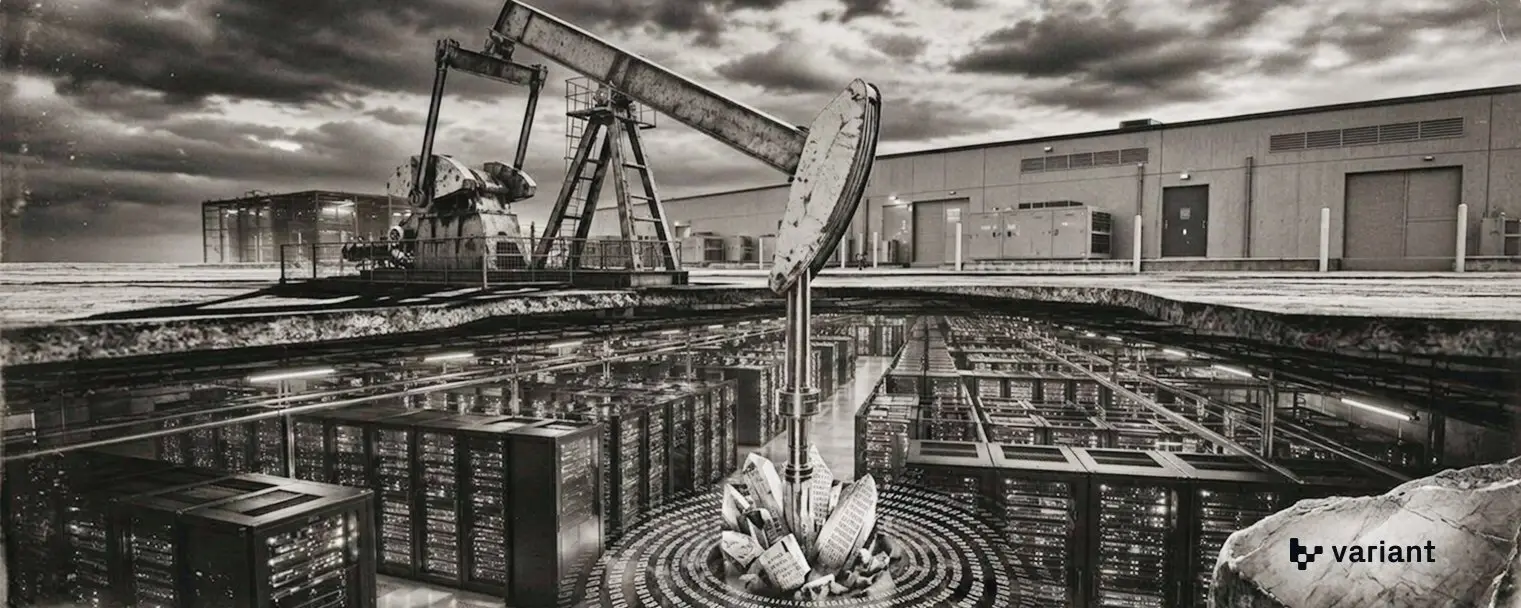
When Compute is Commoditized: How Far Away is a GPU Futures Market? The article explores the potential emergence of a futures market for computing power ("compute"), akin to markets for commodities like oil or electricity. It uses a five-dimension framework to assess the market's maturity for sustaining robust futures trading. **Current Market Assessment (Scorecard):** * **Supply Fragmentation:** 🔴 **Red.** Supply is highly concentrated, dominated by a few hyperscale cloud providers. * **Price Volatility:** 🟢 **Green.** GPU pricing is already highly volatile. * **Physical Settlement Infrastructure:** 🟢 **Green.** Early infrastructure exists at the OTC/broker level. * **Standardization:** 🔴 **Red.** Compute lacks a standardized, tradable unit (e.g., an H100 hour is not uniform). * **Lack of Substitutes:** 🟡 **Yellow.** Vertically integrated players can hedge internally, while others are forced to be long. **Conclusion:** The overall scorecard suggests a robust futures market is premature. The market has volatility and early settlement infrastructure but lacks the necessary supply fragmentation and standardization for large-scale price discovery. Most activity remains OTC. **Key Unanswered Questions & Hypotheses:** The article posits that the market could evolve in the next 1-2 years: 1. **Supply:** May become *moderately more fragmented* due to new cloud providers, cheaper power locations, and demand from long-tail users (e.g., startups running open-source model inference). 2. **Standardization:** Could emerge from the growing **inference** workload (expected to be >65% of AI compute demand by 2029), which has more homogeneous hardware requirements than custom training workloads. Widespread adoption of **open-source model weights** is seen as a key catalyst for democratizing inference and driving infrastructure standardization. 3. **Traded Unit:** The most viable layer for trading is likely the **"chip-instance-hour"** (powered, usable compute time), traded similarly to electricity in regional contracts with spot/futures overlays. Trading at the upstream "chip" layer is unlikely due to supply concentration, while the downstream "token" layer faces challenges due to lack of uniformity across AI models.

链捕手05/18 09:04

When Computing Power Becomes Commoditized, How Long Until a GPU Futures Market?

链捕手05/18 09:04

活动图片