BNB Chain Overtakes Solana In $5.2B Tokenized Stock Trading Push

bitcoinistPublished on 2026-06-30Last updated on 2026-06-30

Abstract

BNB Chain has surpassed Solana in cumulative tokenized equity trading volume, reaching $5.2 billion compared to Solana's $4.5 billion. This activity is primarily driven by Ondo Finance on BNB Chain. The report highlights a crucial distinction: BNB Chain's figure represents "trading volume," while Solana's is "transfer volume," meaning direct comparisons should be cautious. For crypto traders, this shift signals where market activity and risk appetite are clustering within the growing real-world asset (RWA) narrative. It's presented as a market-structure signal rather than a definitive verdict, emphasizing that such data points can influence broader sentiment and liquidity flows, especially in thin markets. The key takeaway is to watch if this trend persists across other metrics to confirm a durable theme or if it remains a short-term positioning shift.

TL;DR

  • BNB Chain reached $5.2B in cumulative tokenized equity trading volume (primarily driven by Ondo Finance Global Markets at $5.12B), surpassing Solana’s $4.5B.
  • The key caveat: Distinguish between BNB Chain’s “cumulative trading volume for tokenized stock” and Solana’s “cumulative transfer volume for tokenized equities.”
  • For traders, the story matters because it affects how capital, liquidity or confidence is being priced across crypto right now.

What Happened

BNB Chain Overtakes Solana In $5.2B Tokenized Stock Trading Push. The update comes from Ondo Global Markets dashboard / DefiLlama RWA index. That matters because this is the sort of story that can quickly become noisy if it is treated as a simple price headline rather than a market-structure development.

BNB Chain reached $5.2B in cumulative tokenized equity trading volume (primarily driven by Ondo Finance Global Markets at $5.12B), surpassing Solana’s $4.5B. The clean read is not that one data point should dominate the whole market, but that the latest signal gives traders a better sense of where risk appetite is shifting. In a market still being driven by ETF flows, leverage, treasury decisions and rotating altcoin liquidity, context is doing a lot of work.

Why It Matters For Crypto Traders

Tokenized stocks and other real-world asset products have become one of the more serious on-chain narratives because they speak directly to settlement, access and market infrastructure. BNB Chain overtaking Solana on one trading-volume measure does not end the race, but it does show where activity is clustering.

The practical takeaway is that this is not just about the headline asset. These stories tend to spill across related trades: Bitcoin treasury names can affect altcoin sentiment, ETF flow data can shape institutional positioning, and token-specific network metrics can change how traders think about support, demand and supply. When liquidity is thin, those second-order effects can matter almost as much as the original news.

The Caveat To Keep In Mind

Distinguish between BNB Chain’s “cumulative trading volume for tokenized stock” and Solana’s “cumulative transfer volume for tokenized equities.” That is the line readers should keep front and center. Crypto markets are very good at taking a narrow data point and turning it into a sweeping narrative within minutes. The better read is usually more measured: this is a signal, not a guarantee.

For example, an outflow does not automatically mean long-term holders have lost conviction. A governance warning does not mean a network is broken. A token unlock does not mean every released coin is being dumped at market. And a derivatives shift does not mean price must follow in a straight line. The useful part is understanding what the signal says about positioning, confidence and incentives.

What To Watch Next

The next step is to watch whether the data keeps confirming the story. If the same pattern appears across follow-up flows, on-chain metrics, open interest, governance dashboards or official filings, it becomes a more durable market theme. If it fades quickly, it may end up looking like a short-term positioning scare rather than a structural shift.

That distinction is especially important in the current market. Traders are still trying to work out whether capital is truly leaving crypto, rotating into safer crypto assets, or simply sitting in stablecoins waiting for a cleaner entry. This story adds one more piece to that puzzle, but it should be read alongside broader liquidity, macro and derivatives conditions.

This report is based on information from Ondo Global Markets dashboard / DefiLlama RWA index.

This article was written by the News Desk and edited by Samuel Rae.

Source: Defillama

Trending Cryptos

Related Questions

QWhat is the main achievement reported for BNB Chain in the article?

ABNB Chain has reached $5.2 billion in cumulative tokenized equity trading volume, surpassing Solana's $4.5 billion.

QWhat is the key caveat or distinction the article highlights when comparing the data for BNB Chain and Solana?

AThe key caveat is to distinguish between BNB Chain's 'cumulative trading volume for tokenized stock' and Solana's 'cumulative transfer volume for tokenized equities.'

QWhich platform is primarily responsible for driving the majority of BNB Chain's reported tokenized equity trading volume?

AOndo Finance Global Markets is primarily responsible, driving $5.12B of the $5.2B total for BNB Chain.

QAccording to the article, why does the reported data matter for crypto traders?

AIt matters because it shows where risk appetite and trading activity are clustering, offering a signal about market positioning, confidence, and incentives, which can affect capital flow and sentiment across the crypto market.

QWhat does the article suggest traders should watch next to understand the significance of this development?

ATraders should watch whether the pattern is confirmed by follow-up data (like flows, on-chain metrics, open interest, or official filings) to see if it's a durable market theme or just a short-term positioning change.

Related Reads

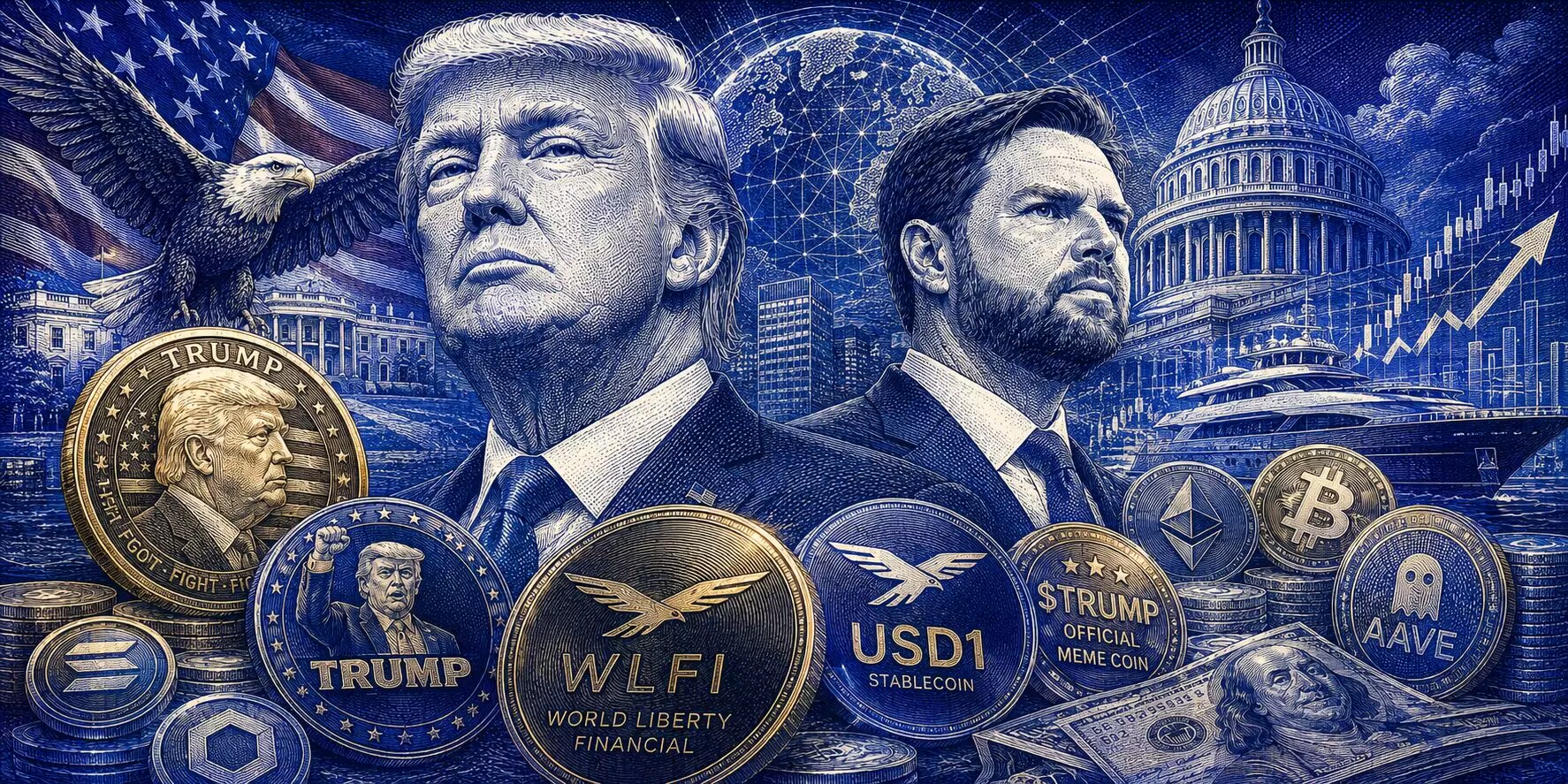
Trump's 25-Year Financial Report: Family Earns Over $1 Billion Annually from Crypto, While Retail Investors Lose Money on $TRUMP

Former President Donald Trump's family earned approximately $1.2 billion from cryptocurrency ventures in 2025, according to a financial disclosure report. This revenue stream, outlined in a 927-page filing, now surpasses income from most of his long-established real estate holdings. The crypto earnings originated from two main sources: over $500 million from the sale of products like "governance tokens" by World Liberty Financial, a DeFi project co-owned by the Trump family, and roughly $635 million in royalties from the Trump-themed meme coin $TRUMP, issued by CIC Digital LLC. While Trump's entities profited, retail investors faced significant losses. The $TRUMP token, which peaked above $74 shortly after its January 2025 launch, has plummeted to around $1.68. World Liberty Financial's token has also fallen roughly 80% since its debut. Reports indicate that the majority of meme coin buyers have lost money, with Trump-linked entities still holding about 80% of $TRUMP's supply under vesting plans. The disclosure highlights a stark contrast: Trump's crypto and real estate businesses flourished—with new international property deals bringing in tens of millions—even as his administration shifted to crypto-friendly policies, relaxing the stringent regulatory stance of the previous Biden administration. The White House maintains that Trump acts only in the public interest, with his businesses placed in a trust managed by his sons, denying any conflict of interest. However, the report notes the difficulty of assessing such conflicts, particularly regarding foreign business dealings with countries that later received favorable U.S. policy decisions.

marsbit23m ago

Trump's 25-Year Financial Report: Family Earns Over $1 Billion Annually from Crypto, While Retail Investors Lose Money on $TRUMP

marsbit23m ago

From 'Address Clustering' to 'Evidence Standards': Why is Chainalysis Redefining Blockchain Tracing?

**Summary:** In June 2026, Chainalysis introduced the **Blockchain Tracing Ontology (BTO)**, a proposed data framework aiming to establish standardized, transparent, and verifiable models for blockchain analysis. This initiative addresses a core industry issue: despite public blockchain data, different firms often produce inconsistent results (e.g., differing entity labels for the same address) due to non-uniform methodologies, particularly in **address clustering**. This lack of standardization poses challenges for judicial investigations, AML, and enforcement. The BTO is not a new clustering algorithm but a **common "language" or conceptual framework**. It moves beyond the simplistic "cluster" model by introducing a hierarchical structure: **Entity → Wallet → Wallet Segment → Address**, which better reflects complex organizational wallet management. A key shift is from presenting mere results to ensuring **process trust and explainability**. The framework emphasizes documenting the **Evidence** and **Confidence** behind each analytical claim—specifying the on-chain/off-chain data, rules applied, and certainty levels—enabling third-party verification. This focus is partly informed by legal precedents like the **Bitcoin Fog** case, where Chainalysis's methods underwent rigorous judicial scrutiny (Daubert hearing), highlighting the need for reproducible, scientifically sound analysis. The proposal clarifies that on-chain analysis identifies address relationships and flow patterns, not real-world identities, which still require off-chain evidence (e.g., KYC data). Ultimately, Chainalysis envisions steering the industry from an "experience-driven" to a **"standards-driven"** future, where competition centers on **data quality, analytical transparency, and judicial admissibility** rather than just label coverage. Widespread adoption could facilitate cross-agency collaboration, reduce disputes, and provide a more reliable foundation for global compliance and enforcement.

marsbit50m ago

From 'Address Clustering' to 'Evidence Standards': Why is Chainalysis Redefining Blockchain Tracing?

marsbit50m ago

The 'Conference Circuit' for the Second Half of the Year Begins! A Complete Overview of the 2026 Web3 Global Summit Schedule

"Web3 Global Summit Calendar for the Second Half of 2026" provides a comprehensive list of major Web3 and blockchain conferences worldwide, focusing on events from July to December 2026. The schedule starts in July with IVS in Kyoto, WebX in Tokyo, Canada Crypto Week in Toronto, and Malaysia Blockchain Week in Kuala Lumpur. August features Conviction in Ho Chi Minh City, Coinfest Asia in Bali, and Bitcoin Hong Kong. September is the most intense month, with notable events like NFT NYC in New York, ETHRome in Rome, Money20/20 in Saudi Arabia, European Blockchain Convention in Barcelona, and Korea Blockchain Week in Seoul. The fourth quarter begins with the significant TOKEN2049 Singapore in October, which will be the sole TOKEN2049 event of the year following the cancellation of the Dubai edition. November includes Devcon 8 and Bitcoin Amsterdam in Amsterdam, Digital Asset Summit and Solana Breakpoint in London. The year concludes in December with Blockchain Life in Dubai and Bitcoin MENA in Abu Dhabi. The article also lists key events from the first half of the year (January to June, marked as concluded) for reference, including Consensus Hong Kong, ETHDenver, and Paris Blockchain Week. The guide serves as a resource for planning attendance at these industry gatherings across Asia, Europe, North America, and the Middle East.

Foresight News1h ago

The 'Conference Circuit' for the Second Half of the Year Begins! A Complete Overview of the 2026 Web3 Global Summit Schedule

Foresight News1h ago

Video Edition Nano Banana Arrives: Built-in Gemini World Knowledge, Original Banana Generates Images in Just 4 Seconds

Google has unveiled two new multimodal AI models: Gemini Omni Flash and Nano Banana 2 Lite. Gemini Omni Flash is a video generation and editing model that leverages Gemini's world knowledge. It allows for conversational video editing using natural language prompts, maintains scene consistency, and integrates text/graphics with video actions. Priced at $0.10 per second of output, its current limitations include a 10-second video cap. Nano Banana 2 Lite (gemini-3.1-flash-lite-image) is an optimized image generation model focused on speed and cost. It produces a 1K resolution image in about 4 seconds at a cost of roughly $0.034, making it significantly faster and cheaper than its predecessor. It retains strong text rendering capabilities. A key highlight is the combined workflow: users can rapidly generate images with Nano Banana 2 Lite and then seamlessly feed them into Gemini Omni Flash to create videos. Google demonstrated this with three application demos: "Anywhere" for creating travel videos from photos, "Space Lift" for generating interior design walkthroughs, and "Omni Product Studio" for automating e-commerce ad creation from product photos. The release underscores Google's strategic focus on advancing multimodal AI for practical, commercial applications in areas like marketing, design, and content creation, despite competitive pressures in other AI domains.

marsbit1h ago

Video Edition Nano Banana Arrives: Built-in Gemini World Knowledge, Original Banana Generates Images in Just 4 Seconds

marsbit1h ago

Trading

Spot

Hot Articles

How to Buy PUSH

Welcome to HTX.com! We've made purchasing Push Protocol (PUSH) simple and convenient. Follow our step-by-step guide to embark on your crypto journey.Step 1: Create Your HTX AccountUse your email or phone number to sign up for a free account on HTX. Experience a hassle-free registration journey and unlock all features.Get My AccountStep 2: Go to Buy Crypto and Choose Your Payment MethodCredit/Debit Card: Use your Visa or Mastercard to buy Push Protocol (PUSH) instantly.Balance: Use funds from your HTX account balance to trade seamlessly.Third Parties: We've added popular payment methods such as Google Pay and Apple Pay to enhance convenience.P2P: Trade directly with other users on HTX.Over-the-Counter (OTC): We offer tailor-made services and competitive exchange rates for traders.Step 3: Store Your Push Protocol (PUSH)After purchasing your Push Protocol (PUSH), store it in your HTX account. Alternatively, you can send it elsewhere via blockchain transfer or use it to trade other cryptocurrencies.Step 4: Trade Push Protocol (PUSH)Easily trade Push Protocol (PUSH) on HTX's spot market. Simply access your account, select your trading pair, execute your trades, and monitor in real-time. We offer a user-friendly experience for both beginners and seasoned traders.

3.8k Total ViewsPublished 2024.03.29Updated 2026.06.02

How to Buy PUSH

Discussions

Welcome to the HTX Community. Here, you can stay informed about the latest platform developments and gain access to professional market insights. Users' opinions on the price of PUSH (PUSH) are presented below.

活动图片