# Supply Chain Related Articles

HTX News Center provides the latest articles and in-depth analysis on "Supply Chain", covering market trends, project updates, tech developments, and regulatory policies in the crypto industry.
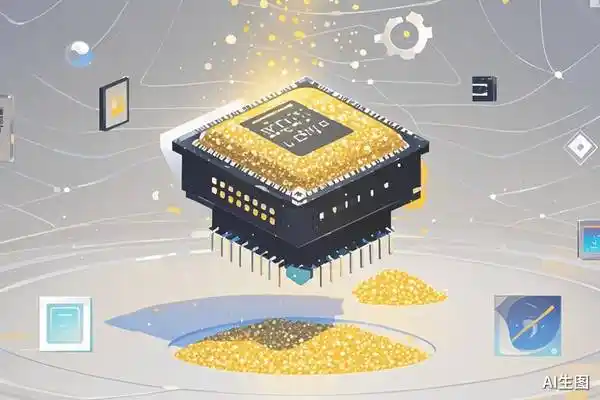
From Sand to Chips: Hefei's Semiconductor Alchemy

From Sand to Chips: Hefei's Semiconductor "Alchemy" On July 27, 2026, a memory chip maker from Hefei made history by surpassing the market capitalization of Industrial and Commercial Bank of China on its Shanghai Stock Exchange debut. This marks the culmination of Hefei's two-decade industrial transformation, often summarized in three strategic leaps: "Screen, Chip, Vehicle." The journey began in 2008 with a bold investment in BOE, establishing China's first 6th-generation LCD panel line. The second leap was the "Project 506" in 2016, which gave birth to ChangXin Memory Technologies (CXMT). With initial backing of 14.4 billion RMB from Hefei's state-owned investment platform, CXMT aimed to break into the global DRAM market, then over 95% controlled by three overseas giants. CXMT achieved a breakthrough in 2019 by producing China's first 8GB DDR4 DRAM chip, employing "generational leapfrog" R&D to catch up. After years of significant losses, the company turned profitable in 2025. A dramatic surge followed in 2026, driven by AI-driven demand and full capacity utilization, propelling CXMT to become the world's fourth-largest DRAM manufacturer. CXMT's success is not isolated. It anchors a dense, localized semiconductor ecosystem in Hefei. Within its vicinity are numerous supporting companies for equipment, materials, and packaging & testing. This cluster has fueled the regional economy, with Hefei's integrated circuit industry output growing over sevenfold between 2016 and 2025. The ripple effects extend beyond high-tech, revitalizing local communities with new businesses and services catering to the influx of workers. For individuals, Hefei offers competitive tech salaries at a significantly lower cost of living compared to major coastal cities, along with improved amenities and shorter commutes. Hefei's story demonstrates two decades of focused, long-term industrial policy, transforming the city from a provincial capital into a trillion-RMB GDP "Double Ten-Thousand" city (10 million people, 1 trillion RMB GDP). It shows how persistence in strategic sectors—turning sand into chips—can redefine a city's economic destiny.

marsbit07/28 08:26

From Sand to Chips: Hefei's Semiconductor Alchemy

marsbit07/28 08:26

AI is Turning Nuclear Power from a 'National Project' into a Replicable Commercial Product

Artificial intelligence is transforming nuclear energy from a "national-level project" into a replicable commercial product. Traditionally, nuclear power has been characterized by massive investments, long timelines, and complex regulations, making it inaccessible to most private enterprises. However, the emergence of AI data centers is shifting this dynamic. Major tech companies like Microsoft, Google, and Amazon, urgently needing large-scale, stable, and low-carbon power, are becoming powerful commercial buyers for nuclear energy. This new demand is driving several key developments. While large-scale nuclear plants remain national infrastructure, small modular reactors (SMRs) are advancing toward commercial validation, offering a more suitable scale for data centers, industrial parks, and energy-intensive industries. Furthermore, innovations in passive safety systems, modular manufacturing, and improved regulatory efficiency are helping to standardize nuclear technology into a more replicable industrial product. The value of nuclear energy is also expanding beyond electricity generation to include applications like industrial heat, hydrogen production, seawater desalination, and power for heavy manufacturing, supported by an entire supply chain. Challenges such as construction delays, cost overruns, waste management, fuel supply, regulation, and project financing remain significant risks. Fusion energy also still requires considerable time for commercialization. AI has not instantly matured nuclear technology, but it is providing unprecedented commercial demand, capital support, and concrete orders. Over the next decade, nuclear energy may become one of the most underestimated yet critical infrastructures supporting the AI industry.

链捕手07/24 06:56

AI is Turning Nuclear Power from a 'National Project' into a Replicable Commercial Product

链捕手07/24 06:56

A New 'Ghost Story' in Storage: Is the US Going to Grab Money?

The article discusses a potential new phase in US-Korea semiconductor relations, shifting from pressure to build factories in the US to demands for profit-sharing. Citing the *Korea Times*, it reports that a US trade official allegedly claimed the US has a right to share in the massive profits of South Korean chipmakers Samsung and SK Hynix, arguing that purchases by American companies directly drive their earnings. While unconfirmed by US authorities, the claim has caused concern in Korea. The context is Korea's surging semiconductor exports to the US and the dominant profitability of its memory chipmakers in the global AI supply chain. Analysis from CITIC Securities draws historical parallels, noting that sustained high profits or market share by foreign firms in key industries have often triggered US political intervention to redistribute global industrial benefits, as seen with Japanese semiconductors in the 1980s and Taiwanese panels in the 2000s. Currently, the primary US focus remains securing AI-related memory supply and encouraging Korean investment in US manufacturing. Systemic political pressure to curb Korean profits is not yet evident. However, the report warns the risk could materialize if continued price increases start squeezing the profits and competitiveness of American companies. Key signals to watch would be if US tech giants publicly oppose price hikes or if US policymakers reframe the issue around anti-competitive practices. The official's reported remarks are seen as an early sign that the battleground in US-Korea chip rivalry may be extending to the division of profits.

marsbit07/19 01:10

A New 'Ghost Story' in Storage: Is the US Going to Grab Money?

marsbit07/19 01:10

Jensen Huang Turns Japan into NVIDIA's "Physical AI" Pivot Point: A Life-Saving Favor 30 Years Ago, a Full-Stack Bind 30 Years Later

NVIDIA CEO Jensen Huang’s recent visit to Japan signals a strategic push to make the country a core hub for its global “physical AI” ecosystem. During his trip, NVIDIA announced partnerships with Japanese robotics giants Fanuc and Yaskawa Electric, and expanded its collaboration with Toyota across autonomous driving, factory simulation, and smart city applications. Huang emphasized that AI-driven robotics will become intelligent, adaptable, and accessible. The visit also highlighted a historic reunion with former SEGA president Shoichiro Irimajiri, who helped save NVIDIA from bankruptcy in the 1990s with a critical investment. Now, SEGA plans to support NVIDIA’s RTX Spark platform for future game releases. Behind the scenes, Huang hosted a dinner with key Japanese semiconductor and electronics supply chain leaders, including Kioxia, Shin-Etsu Chemical, Tokyo Electron, and Ajinomoto, underscoring Japan’s role in NVIDIA’s hardware roadmap. Beyond robotics and automotive, NVIDIA is deepening ties across Japanese industries. In healthcare, companies like Eisai and Fujifilm are using NVIDIA’s BioNeMo and Blackwell platforms for AI-driven drug discovery and medical imaging. In finance, Mizuho Bank and SMFG are building AI factories powered by NVIDIA systems. In quantum computing, RIKEN’s supercomputers, equipped with Blackwell GPUs, are advancing research. Market speculation also points to a potential partnership with Japan’s state-backed “physical AI” consortium, Noetra. Huang dismissed concerns about an AI bubble, stating demand remains strong and a decade of infrastructure building is needed. He framed Japan’s manufacturing expertise and automation needs as a natural fit for the physical AI era.

marsbit07/16 11:42

Jensen Huang Turns Japan into NVIDIA's "Physical AI" Pivot Point: A Life-Saving Favor 30 Years Ago, a Full-Stack Bind 30 Years Later

marsbit07/16 11:42

Beyond Private Keys: From Wallets and L2 to Supply Chains, How to Guard the Security Perimeter of Web3?

Beyond Private Keys: Securing Web3's Expanding Attack Surface from Wallets to L2s and Supply Chains The crypto space faced a wave of security incidents in June, with over $75 million lost across 40 major attacks. These breaches highlighted risks beyond private key theft, exposing vulnerabilities across the entire user interaction chain. Wallet security was compromised not through stolen seed phrases, but via a critical flaw in the Cardano wallet SecondFi's signing implementation. This bug allowed attackers to potentially derive private keys from publicly visible signature data, emphasizing that wallet security depends on correct cryptographic implementation, ideally in open-source, auditable code. Layer-2 networks also revealed complex trust chain risks. Attacks on legacy Aztec deployments exploited inconsistencies in proof systems, showing that a valid zero-knowledge proof is only as secure as its underlying rules. Another attack on Taiko's SGX-based prover stemmed from a leaked signing key and inadequate verification checks. Furthermore, a technical glitch halted Base's block production, underscoring that L2 security encompasses network availability and reliable user exit paths as much as asset safety. Finally, the Polymarket incident demonstrated that even audited smart contracts are not immune. A compromised third-party supplier led to a malicious script being injected into the platform's frontend, resulting in user fund losses. This "supply chain attack" shows that the security of the entire interaction path—from the webpage to the wallet signature—is critical. The conclusion is clear: Web3 security now involves safeguarding the entire journey from transaction intent to on-chain settlement. Users must adopt layered security habits: isolating long-term holdings, using dedicated wallets for daily interactions, scrutinizing transaction details before signing, and managing authorizations cautiously. Defense must evolve from protecting a single point (the private key) to securing a complete chain of interactions.

marsbit07/09 10:44

Beyond Private Keys: From Wallets and L2 to Supply Chains, How to Guard the Security Perimeter of Web3?

marsbit07/09 10:44

活动图片