# Supply Chain Related Articles

HTX News Center provides the latest articles and in-depth analysis on "Supply Chain", covering market trends, project updates, tech developments, and regulatory policies in the crypto industry.

Changxin Rejects Apple's Price Pressure, Prices Not Lower Than Samsung and SK Hynix, Apple Loses Pricing Power

Apple recently attempted to negotiate lower-priced DRAM procurement deals with China's CXMT (ChangXin Memory Technologies) compared to its agreements with Samsung and SK Hynix but was rejected. CXMT stated its prices would not be lower, and could even be higher, than those of the South Korean suppliers. This refusal is attributed to CXMT's production capacity being largely secured by long-term contracts with major domestic clients like Huawei, Xiaomi, OPPO, Vivo, and Chinese internet giants. Consequently, CXMT feels no pressure to meet Apple's stringent terms. The backdrop is a significant surge in memory prices driven by the AI boom. As Samsung and SK Hynix shift more production capacity towards high-margin High Bandwidth Memory (HBM) for AI servers, the supply of conventional DRAM has tightened, causing prices to skyrocket. This has drastically increased the bill-of-materials cost for devices like iPhones, pressuring Apple's profits. Apple's traditional strategy of leveraging multiple suppliers for price competition has weakened, as memory makers prioritize more profitable AI-related orders. CXMT's confidence stems from achieving technological parity. Its DDR5 and LPDDR5X products have reached mass-production yields above 90%, closely matching Samsung's performance. With technical gaps closed, CXMT no longer competes solely on low prices. Furthermore, Chinese companies are wary of the risks associated with over-reliance on Apple's supply chain, citing cases like OFILM and Wingtech, which suffered severe losses after being removed from or impacted by US sanctions. This event signals a shift in the semiconductor industry's power dynamics. The AI-driven demand has transformed the market from buyer-centric to supplier-centric, where control over scarce, advanced production capacity grants pricing power. For Chinese semiconductor firms, the episode marks a transition from being low-cost alternatives to becoming equal suppliers with their own pricing authority, backed by domestic demand and technological advancement. Apple's loss of leverage with a mainland supplier underscores this changing era.

marsbit08/06 00:41

Changxin Rejects Apple's Price Pressure, Prices Not Lower Than Samsung and SK Hynix, Apple Loses Pricing Power

marsbit08/06 00:41

ChangXin's "Peer": The Fate of Fujian Jinhua Integrated Circuit Co., Ltd. Is Regrettable

China's DRAM industry saw a pivotal moment with ChangXin's (CXMT) successful IPO. However, the fate of its 2016 counterpart, Fujian Jinhua Integrated Circuit, offers a stark contrast. Both were founded the same year with similar missions, massive investment, and 12-inch wafer fab goals to break into the DRAM market dominated by Samsung, SK Hynix, and Micron. Fujian Jinhua initially progressed faster by partnering with Taiwan's United Microelectronics Corporation (UMC) for 32nm DRAM technology. This strategy, however, led to a protracted legal battle. In 2017, Micron sued UMC and Jinhua for trade secret theft. The situation escalated in October 2018 when the U.S. Commerce Department added Fujian Jinhua to its Entity List, citing its imminent mass production as a threat. This resulted in an immediate halt of equipment, software, and technical support from American suppliers, followed by UMC suspending cooperation. Although Jinhua was eventually cleared of criminal charges in late 2023 after a nearly six-year legal saga, it missed the critical industry growth window. In contrast, ChangXin took a different path from the start, focusing on building its own R&D system and securing intellectual property, notably through a license for former Qimonda patents. While also facing U.S. scrutiny and initial heavy losses, ChangXin benefited from a more mature domestic supply chain when it reached mass production. It achieved profitability in 2025 and represents the rise of China's DRAM industry. Jinhua's story is a crucial lesson. It was the first Chinese DRAM company to confront the complex realities of international IP disputes, export controls, and supply chain vulnerabilities. Today, it has resumed operations with a 40,000 wafers-per-month capacity, aiming for 60,000. While it missed its initial opportunity, its experience informed the strategic evolution of later Chinese semiconductor firms.

marsbit08/05 12:31

ChangXin's "Peer": The Fate of Fujian Jinhua Integrated Circuit Co., Ltd. Is Regrettable

marsbit08/05 12:31

Playing the "Decoupling" Card Again? Domestic Optical Modules Face a Stress Test

The U.S. Federal Communications Commission (FCC) is reportedly drafting a ban on importing new models of Chinese-made optical transceiver modules, with a potential implementation target of 2026. This "decoupling" move comes as Chinese firms, led by industry leaders like Zhongji Innolight and Eoptolink, dominate the global optical module market with over 60% share, and hold an even larger position in the high-speed 800G and 1.6T segments critical for AI data centers. Market reactions were mixed: U.S. optical module stocks initially rose, while Chinese A-shares opened lower but largely recovered by the close. Analysis suggests a complete U.S. decoupling from Chinese modules faces significant hurdles. North American cloud giants (Meta, Google, Microsoft, Amazon) and NVIDIA have massive demand for high-speed modules, estimated at around 40 million units in 2026. U.S. manufacturers' combined monthly production capacity for these modules is less than one-fifth that of a single major Chinese player like Zhongji Innolight, which reported production of 23.76 million units in 2025. Chinese companies are heavily reliant on the U.S. market, with over 90% of revenue for top firms coming from overseas, primarily the U.S. However, they have begun mitigating risks by establishing assembly plants in Southeast Asia and Mexico. Industry observers note the final impact depends on whether any potential U.S. restrictions target specific companies or products based on origin. Past U.S. sanctions on Chinese tech firms have often spurred increased domestic R&D and market diversification. Despite initial stock volatility, shares of major Chinese optical module companies pared losses, indicating market belief in the sector's resilience and the practical difficulties of abruptly replacing Chinese supply.

marsbit08/05 11:47

Playing the "Decoupling" Card Again? Domestic Optical Modules Face a Stress Test

marsbit08/05 11:47

When the Competition in Chip Manufacturing Equipment Stops Being Just About Who Is More Advanced

The competition in chip manufacturing equipment is no longer solely about who has the most advanced technology. While performance, yield, and cost remain key, U.S. export controls are adding a critical new dimension: long-term supply chain reliability. Major chipmakers like Samsung and SK Hynix, despite having mature supply chains with leading American and European vendors, are reportedly evaluating etching equipment from China's AMEC for their Chinese factories. This move is not primarily about immediate replacement or AMEC's current capabilities. Instead, it's a risk mitigation strategy. Companies are concerned that future U.S. policies could disrupt their access to spare parts, software updates, and maintenance for existing equipment over its decade-long lifespan. For chipmakers investing billions in fabs with long planning cycles, this policy-induced uncertainty is a significant new risk. The U.S., through its controls, is inadvertently eroding the very reliability and certainty that were foundational strengths of its equipment suppliers. This creates a pivotal shift for Chinese semiconductor equipment. Previously seen largely as a "domestic replacement" option when foreign gear was unavailable, they are now being assessed as potential "contingency suppliers" by global players—even before a supply disruption occurs. This provides a crucial entry point for validation in real production lines, which is essential for iterative improvement. Chinese equipment, particularly in areas like etching, has progressed from prototypes to participating in mass production within China, gaining valuable experience. However, this does not signify full global competitiveness. Gaps remain in advanced lithography, metrology, and other key tools. The current evaluations are largely confined to foreign firms' China-based fabs, not their global procurement networks. The core change is in the decision-making framework. Efficiency-driven globalization favored single, optimal suppliers. An era of heightened geopolitical risk is forcing companies to value "replaceability." While technical prowess remains paramount, supply chain certainty is now being factored into a device's competitive equation. Ultimately, U.S. policies have not made Chinese equipment more advanced, but they have given global customers a compelling reason to start testing it. The competition has expanded: it's no longer just about who is more advanced, but also about who can be relied upon to stay.

marsbit08/05 11:46

When the Competition in Chip Manufacturing Equipment Stops Being Just About Who Is More Advanced

marsbit08/05 11:46

Helium, Naphtha, and Photoresist: The Three Critical Vulnerabilities of Semiconductor Fabs

The article "Helium, Naphtha, Photoresist: The Three Achilles' Heels of Semiconductor Fabs" analyzes a hypothetical 2026 supply crisis triggered by geopolitical conflict in the Middle East, focusing on three critical materials for semiconductor manufacturing: helium, naphtha, and photoresist. A key attack on a Qatari LNG facility and the blockade of the Strait of Hormuz threaten the global supply of helium (a byproduct of LNG) and naphtha (a petroleum product). This creates a triple threat of shortages that could halt chip production. Helium is essential, particularly for precise wafer temperature control in dry etching processes; a shortage would cause an immediate "instant failure" in these steps. Naphtha is the foundational raw material for numerous equipment consumables and, crucially, for photoresist chemicals. Japan dominates the photoresist market, relying on a single key supplier for intermediates. The analysis shows the impacts would differ. The tiny fraction of global naphtha used for semiconductors (under 0.1%) makes securing supply for photoresist relatively easier. Helium is the greater vulnerability. Qatar supplies about one-third of the world's helium, exceeding the total annual consumption of the semiconductor industry (21-24% of global supply). While short-term buffers like corporate reserves, recycling, and prioritization (e.g., cutting balloon use first) can delay the crisis, helium cannot be stored long-term due to boil-off. Fabs typically hold only days to weeks of inventory. The consequences would be severe and tiered. Advanced logic nodes (e.g., 2nm, 3nm) using complex processes like GAA would be hit hardest, potentially stopping within three months. Mature nodes for automotive and power semiconductors would also eventually halt (within 6-12 months), which could be catastrophic for the auto industry due to stringent certification requirements. The crisis would unfold not as a sudden global stop, but through a sequence of allocation, severe price spikes, reduced output of low-margin products, and partial fab shutdowns by region and company if the shortage persists beyond a year.

marsbit08/05 11:23

Helium, Naphtha, and Photoresist: The Three Critical Vulnerabilities of Semiconductor Fabs

marsbit08/05 11:23

Analog Chips Are Picking Up

The analog chip market is showing signs of recovery, as evidenced by strong Q2 2026 earnings and guidance from major players like TI, STMicroelectronics, NXP, and onsemi. Revenue growth, improved order backlogs, and declining inventory levels across the supply chain indicate the start of a new upward cycle. Industrial markets led the recovery, followed by data centers and a notable pickup in automotive demand in Q2. The rebound is broad-based but uneven, with specific product areas like automotive analog, power management, and AI server power chains seeing tighter supply and pricing power, while consumer-focused and general-purpose segments remain competitive. A critical turning point is the normalization of inventory. After a prolonged multi-level destocking phase from OEMs to end customers, channel inventories have returned to healthy levels (e.g., NXP at 11 weeks). This has triggered restocking, particularly in automotive, and is now being supplemented by genuine end-demand from new system designs. AI is emerging as a key growth driver, creating new demand in two areas: 1) high-power data center infrastructure (power conversion, thermal management, signal integrity for GPUs, and optical modules) and 2) "Physical AI" in automotive, robotics, and industrial equipment (sensors, motor drivers, power management). This provides a growth vector less dependent on traditional consumer cycles. While some price increase notices have been issued, the revenue impact in Q3 is expected to be minimal, with volume driving growth. The recovery's sustainability will depend on the strength of underlying end-demand now taking over from inventory replenishment.

marsbit08/04 10:06

Analog Chips Are Picking Up

marsbit08/04 10:06

Sales Drop 26% But Prices Rise? Xiaomi's Dilemma

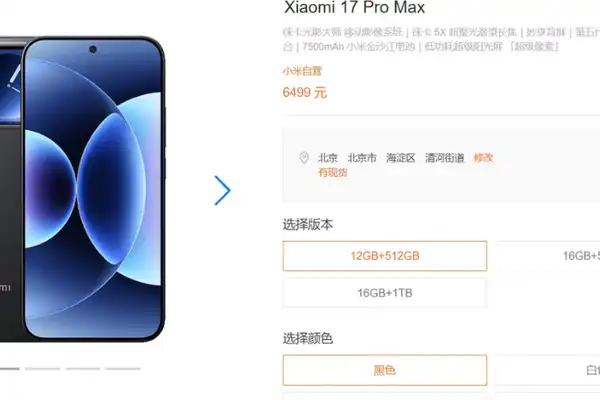
Xiaomi, facing a significant 26.3% year-on-year decline in global smartphone shipments in Q2 2026, has implemented its third price hike of the year. On August 2nd, prices were raised for nine models, including the flagship Mi 17 series (up 400-500 yuan) and Redmi K90/Turbo 5 series (up 300 yuan). This move completes a pattern where cost pressure, originating from surging memory chip prices, has climbed from entry-level to mid-range and now flagship products. The primary driver is a severe supply squeeze on consumer-grade DRAM and NAND flash memory, as major manufacturers like Samsung shift advanced capacity to more profitable HBM for AI applications. According to Xiaomi President Lu Weibing, memory prices for the same configuration have skyrocketed nearly fourfold since Q1 2025, adding roughly 1500 yuan to the cost of a mainstream 12GB+512GB phone. IDC estimates consumer memory costs have risen nearly 300% year-on-year. While the price increases hurt demand and contributed to the sales slump, Xiaomi's strategy of reducing entry-level models and upgrading its product mix also played a role. Domestically, its market share in China fell to 12% (5th place), while leaders Huawei and Apple saw shipments grow over 24%. To mitigate future risks, Xiaomi is accelerating its in-house "Surge" chip development and optimizing memory configurations across its lineup. Xiaomi is not alone; major brands like OPPO, vivo, and Apple have already raised prices in 2026, with industry insiders predicting another round of increases (200-800 yuan) in the second half. A full-scale industry-wide涨价 cycle is underway, forcing both manufacturers and consumers to recalibrate their strategies and purchasing decisions amid sustained cost pressures.

marsbit08/03 12:55

Sales Drop 26% But Prices Rise? Xiaomi's Dilemma

marsbit08/03 12:55

Low Investment Isn't Apple's Immunity Pass

While Meta and Google face investor scrutiny over ballooning AI capital expenditures, Apple's minimal AI investment has paradoxically become a strength. Its market cap recently reclaimed the global top spot, surpassing $5 trillion. The irony is deep: Apple's own AI efforts have lagged, with "Apple Intelligence" delayed and core talent lost, forcing reliance on partners like Google Gemini and Alibaba's Qianwen. Its Q3 FY2026 (Q2 CY) earnings initially seemed stellar. Revenue hit $109.4B (up 16% YoY), with iPhone and Mac sales, growing 22% and 29% respectively, driving most of the growth. However, the stock fell over 8% post-earnings. The primary concern was a weaker Q4 revenue growth forecast of 9-11%, below expectations, due to looming supply chain constraints. Apple is feeling the indirect cost of the AI boom. Soaring memory and chip prices, fueled by massive data center investments from Microsoft, Amazon, and others, are forcing Apple to raise Mac and iPad prices significantly. The upcoming iPhone launch is also expected to see substantial price hikes. Despite avoiding heavy AI infrastructure spending—its capital expenditures are actually down 28%—Apple cannot escape the industry-wide supply and cost pressures. While Apple's operating cash flow remains robust, its substantial R&D spending (up 32% YoY) has yet to yield major AI breakthroughs. As Tim Cook prepares to step down as CEO, Apple faces a challenging transition: balancing its premium hardware success against the strategic and cost pressures of the AI era it has so far cautiously navigated.

marsbit08/01 02:26

Low Investment Isn't Apple's Immunity Pass

marsbit08/01 02:26

活动图片