# Supply Chain Related Articles

HTX News Center provides the latest articles and in-depth analysis on "Supply Chain", covering market trends, project updates, tech developments, and regulatory policies in the crypto industry.

When the Market Begins to Question AI Capex: A Full Analysis of Q2 Earnings Reports from Five Tech Giants

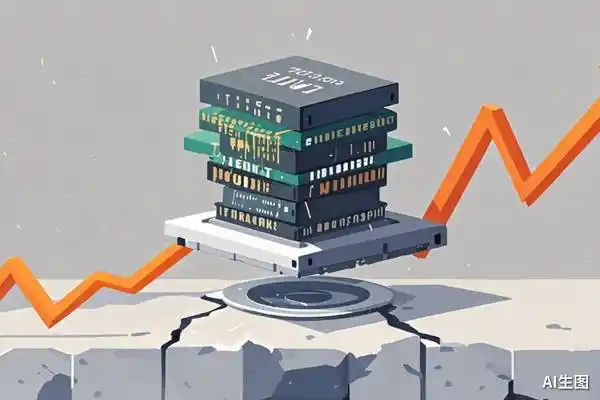
In late July 2026, five major US tech giants—Alphabet, Intel, Microsoft, Meta, and Apple—released their Q2 earnings reports. While all companies exceeded revenue and profit expectations, driven by strong AI-related business growth, investor reactions diverged sharply due to concerns over escalating AI capital expenditures (capex) and their impact on free cash flow. Alphabet reported strong revenue growth and a surging cloud business, but its stock fell after announcing a doubled year-on-year capex and negative quarterly free cash flow for the first time. Intel posted its strongest revenue growth in over 15 years, but its stock experienced volatile trading after significantly raising its full-year capex guidance. Microsoft saw its stock surge after beating estimates and, crucially, lowering its capex forecast while projecting positive free cash flow. Meta faced the most severe sell-off as its profits declined despite revenue beats, with free cash flow plunging over 90% and its capex guidance raised. Apple reported record June-quarter results, but its stock plummeted after providing Q4 revenue guidance that fell short of expectations, citing supply chain constraints and forex headwinds. The overall takeaway is that the market's focus has shifted from validating AI demand to scrutinizing the timeline for returns on massive AI investments. Companies demonstrating a clearer path to managing capex and preserving free cash flow, like Microsoft, were rewarded, while those signaling continued aggressive spending faced investor skepticism.

Odaily星球日报08/01 01:36

When the Market Begins to Question AI Capex: A Full Analysis of Q2 Earnings Reports from Five Tech Giants

Odaily星球日报08/01 01:36

Qualcomm Chip Price Hike Deals a Blow to Android Phones

Qualcomm has officially announced a new round of price increases for its entire chip portfolio, effective September 1. The hikes, reaching up to 18% for the flagship Snapdragon 8 Elite Gen 6 Pro, follow similar moves by MediaTek, intensifying cost pressures on the already strained smartphone industry. CEO Cristiano Amon confirmed the plan, citing the need to offset rising industry-wide costs and restore declining profit margins. Qualcomm's Q3 FY2026 results showed a 25% drop in net profit, with mobile revenue plunging 20% year-over-year, hitting its lowest level since 2021. The surge in AI computing demand has led memory manufacturers to prioritize HBM production, creating a shortage in general-purpose DRAM and NAND Flash chips. Their prices soared by 93%-98% and 55%-60% respectively in Q1 2026, causing the memory cost share in smartphones to jump from 10%-15% to over 30%. Coupled with the soaring cost of advanced nodes like TSMC's 2nm and packaging, overall chip costs have reached historic highs. These upstream pressures are forcing downstream smartphone brands like Xiaomi, OPPO, and vivo to cut orders for mid-to-low-end models by up to 20% and use cost-saving measures like older chipsets. Reportedly, the Snapdragon 8E5 will be repurposed as a "long-lasting" chip for sub-brand phones in H2 2026. Amid this cost crisis, the Android market remains sluggish. Q2 2026 smartphone shipments in China fell 4.3% year-over-year, marking five consecutive quarters of decline. Major Android brands saw market share drop, while Huawei and Apple, with their in-house chip advantages, gained share. Qualcomm is diversifying into automotive and IoT sectors to reduce reliance on smartphones, but these new segments cannot yet fill the mobile revenue gap. Industry observers warn that the full impact of component cost hikes will hit in the second half of 2026, likely leading to higher-than-expected price increases for Android flagships and a further contraction in the Chinese smartphone market.

marsbit07/31 01:26

Qualcomm Chip Price Hike Deals a Blow to Android Phones

marsbit07/31 01:26

AI is Killing 'Poor People's Entertainment'

AI Is Eliminating 'Entertainment for the Poor' This article discusses the rising cost of video gaming, arguing that AI is making digital entertainment increasingly expensive. It follows the example of a frugal gamer who, accustomed to waiting for discounts and buying second-hand games, now faces a new reality. Video game consoles like the PS5 Pro and Switch 2 are increasing in price post-launch, breaking the traditional pattern of降价 over time. Game prices are also rising, with major titles like GTA 6 launching at $80. Furthermore, the industry is moving towards eliminating physical media, exemplified by Sony's plan to stop PS disc production by 2028. This shift blocks the二手 market, a key cost-saving avenue for players. Even Valve's anticipated affordable Steam Machine launched with a high price and disappointing specs. Manufacturers cite inflation, supply chain issues, and rising development costs, but a core driver is the AI boom. AI data centers now consume semiconductor and memory resources once prioritized for consumer electronics like game consoles. This competition from a more profitable sector drives up hardware costs. Additionally, developing modern AAA games with massive teams over many years is astronomically expensive, pushing publishers towards digital-only distribution and subscription models to secure recurring revenue. The article suggests this trend extends beyond gaming. Video streaming, music platforms, cloud storage, and AI tools are increasingly locked behind complex subscription tiers. While AI promises future benefits, it is currently making digital entertainment and services more costly. The era of progressively cheaper, accessible online entertainment is ending, forcing consumers to pay more upfront for future technological promises.

marsbit07/30 04:17

AI is Killing 'Poor People's Entertainment'

marsbit07/30 04:17

After R&D Investment Catches Up with the U.S., Is the Sino-U.S. Chip Competition Still Just About Money?

The article examines the significance of recent data showing China's total R&D expenditure, measured by purchasing power parity (PPP), catching up to or slightly surpassing that of the United States in 2024. It argues that while this milestone reflects China's immense capacity to mobilize research resources, the competition in semiconductors now extends far beyond sheer financial input. The analysis highlights key differences: China's R&D is heavily skewed towards experimental development (over 80%), focusing on product engineering and industrialization, whereas the U.S. allocates a proportionally larger share (about 15%) to basic research. Furthermore, leading U.S. semiconductor firms reinvest a significant portion of their substantial global sales revenue into R&D, creating a sustainable commercial innovation cycle that is difficult to replicate. The article emphasizes that semiconductor progress depends on converting R&D into commercially viable products that pass rigorous customer validation and achieve repeat orders, not just on spending levels. It concludes that as China enters the top tier of R&D spenders, the critical challenges shift to improving resource allocation efficiency, fostering long-term basic research, and building effective mechanisms to bridge the gap between laboratory discoveries and reliable, market-ready industrial capabilities.

marsbit07/30 01:02

After R&D Investment Catches Up with the U.S., Is the Sino-U.S. Chip Competition Still Just About Money?

marsbit07/30 01:02

The Semiconductor Industry's Most Obscure Chokepoint Material: It Has Multiplied in Price Unnoticed, and China Just Banned Its Export

"Helium: The Silent Choke Point in Semiconductors" Helium, despite being the universe's second most abundant element, is critically scarce on Earth. It cannot be synthesized artificially and escapes Earth's gravity once released, making it a non-renewable resource. Yet, it is indispensable for advanced semiconductor manufacturing, requiring ultra-high purity (99.9999%) for processes like wafer etching, leak detection, and thermal management in lithography tools, with no viable substitutes. This low-profile resource, whose price has doubled unnoticed, suddenly gained attention when China imposed an export ban on July 10th. The ban is a response to a severe global shortage triggered months earlier. In March, missile attacks damaged the world's largest helium production hub in Qatar's Ras Laffan, halting a third of global supply with repairs expected to take 3-5 years. Concurrently, Russia tightened export controls, and the US sold off its federal helium reserve. Approximately 200 specialized transport containers, each worth ~$1 million, were stranded with perishable cargo. Global spot prices skyrocketed, and chipmakers like TSMC warned of potential impacts. China, which imports over 84% of its helium (primarily from Qatar and Russia), faces a severe squeeze. Despite being helium-poor, China has developed domestic extraction technology over five years, processing byproduct gases from LNG plants to produce ultra-pure helium. Domestic output, while still only covering less than 20% of demand, enabled the recent export ban aimed at securing domestic supply for its own expanding chip industry. The industry now faces "Helium Shortage 5.0." With key global sources constrained for years, this invisible gas—once wasted on party balloons—has become a critical, geopolitically charged bottleneck for chips, healthcare (MRI machines), and beyond, forcing the world to finally treat it as the finite strategic resource it is.

marsbit07/29 03:26

The Semiconductor Industry's Most Obscure Chokepoint Material: It Has Multiplied in Price Unnoticed, and China Just Banned Its Export

marsbit07/29 03:26

Behind the 67,000 Semiconductor Talent Shortage: U.S. Industrial Policy Game and Implications for China

The U.S. push to reshore semiconductor manufacturing faces a core challenge: a significant talent shortage. While over $770 billion in investments are planned across 160 projects, a key hurdle is finding enough people to run the new fabs. According to industry projections, the U.S. could face a shortage of approximately 67,000 technicians, engineers, and computer scientists by 2030. This shortage is multi-faceted. It includes not only high-level chip design engineers requiring advanced degrees but also a substantial need for technicians to operate and maintain fab equipment. Technician roles, while often requiring less formal education, are hard to fill due to factors like shift work, factory locations, and local community infrastructure. Conversely, for high-end engineers, the issue is less about salary—which is already competitive—and more about intense competition for specialized skills from other tech sectors and the long lead time to develop such expertise. The geographic dispersion of new investments complicates recruitment, as fabs need large numbers of local, stable employees. In response, U.S. policy emphasizes building workforce development as critical infrastructure. Strategies include expanding community college programs for technician training, fostering industry-education partnerships, and pursuing immigration reforms for high-skilled talent, aiming to balance immediate needs with long-term domestic pipeline development. For China, the key takeaway is the need to integrate talent supply planning with factory construction from the outset. This involves requiring companies to submit workforce plans, strengthening vocational education aligned with industry needs, and building supportive local ecosystems to retain talent. Ultimately, a sustainable semiconductor industry depends not just on building fabs, but on cultivating a continuous, local talent pipeline capable of keeping them running and advancing.

marsbit07/29 00:51

Behind the 67,000 Semiconductor Talent Shortage: U.S. Industrial Policy Game and Implications for China

marsbit07/29 00:51

From Sand to Chips: Hefei's Semiconductor Alchemy

From Sand to Chips: Hefei's Semiconductor "Alchemy" On July 27, 2026, a memory chip maker from Hefei made history by surpassing the market capitalization of Industrial and Commercial Bank of China on its Shanghai Stock Exchange debut. This marks the culmination of Hefei's two-decade industrial transformation, often summarized in three strategic leaps: "Screen, Chip, Vehicle." The journey began in 2008 with a bold investment in BOE, establishing China's first 6th-generation LCD panel line. The second leap was the "Project 506" in 2016, which gave birth to ChangXin Memory Technologies (CXMT). With initial backing of 14.4 billion RMB from Hefei's state-owned investment platform, CXMT aimed to break into the global DRAM market, then over 95% controlled by three overseas giants. CXMT achieved a breakthrough in 2019 by producing China's first 8GB DDR4 DRAM chip, employing "generational leapfrog" R&D to catch up. After years of significant losses, the company turned profitable in 2025. A dramatic surge followed in 2026, driven by AI-driven demand and full capacity utilization, propelling CXMT to become the world's fourth-largest DRAM manufacturer. CXMT's success is not isolated. It anchors a dense, localized semiconductor ecosystem in Hefei. Within its vicinity are numerous supporting companies for equipment, materials, and packaging & testing. This cluster has fueled the regional economy, with Hefei's integrated circuit industry output growing over sevenfold between 2016 and 2025. The ripple effects extend beyond high-tech, revitalizing local communities with new businesses and services catering to the influx of workers. For individuals, Hefei offers competitive tech salaries at a significantly lower cost of living compared to major coastal cities, along with improved amenities and shorter commutes. Hefei's story demonstrates two decades of focused, long-term industrial policy, transforming the city from a provincial capital into a trillion-RMB GDP "Double Ten-Thousand" city (10 million people, 1 trillion RMB GDP). It shows how persistence in strategic sectors—turning sand into chips—can redefine a city's economic destiny.

marsbit07/28 08:26

From Sand to Chips: Hefei's Semiconductor Alchemy

marsbit07/28 08:26

活动图片