# Supply Chain Related Articles

HTX News Center provides the latest articles and in-depth analysis on "Supply Chain", covering market trends, project updates, tech developments, and regulatory policies in the crypto industry.
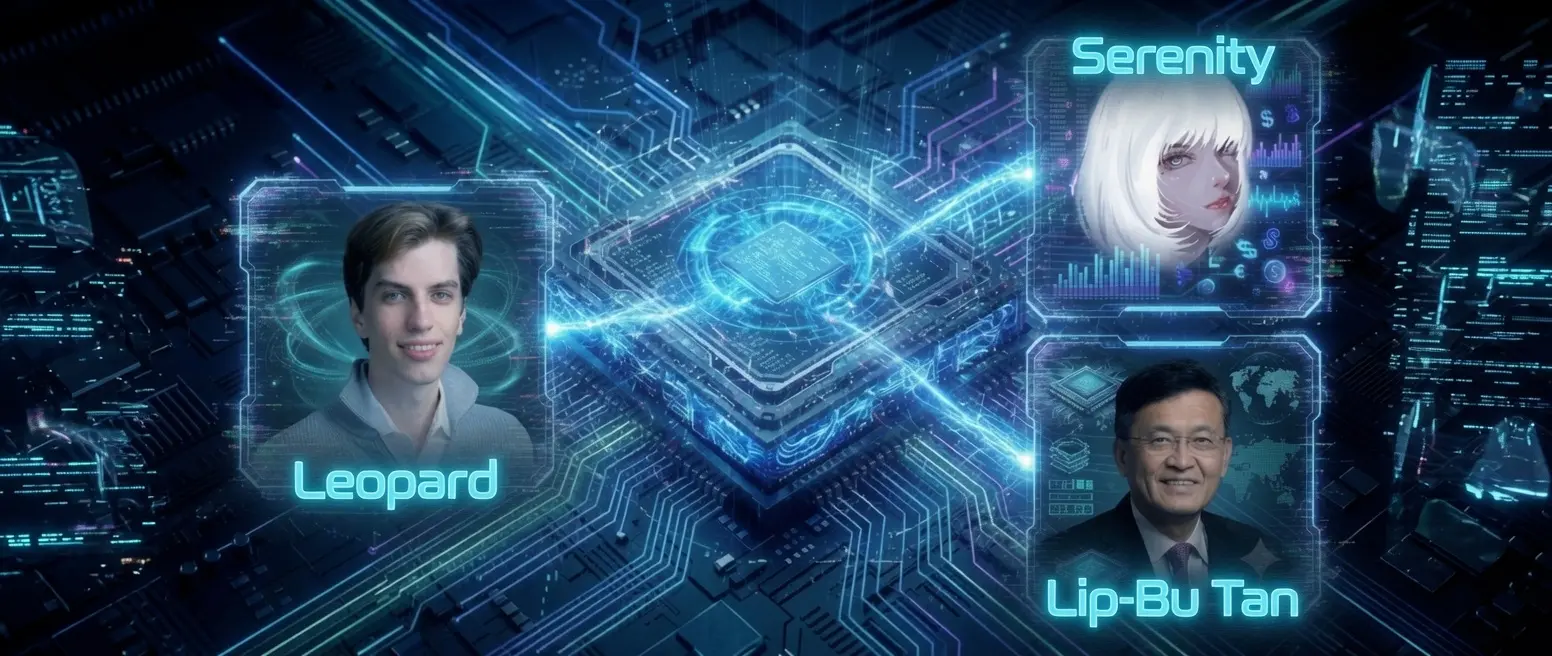

From the White-Haired Stock God to the Billion-Dollar Fund Titan: The Smart People Shorting NVIDIA Are Getting Rich Using the Same Framework

From "white-haired stock god" to billionaire fund manager, those profiting from shorting NVIDIA share a common framework. The article analyzes the critical bottlenecks in the AI hardware supply chain, which have become key investment focal points. The core argument is that the real constraint on the AI boom isn't software or algorithms, but fundamental physical infrastructure. The piece dissects nine major bottlenecks, organized around the lifecycle of an AI accelerator circuit board. *Before the Board*: The pre-manufacturing stage faces constraints in EDA tools, new materials (like GaN, SiC, InP) replacing silicon, and the critical, non-renewable supply of helium for semiconductor fabrication. *On the Board*: The primary bottlenecks are High-Bandwidth Memory (HBM), essential for unleashing GPU power, and advanced packaging (e.g., CoWoS), required to integrate components. Both are in severe shortage. *Between Boards*: Chip-to-chip communication is hitting limits with copper, pushing photonics and optical interconnects (CPO) as the next-gen solution, with NVIDIA heavily investing in this area. *Around the Board*: Power delivery requires new materials (GaN/SiC) for efficient voltage conversion from 48V to sub-1V. High-density AI racks (120kW+) are forcing a shift from air to liquid cooling as the standard. *Beyond the Board*: The ultimate bottleneck is electricity. AI data centers consume power equivalent to mid-sized cities, and grid expansion lags far behind demand, causing project delays and a scramble for power contracts. Prominent investors like Leopold and "white-haired stock god" are heavily betting on these infrastructure bottlenecks. Leopold's fund, for instance, holds no NVIDIA stock but uses massive put options to short the semiconductor sector while going long on power and physical infrastructure. His thesis is that while chip competition may eventually erode margins, the scarcity of foundational elements like electricity is more persistent. The framework's validity is tied to the supply-demand gap. Major new capacity in HBM and photonics is scheduled for 2027-2028, but demand continues to outpace it. Experts like Intel's CEO suggest no relief before 2028. However, the article warns of a potential reversal around 2028-2029 if AI capex slows and new capacity floods the market, turning scarcity into oversupply. Until then, the imbalance persists.

链捕手06/26 01:29

From the White-Haired Stock God to the Billion-Dollar Fund Titan: The Smart People Shorting NVIDIA Are Getting Rich Using the Same Framework

链捕手06/26 01:29

Tidal Investment: We Remain Bullish on the AI Industry Chain, But the Reasons Have Changed

Tidal Investment remains optimistic about the AI industry chain, but the rationale has shifted. The market narrative has changed. While recent large-scale IPOs (e.g., SpaceX) and major fundraising plans by tech giants like Alphabet and Meta have caused some nervousness, this isn't a sign of an AI peak. The focus has moved from the initial question of AI's viability to the sustainability of massive investment cycles. The key players—primarily the major cloud providers—are not slowing down; their capital expenditure (Capex) guidance for 2026 has been increased across the board (e.g., Alphabet to $180B, Amazon to $200B). This investment cycle is proving resilient and difficult to stop. Unlike traditional hardware cycles, current AI Capex is distributed across multiple physical layers—computing, memory, networking, and critically, power infrastructure. Bottlenecks are shifting from chips to elements like electricity, transformers, and cooling systems, which have much longer lead times and cannot be easily pre-built like fiber optics during the dot-com bubble. Supply chain data (e.g., Eaton's 240% YoY data center orders) confirms this broad-based, project-driven expansion. Market concerns are acknowledged but viewed differently. First, while Capex growth currently outpaces revenue growth, raising ROI questions, this mirrors the early scaling phase of cloud computing itself. A change in view would require concrete signals like downward Capex revisions or missed AI product targets, which haven't materialized by mid-2026. Second, comparisons to the 2000 dot-com bust are flawed. That crash was driven by a massive, parallel oversupply of cheap capacity (fiber). The current cycle faces *supply constraints* in critical, capital-intensive physical infrastructure that cannot be overbuilt as easily. In conclusion, the wave of fundraising reflects the next, more complex act of the AI story. Physical bottlenecks and sustained high Capex plans suggest this is not the finale but an ongoing, capital-intensive build-out phase. The script has changed, but the play is far from over.

marsbit06/25 10:36

Tidal Investment: We Remain Bullish on the AI Industry Chain, But the Reasons Have Changed

marsbit06/25 10:36

Tidal Investment: We Remain Bullish on the AI Industry Chain, But for Different Reasons Now

Tidal Investments remains optimistic about the AI industry chain, but the rationale has shifted. The market is concerned about massive concurrent fundraising by tech giants like SpaceX, OpenAI, Alphabet, and Meta, fearing an AI peak. However, the authors argue this signals the next act of AI development, not its end. Capital expenditure (Capex) from major cloud providers (Alphabet, Amazon, Meta, Microsoft, Oracle) continues to surge aggressively into 2026. This investment cycle is more resilient than past hardware cycles due to its scale and complexity. Bottlenecks have shifted from chips to critical physical infrastructure like power grids, transformers, cooling, and data center construction—areas with long lead times and limited capacity for rapid expansion. Supply chain data (e.g., Eaton's orders) confirms substantial, tangible progress. Key market concerns are addressed: 1. **ROI vs. Capex Growth**: While Capex growth outpaces revenue, the authors note cloud giants have historically overcome similar phases through scale. The cycle will only be in danger if Capex guidance is cut, orders are canceled, or AI product demand falters—none of which are currently observed. 2. **Comparison to the 2000 Dot-com Bubble**: Unlike the telecom bubble, where cheap, oversupplied fiber crashed prices, AI infrastructure (especially power) is constrained, customized, and subject to lengthy approvals, making a similar supply glut and crash unlikely. In conclusion, the wave of fundraising reflects the immense, ongoing capital needs for AI's next phase, constrained by slow-moving physical bottlenecks. The AI cycle is not over; the script has simply changed.

链捕手06/25 10:29

Tidal Investment: We Remain Bullish on the AI Industry Chain, But for Different Reasons Now

链捕手06/25 10:29

Stock Soars 1200% on First Day, 80s Sales Engineer's Reversal: From Selling FRP to a Fortune of 29 Billion

On its first day of listing, Zhenbao Technology (stock code "N Zhenbao") surged by 1207%, marking itself as the second "ten-bagger" new stock of the year on the STAR Market. The closing price of 585 yuan propelled it into the top 20 of the A-share market by stock price. Dubbed the "first share of semiconductor consumables," the company is backed by a comprehensive shareholder list including National Integrated Circuit Industry Investment Fund Phase II, SMIC, BOE, and YMTC. Zhenbao's business model focuses on supplying critical consumable components like silicon rings and quartz parts to semiconductor fabs. Unlike expensive core equipment with low repurchase rates, these consumables require frequent replacement as long as production lines are running, generating stable recurring revenue—a key reason for its high market valuation. Founder Wang Bing, an 80s-born former sales engineer, built the company by identifying a supply chain vulnerability: foreign monopolies on high-purity materials led to high costs and unstable deliveries for domestic fabs. Zhenbao's strategy emphasized reliability and speed over absolute top-tier performance, offering products at about 50% of the price with 80% of the performance but 100% on delivery and responsiveness. To achieve this, the company vertically integrated its operations across "raw materials + components + surface treatment," ensuring supply chain control and cost reduction. Its clientele now spans major domestic fabs like BOE and Huahong, as well as international players like SK Hynix and Texas Instruments. However, risks accompany its rapid expansion. The IPO raised approximately 1.605 billion yuan primarily for capacity expansion, which will bring significant annual depreciation costs, potentially impacting future profitability. The company's growth is heavily reliant on sustained high levels of fab expansion, making it vulnerable to the semiconductor industry's cyclical downturns. Other concerns include high accounts receivable (70.83% of revenue at one point in 2025), heavy reliance on its top five customers (over 70% of sales), and questions about the stability and authenticity of its R&D investments, evidenced by volatile R&D headcount and unusual spikes in R&D energy consumption. While the "consumables story" commands a premium, long-term valuation will depend on maintaining high capacity utilization and healthy cash flow conversion.

marsbit06/25 05:57

Stock Soars 1200% on First Day, 80s Sales Engineer's Reversal: From Selling FRP to a Fortune of 29 Billion

marsbit06/25 05:57

Super Spiral Mega-Boom, Micron's Earnings Report Rekindles the Semiconductor Bull Run

On June 25, 2026, Micron Technology released its blockbuster Q3 FY2026 results, significantly exceeding market expectations and reigniting confidence in the semiconductor bull market. Revenue soared to $41.456 billion (vs. ~$35.4B expected), up 346% year-over-year, while GAAP net profit surged nearly 15 times to $28.243 billion. Guidance for Q4 was even more striking, with projected revenue of approximately $50 billion, far surpassing prior estimates. The report highlighted that the AI boom is now fueling growth across Micron's entire product stack, not just HBM. Cloud memory, core data center, SSD, mobile, and automotive businesses all saw revenue growth exceeding 250-600%, with margins hovering around 80%. While HBM4 is already in volume shipment and 2026 capacity is sold out, AI-driven demand is also tightening supply for traditional DRAM and NAND, sustaining a strong pricing cycle. A pivotal development is Micron's shift toward a "demand-first" model. The company disclosed 16 long-term strategic customer agreements (SCAs), most spanning 5 years to 2030, covering about 20% of DRAM and one-third of NAND shipments. These are take-or-pay contracts, with 14 agreements already securing roughly $100 billion in guaranteed future revenue and $22 billion in customer performance assurances. To fulfill this locked-in demand, Micron plans substantial capacity expansion, with Q4 capital expenditure projected at ~$10 billion. This investment, backed by concrete long-term orders rather than cyclical speculation, marks a historic change for the memory industry. Following the earnings release, Micron's stock surged 16% after-hours, lifting the broader semiconductor sector globally. The report served as a powerful signal that AI infrastructure build-out is accelerating, with memory positioned as a central protagonist in the ongoing narrative.

Odaily星球日报06/25 02:43

Super Spiral Mega-Boom, Micron's Earnings Report Rekindles the Semiconductor Bull Run

Odaily星球日报06/25 02:43

From Corning to Ciena: The 10x Opportunity in the AI Optical Communication Chain

The transition from copper to optical communication in AI data centers is creating significant investment opportunities beyond just chipmakers. The entire photonics supply chain, from glass and fiber to connectors and test equipment, is critical. Corning, a key fiber supplier, has locked in multi-billion dollar, multi-year contracts with major cloud providers (Meta, Amazon, Google, Microsoft, OpenAI, NVIDIA), demonstrating pricing power and scale. Its profit growth is outpacing revenue growth. In the interconnect layer, Amphenol benefits from high growth in AI data centers, driven by strategic acquisitions and operational efficiency, while Credo Technology acts as a bridge between copper and optical solutions, though with high customer concentration risk. At the systems level, Ciena enables higher data capacity on existing fiber lines, with a strong backlog and cloud customer adoption. Further upstream, AXT is a bottleneck supplier of key indium phosphide wafers for lasers but faces geopolitical supply chain risks. VEO Solutions provides essential testing equipment for the entire photonics industry. A new pure-play photonics ETF (FOTO) offers a consolidated investment approach. The core thesis is that the physical limits of copper are driving an inevitable shift to optical technologies, with wealth flowing to essential, often overlooked, suppliers across the photonics value chain.

marsbit06/24 07:14

From Corning to Ciena: The 10x Opportunity in the AI Optical Communication Chain

marsbit06/24 07:14

Research Report Analysis: AI Triggers MLCC Supercycle, How Many Years of Gains Can Samsung Electro-Mechanics Enjoy?

Title: Analyst Report: AI Ignites MLCC Super Cycle, How Many Years of Benefits Can Samsung Electro-Mechanics Reap? Summary: Morgan Stanley has sharply raised its target price for Samsung Electro-Mechanics from 920,000 KRW to 2,560,000 KRW, recasting the MLCC (Multi-Layer Ceramic Capacitor) industry from cyclical to structurally bullish. The core thesis is that AI servers demand 10-15 times more MLCCs than traditional servers, with a single AI server requiring up to 440,000 units compared to just 30,000 for a standard server. This drives not only higher volumes but also a shift to more advanced, higher-value MLCCs, boosting Average Selling Prices (ASP). The current supply crunch is seen as structural, not a temporary cyclical mismatch, driven by capacity constraints meeting sustained new demand. High-end MLCC production lines are fully booked, with new lines taking two years to build. Morgan Stanley forecasts MLCC price increases of 30% in H2 2026 and another 30-50% in 2027. Samsung Electro-Mechanics is positioned as the primary beneficiary through three channels: 1) Direct MLCC price hikes, especially for high-margin AI-use MLCCs, driving significant operating margin expansion from 15.7% (present) to 24.5% by 2027. 2) Strong growth in its ABF substrate business from saturated AI/ASIC chip orders. 3) Future revenue streams from new product lines like silicon capacitors and glass substrates. The firm's ROE is projected to surge from 7.5% in FY25 to 32.2% by FY28, with an increased dividend payout. Risks include potential smartphone demand weakness or execution issues in China, while upside catalysts are further price increases and confirmation of higher MLCC content in next-gen AI platforms like Rubin/VR200. The story transforms Samsung Electro-Mechanics from a traditional component supplier into a key AI infrastructure player, with its growth narrative supported by current supply constraints and pricing power.

marsbit06/24 02:49

Research Report Analysis: AI Triggers MLCC Supercycle, How Many Years of Gains Can Samsung Electro-Mechanics Enjoy?

marsbit06/24 02:49

Report Review: Kyber Delay Tear NVIDIA Supply Chain, Only a Few Winners in the PCB Chain

Research Report Analysis: Kyber's Delay Reshapes NVIDIA Supply Chain, Winners Limited in PCB Sector Jefferies maintained a Buy rating on NVIDIA with a $300 price target (42% upside), but delivered a surprising take on the AI server PCB supply chain. The key finding is that the high-density orthogonal backplane PCB, codenamed "Kyber," is likely delayed to 2028 or even canceled. This prompts a downward revision in the global AI PCB market forecast for 2027/2028 by 5% and 11%, respectively, with CCL (copper-clad laminate) forecasts cut by 8% and 16%. While Kyber's postponement extends the lifecycle of the current Oberon architecture and defers some PCB volume, it does not halt the trend towards higher specifications. Migration to advanced materials like M9/M10-grade CCL and PTFE processes continues. The delay reshuffles the winners' list: upstream material suppliers (glass fabric, CCL) benefit from persistent tight supply and strong pricing power. Copper cable vendors gain a reprieve as the threat from PCB-based interconnects recedes. PCB manufacturers, however, face intensified competition, with mid-tier players most vulnerable to being squeezed out. The report stresses that the market adjustment reflects a timing shift, not a demand destruction. Kyber-related orders are deferred, not canceled. NVIDIA's core GPU competitiveness and the AI server growth trajectory remain intact. The analyst's investment thesis prioritizes "high-value-add" and "supply-constrained" segments: upstream materials > NVIDIA > copper cables > downstream PCB manufacturing. The delay accelerates a consolidation within the PCB industry, favoring companies positioned in high-end specifications and critical upstream materials.

marsbit06/23 09:52

Report Review: Kyber Delay Tear NVIDIA Supply Chain, Only a Few Winners in the PCB Chain

marsbit06/23 09:52

From Corning to Ciena: The 10X Stock Opportunities in the AI Optical Communication Chain

From Copper to Light: The AI-Driven Optical Communication Supply Chain and Investment Opportunities The exponential data demands of AI are pushing data centers beyond the physical limits of copper cables, forcing a critical transition to optical communication. This shift from electrical to photonic signals over distances greater than ~3 feet solves heat, power, and bandwidth constraints. The real investment opportunity lies not just in headline chipmakers, but across the entire essential photonics supply chain. **Key Investment Layers & Companies:** * **Glass & Fiber:** **Corning** is a dominant, irreplaceable supplier of advanced fiber to all major cloud/AI players (Meta, Amazon, Google, MSFT, OpenAI, NVIDIA), with multi-billion-dollar, multi-year contracts locked in years ahead of delivery. Its profit growth (93%) far outpaces revenue growth (36%), showing pricing power. * **Interconnects:** **Amphenol**, a consolidating giant in high-speed connectors (both copper and optical), shows robust growth (>80% in AI data centers) and expanding margins post-acquisition. **Credo Technology** bridges old and new worlds, extending copper's life in racks while moving into optics. It has hyper-growth but carries high customer concentration risk. * **Systems:** **Ciena** is a leader in coherent optics, enabling massive data capacity upgrades on existing fiber. It has a massive, growing order backlog ($~7B) and strong ties with cloud providers. * **Upstream & Enablers:** **AXT** produces mission-critical indium phosphide wafers for lasers, creating a supply bottleneck, but faces significant geopolitical/export license risk from its China-based manufacturing. **VEO Solutions** is the essential "picks and shovels" play, providing test equipment needed by every component in the optical chain, regardless of the eventual winner. A new pure-play photonics ETF (**FOTO**) offers a consolidated investment vehicle for this theme, though it is new and small. The core thesis is clear: the move from copper to light is inevitable and accelerating, with wealth creation spreading across this critical, multi-layered supply chain.

marsbit06/23 04:58

From Corning to Ciena: The 10X Stock Opportunities in the AI Optical Communication Chain

marsbit06/23 04:58

活动图片