# Regulation Related Articles

HTX News Center provides the latest articles and in-depth analysis on "Regulation", covering market trends, project updates, tech developments, and regulatory policies in the crypto industry.

Weekly Editor's Picks (0509-0515)

Weekly Editor's Picks (0509-0515): A Weekly Digest to Filter Noise This weekly digest curates deep analysis often lost in fast information flows. Key highlights: * **Macro:** A new "NACHO" (Not A Chance Hormuz Opens) trade emerges on Wall Street, betting on a prolonged closure of the Strait of Hormuz, shifting focus from political rhetoric to fundamental oil market data. * **Investment & Startups:** * Justin Sun discusses his long-term investment theses, highlighting future opportunities in embodied AI, drones, spatial computing, and space exploration. * Anthropic and OpenAI's crackdown on unauthorized stock transfers disrupts the pre-IPO token market, prompting a re-evaluation of its boundaries. * Bitwise analyzes massive capital inflows into new, compliant blockchains like Arc, Canton, and Tempo, tailored for stablecoins and asset tokenization. * A skeptical view questions HYPE's potential for further price appreciation, citing high fully diluted valuation, unlocking token supply, and unclear new buyer demographics. * **AI:** The "Semiconductor Century" report outlines the 2026 AI investment landscape, identifying key players (Nvidia, TSMC, ASML) and catalysts across the semiconductor supply chain, from design to manufacturing. * **Policy & Stablecoins:** The potential CLARITY Act is analyzed for its impact on DeFi. It could trigger massive institutional capital inflows and redirect stablecoin yields, benefiting structured, compliant DeFi protocols like Pendle, Morpho, and Centrifuge. * **CeFi & DeFi:** New tokens like sato and FLOOD, built on Uniswap v4's "Hook" mechanism, are gaining traction. Meanwhile, following the Kelp DAO exploit, Chainlink's CCIP is gaining market share from LayerZero in the cross-chain sector. * **Ethereum:** Grayscale suggests Ethereum's staking reward model needs reform to address issues like reduced fee burns from L2s and potentially excessive ETH lock-up, proposing a reward curve with a cap to benefit ETH's long-term value. * **Weekly Recap:** Summarizes key events including Trump's China visit, new Fed leadership, CLARITY Act progress, notable price movements (ZEC, TON), strong corporate earnings (Circle, Gemini), and institutional Bitcoin accumulation.

marsbit05/16 02:40
Weekly Editor's Picks (0509-0515)

marsbit05/16 02:40

TechFlow Intelligence Brief: South Korean Stock Market Plunges, Trump's Q1 Holdings Revealed

This TechFlow intelligence report covers key developments across AI, crypto, hardware, tech companies, and finance. In AI, Anthropic's valuation surpasses OpenAI, while AWS users face massive bills from runaway Claude API calls, highlighting AI's cost risks. A local AI model executing 'rm -rf' sparks safety debates. Meanwhile, arXiv enforces bans for AI-generated paper errors, and ChatGPT's impact on education grading is questioned. The crypto sector sees a US Senate committee passing a market structure bill, $2B in Bitcoin options expiring, and debates on Bitcoin's seizure resistance and DeFi's value without stablecoin yields. Hardware news includes NVIDIA planning RTX 5090 price hikes and the US approving H200 chip sales to Chinese firms. Tech company updates feature a macOS M5 chip exploit, Apple's iPhone price cuts, a South Korean stock market plunge, and Cisco's record revenue alongside layoffs. In stocks, NVIDIA's market cap hits $5.7T as Trump's Q1 portfolio shifts toward AI infrastructure stocks like NVIDIA and Broadcom. Cerebras' IPO soars, and a Reddit user reports massive gains on a leveraged ETF, fueling discussions on an AI bubble. Macro developments show precious metals falling due to Indian tariff hikes and strong US data. The Iran conflict disrupts Hormuz Strait shipping, affecting oil supplies. New tech includes 'haptic dreaming' to improve robot task success and Meta's Ray-Ban Display glasses with virtual handwriting. The underlying theme is AI's dual reality: creating both massive unexpected costs and immense market valuations. As technology advances rapidly, academia, markets, and regulators are all grappling to find a new equilibrium between innovation, risk, and control.

marsbit05/15 10:59

TechFlow Intelligence Brief: South Korean Stock Market Plunges, Trump's Q1 Holdings Revealed

marsbit05/15 10:59

Bankless Interview: Private Equity Insiders Reveal the Inside Story of Anthropic's Primary Market Trading

**Bankless Interview: A Private Equity Veteran Exposes the Dark Side of Anthropic's Pre-IPO Trading** In a Bankless podcast, Patagon founder Dio Casares reveals the opaque inner workings of the massive secondary market for shares in pre-IPO giants like Anthropic. The market, driven by private SPVs (special purpose vehicles), brokers, and even informal networks, sees hundreds of billions in notional value changing hands, with single-deal fees as high as 10%. However, an estimated 10-20% of transactions involve fraud or fabricated share certificates. Intermediaries often profit more from these deals than from their core investment businesses. Two types of "secondary" exist: company-sanctioned trades (like employee tender offers) that bring new money to the company, and disruptive "gray market" trades on platforms like Hive or Forge, which companies like Anthropic actively fight. The latter creates pricing chaos and complicates primary fundraising. A major risk involves multi-layered, nested SPV structures. When a company like Anthropic finally IPOs, delays in distributing shares down these chains, combined with discretionary powers of fund managers (GPs) to hold or sell, could trigger a wave of lawsuits and settlement nightmares lasting years. For small investors in "tokenized" versions of these assets, transparency is minimal, and due diligence is often impossible. Casares advises extreme caution, suggesting investors trust their gut and exit if something feels wrong. He warns that the post-IPO period will be a major "reckoning" for this wild and largely unregulated market.

marsbit05/15 09:44

Bankless Interview: Private Equity Insiders Reveal the Inside Story of Anthropic's Primary Market Trading

marsbit05/15 09:44

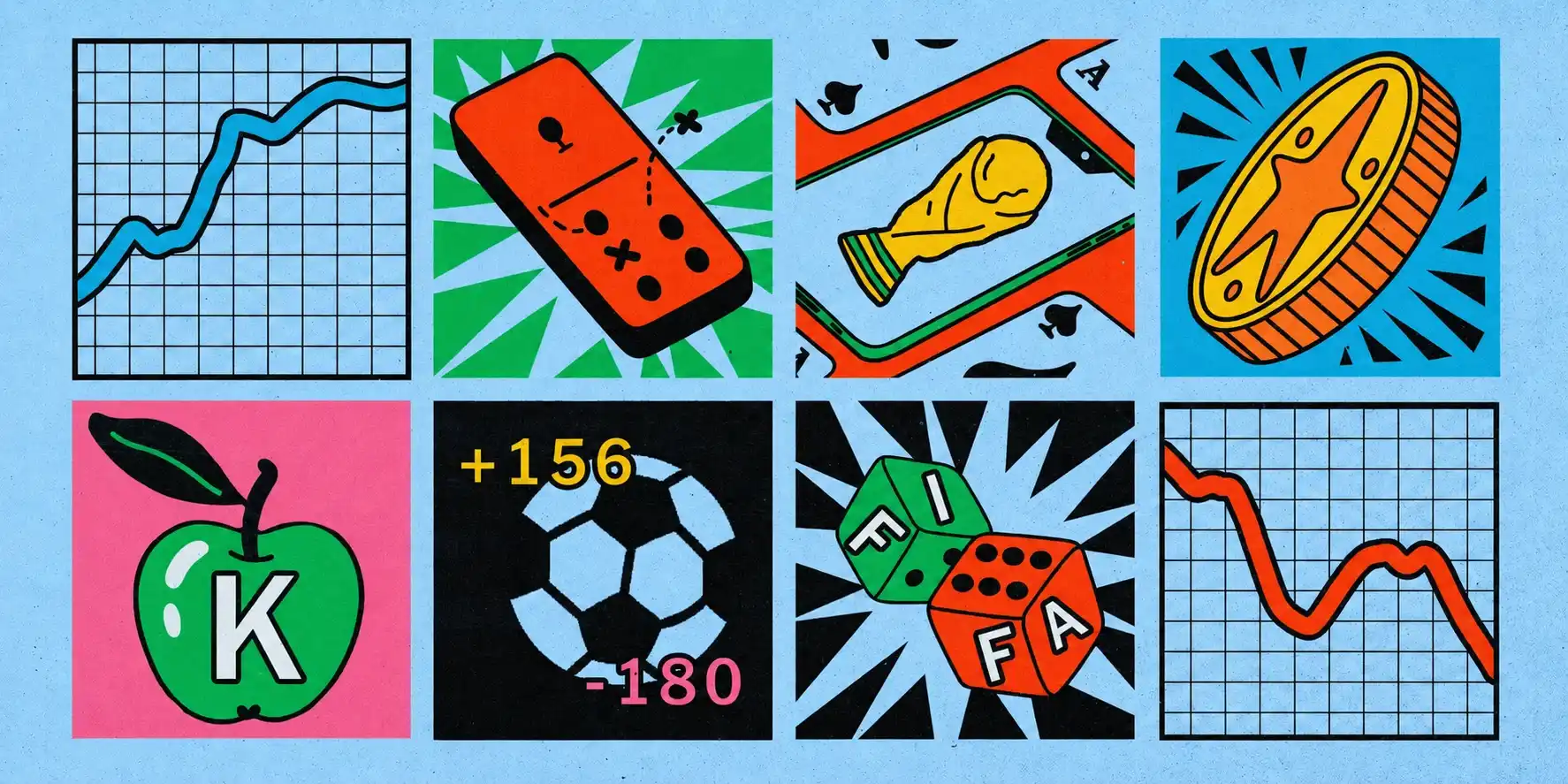
World Cup Approaches, Prediction Markets Face a Major Test

The 2026 FIFA World Cup represents a major public test for sports prediction markets like Polymarket and Kalshi, which have grown significantly by offering tradable markets on event outcomes. This global event, hosted by the US, Canada, and Mexico, concentrates risks related to sports integrity, cross-border operations, and gambling ecosystems. A key concern is the potential for insider trading on non-public information (e.g., injuries, lineups), which could be exploited in granular prediction markets. FIFA's choice of its official prediction market partner, ADI Predictstreet, has raised significant doubts. The platform, relatively unknown, has faced scrutiny over the integrity of its executives—including past insider trading allegations and associations with a major EU corruption scandal—its rapid licensing in Gibraltar, and the fact its product was not yet live at the time of the announcement. This partnership begins with a "trust deficit." FIFA itself carries historical corruption baggage, and its deepening ties with betting and data industries fuel concerns about maintaining sporting integrity. While FIFA has established monitoring systems, their effectiveness against potential insider trading across decentralized global prediction markets remains unproven. Major US-based prediction platforms have updated rules to prohibit trading based on confidential information. However, the World Cup's complex ecosystem of federations, teams, and officials makes enforcement far more challenging than in domestic leagues. The event will not determine the fate of prediction markets but will critically test whether they can be integrated as a regulated event-trading infrastructure or remain a high-risk gambling-adjacent activity within global sports.

marsbit05/15 05:11

World Cup Approaches, Prediction Markets Face a Major Test

marsbit05/15 05:11

Bitwise: Why Are Top-Tier Capitals Frenziedly Betting on New Public Blockchains? The Answer Lies in These Three Points

Recently, a wave of major funding announcements for new public blockchains like Arc, Canton, and Tempo signals a significant industry shift. This article analyzes the driving forces behind this surge. Firstly, regulatory clarity is a key catalyst. These massive investments, including Circle's Arc ($222M), Digital Asset's Canton ($300M), and Stripe's Tempo ($500M), all followed the US passage of the *Genius Act* in July 2025. This suggests that clear legislation is unlocking institutional capital. The anticipated, broader *Clarity Act* could further accelerate growth, particularly in tokenization and compliant infrastructure. Secondly, built-in privacy is emerging as a critical design feature. Unlike Ethereum or Solana, these new chains natively support confidential transactions. This directly addresses real-world business needs, where public transparency can be a liability for corporate dealings or personal salary data, making privacy a potential killer application. Finally, the entry of traditional giants marks a new competitive phase. These projects are backed by major firms: Arc by Circle, Canton by a consortium including Goldman Sachs and Nasdaq, and Tempo by Stripe with partners like Visa. While crypto-native projects remain strong contenders, this institutional involvement brings substantial capital, execution capability, and operational rigor. In conclusion, the convergence of regulatory progress, demand for privacy, and competition from established financial and tech players is rapidly reshaping the blockchain landscape, pushing innovation and expanding the industry's boundaries.

marsbit05/14 09:20

Bitwise: Why Are Top-Tier Capitals Frenziedly Betting on New Public Blockchains? The Answer Lies in These Three Points

marsbit05/14 09:20

活动图片