# Future of Work Related Articles

HTX News Center provides the latest articles and in-depth analysis on "Future of Work", covering market trends, project updates, tech developments, and regulatory policies in the crypto industry.

Dan Koe's New Essay: Escaping the Fate of the Wage Slave, How to Survive the AI Replacement Wave?

Dan Koe argues that the true threat in the AI era isn't technology itself, but a reliance on others for one's livelihood and happiness. The core problem is "wage slavery"—spending life on unfulfilling work. To survive and thrive, one must escape this by building their own enterprise. The key is developing five elements: Agency (initiative), Taste (discernment), Persuasion, Persistence, and Iteration. These boil down to problem-solving skills and experiential knowledge, which cannot be learned passively but only through doing your own projects. The solution is to become "unemployable" by shifting your identity. This requires: 1) Radically changing your environment to force growth, 2) Choosing a medium (like content creation) that provides real feedback through trial and error, and 3) Mastering either code or, preferably, media (content). Content creation is more valuable because its subjective nature and need for human perspective create a durable advantage over generic AI output. To start, define your life's work by answering foundational questions about your innate knowledge, unique abilities, and contrarian beliefs. Then, immediately act by publishing your first piece of content. The cycle of creating, receiving feedback, and iterating is the essential path to developing the skills needed for an independent, meaningful career and financial resilience.

marsbit06/23 12:27

Dan Koe's New Essay: Escaping the Fate of the Wage Slave, How to Survive the AI Replacement Wave?

marsbit06/23 12:27

Interview with 7 Ordinary Professionals: After AI Arrived, How Are You Doing?

This article interviews seven professionals from diverse fields like Web3, bulk chemical trading, digital agriculture, and traditional wholesale to examine the impact of AI on their work. Key themes emerge from the discussions. AI has become integral to their workflows, primarily for increasing efficiency in tasks such as coding, content creation, research, and data analysis. Individuals across roles, from developers to managers, report that AI tools like ChatGPT and Claude have significantly reduced workloads and accelerated learning, creating opportunities for "super individuals" or one-person teams. However, this efficiency comes with a double-edged sword. It intensifies competition, pushing professionals to constantly learn new tools and adapt, leading to widespread anxiety about job security and a heightened pressure to keep pace. Interviewees anticipate significant job reductions in roles like administrative support, finance, HR, customer service, and some creative fields. A recurring view is that AI acts as a "great equalizer," amplifying the capabilities of those who use it effectively while leaving others behind, potentially deepening polarization. Despite AI's capabilities, interviewees identify enduring human strengths. AI struggles with tasks requiring deep contextual understanding, complex judgment in areas like risk assessment and system stability (especially in finance/Web3), nuanced human communication, and handling exceptions in logistics and manufacturing. These areas remain firmly in the human domain. Consequently, many professionals are refocusing their career strategies. They plan to evolve from task executors into "complex system owners," "super coordinators" managing AI agents, or specialists in high-level areas like business context, risk control, product design, and personal branding. In summary, the article portrays AI not as an optional tool but as a transformative force reshaping job demands. While it automates routine work, it also creates new forms of pressure and competition. The future, as seen by these professionals, belongs to those who can strategically integrate AI to augment uniquely human skills like judgment, responsibility, and strategic oversight.

marsbit06/01 08:17

Interview with 7 Ordinary Professionals: After AI Arrived, How Are You Doing?

marsbit06/01 08:17

The AI Industrial Revolution: Where Are We Now?

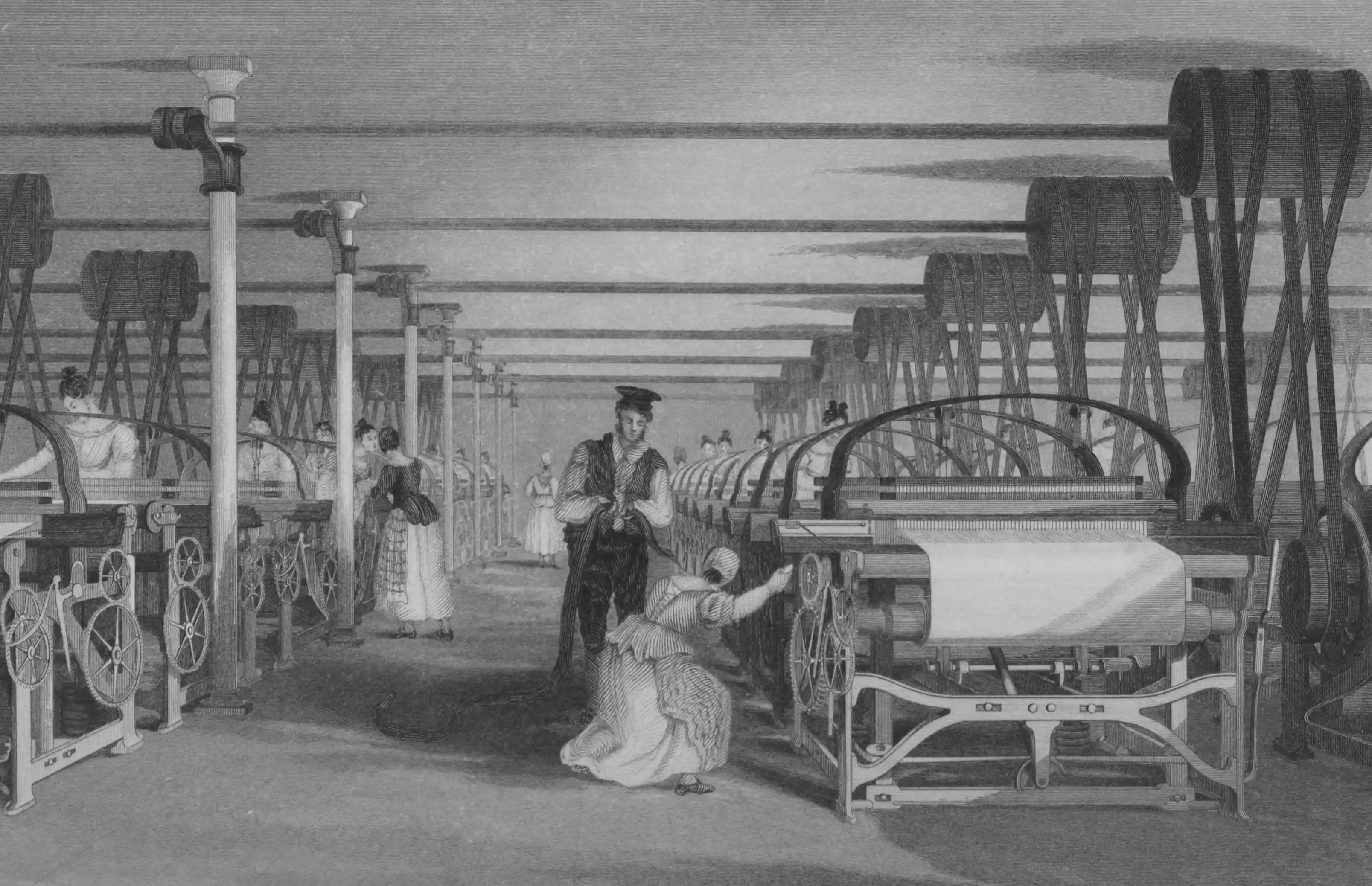
This article explores the current stage of the AI industrial revolution, arguing we are still merely attaching new tools to old workflows rather than fundamentally redesigning production. The author compares this to the early Industrial Revolution, where factories simply replaced waterwheels with steam engines without changing their core structure. Similarly, today we embed AI chat windows into existing software but leave organizational processes unchanged. While massive investment floods into AI infrastructure (data centers, chips), akin to railway manias of the past, the real transformation lies in "dismantling the old workshop"—reorganizing companies around AI. Examples include Notion's use of hundreds of AI Agents and Y Combinator's experiments with self-improving AI systems that operate autonomously. The author notes a critical gap: while China has vast AI user growth, few companies have rebuilt core workflows. AI is beginning to impact entry-level jobs, and early adopters are gaining a compounding advantage. The conclusion is that the pivotal moment will not be the invention of better models, but when organizations decide to tear down old structures and rebuild around AI, shifting the bottleneck from human coordination to computing power. The future workplace and job titles are yet to be defined, but the imperative is to move away from legacy processes and position oneself where the new "railway" is being built.

marsbit05/27 01:32

The AI Industrial Revolution: Where Are We Now?

marsbit05/27 01:32

Google CEO Admits Lagging Behind in Coding

Google CEO Sundar Pichai acknowledged in a recent interview that Google's Gemini AI models are currently "lagging behind" in coding capabilities, particularly for complex, long-horizon tasks requiring advanced developer expertise. He noted the field is advancing at an "unprecedented" pace, where 30-60 days now brings changes equivalent to five years in the past. Pichai expressed that achieving Artificial General Intelligence (AGI) now seems closer than previously imagined due to rapid progress. While highlighting strengths in text, multimodal, and reasoning tasks, Pichai admitted competitors like Anthropic and OpenAI have focused more intently on coding. He emphasized Google's commitment to catching up, citing internal tools like Antigravity 2.0 and the newly released Gemini 3.5 Flash, which aims to address previous shortcomings. Regarding Google Search's AI-driven overhaul, Pichai stated changes will be gradual to align with user needs, not disrupt the core search experience or its advertising model. He addressed public AI anxiety as understandable, given the technology's potential to reshape jobs and society, but remained optimistic about AI augmenting human capabilities and creating new opportunities. Pichai stressed the need for broad societal dialogue and responsible development as AI approaches more advanced, potentially recursive self-improvement stages. He affirmed Google's long-term commitment to leading in AI while navigating its profound implications responsibly.

marsbit05/24 08:28

Google CEO Admits Lagging Behind in Coding

marsbit05/24 08:28

The First Large-Scale Strike in the AI Era Comes from the Factories That Build AI

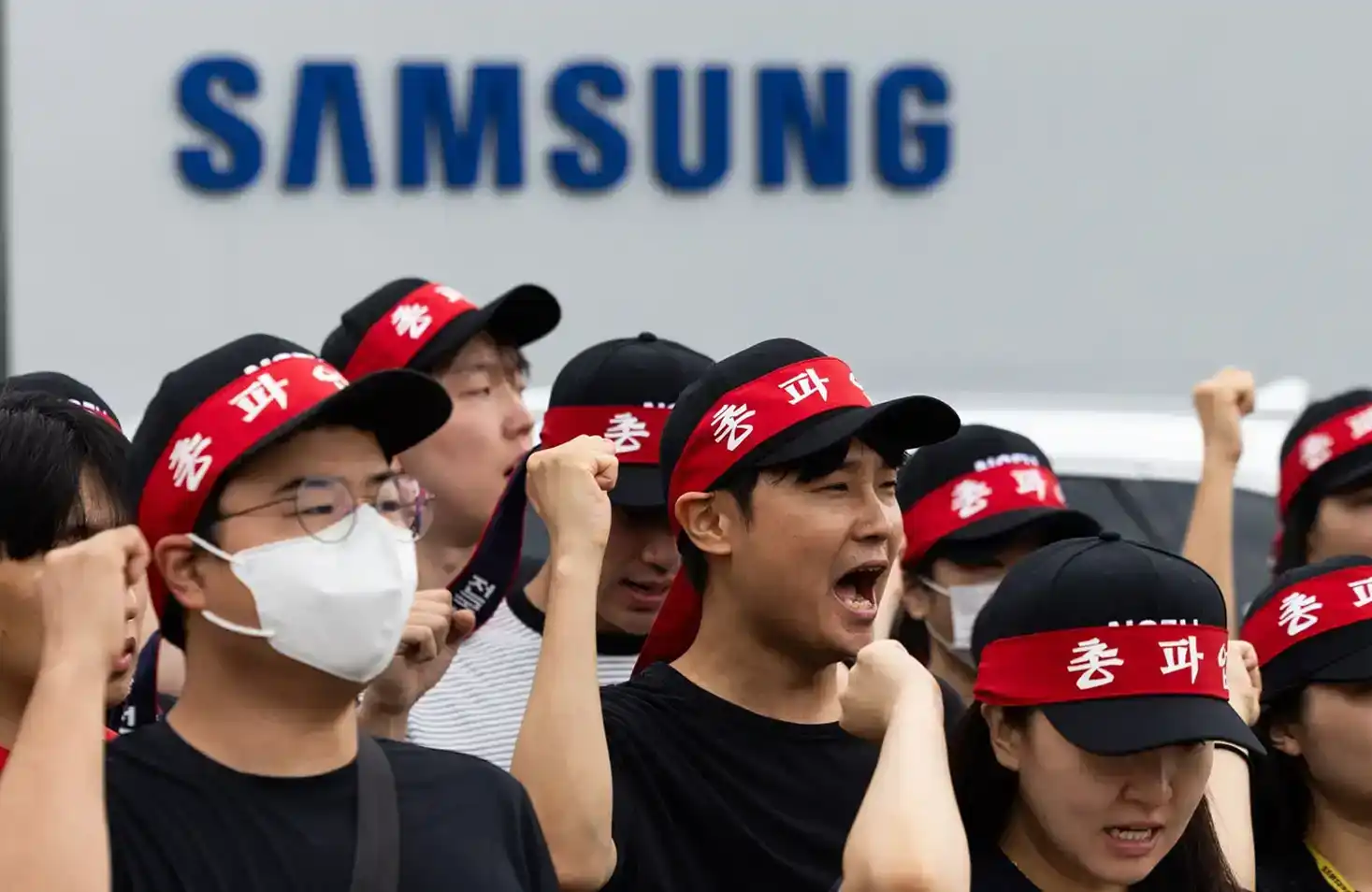
The article describes a potential large-scale strike at Samsung Electronics, narrowly averted in May 2026 after a temporary agreement. The strike, planned by the company's union, would have been the first major labor action in the AI era targeting a core AI supply chain player. Samsung, alongside SK Hynix, produces roughly two-thirds of the world's memory chips, critical components for AI training and data centers like HBM. An 18-day strike could have disrupted global supply, affecting prices and production for tech companies and cloud providers. For South Korea, where semiconductors constitute about 35% of exports and Samsung represents a quarter of the stock market's value, such an action threatens national economic stability. The union's demands include a 7% base wage increase and, crucially, a clear, substantial profit-sharing model. They want 15% of annual operating profit as an employee bonus pool and the removal of the existing cap (about 50% of annual salary). This frustration is amplified by seeing rival SK Hynix successfully negotiate a deal granting employees 10% of operating profit as bonuses, with reports suggesting some workers could receive bonuses equivalent to hundreds of thousands of dollars. The conflict stems from deeper issues in South Korea's chaebol (conglomerate) system, where rapid national industrialization often prioritized corporate growth over labor rights. Samsung long maintained a "no union" policy until a 2020 apology from its leader. The article argues this strike highlights a fundamental tension in the AI age: as technology advances and corporate profits soar—often driven by AI—the workers who build the infrastructure are demanding a fair share and dignity, rejecting the notion that they are mere expendable components in a machine that "must not stop." The piece concludes that the true test of the AI era isn't just computational power, but whether the people who build the future can secure a stable and valued place within it.

marsbit05/21 05:16

The First Large-Scale Strike in the AI Era Comes from the Factories That Build AI

marsbit05/21 05:16

YC Partner: How to Build a Self-Evolving AI-Native Company

YC Partner Tom Blomfield argues that the future lies in building AI-native companies designed as self-evolving systems, not just applying AI to traditional, hierarchical "Roman legion" structures. The core idea is to extract and codify all organizational knowledge—scattered across emails, Slack, documents, and human minds—into a central, AI-readable "company brain." This enables the creation of recursive AI loops that sense changes (from emails, support tickets, data), make decisions, execute via tools, and learn from feedback, all with minimal human intervention. YC exemplifies this with an agent that monitors failed queries, autonomously diagnoses the issue (e.g., needing a new database or index), writes code, submits it for review, and deploys fixes—optimizing the company while founders sleep. This shift redefines organizational structure: the bottleneck becomes token usage and context quality, not headcount. Middle management for coordination is largely obsolete. The critical human roles are individual contributors (ICs) and those handling high-risk, real-world judgments at the system's edge. Key steps include recording all organizational activity for AI, creating self-improving artifacts (like an AI-generated, living handbook), and treating internal software as temporary and disposable, while preserving valuable business context and data. The fundamental question for founders is whether to build their company as this new type of intelligent, self-optimizing system from the start.

marsbit05/20 06:36

YC Partner: How to Build a Self-Evolving AI-Native Company

marsbit05/20 06:36

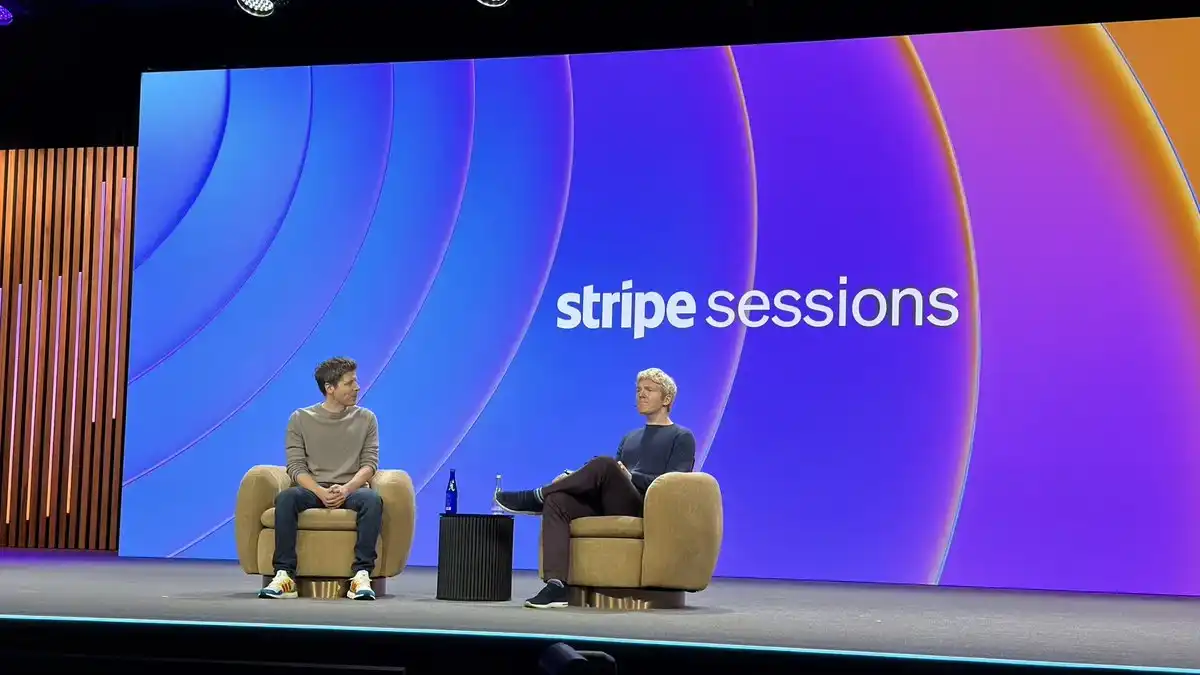
Sam Altman in Conversation with Stripe CEO: The Era Where Ideas Are More Valuable Than Code Has Arrived!

At Stripe's 2026 annual conference, OpenAI CEO Sam Altman joined Stripe CEO Patrick Collison for a fireside chat. Altman shared key insights on the AI revolution, emphasizing that we are in a period of rapid takeoff, with AI capabilities advancing weekly. He outlined OpenAI's evolution from a research lab to a product company and now a large-scale "token factory" – a low-margin, utility-like provider of intelligence. Altman stressed that the most successful AI adopters have CEOs who personally automate workflows, driving organizational change. A significant shift is the rise of the "idea person." Altman now actively invests in founders with deep product insight but no coding skills, as AI tools enable them to build. He advocates for "suspension of disbelief" in investing, planning long-term (e.g., 20-year infrastructure deals) while focusing on a clear 2-year product roadmap. Beyond products, Altman is most excited about AI accelerating scientific discovery, shortening decade-long research cycles in complex diseases and driving breakthroughs in materials science and energy. He predicts the first profitable fusion reactor could emerge within five years, spurred by AI's compute demands. Finally, Altman defended OpenAI's philosophy of iterative public deployment over elite control, believing democratizing AI access is crucial to avoid centralized power and unlock global innovation.

marsbit05/15 13:52

Sam Altman in Conversation with Stripe CEO: The Era Where Ideas Are More Valuable Than Code Has Arrived!

marsbit05/15 13:52

活动图片