# CFTC Related Articles

HTX News Center provides the latest articles and in-depth analysis on "CFTC", covering market trends, project updates, tech developments, and regulatory policies in the crypto industry.

a16z Crypto: Marc Andreessen and Chris Dixon Explain Why the 'CLARITY Act' Is Urgently Needed

The CLARITY Act proposes a critical federal regulatory framework for the U.S. crypto market. Currently, a lack of clear rules creates uncertainty, hinders innovation, and leaves consumers exposed. The Act would clearly divide regulatory jurisdiction between the SEC and CFTC, mandate disclosures and insider restrictions for projects, and bring exchanges and other intermediaries under a comprehensive oversight system akin to traditional finance. This clarity is urgently needed as crypto has evolved from a niche interest into a major industry with institutional involvement. Clear, lasting rules would protect consumers by requiring proper audits, custody of client assets, and anti-fraud measures for registered platforms, helping prevent failures like FTX. Regulatory ambiguity currently punishes compliant U.S. firms with high costs while rewarding offshore competitors who bypass rules, creating a race to the bottom. The Act addresses national security by applying existing anti-money laundering rules to crypto intermediaries and distinguishes between legitimate privacy and illicit concealment. It also resolves banking sector concerns by prohibiting interest payments on stablecoin balances while permitting transaction-based rewards. For developers, it establishes liability based on intent and direct assistance to crime, not for unforeseeable downstream misuse of open-source software. Regarding securities law, the Act introduces a risk-based framework. Assets begin under SEC oversight when a network is centralized, transitioning to CFTC commodity regulation if it becomes sufficiently decentralized, with clear definitions to avoid constant litigation. Without the Act, regulatory uncertainty driven by shifting agency interpretations will persist, discouraging long-term investment in the U.S. and pushing development offshore, reducing American oversight and economic leadership. Support for the bipartisan bill comes from lawmakers, law enforcement (like the Fraternal Order of Police), and major financial institutions. Ultimately, the CLARITY Act is essential to establish a stable, sensible regulatory environment that fosters responsible innovation, enhances consumer protection, and ensures U.S. leadership in shaping the future of financial technology.

marsbit08/07 07:26

a16z Crypto: Marc Andreessen and Chris Dixon Explain Why the 'CLARITY Act' Is Urgently Needed

marsbit08/07 07:26

Utah State Judge Denies Kalshi's Motion to Apply Federal Protection Against Gambling Laws

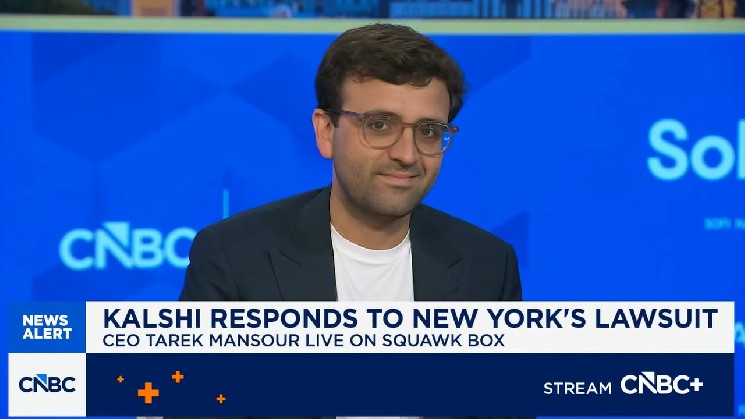
A U.S. district judge in Utah, Robert J. Shelby, rejected Kalshi's motion for a federal preemption defense against Utah's gambling laws and denied the prediction market's request for an injunction. The judge ruled the Commodity Exchange Act (CEA) does not preclude Utah from enforcing its anti-gambling statutes. He found the CEA's jurisdiction provisions ambiguous and stated courts typically do not find federal preemption in such situations. He also dismissed Kalshi's key argument that the Dodd-Frank Act established federal supremacy over derivatives trading as an "implausible" reading of congressional intent, noting gambling is traditionally regulated by states. Utah's constitution strictly prohibits gambling, with online betting qualifying as a felony. A new state law adding event outcome contracts to its gambling definition prompted Kalshi's lawsuit after the governor criticized prediction markets. Utah's attorney general declared the ruling a victory, stating Kalshi "bet that clever branding would defeat Utah law. Kalshi lost, and Utah won." Kalshi's spokesperson stated the company disagrees and the fight in Utah is not over; its contracts remain available there with no enforcement action taken yet. The New York Attorney General cited this ruling in opposing a CFTC injunction request after New York sued Kalshi last week. A gaming attorney noted an expected appeal to the Tenth Circuit would bring prediction market litigation to seven federal appellate circuits, a scale often leading to Supreme Court review. Kalshi has seen mixed results, with a Washington state court recently issuing an injunction against it but securing protections in New Jersey and Minnesota.

cryptonews.ru08/06 11:06

Utah State Judge Denies Kalshi's Motion to Apply Federal Protection Against Gambling Laws

cryptonews.ru08/06 11:06

Senate to Vote on CLARITY Act Before August Recess, Lummis Says

U.S. Senator Cynthia Lummis (R-WY), chair of the Senate's digital assets subcommittee, stated the Senate may work past Friday and through the weekend to secure a vote on the CLARITY Act before the August recess. This vote would force senators to take a public position on the bill. Over 300 pages of amendments, requested by Democrats, have been prepared after 11 months of negotiations, with final discussions ongoing regarding CFTC jurisdiction, law enforcement provisions, and ethics rules for senior federal officials. Key unresolved issues, per Democratic staff, include securities protection, illicit finance, national security, and presidential conflicts of interest. A bipartisan counterproposal, allowing state attorneys general to enforce federal crypto ethics rules, has been sent to President Trump, who reportedly agreed to broader restrictions than those applied to previous presidents. Lummis asserted that if the bill fails, it will be due to Democratic opposition. Regulators have expressed support. CFTC Chairman Michael S. Selig endorsed congressional action for clearer digital asset rules, while SEC Chairman Paul Atkins expressed optimism about the bill's passage. The CLARITY Act aims to divide oversight between the CFTC and SEC, providing distinct regulatory frameworks for cryptocurrencies and securities. Proponents argue this clarity will help retain crypto companies, capital, and innovation within the United States, preventing an exodus to jurisdictions like Switzerland or Singapore. The approaching recess deadline increases pressure to secure the 60 votes typically needed. With Republicans holding 53 seats, Democratic support is crucial. A Senate vote would lock in each legislator's stance before negotiations with the House on a final bill text.

cryptonews.ru08/06 10:41

Senate to Vote on CLARITY Act Before August Recess, Lummis Says

cryptonews.ru08/06 10:41

US Senators Target Wildfire Betting in New Push Against CFTC Rules

A group of nine U.S. senators has urged the Commodity Futures Trading Commission (CFTC) to restrict wildfire prediction contracts, arguing they allow traders to profit from disasters. In an August 3rd letter led by Sen. Jeff Merkley (D-Ore.), the lawmakers requested answers from CFTC Chair Rostin Behnam by August 14th. The senators, representing states impacted by recent wildfires, expressed concern that betting on fires' duration, spread, or property damage trivializes community suffering and creates a perverse incentive for arson. They cited over $1.2 million in trading volume on contracts related to California's Palisades and Eaton fires on the Polymarket platform as a catalyst for their inquiry. While acknowledging no confirmed cases of arson linked to such markets, the letter draws a parallel to insider trading risks. Polymarket defended its markets as sources of timely information for understanding evolving events, not causes of tragedy. The senators questioned if the CFTC, currently developing new rules, plans to ban wildfire contracts as contrary to the public interest, given its authority to prohibit contracts on terrorism, assassination, or gambling. Although wildfires aren't explicitly mentioned in law, the lawmakers seek a preemptive move, warning it's only a matter of time before U.S.-based markets offer similar contracts. This follows a prior, broader request from Merkley in April to ban election and war-related contracts, which the CFTC did not adopt, instead proposing a case-by-case review process in June.

cryptonews.ru08/05 08:50

US Senators Target Wildfire Betting in New Push Against CFTC Rules

cryptonews.ru08/05 08:50

活动图片