# CFTC Related Articles

HTX News Center provides the latest articles and in-depth analysis on "CFTC", covering market trends, project updates, tech developments, and regulatory policies in the crypto industry.

Interview with Kalshi's Founders: Sports Trading Accounts for 95%; Disagreement on Philosophy with Polymarket

Interview with Kalshi Founders: Sports Trading at 95%, Disagreement with Polymarket on Philosophy Kalshi, a US-based prediction market platform founded in 2018 by MIT graduates Tarek Mansour and Luana Lopes Lara, has reached a $220 billion valuation. Operating under CFTC regulation, the platform allows users to trade on event outcomes, from sports to politics. Currently, sports-related trading dominates, accounting for about two-thirds of volume, down from 95% last year. Mansour argues this liquidity boosts other categories like crypto and politics, where major events can see $50-100 million in volume. He defends the concept of "financializing everything," stating markets transform partisan debates into objective, incentive-aligned systems for truth-seeking. A key point of contention is the regulatory approach. Mansour emphasizes Kalshi's commitment to a compliant path, contrasting it with rival Polymarket, which he accuses of operating without proper safeguards. He views established financial platforms like Robinhood and CME as his real competition. The industry faces legal challenges, including a lawsuit from New York's Attorney General alleging illegal gambling, and scrutiny over potential insider trading. Kalshi cites identity verification, surveillance systems, and full transparency as its defenses. On management, Mansour describes a flat, non-hierarchical structure adapted from his upbringing in Lebanon, focusing on agility. He credits his success to consistent, extreme effort. In rapid-fire questions, Mansour highlighted a trade on computing power prices, uses ChatGPT to analyze Kalshi's own election data, and advises young entrepreneurs to experiment boldly and avoid most outside advice.

marsbit08/11 08:57
Interview with Kalshi's Founders: Sports Trading Accounts for 95%; Disagreement on Philosophy with Polymarket

marsbit08/11 08:57

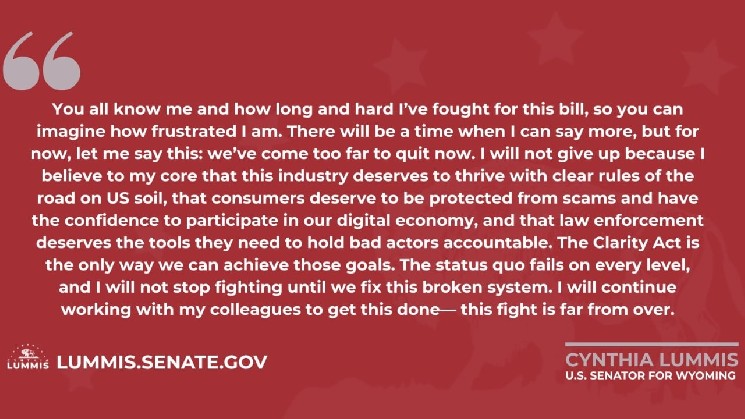
CLARITY Act May Not Pass This Year: Grayscale Assesses the Chances

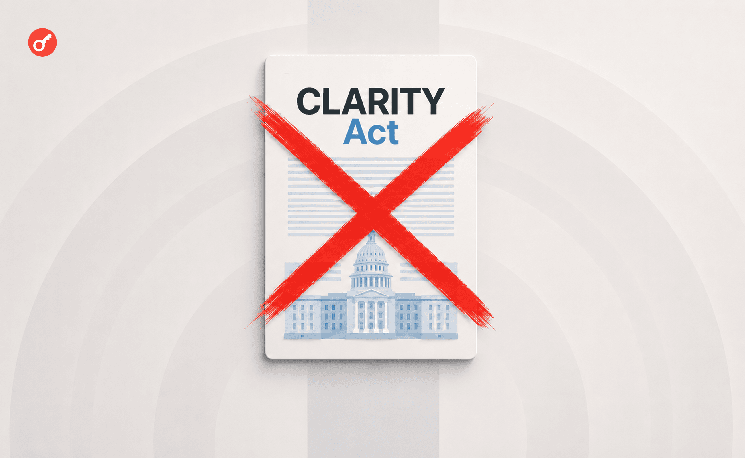
The chances of the CLARITY Act passing in the U.S. in 2026 have decreased after the Senate postponed a vote to September, according to Grayscale's Zach Pandl. While the crypto industry will continue to develop without new comprehensive legislation, aided by SEC and other regulators, the lack of clear rules may push some investors and developers to move activity outside the U.S. The CLARITY Act aimed to establish a comprehensive regulatory framework for digital assets, covering capital raising, tokenized securities, crypto intermediaries, and consumer protections. Pandl notes its failure won't immediately impact major blockchains, Bitcoin's store-of-value demand, or stablecoin payments, as the industry has operated for nearly 17 years without such a law. However, regulatory uncertainty could hinder new U.S. investments and business development. The bill has procedurally advanced, but observers like entrepreneur Mark Chadwick and Digital Assets' Patrick Witt deem passage unlikely this year due to a tight congressional calendar and the need for Democratic support. They warn that if consensus isn't reached by mid-September, the opportunity may be lost. Even without the CLARITY Act, the U.S. market has seen regulatory updates on custody, banking access, and crypto products. Grayscale and analysts like those at Bernstein expect the SEC and CFTC to continue addressing regulatory gaps, particularly for tokenization, DeFi, and real-world assets (RWA), ensuring the industry's continued evolution.

cryptonews.ru08/09 11:21

CLARITY Act May Not Pass This Year: Grayscale Assesses the Chances

cryptonews.ru08/09 11:21

活动图片