# Capital Related Articles

HTX News Center provides the latest articles and in-depth analysis on "Capital", covering market trends, project updates, tech developments, and regulatory policies in the crypto industry.


Believing in the Capital Market: The Essence and Core Value of Cryptocurrency

The article "Believing in the Capital Market: The Essence and Core Value of Cryptocurrency" argues that the true foundation of the crypto industry is not technological utility or capital manipulation, but faith and consensus, forming what the author terms a "faith capital market." The author posits Bitcoin as a modern religion, drawing parallels to traditional faiths: it has a creator (Satoshi Nakamoto), a foundational text (the whitepaper), core tenets (e.g., the collapse of the modern financial system). However, its key differentiators are its decentralized consensus formation, internet-native propagation through memes, and a unique system where acts of "faith" like running a node or holding BTC are rewarded with both spiritual and material gains (price appreciation). The piece explores the double-edged sword of secularization. While it expands influence (like Christmas for Christianity), in crypto, it attracts speculators who dilute the core faith, leading to industry-wide "narrative failure" and a loss of purpose. The author critiques the industry's "technology myth," arguing that the relentless pursuit of faster blockchains with more utility is a self-destructive distraction from crypto's core value: decentralized consensus on value. The proposed savior is not more technology, but meme coins—or more accurately, "faith assets." True faith assets, like $SPX or $NEET, are not mere jokes; they are new religions with clear doctrines that galvanize communities around shared beliefs, mirroring Bitcoin's original role. The author concludes that the market's essence is this faith capital, and its future resurgence depends on recognizing and nurturing these belief-based assets, not on technological specs. The piece is a call to return to the foundational belief that value is derived from collective, decentralized consensus.

marsbit12/23 07:22

Believing in the Capital Market: The Essence and Core Value of Cryptocurrency

marsbit12/23 07:22

Founder's Playbook: Story is Leverage, No Product is Just Self-Indulgence

Founder's Playbook: Story as Leverage, No Product is Just Self-Indulgence Many marketing efforts in crypto fail because founders don't know how to "tell stories." A story is the lasting impression a brand leaves—it's the emotional resonance and mindshare accumulated over time. Examples include Apple's "Think Different" and Nike's "Just Do It." Founders often mistake media exposure, event sponsorships, or investor announcements for storytelling. But these are not stories. True storytelling requires careful cultivation and cannot be entirely outsourced. In the attention economy, storytelling has been reduced to algorithmic dopamine hits, but it remains a powerful form of leverage. Visionaries like Masayoshi Son, Elon Musk, and Steve Jobs used stories to drive capital formation and emotional engagement. However, storytelling without a product is overvalued. Viral marketing may create buzz, but without a usable, sustainable product, it ultimately fails. In crypto, many projects generate hype on social media but offer users no clear utility, often confusing them with jargon. Token price, functionality, and use cases should each tell different stories through appropriate channels. Effective storytellers—like those at Hindenburg Research or Packy McCormick—can influence markets and amplify capital. But a great story without a product, or a great product without a story, will eventually fail. Both must intertwine to create lasting impact. Storytelling is a skill that requires time, taste, and practice. Founders should engage with creative communities, support artists, and explore unrelated interests to find inspiration. The audience is forgiving—if you provide value, they will listen.

marsbit12/21 04:37

Founder's Playbook: Story is Leverage, No Product is Just Self-Indulgence

marsbit12/21 04:37

Bitcoin's Dormant Capital Has Finally Awakened

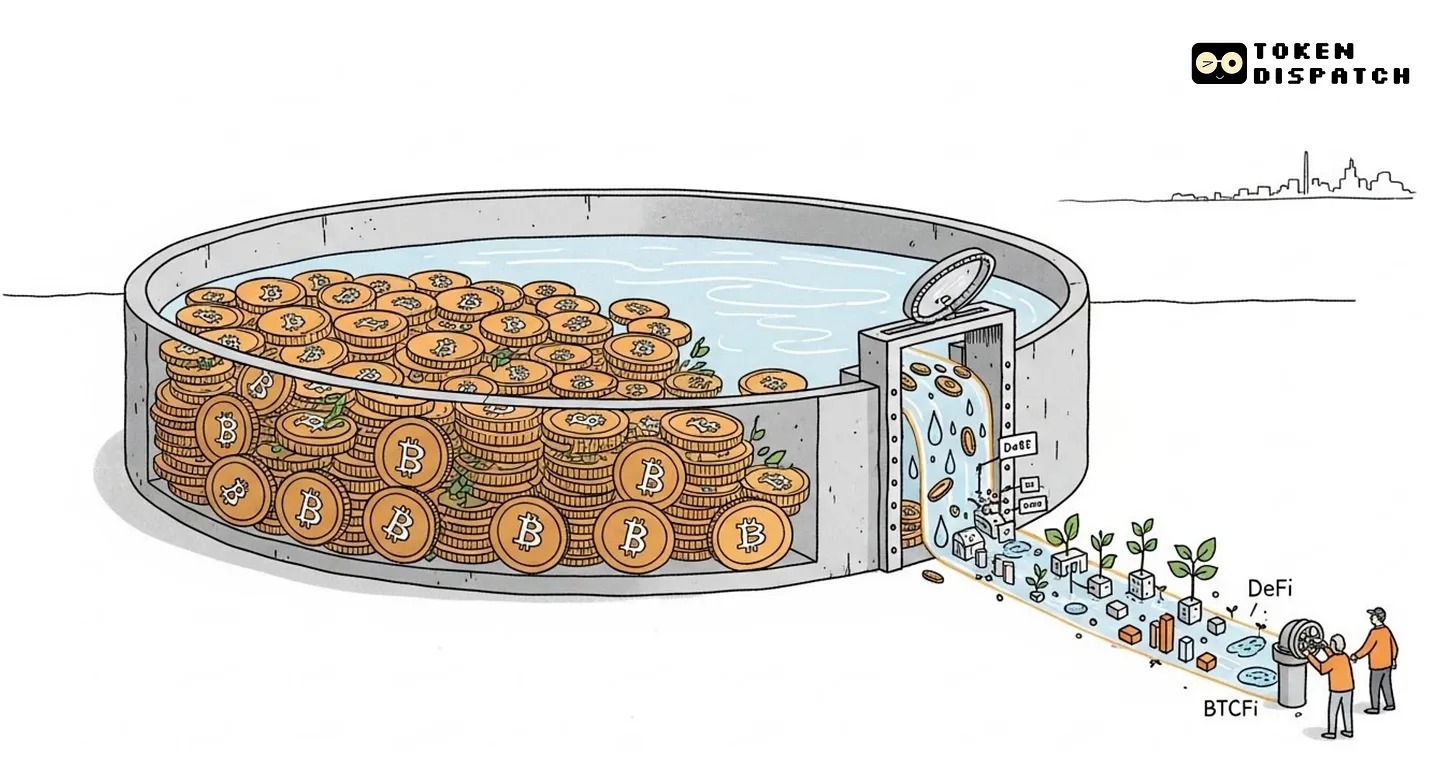
Bitcoin, the largest and most secure cryptocurrency, has historically been underutilized, with over 60% of its supply dormant for more than a year and less than 1% engaged in DeFi. While other ecosystems like Ethereum and Solana evolved with smart contracts and vibrant economies, Bitcoin’s largely remained a passive asset due to its security-first architecture, limited scripting capabilities, slow upgrade processes, and cultural conservatism. Previous workarounds—wrapped BTC, federated systems, cross-chain bridges, and sidechains—introduced trust assumptions, custodial risks, and security vulnerabilities, failing to align with Bitcoin’s trust-minimized ethos. Recent breakthroughs are changing this. Innovations like BitVM enable Bitcoin to verify off-chain computations without executing them, allowing for Bitcoin-backed rollups, trust-minimized bridges, and programmable vaults. Upgrades like Taproot have expanded Bitcoin’s capabilities, enabling native assets (e.g., Taproot Assets for stablecoins) and more complex cryptographic structures. New models also allow Bitcoin to earn yield natively—through staking, restaking, and Lightning Network-based liquidity provision—without leaving self-custody. This emerging BTCFi ecosystem comprises infrastructure for secure execution environments, verifiable bridges, yield markets, and Bitcoin-native assets, all without compromising Bitcoin’s core security or self-custody principles. This marks the first time Bitcoin has a financial ecosystem capable of supporting its trillion-dollar market cap, potentially unlocking vast dormant capital and integrating it into a productive, decentralized economy.

深潮12/09 01:34

Bitcoin's Dormant Capital Has Finally Awakened

深潮12/09 01:34

活动图片