Author: Joel John, Decentralised.co
Compiled by: Felix, PANews
Many marketing campaigns in the crypto space fail precisely because founder teams don't know how to "tell stories." Joel John, founder and main writer of Decentralised.co, a Web3 research and writing platform, published an article interpreting the importance and methodology of good storytelling. Below are the details.
My career has witnessed the growth of three venture capital funds and one hedge fund from scratch. Over the past three years, I, along with Siddharth and Saurabh Deshpande, have achieved the same feat for DCo. In many ways, my career revolves around culture, capital, and cryptocurrency. As someone whose career has primarily unfolded between storytelling and capital accumulation, here are some key points I hope entrepreneurs understand.
A story is what remains after a click or a browse. It is the imprint left in people's minds when they think of a brand, long after the marketing message has been digested. Some call it influence. Personally, I believe a story symbolizes what a brand represents. Apple encourages you to "Think Different," Nike advocates "Just Do It," and Kanye West encourages you to "Love Yourself."
The impact of a good story includes the various emotions people feel, the thought processes, and the cumulative cognitive share the brand holds in people's minds.
If you can create influence and resonance in 10 seconds, build your brand around that. If you believe what you're building has depth and requires time to unfold, invest in media forms that attract people's time investment.
The medium is always changing, but what ultimately determines the quality of a brand's story is the choices that shape the brand. Founders often mistake media exposure for a story. Actually, it's not. Media merely condenses the founder's claims. If they cannot clearly convey their propositions to the creatives trying to tell the brand's story, there will be no story to write. These founders still invest heavily in marketing but wonder what went wrong.
- Big events are not stories.
- Sponsored ads are not stories.
- Your VC talking about your funding is not a story.
- Your employees sharing your content is not a story.
- Traders mentioning your stock price is not a story.
The quantification of media reduces creators to clicks and numbers. When creators are quantified by numbers and assigned by algorithms—their motivation is to collaborate with every brand and monetize every exposure.
A brand endorsed by creators who partner with all brands doesn't truly represent any brand.
The audience understands that the brand is in it for the money. Creators understand that collaborations are for expanding influence. Brands understand that creators only care about how much they can earn. Stories built on a foundation no one cares about aren't worth anyone's time.
This is the current state of the attention economy. It was once fertile ground for stories to thrive, but now it has become a toxic cesspool of AI garbage, nauseating. It compresses culture into dopamine hits, simplifies emotions into momentary expressions, and quantifies what should be felt.

If I had just raised $45 billion for a venture capital fund, I think I'd smile like that too
In the hands of great capitalists, stories are leverage. Masa raising $10 billion for every minute he spent talking to the Saudi Crown Prince about the future—that's his story. Musk leading a generation to aspire to life on Mars—that's another story. Jobs dedicating himself to making computers personal—that's also a story. What they have in common is how stories empower them. Stories aid capital formation because they are more memorable than numbers. The language of finance is numbers, but its grammar is defined by emotion-driven stories.
Advertising is an explicit call to action. Stories are an implicit call to adventure. You can't completely outsource this to a team. The most outstanding entrepreneurs personally curate their own stories. Of course, they use external forces to help deliver, iterate, and spread the story. But the basic premise of the story is drafted by themselves. You can't just hand it over to anyone. Like a garden, stories need cultivation, curation, fertilization, nurturing, and cherishing—often requiring collaboration from multiple people.

The story about Chris Sacca is perhaps my favorite venture capitalist profile
Jobs spent about 13 years building Pixar before returning to Apple. During that time, he worked with Ed Catmull to understand the ways of good storytelling, emotion, and rhythm. Technology needs a human-facing element to have a social impact.

Jobs earned more from the Disney stock acquired through Pixar than he did from Apple
Most founders aren't in a position to acquire a studio and invest 14 years. But they can perhaps support creative people. Stripe does this through its media initiatives. Ramp often achieves this by sponsoring podcasts. Henrik Karlsson calls this "circles." He believes that shaping our social graph is fundamental to forming our worldview. If you want to write great stories—develop the habit of appreciating good writers, follow them, leave them messages, and understand the essence of excellent work before putting pen to paper.
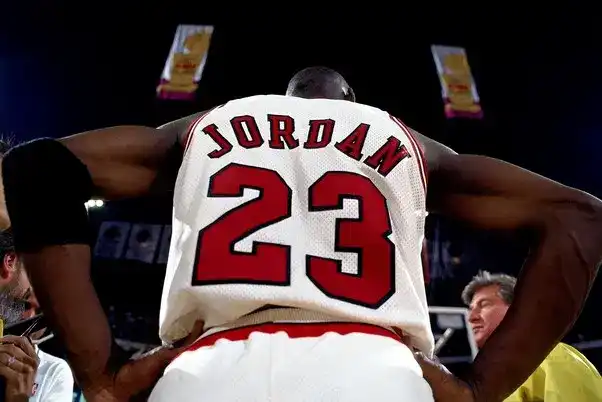
If Jordan's shoes didn't have all those championship rings, would they still mean anything?
Stories are overrated without a practical product or iterative releases. You can have the hottest marketing campaign, moving hearts, but if there's ultimately no product for users to use, invest time and effort in, and continue using, all that effort will be in vain. Founders often confuse viral media campaigns with attraction. They are not the same. Attraction is the sustained emotion people feel through repeated use of the product. No product, no story.
If Apple's products weren't so inspiring, its "Think Different" campaign would be very different. This is why much of cryptocurrency marketing fails. It creates buzz on platform X but leaves users with nothing to do. Worse, the abundance of jargon confuses users. If you don't want to expand your total addressable market, use jargon.
A story related to capital markets is influenced by price sentiment. If your price chart is consistently downward, an effective marketing campaign might actually cause pain because it reminds people how much money they've lost. This is also why excellent creators almost never "issue their own tokens."
In the crypto space, marketers often confuse the token (a product), its function (also a product), and its use case (often an interface). The token's story is reflected in its price, the token's function is reflected in its governance mechanism, and its use case is what should be marketed. These three are distinct stories and should not be conflated. Founders often combine these three. Worse, they conduct overly optimistic "marshmallow tests," promising soaring prices and leading people into a bearish-only mindset.
You should communicate the token's fundamentals through data products, its functions through DAO forums, and showcase its application scenarios in X posts. Different media, different audience groups.
As capital markets intertwine with the attention economy, the best storytellers will be able to sway the market. Hindenburg Research is a company that allocates capital and supports it through excellent storytelling. Packy McCormick runs a venture capital fund while writing one of the best newsletters on the web. Storytellers with communication channels will be able to amplify the leverage of capital to maximize their own interests.
A great story without a product might last longer than a good product without a story. But unless the two are intertwined, creating a large enough profit margin to sustain survival, there is only one inevitable outcome. That is extinction.
Inspiration may strike randomly, but you won't wake up one ordinary morning as an athlete or a warrior; the same goes for becoming an infectious writer. Storytelling is a skill that takes time to hone. Cultivating taste and insight into how stories are presented can bring unexpected rewards over time.
One thing to understand is that no one cares. You have countless opportunities to try. As long as you don't spam people with shoddy work but provide content people want, the audience's tolerance may far exceed your imagination.
Inspiration doesn't always emerge while working at a desk. As krs.eth often reminds: a lot of inspiration comes from extreme exploration. You need to immerse yourself in random side quests that have nothing to do with your main business. All the secrets are hidden there.
Related reading: From Hype to Pull, A Sharp Review of 21 Mainstream Crypto Narratives in 2025