Single-Day Plunge of Nearly 20%: How Long Has It Been Since You Last Saw Bitcoin at $60,000?

Odaily星球日报Published on 2026-02-06Last updated on 2026-02-06

Abstract

The cryptocurrency market experienced its most severe sell-off of the year, with Bitcoin plummeting nearly 20% in 24 hours to briefly touch $60,000, a level unseen for some time. It has since slightly recovered to around $63,150. Ethereum fell below the key $2,000 psychological level, dropping over 14% to $1,848. Other major altcoins, including Solana, BNB, XRP, and Cardano, saw losses exceeding 12-19%. This sharp decline triggered massive liquidations, with over $26.6 billion in positions forcibly closed across the market. Long positions accounted for 87% of these liquidations, affecting more than 580,000 traders and creating a vicious cycle of selling pressure. The crash was driven by multiple factors converging. Concerns over potential hawkish monetary policy from new Fed Chair nominee Kevin Warsh, a strong rebound in the US Dollar Index, and sustained outflows from institutional investors in US spot ETFs all contributed to the panic. Market sentiment is now highly sensitive to geopolitical and macroeconomic news. Looking ahead, a quick V-shaped recovery is considered unlikely. The market is expected to remain volatile due to structural weakness in altcoins, heightened risk aversion among retail investors, and ongoing sensitivity to external news. Investors are advised to practice strict risk management, avoid excessive leverage, focus on high-quality projects with strong fundamentals, and maintain a long-term perspective, as the crypto market has historically recovered...

Original | Odaily Planet Daily (@OdailyChina)

Author | jk
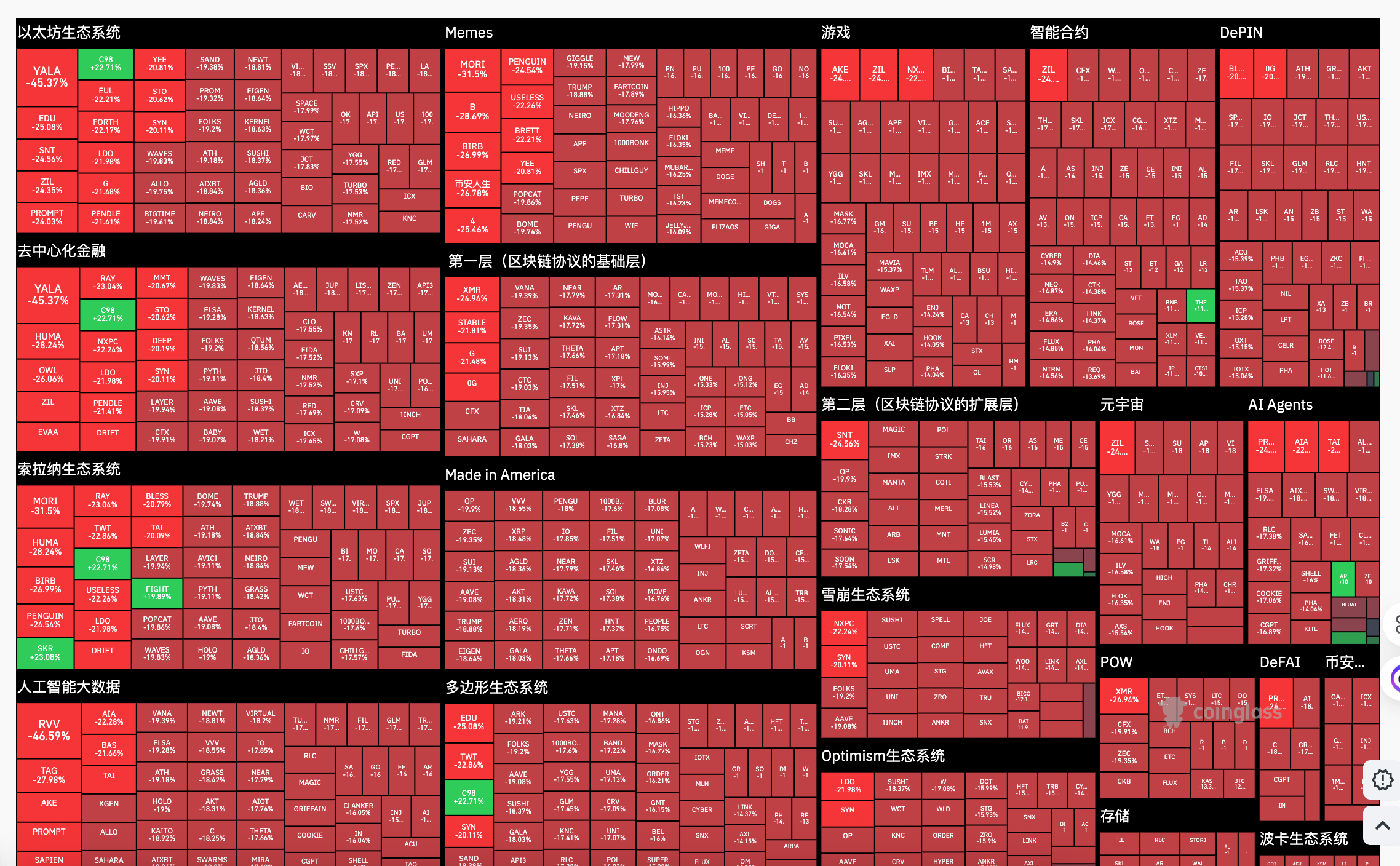
In the past 24 hours, the crypto market has experienced its most severe sell-off of the year, with major cryptocurrencies collectively plummeting over 15%, and panic sentiment continues to spread.

OKX market data shows that the BTC price fell to a low of $60,000, with a maximum 24H drop of 18%, currently trading at $63,150; Ethereum broke below $2,000, falling to a low of $1,744, currently trading at $1,860, with a 24H drop of 13.7%; Solana broke below $70, falling to a low of $67, with a 24H drop of 19%. All major cryptocurrencies fell by more than 12%.

Major Assets Suffer Heavy Losses

According to the latest data from CoinGecko, as of press time, Bitcoin is trading at $63,576, plummeting 13.3% in 24 hours. At this time yesterday, Bitcoin was at $73,311. Bitcoin's market capitalization evaporated over $160 billion, and its 24-hour trading volume surged to $142.4 billion, indicating intensified panic selling in the market.

Ethereum was hit even harder, falling to $1,848, with a 24-hour drop of 14.3%. This is the first time Ethereum has fallen below the psychological level of $1,900 since April 2025. Ethereum's market capitalization shrank to $224 billion, with a 24-hour trading volume of $61.5 billion.

Other major cryptocurrencies were not spared. BNB fell to $611, down 12.4%, with its market capitalization shrinking to $83.3 billion. Solana plunged 14.0% to $79, with its market capitalization falling below $45 billion. Altcoins like XRP and Cardano generally fell over 15%.

Record Market Liquidation Scale

This sharp decline triggered massive forced liquidations. Data from Coinglass shows that over the past 24 hours, the total market liquidation amount exceeded $2.66 billion, with long positions accounting for a staggering 87% of the liquidations. The single-day liquidation scale ranks 10th in history, second only to the sell-off triggered by the tariff crisis in April 2025.
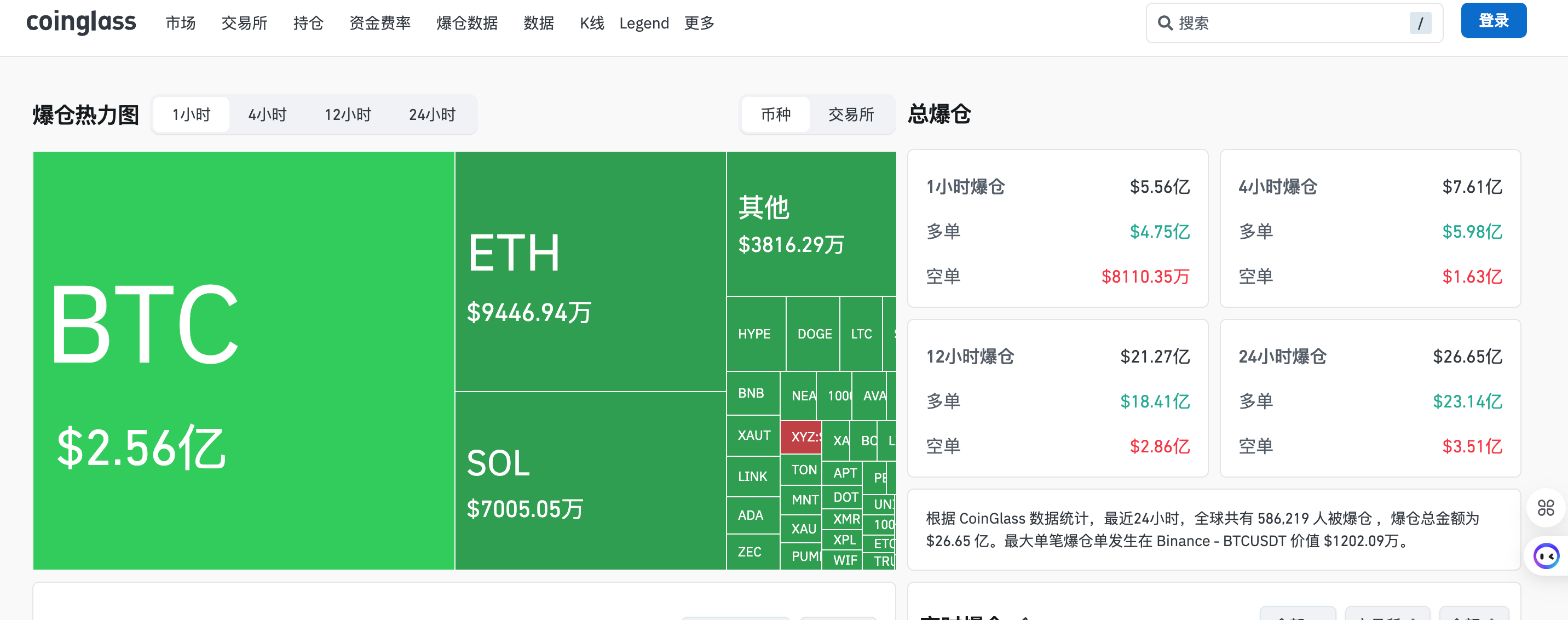
Over 580,000 traders were liquidated during this plunge. The chain reaction of liquidations exacerbated the market's downward pressure, creating a vicious cycle.

Multiple Factors Combine to Trigger Panic

This crash was not caused by a single factor but rather a resonance of multiple negative factors. During a previous decline, the market was concerned about the hawkish stance of the new Fed Chair nominee, Kevin Warsh. Warsh is perceived as likely to adopt a more aggressive inflation control policy than Powell, meaning the high-interest-rate environment could persist longer. Simultaneously, the US Dollar Index saw a strong rebound, which directly pressured dollar-denominated risk assets. Historical data shows a significant negative correlation between Bitcoin's price and the Dollar Index; a stronger dollar is usually accompanied by selling in crypto assets. Continued outflows of institutional funds further intensified market pressure. According to data from The Block, US Bitcoin spot ETFs recorded a net outflow of $272 million on February 4th, and Ethereum spot ETFs similarly faced a $252 million withdrawal on January 30th. The large-scale exit of institutional investors indicates a sharp decline in market risk appetite.

Future Outlook

The market generally expects continued consolidation in the short term, with a V-shaped reversal unlikely. The main reasons include structural weakness in altcoins, risk aversion among retail investors, and high market sensitivity to news. Many altcoins have fallen more than 20%, are structurally bearish, and continue to face selling pressure from retail investors. Retail investors, having suffered significant losses, are generally risk-averse, leading to decreased speculative demand. At the same time, the market is extremely sensitive to geopolitical news such as trade relations and monetary policy changes.

Facing the current market environment, Odaily Planet Daily advises investors to strictly manage risks, avoid excessive leverage, and set reasonable stop-loss levels. Investors should focus on high-quality projects, choosing those with solid fundamentals and real-world application scenarios. Maintaining a long-term perspective is also crucial; historical data shows the crypto market is cyclical and has recovered after every major crash in the past. Finally, be wary of emotional trading during periods of panic, avoid chasing pumps and dumping, and rationally assess the situation.


Related Questions

QWhat was the single-day maximum drop in Bitcoin's price as reported in the article?

AThe single-day maximum drop in Bitcoin's price was 18%, bringing it down to the $60,000 level.

QWhich major cryptocurrency fell below the $2,000 psychological barrier for the first time since April 2025?

AEthereum (ETH) fell below the $1,900 psychological barrier, hitting a low of $1,744, which was its first time below $1,900 since April 2025.

QWhat was the total value of market liquidations in the 24-hour period, and what percentage were long positions?

AThe total market liquidation value exceeded $2.66 billion, with long positions accounting for 87% of the liquidations.

QAccording to the article, what are two key factors that contributed to this market-wide sell-off?

ATwo key contributing factors were concerns over the hawkish stance of the new Fed Chair nominee, Kevin Warsh, and a strong rebound in the U.S. Dollar Index (DXY), which typically has a negative correlation with crypto assets.

QWhat advice does Odaily Planet Daily give to investors facing the current market environment?

AThe advice includes practicing strict risk management, avoiding excessive leverage, setting reasonable stop-losses, focusing on high-quality projects with solid fundamentals, maintaining a long-term perspective, and avoiding emotional trading to prevent buying high and selling low.

Related Reads

Trading

Spot
Futures

Hot Articles

What is $BITCOIN

DIGITAL GOLD ($BITCOIN): A Comprehensive Analysis Introduction to DIGITAL GOLD ($BITCOIN) DIGITAL GOLD ($BITCOIN) is a blockchain-based project operating on the Solana network, which aims to combine the characteristics of traditional precious metals with the innovation of decentralized technologies. While it shares a name with Bitcoin, often referred to as “digital gold” due to its perception as a store of value, DIGITAL GOLD is a separate token designed to create a unique ecosystem within the Web3 landscape. Its goal is to position itself as a viable alternative digital asset, although specifics regarding its applications and functionalities are still developing. What is DIGITAL GOLD ($BITCOIN)? DIGITAL GOLD ($BITCOIN) is a cryptocurrency token explicitly designed for use on the Solana blockchain. In contrast to Bitcoin, which provides a widely recognized value storage role, this token appears to focus on broader applications and characteristics. Notable aspects include: Blockchain Infrastructure: The token is built on the Solana blockchain, known for its capacity to handle high-speed and low-cost transactions. Supply Dynamics: DIGITAL GOLD has a maximum supply capped at 100 quadrillion tokens (100P $BITCOIN), although details regarding its circulating supply are currently undisclosed. Utility: While precise functionalities are not explicitly outlined, there are indications that the token could be utilized for various applications, potentially involving decentralized applications (dApps) or asset tokenization strategies. Who is the Creator of DIGITAL GOLD ($BITCOIN)? At present, the identity of the creators and development team behind DIGITAL GOLD ($BITCOIN) remains unknown. This situation is typical among many innovative projects within the blockchain space, particularly those aligning with decentralized finance and meme coin phenomena. While such anonymity may foster a community-driven culture, it intensifies concerns about governance and accountability. Who are the Investors of DIGITAL GOLD ($BITCOIN)? The available information indicates that DIGITAL GOLD ($BITCOIN) does not have any known institutional backers or prominent venture capital investments. The project seems to operate on a peer-to-peer model focused on community support and adoption rather than traditional funding routes. Its activity and liquidity are primarily situated on decentralized exchanges (DEXs), such as PumpSwap, rather than established centralized trading platforms, further highlighting its grassroots approach. How DIGITAL GOLD ($BITCOIN) Works The operational mechanics of DIGITAL GOLD ($BITCOIN) can be elaborated on based on its blockchain design and network attributes: Consensus Mechanism: By leveraging Solana’s unique proof-of-history (PoH) combined with a proof-of-stake (PoS) model, the project ensures efficient transaction validation contributing to the network's high performance. Tokenomics: While specific deflationary mechanisms have not been extensively detailed, the vast maximum token supply implies that it may cater to microtransactions or niche use cases that are still to be defined. Interoperability: There exists the potential for integration with Solana’s broader ecosystem, including various decentralized finance (DeFi) platforms. However, the details regarding specific integrations remain unspecified. Timeline of Key Events Here is a timeline that highlights significant milestones concerning DIGITAL GOLD ($BITCOIN): 2023: The initial deployment of the token occurs on the Solana blockchain, marked by its contract address. 2024: DIGITAL GOLD gains visibility as it becomes available for trading on decentralized exchanges like PumpSwap, allowing users to trade it against SOL. 2025: The project witnesses sporadic trading activity and potential interest in community-led engagements, although no noteworthy partnerships or technical advancements have been documented as of yet. Critical Analysis Strengths Scalability: The underlying Solana infrastructure supports high transaction volumes, which could enhance the utility of $BITCOIN in various transaction scenarios. Accessibility: The potential low trading price per token could attract retail investors, facilitating wider participation due to fractional ownership opportunities. Risks Lack of Transparency: The absence of publicly known backers, developers, or an audit process may yield skepticism regarding the project's sustainability and trustworthiness. Market Volatility: The trading activity is heavily reliant on speculative behavior, which can result in significant price volatility and uncertainty for investors. Conclusion DIGITAL GOLD ($BITCOIN) emerges as an intriguing yet ambiguous project within the rapidly evolving Solana ecosystem. While it attempts to leverage the “digital gold” narrative, its departure from Bitcoin's established role as a store of value underscores the need for a clearer differentiation of its intended utility and governance structure. Future acceptance and adoption will likely depend on addressing the current opacity and defining its operational and economic strategies more explicitly. Note: This report encompasses synthesised information available as of October 2023, and developments may have transpired beyond the research period.

363 Total ViewsPublished 2025.05.13Updated 2025.05.13

What is $BITCOIN

Discussions

Welcome to the HTX Community. Here, you can stay informed about the latest platform developments and gain access to professional market insights. Users' opinions on the price of BTC (BTC) are presented below.

活动图片













