Sharplink stakes 511 Ethereum in a week – Breaking down its ‘ETH earns more ETH’ approach

ambcryptoPublished on 2026-04-08Last updated on 2026-04-08

Abstract

Sharplink, the second-largest Ethereum treasury company, staked 511 ETH this week, bringing its total staked ETH to 16,947. This is part of its strategy to earn passive yield by staking its Ethereum holdings, which it describes as "Ethereum with an edge." The company's total ETH holdings are valued at $1.95 billion. This approach differs from the largest Ethereum treasury firm, BitMine, which hoards ETH for long-term bullish gains and flexibility. Sharplink's staking strategy, while generating rewards, carries risks like reduced liquidity, potential slashing, and exposure to price volatility. The trend of earning yield on crypto assets is growing, exemplified by Michael Saylor's MicroStrategy, which recently entered the yield-earning space with a new financial instrument. At the time of reporting, ETH's price was $2,245.04, and on-chain data suggested the asset was in an accumulation phase.

Sharplink, the second-largest Ethereum [ETH] treasury company, has reportedly staked over 511 ETH this week in staking rewards, bringing its total to 16,947 ETH.
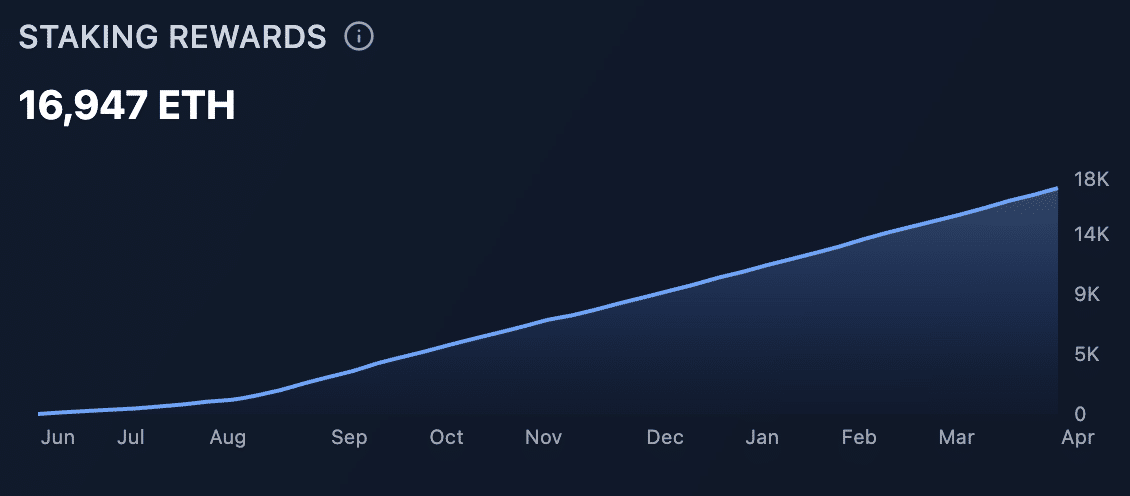
Source: Sharplink

By staking ETH, Sharplink is locking up its Ethereum tokens in the network to validate transactions and, in return, earn rewards in ETH. Remarking on the same, Sharplink said,

Every week, our ETH earns more ETH. This is Ethereum with an edge.

Sharplink vs. BitMine – ETH holdings and strategy

This happens at a time when Sharplink’s ETH stash has reached 868,699 ETH holdings worth $1.95 billion. However, when compared to the largest Ethereum treasury company, BitMine, it’s too little. As per CoinGecko’s data, BitMine holds 4,803,334 ETH worth $10.81 billion.
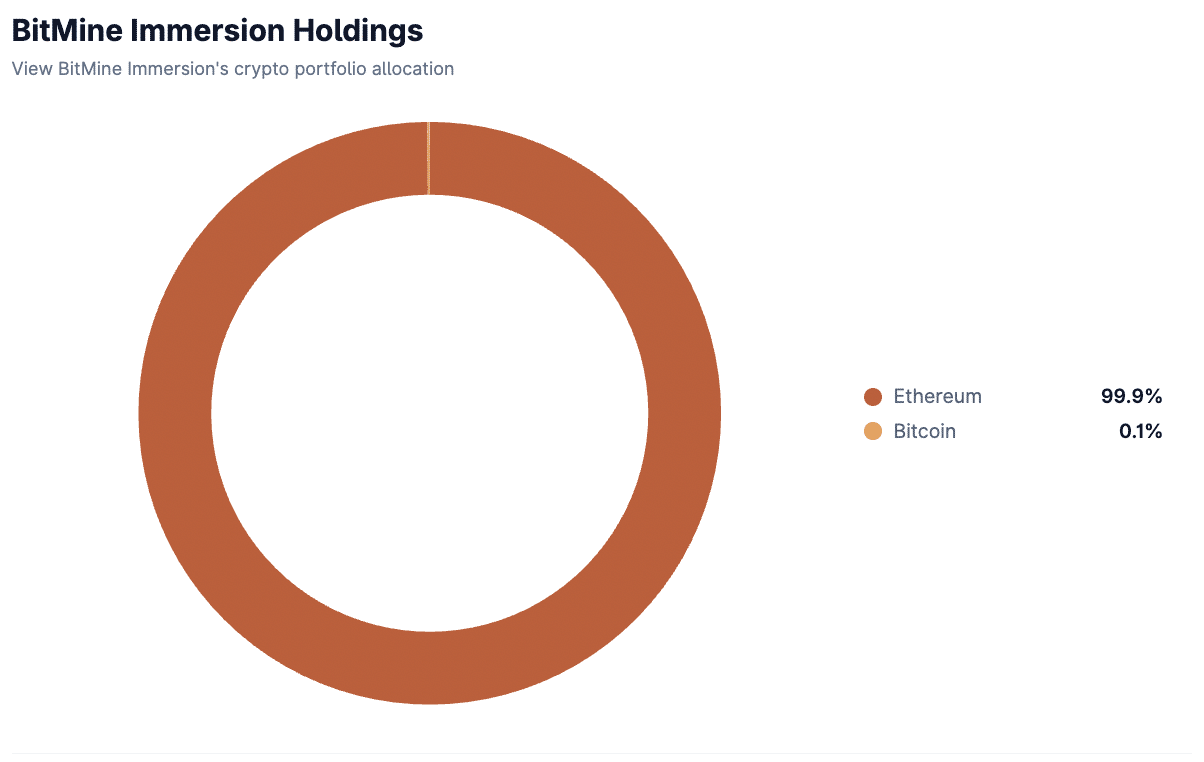
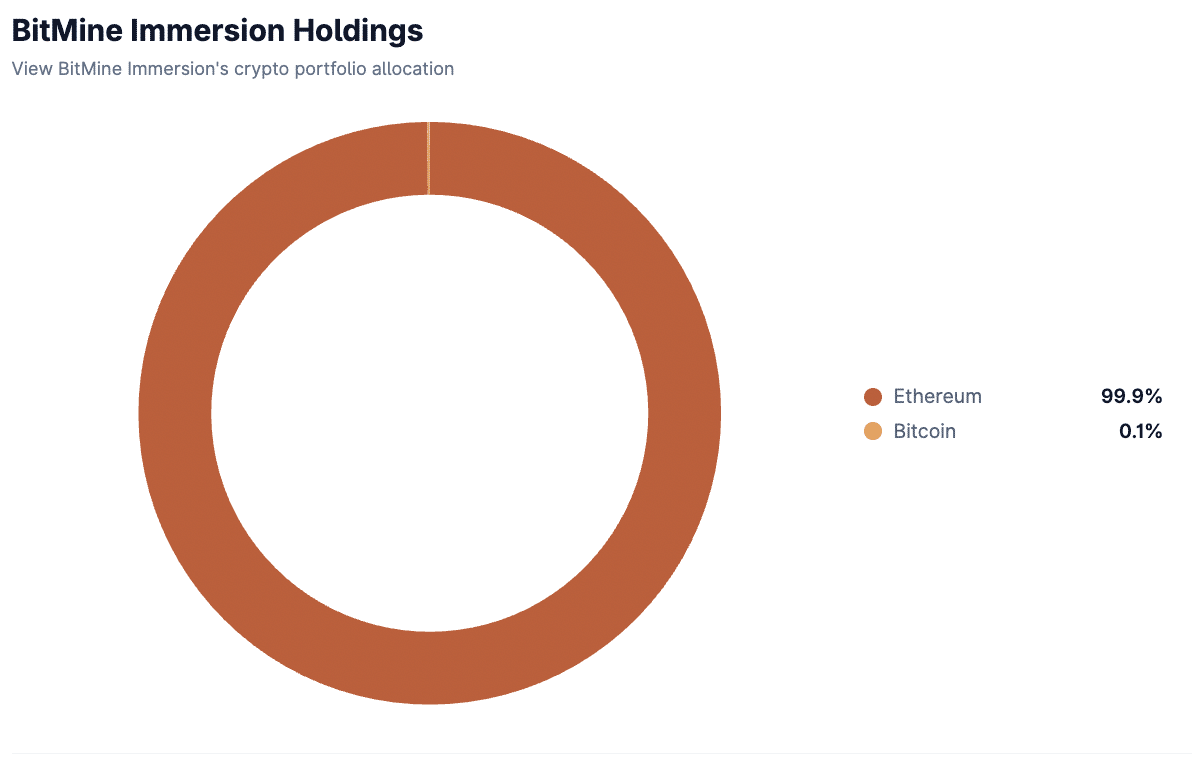
Source: CoinGecko

In fact, the motives of the two firms are also widely different, as BitMine strongly believes in hoarding ETH, which is similar to Michael Saylor’s firm, Strategy. However, Sharplink is taking a different approach to earning interest by staking its Ethereum.

The approach that BitMine is following is good if the firm is looking for bullish results and is more inclined towards flexibility at times of selling.

However, in Sharplink’s case, the firm is more interested in long-term conviction and wants passive yield. But this also comes with a set of risks, like reduced liquidity, potential slashing risks, and exposure to price drops while the ETH is locked.

Why is staking becoming important now?

Additionally, with the ongoing discussions around the CLARITY ACT and investors adjusting to the yield-earning policy shift, Ethereum staking is gradually growing.

Needless to say, there are many firms that opt for both. The recent addition to the list was Saylor’s Strategy. The firm, with the help of STRC, a Variable Rate Series A Perpetual “Stretch” Preferred Stock, recently entered the yield-earning cycle besides hoarding Bitcoin [BTC].

This comes as ETH’s price was trading at $2,245.04 after a hike of 6.8% in the past 24 hours.

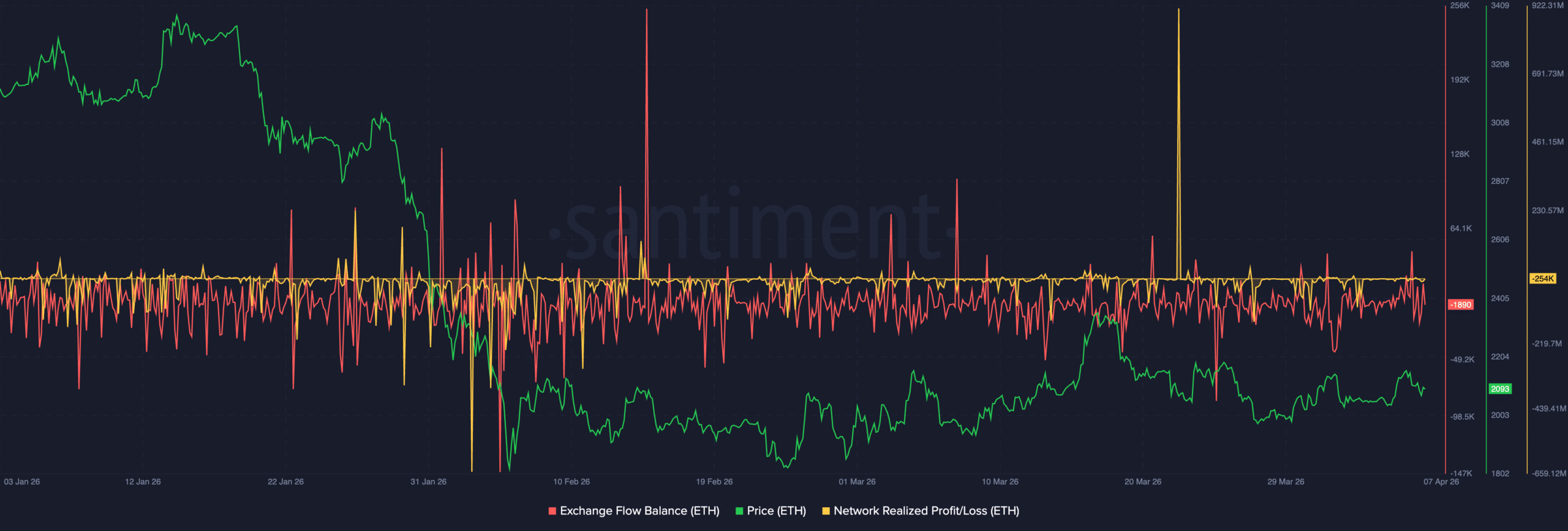
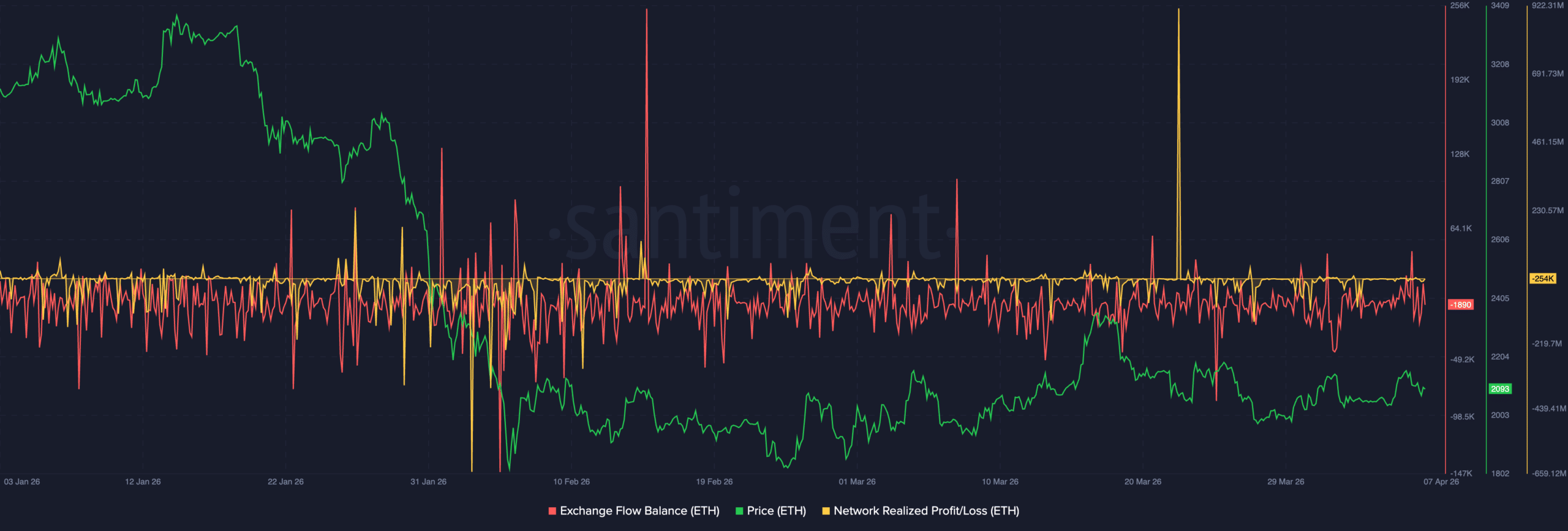
Additionally, the on-chain metrics are also in support. For instance, the Ethereum Exchange Fow Balance showed more ETH being withdrawn from exchanges, and the Network Realized Profit/Loss suggested a neutral phase.

All this combined suggests that ETH was in an accumulation phase at the time of reporting.
Source: Santiment

Final Summary

  • Sharplink reaches 16,947 ETH thanks to its Ethereum staking strategy, but risk remains.
  • If in the Ethereum ecosystem it’s Sharplink, in the Bitcoin space, it’s Michael Saylor’s Strategy, which recently started STRC for the same reason.


Related Questions

QHow much Ethereum did Sharplink stake this week, and what is its total staked amount now?

ASharplink staked over 511 ETH this week, bringing its total staked amount to 16,947 ETH.

QWhat is the key difference in Ethereum strategy between Sharplink and the largest treasury company, BitMine?

ASharplink focuses on earning passive yield through staking its Ethereum, while BitMine believes in hoarding ETH, similar to Michael Saylor's Strategy, prioritizing bullish results and flexibility for selling.

QWhat are some of the risks associated with Sharplink's staking strategy?

AThe risks include reduced liquidity, potential slashing risks, and exposure to price drops while the ETH is locked in the staking contract.

QWhat recent development suggests that Ethereum is in an accumulation phase according to the article?

AOn-chain metrics support this, specifically the Ethereum Exchange Flow Balance showing more ETH being withdrawn from exchanges and the Network Realized Profit/Loss indicating a neutral phase.

QWhich other major company, mentioned in the article, recently entered the yield-earning cycle for its crypto holdings?

AMichael Saylor's company, Strategy, recently entered the yield-earning cycle by utilizing STRC, a Variable Rate Series A Perpetual 'Stretch' Preferred Stock, in addition to its Bitcoin hoarding strategy.

Related Reads

TAO is Elon Musk who invested in OpenAI, Subnet is Sam Altman

The article, titled "TAO is Elon Musk who invested in OpenAI, Subnet is Sam Altman," presents a critical analysis of the Bittensor (TAO) project. It argues that Bittensor functions as a decentralized AI marketplace where TAO tokens fund AI research via subnets. However, the author highlights a fundamental flaw: subnet operators have no obligation to return any value, such as AI models or profits, back to the TAO ecosystem or its token holders. This structure is likened to Elon Musk's early investment in the non-profit OpenAI, which later commercialized its technology without returning value to its initial benefactor. The bear case posits that Bittensor is essentially a wealth transfer from crypto speculators to AI researchers ("miners"). Subnets can use TAO incentives for development and then take their successful products elsewhere, leaving TAO holders with diluted tokens from inflation and no captured value. The lack of enforced equity or binding mechanisms means the project relies on a "hope" that subnet tokens maintain value. The optimistic perspective counters that two factors could create a successful, self-sustaining economy: 1) AI's perpetual and massive resource needs could incentivize subnets to stay for continued funding, and 2) crypto has a proven ability to aggregate resources through token incentives, as seen with Bitcoin and Ethereum. The conclusion states that investing in TAO is a bet on a博弈论 (game theory) miracle—that soft incentives alone will be enough to keep the best subnets within the ecosystem and create a flywheel effect. This outcome is possible but represents a highly skewed, low-probability success scenario amidst significant risks of failure.

marsbit1h ago

TAO is Elon Musk who invested in OpenAI, Subnet is Sam Altman

marsbit1h ago

Hermes Agent Guide: Surpassing OpenClaw, Boosting Productivity by 100x

A guide to Hermes Agent, an open-source AI agent framework by Nous Research, positioned as a powerful alternative to OpenClaw. It is described as a self-evolving agent with a built-in learning loop that autonomously creates skills from experience, continuously improves them, and solidifies knowledge into reusable assets. Its core features include a memory system (storing environment info and user preferences in MEMORY.md and USER.md) and a skill system that generates structured documentation for complex tasks. The agent boasts over 40 built-in tools for web search, browser automation, vision, image generation, and text-to-speech. It supports scheduling automated tasks and can run on various infrastructures, from a $5 VPS to GPU clusters. Popular tools within its ecosystem include the Hindsight memory plugin, the Anthropic Cybersecurity Skills pack, and the mission-control dashboard for agent orchestration. Key differentiators from OpenClaw are its architecture philosophy—centered on the agent's own execution loop rather than a central controller—and its autonomous skill generation versus OpenClaw's manually written skills. Installation is a one-line command, and setup is guided. It integrates with messaging platforms like Telegram, Discord, and Slack. It's suited for scenarios requiring a persistent, context-aware assistant that improves over time, automates workflows, and operates across various deployment environments.

marsbit2h ago

Hermes Agent Guide: Surpassing OpenClaw, Boosting Productivity by 100x

marsbit2h ago

Trading

Spot
Futures

Hot Articles

Discussions

Welcome to the HTX Community. Here, you can stay informed about the latest platform developments and gain access to professional market insights. Users' opinions on the price of ETH (ETH) are presented below.

活动图片