Just now, the Cyberspace Administration of China announced: Apple Intelligence, Huawei Celia AI Model, OPPO AndesGPT Model, vivo BlueVivo On-Device Model, Xiaomi HyperMind AI, Samsung Galaxy AI, and Nubia Doubao Mobile Model — 7 on-device generative AI services for mobile phones have passed the regulatory filing.
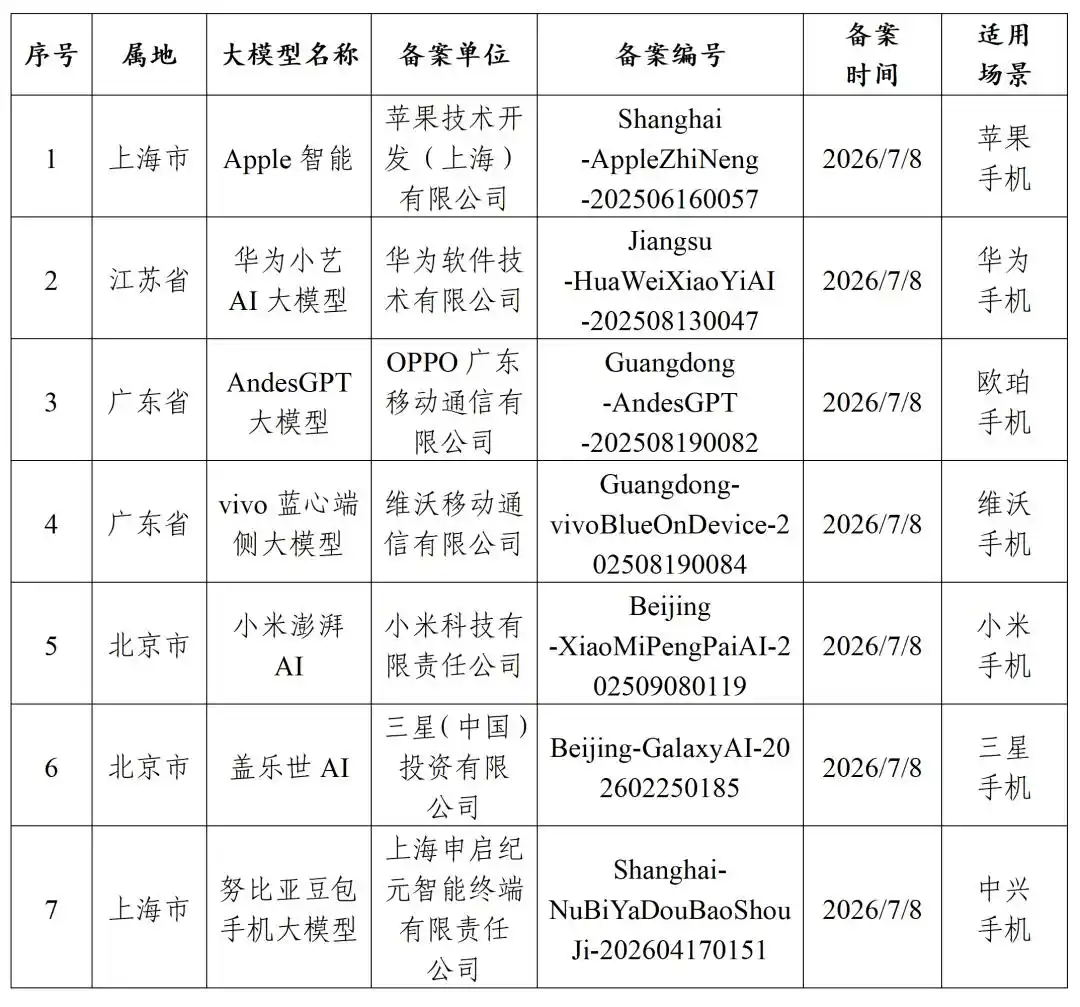
Announcement on Releasing Filing Information for 7 On-Device Generative AI Services for Mobile Phones
This is the largest collective approval in the domestic on-device mobile AI field to date.
Counting from its debut at WWDC in June 2024, Chinese users have waited two years for Apple AI.
Alibaba's Qwen will be integrated as the AI capability into Apple Intelligence, providing Chinese users of iOS, iPadOS, macOS, and visionOS with abilities like text and image understanding, content generation, and more.
In response to this news, Alibaba stated:
Alibaba's Qwen will be integrated as the AI capability into Apple Intelligence, delivering intelligent experiences to Chinese users of iOS, iPadOS, macOS, and visionOS.
Users can directly experience Qwen's text and image understanding, content generation, and other capabilities on Apple devices without needing to switch between apps.
The filing is the compliance admission ticket, but even before Apple obtained this ticket, Chinese users had experienced a brief, preliminary version.
The Previously Leaked Test Version of Apple AI Left Much to Be Desired
On March 31 this year, the day before Apple's 50th anniversary, an "Apple Intelligence and Siri" entry appeared in the Settings page of iPhones in China.
There was no launch event, no press release. The feature went live and was quickly taken down.
Bloomberg journalist Mark Gurman judged it to be an accidental push: Apple wouldn't launch its AI for China without any promotional activity, wouldn't choose the early hours of the morning in China to go live, and the visual recognition was calling on a Google engine rather than a domestic one, which is also unreasonable for China. Regulatory approval had not yet been granted at that time.

https://x.com/markgurman/status/2038701276699967554
The hands-on results from that brief appearance can be summarized in two words: fast, but rough.
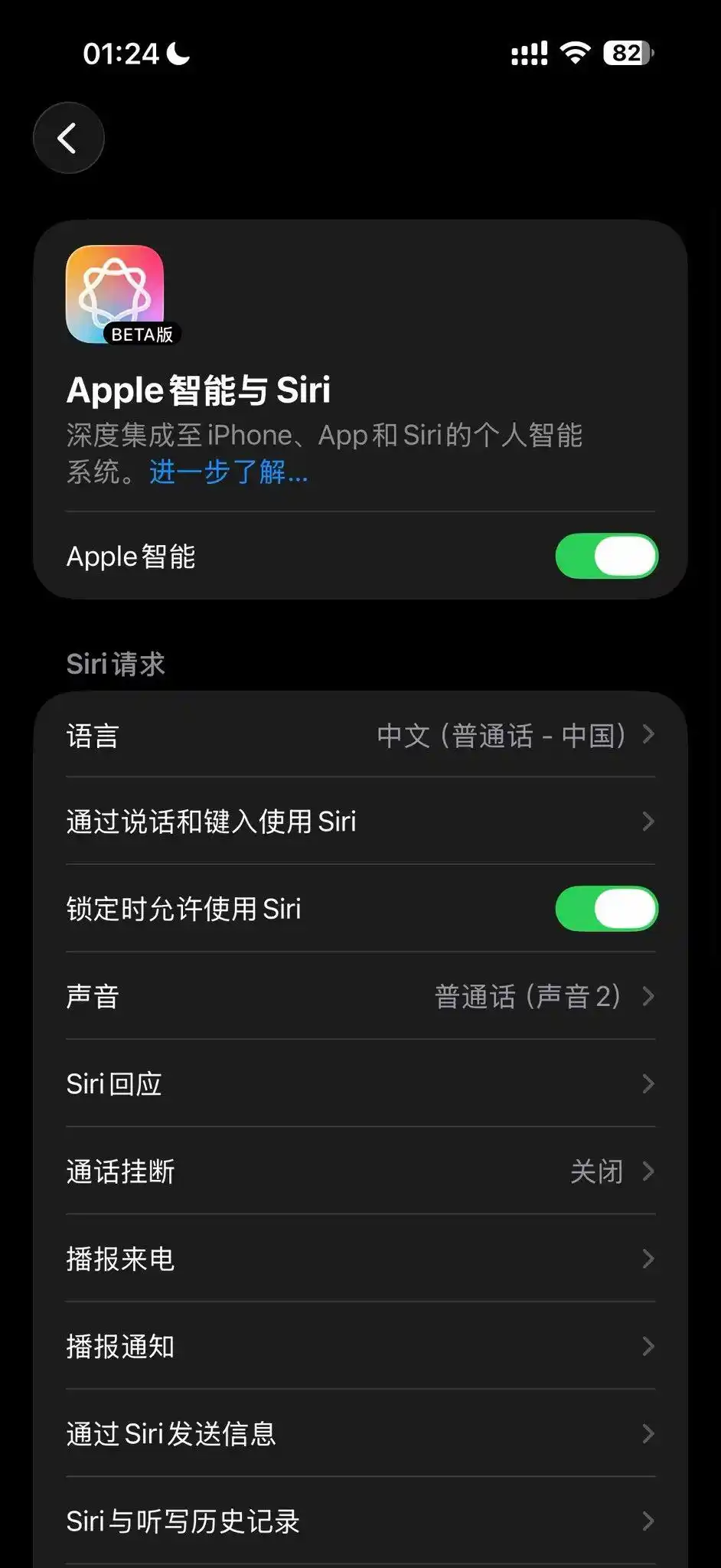
The speed of the on-device model was the most immediate perception.
Text polishing, information summarization, AI erasure — responses were almost instantaneous.
A 200-word draft clicked to "Change to Professional Tone" produced results in less than two seconds.
The Image Playground supported generating images from text descriptions, producing images in three to five seconds, but the phone noticeably heated up.
All processing was done locally, with no data uploaded to the cloud, ensuring privacy — at the cost of accuracy.
Summarizing complex long texts would miss key information; tone rewriting occasionally produced unnatural expressions.
AI erasure worked okay on simple backgrounds, but with complex scenes, it showed issues like residual shadows, blurred edges, and broken textures.
Writing tools, translation, visual recognition — each was usable, each had a noticeable gap compared to competitors using cloud-based large models.
Apple made a trade-off between privacy and performance, choosing the former.
Although the leaked version in March was taken down at lightning speed in less than a day, it prematurely revealed the capability boundaries of Apple Intelligence for China: on-device models are fast, protect privacy, but depth and accuracy require supplementation by cloud models.
Previously, there was no clear, reliable information confirming which model was actually integrated.
Seven Approved, Apple Late by Two Years
Apple wasn't alone in passing the filing.
Also receiving admission tickets on the same day were Huawei, OPPO, vivo, Xiaomi, Samsung, and Nubia — the on-device AI of 7 phone manufacturers collectively approved.
Nubia's Doubao Mobile Model is expected to debut during WAIC.
For Apple, the cost of being late is already written in its financial reports.
iPhone sales in the Chinese market have been under continuous pressure. Cook previously admitted in an earnings call that the absence of Apple Intelligence was a reason for the decline in competitiveness.
Huawei, Xiaomi, and OPPO have long made AI features standard on flagships. Some brands have even integrated models like DeepSeek , widening the experience gap.
Previously, at WWDC 26, Apple showcased the new-generation Siri AI developed in collaboration with Google and based on Gemini, supporting cross-app contextual awareness and natural conversation, even capable of pulling up email and calendar information in real-time during calls.
However, at that time, Apple also made it clear: the new Siri AI would not immediately land in the Chinese market.
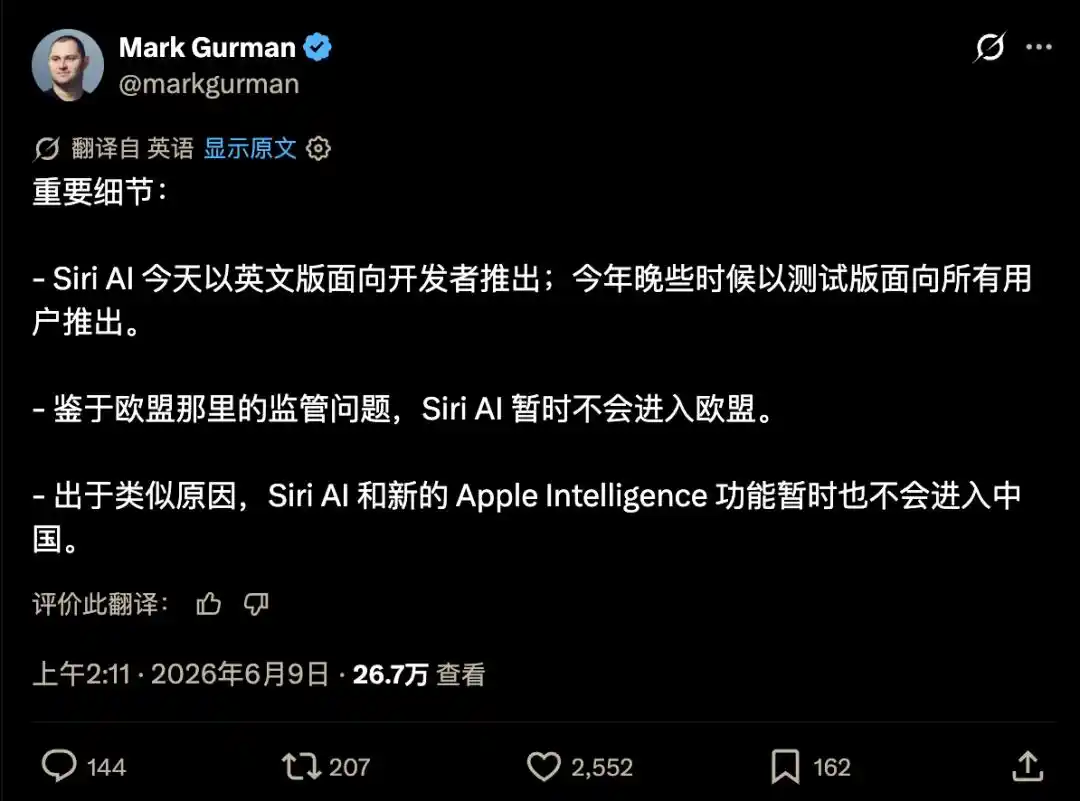
https://x.com/markgurman/status/2064047700488655019
The foundational AI capability for the Chinese version is Alibaba's Qwen , which is different from the technology stack used in the overseas version.
Apple has not given any promises regarding the official launch timeline or the completeness of features.
The filing resolves the compliance issue, but between filing and product launch, there are still engineering steps like version adaptation, feature tailoring, and model optimization to complete.
For users of iPhones in China, judging the true value of this AI admission ticket simply requires attention to: whether Apple Intelligence appears in the next iOS update log and how many features are retained.
Until then, the two-year wait is just one step away from being over.
This article is from the WeChat public account "New Zhiyuan", author: ASI Apocalypse