After weeks of persistent selling pressure, institutional demand is starting to recover.
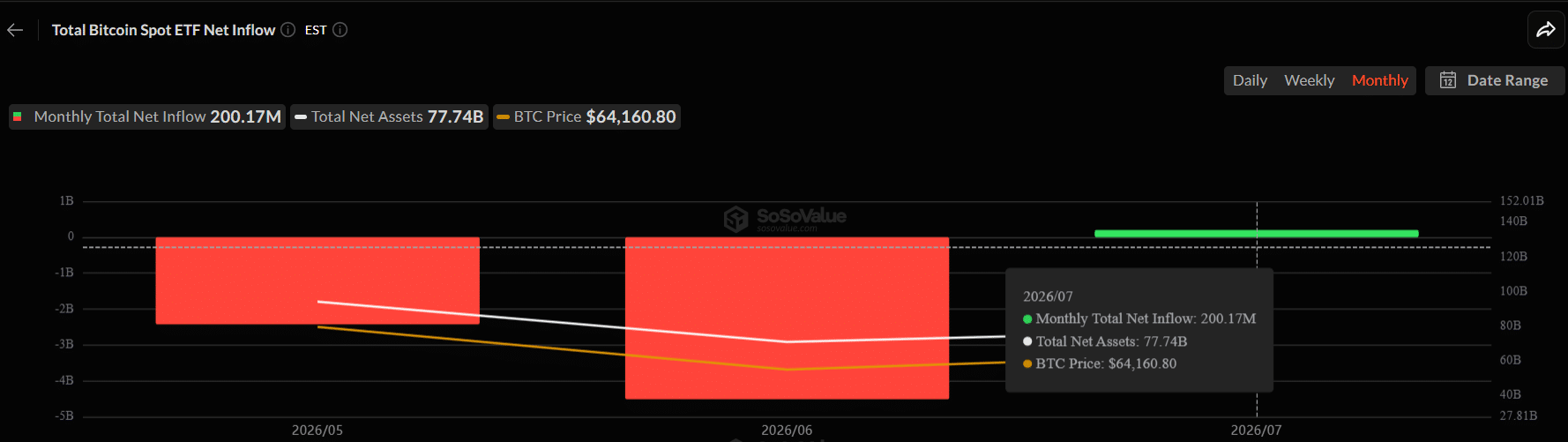
To put it into perspective, U.S. spot Bitcoin ETFs recorded over $6 billion in net outflows over the past two months. Notably, this coincided with Bitcoin’s nearly 25% correction, highlighting how closely ETF flows have tracked BTC’s price action.
With inflows now turning positive again, it’s no surprise the market is beginning to question whether institutional sentiment is finally shifting.
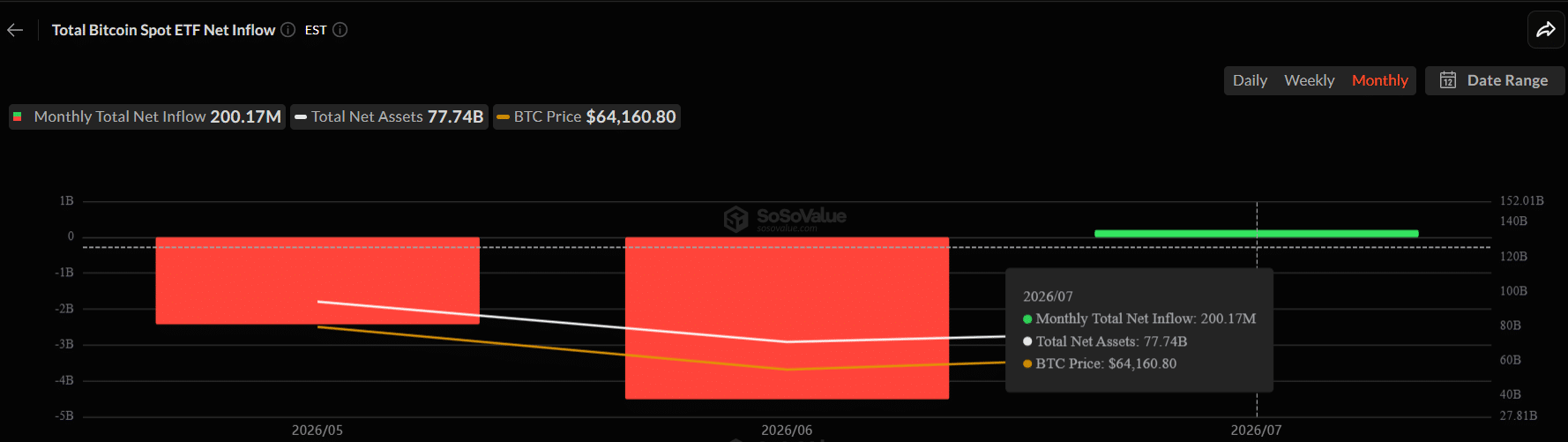
As the chart below shows, more than $200 million has flowed into Bitcoin ETFs so far this month, alongside BTC’s 9%+ rebound. Simply put, Bitcoin’s recovery still depends heavily on institutional positioning, making ETF flows a key signal to watch in the weeks ahead.
That said, it may still be too early to call this a full-blown return of institutional demand.
According to CryptoQuant, Bitcoin’s Coinbase Premium Index remains in negative territory despite BTC rallying from $58k to $64k.
In other words, U.S. investors are still not aggressively buying the dip, suggesting the latest rally lacks strong spot demand from institutions.
More importantly, the biggest risk to Bitcoin’s [BTC] recovery may not be weak ETF inflows alone.
Instead, another key on-chain signal suggests the recent $200 million in ETF inflows could simply reflect a short-term rotation, rather than the beginning of a broader structural shift in institutional demand.
ETF inflows alone don’t confirm a bullish reversal
As the largest cryptocurrency by market cap, Bitcoin remains the market’s anchor.
However, despite Bitcoin ETF inflows recovering and BTC.D climbing 1.5% over the past week to hover around 60%; capital continues rotating into Ethereum.
The ETH/BTC ratio has now posted three straight weeks of gains and is heading into a fourth. The key takeaway? This rotation doesn’t look like a fluke.
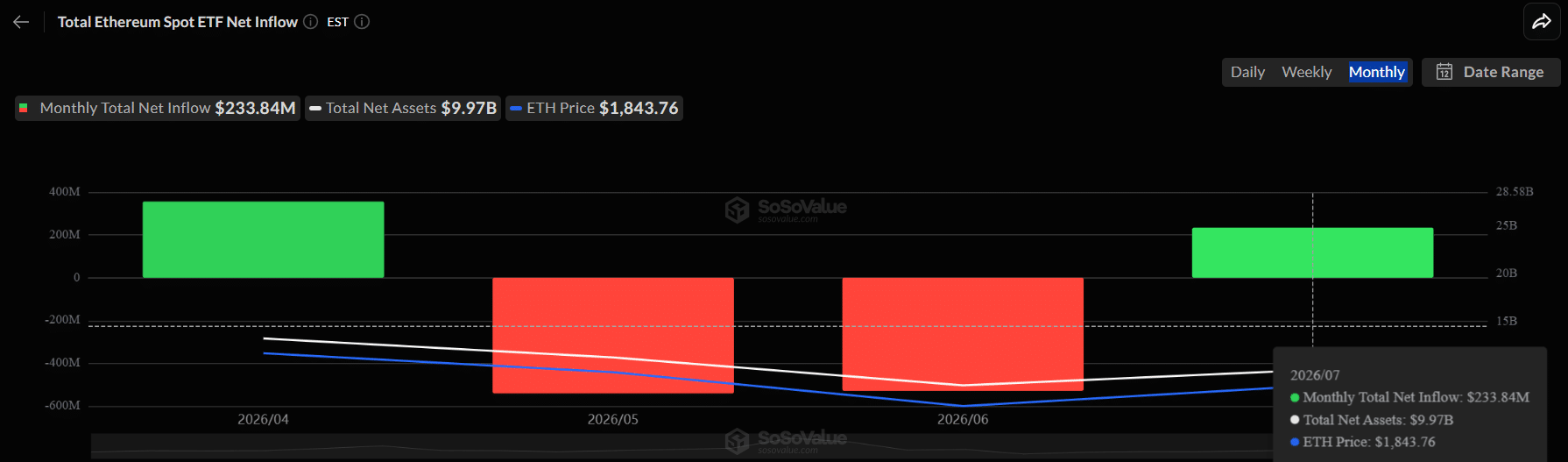
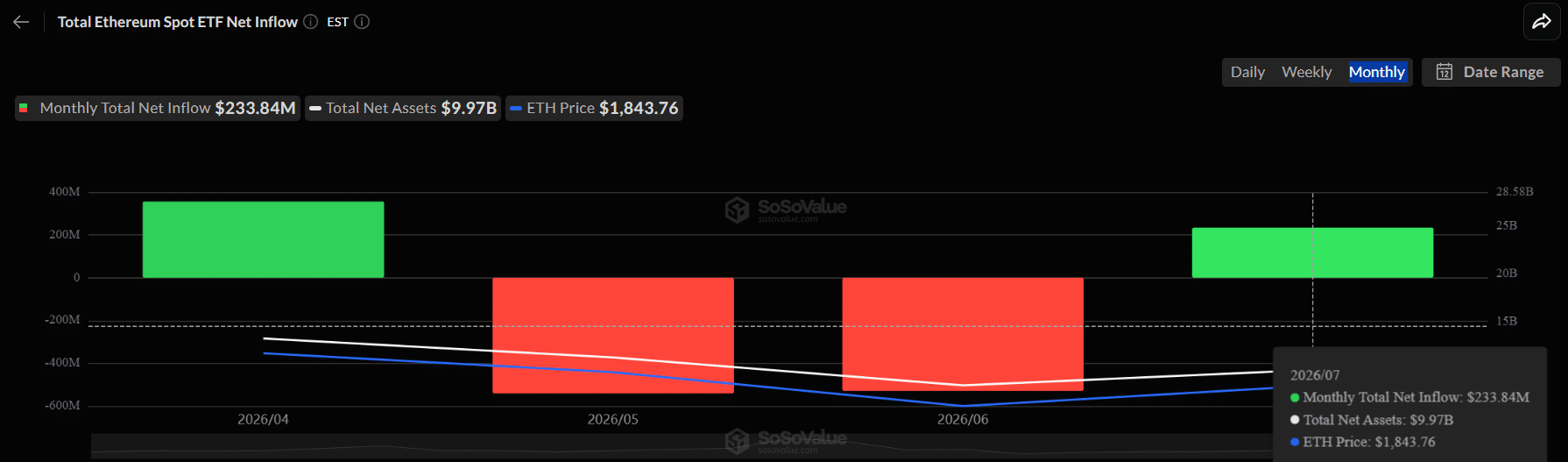
As the chart below shows, Ethereum ETFs have attracted more than $233 million in net inflows this month, outpacing Bitcoin on a relative basis. More importantly, ETH ETFs saw significantly smaller outflows during the recent correction.
In other words, Ethereum faced less institutional selling on the way down and is attracting stronger buying on the way back up, a clear sign that institutional capital is favoring ETH over BTC.
In essence, Bitcoin’s recent ETF inflows look more measured than euphoric.
Pair that with a negative Coinbase Premium Index and Ethereum’s [ETH] continued strength across both technicals and institutional flows, and Bitcoin’s latest recovery starts to look more like a short-term rotation than the beginning of a broad structural shift in institutional demand.
The bottom line? ETF inflows have undoubtedly improved, but the broader institutional picture hasn’t fully flipped. Until U.S. spot demand strengthens and Bitcoin starts reclaiming relative strength against Ethereum, the latest recovery still lacks a key confirmation signal.