Bitcoin and gold decline together – ‘Haven’t seen before,’ says strategist

ambcryptoPublished on 2026-06-29Last updated on 2026-06-29

Abstract

Market strategist Charlie Bilello notes that 2026 has been a historically unique year, with both Bitcoin and gold declining significantly—Bitcoin down 31% and gold down 6%—making them the worst-performing major asset classes. This simultaneous drop, not observed in any previous calendar year, suggests investors are reducing exposure to both traditional and alternative stores of value. The trend is attributed to a mix of factors including sustained high interest rates, geopolitical conflicts, and increased crypto hacks. Bitcoin's price fell 43% over the past year to around $60,237, while gold saw a 33% increase to about $4,072. The correlation between the two assets, which was low or negative for much of the period, turned strongly positive by June 2026 as gold also began to decline. Historically, Bitcoin and gold have often moved inversely during market stress, but 2026 shows a break from that pattern, with both assets under significant pressure.

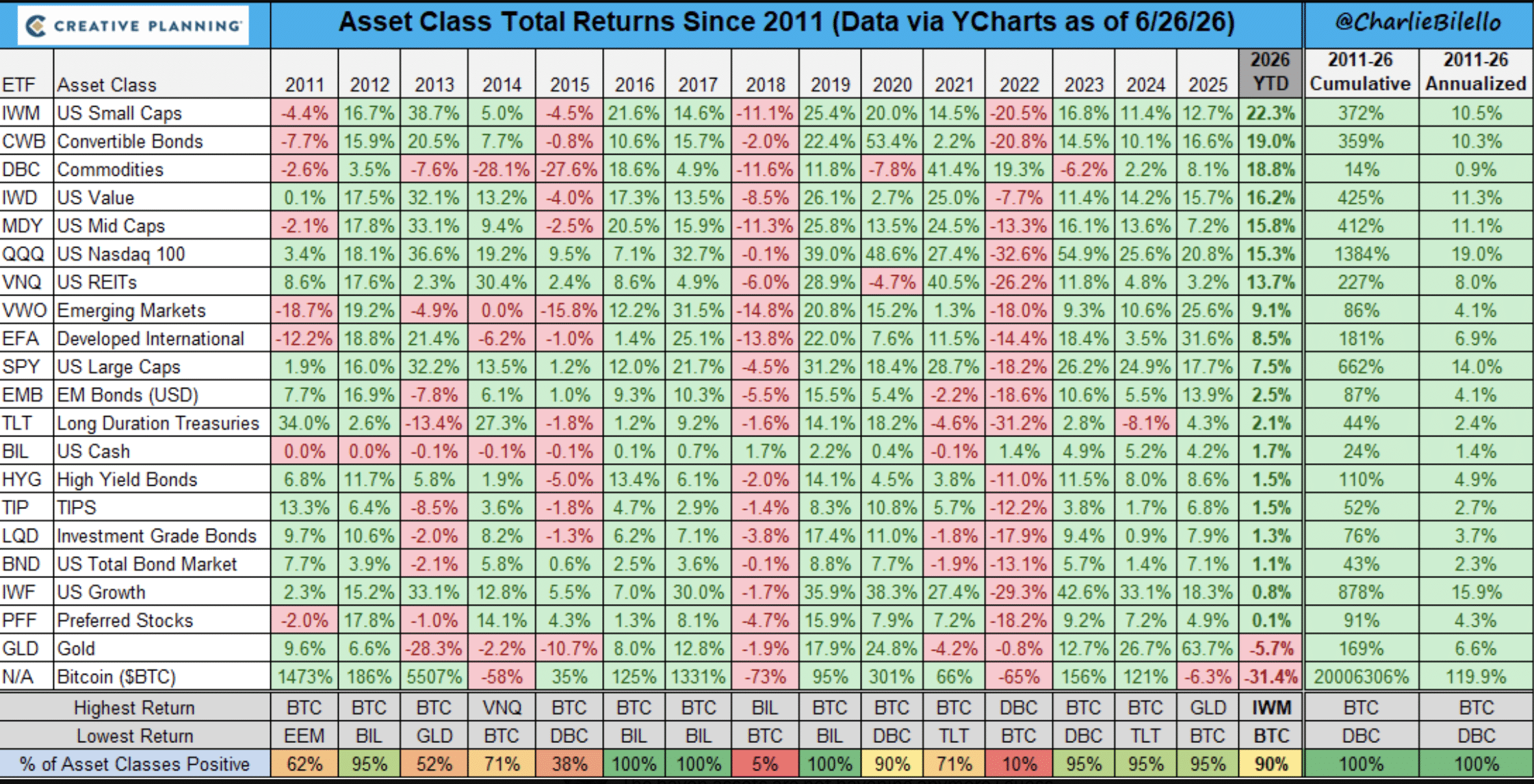
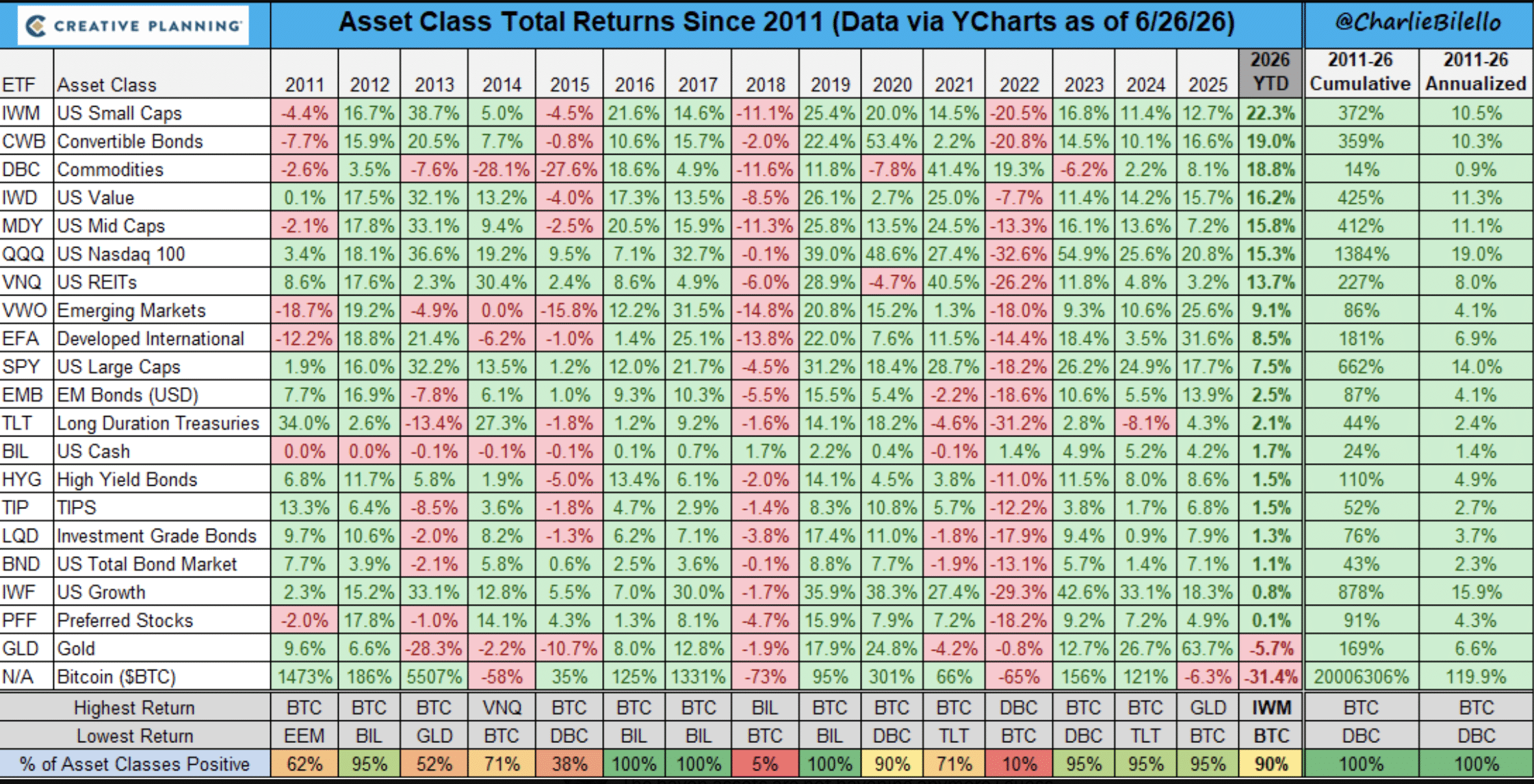
According to a revelation made by market strategist Charlie Bilello, Bitcoin [BTC] and gold have fallen 31% and 6%, respectively, making them the two worst-performing major asset classes in 2026 thus far.

Needless to say, this combination is unusual in history.
Source: X

2026 becomes a unique year for Bitcoin and Gold

Naturally, this suggests that investors have been lowering their exposure to both conventional and alternative value stores.

As a result, money has mostly moved into other asset classes that have produced higher returns, making 2026 the first year that both gold and Bitcoin have been among the major assets with the worst performance.

Remarking on the same, Bilello added,

This is something we haven’t seen before in any calendar year.

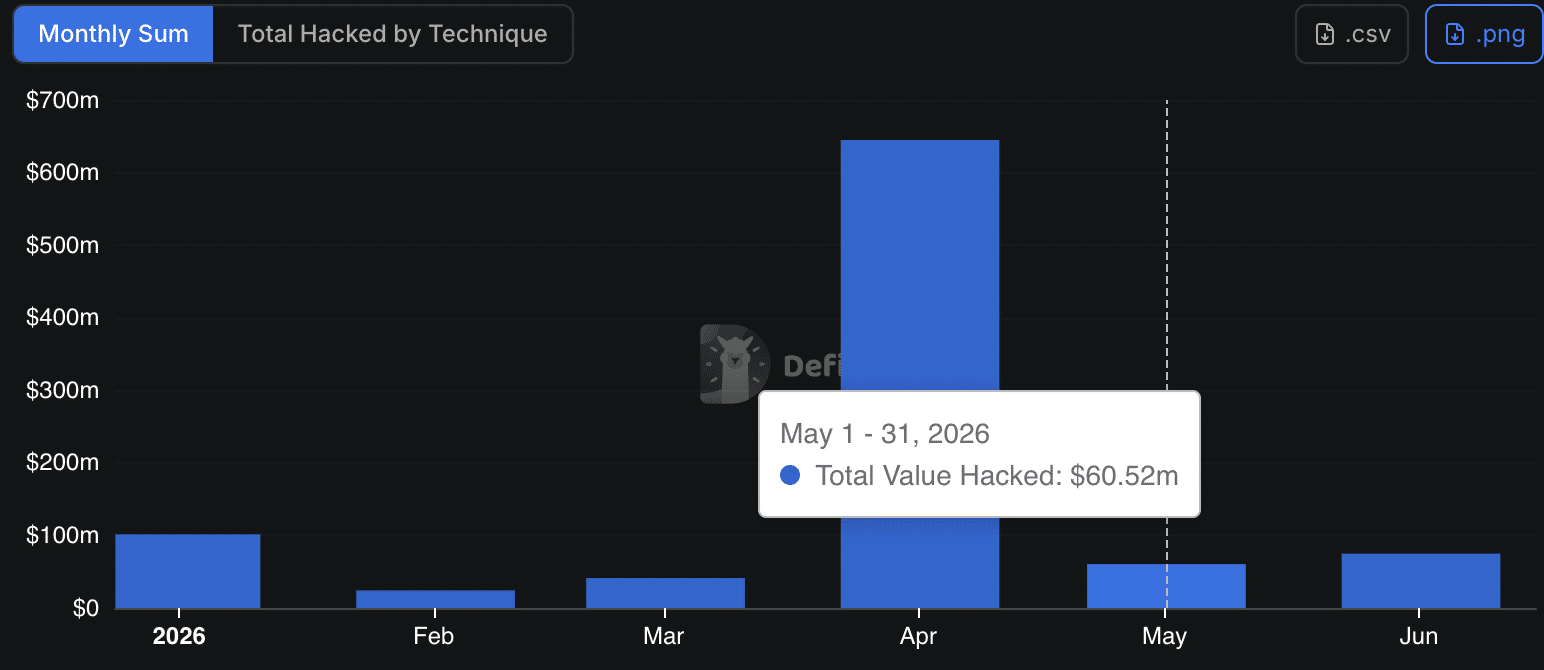
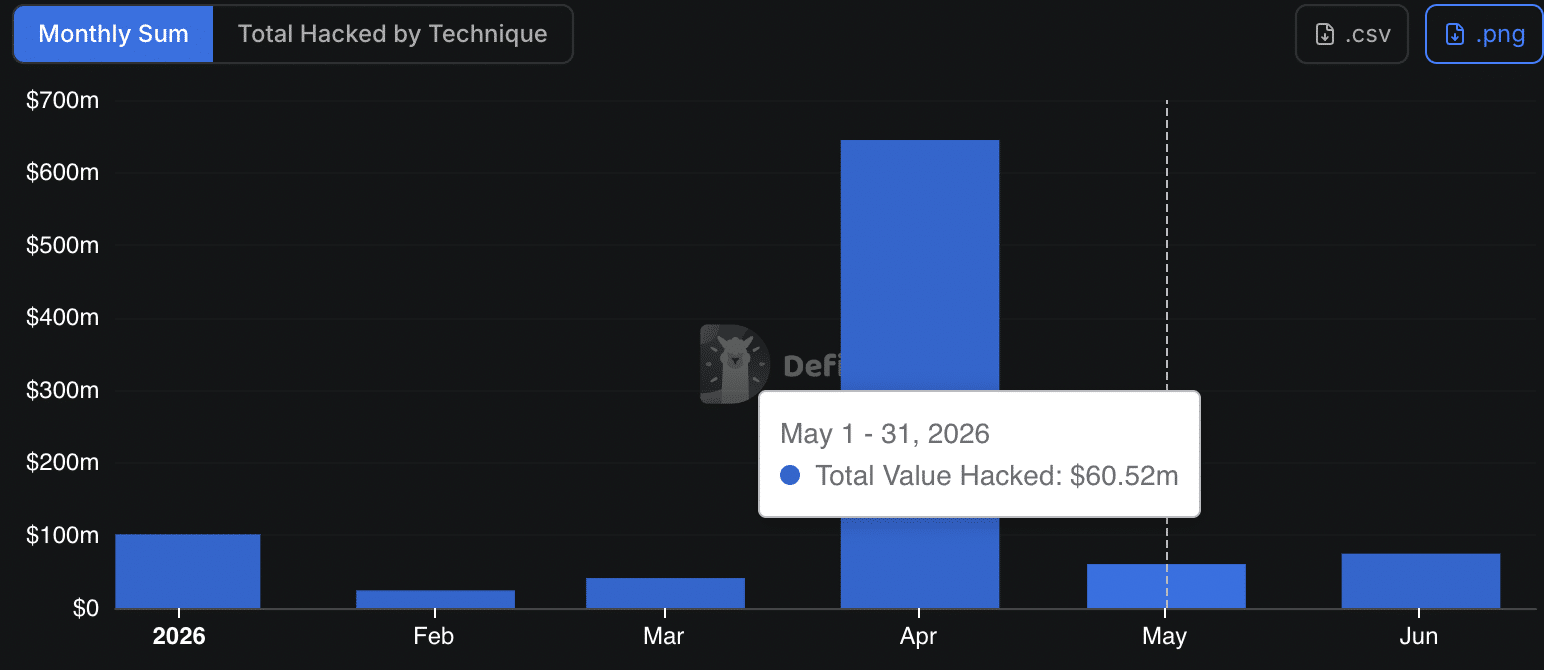
That said, all this might be because of a combination of macroeconomic and geopolitical factors, such as extended high-interest rates, intensifying geopolitical conflicts in Q1 2026, and increased numbers of hacks and exploits.
Source: DeFiLlama

Bitcoin and gold both flag signs of concerns

This coincided with the price of Bitcoin trading at $60,237.04 at the time of writing, following a 43% drop in a year. Meanwhile, the price of gold was at $4,071.95 following a 33% increase during the same period. Meanwhile, the Bitcoin to Gold ratio was at 14.63872, down 2.01% from the day before.
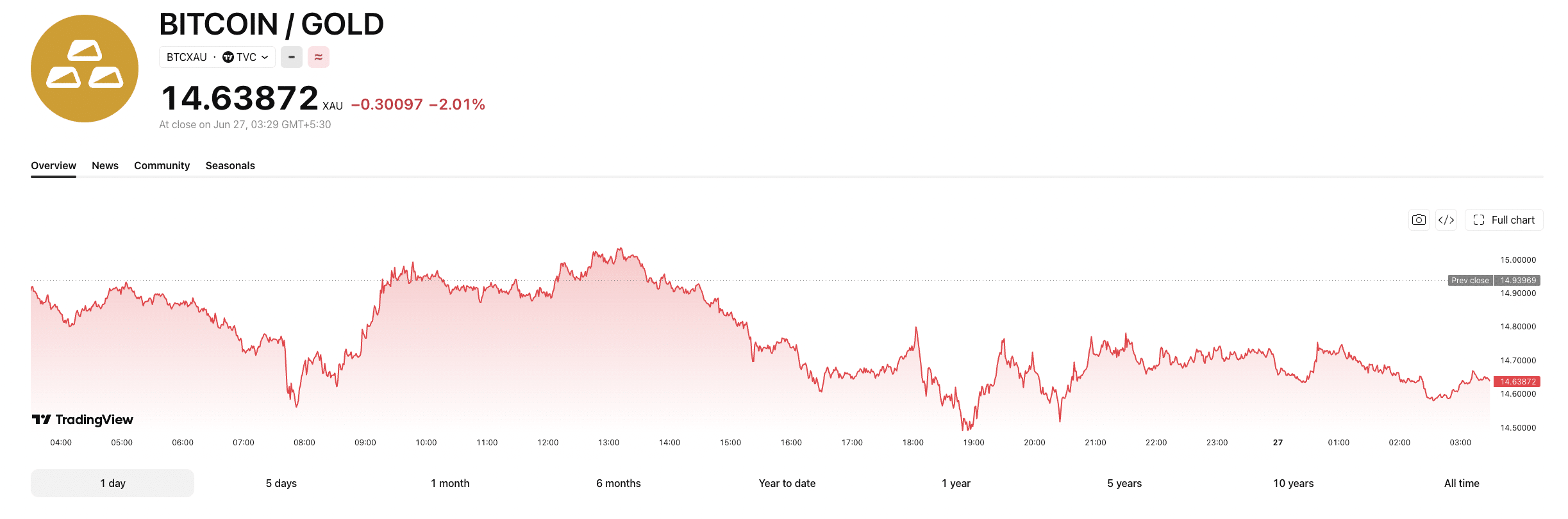
Source: Trading View

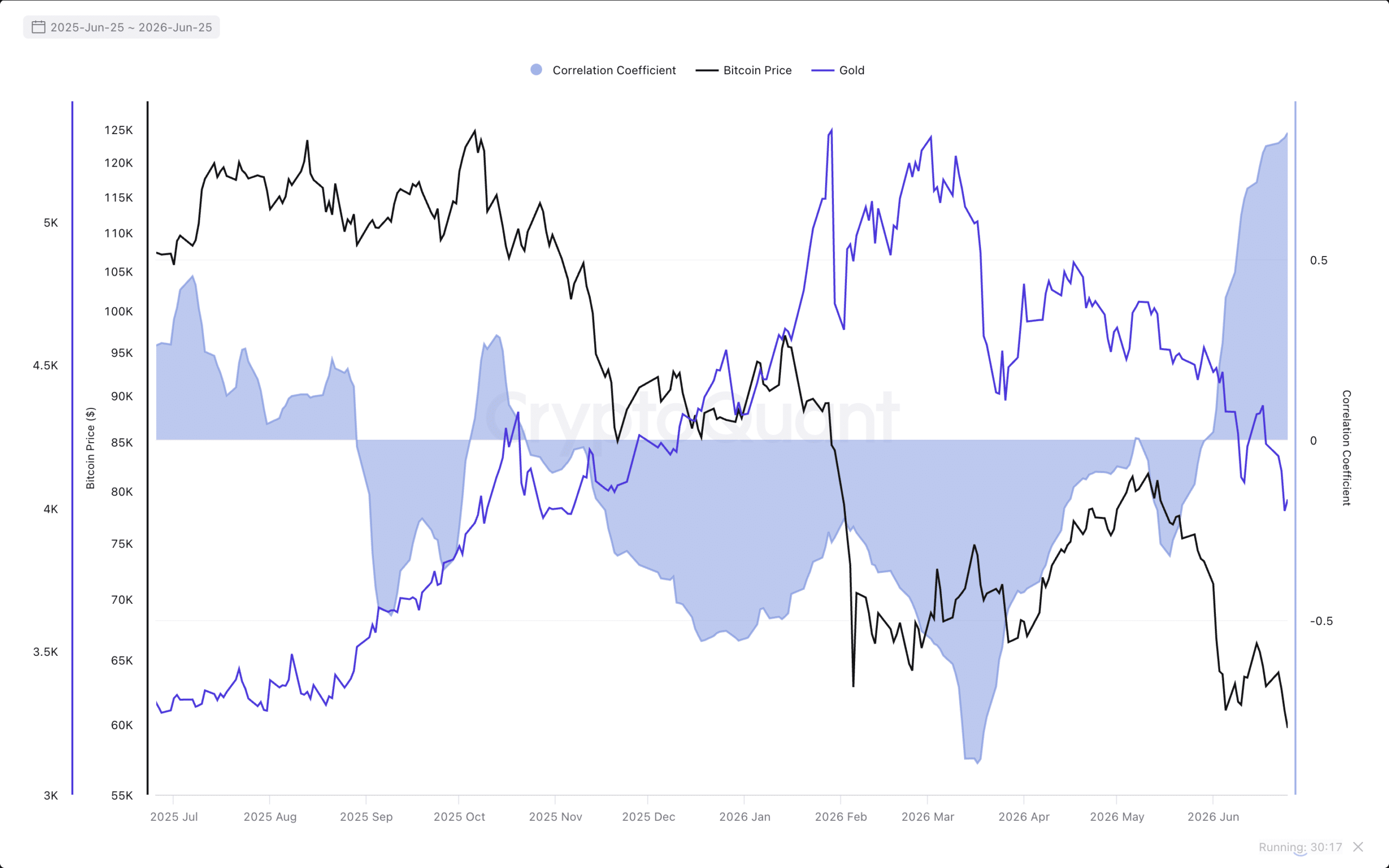
Additionally, a significant difference between June 2025 and June 2026 was also shown by the Bitcoin and Gold Price Correlation. The graph shows how the two assets’ correlation fluctuated throughout the year, often moving between positive and negative areas.
Source: CryptoQuant

Though their price movements were only marginally related, Bitcoin traded above $110,000 in the second half of 2025 while gold steadily gained ground.

At first, gold held up well, reflecting its long-standing appeal during times of market turbulence, even as Bitcoin entered a steep decline starting in February 2026, dropping from about $90,000 to almost $60,000. However, the correlation coefficient jumped into strongly positive territory by June 2026 as gold also started to decline.

Regarding this, Bitcoin expert Adam Livingston had recently pointed out,

2026 is officially the most oversold year for Bitcoin versus gold ever recorded.

What happened in previous years?

That said, throughout history, Bitcoin and gold have often moved in opposing directions during periods of market stress.

According to a previous report by AMBCrypto, during the March COVID-19 outbreak, Bitcoin rose 21% while the S&P 500 and gold increased 2% and 3%, respectively.

Similar trends were seen in the Russia-Ukraine war, the U.S. banking crisis, and the U.S.-Iran war in 2026.


Final Summary

  • Both Bitcoin and gold, which usually move in opposite directions, have already declined this year.
  • Bitcoin to Gold ratio and the price correlation between the 2 assets further flag signs of stress.


Trending Cryptos

Related Questions

QWhat unusual phenomenon regarding Bitcoin and gold in 2026 is highlighted by strategist Charlie Bilello?

ACharlie Bilello highlighted that Bitcoin and gold have both declined significantly in 2026, with Bitcoin down 31% and gold down 6%, making them the two worst-performing major asset classes for the year so far—a combination not seen before in any calendar year.

QAccording to the article, what are some potential reasons for the simultaneous decline of Bitcoin and gold in 2026?

AThe article suggests the decline could be due to a combination of macroeconomic and geopolitical factors, including extended high-interest rates, intensifying geopolitical conflicts in Q1 2026, and an increased number of hacks and exploits.

QHow did the correlation between Bitcoin and gold's price movements change from 2025 to mid-2026?

AIn the second half of 2025, Bitcoin traded above $110,000 while gold steadily gained, showing only a marginal correlation. However, by June 2026, after Bitcoin entered a steep decline and gold also started to fall, the correlation coefficient jumped into strongly positive territory.

QWhat is the historical pattern for Bitcoin and gold movements during periods of market stress, according to the article?

AHistorically, during periods of market stress such as the March COVID-19 outbreak, the Russia-Ukraine war, the U.S. banking crisis, and the 2026 U.S.-Iran war, Bitcoin and gold have often moved in opposing directions.

QWhat statement did Bitcoin expert Adam Livingston make about 2026 concerning Bitcoin versus gold?

ABitcoin expert Adam Livingston stated that '2026 is officially the most oversold year for Bitcoin versus gold ever recorded.'

Related Reads

Tokens as Assets: Which Type of Tokenized Stock Is Right for You?

**Tokenized Stocks: Three Models, Which Suits You?** For investors outside the US, accessing stocks like SpaceX or NVIDIA is often difficult, requiring compliant brokers and cross-border transfers. Blockchain offers an alternative through tokenized stocks, but this term encompasses three distinct models with vastly different ownership, voting rights, and economic benefits. The first model offers full, direct ownership. Platforms like Superstate register shares directly on-chain (e.g., Solana), with holders listed on the official shareholder registry, granting full voting rights, dividends, and legal status. The second model sacrifices direct ownership for DeFi composability. Issuers like Backed and Ondo use offshore Special Purpose Vehicles (SPVs) to issue tokens 1:1 backed by real shares. Holders gain price exposure and automated dividend accruals (via token balance increases), and tokens can be used as collateral in DeFi protocols. However, this introduces SPV counterparty risk, as seen in the PreStocks collapse. The third model abandons ownership entirely for pure price speculation. Perpetual futures platforms like TradeXYZ (on Hyperliquid) and Ostium create synthetic markets using price oracles and funding rates to track stock prices. They require no underlying shares, enabling rapid listing (e.g., SpaceX pre-IPO) and high leverage, which explains their trading volumes being 4-5x higher than tokenized spot markets. The core insight is that tokens derive value without needing to replicate full stock ownership. Most retail investors rarely exercise voting rights. These three models cater to different needs: direct ownership for institutions, DeFi-composable tokens for on-chain users, and perpetuals for leveraged, speculative traders. Tokenization is not a mere stock substitute but a new class of layered financial instruments.

Foresight News3m ago

Tokens as Assets: Which Type of Tokenized Stock Is Right for You?

Foresight News3m ago

Trading Moments: Bitcoin's 200-week moving average has turned into a resistance level, can the July rise still be realized?

**Market Recap: Key Global Developments and Outlook** Global markets are navigating shifting dynamics. Geopolitical tensions eased as the US and Iran agreed to halt further military actions, planning talks for June 30. This pushed oil prices down, with WTI crude dropping below $70. Meanwhile, gold saw a "death cross" (50-day moving average crossing below the 200-day), pressured by a strong dollar and rising real yields. A methodological revision to the US PCE inflation index, set for September, is expected to artificially lower reported core inflation, drawing criticism for lack of transparency. In US equities, major indices extended losses, with the S&P 500 and Nasdaq recording their longest losing streaks since last year. Hedge funds aggressively sold tech stocks, particularly in semiconductors, leading to a sharp rotation into defensive sectors like healthcare and utilities. SpaceX is set for rapid inclusion in the Nasdaq 100, potentially triggering significant passive fund inflows, while its valuation faces scrutiny. Bitcoin is on track for its worst monthly performance since 2022, down over 18% in June. It has failed to reclaim its 200-week moving average (now acting as resistance near $62.6k), raising the risk of a drop toward $55k. Historically, July is a strong month for BTC, with an average gain of 7.6%. Analysts suggest the current sell-off could present a buying opportunity, with a key test being whether Bitcoin can stabilize above $61k to confirm a reversal. In Asia, South Korean stocks initially fell on semiconductor selling but recovered after the government announced a massive investment plan for chips and AI. Japanese retail sales showed strength, supporting consumer recovery. Chinese markets saw a rebalancing, with healthcare stocks surging on policy catalysts and consumption shares rebounding. Hong Kong tech stocks also rallied. **Key upcoming events:** * June 30: US-Iran technical talks; MiCA transition deadline in Spain; NetEase's dual-primary listing in Hong Kong. * July 1: ECB's Sintra Forum featuring key central bankers. * July 6-7: SpaceX's inclusion in Nasdaq 100 triggering passive fund flows. * September 30: New US PCE methodology takes effect.

marsbit28m ago

Trading Moments: Bitcoin's 200-week moving average has turned into a resistance level, can the July rise still be realized?

marsbit28m ago

Lao Huang: Prompt is Dead, the Entire AI Community is Frenziedly Chasing Loops

The article "Prompt is Dead: The AI Industry is Obsessively Chasing Loops" discusses a major shift in AI development, where "Loop Engineering" is replacing traditional prompt engineering. Industry leaders like NVIDIA's Jensen Huang, Andrew Ng, and engineers from Anthropic and OpenAI argue that manually crafting prompts is becoming obsolete. Instead, the new focus is on designing autonomous, self-improving AI systems (loops) that can operate 24/7. A loop system typically involves five key phases: Discovery (finding tasks), Handoff (assigning to agents), Validation (critical independent review), Persistence (saving progress), and Scheduling (automated operation). The core idea is to move humans from being the operational "engine" to being the system "architects" who design the loop, define goals, and set up verification mechanisms. A major challenge and necessity is implementing robust, independent validation to prevent AI from uncritically approving its own work. The trend is seen as part of a move towards "inference-time compute," where allocating computational budget effectively becomes a key engineering skill. While loops can produce higher-quality outputs, they are more expensive and time-consuming than simple prompting. The article warns of risks like "verification debt," "comprehension corrosion," and "cognitive surrender," where engineers might stop understanding the code their systems generate. Ultimately, the article concludes that in an era of automated loops, human judgment and oversight remain the most critical and scarce resources.

marsbit33m ago

Lao Huang: Prompt is Dead, the Entire AI Community is Frenziedly Chasing Loops

marsbit33m ago

Trading

Spot

Hot Articles

What is $BITCOIN

DIGITAL GOLD ($BITCOIN): A Comprehensive Analysis Introduction to DIGITAL GOLD ($BITCOIN) DIGITAL GOLD ($BITCOIN) is a blockchain-based project operating on the Solana network, which aims to combine the characteristics of traditional precious metals with the innovation of decentralized technologies. While it shares a name with Bitcoin, often referred to as “digital gold” due to its perception as a store of value, DIGITAL GOLD is a separate token designed to create a unique ecosystem within the Web3 landscape. Its goal is to position itself as a viable alternative digital asset, although specifics regarding its applications and functionalities are still developing. What is DIGITAL GOLD ($BITCOIN)? DIGITAL GOLD ($BITCOIN) is a cryptocurrency token explicitly designed for use on the Solana blockchain. In contrast to Bitcoin, which provides a widely recognized value storage role, this token appears to focus on broader applications and characteristics. Notable aspects include: Blockchain Infrastructure: The token is built on the Solana blockchain, known for its capacity to handle high-speed and low-cost transactions. Supply Dynamics: DIGITAL GOLD has a maximum supply capped at 100 quadrillion tokens (100P $BITCOIN), although details regarding its circulating supply are currently undisclosed. Utility: While precise functionalities are not explicitly outlined, there are indications that the token could be utilized for various applications, potentially involving decentralized applications (dApps) or asset tokenization strategies. Who is the Creator of DIGITAL GOLD ($BITCOIN)? At present, the identity of the creators and development team behind DIGITAL GOLD ($BITCOIN) remains unknown. This situation is typical among many innovative projects within the blockchain space, particularly those aligning with decentralized finance and meme coin phenomena. While such anonymity may foster a community-driven culture, it intensifies concerns about governance and accountability. Who are the Investors of DIGITAL GOLD ($BITCOIN)? The available information indicates that DIGITAL GOLD ($BITCOIN) does not have any known institutional backers or prominent venture capital investments. The project seems to operate on a peer-to-peer model focused on community support and adoption rather than traditional funding routes. Its activity and liquidity are primarily situated on decentralized exchanges (DEXs), such as PumpSwap, rather than established centralized trading platforms, further highlighting its grassroots approach. How DIGITAL GOLD ($BITCOIN) Works The operational mechanics of DIGITAL GOLD ($BITCOIN) can be elaborated on based on its blockchain design and network attributes: Consensus Mechanism: By leveraging Solana’s unique proof-of-history (PoH) combined with a proof-of-stake (PoS) model, the project ensures efficient transaction validation contributing to the network's high performance. Tokenomics: While specific deflationary mechanisms have not been extensively detailed, the vast maximum token supply implies that it may cater to microtransactions or niche use cases that are still to be defined. Interoperability: There exists the potential for integration with Solana’s broader ecosystem, including various decentralized finance (DeFi) platforms. However, the details regarding specific integrations remain unspecified. Timeline of Key Events Here is a timeline that highlights significant milestones concerning DIGITAL GOLD ($BITCOIN): 2023: The initial deployment of the token occurs on the Solana blockchain, marked by its contract address. 2024: DIGITAL GOLD gains visibility as it becomes available for trading on decentralized exchanges like PumpSwap, allowing users to trade it against SOL. 2025: The project witnesses sporadic trading activity and potential interest in community-led engagements, although no noteworthy partnerships or technical advancements have been documented as of yet. Critical Analysis Strengths Scalability: The underlying Solana infrastructure supports high transaction volumes, which could enhance the utility of $BITCOIN in various transaction scenarios. Accessibility: The potential low trading price per token could attract retail investors, facilitating wider participation due to fractional ownership opportunities. Risks Lack of Transparency: The absence of publicly known backers, developers, or an audit process may yield skepticism regarding the project's sustainability and trustworthiness. Market Volatility: The trading activity is heavily reliant on speculative behavior, which can result in significant price volatility and uncertainty for investors. Conclusion DIGITAL GOLD ($BITCOIN) emerges as an intriguing yet ambiguous project within the rapidly evolving Solana ecosystem. While it attempts to leverage the “digital gold” narrative, its departure from Bitcoin's established role as a store of value underscores the need for a clearer differentiation of its intended utility and governance structure. Future acceptance and adoption will likely depend on addressing the current opacity and defining its operational and economic strategies more explicitly. Note: This report encompasses synthesised information available as of October 2023, and developments may have transpired beyond the research period.

506 Total ViewsPublished 2025.05.13Updated 2025.05.13

What is $BITCOIN

Discussions

Welcome to the HTX Community. Here, you can stay informed about the latest platform developments and gain access to professional market insights. Users' opinions on the price of BTC (BTC) are presented below.

活动图片