Bessent Draws a Line on Bitcoin Bailouts: Why Investors are Flocking to $SUBBD for Self-Sustaining Yield

bitcoinistPublished on 2026-02-05Last updated on 2026-02-05

Abstract

Scott Bessent, the anticipated U.S. Treasury Secretary, has signaled that the federal government will not bail out the cryptocurrency sector, forcing the market to rely on self-sustaining economics. This shift is driving investor interest toward assets with real-world utility and external revenue streams, such as SUBBD Token ($SUBBD). Targeting the $85B creator economy, SUBBD uses an Ethereum-based ecosystem with AI tools to reduce platform fees and empower creators. The token has raised over $1.47M in its presale and offers a 20% APY staking reward for early adopters, positioning itself as a defensible investment in a post-bailout crypto landscape.

The era of implied safety nets for digital assets isn’t just closing; it never really opened.

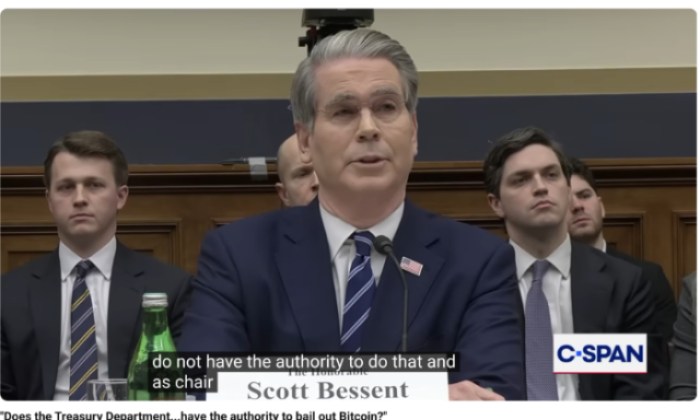
Scott Bessent, the anticipated U.S. Treasury Secretary, has signaled that the federal government won’t extend bailouts to the cryptocurrency sector. This stance effectively removes the ‘moral hazard’ that has plagued traditional finance, serving notice that crypto markets must stand on their own merit, liquidity, and solvency.

This clarity lands at a pivotal moment. While Bitcoin ($BTC) continues to trade low, the broader altcoin market also faces a reckoning. Bessent’s ‘no bailout’ doctrine suggests that protocols relying on speculative leverage or obscure backing mechanisms will face unchecked liquidation risks during downturns.

The market is listening. Smart money is already rotating away from governance tokens with vague value accrual and toward assets backed by external revenue streams.

The takeaway? Survival now depends on self-sustaining economics. This shift in sentiment is driving capital toward sectors that generate cash flow independent of broader market volatility.

Specifically, the convergence of AI and the $85B creator economy has emerged as a primary flight-to-safety destination. Leading this charge is SUBBD Token ($SUBBD), a platform using Web3 architecture to ensure creators and investors capture value directly, bypassing the need for systemic support.

SUBBD Token Disrupts The $85B Creator Economy With AI Integration

Bessent’s philosophy favors assets that solve real-world inefficiencies over those relying on circular DeFi yield. SUBBD Token targets the content creation industry, a sector historically plagued by predatory intermediaries.

Traditional Web2 platforms often grab between 20% and 70% of creator earnings while retaining absolute control over account suspension. This centralization creates a fragile ecosystem where income can vanish overnight, a risk profile that aligns poorly with the strict market discipline the Treasury now advocates.

SUBBD addresses this by deploying an Ethereum-based (ERC-20) ecosystem that merges AI utility with decentralized payments. The platform democratizes advanced tools previously reserved for studio-level production.

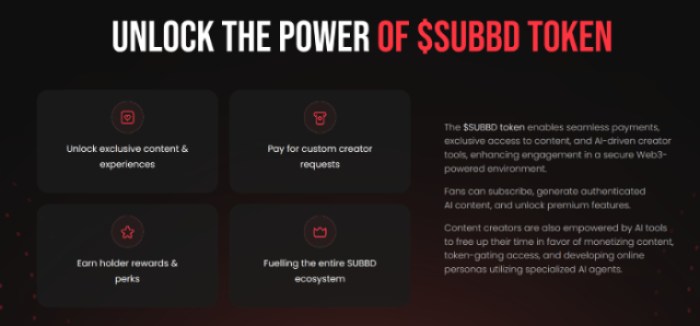
Users will gain access to AI Personal Assistants for automated interactions, AI Voice Cloning, and tools for generating AI-exclusive content. That matters because it lowers the barrier to entry for creators while simultaneously slashing the fees they pay to platforms.

By using blockchain for transactions, SUBBD creates a transparent revenue model where earnings are settled instantly.

For investors, the utility argument is straightforward. The token isn’t merely a speculative vehicle; it’s the currency of a functional economy. $SUBBD is required for token-gated exclusive content, tipping, and NFT sales.

Plus, the platform introduces ‘HoneyHive’ governance, allowing token holders to vote on feature rollouts. In a market where the Treasury has ruled out rescuing failed projects, protocols like SUBBD (which anchor their value in the high-growth demand of the creator economy) offer a defensive play against regulatory indifference.

VISIT THE $SUBBD PRESALE TO BE PART OF THE DISRUPTION

Early Adopters Secure 20% Staking APY As Presale Crosses $1.47M

While headlines focus on regulatory shifts, on-chain data shows a distinct appetite for yield-bearing assets during the presale phase. SUBBD Token has raised over $1.47M to date, signaling robust demand despite broader market uncertainty. The current entry price is set at $0.05749, positioning early participants at a potentially advantageous cost basis before the platform’s full public launch.

The project’s staking structure is designed to reward long-term conviction over short-term flipping, a crucial feature in a market stripped of government backstops. $SUBBD offers a fixed 20% APY for the first year to users who lock their tokens.

This high-yield incentive serves a dual purpose: it secures network stability during the critical bootstrapping phase and provides investors with predictable returns unrelated to Bitcoin’s price action. Beyond simple yield, stakers gain access to VIP benefits, including exclusive livestreams, daily ‘Behind The Scenes’ drops, and XP multipliers that enhance platform status.

What most coverage misses is the strategic importance of the ‘Platform Benefit Staking’ model that kicks in after the first year. Unlike inflationary farming tokens that print endless supply, SUBBD’s staking rewards evolve to offer tangible platform utility. Find out more in our ‘What is SUBBD Token‘ guide.

This transition from monetary inflation to utility-based rewards creates deflationary pressure on the circulating supply as the platform grows. With features like AI influencer creation already integrated, the project is positioning itself not just as a crypto asset but as infrastructure for the next generation of digital media.

GET YOUR $SUBBD HERE

This article is for informational purposes only and does not constitute financial advice. Cryptocurrency investments carry high risks, including the potential loss of all invested capital. Always conduct independent research before participating in any presale.

Related Questions

QWhat stance has Scott Bessent, the anticipated U.S. Treasury Secretary, taken regarding cryptocurrency bailouts?

AScott Bessent has signaled that the federal government will not extend bailouts to the cryptocurrency sector, removing the 'moral hazard' and requiring crypto markets to stand on their own merit, liquidity, and solvency.

QWhich token is highlighted as a solution for self-sustaining yield in the article and what sector does it target?

AThe SUBBD Token ($SUBBD) is highlighted, and it targets the $85 billion creator economy, using Web3 and AI integration to provide value directly to creators and investors.

QWhat is the current presale achievement of SUBBD Token mentioned in the article?

ASUBBD Token has raised over $1.47 million in its presale to date.

QWhat annual percentage yield (APY) does SUBBD Token offer for staking in the first year?

ASUBBD Token offers a fixed 20% APY for the first year to users who lock their tokens.

QHow does SUBBD Token aim to address issues in the content creation industry?

ASUBBD Token uses an Ethereum-based ecosystem to democratize advanced AI tools, reduce platform fees, and create a decentralized payment model, allowing creators to retain more value and avoid the control of predatory intermediaries.

Related Reads

The Largest IPO in History Ignites Heated Debate: Is SpaceX Worth $1.77 Trillion?

SpaceX's potential IPO is priced at $135 per share, aiming to raise $75 billion and valuing the company at approximately $1.77 trillion, which would make it the largest IPO in history. This valuation has sparked intense debate among investors. Bullish analysts, including major underwriters Goldman Sachs and Morgan Stanley, argue the valuation is justified by SpaceX's long-term potential. They see it not just as a rocket company but as a future leader in space infrastructure, with key growth drivers being Starlink satellite internet, low-cost rocket launches, and future AI-related ventures. They project revenues reaching hundreds of billions to trillions of dollars by 2030-2040. ARK Invest's model suggests a 2030 enterprise value could reach $2.5 trillion. Bearish analysts from independent research firms like Morningstar, PitchBook, and New Constructs contend the IPO price is excessively high, already pricing in unrealistic future growth. Using DCF and sum-of-the-parts models, they estimate fair value between $780 billion and $1.7 trillion, significantly below the IPO target. They highlight risks such as the speculative nature of AI projections, over-dependence on Elon Musk, high growth expectations, and corporate governance concerns. Trefis set a target price of just $79 per share. While both sides acknowledge SpaceX's unique position in commercial space, the core disagreement centers on whether the $135 share price offers a reasonable margin of safety or is overly optimistic. Despite the valuation controversy, reported strong demand for the IPO indicates significant market interest.

marsbit48m ago

The Largest IPO in History Ignites Heated Debate: Is SpaceX Worth $1.77 Trillion?

marsbit48m ago

After the Passage of the GENIUS Act and the CLARITY Act, What Is the Correct Architecture for On-Chain Yield?

The article discusses the evolution of on-chain credit, distinguishing three markets: overcollateralized crypto lending, unsecured lending (largely unsuccessful), and asset-backed credit (ABC). ABC, backed by identifiable real-world collateral with legal recourse, is identified as the fastest-growing category and the only one credibly addressing adverse selection—the core problem in credit where the riskiest borrowers self-select. Current growth in on-chain Real World Assets (RWAs), particularly tokenized private credit funds (e.g., Maple Finance, Centrifuge), is substantial but often merely "wraps" existing fund structures, inheriting their risks rather than solving adverse selection at the protocol level. The regulatory landscape is a key driver, with the US GENIUS Act (prohibiting stablecoin issuers from paying yield) and the proposed CLARITY Act (closing loopholes on indirect yield) set to redefine permissible yield-bearing products. This makes vaults (like ERC-4626) the critical architecture—they become the primary compliant vehicle for delivering yield, functioning as issuance, disclosure, distribution, and recovery mechanisms. The author's thesis is that the correct post-GENIUS/CLARITY architecture involves building ABC solutions where credit assessment, structure, and recovery are encoded directly into the smart contract vault layer, moving beyond mere tokenized fund wrappers to solve adverse selection fundamentally and ensure regulatory compliance.

Foresight News1h ago

After the Passage of the GENIUS Act and the CLARITY Act, What Is the Correct Architecture for On-Chain Yield?

Foresight News1h ago

TechFlow Intelligence Bureau: Anthropic's New Model Fable Sparks Controversy by Restricting Biosafety Research, US CPI Soars to 4.2%, a Three-Year High

**Summary of TechFlow Intelligence Report:** The newsletter covers several key tech and finance developments. In AI, Anthropic's new Fable model faced backlash for secretly limiting biomedical research capabilities and enforcing a 30-day data retention policy, prompting the company to promise more transparent adjustments. In a related story, Anthropic's founder revealed his departure from OpenAI was due to dishonesty from Sam Altman, not safety concerns. Meanwhile, OpenAI is considering significant price cuts to compete with Anthropic, potentially sparking a price war. In crypto/Web3, BlackRock filed a new amendment for a yield-generating Bitcoin ETF, while Bank of America's CEO warned that stablecoin yields could drain trillions from traditional banks. U.S. Senator Cynthia Lummis advocated for the U.S. to officially accumulate Bitcoin reserves. In hardware, Nvidia released the DiffusionGemma-2-6B image model optimized for efficient inference, and AMD promoted its unified memory architecture to challenge Nvidia's dominance. TSMC's CFO hinted at possible price increases due to soaring AI chip demand. A major legal ruling in Germany held Google legally responsible for inaccurate information generated by its AI Overviews feature. Google Chrome also moved to fully block ad-blocker workarounds like uBlock Origin. Macroeconomic headlines included U.S. CPI rising to 4.2% (a 3-year high) and Iran's complete closure of the Strait of Hormuz, raising oil price and inflation fears. South Korean markets saw continued volatility with massive foreign capital outflow. Other notable stories: Microsoft expanded its Copilot AI assistant "Mico" globally; a study found r/wallstreetbets users' stock picks outperformed Wall Street; a fully autonomous drone killed a human soldier for the first time, raising AI ethics concerns; and a Chinese hospital used brain-computer interface technology to help a blind person "see." The overarching theme connects debates over AI boundaries and responsibility (Anthropic's restrictions, Google's liability, lethal autonomous drones) with real-world economic and geopolitical turmoil (inflation, Strait of Hormuz closure, market instability), highlighting the tense interplay between technological advancement and global chaos.

marsbit1h ago

TechFlow Intelligence Bureau: Anthropic's New Model Fable Sparks Controversy by Restricting Biosafety Research, US CPI Soars to 4.2%, a Three-Year High

marsbit1h ago

Alibaba's Yet Another New Business Division: What Signal Does It Send?

Alibaba has established a new "Token Foundry" business unit, merging its Tongyi large model division and Future Life Lab. Led directly by Group CEO Wu Yongming, this marks the company's third significant AI organizational reshuffle in 2026, following the creation of the Alibaba Token Hub (ATH) and a Group Technology Committee. The move signals a strategic shift from consolidating AI resources to accelerating productization and commercialization. The "Token Foundry" name reflects Alibaba's ambition to become a foundational supplier in the AI era, focusing on model development and commercial application. Key teams, including those behind the high-performing HappyHorse video generation model, have been integrated into the new unit. Concurrently, Zhou Jingren, architect of the Qwen model series, has been appointed Group Chief Scientist to lead a new AI Future Research Institute, focusing on long-term technological breakthroughs like Agent capabilities. This restructuring creates a clear four-layer AI architecture within Alibaba: the research institute for frontier exploration, Token Foundry for core models and commercialization, MaaS for platform services, and business units like Qianwen (C端) and Wukong (B端) for end-user applications. The adjustments align with a global trend among tech giants like Google and Microsoft to centralize AI leadership under the CEO and deeply integrate research with business units. The urgency is driven by a narrowing competitive window. Alibaba has announced its AI business is now entering a commercialization phase, with AI-related revenue seeing triple-digit growth for eleven consecutive quarters. The company faces intense competition in the MaaS (Model-as-a-Service) sector from rivals like ByteDance and Tencent. The Token Foundry initiative represents Alibaba's effort to streamline execution and enhance competitiveness in this critical, fast-evolving landscape.

marsbit2h ago

Alibaba's Yet Another New Business Division: What Signal Does It Send?

marsbit2h ago

Trading

Spot
Futures

Hot Articles

What is $BITCOIN

DIGITAL GOLD ($BITCOIN): A Comprehensive Analysis Introduction to DIGITAL GOLD ($BITCOIN) DIGITAL GOLD ($BITCOIN) is a blockchain-based project operating on the Solana network, which aims to combine the characteristics of traditional precious metals with the innovation of decentralized technologies. While it shares a name with Bitcoin, often referred to as “digital gold” due to its perception as a store of value, DIGITAL GOLD is a separate token designed to create a unique ecosystem within the Web3 landscape. Its goal is to position itself as a viable alternative digital asset, although specifics regarding its applications and functionalities are still developing. What is DIGITAL GOLD ($BITCOIN)? DIGITAL GOLD ($BITCOIN) is a cryptocurrency token explicitly designed for use on the Solana blockchain. In contrast to Bitcoin, which provides a widely recognized value storage role, this token appears to focus on broader applications and characteristics. Notable aspects include: Blockchain Infrastructure: The token is built on the Solana blockchain, known for its capacity to handle high-speed and low-cost transactions. Supply Dynamics: DIGITAL GOLD has a maximum supply capped at 100 quadrillion tokens (100P $BITCOIN), although details regarding its circulating supply are currently undisclosed. Utility: While precise functionalities are not explicitly outlined, there are indications that the token could be utilized for various applications, potentially involving decentralized applications (dApps) or asset tokenization strategies. Who is the Creator of DIGITAL GOLD ($BITCOIN)? At present, the identity of the creators and development team behind DIGITAL GOLD ($BITCOIN) remains unknown. This situation is typical among many innovative projects within the blockchain space, particularly those aligning with decentralized finance and meme coin phenomena. While such anonymity may foster a community-driven culture, it intensifies concerns about governance and accountability. Who are the Investors of DIGITAL GOLD ($BITCOIN)? The available information indicates that DIGITAL GOLD ($BITCOIN) does not have any known institutional backers or prominent venture capital investments. The project seems to operate on a peer-to-peer model focused on community support and adoption rather than traditional funding routes. Its activity and liquidity are primarily situated on decentralized exchanges (DEXs), such as PumpSwap, rather than established centralized trading platforms, further highlighting its grassroots approach. How DIGITAL GOLD ($BITCOIN) Works The operational mechanics of DIGITAL GOLD ($BITCOIN) can be elaborated on based on its blockchain design and network attributes: Consensus Mechanism: By leveraging Solana’s unique proof-of-history (PoH) combined with a proof-of-stake (PoS) model, the project ensures efficient transaction validation contributing to the network's high performance. Tokenomics: While specific deflationary mechanisms have not been extensively detailed, the vast maximum token supply implies that it may cater to microtransactions or niche use cases that are still to be defined. Interoperability: There exists the potential for integration with Solana’s broader ecosystem, including various decentralized finance (DeFi) platforms. However, the details regarding specific integrations remain unspecified. Timeline of Key Events Here is a timeline that highlights significant milestones concerning DIGITAL GOLD ($BITCOIN): 2023: The initial deployment of the token occurs on the Solana blockchain, marked by its contract address. 2024: DIGITAL GOLD gains visibility as it becomes available for trading on decentralized exchanges like PumpSwap, allowing users to trade it against SOL. 2025: The project witnesses sporadic trading activity and potential interest in community-led engagements, although no noteworthy partnerships or technical advancements have been documented as of yet. Critical Analysis Strengths Scalability: The underlying Solana infrastructure supports high transaction volumes, which could enhance the utility of $BITCOIN in various transaction scenarios. Accessibility: The potential low trading price per token could attract retail investors, facilitating wider participation due to fractional ownership opportunities. Risks Lack of Transparency: The absence of publicly known backers, developers, or an audit process may yield skepticism regarding the project's sustainability and trustworthiness. Market Volatility: The trading activity is heavily reliant on speculative behavior, which can result in significant price volatility and uncertainty for investors. Conclusion DIGITAL GOLD ($BITCOIN) emerges as an intriguing yet ambiguous project within the rapidly evolving Solana ecosystem. While it attempts to leverage the “digital gold” narrative, its departure from Bitcoin's established role as a store of value underscores the need for a clearer differentiation of its intended utility and governance structure. Future acceptance and adoption will likely depend on addressing the current opacity and defining its operational and economic strategies more explicitly. Note: This report encompasses synthesised information available as of October 2023, and developments may have transpired beyond the research period.

363 Total ViewsPublished 2025.05.13Updated 2025.05.13

What is $BITCOIN

Discussions

Welcome to the HTX Community. Here, you can stay informed about the latest platform developments and gain access to professional market insights. Users' opinions on the price of BTC (BTC) are presented below.

活动图片