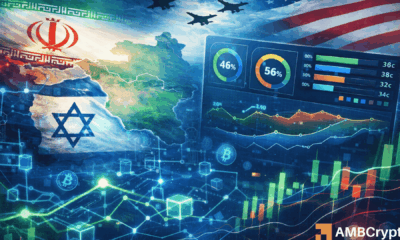
Iran Accepts Cryptocurrency Payments for Weapons Exports to Bypass Sanctions

TheNewsCryptoPublicado em 2026-01-02Última atualização em 2026-01-02

Resumo

Iran's government now allows foreign nations to purchase weapons from its Defence Ministry using cryptocurrency, according to local media. The initiative, led by the Ministry of Defence Export Center (Mindex), marks the first publicly known state-backed arms transaction via crypto. Available equipment includes ballistic missiles, drones, warships, and air defense systems. The move aims to bypass international sanctions that restrict Iran's access to global banking systems. Despite internal regulatory complexities and past U.S. sanctions related to crypto-facilitated trading, Iran continues to expand its use of digital assets for international trade, challenging the effectiveness of current sanctions.

The move, according to various local Iranian media sources, has been initiated by the Iranian government, which now permits foreign governments to purchase sophisticated equipment from the Iranian Defence Ministry using cryptocurrency. The project is led by the Ministry of Defence Export Center, or Mindex, a government entity tasked with the export of arms to foreign nations, and is the first publicly known case of a government supporting an arms transaction through the use of cryptocurrency.

Peruse Mindex’s official documentation, which has been analyzed by international media, and it appears that payment options include cryptocurrencies as well as barter trade and the Iranian fiat. The list of Iranian-manufactured goods available on their website includes Emad ballistic missiles, Shahed drones, Shahid Soleimani warships, and short-range surface-to-air defense systems.

While prices are not publicly posted, the exporter’s platform says that contracts can be completed without problems despite the sanctions and that in-person product inspections are available in Iran, subject to security approval.

Sanctions Drive Alternative Transactions

As Iran faces sanctions that hinder access to the global banking system, it has been observed to rely on cryptocurrency to promote its global trading and military sales activities. Iranian nuclear and military activities have had a previous serious history in engaging with transactions using digital currencies to enable global trading, including oil trading, and this led to sanctions in 2025 against individuals associated with “shadow banking” cryptocurrency networks managed by the U.S. Treasury.

Despite the legal and regulatory contradictions, domestic engagement with cryptocurrencies in Iran continues to grow. Estimates have suggested that millions of Iranians are active in crypto trading, while inbound digital asset volumes have risen year-over-year. The number of users of local exchanges like Bit24, Excoino, and Nobitex has grown, even if enforcement pressures vary.

Still, Iran’s internal regulatory landscape remains complex—separate developments have shown efforts to rein in or ban certain crypto transactions within the country at various times, a reminder of ongoing tension between economic necessity and regulatory control.

However, the Iranian willingness to receive payment in cryptocurrency for their exports of weapons indicates a paradigm shift in how nations facing sanctions are looking to conduct their international trade. The Iranian government is pushing the boundaries of the sanctions imposed on it by testing and beginning to explore other avenues via the adoption and integration of digital assets. This move is bound to receive more focus and attention from international regulatory bodies, as it calls into question the efficacy of the current sanctions.

Highlighted Crypto News:

‌Whale Wallet Deposits Additional USDC to Expand LIT Holdings, Price Rally Ahead?

TagsCrypto PaymentsIranIran Government

Perguntas relacionadas

QWhat is the primary reason Iran is accepting cryptocurrency payments for weapons exports?

ATo bypass international sanctions and facilitate global trading and military sales despite restricted access to the global banking system.

QWhich Iranian government entity is leading the initiative to accept cryptocurrency for arms exports?

AThe Ministry of Defence Export Center, also known as Mindex.

QWhat types of military equipment are listed for sale on Mindex's platform?

AEmad ballistic missiles, Shahed drones, Shahid Soleimani warships, and short-range surface-to-air defense systems.

QHow has Iran historically used cryptocurrency in its global trading activities?

AIran has used digital currencies for transactions related to oil trading and military activities, leading to sanctions against individuals associated with cryptocurrency networks.

QWhat does Iran's acceptance of cryptocurrency for weapon exports indicate about the effectiveness of sanctions?

AIt suggests a paradigm shift where sanctioned nations are exploring alternative trade avenues, potentially challenging the efficacy of current sanctions.

Leituras Relacionadas

Galaxy Research 10,000-Word Report: x402 and the "Leviathan Moment" of the AI Economy

Artificial intelligence agents are poised to transform the internet by enabling autonomous task execution, reducing the need for direct human interaction. Galaxy Research highlights the emergence of Agentic Payment Standards (APS), particularly the x402 protocol, which allows AI agents to use cryptocurrencies like stablecoins for seamless, on-demand payments for digital services, data access, and API calls. Developed by Coinbase, x402 leverages the HTTP 402 status code to facilitate machine-native transactions, eliminating the need for traditional payment rails or API key management. The protocol operates through a stack involving clients (agents), servers, coordinators, and blockchain settlement layers, with recent upgrades (x402 V2) enhancing support for subscriptions, reusable sessions, and service discovery. Early adoption saw speculative activity, but use cases are expanding into data-as-a-service, agent-to-agent transactions, and infrastructure payments. While x402 excels in micro-payments for digital resources, traditional players like Visa, PayPal, and Stripe are also developing agentic commerce solutions for regulated, high-value e-commerce transactions. The integration of APS could significantly improve capital efficiency for software production by replacing subscriptions with pay-per-use models, reducing friction in experimentation and development. In the long term, blockchain-based payments are likely to operate silently in the background, complementing rather than replacing existing systems, and becoming a foundational layer for the AI-driven economy without requiring end-user engagement with crypto directly.

比推Há 1h

Galaxy Research 10,000-Word Report: x402 and the "Leviathan Moment" of the AI Economy

比推Há 1h

Trading

Spot
Futuros

Discussões

Bem-vindo à Comunidade HTX. Aqui, pode manter-se informado sobre os mais recentes desenvolvimentos da plataforma e obter acesso a análises profissionais de mercado. As opiniões dos utilizadores sobre o preço de MOVE (MOVE) são apresentadas abaixo.

活动图片