AI Takes Over the Lab? Latest Research from USTC Puts It to the Test in the Real Physical World

marsbitPublished on 2026-08-06Last updated on 2026-08-06

Abstract

This study from the University of Science and Technology of China presents a real-world stress test for AI in scientific research. Researchers developed a machine-readable, modular laboratory for catalysis, consisting of 45 automated workstations. They evaluated 48 configurations combining 6 agent frameworks and 9 large language models (LLMs) across 32 expert-defined research tasks, conducting 4,608 tests. The key findings reveal a significant gap between AI's planning ability and reliable physical execution. Only 3.3% of all generated workflows (151 out of 4,608) could be executed without human correction. The best-performing agent/LLM combination achieved a 28.1% success rate. In a five-round closed-loop experiment, the AI could adjust local parameters based on results but failed at higher-level scientific replanning, such as redesigning analytical methods or correcting persistent critical omissions. Maintaining logical integrity for long-sequence workflows (over 30 steps) also proved challenging. The research distinguishes three often-conflated AI capabilities: generating plausible experimental plans, creating physically executable workflows, and performing evidence-driven strategic replanning. Results show the first does not guarantee the second, and parameter tuning is not equivalent to scientific reasoning. The platform serves as both a "testing ground" to quantify AI's scientific aptitude and a potential "training ground." By forming a "plan-execute-feedback-replan"...

How can we determine if artificial intelligence is intelligent enough to conduct scientific research and achieve end-to-end autonomous scientific discovery?

The latest research from the University of Science and Technology of China (USTC) has allowed an AI "brain" to take over a machine scientist laboratory "body," advancing this question from knowledge Q&A and solution generation to experimental execution and feedback learning in the real physical world.
Paper link: https://arxiv.org/abs/2607.23045

The research team built a machine catalysis laboratory, which includes 45 modular automated workstations covering synthesis, characterization, and catalytic performance testing.

To enable the AI to understand and utilize the lab's capabilities, the research team encapsulated these capabilities into machine-readable skills. The AI agent can directly call on experimental equipment through these skills while being constrained by the actual equipment capabilities, operational protocols, and experimental conditions.
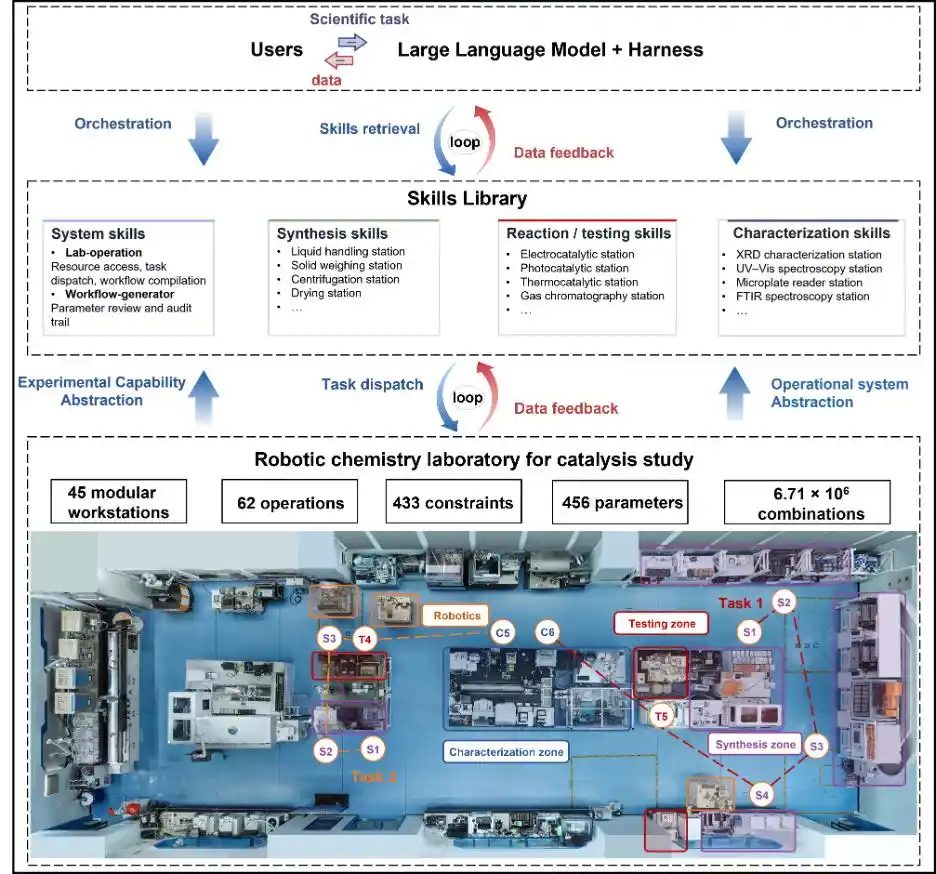
Figure 1. Architecture of an AI-readable machine scientist laboratory for catalysis research.
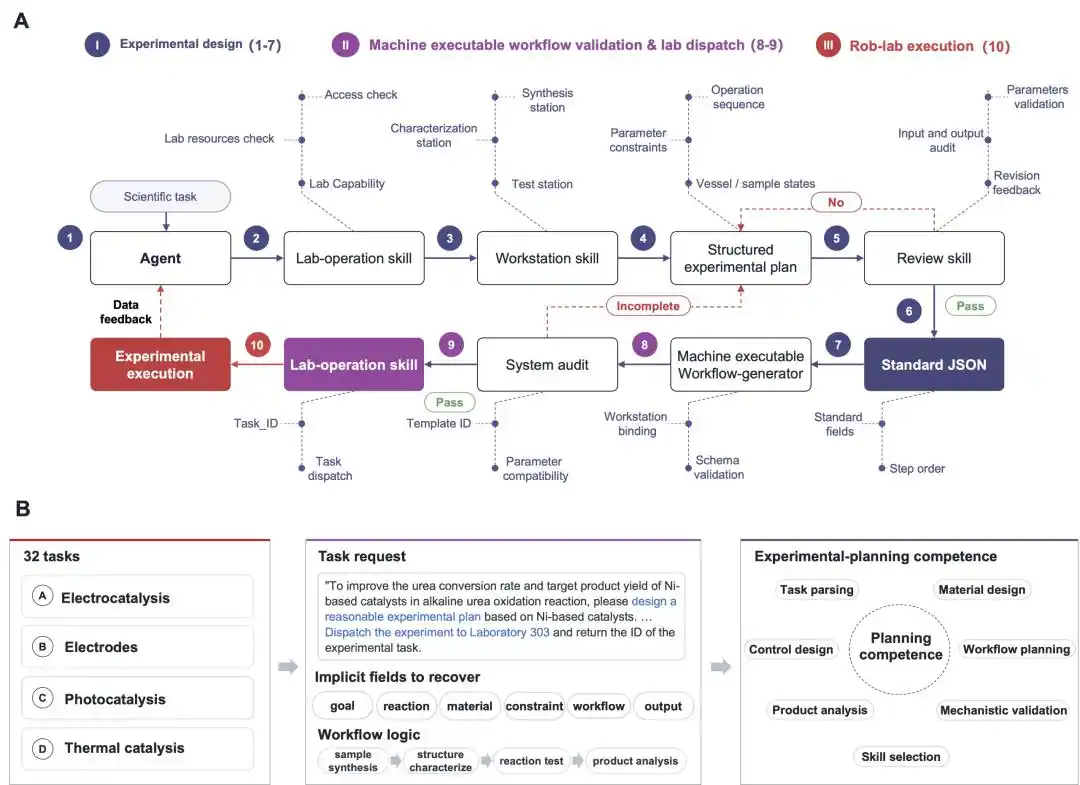
Figure 2. Path from scientific intent to machine laboratory execution.

Pressure Test

Based on this platform, the research team systematically evaluated 48 practical configurations composed of 6 agent frameworks and 9 large language models.

The test covered 32 research tasks defined by domain experts, totaling 4,608 evaluation runs. The assessment not only examined whether the agent could generate experimental plans but also tracked whether these plans could pass verification and be dispatched to the robotic system, and whether the generated workflows could be executed directly without human intervention.

Harsh Real-World Evaluation Results

Current leading large language model agents still have a significant gap from "taking over." Out of 4,608 tests, only 151 workflows could be executed without manual fixes, accounting for 3.3% of all tests. The best-performing combination, Claude Code and Claude Opus 4.7, achieved an executable rate of 28.1%; the Codex and GPT 5.5 combination achieved an executable rate of 19.8%.

Adjusting Parameters Does Not Equal Re-planning

The research further examined whether the agent could learn from real experimental results. The team placed the Codex/GPT 5.5 combination in an open-ended, five-round closed loop to continuously conduct experimental planning, robotic execution, evidence acquisition, and re-planning.

The agent was able to adjust material formulas and operational conditions based on the returned experimental results, but these adjustments mainly stayed at the level of local parameter optimization.

During the five rounds of experiments, the agent consistently retained the original workflow skeleton, failing to redesign analysis methods or correct some persistent key omissions, such as the lack of electrode binders and colorimetric reagents for specific analytes.

The results indicate that being able to read experimental feedback and adjust parameters does not equate to being able to identify problems with the research strategy itself, let alone perform scientific-level re-planning.
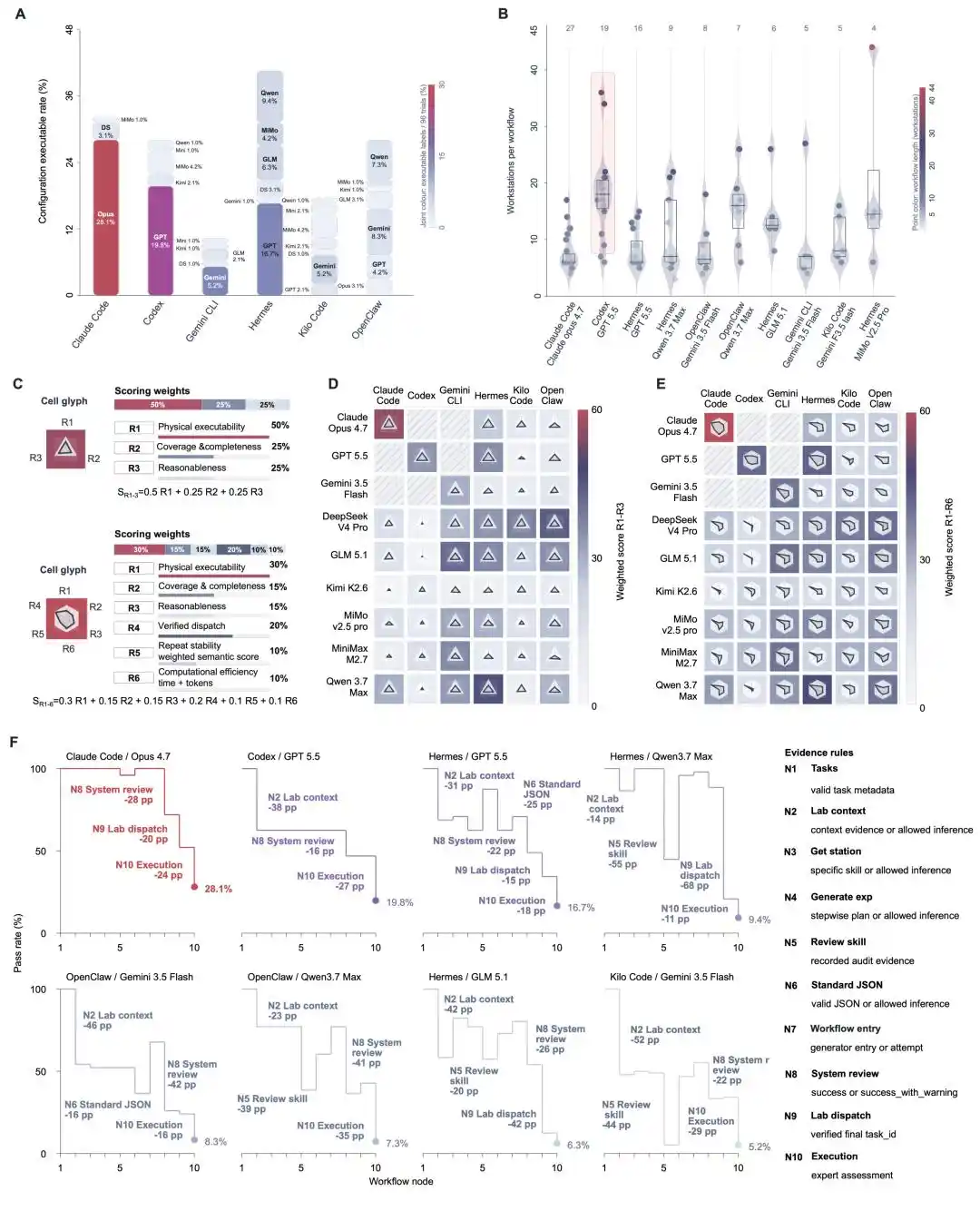
Figure 3. Performance of AI agents across executable planning, verification, and laboratory task dispatch.

Long-Range Planning Remains a Bottleneck

Although some agents generated workflows deemed executable by expert evaluation, with some containing up to 44 operational steps, only 3 workflows across all tests exceeded 30 steps. This suggests that as the task chain lengthens, the agent's ability to maintain experimental logical integrity and physical executability still faces significant challenges.

Redefining AI's Scientific Capabilities

The research thus distinguishes between three capabilities often conflated in current discussions about "AI scientists": first, fluently generating experimental plans; second, generating workflows that can actually be executed in a physical laboratory; and third, adjusting overall research strategies based on experimental results.

The research results show that linguistic-level planning capability does not automatically translate into reliable experimental execution capability, and local parameter adjustment cannot be directly regarded as scientific-level re-planning.

From "AI Proving Ground" to "AI Training Ground"

As intelligent research infrastructure for AI for Science, the machine laboratory can serve both as a "proving ground" to test AI's scientific capabilities and as a "training ground" to drive AI's continuous evolution. The AI agent, through machine-readable skills, directly converses with the machine lab, transforming scientific intent into executable tasks and receiving real feedback from machine execution, instrument status, and experimental results.

The resulting closed loop of "planning—execution—feedback—re-planning" can not only expose AI's deficiencies in knowledge, operation, and research strategy but also capture successful workflows, failure cases, experimental results, and expert evaluations as data for model training and agent alignment, continuously iterating AI models and their agent systems.

Thus, the machine scientist provides quantifiable, repeatable, and verifiable physical world evidence to answer "How can we determine if artificial intelligence is intelligent enough to conduct scientific research?" and drives AI from generating experimental protocols to gradually achieving end-to-end autonomous scientific discovery encompassing scientific question posing, experimental design, robotic execution, data analysis, and evidence-driven re-planning.
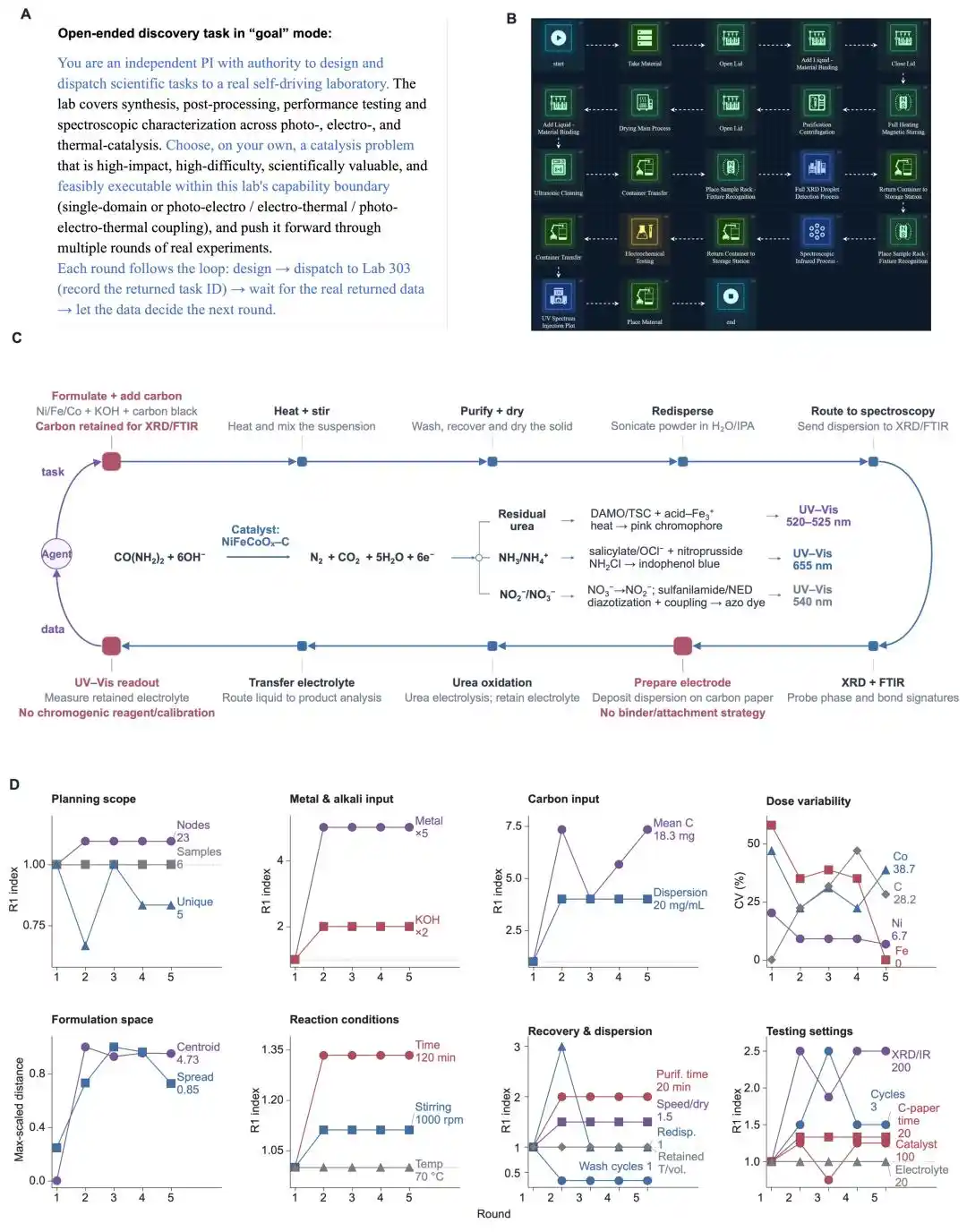
Figure 4. Five-round iteration of the AI-Machine Scientist on an open scientific question.

Reference: https://arxiv.org/abs/2607.23045

This article is from the WeChat public account "Xin Zhi Yuan," author: Xin Zhi Yuan; editor: LRST


Trending Cryptos

Related Questions

QWhat is the main contribution of the University of Science and Technology of China's latest research on AI in scientific discovery?

AThe research transitions the question of AI's scientific capability from knowledge-based Q&A and plan generation to a real-world test by developing a 'machine-scientist lab'. This lab comprises 45 automated workstations for catalysis research, where an AI agent can control lab equipment via machine-readable 'skills', enabling real-world experiment execution and feedback learning.

QWhat were the key findings from the pressure test conducted on AI agents using the machine-scientist lab platform?

AThe pressure test revealed a significant gap in AI's readiness to take over. Out of 4,608 test trials using 48 AI agent configurations, only 151 workflows (3.3%) were executable without human intervention. The best-performing combination (Claude Code with Claude Opus 4.7) had a 28.1% execution success rate. The test highlighted major challenges in creating long, logically consistent workflows and in moving from simple parameter adjustments to true scientific re-planning.

QWhat three distinct capabilities did the study identify as often being conflated in discussions about 'AI scientists'?

AThe study distinguishes three often-conflated capabilities: 1) Fluently generating experimental plans on paper. 2) Generating workflows that are physically executable in a real laboratory. 3) Adjusting the overall research strategy based on experimental results. The research shows that language-based planning does not automatically translate to reliable execution, and parameter tuning does not equate to scientific-level re-planning.

QHow did the AI agent perform in the five-round closed-loop experiment designed to test its ability to learn from results?

AIn the five-round closed-loop test, the AI agent could adjust material formulas and operation conditions based on returned experimental results, but these adjustments remained at the level of local parameter optimization. It consistently retained the original workflow skeleton, failed to redesign analytical methods, and could not correct persistent key omissions, indicating it cannot identify flaws in research strategy or perform true scientific re-planning.

QHow can the machine-scientist lab function as both a 'testing ground' and a 'training ground' for AI in science?

AAs a testing ground, it provides quantifiable, repeatable physical-world evidence to assess an AI's scientific capabilities. As a training ground, the 'planning-execution-feedback-re-planning' closed loop exposes AI's shortcomings and can generate training data—including successful workflows, failure cases, experimental results, and expert evaluations. This data can be used to iteratively improve AI models and agent systems, moving AI toward end-to-end autonomous scientific discovery.

Related Reads

$120 Million Vanishes Overnight! Crypto's 'Steadiest Giant' Stumbles in South America

Summary: Tether's $120 million Bitcoin mining venture in Uruguay, initiated in May 2023, was abruptly shut down in July 2025 when the national power utility UTE cut off electricity. The project, developed in partnership with local firm Microfin in Florida province, was touted as a model for leveraging the country's nearly 98% renewable energy grid. The collapse stemmed from a fundamental contract dispute over electricity supply. Tether interpreted the agreed power volume as a "minimum guaranteed supply," expecting to request more as the mining operation expanded. UTE, however, viewed it as a "strict maximum cap." This disagreement led to frequent power curtailments for the 24/7 mining facility, causing significant revenue loss from lost computing power. Following the 2025 election of left-wing President Yamandú Orsi and a management change at UTE, negotiations broke down. Microfin stopped paying electricity bills in May 2025, formally notified UTE of contract termination in June, and did not attend a final meeting where UTE presented a revised contract. By the July 25 power cut, Microfin's debt approached $5 million. The operation ceased, laying off 30 of its 38 local staff, with all outstanding debts settled by December 2025. The failure highlights key risks for heavy-asset overseas investments: Uruguay's green energy proved not to be cheap energy, especially after the 2024 Bitcoin halving squeezed industry profits. Furthermore, political changes can swiftly alter utility company policies, undermining the long-term regulatory stability critical for such projects. While financially absorbable for Tether, the incident underscores that operational success depends on unambiguous contracts and genuine cost advantages, not just technological scale.

marsbit22m ago

$120 Million Vanishes Overnight! Crypto's 'Steadiest Giant' Stumbles in South America

marsbit22m ago

Is Bitcoin Price Lagging? Record Global M2 Money Supply Could Be a Springboard for BTC's Rise

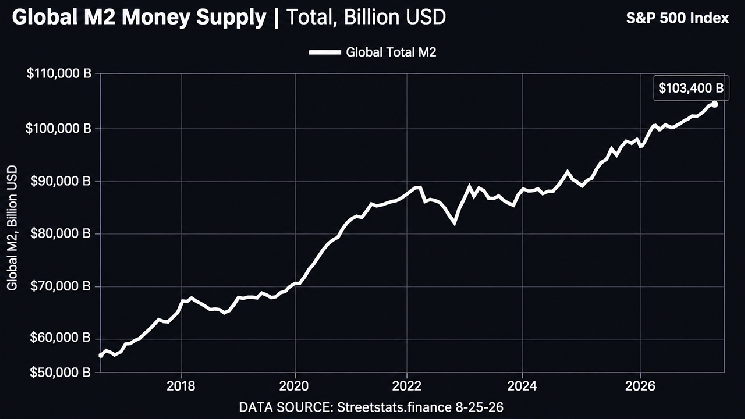
Bitcoin Price Lagging? Record Global Money Supply M2 Could Springboard BTC Growth The global money supply (M2) is expanding rapidly, similar to global debt. The US M2, representing all money circulating in its economy, has reached a record $23.16 trillion. Combined with figures from major economies like the Eurozone, China, and Japan, the global M2 is approximately $103 trillion. Some estimates, however, place it closer to $195 trillion. This surge in liquidity is significant because excess capital often seeks higher returns in assets like precious metals, stocks, and cryptocurrencies. Bitcoin's recent price surge above $81,000 has brought the global M2 metric back into focus. Following a sharp rise in early August after a US Treasury bond buyback announcement, BTC still trades about 37% below its October 2025 all-time high exceeding $126,000. This gap presents a potential "catch-up" trade thesis. Bitcoin's fixed supply of 21 million contrasts with governments' ability to print fiat currency, making scarce assets like BTC attractive if monetary expansion continues. Historically, Bitcoin's bull cycles in 2017-2018 and 2020-2021 coincided with M2 expansion and increased liquidity. Over the past year, the correlation seemed broken as M2 grew while Bitcoin's price fell sharply from its peak. Observers believe fresh dollars may have remained locked in cash-favorable investments. Some, like Ash Crypto, now suggest a long-awaited alignment between Bitcoin and M2 may be starting, especially as a weakening US Dollar Index this month has seen assets like gold and Bitcoin surge. A softer dollar pressures cash havens and prompts holders to act. While record M2 doesn't guarantee higher Bitcoin prices, a sustained influx of liquidity, a weak dollar, and capital flowing into alternative assets could trigger a catch-up rally sooner than expected. However, changes in these conditions could lead to the opposite outcome.

cryptonews.ru47m ago

Is Bitcoin Price Lagging? Record Global M2 Money Supply Could Be a Springboard for BTC's Rise

cryptonews.ru47m ago

Blockchain Capital Partner: Tokenization Will Reshape the Underlying Structure of Capital Markets

"Blockchain Capital partner Aleks Larsen argues that tokenization will fundamentally restructure capital markets by solving a costly 'packaging' problem in finance. Currently, assets like mortgages, private equity, and stocks exist in fragmented, incompatible systems, creating huge friction and slowing capital flow. Tokenization introduces a standardized, machine-readable interface for assets—akin to shipping containers for finance. Just as containerization standardized global trade, enabling massive efficiency gains and economic growth, tokens standardize financial rights. This allows platforms, lenders, and custodians to interact with assets directly on a shared network without rebuilding infrastructure for each one. Stablecoins demonstrate this potential, processing volumes rivaling Visa with far lower cost and faster settlement. Beyond payments, tokenization is expanding to assets like U.S. Treasuries, commodities, and private credit, now totaling nearly $400 billion on-chain. This shift changes financial service access: instead of depending on relationships with institutions, services become accessible based on the asset's tokenized properties themselves. DeFi protocols like Aave exemplify this, where assets meeting criteria can be used as collateral programmatically. Ultimately, tokenization will reorganize capital markets around open networks of specialized services, lowering barriers to entry and reducing costs. This could unlock global capital for currently underserved assets—small receivables, regional infrastructure, emerging market credit—integrating them into a seamless, programmable financial system. Combined with AI, tokenization promises to make capital allocation more efficient, transparent, and globally accessible, reshaping how economic value is created and distributed."

marsbit51m ago

Blockchain Capital Partner: Tokenization Will Reshape the Underlying Structure of Capital Markets

marsbit51m ago

Trading

Spot

Hot Articles

Discussions

Welcome to the HTX Community. Here, you can stay informed about the latest platform developments and gain access to professional market insights. Users' opinions on the price of AI (AI) are presented below.

活动图片