Bitcoiner Rayakan 'Hari Genesis' Saat Utang AS Melebihi $38 Triliun

bitcoinistPublished on 2026-01-04Last updated on 2026-01-04

Abstract

Utang federal AS mencapai rekor $38 triliun pada 3 Januari 2026, bersamaan dengan peringatan Hari Genesis Bitcoin. Komunitas kripto mencatat kontras antara utang pemerintah yang terus membengkak dengan pasokan Bitcoin yang tetap terbatas 21 juta koin. Utang naik tajam dari $34 triliun (awal 2024) menjadi $38,5 triliun (akhir 2025), didorong oleh defisit anggaran dan pembayaran bunga yang meningkat. Ekonom memperingatkan bahwa pembayaran utang dapat menyedot anggaran untuk prioritas lain. Bitcoin, yang blok pertamanya tercipta pada 3 Januari 2009 dengan pesan kritik terhadap sistem perbankan, kini diperdagangkan di sekitar $91.487. Sebagian investor menganggapnya sebagai lindung nilai terhadap risiko utang yang tinggi, sementara ekonom arus utama mengingatkan defisit besar berisiko memperlambat pertumbuhan ekonomi.

Utang federal AS melebihi $38 triliun pada 3 Januari 2026, menurut pelacakan Treasury. Pencapaian baru ini terjadi bersamaan dengan sebagian komunitas cryptocurrency yang memperingati Hari Genesis, peringatan blok pertama Bitcoin. Laporan mencatat waktu tersebut menarik perhatian karena menyoroti kontras antara pinjaman publik dan pasokan Bitcoin yang tetap.

Utang Capai Rekor Baru

Menurut data Treasury, utang federal bruto naik melebihi $38 triliun pada 3 Januari. Kenaikannya cukup tajam dalam dua tahun terakhir, bergerak dari sekitar $34 triliun pada awal 2024 menjadi sekitar $36 triliun pada akhir 2024, dan kemudian $38,5 triliun pada akhir 2025.

Analis menghitung bahwa utang telah meningkat sekitar $6 miliar per hari belakangan ini, sebuah langkah yang mendorong biaya bunga lebih tinggi dan mempersempit opsi untuk anggaran masa depan. Sebagian dari kenaikan ini berasal dari defisit anggaran yang berkelanjutan di mana pengeluaran melampaui pendapatan.

Pendorong Di Balik Lonjakan

Menurut liputan pasar, beberapa faktor berada di balik lonjakan ini: defisit tahunan yang berkelanjutan, meningkatnya pembayaran bunga atas utang yang ada, dan tagihan pengeluaran besar yang disahkan dalam beberapa sesi Kongres baru-baru ini.

Utang yang dipegang oleh publik dan jumlah yang terhutang kepada dana perwalian federal bersama-sama membentuk angka utama. Para ekonom memperingatkan bahwa seiring utang tumbuh relatif terhadap ukuran ekonomi, lebih banyak dolar pembayar pajak akan dibutuhkan hanya untuk membayar bunga, yang dapat menggeser prioritas lainnya.
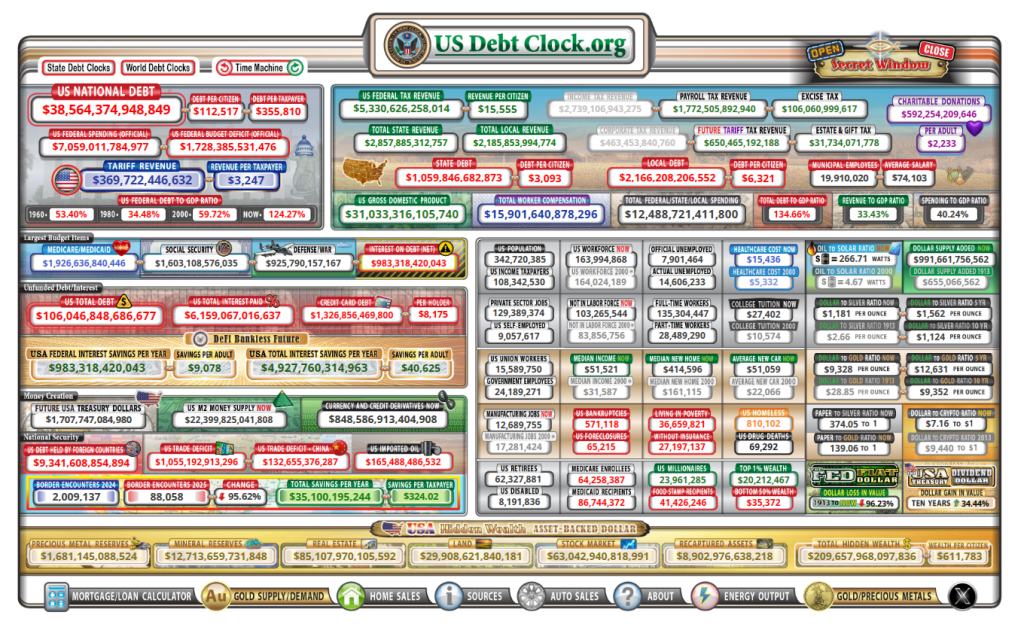
Dasbor yang menunjukkan utang pemerintah AS, kini lebih dari $38 triliun dan terus naik. Sumber: US Debt Clock

Komunitas Bitcoin Merespons

Pada 3 Januari, banyak pendukung Bitcoin menandai Hari Genesis, sebuah tanggal yang mereka anggap simbolis dari perubahan finansial ketika blok pertama Bitcoin ditambang pada 2009. Beberapa pengguna memposting tentang kontras antara utang nasional yang terus menanjak dan pasokan Bitcoin yang terbatas pada 21 juta koin.

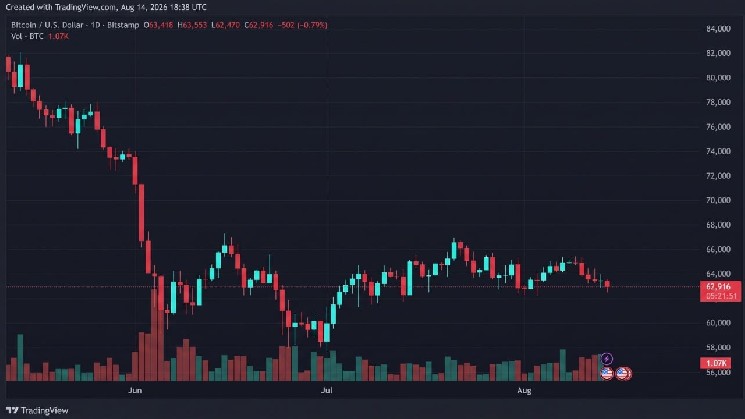
BTCUSD saat ini diperdagangkan di $91,487. Grafik: TradingView

Yang lain menggunakan peringatan ini untuk mengangkat pertanyaan yang lebih luas tentang aturan fiskal dan pasokan uang. Reaksinya beragam; beberapa melihatnya sebagai peringatan, yang lain melihatnya sebagai momen untuk peringatan.

Investor dan komentator telah mempertimbangkan implikasinya. Sebagian pasar memperlakukan aset langka seperti Bitcoin dan emas sebagai lindung nilai terhadap apa yang mereka anggap sebagai risiko dari pinjaman besar.

Pada saat yang sama, ekonom arus utama memperingatkan bahwa menjalankan defisit besar dan terus-menerus dapat meningkatkan biaya pinjaman dan memperlambat pertumbuhan dalam jangka panjang. Pejabat Treasury memantau kebutuhan kas dengan cermat dan terkadang mengubah jadwal peminjaman untuk menutupi kesenjangan antara penerimaan dan pengeluaran.

Gambar unggulan dari Unsplash, grafik dari TradingView

Related Questions

QApa yang dimaksud dengan 'Genesis Day' dalam komunitas Bitcoin?

AGenesis Day adalah hari peringatan tahunan terhadap penambangan blok pertama Bitcoin (Genesis Block) pada tanggal 3 Januari 2009, yang dianggap simbolis bagi perubahan sistem keuangan.

QBerapa total utang federal AS yang disebutkan dalam artikel dan pada tanggal berapa dicapai?

AUtang federal AS mencapai lebih dari $38 triliun pada tanggal 3 Januari 2026, menurut data Treasury.

QApa saja faktor utama yang disebutkan sebagai penyebab lonjakan utang AS?

AFaktor utamanya meliputi defisit anggaran tahunan yang berkelanjutan, peningkatan pembayaran bunga atas utang yang ada, dan tagihan pengeluaran besar yang disahkan Kongres.

QBagaimana komunitas Bitcoin merespons perbandingan antara utang nasional dan pasokan Bitcoin?

AKomunitas Bitcoin melihat kontras antara utang nasional yang terus meningkat dengan pasokan Bitcoin yang terbatas 21 juta koin, dan menganggapnya sebagai peringatan atau momentum peringatan terhadap kebijakan fiskal.

QApa peringatan yang diberikan ekonom arus utama terkait defisit anggaran besar?

AEkonom arus utama memperingatkan bahwa defisit besar dan berkelanjutan dapat meningkatkan biaya pinjaman dan memperlambat pertumbuhan ekonomi dalam jangka panjang.

Related Reads

Dalio's Latest Warning: Don't Get Carried Away by AI, Real Returns on US Stocks in the Next 5-10 Years Could Be -5% to -10%

Ray Dalio, founder of Bridgewater Associates, warns investors against excessive concentration in AI stocks. He argues the current market, dominated by a few AI giants, mirrors historical patterns where revolutionary new technologies lead to high risk, volatility, and uncertainty. While acknowledging AI's transformative potential, Dalio emphasizes that most investors fail at this stage of the cycle by over-concentrating in a handful of leading companies. He cites inherent risks: companies cannot accurately forecast investment needs or external shocks (e.g., monetary policy, geopolitics, taxes), face potential disruption from future technologies and international competition (notably from China), and experience significant price swings. Dalio's core advice is diversification, calling it his "Holy Grail of Investing." He presents a mathematical case that a well-diversified portfolio of 15-20 uncorrelated, good bets offers a superior risk-adjusted return compared to a concentrated position. Dalio also offers a cautious outlook, suggesting U.S. stocks may deliver real returns of -5% to -10% over the next 5-10 years based on valuation and bubble indicators. He concludes that in the face of high uncertainty, the prudent strategy is not to avoid betting entirely, but to avoid large, concentrated bets where one lacks sufficient informational edge. Instead, investors should build a strategically balanced, diversified portfolio.

marsbit1h ago

Dalio's Latest Warning: Don't Get Carried Away by AI, Real Returns on US Stocks in the Next 5-10 Years Could Be -5% to -10%

marsbit1h ago

Rain Valuation Approaches $20 Billion: The Battle for U-Cards Extends to Rewards Systems

Rain, a stablecoin payments infrastructure company, is shifting the competitive focus for U Cards from simple issuance to user retention and repeated usage. On June 15, Rain launched "Rain Rewards," an embedded loyalty program capability within its card-issuing infrastructure. This allows partner businesses—like fintech platforms and neobanks—to configure branded loyalty points, earning rules, redemptions, and merchant promotions directly within their card products. The system, built from the 2025 acquisition of Uptop, ensures points are only issued upon final transaction settlement, preventing liabilities from refunds. Trials, such as with Avalanche Card, reportedly boosted spending by 25% among enrolled users. Founded by Farooq Malik and Charles Yoo-Naut, Rain evolved from a tool for managing Web3 company expenses into a full-stack enterprise platform. It is a Principal Member of Visa and Mastercard, enabling partners to issue stablecoin-backed cards and wallets while leveraging traditional payment networks. Notably, the popular U Card Plasma One is issued by Rain under Visa's authority. Rain also integrates with Visa's stablecoin settlement pilot, using USDC for network settlement. Rain's rapid funding reflects growing institutional interest in stablecoin payment infrastructure. It raised a $245 million Series A in March 2025, a $58 million Series B in August 2025, and a $250 million Series C in January of this year, reaching a $19.5 billion valuation. Annualized transaction volume exceeds $3 billion, serving over 200 partners including Western Union and Nuvei. Beyond cards, Rain is expanding into programmable payments. Its June 2026 "Agent Control Layer" allows businesses to set spending rules—like merchant categories, amounts, and frequency—for AI agents before transactions occur. This positions Rain not as a single product but as an operating system for stablecoin payments, handling everything from card issuance and wallet management to rewards, on/off-ramps, and automated compliance. The goal is to enable seamless, often invisible, real-world spending of on-chain assets.

Foresight News1h ago

Rain Valuation Approaches $20 Billion: The Battle for U-Cards Extends to Rewards Systems

Foresight News1h ago

Google TPU Shipments Revised Up by 50%

Recent industry research indicates a significant upward revision in the shipments of Google's TPU (Tensor Processing Unit) chips. Previous expectations for 2027 were set at around 10 million units, but new estimates now point to 15 million units, a 50% increase. This substantial boost directly translates to higher demand across the entire supporting supply chain. Google's TPU clusters utilize a standardized all-optical interconnect architecture. Consequently, key hardware components are deeply integrated and scaled in fixed ratios with the chips. The 15 million TPU target will drive corresponding demand increases for NPO optical engines (roughly a 1:1 match), 1.6T optical modules, OCS optical switches, high-end server power supplies, fiber optics & MPO connectors, and liquid cooling solutions. Among these, liquid cooling is highlighted as the sector experiencing the most significant transformation and offering the most stable potential for excess returns. As next-generation TPU chips reach power levels where traditional air cooling is insufficient, liquid cooling becomes essential. 2026 is forecasted as the first year of substantial adoption for Google's liquid cooling solutions. This shift, coupled with delivery and capacity bottlenecks faced by incumbent overseas manufacturers, is creating a prime window for domestic Chinese suppliers to enter and secure Google's core supply chain. The market size for Google-specific liquid cooling is projected to potentially triple from a baseline of hundreds of billions to around 300 billion units by 2028. The logic for the fiber optic sector is also being rewritten. Once considered a cyclical commodity tied to telecom operator procurement, fiber is now a strategic and scarce resource for AI Data Centers (AIDC). A severe supply-demand imbalance, driven by the long lead time for preform production (18-24 months) and surging demand from cloud giants, is supporting strong performance. Chinese fiber manufacturers are well-positioned to capture a significant share of global AIDC demand, with exports potentially reaching 200-300 million core kilometers in 2026. Overall, the investment focus within the AI computing industry is shifting from pure "chip performance speculation" towards the more certain incremental growth in computing infrastructure and its supporting ecosystem. The upward revision in Google TPU shipments, along with the potential for further doubling by 2028, is seen as solidifying performance visibility for the entire supporting supply chain over the next two years.

marsbit2h ago

Google TPU Shipments Revised Up by 50%

marsbit2h ago

Trading

Spot
Futures

Hot Articles

What is $BITCOIN

DIGITAL GOLD ($BITCOIN): A Comprehensive Analysis Introduction to DIGITAL GOLD ($BITCOIN) DIGITAL GOLD ($BITCOIN) is a blockchain-based project operating on the Solana network, which aims to combine the characteristics of traditional precious metals with the innovation of decentralized technologies. While it shares a name with Bitcoin, often referred to as “digital gold” due to its perception as a store of value, DIGITAL GOLD is a separate token designed to create a unique ecosystem within the Web3 landscape. Its goal is to position itself as a viable alternative digital asset, although specifics regarding its applications and functionalities are still developing. What is DIGITAL GOLD ($BITCOIN)? DIGITAL GOLD ($BITCOIN) is a cryptocurrency token explicitly designed for use on the Solana blockchain. In contrast to Bitcoin, which provides a widely recognized value storage role, this token appears to focus on broader applications and characteristics. Notable aspects include: Blockchain Infrastructure: The token is built on the Solana blockchain, known for its capacity to handle high-speed and low-cost transactions. Supply Dynamics: DIGITAL GOLD has a maximum supply capped at 100 quadrillion tokens (100P $BITCOIN), although details regarding its circulating supply are currently undisclosed. Utility: While precise functionalities are not explicitly outlined, there are indications that the token could be utilized for various applications, potentially involving decentralized applications (dApps) or asset tokenization strategies. Who is the Creator of DIGITAL GOLD ($BITCOIN)? At present, the identity of the creators and development team behind DIGITAL GOLD ($BITCOIN) remains unknown. This situation is typical among many innovative projects within the blockchain space, particularly those aligning with decentralized finance and meme coin phenomena. While such anonymity may foster a community-driven culture, it intensifies concerns about governance and accountability. Who are the Investors of DIGITAL GOLD ($BITCOIN)? The available information indicates that DIGITAL GOLD ($BITCOIN) does not have any known institutional backers or prominent venture capital investments. The project seems to operate on a peer-to-peer model focused on community support and adoption rather than traditional funding routes. Its activity and liquidity are primarily situated on decentralized exchanges (DEXs), such as PumpSwap, rather than established centralized trading platforms, further highlighting its grassroots approach. How DIGITAL GOLD ($BITCOIN) Works The operational mechanics of DIGITAL GOLD ($BITCOIN) can be elaborated on based on its blockchain design and network attributes: Consensus Mechanism: By leveraging Solana’s unique proof-of-history (PoH) combined with a proof-of-stake (PoS) model, the project ensures efficient transaction validation contributing to the network's high performance. Tokenomics: While specific deflationary mechanisms have not been extensively detailed, the vast maximum token supply implies that it may cater to microtransactions or niche use cases that are still to be defined. Interoperability: There exists the potential for integration with Solana’s broader ecosystem, including various decentralized finance (DeFi) platforms. However, the details regarding specific integrations remain unspecified. Timeline of Key Events Here is a timeline that highlights significant milestones concerning DIGITAL GOLD ($BITCOIN): 2023: The initial deployment of the token occurs on the Solana blockchain, marked by its contract address. 2024: DIGITAL GOLD gains visibility as it becomes available for trading on decentralized exchanges like PumpSwap, allowing users to trade it against SOL. 2025: The project witnesses sporadic trading activity and potential interest in community-led engagements, although no noteworthy partnerships or technical advancements have been documented as of yet. Critical Analysis Strengths Scalability: The underlying Solana infrastructure supports high transaction volumes, which could enhance the utility of $BITCOIN in various transaction scenarios. Accessibility: The potential low trading price per token could attract retail investors, facilitating wider participation due to fractional ownership opportunities. Risks Lack of Transparency: The absence of publicly known backers, developers, or an audit process may yield skepticism regarding the project's sustainability and trustworthiness. Market Volatility: The trading activity is heavily reliant on speculative behavior, which can result in significant price volatility and uncertainty for investors. Conclusion DIGITAL GOLD ($BITCOIN) emerges as an intriguing yet ambiguous project within the rapidly evolving Solana ecosystem. While it attempts to leverage the “digital gold” narrative, its departure from Bitcoin's established role as a store of value underscores the need for a clearer differentiation of its intended utility and governance structure. Future acceptance and adoption will likely depend on addressing the current opacity and defining its operational and economic strategies more explicitly. Note: This report encompasses synthesised information available as of October 2023, and developments may have transpired beyond the research period.

379 Total ViewsPublished 2025.05.13Updated 2025.05.13

What is $BITCOIN

Discussions

Welcome to the HTX Community. Here, you can stay informed about the latest platform developments and gain access to professional market insights. Users' opinions on the price of BTC (BTC) are presented below.

活动图片