Experts Named Reasons for Bitcoin's Decline After US Inflation Drop

cryptonews.ruPublished on 2026-08-14Last updated on 2026-08-14

Abstract

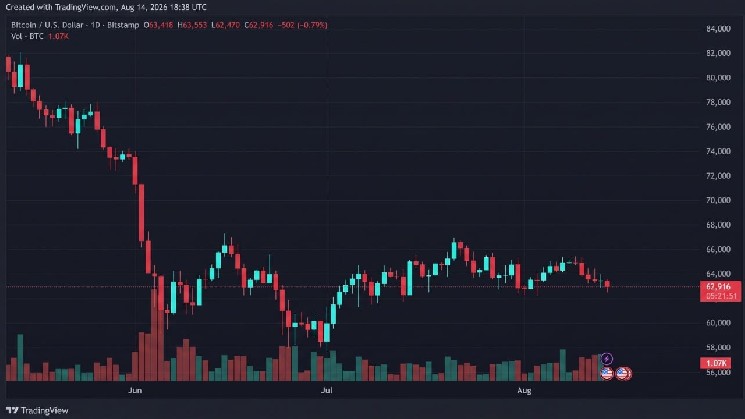
Despite favorable U.S. inflation data in July, Bitcoin failed to rally and instead declined. Analysts from CryptoQuant identify weak spot market demand as the primary cause. After the data release, Bitcoin briefly dropped from around $64,500 to $63,000. While the Producer Price Index (PPI) was better than expected, and U.S. stock indices rose, Bitcoin remained stuck in a range. Key indicators point to subdued demand: capital inflows into U.S. spot Bitcoin ETFs remain low, and the Coinbase Premium Index has been negative since May, indicating limited buying pressure from American investors. In contrast, positioning in the futures market remains relatively high, creating an imbalance of weak spot demand, low liquidity, and significant leveraged positions. Analysts warn that under these conditions, even positive macroeconomic news may not spur growth. If the price doesn't react to a favorable backdrop, traders might start closing margin longs, adding further downward pressure. A key resistance level is identified at $68,700, the approximate cost basis for short-term holders, which could trigger selling. For a sustained rally to resume, CryptoQuant states the market needs: renewed capital inflows into U.S. Bitcoin ETFs, the Coinbase Premium Index turning positive, an increase in spot trading volumes, and a decisive break above $68,700.

Favorable US inflation data failed to support Bitcoin. CryptoQuant analysts named weak spot demand as the primary reason.

Bitcoin Failed to React to Inflation Data

On August 12, the US Bureau of Labor Statistics published inflation data for July. After the publication, Bitcoin momentarily dropped from around $64,500 to $64,000. On August 13, the asset fell below $63,000.

At the same time, the July CPI data generally met market expectations, and the Producer Price Index (PPI) was better than forecast. PPI remained unchanged on a monthly basis, whereas analysts had expected a 0.2% increase, noted CryptoQuant.

The experts added that against this backdrop, the yield on US Treasury bonds decreased, and US stock indices rose. However, Bitcoin failed to form a rally and remained in the $63,000-$64,000 range.

Weak Demand

According to analysts, the main reason for this reaction is weak demand on the spot market.

The inflow of capital into US spot Bitcoin ETFs also remains low. At the same time, the Coinbase Premium Index, which reflects the difference between Bitcoin's price on Coinbase and other major exchanges, has remained predominantly negative since May.

The indicator is currently around -0.1%. CryptoQuant noted that this indicates limited buying pressure from US investors. Meanwhile, traders' positioning on the futures market remains relatively high.

Thus, an imbalance has formed in the market: weak spot demand, low liquidity, and a significant volume of leveraged positions, added the experts.

They believe that under such conditions, positive macroeconomic news may not trigger Bitcoin growth. If the price does not react to a favorable backdrop, traders may start closing margin longs, which creates additional pressure on the asset, the statement said.

Analysts separately named the $68,700 level as resistance — the approximate cost basis for Bitcoin's short-term holders. If the price approaches this level, recent buyers may start closing their positions.

In CryptoQuant's opinion, even the most favorable inflation data is insufficient to start a prolonged uptrend. To resume a stronger market rally, the following are needed:

  • Resumption of capital inflows into US Bitcoin ETFs;
  • The Coinbase Premium Index moving into positive territory;
  • Growth in spot trading volumes;
  • Bitcoin's confident return above $68,700.

Earlier, Glassnode identified conditions for a new Bitcoin crash.

Trending Cryptos

Related Questions

QAccording to the article, why didn't Bitcoin rally after favorable US inflation data in July?

AThe main reason, according to CryptoQuant analysts, was weak spot market demand. Factors contributing to this included low capital inflow into US spot Bitcoin ETFs and a negative Coinbase Premium Index, indicating limited buying pressure from American investors.

QWhat key metric showed that buying pressure from US investors was limited?

AThe Coinbase Premium Index, which reflects the price difference of Bitcoin on Coinbase versus other major exchanges, remained predominantly negative since May and was around -0.1% at the time of the article. This signals limited buying pressure from American investors.

QWhat imbalance has formed in the Bitcoin market according to CryptoQuant experts?

AThe market has formed an imbalance characterized by weak spot demand, low liquidity, and a significant volume of leveraged positions (margin longs).

QWhat price level do analysts identify as a key resistance point for Bitcoin, and why?

AAnalysts identified approximately $68,700 as a key resistance level. This is the approximate cost basis for short-term Bitcoin holders, meaning recent buyers might start selling (taking profits) if the price approaches this level.

QWhat conditions does CryptoQuant believe are necessary for Bitcoin to resume a stronger rally?

AAccording to CryptoQuant, for a stronger rally to resume, the market needs: 1) A resumption of capital inflow into US spot Bitcoin ETFs. 2) The Coinbase Premium Index to move into positive territory. 3) An increase in spot trading volumes. 4) Bitcoin to confidently return above the $68,700 resistance level.

Related Reads

Bitcoin Price Drops to $62,470 as Sellers Retest $63,000 Support Level

Bitcoin's price fell below $63,000 for a second consecutive day on Friday, hitting an intraday low of $62,470. The cryptocurrency later recovered to trade just above $63,000, leaving it nearly flat for the past 24 hours and for August overall, with a weekly loss of 2.6%. The volatility triggered significant liquidations, with $26 million of leveraged long Bitcoin positions liquidated over 24 hours. Market sentiment was further dampened by data showing over $131 million in outflows from spot Bitcoin ETFs for a second straight day, signaling a potential pullback by institutional investors. Adding to the negative pressure, index provider MSCI has proposed new criteria for "non-operating companies" in its global indexes, which could lead to the exclusion of firms holding significant digital assets like Bitcoin on their balance sheets. Companies such as Strategy and Metaplanet could be affected, potentially forcing index-tracking funds to sell their shares. Strategy publicly criticized the proposal, arguing digital assets are legitimate assets and index providers should not dictate what companies can own. Public consultations on MSCI's proposal end September 30, with a final decision expected by October 16. If approved, exclusions could begin in November, potentially triggering sustained institutional selling and damaging a key bridge for Bitcoin adoption in the corporate sector.

cryptonews.ru49m ago

Bitcoin Price Drops to $62,470 as Sellers Retest $63,000 Support Level

cryptonews.ru49m ago

Trading

Spot

Hot Articles

Discussions

Welcome to the HTX Community. Here, you can stay informed about the latest platform developments and gain access to professional market insights. Users' opinions on the price of S (S) are presented below.

活动图片