设计软体巨头 Figma 宣布 IPO:文件揭露持有近 7000 万美元比特币 ETF

链捕手Published on 2025-07-02Last updated on 2025-07-02

作者:Crumax


设计软体开发商 Figma 正式启动上市程序,将以股票代号「FIG」在纽约证交所挂牌。

S-1 文件不仅揭示了公司强劲的营运成长,也首次曝光其持有将近7,000 万美元比特币ETF 的财务策略,并计划再投入3,000 万美元USDC 进行增持,可见其积极拥抱加密资产的态度。

Figma 宣布上市:挑战当年 Adobe 200 亿美元估值

在与Adobe 的200 亿美元收购案破局一年半后, Figma 于昨日宣布于美国启动 IPO 上市。根据最新提交的S-1 文件, Figma 尚未公开预计的募资金额与估值范围,但市场乐观看待该公司有望超越当年Adobe 开出的天价。

回顾Adobe 收购案之所以告吹,关键在于英美监管机构对竞争垄断的疑虑。如今, Figma 选择独立上市,也算是从破局阴影中走出。 2024 年员工股权回购案中,公司估值约为 125 亿美元,随着 AI 与 IPO 市场热潮升温,也让投资人期待其挂牌后能打破该数字。

营收表现亮眼,AI 加码布局不手软

Figma 的财报表现同样吸引目光,继2024 年亏损后,2025 第一季缴出4,488 万的净收入;当季营收达2.28 亿美元,年增率达46%。 2024 年全年营收为7.49 亿美元,年增48%,反映其订阅制商业模式的强劲动能。

Figma CEO Dylan Field 在投资人信中强调:「AI 是未来设计流程的核心。我们会持续重金投入,尽管短期内会拉低效率,但这是不可或缺的长期布局。」这也呼应 Figma 在文件中出现超过200 次AI 相关字眼的野心。

目前, Figma 拥有超过1,000 位年付费超过10 万美元的企业客户,及超过11,000 位年缴逾万的中型客户。财务数据显示过半营收来自美国以外市场,而其未来将持续推进国际扩张与并购。

Figma 也是比特币粉丝:持有近7,000 万美元比特币现货ETF

除了营运表现了得, Figma 在财务策略上也展现出独特视野。文件揭露,公司透过Bitwise Bitcoin ETF (BITB) 持有价值约6,953 万美元的比特币部位,起初投入为5,500 万美元,目前已获利约26%。

值得注意的是, Figma 董事会更已于今年 5 月授权购买3,000 万美元的USDC,以便日后灵活转换成比特币,借此保持资金弹性。这代表 Figma 并非将比特币视为投机,而是明确将其纳入长期的现金与资本管理策略。

这笔部位约占 Figma 现有10.7 亿美元现金与有价证券的4%,显示其对比特币的战略性认同,也与微策略(Strategy)等公司形成共鸣,成为将比特币视为企业储备资产的新创公司代表。

创办人持续掌控 Figma 走向:将大举并购扩张

Dylan Field 表示,选择此刻上市,除了提高品牌能见度与取得资本动能,更希望让使用者与社群成为公司的一部分。透过特殊投票权架构,他将保有超过75% 的公司投票权,持续掌控公司方向,并强调将大举透过并购整合来扩张该公司。

此外,公司内部创投部门 Figma Ventures也已投资18 个专案,显示其从产品到资本布局的全面性。随着招股说明书正式曝光, Figma 也加入Circle等一线新创的IPO 行列,为2025 年资本融资市场投下震撼弹。


Trending Cryptos

Related Reads

You'll Be Surprised How Much WeChat's Architecture Differs from Telegram's

An article compares the core architectural philosophies of WeChat and Telegram, highlighting fundamental differences in data storage, monetization, and developer ecosystems. **Data Storage:** Telegram offers unlimited, synchronized cloud storage for seamless access across all devices. In contrast, WeChat stores chat history locally on each device, requiring a manual migration process for transfer and tethering desktop sessions to an active smartphone. **Features & Ecosystem:** Telegram's open Bot API allows for easy, free bot creation, while WeChat's massive ecosystem of over 4.8 million "mini-programs" operates within a closed, curated, and more regulated platform. Commenting also differs: Telegram uses integrated discussion threads for channels, whereas WeChat relies on pre-moderated comments for official accounts and separate chats for interaction. **File Sharing & Payments:** Telegram supports large file transfers (up to 4GB for Premium), while WeChat limits most files to 200MB. A key divergence is in payments: WeChat Pay is deeply integrated into daily life and commerce in China, whereas Telegram lacks a comparable built-in fiat payment system, focusing instead on third-party bots and crypto. **Analysis:** The comparison reveals two distinct models: WeChat is a tightly integrated, closed ecosystem deeply embedded in the real economy, while Telegram prioritizes open protocols, flexible data handling, and low barriers for developers. An added perspective notes that WeChat's fusion of messaging and payments in a single interface without end-to-end encryption for chats potentially broadens the attack surface, raising security questions as more functions converge.

cryptonews.ru1h ago

You'll Be Surprised How Much WeChat's Architecture Differs from Telegram's

cryptonews.ru1h ago

Hacker Leaks GTA6 and Launches a Token: Leaked Videos Become Ad Space for $CYBERLEEK, Must Buy Tokens to Vote for Next Clip

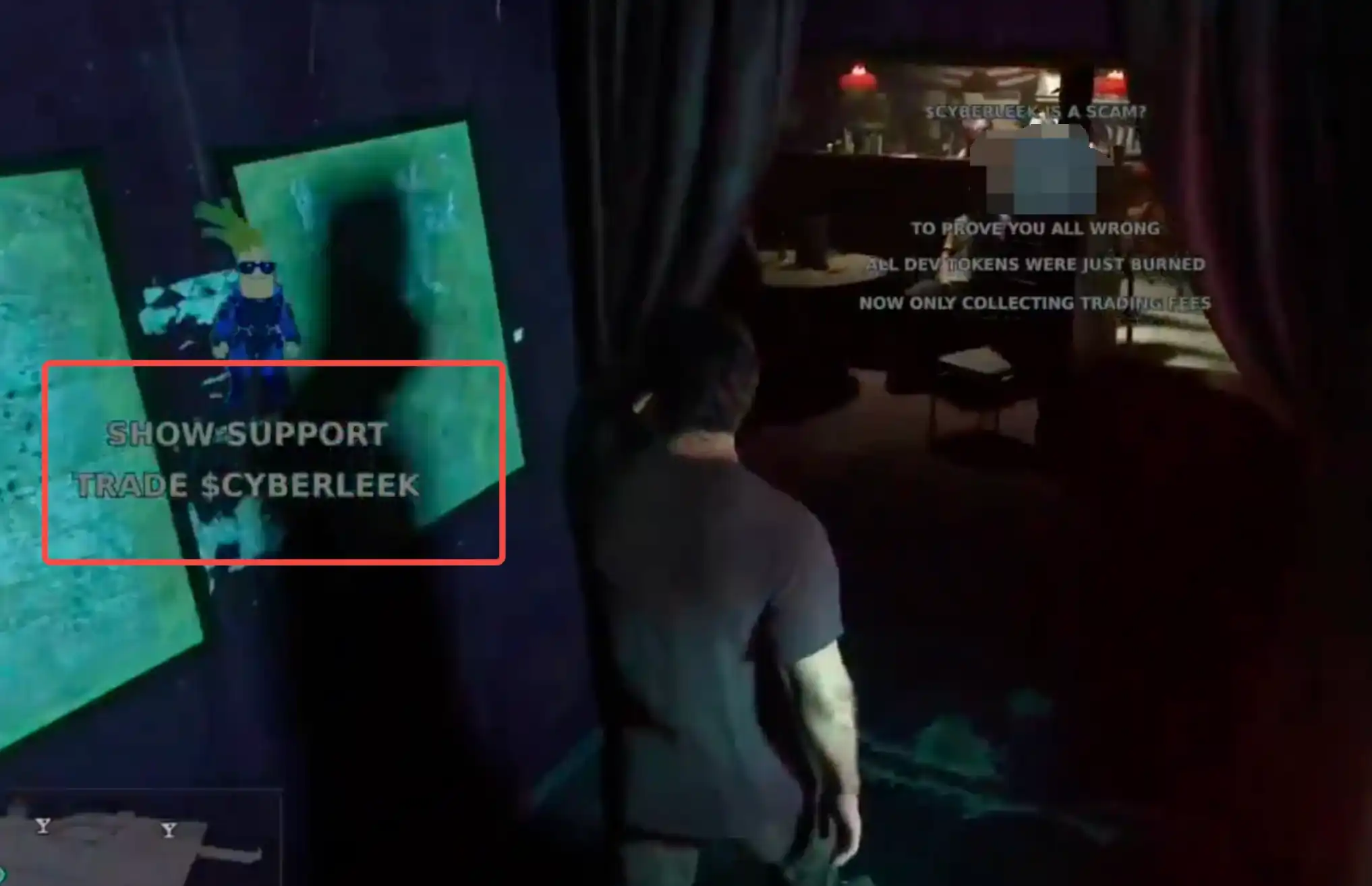
A hacker group called "CyberLeek" has leaked gameplay footage of the highly anticipated video game *GTA 6*, which is slated for release in 2026. Simultaneously, the group launched a meme token, $CYBERLEEK, on Solana. The leaks, which include maps and gameplay clips, are heavily watermarked with advertisements urging viewers to buy the token. Investigations of blockchain data reveal that the token was created and funded from a single wallet approximately eight hours before the first leak was released, suggesting a coordinated plan. The group has implemented a voting system where token holders can "vote" for the next type of content to be leaked by sending $CYBERLEEK tokens to a designated wallet—a process that permanently transfers the tokens to the hackers. This creates a self-sustaining cycle where interest in the leaks drives token purchases. Financially, the operation involved minimal upfront costs (less than $3,500 in out-of-pocket expenses) but generated significant revenue. On its first day, the token saw $15 million in trading volume, netting the creators an estimated $30,000 from transaction fees alone. While the group later burned a large portion of its developer-held tokens (worth over $1 million) to build trust, the fee-generating mechanism remains intact. The game's publisher, Take-Two Interactive, has initiated legal proceedings to identify the hackers. Despite this, the case demonstrates a new model where leaked intellectual property is used as leverage to promote and profit from a cryptocurrency, with meme token markets serving as an additional revenue stream.

marsbit3h ago

Hacker Leaks GTA6 and Launches a Token: Leaked Videos Become Ad Space for $CYBERLEEK, Must Buy Tokens to Vote for Next Clip

marsbit3h ago

Trading

Spot

Hot Articles

What is $BITCOIN

DIGITAL GOLD ($BITCOIN): A Comprehensive Analysis Introduction to DIGITAL GOLD ($BITCOIN) DIGITAL GOLD ($BITCOIN) is a blockchain-based project operating on the Solana network, which aims to combine the characteristics of traditional precious metals with the innovation of decentralized technologies. While it shares a name with Bitcoin, often referred to as “digital gold” due to its perception as a store of value, DIGITAL GOLD is a separate token designed to create a unique ecosystem within the Web3 landscape. Its goal is to position itself as a viable alternative digital asset, although specifics regarding its applications and functionalities are still developing. What is DIGITAL GOLD ($BITCOIN)? DIGITAL GOLD ($BITCOIN) is a cryptocurrency token explicitly designed for use on the Solana blockchain. In contrast to Bitcoin, which provides a widely recognized value storage role, this token appears to focus on broader applications and characteristics. Notable aspects include: Blockchain Infrastructure: The token is built on the Solana blockchain, known for its capacity to handle high-speed and low-cost transactions. Supply Dynamics: DIGITAL GOLD has a maximum supply capped at 100 quadrillion tokens (100P $BITCOIN), although details regarding its circulating supply are currently undisclosed. Utility: While precise functionalities are not explicitly outlined, there are indications that the token could be utilized for various applications, potentially involving decentralized applications (dApps) or asset tokenization strategies. Who is the Creator of DIGITAL GOLD ($BITCOIN)? At present, the identity of the creators and development team behind DIGITAL GOLD ($BITCOIN) remains unknown. This situation is typical among many innovative projects within the blockchain space, particularly those aligning with decentralized finance and meme coin phenomena. While such anonymity may foster a community-driven culture, it intensifies concerns about governance and accountability. Who are the Investors of DIGITAL GOLD ($BITCOIN)? The available information indicates that DIGITAL GOLD ($BITCOIN) does not have any known institutional backers or prominent venture capital investments. The project seems to operate on a peer-to-peer model focused on community support and adoption rather than traditional funding routes. Its activity and liquidity are primarily situated on decentralized exchanges (DEXs), such as PumpSwap, rather than established centralized trading platforms, further highlighting its grassroots approach. How DIGITAL GOLD ($BITCOIN) Works The operational mechanics of DIGITAL GOLD ($BITCOIN) can be elaborated on based on its blockchain design and network attributes: Consensus Mechanism: By leveraging Solana’s unique proof-of-history (PoH) combined with a proof-of-stake (PoS) model, the project ensures efficient transaction validation contributing to the network's high performance. Tokenomics: While specific deflationary mechanisms have not been extensively detailed, the vast maximum token supply implies that it may cater to microtransactions or niche use cases that are still to be defined. Interoperability: There exists the potential for integration with Solana’s broader ecosystem, including various decentralized finance (DeFi) platforms. However, the details regarding specific integrations remain unspecified. Timeline of Key Events Here is a timeline that highlights significant milestones concerning DIGITAL GOLD ($BITCOIN): 2023: The initial deployment of the token occurs on the Solana blockchain, marked by its contract address. 2024: DIGITAL GOLD gains visibility as it becomes available for trading on decentralized exchanges like PumpSwap, allowing users to trade it against SOL. 2025: The project witnesses sporadic trading activity and potential interest in community-led engagements, although no noteworthy partnerships or technical advancements have been documented as of yet. Critical Analysis Strengths Scalability: The underlying Solana infrastructure supports high transaction volumes, which could enhance the utility of $BITCOIN in various transaction scenarios. Accessibility: The potential low trading price per token could attract retail investors, facilitating wider participation due to fractional ownership opportunities. Risks Lack of Transparency: The absence of publicly known backers, developers, or an audit process may yield skepticism regarding the project's sustainability and trustworthiness. Market Volatility: The trading activity is heavily reliant on speculative behavior, which can result in significant price volatility and uncertainty for investors. Conclusion DIGITAL GOLD ($BITCOIN) emerges as an intriguing yet ambiguous project within the rapidly evolving Solana ecosystem. While it attempts to leverage the “digital gold” narrative, its departure from Bitcoin's established role as a store of value underscores the need for a clearer differentiation of its intended utility and governance structure. Future acceptance and adoption will likely depend on addressing the current opacity and defining its operational and economic strategies more explicitly. Note: This report encompasses synthesised information available as of October 2023, and developments may have transpired beyond the research period.

2.1k Total ViewsPublished 2025.05.13Updated 2025.05.13

What is $BITCOIN

Discussions

Welcome to the HTX Community. Here, you can stay informed about the latest platform developments and gain access to professional market insights. Users' opinions on the price of BTC (BTC) are presented below.

活动图片