You'll Be Surprised How Much WeChat's Architecture Differs from Telegram's

cryptonews.ruPublished on 2026-08-23Last updated on 2026-08-23

Abstract

An article compares the core architectural philosophies of WeChat and Telegram, highlighting fundamental differences in data storage, monetization, and developer ecosystems. **Data Storage:** Telegram offers unlimited, synchronized cloud storage for seamless access across all devices. In contrast, WeChat stores chat history locally on each device, requiring a manual migration process for transfer and tethering desktop sessions to an active smartphone. **Features & Ecosystem:** Telegram's open Bot API allows for easy, free bot creation, while WeChat's massive ecosystem of over 4.8 million "mini-programs" operates within a closed, curated, and more regulated platform. Commenting also differs: Telegram uses integrated discussion threads for channels, whereas WeChat relies on pre-moderated comments for official accounts and separate chats for interaction. **File Sharing & Payments:** Telegram supports large file transfers (up to 4GB for Premium), while WeChat limits most files to 200MB. A key divergence is in payments: WeChat Pay is deeply integrated into daily life and commerce in China, whereas Telegram lacks a comparable built-in fiat payment system, focusing instead on third-party bots and crypto. **Analysis:** The comparison reveals two distinct models: WeChat is a tightly integrated, closed ecosystem deeply embedded in the real economy, while Telegram prioritizes open protocols, flexible data handling, and low barriers for developers. An added perspective notes that WeC...

The monthly active user base of WeChat and Weixin reached 1.428 billion people—a figure disclosed by Tencent Holdings in its Q2 2026 financial report published on August 13th. This growth confirms the app's status as a primary digital tool for hundreds of millions of users in China and beyond. Against this backdrop, it is relevant to compare WeChat's architecture with Telegram's—the two messengers are built on opposing principles of data storage, monetization, and openness to developers.

Where Conversations Are Stored

Telegram provides unlimited cloud storage with synchronization of message history across all of a user's devices. Simply log in on a new phone or computer—and all conversations will appear automatically, without manually transferring files. The desktop version works independently: logging in via phone number or QR code does not require the mobile app to remain active.

WeChat is structured differently: chat history is stored locally on the device, and Tencent servers do not retain messages after delivery. Because of this, transferring conversations to a new smartphone or laptop is only possible through the built-in migration function using a QR code. Logging into the desktop version is strictly tied to the phone—each session requires confirmation from the primary device, and it is impossible to use WeChat without a smartphone at hand.

How Channel Comments Work

In Telegram, comments on channel posts are implemented via automatic linking to a separate discussion group—subscribers write directly under the post in one interface, without switching to external chats.

In WeChat, Official Accounts publish articles, but comments undergo pre-moderation: they become visible only after approval by the account owner. There is no separate discussion system automatically attached to a specific article in WeChat—for discussions, users have to navigate to separate chats or Mini Programs.

Development: Open Bot API vs. Closed Platform

Telegram's Bot API remains completely open and free: documentation is publicly available, and launching a basic bot does not require developer verification.

WeChat Mini Programs operate within a closed ecosystem. Each application undergoes content review for compliance with Tencent's rules, and access to some APIs is only granted after paid certification and submission of a business license. According to QuestMobile data from June 2025, the number of active WeChat Mini Programs exceeded 4.8 million—the ecosystem is vast, but the entry barrier for developers is noticeably higher than in Telegram.

File Transfer Limits

According to official Telegram data, the file upload limit is 2 GB for regular users and 4 GB for Premium subscribers—without restrictions on file type or download speed.

WeChat limits file transfers in chat to a 200 MB cap for most documents and videos. For larger data volumes, the "File Transfer Assistant" or third-party services are provided, and files on servers are stored for a limited time before being deleted.

Payments as a Point of Ecosystem Divergence

WeChat Pay is integrated into over 90% of retail outlets in China and covers utility payments, government services, and peer-to-peer transfers—effectively replacing banking apps and cash for a billion-strong audience.

Telegram does not have a built-in fiat payment system of comparable scale: financial functions are implemented through third-party bots and are primarily focused on crypto payments. This reflects the platform's emphasis on decentralization but limits its use as an everyday financial tool in areas with developed traditional banking infrastructure.

The comparison reveals two different philosophies of digital platforms: WeChat is built around a closed but deeply integrated model tied to the real economy, while Telegram is built around open protocols, flexible data storage, and minimal barriers for developers. The choice of architecture determines both the audience and the use cases for each messenger.

Understood, I'll remove this frame—rewrite it purely from a technical/market angle, without the topic of dissidents and journalists.

AI Opinion

From a machine data analysis perspective, the article compares storage and monetization architectures but bypasses the question of encryption—which is directly related to the described dominance of WeChat Pay. Telegram encrypts cloud chats at the server level and separately offers secret chats with end-to-end encryption. WeChat does not provide such an option: there is no end-to-end encryption for conversations, and the same interface handles both messages and payments—meaning the attack surface for fraud is wider precisely where functions are most tightly fused. This is not an abstract illustration: from January 2025 alone, Singapore police and the Monetary Authority of Singapore (MAS) recorded 678 cases of fraud impersonating WeChat, UnionPay, and Alipay employees, amounting to over SGD 17.4 million.

The technical question is posed differently than in the article: the more tightly a messenger and a payment system merge within a single app, the higher the cost of any vulnerability in chat security. Will such a combination withstand the further growth of features within a single window?

end-content

Trending Cryptos

Related Questions

QWhat is the fundamental difference in how WeChat and Telegram store chat history?

ATelegram stores chat history on its cloud servers, allowing for unlimited storage and automatic synchronization across all of a user's devices. In contrast, WeChat primarily stores chat history locally on the user's device. Tencent's servers do not retain messages after delivery, requiring a manual migration process to transfer chats to a new device.

QHow do comments function differently in Telegram channels versus WeChat official accounts?

AIn Telegram, comments on channel posts are handled through a directly linked discussion group, visible in the same interface. In WeChat, comments on articles published by official accounts undergo pre-moderation and only become visible after the account owner's approval. There is no automatic, dedicated discussion thread attached to each article.

QCompare the openness for developers on the Telegram and WeChat platforms.

ATelegram offers an open and free Bot API with public documentation and no mandatory developer verification for basic bots. WeChat's mini-programs operate within a closed ecosystem; each application must pass Tencent's content review, and access to certain APIs requires paid certification and a business license, creating a higher entry barrier.

QWhat are the key differences in file transfer limits between Telegram and WeChat?

ATelegram allows file uploads up to 2GB for regular users and 4GB for Premium subscribers, with no restrictions on file type or download speed. WeChat limits file transfers in chats to 200MB for most documents and videos, requiring the use of its 'File Transfer Assistant' or third-party services for larger files, which are stored temporarily on servers.

QHow does the article frame the core philosophical divergence between WeChat and Telegram?

AThe article posits that WeChat is built around a closed, deeply integrated model fused with the real economy, functioning as a comprehensive digital tool. Telegram, conversely, is built around open protocols, flexible cloud data storage, and minimal barriers for developers, emphasizing decentralization. This architectural choice defines each platform's audience and primary use cases.

Related Reads

Hacker Leaks GTA6 and Launches a Token: Leaked Videos Become Ad Space for $CYBERLEEK, Must Buy Tokens to Vote for Next Clip

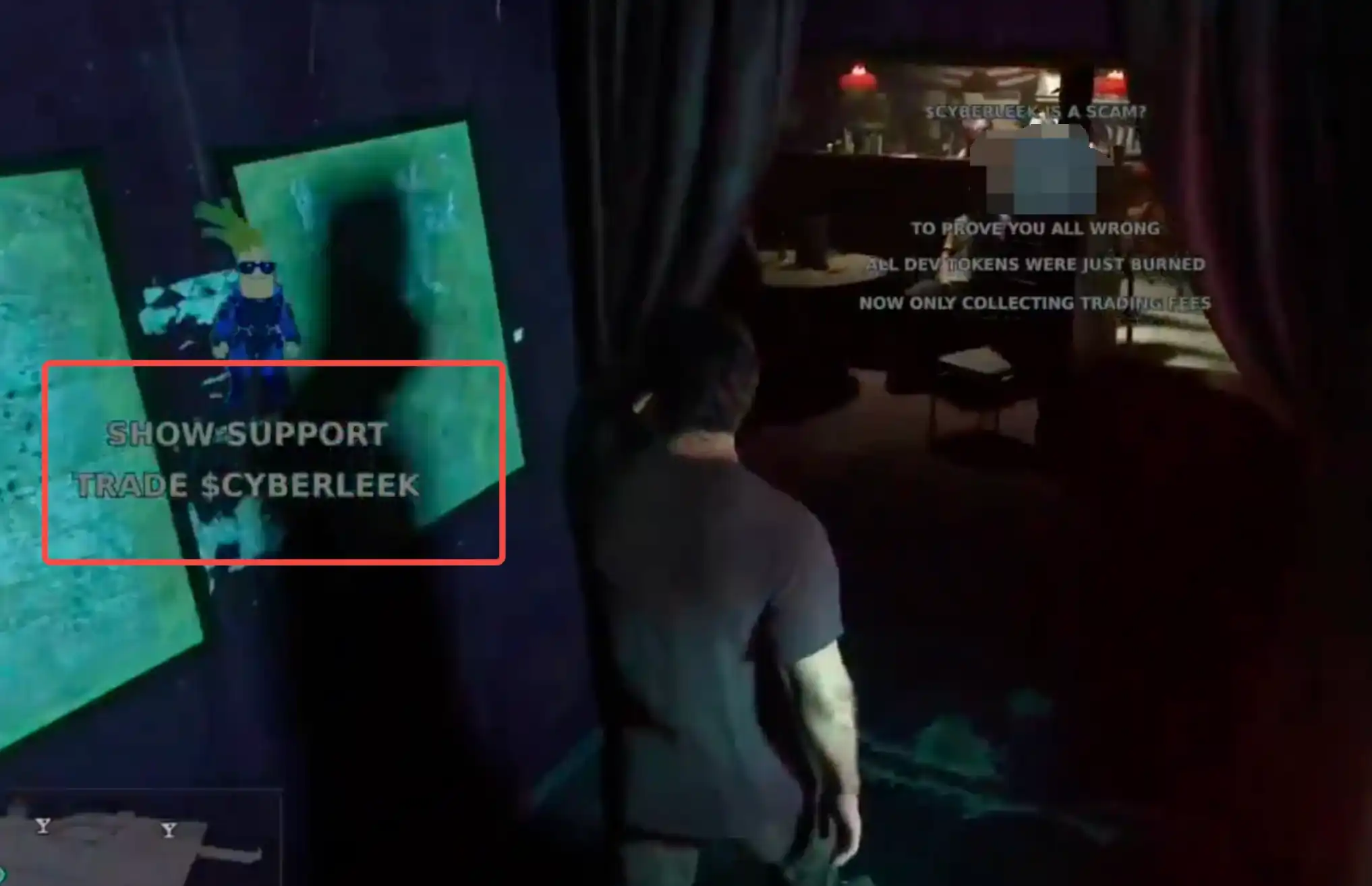
A hacker group called "CyberLeek" has leaked gameplay footage of the highly anticipated video game *GTA 6*, which is slated for release in 2026. Simultaneously, the group launched a meme token, $CYBERLEEK, on Solana. The leaks, which include maps and gameplay clips, are heavily watermarked with advertisements urging viewers to buy the token. Investigations of blockchain data reveal that the token was created and funded from a single wallet approximately eight hours before the first leak was released, suggesting a coordinated plan. The group has implemented a voting system where token holders can "vote" for the next type of content to be leaked by sending $CYBERLEEK tokens to a designated wallet—a process that permanently transfers the tokens to the hackers. This creates a self-sustaining cycle where interest in the leaks drives token purchases. Financially, the operation involved minimal upfront costs (less than $3,500 in out-of-pocket expenses) but generated significant revenue. On its first day, the token saw $15 million in trading volume, netting the creators an estimated $30,000 from transaction fees alone. While the group later burned a large portion of its developer-held tokens (worth over $1 million) to build trust, the fee-generating mechanism remains intact. The game's publisher, Take-Two Interactive, has initiated legal proceedings to identify the hackers. Despite this, the case demonstrates a new model where leaked intellectual property is used as leverage to promote and profit from a cryptocurrency, with meme token markets serving as an additional revenue stream.

marsbit2h ago

Hacker Leaks GTA6 and Launches a Token: Leaked Videos Become Ad Space for $CYBERLEEK, Must Buy Tokens to Vote for Next Clip

marsbit2h ago

Trading

Spot

Hot Articles

Discussions

Welcome to the HTX Community. Here, you can stay informed about the latest platform developments and gain access to professional market insights. Users' opinions on the price of S (S) are presented below.

活动图片