Polymarket Passive Income Guide: From Volume Scripts to AI Automation

比推Опубликовано 2025-12-10Обновлено 2025-12-10

Введение

Polymarket, a leading prediction market platform on Polygon, enables users to bet on real-world events using USDC. This guide outlines strategies for building automated trading bots to profit on the platform, capitalizing on its open API, transparent order books, low fees, and frequent trader errors. Bot strategies are categorized by complexity: - **Beginner Bots**: Includes volume-bots for potential airdrop farming (buying/selling the same position repeatedly) and volatility bots that bet on mean reversion after price spikes. - **Intermediate Bots**: Market-making bots place limit orders to capture bid-ask spreads and earn liquidity rewards, requiring significant capital and carrying volatility risk. - **Advanced Bots**: Arbitrage bots exploit pricing inefficiencies (e.g., YES/NO pairs summing below 100%), while AI-powered bots use machine learning models to analyze multiple data sources (news, on-chain activity, social sentiment) to identify mispriced probabilities across markets. All bots require a core tech stack: access to Polymarket’s API, a Polygon wallet with USDC, historical data storage (e.g., PostgreSQL), and Python-based tools for execution and analysis. Success relies on speed, discipline, scalability, and data integration, but effective risk management is essential to avoid significant losses.

Author: Archive

Compiled by: Azuma, Odaily Planet Daily

Original title: How to Build a Polymarket Passive Income Bot from Scratch


Polymarket is the hottest prediction market platform right now, where people use real money to bet on the outcomes of real-world events, such as US elections, sports matches, asset prices, policy changes, and more.

Polymarket operates on the Polygon network, uses USDC for settlements, and offers transparent, fast transactions with almost no fees.

There are also bots on Polymarket that profit massively by repeatedly identifying and exploiting traders' mistakes faster than anyone else, executing thousands of times.

Why do bots thrive so well on Polymarket? The reasons are:

  • Open API, transparent order book — Bots can see everything;

  • Extremely low fees, instant settlement — Micro-spread arbitrage works effectively;

  • Millions of human users trade manually, and many of them frequently make mistakes.

This is not an article advertising bots. It's a breakdown from the dumbest bot to a true money-making AI monster.

I. Beginner-Level Bots

Airdrop Farming Bot: The Volume Grinder

The market expects that interacting with Polymarket will yield generous airdrop rewards. These bots continuously buy and immediately sell the same position, over and over, just to inflate trading volume — with no real intent, purely for volume.

The operation is simple too — pick a market with good liquidity, for example, buy a "YES" position for $10, then instantly sell it for $10, and the trading volume is boosted just like that.

Pros:

  • None.

Cons:

  • No one knows the specific criteria for the airdrop;

  • The platform might not count such trades;

  • The airdrop might not exist; you might be working for nothing.

Volatility Capture Bot: Specializes in Panic Moments

This type of bot looks for sharp price fluctuations and bets against the market, expecting a reversion to the mean — prices will eventually return to normal.

The bot continuously monitors price history, calculating the deviation of the current price from the recent average. Once the price surges or plummets violently, the bot quickly opens a position in the opposite direction, betting that the market overreacted.

Pros:

  • Operable with small funds;

  • Simple and easy-to-understand logic;

  • Profits from human emotions and mistakes.

Cons:

  • Not all fluctuations are false; sometimes real big news causes market moves;

  • If stop-loss or take-profit levels are set wrong, fees alone can make you lose money;

  • Risk management must be strict, otherwise it's a slow bleed.

II. Intermediate-Level Bots

Market Making Bot: The Spread Harvester

This type of bot profits by continuously placing limit orders on both the buy and sell sides.

The bot places a buy order slightly below the current price and a sell order slightly above it. When both are filled, the spread is pocketed. Additionally, Polymarket rewards liquidity provision, meaning dual income.

Pros:

  • Dual income sources: Spread + platform rewards;

  • Surprisingly stable returns in calm, low-volatility markets;

  • Effective if you choose the right markets.

Cons:

  • Requires at least $10,000+ in capital for the spread to be meaningful;

  • Very afraid of sudden market swings: if your buy order gets filled just before a crash, you'll be stuck at a high point;

  • One bad market can wipe out a week's profits.

III. Advanced-Level Bots

Arbitrage Bot

An arbitrage opportunity exists when the sum of the prices of correlated outcomes (e.g., the most basic "YES" and "NO") is less than 100%.

More complex tests involve arbitraging between different correlated markets (different phrasings of the same event, time windows, compound conditions, etc.). As long as the position is constructed correctly, you can lock in profit regardless of the outcome.

Pros:

  • Properly constructed arbitrage strategies do not depend on the event outcome;

  • Profits from market inefficiencies that humans cannot process quickly.

Cons:

  • The more arbitrage bots there are, the faster the opportunity window closes — profits get thinner and thinner;

  • Strategies that are perfect on paper can fail during execution due to insufficient liquidity.

AI Bot

These bots don't just look at prices; they can estimate the true probability more accurately than the market. They integrate and analyze clues from historical prices, trading volume, news, on-chain data, whale behavior, and sometimes even analyze the collective sentiment on social media.

If the model determines the market is pricing a 40% probability, but the true probability is 60%, the bot will buy low and sell high, operating 24/7.

Pros:

  • A successful AI bot can operate across politics, sports, macroeconomics, etc., running one model across hundreds of markets;

  • Can cover multiple signal sources: statistical, on-chain, news, behavioral indicators.

Cons:

  • High barrier to entry.

You need data pipelines, infrastructure, machine learning skills, financial intuition, a risk framework, and resources for data storage, processing, continuous model retraining, monitoring, and building a bulletproof risk management system. This isn't a side project; it's equivalent to starting a startup.

Tech Stack (Required for All Bots)

Polymarket API Access: The official documentation contains all real-time data and order placement interfaces. You can't do anything without this.

Polygon Wallet: Trades are conducted in USDC on Polygon. You need a wallet private key capable of signing transactions and managing balances.

Historical Data Storage:

  • Bots need: Prices, trading volume, spreads, market metadata.

  • Recommended: PostgreSQL or SQL + columnar storage hybrid for fast data aggregation.

Python + Common Toolchain: For API requests, asynchronous processing, data analysis, machine learning libraries.

Why Do Bots Always Win?

  • Speed: No emotions, no hesitation;

  • Discipline: Strictly follows system rules;

  • Scale: One bot can monitor thousands of markets while you sleep;

  • Data Depth: Combines prices, order books, news, behavioral patterns into signals you cannot calculate manually;

In summary, using trading bots on Polymarket is a powerful tool for achieving automated income — but only if you manage risk properly.


Twitter:https://twitter.com/BitpushNewsCN

BitPush TG Discussion Group:https://t.me/BitPushCommunity

BitPush TG Subscription: https://t.me/bitpush

Original link:https://www.bitpush.news/articles/7594628

Связанные с этим вопросы

QWhat are the main reasons why trading bots are so effective on Polymarket?

ATrading bots are effective on Polymarket due to the open API and transparent order book, extremely low fees and instant settlement, and the presence of millions of human traders who frequently make mistakes.

QWhat is the primary purpose of an airdrop farming bot on Polymarket?

AThe primary purpose of an airdrop farming bot is to repeatedly buy and immediately sell the same position to artificially inflate trading volume, with the hope of qualifying for potential airdrop rewards from the platform.

QHow does a market-making bot generate profit on Polymarket?

AA market-making bot generates profit by placing limit orders to buy slightly below the current price and sell slightly above it, capturing the spread between the buy and sell prices. It may also earn additional rewards from Polymarket for providing liquidity.

QWhat is an arbitrage bot on Polymarket designed to exploit?

AAn arbitrage bot is designed to exploit pricing inefficiencies, such as when the combined price of related outcomes (e.g., 'YES' and 'NO') is below 100%, allowing for a risk-free profit if the positions are constructed correctly.

QWhat additional data sources does an AI bot analyze compared to simpler bots?

AAn AI bot analyzes multiple data sources beyond just price, including historical data, trading volume, news, on-chain data, whale activity, and even social media sentiment to more accurately predict real-world probabilities.

Похожее

Breaking: OpenAI Undergoes Major Reorganization, President Brockman Assumes Command

OpenAI has announced a major internal reorganization just months before its anticipated IPO. The company is merging its three flagship product lines—ChatGPT, Codex, and the API platform—into a single, unified product organization. The most significant leadership change involves co-founder and President Greg Brockman moving from a background technical role to take full, permanent control over all product strategy. This follows the indefinite medical leave of AGI Deployment CEO Fidji Simo. Additionally, ChatGPT's longtime lead, Nick Turley, has been reassigned to enterprise products, with former Instagram executive Ashley Alexander taking over consumer offerings. The consolidation, internally framed as a strategic move towards an "Agentic Future," aims to break down internal silos and create a cohesive "Super App." This planned desktop application would integrate ChatGPT's conversational abilities, Codex's coding power, and a rumored internal web browser named "Atlas" to autonomously perform complex user tasks. The reorganization occurs amid significant internal and external pressures. OpenAI has recently seen a wave of high-profile departures, including Sora co-lead Bill Peebles and other senior technical leaders, leading to concerns about a thinning executive bench. Externally, rival Anthropic recently secured funding at a staggering $900 billion valuation, surpassing OpenAI's own. Google's upcoming I/O developer conference also poses a competitive threat. Analysts suggest the dramatic restructure is a pre-IPO move to present a clearer, more focused narrative to Wall Street—streamlining operations and demonstrating decisive leadership under Brockman to counter internal turbulence and intense market competition.

marsbit52 мин. назад

Breaking: OpenAI Undergoes Major Reorganization, President Brockman Assumes Command

marsbit52 мин. назад

Two Survival Structures of Market Makers and Arbitrageurs

Market makers and arbitrageurs represent two distinct survival structures in high-frequency trading. Market makers primarily use limit orders (makers) to profit from the bid-ask spread, enjoying high capital efficiency (nominally 100%) but bearing inventory risk. This "inventory risk" arises from passive, fragmented, and discontinuous order fills in the limit order book (LOB). This risk, while a potential cost, can also contribute to excess profit if managed within control boundaries, allowing for mean reversion. Market makers essentially sell "time" (uncertainty over execution timing) to the market for price control and low fees. In contrast, cross-exchange arbitrageurs typically use market orders (takers) to exploit price differences or funding rates, resulting in lower nominal capital efficiency (requiring capital on both exchanges) and higher transaction costs. Their risk exposure stems from asymmetries in exchange rules (e.g., minimum order sizes), execution latency, and infrastructure risks (e.g., ADL, oracle drift). These exposures are active, exogenous gaps that primarily erode profits rather than contribute to them. Arbitrageurs essentially sell "space" (capital sunk across venues) for localized, immediate certainty. Both strategies engage in a trade-off between execution friction and residual risk. Optimal systems allow for temporary, controlled risk exposure rather than enforcing zero exposure at all costs. Their evolution converges towards hybrid models: arbitrageurs may use maker orders to reduce costs, while market makers may use taker orders or hedges for risk management. Ultimately, both use different forms of risk exposure—market makers exposing inventory, arbitrageurs immobilizing capital—to extract marginal, hard-won certainty from the market.

链捕手52 мин. назад

Two Survival Structures of Market Makers and Arbitrageurs

链捕手52 мин. назад

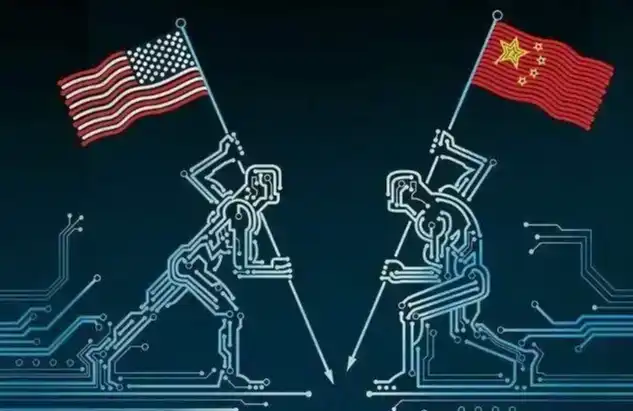
Who Will Define the Rules of the AI Era? Anthropic Discusses the 2028 US-China AI Landscape

This article, based on Anthropic's analysis, outlines the intensifying systemic competition between the U.S./allies and China for AI leadership by 2028. It argues that access to advanced computing power ("compute") is the critical bottleneck, where the U.S. currently holds a significant advantage through chip export controls and allied innovation. However, China's AI labs remain competitive by exploiting policy loopholes—via chip smuggling, overseas data center access, and "model distillation" attacks to copy U.S. model capabilities—keeping them close to the frontier. The piece presents two contrasting scenarios for 2028. In the first, decisive U.S. action to tighten compute controls and curb distillation locks in a 12-24 month AI capability lead, cementing democratic influence over global AI norms, security, and economic infrastructure. In the second, policy inaction allows China to achieve near-parity through continued access to U.S. technology, enabling Beijing to promote its AI stack globally and integrate advanced AI into its military and governance systems, altering the strategic balance. Anthropic contends that maintaining a decisive U.S. lead is essential for shaping safe AI development and governance. The core recommendation is for U.S. policymakers to urgently close compute and model access loopholes while promoting global adoption of the U.S. AI technology stack to secure a lasting strategic advantage.

marsbit2 ч. назад

Who Will Define the Rules of the AI Era? Anthropic Discusses the 2028 US-China AI Landscape

marsbit2 ч. назад

Торговля

Спот
Фьючерсы

Популярные статьи

Неделя обучения по популярным токенам (2): 2026 может стать годом приложений реального времени, сектор AI продолжает оставаться в тренде

2025 год — год институциональных инвесторов, в будущем он будет доминировать в приложениях реального времени.

1.8k просмотров всегоОпубликовано 2025.12.16Обновлено 2025.12.16

Неделя обучения по популярным токенам (2): 2026 может стать годом приложений реального времени, сектор AI продолжает оставаться в тренде

Обсуждения

Добро пожаловать в Сообщество HTX. Здесь вы сможете быть в курсе последних новостей о развитии платформы и получить доступ к профессиональной аналитической информации о рынке. Мнения пользователей о цене на AI (AI) представлены ниже.

活动图片