# Artikel Terkait Workforce

Pusat Berita HTX menyediakan artikel terbaru dan analisis mendalam mengenai "Workforce", mencakup tren pasar, pembaruan proyek, perkembangan teknologi, dan kebijakan regulasi di industri kripto.

Luno Cuts 20% of Global Workforce as Cryptocurrency Exchange Shifts Priorities Towards Automation

Luno, a global cryptocurrency exchange owned by Digital Currency Group, is reducing its global workforce by 20% as part of a major operational restructuring driven by a downturn in retail crypto activity and increased automation. CEO James Lanigan announced the layoffs on July 28, stating it was a difficult but necessary decision to build a more sustainable structure for the long term. The company did not disclose the total number of affected employees, though South African staff are among those impacted, with formal consultations initiated there in line with local labor laws. This marks the second major round of layoffs in three and a half years, following a 35% staff reduction in January 2023. The company cites cyclical declines in retail user activity and ongoing investment in automated tools as key factors behind the restructuring, which has fundamentally changed the firm's resource needs. Concurrently, Luno is reorganizing into three unified divisions built on a single core platform: 1) a consolidated consumer and API platform serving over 16 million users in Africa and Asia-Pacific, 2) a stablecoin solutions unit focused on the zar-backed 'Zaru' stablecoin launched in February 2026, and 3) an institutional arm offering OTC services and cross-border settlement networks. This restructuring follows recent market withdrawals, with Luno discontinuing services in certain markets from September 1, 2026.

cryptonews.ru07/30 05:22

Luno Cuts 20% of Global Workforce as Cryptocurrency Exchange Shifts Priorities Towards Automation

cryptonews.ru07/30 05:22

Behind the 67,000 Semiconductor Talent Shortage: U.S. Industrial Policy Game and Implications for China

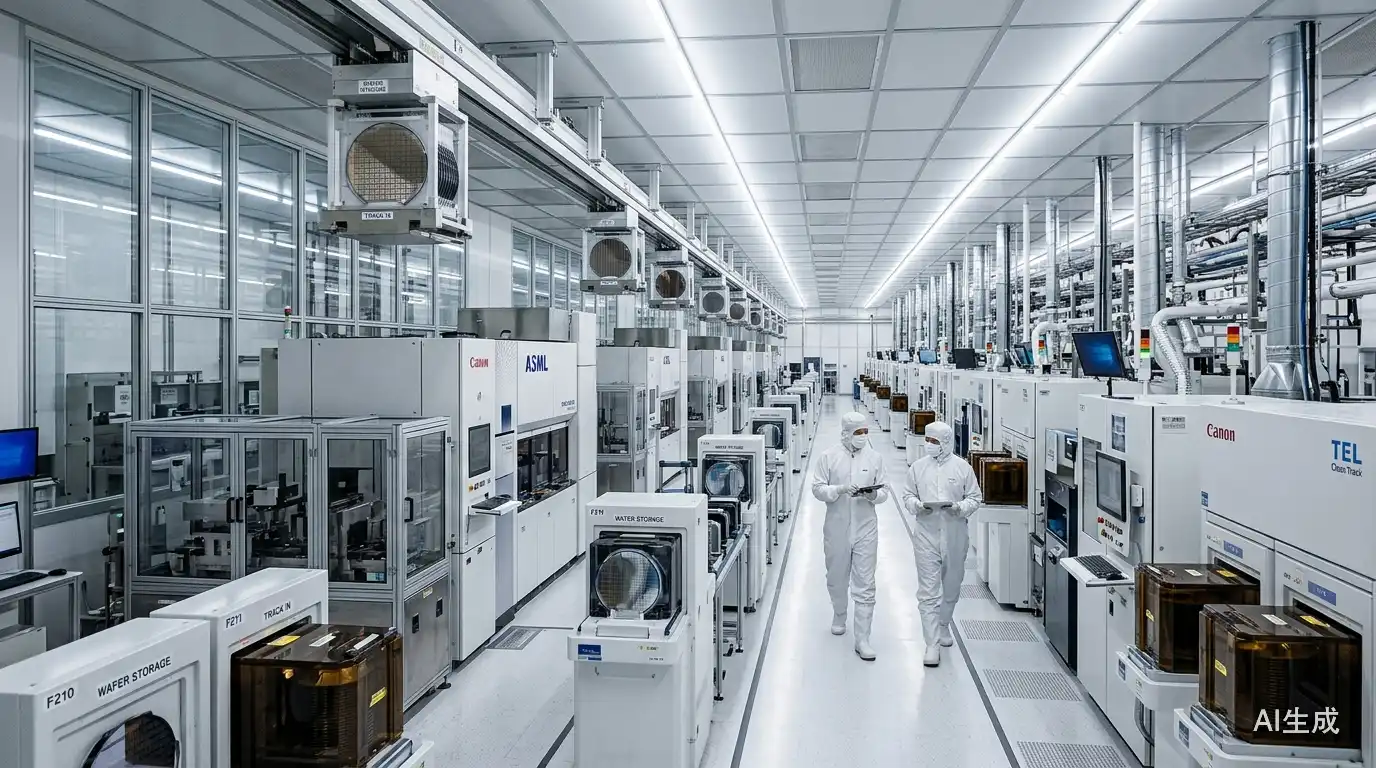
The U.S. push to reshore semiconductor manufacturing faces a core challenge: a significant talent shortage. While over $770 billion in investments are planned across 160 projects, a key hurdle is finding enough people to run the new fabs. According to industry projections, the U.S. could face a shortage of approximately 67,000 technicians, engineers, and computer scientists by 2030. This shortage is multi-faceted. It includes not only high-level chip design engineers requiring advanced degrees but also a substantial need for technicians to operate and maintain fab equipment. Technician roles, while often requiring less formal education, are hard to fill due to factors like shift work, factory locations, and local community infrastructure. Conversely, for high-end engineers, the issue is less about salary—which is already competitive—and more about intense competition for specialized skills from other tech sectors and the long lead time to develop such expertise. The geographic dispersion of new investments complicates recruitment, as fabs need large numbers of local, stable employees. In response, U.S. policy emphasizes building workforce development as critical infrastructure. Strategies include expanding community college programs for technician training, fostering industry-education partnerships, and pursuing immigration reforms for high-skilled talent, aiming to balance immediate needs with long-term domestic pipeline development. For China, the key takeaway is the need to integrate talent supply planning with factory construction from the outset. This involves requiring companies to submit workforce plans, strengthening vocational education aligned with industry needs, and building supportive local ecosystems to retain talent. Ultimately, a sustainable semiconductor industry depends not just on building fabs, but on cultivating a continuous, local talent pipeline capable of keeping them running and advancing.

marsbit07/29 00:51

Behind the 67,000 Semiconductor Talent Shortage: U.S. Industrial Policy Game and Implications for China

marsbit07/29 00:51

The First Batch of Big Tech Employees Laid Off by AI Have Returned to Their Posts

The first wave of employees laid off by major tech companies, citing AI as the reason, are already being rehired. In late February, Block, led by Jack Dorsey, laid off over 4,000 employees, reducing its workforce from 10,000 to under 6,000, with Dorsey stating that "AI tools changed everything." However, within a month, some of those laid off began receiving offers to return. Reports indicate rehires occurred in departments like engineering and HR, with reasons ranging from "clerical errors" in termination to managers advocating for their return. The article argues that replacing humans with AI is often more cost-effective. For instance, enterprise-level AI can be expensive in terms of token usage, and training a reliable AI system, such as for customer service, may exceed the cost of human employee salaries. Examples like Klarna, which rehired客服 after initially replacing them with AI, support this. Additionally, the "Jevons Paradox" suggests that AI-driven efficiency gains don’t necessarily reduce workloads but may increase demands on remaining employees, adding to their burden. The piece criticizes companies using AI as a pretext for layoffs, arguing that AI cannot replace human organizational dynamics or strategic roles. Nvidia’s Jensen Huang is quoted condemning leaders who裁员 instead of leveraging AI for expansion. Ultimately, AI serves as a convenient excuse for cost-cutting, but its limitations and the essential role of humans in organizations mean that some layoffs are reversed when key roles are affected. The trend reflects broader issues of corporate strategy and management rather than a true AI takeover.

Odaily星球日报03/20 07:26

The First Batch of Big Tech Employees Laid Off by AI Have Returned to Their Posts

Odaily星球日报03/20 07:26

Jack Dorsey's Company Is Laying Off 4,000 White-Collar Workers, Replaced by AI

Jack Dorsey's fintech company Block has announced a major workforce reduction, cutting nearly 40% of its employees—around 4,000 roles—to streamline operations and transition toward a flatter, AI-centric organizational structure. Despite reporting growing revenue and profitability, and even raising its 2026 profit guidance to $12.2 billion, Block is proactively restructuring to adapt to rapid AI-driven changes in productivity. Dorsey emphasized that AI tools are fundamentally reshaping how companies operate, enabling exponential growth without proportional increases in staff. This move reflects a broader trend among tech firms like Salesforce, Amazon, and ASML, which have also cut jobs during growth phases by leveraging AI for efficiency. Notably, Block’s stock surged 20% following the announcement, adding nearly $6 billion in market value—effectively valuing each eliminated role at about $1.5 million in created enterprise value. The layoffs primarily affect white-collar roles, as AI excels at tasks involving information processing—a core function of many knowledge-economy jobs. Affected employees will receive severance including 20 weeks' base pay, additional compensation per year served, a $5,000 transition bonus, and six months of continued health insurance. The situation underscores how AI is disrupting traditional employment faster than expected, shifting focus toward reskilling and adaptation in the automated economy.

Odaily星球日报02/27 03:55

Jack Dorsey's Company Is Laying Off 4,000 White-Collar Workers, Replaced by AI

Odaily星球日报02/27 03:55

活动图片