Crypto Bets On Argentina Inflation Stoke Fears Of Insider Trading On Polymarket

bitcoinistDipublikasikan tanggal 2026-03-17Terakhir diperbarui pada 2026-03-17

Abstrak

Argentinian authorities have ordered a nationwide blockade of the crypto prediction platform Polymarket, enforced by regulators and internet providers, following a court ruling that deemed it an unlicensed gambling operation. The move comes after allegations of insider trading emerged when suspicious betting activity occurred just before the release of official inflation data in February. Argentina follows Colombia as the second Latin American country to ban the platform, reflecting a broader global trend of regulators treating prediction markets as gambling rather than financial tools. This could fragment liquidity and push users into less regulated markets.

Argentinian authorities have ordered a full national blockade of Polymarket after it predicted inflation data.

An Authoritarian Crypto Ban?

Argentinian outlets reported this Monday that a court ruling in Buenos Aires ordered a nationwide blockade of Polymarket, one of the largest crypto prediction market platforms globally. The blockade will be enforced via the Ente Nacional de Comunicaciones (ENACOM) and local internet service providers (ISPs), in addition to its removal from Apple and Google app stores. The restriction goes as far as affecting already signed up Polymarket users, another local outlet claims.

Buenos Aires Lottery Regulators (Lotería de la Ciudad de Buenos Aires and the Cámara Argentina de Casinos y Bingos) argue that Polymarket is operating as an unlicensed online gambling platform, not just a neutral "prediction market". This led to a case being brought by the City's Special Prosecutor's Office for Gambling (FEJA) and presided over by Judge Susana Parada.

The Public Prosecutor's Office explained that despite the blocking order having already been issued, the implementation depends on ENACOM notifying all ISP's so the companies can cut off access. Therefore, the full and final implementation will most likely be gradual.

A "Degen Casino" That Played With The Country's Inflation

This drastic ruling follows a suspicious trading scandal in the inflation market back in February, where odds moved around fifteen minutes before INDEC released official CPI data, raising allegations of insider trading by politically connected actors.

The local media has echoed the "degen casino" narrative, arguing that these markets let users place peso‐linked wagers on macro data, elections and high‐profile political outcomes without any Argentine license or KYC/age checks. Clarín claims that, in Polymarket, "it all comes down to betting money on a question that can be answered with a yes or a no":

Polymarket presents itself as a prediction market, but in practice it's a way to bet on almost anything that emerged during the pandemic and gained popularity during the election campaign between Donald Trump and Kamala Harris, when the tycoon began promoting these markets because they gave him better results than the polls: 55.5% were literally betting on him.

A Global Trend

Despite some claims that place Argentina as the first country in the region to implement such measures, the truth is that last year Colombia became the first country in Latin America to ban Polymarket. Coljuegos, Colombian gambling regulators, declared the platform ilegal in September 2025 and, similarly to the Argentinian ban, instructed their ISPs to block access to it.

It its worth noting that prediction markets had become a popular way for global crypto traders to price political risk, inflation paths and macro events in real time, often anticipating official data. In line with this, this is not the first clash between Polymarket's and regulatory entities. Besides Colombia, other earlier blocks or investigations have been registered in France, Taiwan and Singapore, in addition to the US regulatory pressure over unregistered derivatives and gambling concerns.

Argentina's move reinforces a growing trend of regulators increasingly treating crypto prediction platforms as gambling first and market infrastructure second, which could fragment liquidity and push activity into friendlier jurisdictions or darker venues.
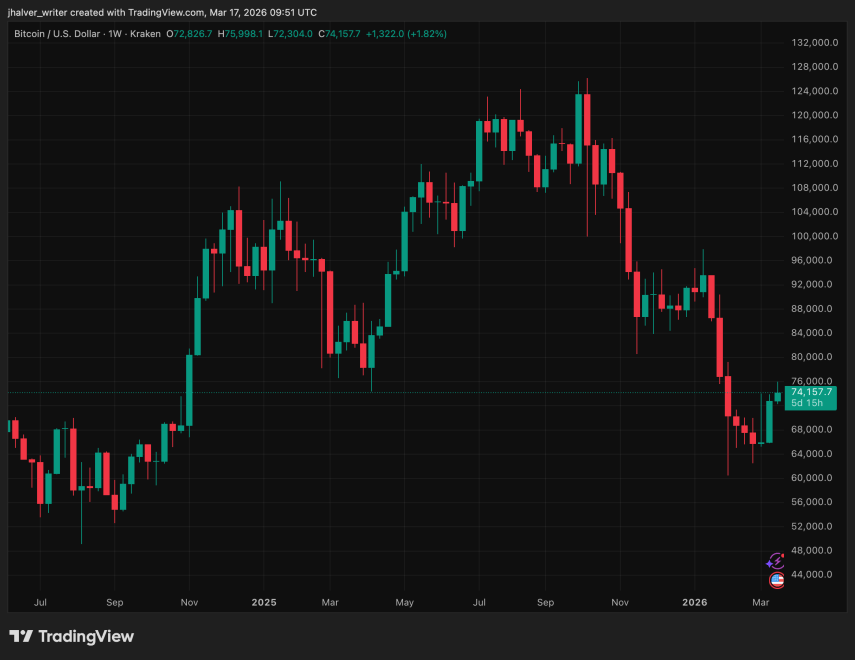
BTC's price trends reaches $74K on the daily chart, the highest since January. Source: BTCUSD on Tradingview

Cover image from Perplexity, BTCUSD chart from Tradingview

Pertanyaan Terkait

QWhy did Argentinian authorities order a national blockade of Polymarket?

AArgentinian authorities ordered a national blockade of Polymarket because they argue it is an unlicensed online gambling platform, not just a neutral prediction market, following a suspicious trading scandal involving inflation data.

QWhat was the suspicious trading activity on Polymarket related to in Argentina?

AThe suspicious trading activity was related to Argentina's inflation data, where odds moved around fifteen minutes before the official CPI data was released by INDEC, raising allegations of insider trading.

QWhich other Latin American country banned Polymarket before Argentina?

AColombia became the first country in Latin America to ban Polymarket, declaring the platform illegal in September 2025 and instructing ISPs to block access.

QHow does Polymarket present itself versus how it is viewed by regulators?

APolymarket presents itself as a prediction market, but regulators view it as an unlicensed online gambling platform that allows users to place wagers on events without proper licensing or KYC/age checks.

QWhat global trend does Argentina's move against Polymarket reinforce?

AArgentina's move reinforces a growing trend of regulators treating crypto prediction platforms as gambling first and market infrastructure second, which could fragment liquidity and push activity into friendlier jurisdictions.

Bacaan Terkait

Kota Baltimore Menuntut Pasar Prediksi untuk Taruhan Olahraga

Kota Baltimore dan walikotanya, Brendan Scott, mengajukan gugatan terhadap Kalshi dan Polymarket atas tuduhan bahwa perusahaan-perusahaan tersebut melanggar undang-undang perjudian setempat. Dalam pemberitahuan pada hari Kamis, kantor walikota Baltimore menyatakan bahwa kedua platform pasar prediksi ini menjalankan "platform taruhan olahraga ilegal tanpa lisensi" dan menyesatkan pengguna tentang "legalitas dan status regulasi produk mereka." Gugatan berfokus pada klaim yang memperdebatkan karakterisasi kontrak acara oleh Kalshi dan Polymarket, dengan argumen bahwa transaksi tersebut merupakan taruhan yang melanggar hukum negara bagian. Walikota Scott menegaskan bahwa perusahaan-perusahaan ini menjalankan operasi seperti sportsbook tanpa lisensi. Gugatan terhadap Kalshi juga menyebutkan Robinhood, Webull, dan Coinbase sebagai mitra platform. Semua perusahaan dituduh melakukan praktik menipu dengan memasarkan kontrak olahraga sebagai produk yang dapat "dibeli dan diperdagangkan secara sah di Maryland." Tindakan hukum ini merupakan konflik terbaru antara otoritas negara bagian dan federal AS, dan banyak ahli memperkirakan kasus ini akan berakhir dengan naik banding ke Mahkamah Agung. Sementara Komisi Perdagangan Berjangka Komoditas AS (CFTC) berpendapat kontrak acara di pasar prediksi termasuk dalam "swap" di bawah yurisdiksinya, gugatan Baltimore dan otoritas negara bagian lain menentang klaim tersebut. Polymarket menanggapi dengan menyatakan bahwa tindakan kota ini bertentangan dengan kerangka kerja regulasi CFTC dan bahwa pasar prediksi di bursa yang terdaftar CFTC diatur oleh hukum federal, bukan aturan negara bagian dan lokal yang terfragmentasi.

cointelegraph44m yang lalu

Kota Baltimore Menuntut Pasar Prediksi untuk Taruhan Olahraga

cointelegraph44m yang lalu

Michael Saylor, Penjual Bitcoin, Kembali Lontarkan Pernyataan Kontroversial Tentang BTC!

Michael Saylor, pemimpin komite strategi, memperkenalkan konsep baru untuk mengklasifikasikan Bitcoin dan aset digital berdasarkan fungsi keuangan yang berbeda. Menurut Saylor, Bitcoin tidak boleh dilihat sekadar sebagai alat pembayaran, melainkan sebagai lapisan dasar "modal digital" yang menjadi fondasi bagi pinjaman, uang, dan produk keuangan lainnya. Dengan menilai aset digital dalam "spektrum moneter," Saylor mendefinisikan Bitcoin sebagai "modal digital," STRC sebagai "kredit digital," SR-strcUSX sebagai "uang digital," dan USDT sebagai "mata uang digital." Ia menyatakan bahwa semakin ke kanan dalam spektrum ini, volatilitas dan potensi imbal hasil menurun, sementara stabilitas harga dan kemudahan transaksi meningkat. Saylor menggambarkan Bitcoin sebagai penyimpan nilai ideal dengan volatilitas tinggi dan potensi imbal hasil besar. Di sisi lain, mata uang digital seperti USDT menawarkan stabilitas harga dan kemudahan untuk transaksi sehari-hari. Kategori "kredit digital" dan "uang digital" berperan sebagai jembatan antara kedua ekstrem tersebut. Ia juga menekankan bahwa Bitcoin adalah aset langsung yang dimiliki pemiliknya, sementara kredit, uang, dan mata uang digital dikelola oleh perusahaan keuangan. Lapisan kepemilikan dalam struktur ini adalah "modal digital," dan secara keseluruhan komponen-komponen ini membentuk "tumpukan keuangan digital." Dengan analogi minyak mentah yang dapat diolah menjadi berbagai produk, Saylor berpendapat bahwa Bitcoin sebagai modal digital dapat diinovasi menjadi kredit, uang, dan mata uang. Dengan demikian, di masa depan Bitcoin berpotensi tidak hanya menjadi penyimpan nilai, tetapi juga jaminan dasar dan lapisan modal dalam ekosistem keuangan digital yang lebih luas.

cryptonews.ru54m yang lalu

Michael Saylor, Penjual Bitcoin, Kembali Lontarkan Pernyataan Kontroversial Tentang BTC!

cryptonews.ru54m yang lalu

Trading

Spot
活动图片