Olympus DAO Myth Reappears? A "Sovereign On-Chain Central Bank" Written with 4000 Lines of Immutable Code

marsbitDipublikasikan tanggal 2026-08-24Terakhir diperbarui pada 2026-08-24

Abstrak

A new project called The Standard Reserve has emerged, branding itself as a "sovereign on-chain central bank." It aims to replicate core central bank functions—currency issuance, money supply adjustment, and reserve accumulation—entirely through 4,000 lines of immutable code, with no human governance. Its core mechanism is a "reflexive monetary policy" based on a single signal: the net ETH flow into or out of the system's sole Uniswap v4 ETH/$STANDARD pool. Sustained net ETH inflows trigger an "expansion" phase, increasing $STANDARD issuance and using protocol fees to buy tokenized gold as a permanent hard reserve. Net outflows (or zero flow) trigger an immediate "contraction" phase, reducing issuance and using fees to buy back and burn $STANDARD. The system involves six key entities: the $STANDARD token (hard-capped at 1 billion), the central Uniswap pool, the Central Bank contract, Charter NFTs (acting as "banking licenses"), Branch units under each Charter (which earn a share of newly minted $STANDARD), and separate Vaults for expansion (buying gold) and contraction (buying back $STANDARD). To participate, users ideally acquire a Founding Charter NFT (initially 1,000 are free via allowlist/public mint). Each Charter comes with one Branch; more can be opened by burning $STANDARD for "expansion permits," increasing revenue share. Retiring a Branch lets users claim accumulated $STANDARD but imposes a dynamic exit fee (higher if many exit simultaneously), with half the fee ...

Crypto friends who see the symbol (3,3) know the power of Olympus DAO $OHM @OlympusDAO in 2021.

IDO price $4, peak at $1,415, a rise of over 300 times—and that's just the price increase, not counting the additional tokens from rebases. If you held, starting with $500 could truly have a chance to become $5 million.

Since then, any project waving the flag of being an OHM copycat could garner attention or support from a group of followers.

But those days are gone!

Back to the topic.

A very interesting new project recently appeared on-chain: The Standard Reserve. It doesn't call itself a stablecoin, nor a governance token, but directly proclaims itself as "The sovereign onchain central bank."

一、 What does it actually want to do?

Traditional central banks have three core functions:

— Issue currency

— Regulate money supply

— Accumulate reserve assets

The Standard Reserve implements these three things entirely with code, with no committee, no board, no human intervention. The whitepaper sums it up in one sentence:

“It answers to no board, committee, or government. Because it’s 4,000 lines of immutable code. The bank is code.”

The entire system is a closed monetary economy with only four core elements:

One currency: $STANDARD

One market: The ETH/$STANDARD pool on Uniswap v4 (with a custom hook)

One signal: The net ETH flow of this pool

One authority: The code itself

二、 Core Mechanism: Reflexive Monetary Policy

This is the most essential part of the entire project.

The system only looks at one signal

—— Net ETH Flow: Net inflow > 0 (someone continuously buys $STANDARD with ETH) → Expansion period increases the issuance rate of $STANDARD, then uses the fees mainly to purchase tokenized gold, held permanently as hard reserves

—— Net inflow ≤ 0 (someone continuously sells $STANDARD) → Contraction period immediately reduces issuance rate, uses the fees mainly to repurchase and burn $STANDARD

Moreover, the adjustment is asymmetric:

Rate cuts (contraction) take effect immediately

Rate hikes (expansion) must be gradually increased through sustained net inflow

Simply put: if a lot of capital flows in and the price rises consistently, the system issues more tokens + hoards gold; if capital flows out, the system issues fewer tokens + repurchases and burns. This is what it calls "reflexive monetary policy."

三、 Six Core Entities

1、$STANDARD

ERC-20, hard cap of 1 billion

—— The only currency, minted only upon withdrawal, continuously burned

2、The Pool

Uniswap v4 ETH/$STANDARD pool

—— The only market, all trading fees go to the bank, net flow is the policy signal

3、Central Bank

4000 lines of code

—— Reads net flow, decides issuance rate, allocates fees

4、Charter

Soulbound NFT (transfer may be opened later)

—— The banker's "business license," genesis only has 1000 free spots

5、Branch

"Storefronts" under a Charter

—— The units that actually earn issuance revenue, maximum of 10 per Charter

6、Vaults

Expansion Vault + Contraction Vault

—— Responsible for hoarding gold and repurchasing/burning respectively

补充: A Charter is a company, a Branch is its storefront. The company makes money through storefronts, expands by opening new storefronts (burns tokens), and pays dividends to the owner by closing storefronts. Closing the last storefront dissolves the company.

四、 How does one interact with the project?

1、 Acquire a Genesis Charter

1000 free Founding Charters (allowlist + public, 1 per wallet max) After that: Daily ETH Dutch auctions for new ones

2、 Open Branches to Earn

Each Charter comes with 1 Branch Can open up to 10 maximum Additional Branches require purchasing "Expansion Licenses" with $STANDARD (100% burned)

3、 Withdraw and Retire

Branch → Receive proportional accumulated $STANDARD But must pay a dynamic exit fee (higher fee with greater system exit pressure) Half of the exit fee is burned, half is distributed to remaining bankers Closing the last Branch burns the Charter

The design is interesting: to earn more, you must burn tokens to expand; to withdraw, you must permanently give up future profit share and possibly subsidize those who stay.

五、 Where does the money come from and go?

All protocol revenue (trading fees + Charter auction ETH) is pooled and then distributed:

70% → Current active vault Expansion period → Expansion Vault → Converted to tokenized gold, held permanently Contraction period → Contraction Vault → Rate-limited repurchase of $STANDARD and burn

15% → Protocol-owned liquidity (permanently added to the pool)

15% → Team

Repurchases during contraction also have rate-limiting protection:

Formula: spendtick=min⁡(0.10×V, 0.002×R) V is the Contraction Vault reserve, R is the V4 pool reserve. Meaning each hour, at most min(10% of vault balance, 0.2% of pool reserve) can be spent, preventing manipulation or one-time sell-offs.

六、 Summary

1、 Mechanism

The entire mechanism is quite intricate. Total token supply is 1 billion, initial 100 million plus the pool. The first 1000 Charters require allowlist. Acquire a Charter, get one built-in Branch. Holding a Branch allows you to share in the newly issued tokens. Want more Branches? Burn $STANDARD tokens. If you withdraw (retire), you can receive the accumulated platform tokens but must pay an exit fee. The exit fee is dynamic; the more people exit, the higher the fee. Upon exit, the corresponding Branch is destroyed. We can think of Charter as the parent NFT and Branch as the child NFT. The parent NFT is purchased with ETH (first 1000 are free), child NFTs are acquired by burning $STANDARD.

More child NFTs, more money shared.

2、 Expansion Vault and Contraction Vault

This is a point easily confused. First, money is collected uniformly, primarily from subsequent Charter auctions and $STANDARD transaction taxes (rate currently unknown).

After collection, based on the current epoch's state, it flows to either the Expansion Vault or the Contraction Vault.

If net ETH inflow > 0 (which essentially means the token price is rising, assuming ETH price is constant), then 70% of the collected money goes to the Expansion Vault to buy tokenized gold, held as permanent reserves.

If net ETH inflow ≤ 0, then 70% goes to the Contraction Vault to buy $STANDARD according to the formula and burn it continuously.

3、 How to get an Allowlist spot for Charter?

Getting a Genesis Charter is undoubtedly the most profitable way to participate.

1000 pieces, free mint, with allowlist and public spots. Three types of roles have a chance to get on the allowlist:

The most active on-chain participants / Educators in this field / Content creators / High-quality community contributors

4、 Risks

The Standard Reserve attempts to use pure code to create an on-chain central bank that regulates its own money supply, hoards its own gold, and repurchases and burns its own tokens during declines. It also gamifies the "banker" role into NFT + branch earnings, aligning participants' self-interested actions directly with the system's deflation and reserve accumulation.

The mechanism, narrative, and gameplay have some innovation. However, the project is completely anonymous, many key parameters (epoch length, base issuance rate, multiplier range, transaction fee rate, etc.) are still blank, and code security is unknown. DYOR.

@standard_rsv

Kripto yang Sedang Tren

Pertanyaan Terkait

QWhat is The Standard Reserve, and how does it describe itself?

AThe Standard Reserve describes itself as a 'sovereign on-chain central bank'. It aims to replicate the core functions of a traditional central bank—issuing currency, regulating money supply, and accumulating reserve assets—through 4,000 lines of immutable code, operating without a board, committee, or government intervention.

QWhat is the core mechanism of The Standard Reserve's monetary policy?

AThe core mechanism is a 'reflexive monetary policy' governed by the Net ETH Flow into its primary Uniswap v4 ETH/$STANDARD pool. If net ETH inflow is positive, the system enters an expansion phase, increasing $STANDARD issuance and using fees to buy tokenized gold as hard reserves. If net inflow is zero or negative, it enters a contraction phase, immediately reducing issuance and using fees to repurchase and burn $STANDARD.

QWhat are the six core entities within The Standard Reserve system?

AThe six core entities are: 1. $STANDARD (the currency, 1 billion hard cap), 2. The Pool (Uniswap v4 ETH/$STANDARD pool), 3. Central Bank (the 4,000 lines of code), 4. Charter (soulbound NFT, the 'license'), 5. Branch (revenue-generating units under a Charter), and 6. Vaults (Expansion Vault for buying gold, Contraction Vault for repurchasing/burning $STANDARD).

QHow does a participant (banker) generate income within The Standard Reserve?

AA participant must first acquire a Charter NFT. Each Charter comes with one Branch. Holding a Branch allows the participant to receive a share of newly issued $STANDARD tokens. To increase earnings, participants can purchase additional Branches (up to 10 per Charter) by burning $STANDARD tokens for 'Expansion Licenses'.

QWhat are the primary risks mentioned regarding The Standard Reserve?

AThe primary risks mentioned are that the project is completely anonymous, several key parameters (like epoch length, base issuance rate, transaction fee rate) are still undefined, and the security of its unaudited, immutable code is unknown.

Bacaan Terkait

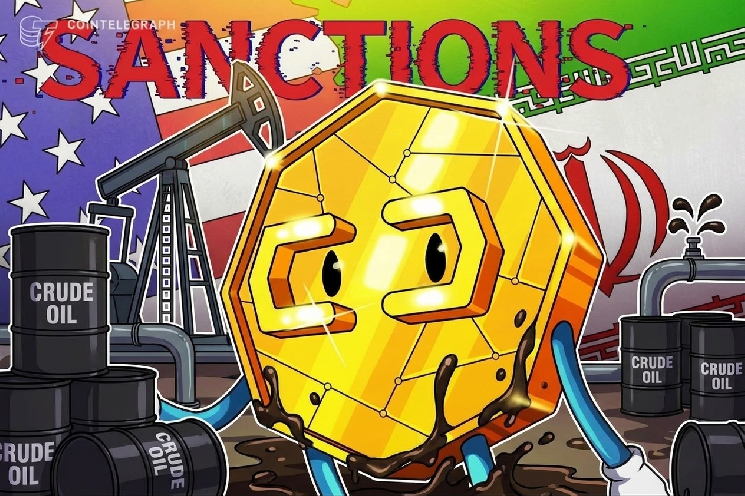
AS Mencincang Sektor Kripto Iran karena Pembayaran Minyak Senilai Lebih dari $100 Juta

Kementerian Keuangan AS memperluas rezim sanksi terhadap Iran dengan memasukkan sektor aset digital, mengutip pembayaran kripto lebih dari $100 juta yang diduga digunakan untuk memfasilitasi penjualan minyak Iran. OFAC menerapkan sanksi sektoral terhadap aset digital, teknologi, emas, penerbangan, dan perkapalan, serta hampir 60 entitas terkait jaringan nuklir, rudal, siber, dan minyak. Keputusan ini memungkinkan OFAC menjatuhkan sanksi pada individu dan perusahaan asing yang beroperasi di sektor kripto Iran atau mendukungnya. Departemen Keuangan AS menyatakan Iran semakin menggunakan kripto untuk menghindari sanksi, termasuk untuk transaksi terkait Korps Garda Revolusi Islam (IRGC). Sanksi juga dijatuhkan terhadap broker Ukraina Ivan Obukhov dan perusahaannya Foscom FZE di UAE, yang diduga memproses pembayaran kripto senilai $100 juta untuk minyak atas nama Pasukan Quds IRGC. Tindakan terbaru ini mengikuti serangkaian sanksi AS terhadap bursa kripto spesifik terkait Iran, termasuk Zedcex, Zedxion, Nobitex, Shelbit, dan Aban Tether. Berbeda dengan tindakan sebelumnya, keputusan ini menciptakan dasar untuk menjatuhkan sanksi atas partisipasi dalam sektor kripto Iran yang lebih luas. Setiap pihak yang dianggap beroperasi di sektor kripto Iran kini dapat dikenai sancsi berdasarkan Perintah Eksekutif 13902. Aset pihak yang ditetapkan di AS akan diblokir, dan bank asing yang memfasilitasi transaksi signifikan untuk mereka dapat menghadapi pembatasan akses ke akun AS.

cryptonews.ru21m yang lalu

AS Mencincang Sektor Kripto Iran karena Pembayaran Minyak Senilai Lebih dari $100 Juta

cryptonews.ru21m yang lalu

Dialog dengan Zhang Chaoyang: Ketika AI Melaju, Mengapa Membuat Konten "Anti-Efisiensi"

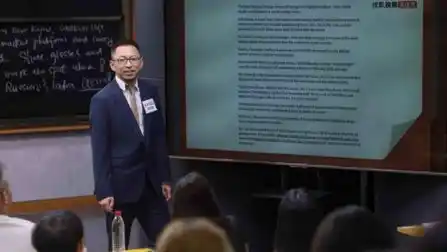
Dialog dengan Charles Zhang, Pendiri dan CEO Sohu: Di Tengah Derap AI, Mengapa Membuat Konten "Anti-Efisiensi"? Pada titik waktu ini, Charles Zhang, pionir internet Tiongkok, dikenal dengan karakteristik pribadinya yang unik. Ia tetap aktif secara publik, menjaga ritme hidup dan bisnisnya sendiri. Dekade setelah memulai "Kursus Bahasa Inggris Charles Zhang", ia memutuskan untuk membawa kelasnya ke dunia offline. Kelas bahasa Inggris ini bermula pada Agustus 2016 di platform siaran langsung Qifan. Lebih dari sepuluh tahun, ia telah menyelesaikan lebih dari 2.000 sesi siaran langsung dengan total durasi lebih dari 110.000 menit dan ditonton lebih dari 52 juta kali. Awalnya, ini adalah caranya untuk "banyak bicara" guna mengatasi gejolak emosional. Ia melihatnya sebagai latihan harian, seperti biksu yang membaca kitab. Persiapan setiap siaran memakan waktu 40 menit, memilih dan membaca mendalam tiga artikel berita dari berbagai topik. Di era ringkasan AI dan rekomendasi algoritma yang berlimpah, Zhang bersikeras pada pendekatan "keras": membaca teks asli kata demi kata, membuat bahan ajar secara manual, menolak menggunakan AI untuk menghasilkan konten instan. Baginya, membaca berita bukan sekadar tujuan, tetapi cara untuk mencari komunitas, dukungan, dan nutrisi spiritual. Ini adalah ketekunan yang "anti-efisiensi", memberikan penghiburan dan pembelaan nilai bagi industri media. Menanggapi kecemasan para pembuat konten bahwa AI dapat menghasilkan artikel yang lebih komprehensif, Zhang menggunakan metafora: wortel dari pasar dengan sedikit tanah terasa lebih enak daripada tomat yang dibesarkan dengan pupuk kimia. Ia mengakui bahwa AI meningkatkan efisiensi akses informasi, tetapi yang diberikan AI adalah "informasi", sedangkan manusia memberikan "perspektif" dan proses berpikir. Zhang menekankan bahwa AI saat ini terutama menggantikan pekerjaan yang terstruktur, seperti dalam pengembangan perangkat lunak. Namun, untuk konten seni, ilmu sosial, emosi, dan kreatif, AI belum bisa menggantikannya. Ia mendorong kaum muda untuk mencoba media mandiri, dengan menekankan bahwa garis bawah kreasi konten adalah "keaslian". Jika menggunakan avatar digital AI, harus ditandai dengan jelas. Praktik "anti-efisiensi" dari dua kursus siaran langsung Zhang adalah jawabannya terhadap derap AI: di era algoritma yang mengejar efisiensi ekstrem, jangan berharap AI mengisi kekosongan batin. Bacalah buku, bicaralah di depan kamera, berkeringatlah di jalur lari, dan bangunlah koneksi dengan orang sungguhan.

marsbit30m yang lalu

Dialog dengan Zhang Chaoyang: Ketika AI Melaju, Mengapa Membuat Konten "Anti-Efisiensi"

marsbit30m yang lalu

Seni Pengecatan Emas ETF Zcash: Bagaimana Koin Privasi Dikemas Menjadi Aset Kepatuhan oleh Wall Street

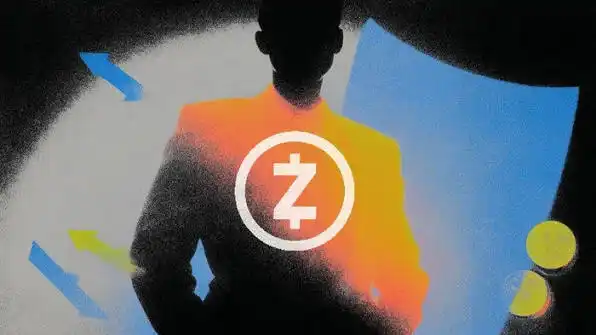
Pada Agustus 2026, Grayscale mengajukan ETF spot Zcash (ZEC) pertama di dunia ke SEC dengan kode ZCSH dan biaya tahunan 2.5%, mendorong harga ZEC melonjak. Artikel ini menganalisis proses panjang di balik "penyamaran" aset privasi ini menjadi produk keuangan yang patuh. Akar masalahnya adalah struktur awal Zcash: perusahaan komersial (ECC), investor VC, dan "Founder's Reward" membuatnya rentan dianggap sebagai kontrak investasi oleh SEC. Investigasi SEC terhadap Yayasan Zcash (2023-2026) akhirnya berakhir tanpa tindakan penegakan hukum, sebagian berkat perubahan lingkungan regulasi dan restrukturisasi tata kelola Zcash pada 2024 yang menghapus pembiayaan otomatis untuk ECC dan yayasan. Tiga pihak kunci mendorong proses ini: Grayscale (dimiliki DCG, investor awal Zcash), Coinbase (berperan sebagai custodian, prime broker, dan investor), dan ZODL (tim pengembang yang memisahkan diri dari ECC dan mendapat pendanaan dari VC ternama). Mereka membentuk jaringan yang saling terkait, di mana setiap node mendapat manfaat dari kenaikan harga dan likuiditas ZEC. Motivasi DCG kuat karena membutuhkan cerita pertumbuhan baru dan pendapatan biaya tinggi (2.5%) untuk mendukung IPO Grayscale dan menutupi masalah hukum dari kebangkrutan anak perusahaannya, Genesis. Penambang seperti Cypherpunk Technologies (didukung Winklevoss) dan Fortitude milik DCG juga berinvestasi besar-besaran, didorong oleh profitabilitas penambangan ZEC yang lebih tinggi dibanding aset kripto lain. Ironisnya, untuk menjadi patuh, ZEC dalam ETF ini disimpan di alamat transparan Coinbase, tidak menggunakan fitur privasi intinya. Wall Street tidak membeli privasi itu sendiri, melainkan eksposur harga terhadap *konsep* privasi. Zcash dipilih justru karena struktur kelembagaannya yang lebih terorganisir dibandingkan koin privasi "liar" seperti Monero, membuatnya lebih mudah dibungkus menjadi produk keuangan. Keseluruhan proses, dari penghapusan risiko regulasi, restrukturisasi tata kelola, hingga mobilisasi modal, menunjukkan bagaimana "privasi" dikemas dan menjadi aset yang dapat diperdagangkan oleh pasar keuangan tradisional.

marsbit38m yang lalu

Seni Pengecatan Emas ETF Zcash: Bagaimana Koin Privasi Dikemas Menjadi Aset Kepatuhan oleh Wall Street

marsbit38m yang lalu

Trading

Spot

Artikel Populer

Cara Membeli DAO

Selamat datang di HTX.com! Kami telah membuat pembelian DAO Maker (DAO) menjadi mudah dan nyaman. Ikuti panduan langkah demi langkah kami untuk memulai perjalanan kripto Anda.Langkah 1: Buat Akun HTX AndaGunakan alamat email atau nomor ponsel Anda untuk mendaftar akun gratis di HTX. Rasakan perjalanan pendaftaran yang mudah dan buka semua fitur.Dapatkan Akun SayaLangkah 2: Buka Beli Kripto, lalu Pilih Metode Pembayaran AndaKartu Kredit/Debit: Gunakan Visa atau Mastercard Anda untuk membeli DAO Maker (DAO) secara instan.Saldo: Gunakan dana dari saldo akun HTX Anda untuk melakukan trading dengan lancar.Pihak Ketiga: Kami telah menambahkan metode pembayaran populer seperti Google Pay dan Apple Pay untuk meningkatkan kenyamanan.P2P: Lakukan trading langsung dengan pengguna lain di HTX.Over-the-Counter (OTC): Kami menawarkan layanan yang dibuat khusus dan kurs yang kompetitif bagi para trader.Langkah 3: Simpan DAO Maker (DAO) AndaSetelah melakukan pembelian, simpan DAO Maker (DAO) di akun HTX Anda. Selain itu, Anda dapat mengirimkannya ke tempat lain melalui transfer blockchain atau menggunakannya untuk memperdagangkan mata uang kripto lainnya.Langkah 4: Lakukan trading DAO Maker (DAO)Lakukan trading DAO Maker (DAO) dengan mudah di pasar spot HTX. Cukup akses akun Anda, pilih pasangan perdagangan, jalankan trading, lalu pantau secara real-time. Kami menawarkan pengalaman yang ramah pengguna baik untuk pemula maupun trader berpengalaman.

495 Total TayanganDipublikasikan pada 2024.12.11Diperbarui pada 2026.06.02

Cara Membeli DAO

Diskusi

Selamat datang di Komunitas HTX. Di sini, Anda bisa terus mendapatkan informasi terbaru tentang perkembangan platform terkini dan mendapatkan akses ke wawasan pasar profesional. Pendapat pengguna mengenai harga DAO (DAO) disajikan di bawah ini.

活动图片