We've Hoarded Trillions in Bitcoin, But Never Use It? That's Changing Now

marsbitPublié le 2025-12-09Dernière mise à jour le 2025-12-09

Résumé

A significant portion of Bitcoin's trillion-dollar market cap remains dormant, with 61% of coins not moving in over a year and only 0.8% used in DeFi. While other ecosystems like Ethereum and L2s thrive with active use cases, Bitcoin has largely functioned as a passive store of value due to architectural and cultural constraints—prioritizing security over programmability, resisting upgrades, and lacking native interoperability. Previous solutions like wrapped BTC, federated systems, and bridges attempted to unlock Bitcoin’s liquidity but introduced new risks like custodial trust, security vulnerabilities, and reliance on external validators, contradicting Bitcoin’s trust-minimized ethos. However, this is changing with recent breakthroughs. Innovations like BitVM enable Bitcoin to verify external computations without executing them, allowing for Bitcoin-secured rollups and trust-minimized bridges. Upgrades like Taproot facilitate native assets and programmable vaults. New systems now support Bitcoin staking, restaking, and Lightning Network-based yield without requiring custodial wrapping or bridging. This emerging BTCFi ecosystem—comprising infrastructure, asset, and protocol layers—finally allows Bitcoin to participate in a functional economy while preserving its security model and self-custody principles. This could unlock a portion of the dormant capital, significantly impacting the broader crypto landscape.

Most people who buy Bitcoin today don't use it at all.

They hold it, call it digital gold, and proudly declare they are "in it for the long term." And that's fine—Bitcoin has earned that reputation.

But such massive holdings have created one of the largest pools of idle capital in the crypto ecosystem today. About 61% of Bitcoin hasn't moved in over a year, and nearly 14% hasn't moved in over a decade. Despite a market cap exceeding $2 trillion, only 0.8% of Bitcoin is currently participating in any form of decentralized finance (DeFi) activity.

In other words, Bitcoin is the most valuable asset in crypto, but also the least used.

Now, let's contrast this with other aspects of the crypto world:

  • Stablecoins settle payments globally at a massive scale.
  • Ethereum powers smart contracts, decentralized autonomous organizations (DAOs), wallets, and entire economies.
  • Layer 2s (L2s) run complete ecosystems with lending, trading, gaming, and thousands of applications.

Meanwhile, Bitcoin, the largest, most secure, and most widely held asset, can do none of the above.

Instead, it sits there with trillions in value, idle, generating no yield, creating no liquidity, and contributing nothing to the broader economy beyond security and price appreciation.

When people tried to solve this, the solutions created new problems. Wrapped BTC (WBTC) became popular but required trusting a custodian. Cross-chain bridges allowed you to move Bitcoin to another chain but introduced security risks. Bitcoin holders wanted to use their Bitcoin, but the infrastructure never provided a secure, native way to do so.

But that is finally changing. Over the past few years, a whole new ecosystem has been forming around Bitcoin, attempting to unlock all this "sleeping capital" without forcing people to wrap their Bitcoin, trust intermediaries, or move it into someone else's custody.

Why Bitcoin Ended Up Here

Bitcoin becoming a passive asset was no accident. Its entire architecture steered it in this direction. Long before DeFi emerged, Bitcoin made a clear trade-off: prioritize security above all else. This decision shaped its culture, developer environment, and ultimately, the type of economic activity that flourished around it.

The result is an extremely immutable blockchain, great for moving money but severely limiting for innovation. Most people only see the surface symptoms: low liquidity, high dormancy rates, and the dominance of wrapped Bitcoin, but the root of the problem goes much deeper.

The first limitation is Bitcoin's scripting model. It deliberately avoids complexity, keeping the base layer hard to exploit and predictable. This means no general computation, no native financial logic, no on-chain automation. Ethereum, Solana, and all modern L1s were built on the assumption that developers would build. Bitcoin was built on the assumption that they shouldn't.

The second limitation is Bitcoin's upgrade path. Any change, even a minor feature, requires coordination across the entire ecosystem. Hard forks are socially nearly impossible, and soft forks take years. So, while other cryptos iterated through entire design paradigms (e.g., AMMs, account abstraction, L2s, modular blockchains), Bitcoin remained largely stagnant. It became a settlement layer but never truly an execution layer.

The third limitation is cultural. Bitcoin's developer ecosystem is inherently conservative. This conservatism protects the network but also stifles experimentation. Any proposal introducing complexity is met with skepticism. This mindset safeguards the base layer but ensures new financial primitives can't emerge on Bitcoin like they do elsewhere.
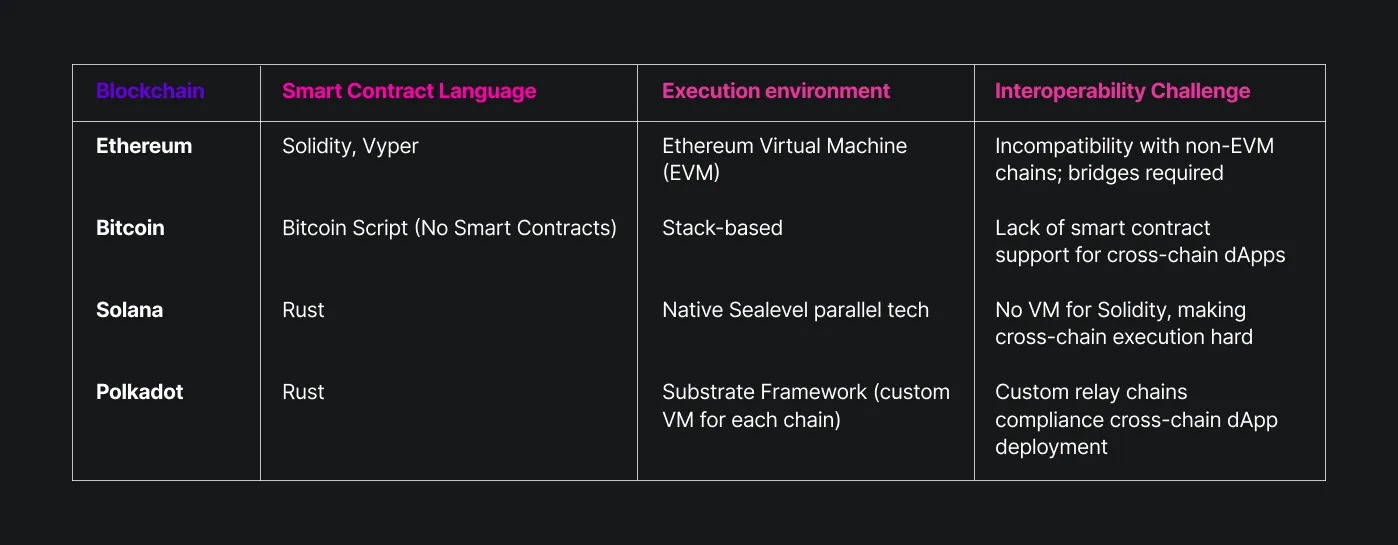
Furthermore, there's a structural limitation: Bitcoin's value grew faster than its surrounding infrastructure. Ethereum had smart contracts from the start; Solana adopted a high-throughput design from day one. Bitcoin's value ballooned into an asset class before its "range of usable applications" could expand. Thus, the entire ecosystem ended up with a paradox: you have trillions in capital with almost nowhere to deploy it.

The final limitation is interoperability. Bitcoin is uniquely isolated; it doesn't interoperate with other blockchains and has no native bridges. Until recently, there was no trust-minimized way to connect Bitcoin to external execution environments. So, any attempt to make Bitcoin usable required abandoning part of Bitcoin's security model—wrapping, bridging, custodial minting, multisigs, federations. For an asset built on distrust of intermediaries, this could never scale.

The First Workarounds: Wrappers, Sidechains, and Bridges

When it became clear that the Bitcoin base layer couldn't support meaningful activity, the industry did what it always does: developed workarounds. Initially, these seemed like progress, enabling Bitcoin to enter realms where DeFi activity thrived. But upon closer inspection, they all shared a common flaw: using them required giving up part of Bitcoin's trust model.

The most prominent example is Wrapped Bitcoin (WBTC). It became the default bridge between Bitcoin and Ethereum, and for a while, this model seemed to work. It unlocked liquidity, allowing Bitcoin to be used as collateral, traded on AMMs, used for margin loans, looped, restaked—basically everything Bitcoin itself couldn't do. But the cost was that WBTC existed only if real Bitcoin was held by someone else. This meant custody, reliance on external entities, operational risk, and a guarantee system divorced from Bitcoin's base security.
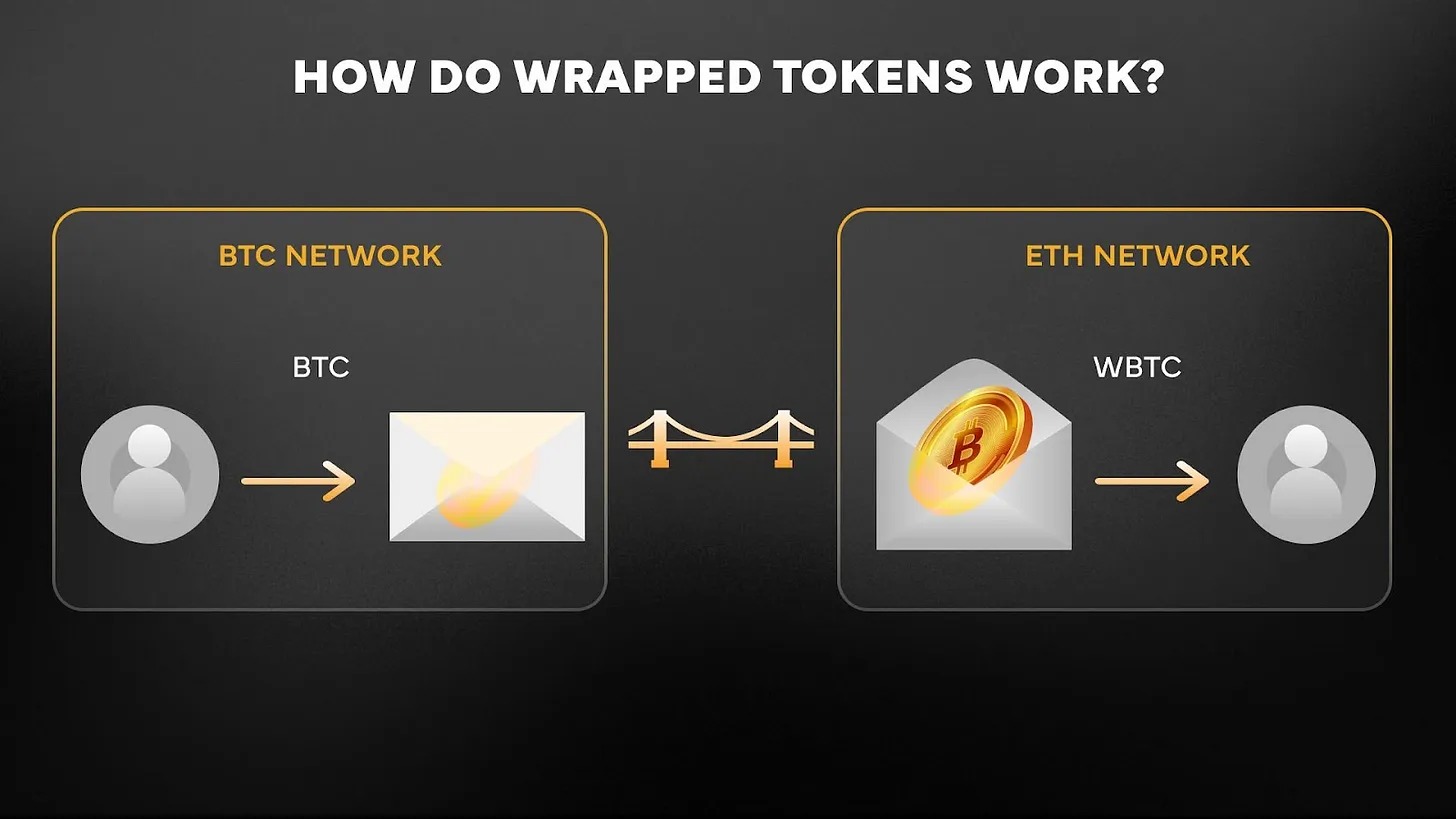
Federated systems tried to lessen this trust burden by dispersing control across multiple entities. Instead of a single custodian, a group collectively held the Bitcoin backing the wrapped asset. This was an improvement but far from trustless. Users still relied on a coordinated set of operators, and the strength of the peg depended solely on their incentives and integrity. For a community that prefers trustless systems, this wasn't ideal.

Bridge technology introduced a new set of problems. Instead of relying on custody, users relied on an external set of validators, whose security was often weaker than the chain they were leaving. Bridges enabled moving Bitcoin across chains but became one of the biggest security holes in crypto. Multiple analyses point to bridge exploits as one of the largest sources of fund loss in the space.
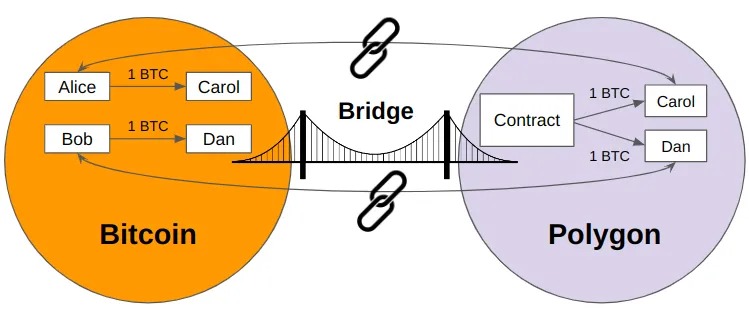
Sidechains added further complexity. They are chains separate from Bitcoin, connected via various peg mechanisms. Some use multisig control, others use Simplified Payment Verification (SPV) proofs. But none inherit Bitcoin's security. They run their own consensus mechanisms, validator sets, and risk assessments. The label "Bitcoin sidechain" is often more marketing than reality. Liquidity moved, but security guarantees didn't.
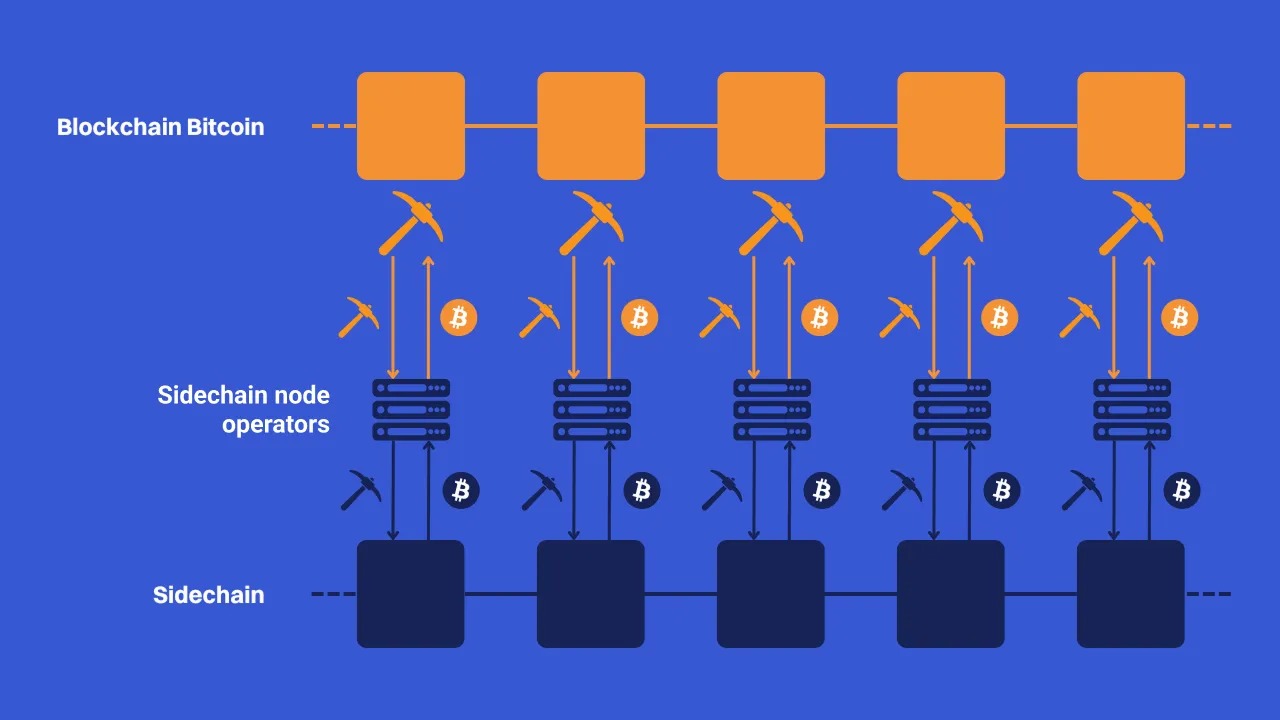
What all these methods had in common was that they pushed Bitcoin outward, off its base layer, into environments where others enforced the rules. This solved the usability problem short-term but created a bigger one: Bitcoin was operating under the very trust models it was designed to avoid.

The flaws were evident:

  • Wrapped BTC (WBTC) grew only because people tolerated custodians as a temporary fix.
  • Sidechains existed but remained niche due to failing to inherit Bitcoin's security.
  • Bridges connected Bitcoin to other chains but introduced entirely new attack vectors.

Each workaround solved one problem but created another.

The Breakthrough: Bitcoin Finally Gets New Primitives

For a long time, Bitcoin's limitations were seen as irreversible. The base layer wouldn't change, upgrades were slow, and any proposal to enhance its expressiveness was dismissed as unnecessary risk.

But in the past few years, that assumption began to crack.

1. Bitcoin gained a "verify, don't execute" capability: The most important breakthrough was the emergence of a new class of verification models enabling Bitcoin to check computations done elsewhere without running them itself.

This breakthrough made BitVM and later BitVM-like systems possible. These systems didn't change Bitcoin's functionality but leveraged its ability to enforce outcomes via fraud proofs.

This means you can build logic, applications, even full execution environments outside Bitcoin, and Bitcoin can still ensure their correctness. This is fundamentally different from Ethereum's "execute everything on L1" philosophy. Bitcoin can now act as a judge. This is what finally opened the door to:

  • Bitcoin-secured rollups
  • Trust-minimized bridges
  • Programmable Bitcoin vaults
  • Off-chain computation, on-chain verification

2. Upgrades like Taproot quietly expanded Bitcoin's range: Taproot wasn't initially promoted as a DeFi upgrade, but it provided the cryptographic foundation BTCFi needed: cheaper multisigs, more flexible key path spending, and better privacy. More importantly, it enabled architectures like Taproot Assets (for stablecoins) and more advanced vault systems.
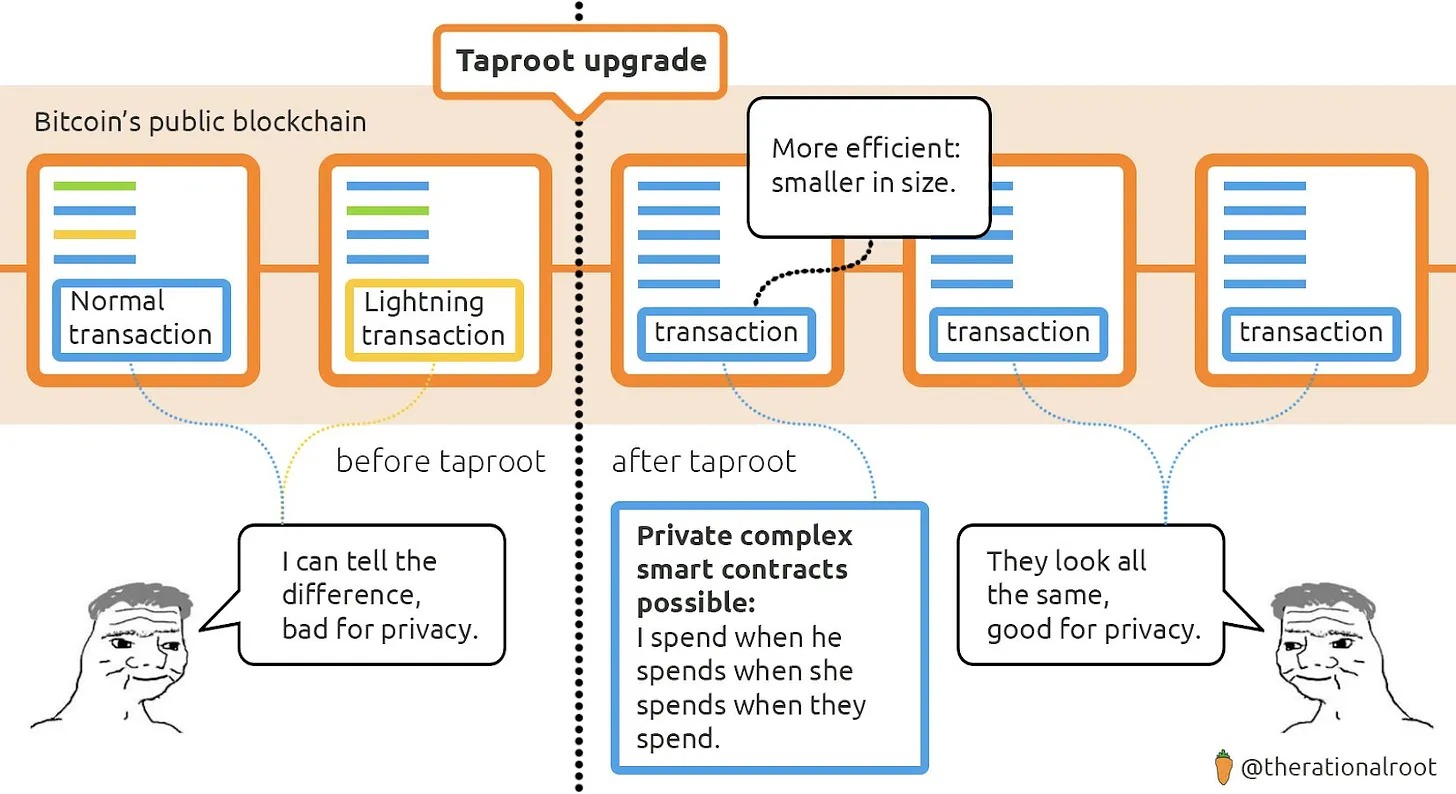
3. The emergence of Bitcoin-native assets: With Taproot and newer proof systems, projects began launching assets native to Bitcoin or secured by Bitcoin without wrapping BTC.

Combining Taproot, Schnorr signatures, and new off-chain verification techniques, developers can now build assets on Bitcoin itself or assets that directly inherit Bitcoin's security.
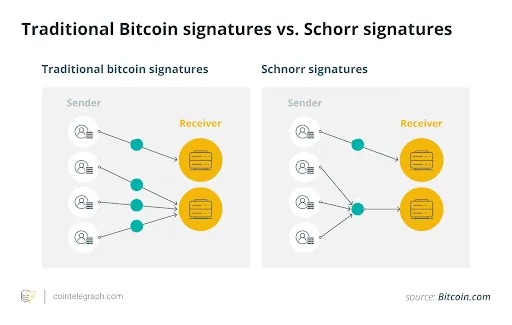
This includes:

  • Taproot Assets (Tether minting USDT directly on Bitcoin/Lightning stack)
  • Bitcoin-native stablecoins without relying on Ethereum, Solana, or Cosmos
  • BTC-backed synthetic assets without custodial pegs
  • Programmable vaults and multisig structures previously impossible

For the first time, assets issued on Bitcoin could be used without leaving Bitcoin. And assets issued by Bitcoin didn't require taking Bitcoin out of self-custody.

4. Bitcoin yield became possible: Bitcoin itself never had yield. Historically, the only way to "earn" yield on Bitcoin was to wrap it, send it to a custodian, lend it on a centralized platform, or bridge it to another blockchain. All these methods carried risk and completely departed from its security model.

BTCFi introduces a completely new way for Bitcoin to generate yield. How? By creating systems where Bitcoin contributes to network security. This leads to three types:

Bitcoin staking (for other networks): BTC can now secure PoS networks or appchains without leaving the Bitcoin chain.

Bitcoin restaking: Similar to how Ethereum can secure multiple protocols via shared security, Bitcoin can now be used as collateral to back external chains, oracles, DA layers, etc.

Lightning Network-based yield systems: Protocols like Stroom allow BTC used in Lightning channels to earn yield by providing liquidity, again without wrapping or relying on custodial bridges.

None of this was possible before BTCFi.

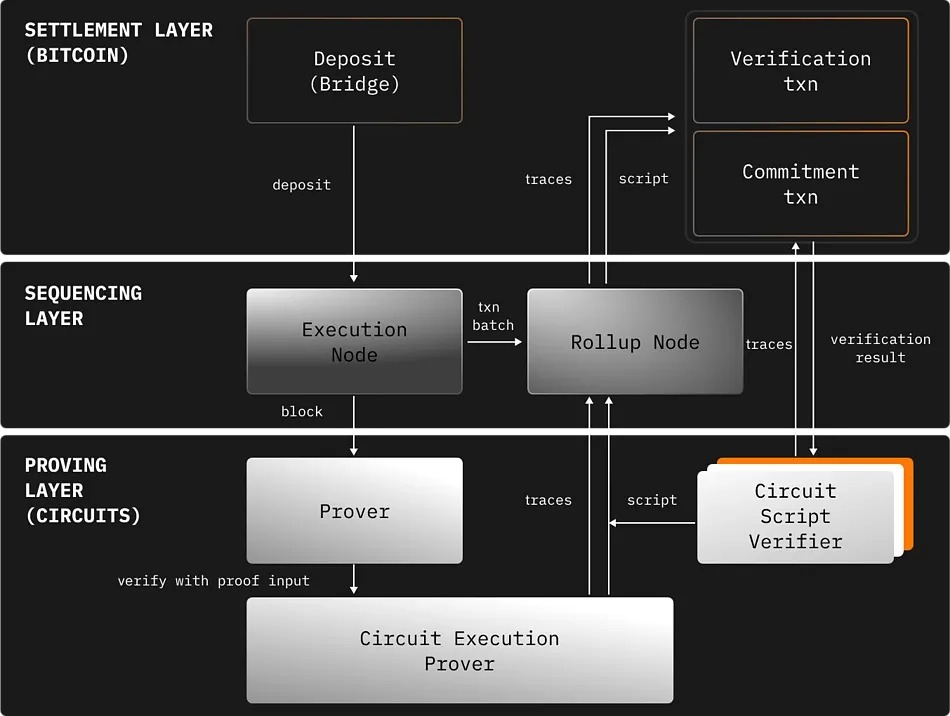
5. Bitcoin finally got an execution layer: Recent advances in off-chain verification allow Bitcoin to enforce the results of computations it doesn't perform itself. This lets developers build rollups, bridges, and contract systems around Bitcoin that rely on Bitcoin for verification, not computation. The base layer remains unchanged, but outer layers can now run logic and prove its correctness to Bitcoin when needed.

This gives Bitcoin unprecedented power: the ability to support applications, contract-like behavior, and new financial primitives without moving Bitcoin into custodial systems or rewriting the protocol. This isn't "smart contracts on Bitcoin" but a verification model that preserves Bitcoin's simplicity while allowing more complex systems to exist around it.
BTCFi Overview: What's Actually Being Built

As the underlying verification and portability tools matured, the Bitcoin ecosystem finally began expanding in ways that no longer rely on custodians or wrapped assets. What's emerging today isn't a single product or category but a series of interconnected layers that, for the first time, give Bitcoin a fully functional economy. The easiest way to understand this is to see how these components complement each other.
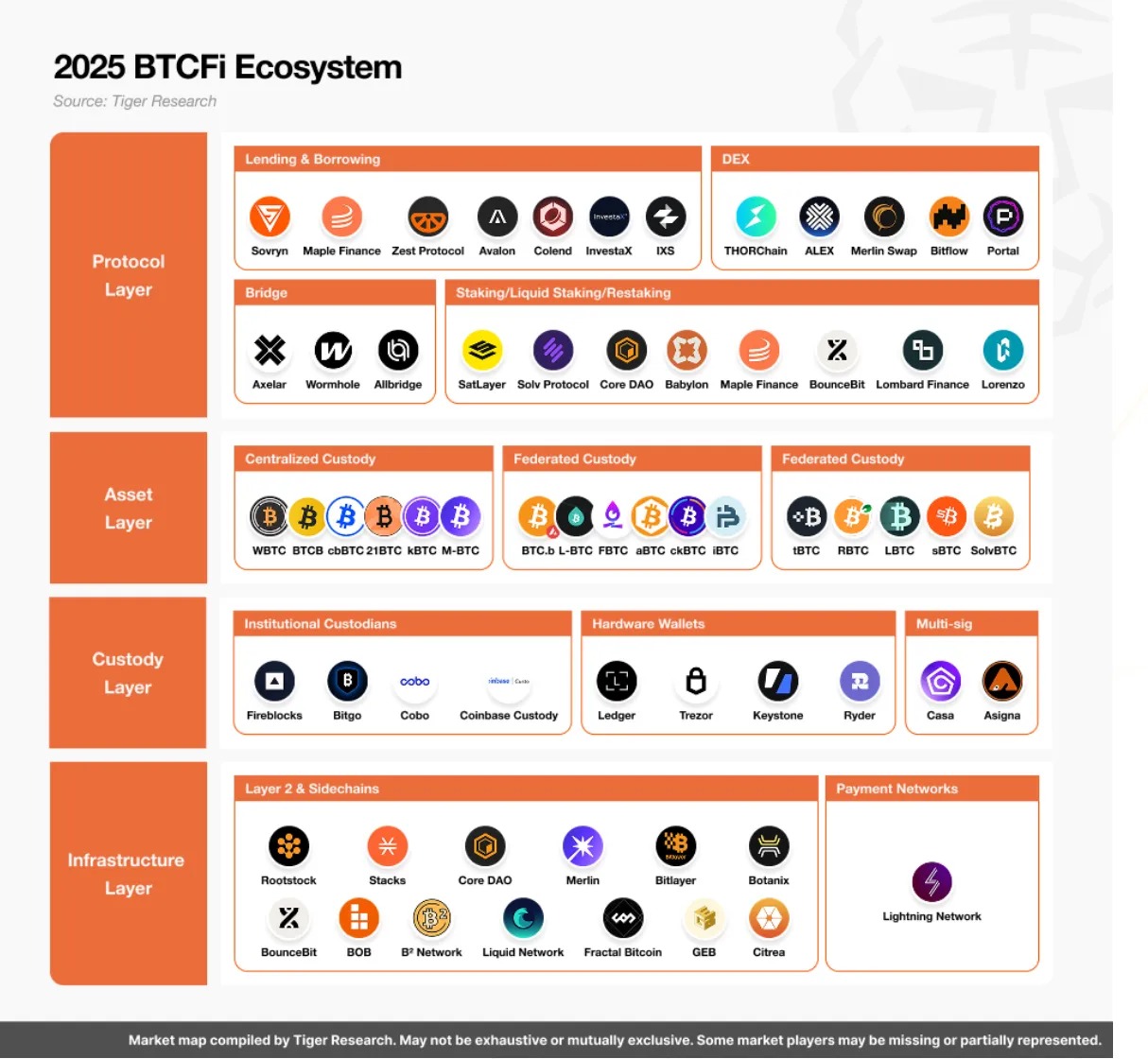
Infrastructure Layer: The first significant change is the emergence of Bitcoin-secured execution environments. These aren't L1 competitors or attempts to turn Bitcoin into a smart contract platform. They are external systems that handle computation, relying on Bitcoin only for verification. This separation is crucial. It creates a space where lending, trading, collateral management, and even more complex primitives can exist without any changes to Bitcoin's base layer. It also avoids the pitfalls of the old model, where using Bitcoin meant handing it to a custodian or trusting a multisig. Now, Bitcoin itself remains untouched; computation happens around it.

Assets & Custody Layer: Simultaneously, a new generation of Bitcoin bridges is forming, no longer the custodial, trust-heavy bridges of the last cycle, but bridges built around verifiable outcomes. Instead of requiring users to trust a set of operators, these systems use challenge mechanisms and fraud proofs to automatically reject incorrect state transitions. The result is a safer way to move Bitcoin to external environments without relying on the fragile trust assumptions of earlier designs. More importantly, this type of bridge aligns with Bitcoin holders' inherent sense of security: minimal trust, minimal dependency.

Protocol Layer: As asset movement becomes safer, the next wave of innovation focuses on what Bitcoin can do within these environments. Yield markets and security markets emerge here. For most of Bitcoin's history, earning any yield on Bitcoin meant sending it to an exchange or wrapping it onto another blockchain. Now, staking and restaking models allow Bitcoin to contribute to external network security without leaving its own custody. Yield doesn't come from credit risk or rehypothecation but from the economic value of maintaining consensus or verifying computation results.

Meanwhile, Bitcoin-native assets are starting to appear. Instead of wrapping Bitcoin or moving it to Ethereum, developers are beginning to use Taproot, Schnorr signatures, and off-chain verification to issue assets on Bitcoin or peg assets to Bitcoin's security. This includes stablecoins minted directly on Bitcoin infrastructure, synthetic assets without custodial dependencies, and vault structures allowing more flexible spending conditions. All this expands Bitcoin's utility without introducing it to different trust models.

These advances are interesting individually. Together, they mark the birth of the first coherent Bitcoin financial system. Computation can happen off-chain and be enforced on Bitcoin. Bitcoin can be moved securely without custody. It can earn yield without leaving self-custody. Assets can exist natively without relying on other ecosystems' security. Each advance solves a different part of the liquidity trap that has plagued Bitcoin for over a decade.

My Take?

I think the simplest way to view BTCFi is this: Bitcoin finally has an ecosystem that matches its scale. For years, people tried to build a Bitcoin ecosystem with tools that simply couldn't support trillion-dollar liquidity. No serious Bitcoin holder would stake their Bitcoin on custodial pegs, unverified bridges, or jury-rigged sidechains—and they didn't.

This wave is different because it meets Bitcoin entirely on its own terms. The security model remains intact, self-custody remains intact, and the surrounding systems are finally robust enough to carry meaningful capital. If even a small fraction of dormant BTC starts moving because the infrastructure is finally worthy of it, the impact will be profound.

This new wave is different because it approaches the challenge Bitcoin's way. The security model is preserved, self-custody mechanisms remain whole, and the systems around Bitcoin are finally strong enough to handle significant capital flows. Even if only a small portion of sleeping Bitcoin begins to move because the infrastructure has finally matured, the impact will be significant.


Questions liées

QWhat percentage of Bitcoin has not moved in over a year, and what does this indicate about its use?

AApproximately 61% of Bitcoin has not moved in over a year, and nearly 14% has been dormant for over a decade. This indicates that Bitcoin, despite its massive market cap, is largely used as a passive store of value ('digital gold') rather than for active transactions or economic activity, creating one of the largest pools of idle capital in the crypto ecosystem.

QWhat were the main limitations of Bitcoin's architecture that prevented it from being used in DeFi and other economic activities?

ABitcoin's main limitations were its script model (lacking general computation and on-chain automation), its slow and difficult upgrade path requiring ecosystem-wide coordination, its conservative developer culture that discouraged complexity, and its structural isolation with no native interoperability or bridging capabilities. These factors prioritized security and immutability over innovation and programmability.

QWhat were the problems with early workarounds like Wrapped BTC and cross-chain bridges?

AEarly workarounds like Wrapped BTC required trusting custodians or federations, introducing counterparty risk. Cross-chain bridges relied on external validator sets that were often less secure than Bitcoin itself, making them major attack vectors. These solutions moved Bitcoin into external trust models that contradicted its foundational principle of minimizing trust in intermediaries.

QWhat key technological breakthrough enabled Bitcoin to verify off-chain computations without executing them?

AThe key breakthrough was the development of verification models like BitVM, which utilize Bitcoin's ability to enforce outcomes through fraud proofs. This allows Bitcoin to check the correctness of computations performed elsewhere (off-chain) without having to perform the computations itself, enabling trust-minimized rollups, bridges, and programmable vaults.

QHow does BTCFi enable Bitcoin to earn yield without leaving its own security model?

ABTCFi enables yield generation by allowing Bitcoin to contribute to the security of other networks or protocols without being moved to custodians or wrapped. This includes Bitcoin staking (securing PoS networks), restaking (securing multiple external systems), and earning from Lightning Network liquidity provision—all while the Bitcoin remains natively on-chain under self-custody.

Lectures associées

Trading

Spot
Futures

Articles tendance

Qu'est ce que $S$

Comprendre SPERO : Un aperçu complet Introduction à SPERO Alors que le paysage de l'innovation continue d'évoluer, l'émergence des technologies web3 et des projets de cryptomonnaie joue un rôle central dans la façon dont se dessine l'avenir numérique. Un projet qui a attiré l'attention dans ce domaine dynamique est SPERO, désigné comme SPERO,$$s$. Cet article vise à rassembler et à présenter des informations détaillées sur SPERO, afin d'aider les passionnés et les investisseurs à comprendre ses fondations, ses objectifs et ses innovations dans les domaines du web3 et de la crypto. Qu'est-ce que SPERO,$$s$ ? SPERO,$$s$ est un projet unique dans l'espace crypto qui cherche à tirer parti des principes de décentralisation et de la technologie blockchain pour créer un écosystème qui favorise l'engagement, l'utilité et l'inclusion financière. Le projet est conçu pour faciliter les interactions entre pairs de nouvelles manières, offrant aux utilisateurs des solutions et des services financiers innovants. Au cœur de SPERO,$$s$, l'objectif est d'autonomiser les individus en fournissant des outils et des plateformes qui améliorent l'expérience utilisateur dans l'espace des cryptomonnaies. Cela inclut la possibilité de méthodes de transaction plus flexibles, la promotion d'initiatives dirigées par la communauté et la création de voies pour des opportunités financières via des applications décentralisées (dApps). La vision sous-jacente de SPERO,$$s$ tourne autour de l'inclusivité, visant à combler les lacunes au sein de la finance traditionnelle tout en exploitant les avantages de la technologie blockchain. Qui est le créateur de SPERO,$$s$ ? L'identité du créateur de SPERO,$$s$ reste quelque peu obscure, car il existe peu de ressources publiques fournissant des informations détaillées sur son ou ses fondateurs. Ce manque de transparence peut découler de l'engagement du projet envers la décentralisation—une éthique que de nombreux projets web3 partagent, privilégiant les contributions collectives plutôt que la reconnaissance individuelle. En centrant les discussions autour de la communauté et de ses objectifs collectifs, SPERO,$$s$ incarne l'essence de l'autonomisation sans désigner des individus spécifiques. Ainsi, comprendre l'éthique et la mission de SPERO reste plus important que d'identifier un créateur unique. Qui sont les investisseurs de SPERO,$$s$ ? SPERO,$$s$ est soutenu par une diversité d'investisseurs allant des capital-risqueurs aux investisseurs providentiels dédiés à favoriser l'innovation dans le secteur crypto. L'objectif de ces investisseurs s'aligne généralement avec la mission de SPERO—priorisant les projets qui promettent des avancées technologiques sociétales, l'inclusivité financière et la gouvernance décentralisée. Ces fondations d'investisseurs s'intéressent généralement à des projets qui non seulement offrent des produits innovants, mais qui contribuent également positivement à la communauté blockchain et à ses écosystèmes. Le soutien de ces investisseurs renforce SPERO,$$s$ en tant que concurrent notable dans le domaine en rapide évolution des projets crypto. Comment fonctionne SPERO,$$s$ ? SPERO,$$s$ utilise un cadre multifacette qui le distingue des projets de cryptomonnaie conventionnels. Voici quelques-unes des caractéristiques clés qui soulignent son unicité et son innovation : Gouvernance décentralisée : SPERO,$$s$ intègre des modèles de gouvernance décentralisée, permettant aux utilisateurs de participer activement aux processus de décision concernant l'avenir du projet. Cette approche favorise un sentiment de propriété et de responsabilité parmi les membres de la communauté. Utilité du token : SPERO,$$s$ utilise son propre token de cryptomonnaie, conçu pour servir diverses fonctions au sein de l'écosystème. Ces tokens permettent des transactions, des récompenses et la facilitation des services offerts sur la plateforme, améliorant ainsi l'engagement et l'utilité globaux. Architecture en couches : L'architecture technique de SPERO,$$s$ supporte la modularité et l'évolutivité, permettant une intégration fluide de fonctionnalités et d'applications supplémentaires à mesure que le projet évolue. Cette adaptabilité est primordiale pour maintenir la pertinence dans le paysage crypto en constante évolution. Engagement communautaire : Le projet met l'accent sur des initiatives dirigées par la communauté, utilisant des mécanismes qui incitent à la collaboration et aux retours d'expérience. En cultivant une communauté forte, SPERO,$$s$ peut mieux répondre aux besoins des utilisateurs et s'adapter aux tendances du marché. Accent sur l'inclusion : En proposant des frais de transaction bas et des interfaces conviviales, SPERO,$$s$ vise à attirer une base d'utilisateurs diversifiée, y compris des individus qui n'ont peut-être pas engagé auparavant dans l'espace crypto. Cet engagement envers l'inclusion s'aligne avec sa mission globale d'autonomisation par l'accessibilité. Chronologie de SPERO,$$s$ Comprendre l'histoire d'un projet fournit des aperçus cruciaux sur sa trajectoire de développement et ses jalons. Voici une chronologie suggérée cartographiant les événements significatifs dans l'évolution de SPERO,$$s$ : Phase de conceptualisation et d'idéation : Les idées initiales formant la base de SPERO,$$s$ ont été conçues, s'alignant étroitement avec les principes de décentralisation et de concentration sur la communauté au sein de l'industrie blockchain. Lancement du livre blanc du projet : Suite à la phase conceptuelle, un livre blanc complet détaillant la vision, les objectifs et l'infrastructure technologique de SPERO,$$s$ a été publié pour susciter l'intérêt et les retours de la communauté. Construction de la communauté et engagements précoces : Des efforts de sensibilisation actifs ont été entrepris pour construire une communauté d'adopteurs précoces et d'investisseurs potentiels, facilitant les discussions autour des objectifs du projet et recueillant du soutien. Événement de génération de tokens : SPERO,$$s$ a organisé un événement de génération de tokens (TGE) pour distribuer ses tokens natifs aux premiers soutiens et établir une liquidité initiale au sein de l'écosystème. Lancement de la première dApp : La première application décentralisée (dApp) associée à SPERO,$$s$ a été mise en ligne, permettant aux utilisateurs d'interagir avec les fonctionnalités principales de la plateforme. Développement continu et partenariats : Des mises à jour et des améliorations continues des offres du projet, y compris des partenariats stratégiques avec d'autres acteurs de l'espace blockchain, ont façonné SPERO,$$s$ en un acteur compétitif et évolutif sur le marché crypto. Conclusion SPERO,$$s$ se dresse comme un témoignage du potentiel du web3 et de la cryptomonnaie pour révolutionner les systèmes financiers et autonomiser les individus. Avec un engagement envers la gouvernance décentralisée, l'engagement communautaire et des fonctionnalités conçues de manière innovante, il ouvre la voie vers un paysage financier plus inclusif. Comme pour tout investissement dans l'espace crypto en rapide évolution, les investisseurs et utilisateurs potentiels sont encouragés à mener des recherches approfondies et à s'engager de manière réfléchie avec les développements en cours au sein de SPERO,$$s$. Le projet illustre l'esprit d'innovation de l'industrie crypto, invitant à une exploration plus approfondie de ses nombreuses possibilités. Bien que le parcours de SPERO,$$s$ soit encore en cours, ses principes fondamentaux pourraient en effet influencer l'avenir de nos interactions avec la technologie, la finance et entre nous dans des écosystèmes numériques interconnectés.

101 vues totalesPublié le 2024.12.17Mis à jour le 2024.12.17

Qu'est ce que $S$

Qu'est ce que AGENT S

Agent S : L'avenir de l'interaction autonome dans Web3 Introduction Dans le paysage en constante évolution de Web3 et des cryptomonnaies, les innovations redéfinissent constamment la manière dont les individus interagissent avec les plateformes numériques. Un projet pionnier, Agent S, promet de révolutionner l'interaction homme-machine grâce à son cadre agentique ouvert. En ouvrant la voie à des interactions autonomes, Agent S vise à simplifier des tâches complexes, offrant des applications transformantes dans l'intelligence artificielle (IA). Cette exploration détaillée plongera dans les subtilités du projet, ses caractéristiques uniques et les implications pour le domaine des cryptomonnaies. Qu'est-ce qu'Agent S ? Agent S se présente comme un cadre agentique ouvert révolutionnaire, spécifiquement conçu pour relever trois défis fondamentaux dans l'automatisation des tâches informatiques : Acquisition de connaissances spécifiques au domaine : Le cadre apprend intelligemment à partir de diverses sources de connaissances externes et d'expériences internes. Cette approche double lui permet de construire un riche répertoire de connaissances spécifiques au domaine, améliorant ainsi sa performance dans l'exécution des tâches. Planification sur de longs horizons de tâches : Agent S utilise une planification hiérarchique augmentée par l'expérience, une approche stratégique qui facilite la décomposition et l'exécution efficaces de tâches complexes. Cette fonctionnalité améliore considérablement sa capacité à gérer plusieurs sous-tâches de manière efficace et efficiente. Gestion d'interfaces dynamiques et non uniformes : Le projet introduit l'Interface Agent-Ordinateur (ACI), une solution innovante qui améliore l'interaction entre les agents et les utilisateurs. En utilisant des Modèles de Langage Multimodaux de Grande Taille (MLLMs), Agent S peut naviguer et manipuler sans effort diverses interfaces graphiques. Grâce à ces fonctionnalités pionnières, Agent S fournit un cadre robuste qui aborde les complexités impliquées dans l'automatisation de l'interaction humaine avec les machines, préparant le terrain pour d'innombrables applications en IA et au-delà. Qui est le créateur d'Agent S ? Bien que le concept d'Agent S soit fondamentalement innovant, des informations spécifiques sur son créateur restent insaisissables. Le créateur est actuellement inconnu, ce qui souligne soit le stade naissant du projet, soit le choix stratégique de garder les membres fondateurs sous le radar. Quoi qu'il en soit, l'accent reste mis sur les capacités et le potentiel du cadre. Qui sont les investisseurs d'Agent S ? Étant donné qu'Agent S est relativement nouveau dans l'écosystème cryptographique, des informations détaillées concernant ses investisseurs et soutiens financiers ne sont pas explicitement documentées. Le manque d'aperçus publiquement disponibles sur les fondations d'investissement ou les organisations soutenant le projet soulève des questions sur sa structure de financement et sa feuille de route de développement. Comprendre le soutien est crucial pour évaluer la durabilité du projet et son impact potentiel sur le marché. Comment fonctionne Agent S ? Au cœur d'Agent S se trouve une technologie de pointe qui lui permet de fonctionner efficacement dans divers environnements. Son modèle opérationnel est construit autour de plusieurs caractéristiques clés : Interaction homme-ordinateur semblable à l'humain : Le cadre offre une planification IA avancée, s'efforçant de rendre les interactions avec les ordinateurs plus intuitives. En imitant le comportement humain dans l'exécution des tâches, il promet d'élever l'expérience utilisateur. Mémoire narrative : Utilisée pour tirer parti des expériences de haut niveau, Agent S utilise la mémoire narrative pour suivre les historiques de tâches, améliorant ainsi ses processus de prise de décision. Mémoire épisodique : Cette fonctionnalité fournit aux utilisateurs un accompagnement étape par étape, permettant au cadre d'offrir un soutien contextuel au fur et à mesure que les tâches se déroulent. Support pour OpenACI : Avec la capacité de fonctionner localement, Agent S permet aux utilisateurs de garder le contrôle sur leurs interactions et flux de travail, s'alignant avec l'éthique décentralisée de Web3. Intégration facile avec des API externes : Sa polyvalence et sa compatibilité avec diverses plateformes IA garantissent qu'Agent S peut s'intégrer sans effort dans des écosystèmes technologiques existants, en faisant un choix attrayant pour les développeurs et les organisations. Ces fonctionnalités contribuent collectivement à la position unique d'Agent S dans l'espace crypto, alors qu'il automatise des tâches complexes en plusieurs étapes avec un minimum d'intervention humaine. À mesure que le projet évolue, ses applications potentielles dans Web3 pourraient redéfinir la manière dont les interactions numériques se déroulent. Chronologie d'Agent S Le développement et les jalons d'Agent S peuvent être encapsulés dans une chronologie qui met en évidence ses événements significatifs : 27 septembre 2024 : Le concept d'Agent S a été lancé dans un document de recherche complet intitulé “Un cadre agentique ouvert qui utilise les ordinateurs comme un humain”, présentant les bases du projet. 10 octobre 2024 : Le document de recherche a été rendu publiquement disponible sur arXiv, offrant une exploration approfondie du cadre et de son évaluation de performance basée sur le benchmark OSWorld. 12 octobre 2024 : Une présentation vidéo a été publiée, fournissant un aperçu visuel des capacités et des caractéristiques d'Agent S, engageant davantage les utilisateurs et investisseurs potentiels. Ces jalons dans la chronologie illustrent non seulement les progrès d'Agent S, mais indiquent également son engagement envers la transparence et l'engagement communautaire. Points clés sur Agent S Alors que le cadre Agent S continue d'évoluer, plusieurs attributs clés se distinguent, soulignant sa nature innovante et son potentiel : Cadre innovant : Conçu pour offrir une utilisation intuitive des ordinateurs semblable à l'interaction humaine, Agent S propose une approche nouvelle de l'automatisation des tâches. Interaction autonome : La capacité d'interagir de manière autonome avec les ordinateurs via une interface graphique signifie un bond vers des solutions informatiques plus intelligentes et efficaces. Automatisation des tâches complexes : Avec sa méthodologie robuste, il peut automatiser des tâches complexes en plusieurs étapes, rendant les processus plus rapides et moins sujets aux erreurs. Amélioration continue : Les mécanismes d'apprentissage permettent à Agent S de s'améliorer grâce à ses expériences passées, améliorant continuellement sa performance et son efficacité. Polyvalence : Son adaptabilité à travers différents environnements d'exploitation comme OSWorld et WindowsAgentArena garantit qu'il peut servir un large éventail d'applications. Alors qu'Agent S se positionne dans le paysage Web3 et crypto, son potentiel à améliorer les capacités d'interaction et à automatiser les processus représente une avancée significative dans les technologies IA. Grâce à son cadre innovant, Agent S incarne l'avenir des interactions numériques, promettant une expérience plus fluide et efficace pour les utilisateurs à travers divers secteurs. Conclusion Agent S représente un saut audacieux en avant dans le mariage de l'IA et de Web3, avec la capacité de redéfinir notre interaction avec la technologie. Bien qu'il soit encore à ses débuts, les possibilités de son application sont vastes et convaincantes. Grâce à son cadre complet abordant des défis critiques, Agent S vise à mettre les interactions autonomes au premier plan de l'expérience numérique. À mesure que nous plongeons plus profondément dans les domaines des cryptomonnaies et de la décentralisation, des projets comme Agent S joueront sans aucun doute un rôle crucial dans la façon dont la technologie et la collaboration homme-machine évolueront à l'avenir.

747 vues totalesPublié le 2025.01.14Mis à jour le 2025.01.14

Qu'est ce que AGENT S

Comment acheter S

Bienvenue sur HTX.com ! Nous vous permettons d'acheter Sonic (S) de manière simple et pratique. Suivez notre guide étape par étape pour commencer votre parcours crypto.Étape 1 : Création de votre compte HTXUtilisez votre adresse e-mail ou votre numéro de téléphone pour ouvrir un compte sur HTX gratuitement. L'inscription se fait en toute simplicité et débloque toutes les fonctionnalités.Créer mon compteÉtape 2 : Choix du mode de paiement (rubrique Acheter des cryptosCarte de crédit/débit : utilisez votre carte Visa ou Mastercard pour acheter instantanément Sonic (S).Solde :utilisez les fonds du solde de votre compte HTX pour trader en toute simplicité.Prestataire tiers :pour accroître la commodité d'utilisation, nous avons ajouté des modes de paiement populaires tels que Google Pay et Apple Pay.P2P :tradez directement avec d'autres utilisateurs sur HTX.OTC (de gré à gré) : nous offrons des services personnalisés et des taux de change compétitifs aux traders.Étape 3 : stockage de vos Sonic (S)Après avoir acheté vos Sonic (S), stockez-les sur votre compte HTX. Vous pouvez également les envoyer ailleurs via un transfert sur la blockchain ou les utiliser pour trader d'autres cryptos.Étape 4 : tradez des Sonic (S)Tradez facilement Sonic (S) sur le marché Spot de HTX. Il vous suffit d'accéder à votre compte, de sélectionner la paire de trading, d'exécuter vos trades et de les suivre en temps réel. Nous offrons une expérience conviviale aux débutants comme aux traders chevronnés.

1.3k vues totalesPublié le 2025.01.15Mis à jour le 2025.03.21

Comment acheter S

Discussions

Bienvenue dans la Communauté HTX. Ici, vous pouvez vous tenir informé(e) des derniers développements de la plateforme et accéder à des analyses de marché professionnelles. Les opinions des utilisateurs sur le prix de S (S) sont présentées ci-dessous.

活动图片