There is no new boss YET

比推Publicado a 2026-03-05Actualizado a 2026-03-05

Resumen

An Iranian deputy military commander from a southern district stated that the Strait of Hormuz has not been blockaded, but only vessels from the U.S. and Israel are prohibited from passing through. This caused a sharp, temporary drop in market prices for oil, gas, and container shipping routes (except European shipping, which remained down). The statement contrasts with Spain's recent refusal to allow the U.S. to use its bases for operations against Iran, where a spokesperson grimly warned of rising energy prices. Around the same time, a U.S. oil tanker sank in the Strait of Hormuz after reportedly “hitting a reef”—a claim viewed by some as corroboration of Iran’s military reports suggesting it was struck by a missile. The information landscape is filled with conflicting narratives, and all claims may be considered both true and false depending on perspective, as psychological and media operations are integral to modern warfare. There is no single authoritative voice in this conflict; even figures like Trump have contributed to the confusion with performative statements. Amid the chaos, all sides are maneuvering for strategic advantage, while humanitarian concerns are overshadowed by geopolitical games. The situation reflects a self-destructive struggle on a global scale.

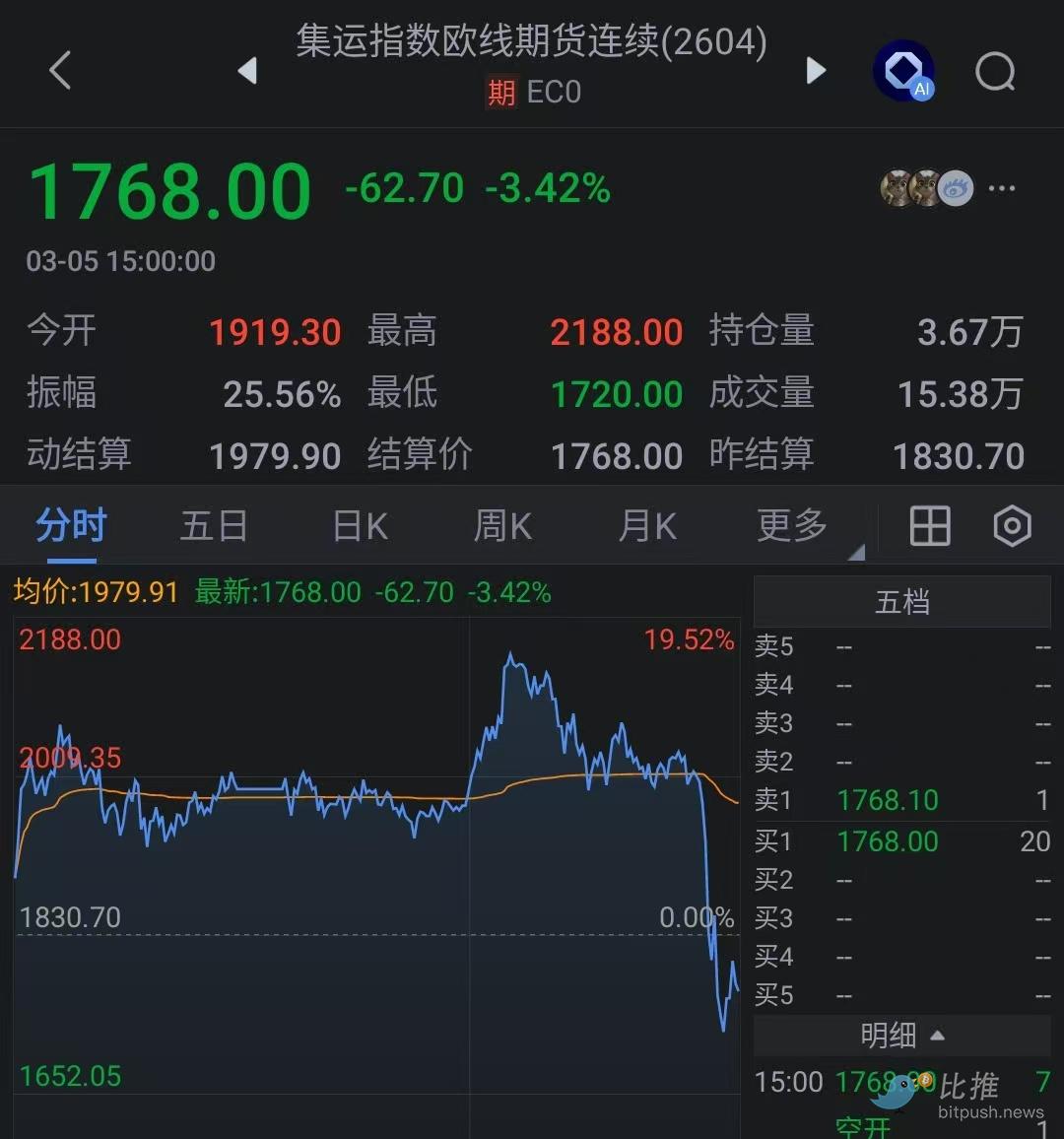
Just now, uh, a deputy commander of a military district in southern Iran said something: 'We have not blocked the Strait of Hormuz,' only prohibiting ships from the US and Israel from passing. This instantly scared the market into a slide, things like European shipping, oil, gas. Scared the hell out of them, a complete mess, but at this moment, most have deeply V-recovered [except for European shipping].

This is in stark contrast to the Spanish spokesperson who, with a grave expression [at a press conference announcing Spain's refusal to negotiate with the US and allow the use of Spanish bases to attack Iran], repeatedly stated that oil and gas prices are bound to rise.

At the moment of speaking, a US oil tanker 'ran aground' and sank in the Strait of Hormuz. Think about it, 'running aground' in the world's busiest energy transport artery. This actually verifies the Iranian military's combat report. It was sunk by a missile.

Some might say, with so many messages and news, which one is true? Who is fooling whom? Actually, all can be considered true (truth mixed with falsehood, falsehood mixed with truth, remember all is fair in war.), because there is no leading figure or authority now [even if there is, like Trump giving himself a 15 out of 10 (evaluating US-Iran actions at a press conference, scoring himself, full marks 10.), it would be full of drama, and the war of public opinion has always been synchronized with the overall war and runs through it from beginning to end.]. The information released by all parties at any given moment can be considered true, but viewed from the overall situation or different standpoints, it can also be considered false. 'Everyone' is searching for the kind of 'ladder' Littlefinger talked about in the chaos, collecting as many chips as possible.

As for humanity, as for compassion. Amidst the complex and numerous coercions, there is temporarily no place for them to stand. This is the self-inflicted disaster of a group of microorganisms on this planet.

Whatever, bro.

#KingOfWar#King of War
Original article link:https://www.bitpush.news/articles/7617058

Preguntas relacionadas

QWhat was the immediate market reaction to the Iranian commander's statement about not blocking the Strait of Hormuz?

AThe market was instantly frightened, causing a sharp decline in prices for routes like European container shipping, oil, and gas. However, these prices mostly experienced a deep V-shaped recovery shortly after, except for European container shipping.

QHow did the Spanish spokesperson's statement contrast with the Iranian commander's?

AThe Spanish spokesperson, with a grave expression, repeatedly stated that oil and gas prices would inevitably rise during a press conference where Spain refused to negotiate with the U.S. on using its bases to attack Iran. This formed a sharp contrast to the Iranian commander's statement that they were not blocking the strait but only banning U.S. and Israeli ships.

QWhat incident is reported to have occurred in the Strait of Hormuz that seemingly confirmed Iran's military report?

AA U.S. oil tanker was reported to have 'run aground' and sunk in the Strait of Hormuz. The article suggests this was a cover story and that the tanker was actually sunk by a missile, validating Iran's military claims.

QAccording to the article, why is it difficult to determine the truth from the various news and messages circulating?

AThe article states that all information released by various parties can be considered true at the moment it is given, but when viewed from an overall perspective or different standpoints, it can also be considered false. There is no single authoritative source, and information warfare is full of deception and drama, making it hard to discern the absolute truth.

QWhat is the overall tone of the article towards the geopolitical situation described?

AThe tone is cynical and pessimistic, describing the situation as a chaotic melee where parties are fighting for leverage, with humanity and compassion having no place. It concludes with a resigned 'so be it' attitude, referring to the conflict as the自作孽 (self-inflicted disaster) of the planet's microbes.

Lecturas Relacionadas

Bitwise: Optimista sobre el mercado de Bitcoin en la segunda mitad del año, la IA y la regulación impulsarán una nueva temporada de altcoins

Bitwise CIO Matt Hougan y el jefe de investigación Ryan Rasmussen expresan un optimismo significativo sobre Bitcoin y el mercado de criptomonedas en la segunda mitad del año. A pesar de un primer trimestre con caídas generalizadas en precios y métricas, destacan que el flujo de noticias positivas —como el lanzamiento de ETFs de Bitcoin por grandes entidades y un nuevo marco regulatorio para tokens— apunta a una recuperación sólida. Hougan argumenta que Bitcoin ofrece una "apuesta dual": es tanto un almacén de valor (oro digital) como una opción de call fuera de dinero para convertirse en un activo de liquidación internacional. Los recientes eventos geopolíticos, como el conflicto con Irán, que ha mencionado usar Bitcoin para pagos, aumentan la probabilidad de este segundo caso, haciendo que la opción sea más valiosa y potencialmente elevando su precio objetivo muy por encima de 1 millón de dólares a largo plazo. Además, Hougan predice un nuevo "altseason" (temporada de altcoins) para 2026, impulsado por la combinación de Inteligencia Artificial (IA), que permite a los proyectos escalar con menos recursos, y el nuevo marco regulatorio claro para tokens, que permite emisiones legales y合规. Esto podría generar una nueva ola de innovación y proyectos tokenizados viables, muy diferente a la era inicial de las ICO. Finalmente, Bitwise anuncia un ETF de Avalanche (AVAX), destacando su arquitectura única y su rápido crecimiento en el segmento de tokenización de activos del mundo real (RWA), que ha crecido un 1000% interanual.

marsbitHace 24 min(s)

Bitwise: Optimista sobre el mercado de Bitcoin en la segunda mitad del año, la IA y la regulación impulsarán una nueva temporada de altcoins

marsbitHace 24 min(s)

DeepSeek V4 finalmente se lanza, rompiendo el monopolio de los modelos cerrados más potentes y anunciando colaboración con los chips de Huawei

DeepSeek-V4 ya está aquí: la nueva generación de modelos de inteligencia artificial de DeepSeek se lanza en versión preliminar y de código abierto. Incluye dos variantes: **DeepSeek-V4-Pro**, con 1,6 billones de parámetros y 49.000 millones de activaciones, diseñado para competir con los mejores modelos cerrados; y **DeepSeek-V4-Flash**, una versión más económica con 284.000 millones de parámetros y 13.000 millones de activaciones, optimizada para velocidad y eficiencia. Ambos soportan un contexto de 1 millón de tokens. Según la evaluación interna, DeepSeek-V4 supera a Claude Sonnet 4.5 en tareas de codificación con agentes y se acerca al rendimiento de Opus 4.6 en modo no reflexivo, aunque aún existe una brecha con el modo reflexivo de Opus. El modelo también destaca en conocimientos generales y razonamiento, situándose a la par de los principales modelos cerrados. La gran novedad es la implementación de un nuevo mecanismo de atención que permite el contexto extenso de manera eficiente, combinando compresión de tokens y atención dispersa (DSA). Además, DeepSeek anuncia que **a partir del segundo semestre de 2026, sus servicios admitirán chips Huawei**, reforzando la independencia tecnológica. La API ya está disponible, compatible con las interfaces de OpenAI y Anthropic, y los modelos antiguos se retirarán en julio de 2026. DeepSeek reafirma su compromiso con el avance en IA de código abierto, priorizando la innovación técnica sobre el ruido mediático.

marsbitHace 1 hora(s)

DeepSeek V4 finalmente se lanza, rompiendo el monopolio de los modelos cerrados más potentes y anunciando colaboración con los chips de Huawei

marsbitHace 1 hora(s)

Trading

Spot
Futuros
活动图片