Artículos Relacionados con Job

El Centro de Noticias de HTX ofrece los artículos más recientes y un análisis profundo sobre "Job", cubriendo tendencias del mercado, actualizaciones de proyectos, desarrollos tecnológicos y políticas regulatorias en la industria de cripto.
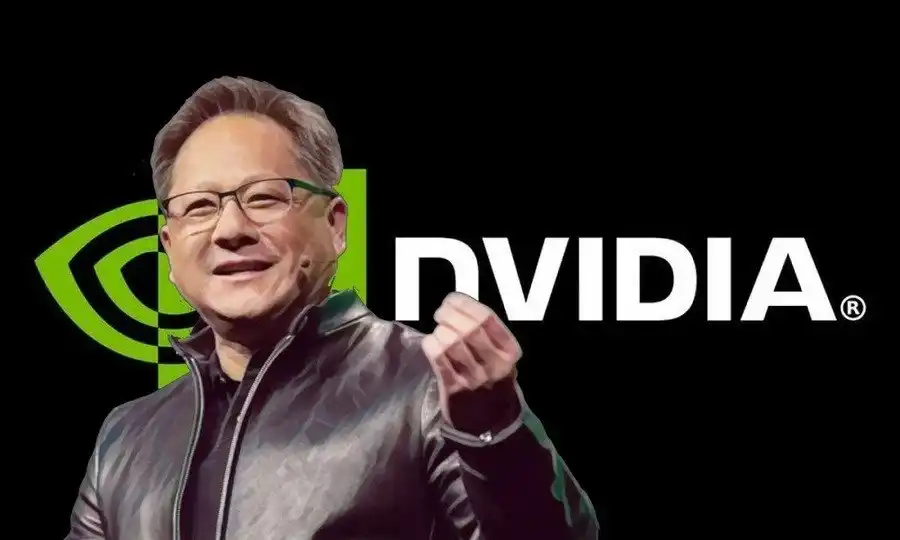
Sequoia Dialogue with Jensen Huang: Computing Model Undergoes a 60-Year Transformation; You Won't Be Replaced by AI, But You Will Be Dimensionality-Reduced by 'Those Who Master AI'

NVIDIA founder and CEO Jensen Huang, in a conversation with Sequoia Capital's Konstantine Buhler, argues that we are witnessing the most significant computing shift in 60 years—from retrieval-based to generative computing. Instead of just storing and retrieving data, future systems will generate highly personalized content (text, images, video) on demand, powered by massive "AI factories." Huang envisions a global "intelligence network" that will envelop the planet, following the historical patterns of energy and communication grids. He outlines a five-layer investment framework: 1) Energy, 2) Chips/Computers, 3) Infrastructure (data centers), 4) AI Models, and 5) Applications. He predicts this ecosystem will reach a scale of $20 trillion annually. Crucially, Huang pushes back against fears of AI-driven job loss. He distinguishes between specific "tasks" (e.g., typing, analyzing images) and overall "jobs" (e.g., CEO, radiologist). While AI automates tasks, it increases efficiency and demand for the higher-value problem-solving aspects of professions, thus creating more jobs and "up-leveling" careers. The real risk, he asserts, is not being replaced by AI, but being outperformed by someone who effectively leverages it. He urges everyone to embrace AI as a tool for augmented capability and innovation.

marsbit06/12 02:59

Sequoia Dialogue with Jensen Huang: Computing Model Undergoes a 60-Year Transformation; You Won't Be Replaced by AI, But You Will Be Dimensionality-Reduced by 'Those Who Master AI'

marsbit06/12 02:59

AI Kills India's Most Profitable Business: 2 Trillion

The article discusses the significant impact of AI on India's IT outsourcing industry, a sector that has been the backbone of the country's economic growth for three decades. On June 3, India's IT stock index plunged 5.8%, with major firms like TCS, Infosys, and Wipro seeing sharp declines. The panic stems from the realization that AI tools capable of coding, testing, documentation, and customer service directly threaten India's core business model of selling programmer hours. The industry, which generated approximately $282 billion in revenue in the 2025 fiscal year with nearly 80% from exports, faces an existential challenge. The traditional growth logic—more projects requiring more engineers—is being dismantled. Estimates suggest AI could reduce development teams from 100 people to just 2-3 for certain tasks, slashing project costs and company profit margins. Consequently, leading firms have begun reducing headcounts, a reversal of a decades-long trend, and entry-level job openings have plummeted. The risk is profound as IT services account for over 7% of India's GDP and support millions of jobs. With high youth unemployment, the AI-driven reduction in low-to-mid-level engineering roles poses a severe socio-economic threat. However, India also shows potential to adapt and lead in the AI era. Reports indicate it has the world's highest rates of AI tool adoption among employees and managers. Major IT firms are rapidly deploying enterprise AI solutions like Microsoft Copilot. The new opportunity may lie not in competing to build foundational AI models but in becoming the world's premier center for AI implementation, deployment, and productivity enhancement—exporting AI-powered services and expertise instead of just manual coding labor.

marsbit06/09 00:38

AI Kills India's Most Profitable Business: 2 Trillion

marsbit06/09 00:38

In-Depth Explanation of ERC-8183: Ethereum's Solution to the AI Agent Trust Challenge

Analysis of ERC-8183: Ethereum's Solution to AI Agent Trust Issues On March 10, the Ethereum Foundation's dAI team and Virtuals Protocol introduced ERC-8183, a new standard designed to enable trustless commercial transactions between AI Agents. This standard addresses the core problem of how two untrusted Agents can securely complete a "hire-deliver-settle" workflow without relying on a centralized platform. ERC-8183 introduces a "Job" concept with three roles: the Client (task publisher), the Provider (task executor), and the Evaluator (task validator). The Evaluator, which can be an AI Agent, a ZK-verifier smart contract, or a multi-sig/DAO, is the core innovation, determining whether a job is completed or rejected based on submitted proofs. A Job progresses through four states: Open (task creation), Funded (client deposits funds into escrow), Submitted (provider submits work), and Terminal (evaluator approves or rejects, funds are distributed accordingly). The standard also supports modular Hooks for added functionality like reputation checks or bidding systems. ERC-8183 complements other standards like x402 (a payment protocol for Agents) and ERC-8004 (an identity/reputation standard). Together, they form a foundational stack for a decentralized, autonomously operating AI Agent economy, with ERC-8183 specifically solving the trust problem in transactions.

Odaily星球日报03/10 07:43

In-Depth Explanation of ERC-8183: Ethereum's Solution to the AI Agent Trust Challenge

Odaily星球日报03/10 07:43

活动图片