Robinhood Founder Vlad Tenev on the Great Wealth Transfer, Tokenization, and Gen Z's Investment Future

marsbitPublicado a 2026-03-18Actualizado a 2026-03-18

Resumen

In a Bankless interview, Robinhood CEO Vlad Tenev discusses the future of finance, driven by generational wealth transfer, tokenization, and Gen Z's investing behavior. He reveals that Gen Z are serious long-term investors, starting retirement planning as early as age 19 on average. Tenev addresses the $70-90 trillion "Great Wealth Transfer," emphasizing Robinhood's strategy to serve both younger generations and older asset owners through products like banking services and trust accounts. He predicts 24/7 markets and asset tokenization will become standard, with Robinhood already offering tokenized stocks in the EU. Robinhood is building a hybrid CeFi/DeFi infrastructure, including its own Layer 2 chain, to improve accessibility and utility for real-world assets. Tenev dismisses the notion that young investors are solely driven by "financial entertainment," highlighting data showing 40% of platform assets are in passive investments. Other key points include: the social value of prediction markets as "truth machines," plans for a Robinhood Social feature, the potential of AI-powered financial agents, and efforts to democratize access to private equity investments. He also discusses regulatory challenges and the strategic focus on global expansion if U.S. clarity remains limited.

Written by: Bankless

Compiled by: Plain Language Blockchain
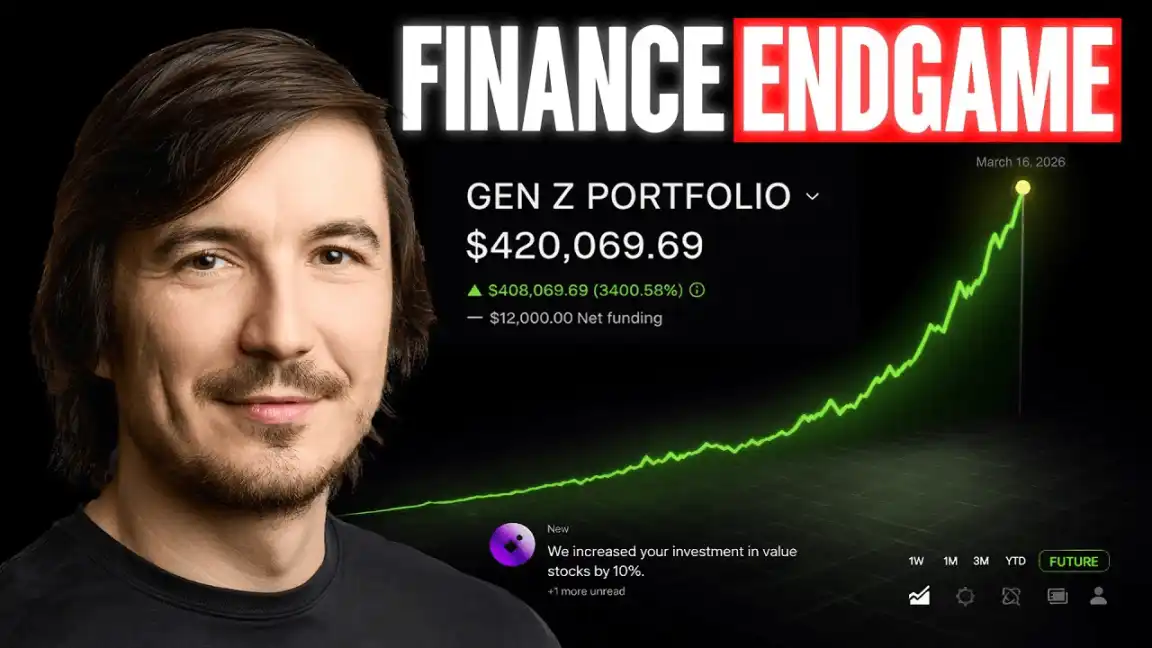
Do you think Generation Z (Gen Z) are just "financial nihilists" squandering their youth on TikTok and blindly speculating in the crypto market? The data from Robinhood founder Vlad Tenev will completely颠覆 your perception. In the latest Bankless interview, Vlad revealed an astonishing fact: Gen Z are the most hardcore long-termists in history, starting to plan for retirement at an average age of 19.

As the序幕拉开 for the $70 trillion "Great Wealth Transfer," this financial giant at the center of the storm is playing a big game: from 24/7 tokenized US stock trading, to plans allowing retail investors to get early access to unicorns like SpaceX and Stripe, to the即将改变游戏规则的 AI financial agents. Vlad not only responded to质疑 about "financial entertainment," but also deeply拆解ed how Robinhood is reshaping traditional banking through a DeFi architecture. This is not just an interview about trading tools, but a roadmap to the future of finance in 2040.

The $70 Trillion "Great Wealth Transfer"

Host: Let's start with the "Great Wealth Transfer." Over the next few decades, as the Baby Boomer and Silent Generations pass their assets down to Gen X, Millennials, and Gen Z, an estimated $70 to $90 trillion in assets are expected to transfer generations in the US. This is the largest wealth transfer in history. To what extent does this massive opportunity guide Robinhood's strategy?

Vlad: We think about it quite a bit. Many companies have started talking about this, but we truly turned it into concrete fintech action, dating back to when we launched Robinhood's banking services at our Gold event last year. Robinhood's core philosophy is: whether individual or institutional, domestic or international, Robinhood should be the place where all your money and assets get the best service. We believe we have a huge opportunity when inheritance events occur for the older generation. We not only serve the younger generation receiving the wealth but also aim to attract the current asset holders—the parents and grandparents—through rich products and features. Through credit and banking services, we can access a large amount of liquid assets held in checking and savings accounts. This year we also launched custodial accounts and trust accounts. We are not just waiting for people to inherit; we are working to make the older generation realize that using other outdated financial platforms today is a disadvantage. This puts us in a favorable position for the peak of the wealth transfer expected in about 8 to 10 years.

Finance in 2040: 24/7 Markets and Asset Tokenization

Host: What will finance look like in 2040? What will remain the same, and what will be彻底改变? Will we have 24/7/365 markets? What role will AI play?

Vlad: I believe 24/7/365 markets are inevitable. We launched 24-hour stock trading in 2022, and now the whole industry is following suit. The technology is ready, and weekend trading will happen sooner than imagined. Tokenization is another core driver. Last year we launched tokenized versions of thousands of US stocks in the EU, even including token giveaways for private companies like OpenAI and SpaceX. It's still early, but I think by the end of this year, tokenized stocks will begin to surpass traditional brokerage accounts in terms of trading advantages. If you can solve the 24/7 liquidity problem for private equity, then basically all assets can achieve全天候 trading.

Tech Stack: The Fusion of CeFi and DeFi

Host: Your Layer 2 chain, Robinhood Chain, just launched on testnet. How do you position this tech stack you are building? Are you challenging the NYSE, or building a new entry point into the crypto world?

Vlad: The tech stack is divided into two parts. One part is the CeFi component, which is the tradability of stock tokens on centralized exchanges like Bitstamp; the other part is the DeFi aspect, where we want users to be able to participate in DeFi protocols on Robinhood Chain or other chains through non-custodial wallets. We don't see ourselves as catching up to traditional providers; this is more like a completely new species. In the crypto ecosystem, many tokens lack underlying utility, but when you bind technological power to real-world assets (RWA) with real fundamental utility, the experience undergoes a qualitative change. As for the US market, although the regulatory environment is changing, the US itself already has a mature structure close to 24/5, so the marginal benefits of tokenization might be less apparent in the short term compared to the EU. But as the technology proves its superiority overseas, it will eventually be移植回 the US.

DeFi Strategy and "Truth Machine" Prediction Markets

Host: Companies like Coinbase and BlackRock are moving towards DeFi. What is Robinhood's decentralized finance strategy? Also, regarding the recently hot "prediction markets," do you think they are good or bad for society?

Vlad: Our strategy is "full-stack." We need to onboard a large number of customers through the Robinhood App and Wallet, while also building infrastructure like Robinhood Chain. The activity on the testnet has exceeded my expectations; developers are very interested. The future core lies in "Curation"—how to help customers filter through thousands of on-chain products to find high-quality choices that match their risk profile. Regarding prediction markets, I believe they are very beneficial to society. They are not just trading venues but "truth machines." The business model of traditional news media sometimes delays the truth in exchange for traffic, while prediction markets fill the primal need people have for "real information."

Host: Will Robinhood strengthen its media and content属性? For example, becoming the homepage for prediction markets, or adding social elements.

Vlad: Absolutely. We are about to launch Robinhood Social. We have a massive amount of assets, and prediction markets will be "first-class citizens" among them. Through user-generated content (UGC), we can capture breaking news faster than manual curation. At the same time, our media division, Sherwood Media, is also outputting high-quality content and integrating prediction market data. In terms of execution, we partner with Kalshi and ForecastX, and in the future, through the acquired Bitstamp, we will also have our own trading venue to provide customers with the optimal experience.

Debunking the Myth of "Financial Entertainment"

Host: Many people believe the younger generation engages in finance for entertainment, even带有 "financial nihilism," thinking they are speculating and gambling. As a platform, how do you view this trend?

Vlad: I have a rather "spicy" take: I don't believe entertainment drives most financial activity. The reality is, no one wants to discuss the boring but important parts on social media. On Twitter, no one posts "my Robinhood retirement account grew again," because it's not sexy and doesn't go viral. But the data tells us that 40% of the assets on the platform are in passive instruments (like ETFs, cash). Even the most active options traders typically have larger passive investment portfolios. People just operate in different accounts for different purposes.

Host: That's a powerful counter-narrative. So Gen Z isn't financially irresponsible, but actually more savvy?

Vlad: Exactly. As I just mentioned, they open accounts very early. Part of the reason is the convenience of access—just a few clicks on Robinhood to open an account. Another part is economic incentives, like our 3% match contribution for Gold members' retirement accounts. Furthermore, young people today are more likely to be independent contractors or gig economy participants, making it harder to rely on traditional employer 401k plans, so they need to actively manage their future more. Currently, our retirement assets have exceeded $25 billion, and the growth is astounding.

Trump Accounts and the Future "Gen Beta"

Host: Let's talk about groups younger than 19. The Trump Accounts mentioned in the recent "Fairness for All Act" have attracted attention; the government would provide a $1000 initial investment fund for newborns. Why do you rate this so highly?

Vlad: This is the first mechanism I can think of that truly "gives money back to the future." Current policies mostly involve debt that mortgages the future. Trump Accounts are automated; they teach children the value of long-term investment. By age 18 or 30, benefiting from compound interest, this money could grow to hundreds of thousands or even millions of dollars. Although newborns won't directly operate phones, these accounts are managed by parents, and we will focus on building a "kids' investment experience" focused on financial education and literacy.

Financial Super App and the Future of Payments

Host: Everyone is running towards a "financial super app." Will Robinhood pack all functions into one app? Also, why haven't you implemented peer-to-peer (P2P) payments between users yet?

Vlad: We will adopt a flexible strategy. The main app will evolve to be more highly personalized, tailored to you like a social media feed. At the same time, we will also retain standalone professional apps, like a dedicated banking app or non-custodial wallet, connected through unified identity verification. Regarding payments, we've experimented. But we found Robinhood users are primarily credit-driven, not the群体 that primarily relies on借记卡 for early paycheck access. Currently, the P2P experience on Venmo and Cash App is already good; we don't want to just pile on mediocre, commoditized features unless we can make significant improvements. Right now, our priority is moving the remaining banking features onto the platform.

Stablecoins and Regulation

Host: What is your view on stablecoins as banking products?

Vlad: Stablecoins face two challenges: First, FDIC insurance. US consumers highly value fund safety, especially after the 2023 banking crisis; the de-pegging risk of stablecoins leaves people wary. Second, competition from cashback on payments. Currently, you can't get 3% cashback like with credit cards when paying with stablecoins. Stablecoins are currently useful for large B2B or cross-border payments, but for consumer scenarios like splitting a bill for pizza, more ecosystem maturity is needed.

Host: Regarding the Clarity Act (crypto regulation bill), how reliant are you on its passage?

Vlad: The Clarity Act can clarify what is a security and what is a commodity, which would save us a lot of legal and compliance costs. More importantly, it can prevent policy flip-flops due to administrative changes. Regardless of whether the bill passes, we will push forward with Robinhood Chain because it is global and permissionless. If clarity is high in the US, we'll push the US market; if clarity is low, we'll prioritize developing international business.

The Next Growth Areas: AI and Private Equity

Host: Looking ahead, what is Robinhood's third big opportunity?

Vlad: There are several directions. First is the launch of Social features; second is the popularization of prediction markets. But the biggest transformation might come from AI. We are thinking: how could an "AI agent," like a family office, run your entire financial life? From automatically managing savings to executing complex trading strategies. Additionally, we are also addressing the issue of retail investors being unable to access growth stocks (like Stripe, SpaceX) through Robinhood Ventures. We allow retail participation in IPOs through IPO Access and use our own capital to invest in late-stage private rounds. In the future, we hope even seed-round financing could include retail investors.

Host: Thank you, Vlad, for sharing. Robinhood has always been a leader in democratizing finance. The above does not constitute financial advice; cryptocurrencies are risky. Thank you for listening to Bankless.


Preguntas relacionadas

QWhat is the 'Great Wealth Transfer' and how is Robinhood positioning itself for it?

AThe 'Great Wealth Transfer' refers to the projected $70-90 trillion in assets that will be passed down from the Baby Boomer and Silent generations to Gen X, Millennials, and Gen Z in the coming decades. Robinhood is positioning itself by not only serving the younger generations who will inherit the wealth but also by attracting the current asset holders (parents and grandparents) through products like credit and banking services, custodial accounts, and trust accounts. The goal is to become the primary platform for all financial services, making them aware that using outdated platforms is a disadvantage.

QAccording to Vlad Tenev, what are the key drivers for the future of finance by 2040?

AVlad Tenev identifies two key drivers for the future of finance by 2040: 24/7/365 markets and asset tokenization. He believes round-the-clock trading is inevitable and that tokenization is a core driver, noting that tokenized stocks in the EU are on track to surpass traditional brokerage accounts in trading advantages by the end of the year. Solving the 24/7 liquidity problem for private equity would essentially allow all assets to trade continuously.

QHow does Robinhood's strategy for DeFi and its new Robinhood Chain differ from traditional financial infrastructure?

ARobinhood's strategy is 'full-stack,' combining both CeFi and DeFi components. The CeFi component involves making tokenized stocks tradable on centralized exchanges like Bitstamp. The DeFi component aims to let users engage with DeFi protocols through non-custodial wallets on the Robinhood Chain or other chains. Vlad Tenev positions this not as competing with traditional suppliers like the NYSE but as creating a new species of financial infrastructure that combines real-world assets (RWA) with crypto utility, leading to a qualitatively different experience.

QWhat is Vlad Tenev's response to the criticism that Gen Z's engagement in finance is driven by 'entertainment' or 'financial nihilism'?

AVlad Tenev strongly disputes the narrative that Gen Z's finance activity is primarily driven by entertainment. He argues that the 'boring but important' aspects of investing, like passive ETF and cash holdings, don't get discussed on social media because they aren't 'sexy' or viral. Data shows that 40% of assets on the Robinhood platform are in passive instruments. He states that Gen Z is actually more financially responsible, opening investment accounts very early (average age 19) due to ease of access and economic incentives, and are often proactive in managing their future, especially as independent workers.

QWhat are some of the next big growth opportunities for Robinhood, as mentioned by Vlad Tenev?

AThe next big growth opportunities for Robinhood include: 1) The launch of its Social feature and the proliferation of prediction markets. 2) The transformative potential of AI, specifically exploring how an 'AI agent' could autonomously manage a user's entire financial life, from savings to executing complex trading strategies. 3) Democratizing access to private equity for retail investors through initiatives like Robinhood Ventures and IPO Access, aiming to eventually allow散户 investment even in seed-round funding for companies like Stripe and SpaceX.

Lecturas Relacionadas

El socio de a16z: Estar en el flujo de capital es la verdadera ventaja competitiva

El artículo argumenta que el verdadero "foso defensivo" (ventaja competitiva sostenible) de un negocio no es su producto, sino su capacidad para situarse dentro del **flujo de capital** (el movimiento de valor en una red) y extraer una parte de cada transacción. Históricamente, empresas como los ferrocarriles, Visa, Google, Meta y AWS crecieron no solo vendiendo algo, sino posicionándose como intermediarios esenciales en la transferencia de mercancías, pagos, atención publicitaria o capacidad computacional, beneficiándose proporcionalmente al volumen de actividad. La tecnología **Crypto** (blockchain, stablecoins, tokens) permite por primera vez que las startups apliquen este modelo de forma nativa y a escala global. Ofrece una infraestructura abierta, liquidación programable y flujos de valor rápidos. Su mayor oportunidad reside en los sectores financieros tradicionales donde los costes de intermediación son altos y la eficiencia es baja (pagos, transferencias, custodia, clearing, creación de mercado). Los emprendedores pueden comprimir esos costes, aumentar la velocidad y redistribuir el valor. El modelo va más allá de las finanzas y puede extenderse a futuros mercados de gran volumen como la capacidad de computación (GPU), datos para IA, energía, robótica o minerales estratégicos. La pregunta clave para los fundadores es: ¿tu producto o protocolo está ya dentro de un flujo de valor? ¿Tu ingreso escala linealmente cuando la actividad en tu red se multiplica por 10? La oportunidad está en identificar y redefinir los canales de valor existentes más ineficientes y lucrativos, posicionarse en el nuevo flujo y dejar que los efectos de red y la composición hagan el resto.

marsbitHace 19 min(s)

El socio de a16z: Estar en el flujo de capital es la verdadera ventaja competitiva

marsbitHace 19 min(s)

Socio de a16z crypto: El flujo de capital es la verdadera fortaleza competitiva

A lo largo de la historia empresarial, las empresas más duraderas han construido su éxito en torno al flujo de capital, posicionándose donde se crea y transfiere valor dentro de un ecosistema para capturar parte de él. La tecnología cripto es la primera tecnología moderna nativamente adaptada a esta lógica. Con la adopción de monedas estables, el valor puede moverse a velocidad de internet, permitiendo liquidaciones globales programables las 24 horas. La blockchain es un modelo de negocio en red con efectos de red incorporados. Los tokens, bien diseñados, alinean a todos los participantes (usuarios, desarrolladores) hacia el crecimiento de la red y distribuyen las ganancias de manera transparente. Esta no es una idea nueva; empresas como los ferrocarriles, Google o AWS se han construido ocupando puntos críticos en el flujo de valor. En finanzas, actores como Visa o los creadores de mercado demuestran que el "flujo de capital + efectos de red" es uno de los modelos más sólidos. La gran oportunidad para los emprendedores cripto reside en los altos márgenes de la industria financiera tradicional (pagos, custodia, etc.), donde "tu margen es mi oportunidad". Pueden construir la próxima infraestructura global, programable y de liquidación instantánea. Además, esta lógica se expande más allá de las finanzas a mercados emergentes como la capacidad de computación (GPU), datos para IA, energía o metales, donde los canales tradicionales son inadecuados. La pregunta clave para los fundadores es: ¿está tu negocio en el camino central por donde fluye el valor? Cuando el volumen de tu ecosistema crezca 10x, ¿crecerán tus ingresos proporcionalmente? Identificar dónde los márgenes son más altos en relación al valor entregado señala la oportunidad: reducir esos costos, entrar en un nuevo flujo de valor y escalar con efectos de red.

Foresight NewsHace 23 min(s)

Socio de a16z crypto: El flujo de capital es la verdadera fortaleza competitiva

Foresight NewsHace 23 min(s)

Desvelando al "Dios de las Acciones Canoso" Serenity: El analgésico espiritual para los inversores minoristas ansiosos

La figura de "Serenity", apodado el "Dios de las acciones de pelo blanco", ha desatado una tormenta en el mercado de valores chino A-shares. Entre el 5 y el 9 de junio, sus menciones en la plataforma X de tres acciones (LeaderDrive, Yishi Te e Innolight) provocaron fuertes subidas, incluyendo máximos diarios del 20%. Su método de inversión se basa en identificar "puntos de estrangulamiento" (Chokepoints) en la cadena de suministro de IA, y afirma tener un rendimiento anual superior al 3600%. Su enorme influencia entre los inversores minoristas internacionales, con más suscriptores en X que Elon Musk, le otorga un poder inusual para mover los precios. Un caso anterior con la acción europea XFAB mostró un patrón similar de fuerte alza tras su recomendación y posterior corrección. Serenity insiste en que sus análisis sobre acciones chinas son solo por "divertimento" y para ofrecer una "perspectiva extranjera", negando tener posiciones en ellas y atribuyendo algunas recomendaciones a sus seguidores. Mantiene el anonimato por seguridad, pero la comunidad deduce, por sus horarios de actividad e historiales, que probablemente es un hablante nativo de inglés residente en Japón, con conocimientos de chino y japonés. Aunque se presenta como un promotor de la "democratización de la información" sin fines de lucro, su servicio de suscripción de 1 dólar le genera ingresos significativos, y su búsqueda de influencia y notoriedad es evidente. Los medios financieros chinos advierten sobre los riesgos de esta "recomendación transfronteriza" y la posible manipulación. Serenity se ha convertido en un símbolo de la fe del mercado alcista en la IA, pero la historia sugiere que estos íconos suelen ser creados y luego derribados cuando cambia el sentimiento del mercado.

marsbitHace 27 min(s)

Desvelando al "Dios de las Acciones Canoso" Serenity: El analgésico espiritual para los inversores minoristas ansiosos

marsbitHace 27 min(s)

Descubriendo a Serenity, el "Mago de las Acciones de Cabello Blanco": El bálsamo espiritual para los inversionistas minoristas ansiosos

**Resumen: Serenity, la "Deidad de las Acciones de Cabello Blanco", y su impacto en el mercado chino A** Serenity, un influyente y misterioso inversor anónimo conocido como la "Deidad de las Acciones de Cabello Blanco", ha generado un gran revuelo recientemente en el mercado de valores chino A. Con un enfoque de inversión basado en "puntos de estrangulamiento", busca empresas pequeñas con cuasi-monopolios en la cadena de suministro de IA. Tras ganar popularidad internacional por sus recomendaciones (con un retorno personal del 3612% este año), en junio comenzó a mencionar acciones chinas en su cuenta de X. El 5 de junio, recomendó a LeaderDrive (688017), un fabricante de componentes para robots, y sus acciones subieron un 20% ese día, con una ganancia superior al 30% en cuatro días. El 8 de junio, una lista de empresas relacionadas con la tecnología de 800V CC, que incluía a Yishite (300376), provocó que esta última subiera un 20% en una hora. Sus acciones han generado polémica. Medios y analistas chinos advierten sobre posibles esquemas de "pump and dump" transfronterizos. Serenity niega estos cargos, afirmando que no posee las acciones chinas que menciona y que su objetivo es ofrecer una "perspectiva diferente" y democratizar la información, aunque admite que también es "divertido". Su único ingreso proviene de sus más de 54,000 suscriptores que pagan 1 dólar al mes. Basándose en su actividad en redes sociales y detalles compartidos, la comunidad cree que Serenity es probablemente un hombre de habla inglesa que vive en Japón y tiene conocimientos de chino y japonés. Su anonimato, sus impresionantes rendimientos declarados y su búsqueda de influencia (su cuenta ya supera en suscriptores a la de Elon Musk en X) lo convierten en una figura controvertida pero fascinante. Muchos lo ven como el nuevo icono de la fe inversora en la era de la IA, un reflejo de la emocionalidad del mercado alcista, recordando que la historia tiende a crear y luego derribar a sus "dioses" financieros.

Odaily星球日报Hace 27 min(s)

Descubriendo a Serenity, el "Mago de las Acciones de Cabello Blanco": El bálsamo espiritual para los inversionistas minoristas ansiosos

Odaily星球日报Hace 27 min(s)

Trading

Spot
Futuros
活动图片




