Retail Investors' 'Short Squeeze' Turns into 'Stampede': How a Silver Frenzy Became a Mass Grave?

比推Publicado a 2026-02-05Actualizado a 2026-02-05

Resumen

The article details how a retail-driven silver squeeze, initially hailed as the "2026 GameStop," rapidly turned into a catastrophic crash, described as a "mass grave" for small investors. In January 2026, retail investors poured a record $1 billion into silver ETFs, with trading volume nearly matching that of the S&P 500 ETF at its peak. Fueled by social media hype and comparisons to the GameStop rally, silver prices soared to over $120 per ounce. However, the rally abruptly ended in just three days, with prices plummeting 40%, erasing all gains and causing significant losses. The crash was triggered not by news events, as initially speculated, but by a 50% increase in margin requirements imposed by the CME exchange. This forced over-leveraged retail investors to liquidate positions automatically, initiating a vicious cycle of selling. While散户 were forced to sell at the worst prices, institutional players like JPMorgan capitalized on the chaos. They accessed emergency liquidity from the Federal Reserve, exploited their role as authorized participants in silver ETFs to arbitrage price discrepancies, and strategically acquired physical assets at depressed prices. The piece concludes that the silver market is inherently risky and structurally skewed in favor of institutions, highlighting the vast power imbalance where retail enthusiasm and memes are no match for algorithmic trading, leverage, and rule-making authority.

Author: Xu Chao

Original Title: Retail Investors Turn Silver into a 'Mass Grave'


"I lost an entire year's after-tax salary today."
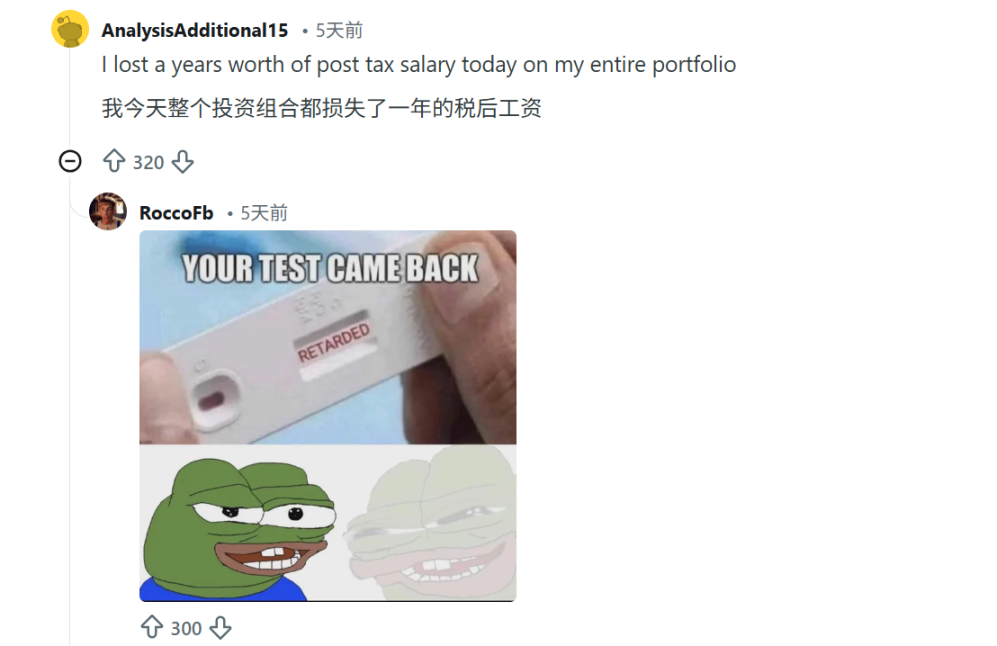
This was a desperate cry left by a Reddit user on the forum last Friday.

Just a few days ago, silver was seen as the "GameStop of 2026," a symbol of retail investors banding together to fight Wall Street. Reddit forums were flooded with "Diamond Hands" memes, vowing to send silver to the moon.
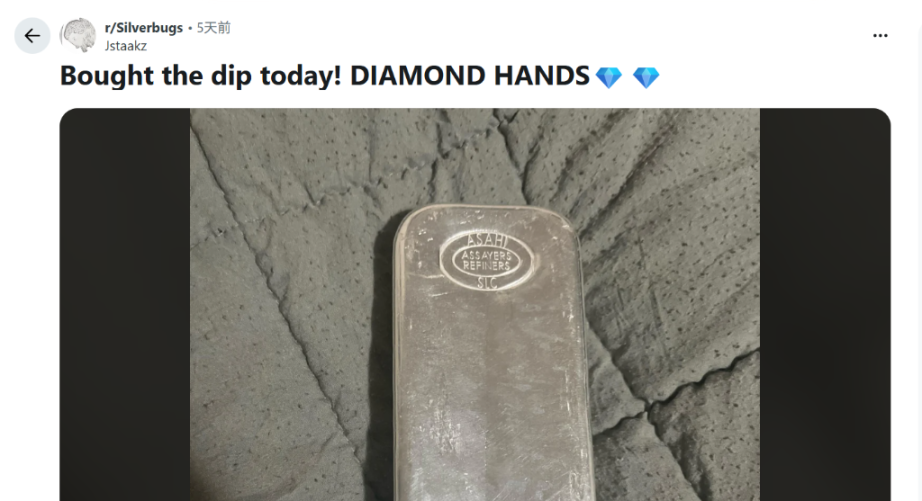
However, the狂欢 (carnival/euphoria) came to an abrupt halt within just three days.

Silver prices plummeted in a free fall from a high of over $120 per ounce, crashing 40% in three days, not only erasing recent gains but also leaving a terrifying cliff on the chart. For retail investors who bought at the peak, this wasn't a correction; it was a massacre. The silver market, which had once carried dreams of immense wealth, had been turned into a "mass grave" where retail investors buried themselves.
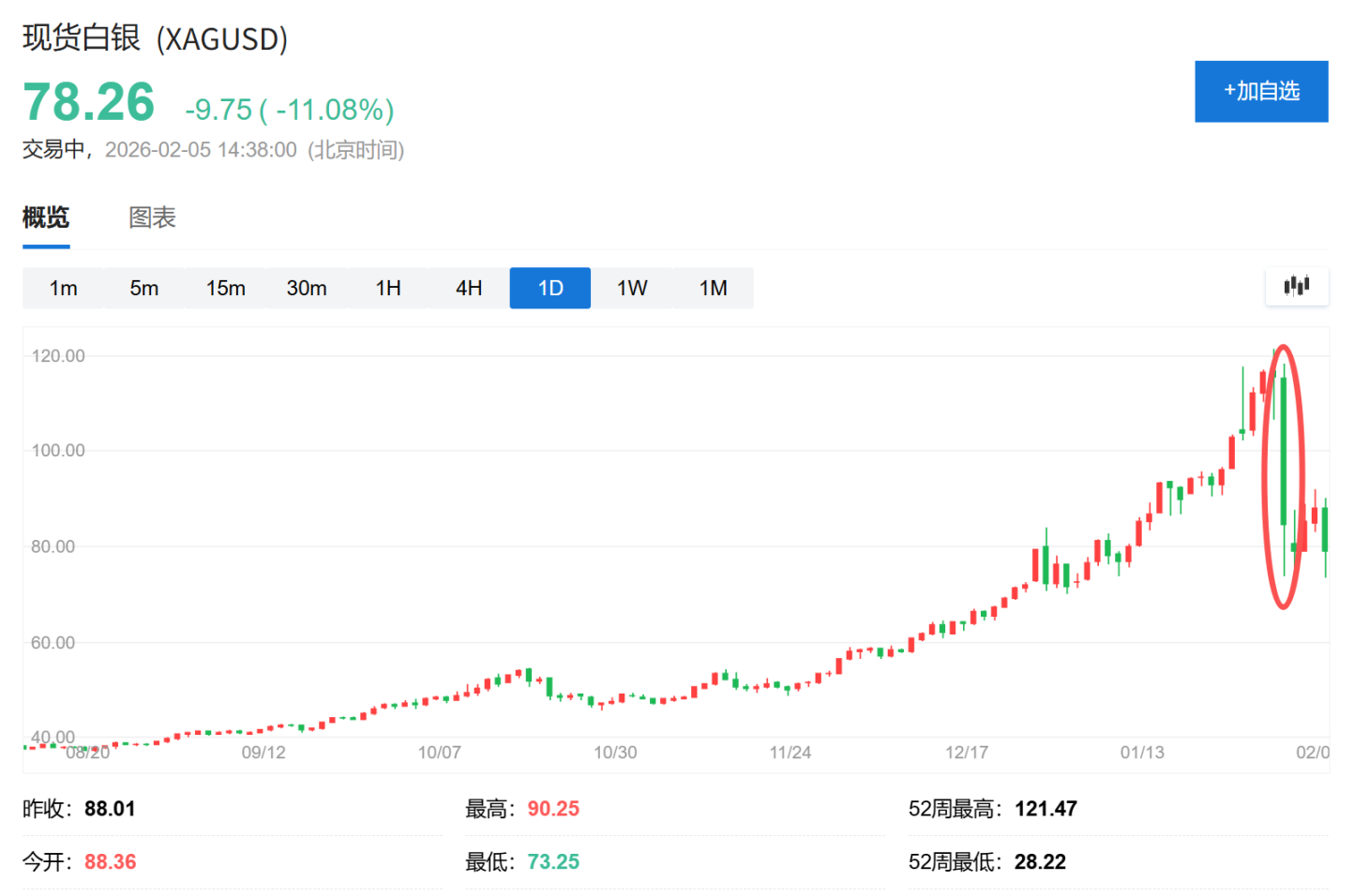
How did this happen? While we were talking about a "short squeeze," Wall Street's giants had already opened their bloodthirsty jaws.

The Crazy Casino: When Silver Became a "Meme Stock"

The silver market in January 2026 could no longer be described as rational.

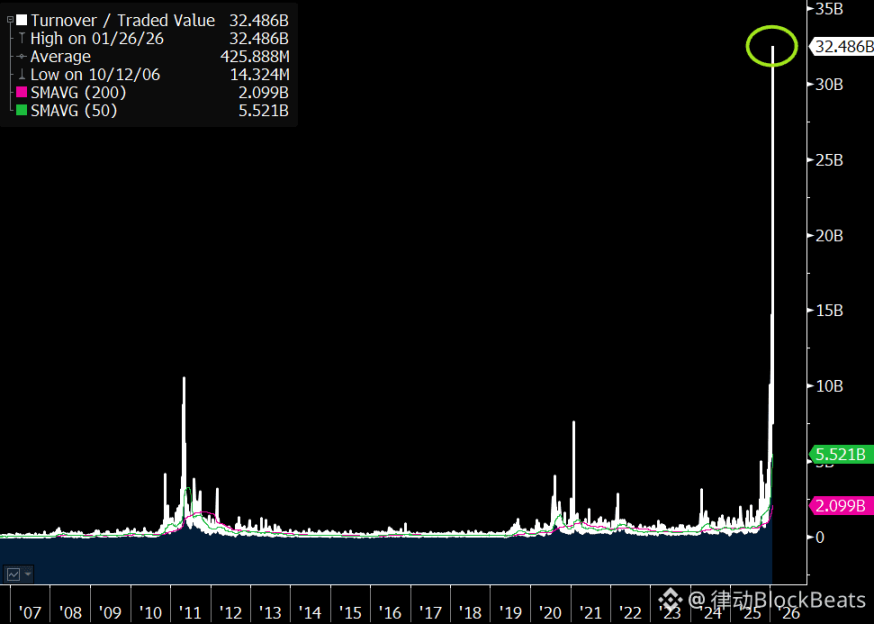
According to VandaTrack data, individual investors poured a record net $1 billion into silver ETFs in January alone. This狂热 (frenzy) peaked on January 26th—trading volume for the silver ETF (SLV) reached a staggering $39.4 billion, almost catching up to the $41.9 billion volume of the S&P 500 ETF (SPY). Remember, this is an ETF for a single metal; its popularity was nearly matching that of the entire US stock market.
StoneX market analyst Rhona O'Connell was blunt: "Silver is severely overvalued, caught in a self-fulfilling madness. Its performance now is like Icarus, flying too close to the sun, destined to be burned."

Social media acted as an accelerant for this狂欢 (frenzy). On Reddit's WallStreetBets and Silverbugs sections, posts about silver surged to 20 times the five-year average. Retail investors, like they did rushing into GameStop in 2021, flocked en masse into this notoriously volatile market, trying to drown out fundamentals with sheer capital.

Bull and Baird market strategist Michael Antonelli told CNBC helplessly: "Silver has completely become the GameStop of 2026. The price doubled in three months, completely detached from industrial demand fundamentals, purely a vertical climb built by retail money."

But they forgot, silver has a nickname: "gold on steroids." It rises疯狂 (crazily), and falls even more ruthlessly.

The Truth of the Crash: Who Pulled the Trigger?

On January 30th, the惨案 (disaster) occurred. Silver experienced an epic sell-off within hours.

The media and analysts quickly found a perfect scapegoat: the nomination of Kevin Warsh as Federal Reserve Chairman.
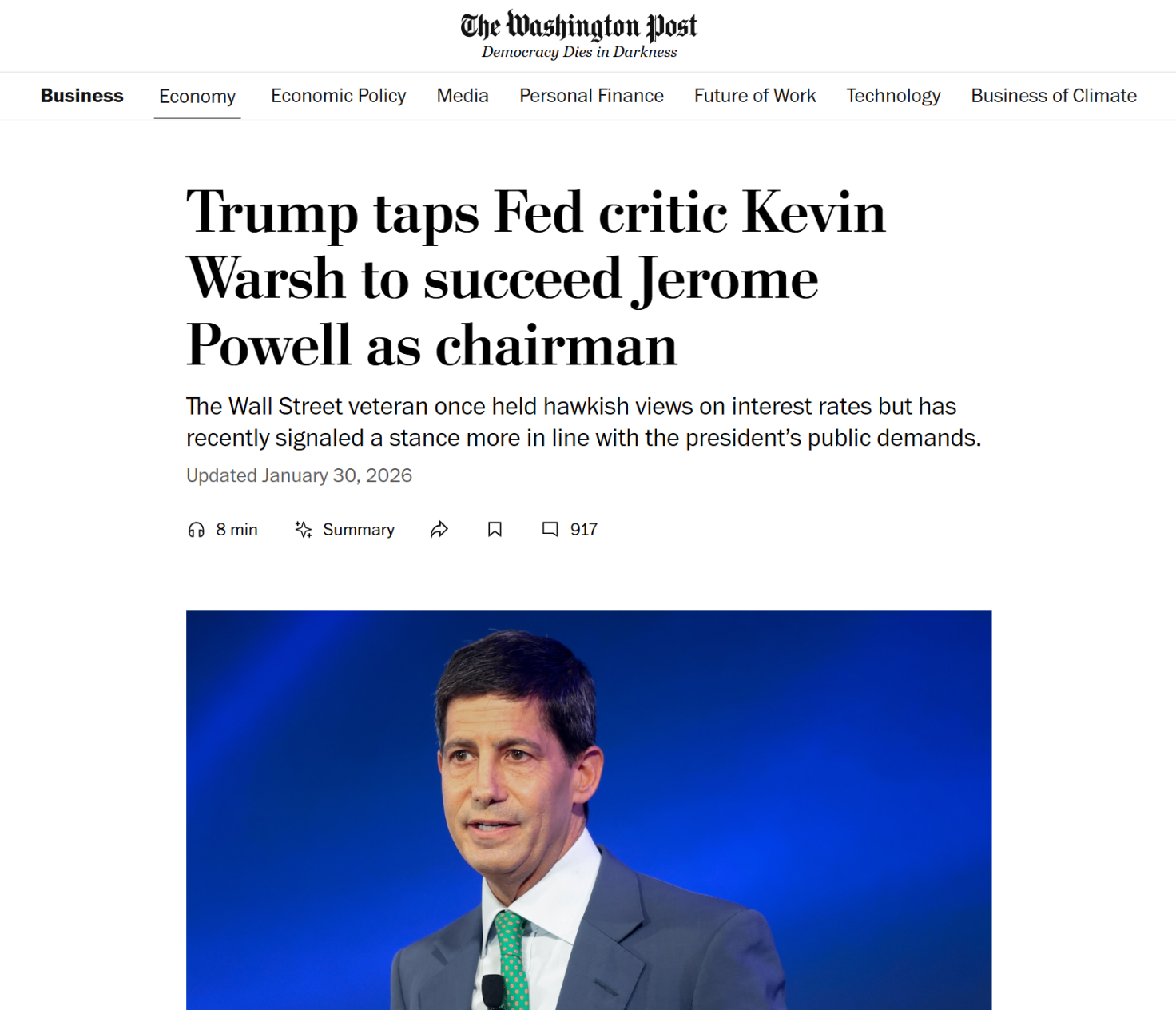
The market's logic seemed sound: Warsh is a hawk, meaning interest rates will remain high, which is bearish for non-yielding precious metals.

But the truth often lies in the details.

Warsh's nomination was announced at 1:45 PM Eastern Time (1:45 AM Beijing Time on February 1st). However, silver's crash began as early as 10:30 AM on the 30th. In the more than three hours before the news was released, the silver price had already plummeted 27%.
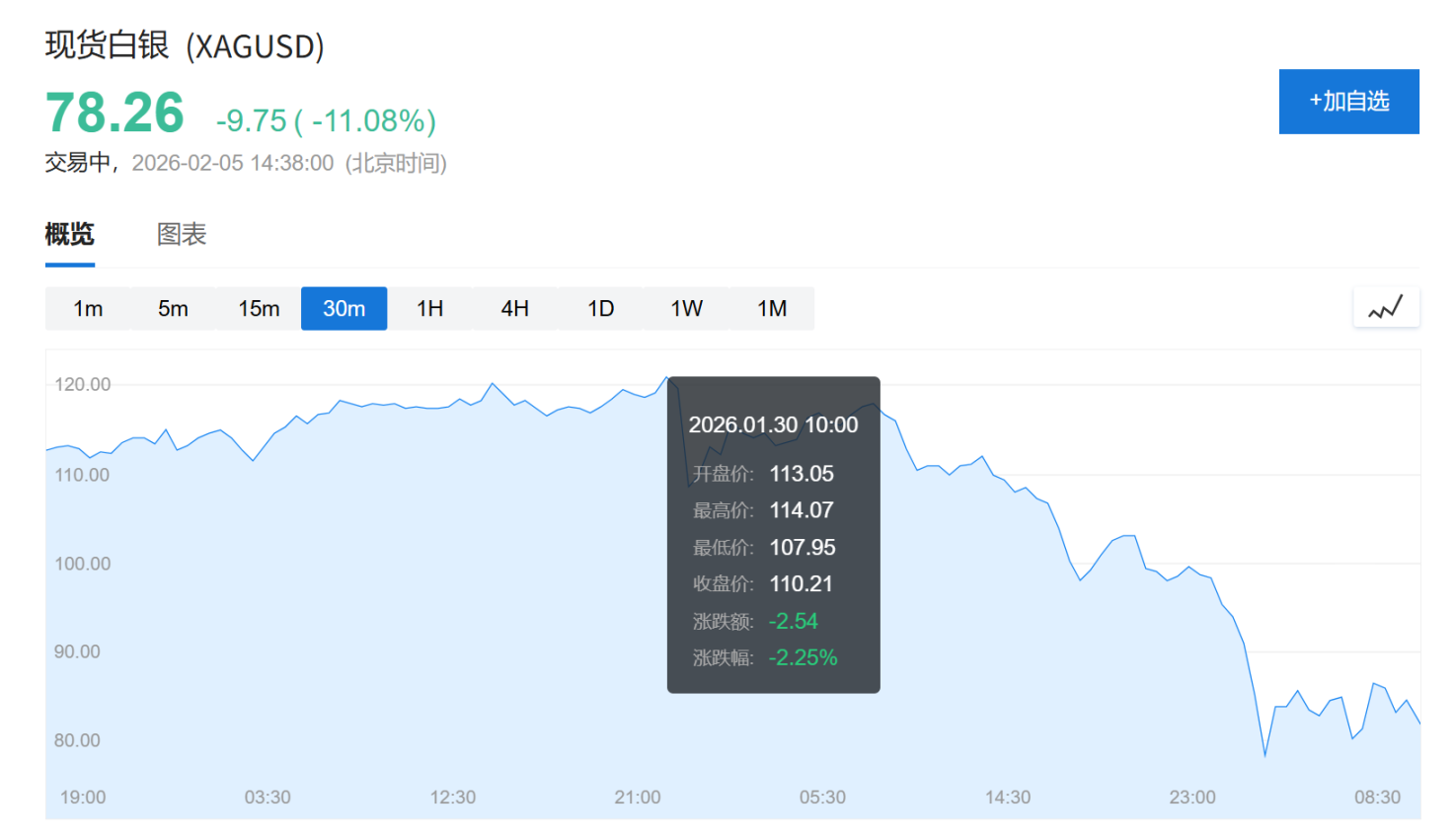
Blaming the Fed nomination was just a cover for the real "tool of slaughter"—margin requirements.

In reality, the true catalyst for this "mass grave" tragedy was a change in exchange rules. The Chicago Mercantile Exchange (CME) raised margin requirements for silver futures twice in the week before the crash, for a total increase of 50%.

What does this mean?

If you were a retail investor, fully leveraged, your account previously only needed $22,000 to maintain the position. Suddenly, the exchange demanded you come up with $32,500. Can't produce the extra $10,500? Sorry, the system will automatically liquidate your position,不问价格 (regardless of price),不计成本 (at any cost).

This is why the crash was so rapid. Margin hikes triggered the first wave of forced selling (liquidation), which caused prices to fall, which in turn triggered more people's liquidation levels. It's a vicious cycle, and retail investors are at the very bottom of this cycle.

An Asymmetric Game

While retail investors were wailing in the "mass grave," what were the institutions doing?

The answer might send a chill down your spine: They were waiting for retail selling to buy low and profit. And this isn't illegal; it's a structural advantage built into the market's operation.

According to disclosures by columnist Luis Flavio Nunes, institutions, represented by JPMorgan, demonstrated textbook "profit-taking" methods during this crash:

Step One: Access Emergency Liquidity.

While the exchange was raising margin requirements for retail investors, banking institutions were enjoying a "blood transfusion" from the Fed.

Data shows that on December 31st, banks borrowed a record $74.6 billion from the Fed's emergency lending window (SRF - Standing Repo Facility). This mechanism exists precisely to provide short-term liquidity to eligible financial institutions. Its original design was to prevent funding crises. But the reality is: only specific institutions qualify to use this tool.
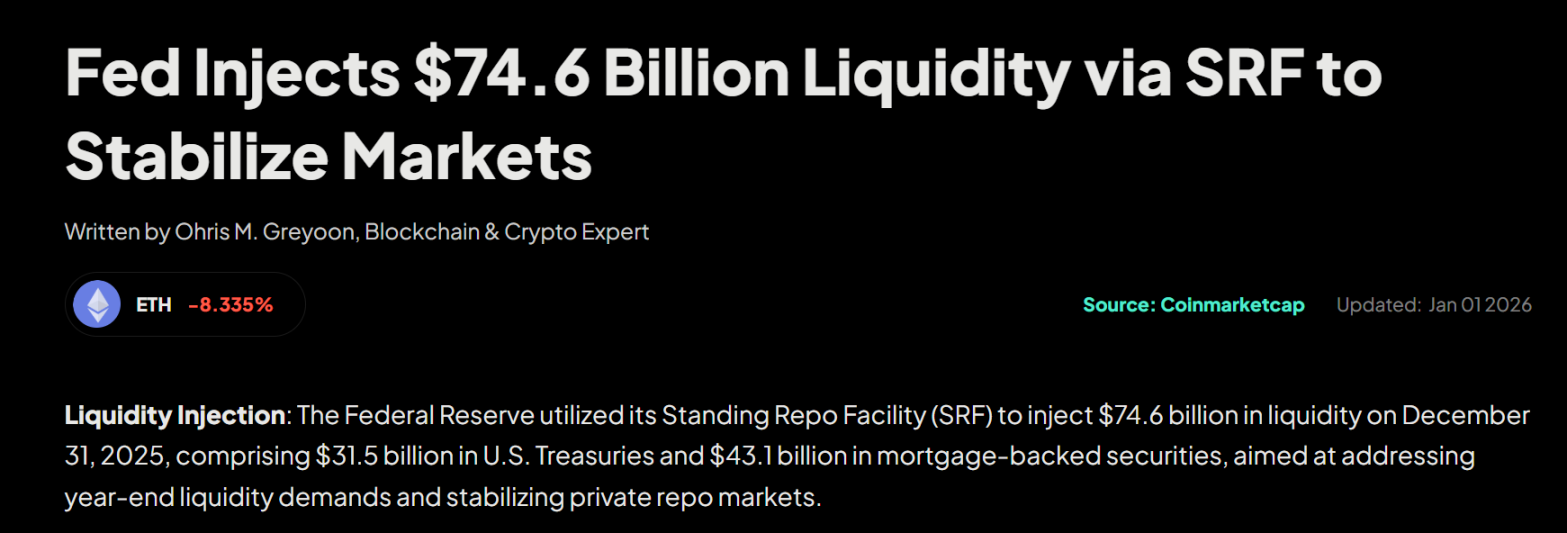
At the same time, the exchange raised silver margin requirements by 50% within a week. The Fed's emergency funding tool provides cash to eligible institutions at favorable rates. Retail investors do not have access to equivalent channels for emergency central bank financing. This isn't favoritism. It's determined by the architecture of the financial system: central banks lend to banks, not to individuals.

Step Two: Wait for the Market Chaos Caused by Higher Margins.

The core mechanism of the silver crash lies in the difference in ability between retail and institutional investors to respond to increased margin requirements.

On December 26th and 30th, just before the crash, the CME exchange raised margin requirements for silver trading by 50% in a short period. This meant a trader holding a position needed to immediately come up with 50% more cash.

For most retail investors, this sudden capital pressure directly triggered their brokers' automatic liquidation mechanisms, forcing them to sell at any cost during the market plunge.

Meanwhile, institutions with access to Fed tools had more options.

They could draw on credit lines, obtain emergency loans, or quickly transfer funds between accounts. This doesn't prevent all liquidations, but it gives them more time and flexibility. Thus, retail positions were sold off in panic, often at the worst possible prices. Institutional positions could be managed more strategically.

Step Three: Fully Utilize Authorized Participant Privileges for Arbitrage.

Take JPMorgan as an example. This bank plays a dual role in the silver market: they store all the physical silver for the largest silver fund (SLV), and they are also an "Authorized Participant" (AP), meaning they can create or destroy shares of that fund in large quantities.

During the panic selling on January 30th, the SLV ETF's share price traded at an abnormal discount, falling to $64.50 per share, while the net asset value (NAV) of the physical silver it represented was $79.53, a spread as high as 19%.

This provided huge arbitrage opportunities for institutions with "Authorized Participant" status. Authorized Participants (a small group of large financial institutions) fully exploited this spread, buying ETF shares at the low market price and redeeming them for the higher-value physical silver.

Data shows that approximately 51 million shares of SLV were redeemed that day. This single operation implied an arbitrage profit of about $765 million.

This operation helps maintain the link between the ETF price and its NAV and is a compliant market function, but it's a source of profit inaccessible to ordinary investors. Retail investors could see the discount but couldn't benefit from it due to their lack of AP status.

Step Four: Strategic Positioning with Derivatives.

JPMorgan also held significant short positions in silver, meaning they were betting on falling prices or hedging other positions. As silver rose to $121 in late January, these positions were underwater (losing money).

The most ironic scene occurred at the price bottom. On January 30th, when retail investors were being forcibly liquidated at the low of $78.29 due to insufficient margin, JPMorgan stepped in. CME records show that JPMorgan took over 633 contracts at this price, acquiring 3.1 million ounces of physical silver.

These four critical steps happened almost on the same day. Did Wall Street plan this series of events? This cannot be confirmed. But they were structurally positioned to benefit from it in multiple ways simultaneously: only institutions with their unique combination of roles and permissions could possibly do this.

Silver is Always a Death Trap

In this wave of market activity, countless retail investors like the Reddit user at the beginning of the article lost years of savings.

StoneX analyst Rhona O'Connell was right: "Silver is always a death trap."

Financial markets have never been a level playing field. When retail investors try to challenge the steel machine composed of algorithms, leverage, and rule-makers with "sentiment" and "memes," the outcome is often predetermined.

Silver is not GameStop; it is a much more brutal arena than stocks. Retail investors thought they were charging at Wall Street. Little did they know, they were unknowingly digging a huge "mass grave" with their own hands, then lining up to jump in.


Twitter:https://twitter.com/BitpushNewsCN

Bitpush TG Discussion Group:https://t.me/BitPushCommunity

Bitpush TG Subscription: https://t.me/bitpush

Original article link:https://www.bitpush.news/articles/7609111

Preguntas relacionadas

QWhat was the main reason for the silver market crash in January 2026 according to the article?

AThe primary reason was the Chicago Mercantile Exchange (CME) raising margin requirements for silver futures by 50% over a week, forcing leveraged retail investors to liquidate positions, which triggered a cascade of automatic sell-offs and a price collapse.

QHow did institutional players like JPMorgan benefit from the silver market crash?

AJPMorgan, as an authorized participant, exploited the price discrepancy in the SLV ETF, conducting arbitrage by buying discounted ETF shares and exchanging them for higher-value physical silver, profiting approximately $765 million. They also acquired physical silver at low prices during the crash.

QWhat role did social media play in the silver market frenzy?

ASocial media platforms like Reddit's WallStreetBets and Silverbugs amplified the frenzy, with posts about silver surging to 20 times the five-year average, encouraging retail investors to flood into the market and drive prices up based on momentum rather than fundamentals.

QWhy was the Federal Reserve's emergency lending facility criticized in the context of the silver crash?

AIt was criticized because banks accessed billions in emergency liquidity from the Fed, while retail investors had no such access. This structural advantage allowed institutions to manage margin calls more effectively, whereas散户 faced forced liquidations.

QWhat metaphor did analysts use to describe the overvaluation of silver before the crash?

AAnalysts compared silver to Icarus, flying too close to the sun and getting burned, indicating it was severely overvalued and destined for a sharp decline due to unsustainable speculation.

Lecturas Relacionadas

Diálogo con Ray Dalio: Nos encontramos en una burbuja de IA actualmente, el 1% de mi cartera de inversiones está en Bitcoin

**Fuente: The Diary Of A CEO** **Resumen: Felix, PANews** Ray Dalio, fundador de Bridgewater Associates, advierte sobre una burbuja en la inteligencia artificial actual, comparable a burbujas históricas como la de Internet en 2000. Según Dalio, los signos clásicos están presentes: precios inflados, endeudamiento basado en ganancias especulativas y una posible corrección brusca si suben las tasas de interés o cambian las condiciones económicas. Dalio explica que esta burbuja se enmarca en un "gran ciclo" más amplio —de unos 80 años— caracterizado por tres dinámicas: creciente desigualdad interna, déficits fiscales gubernamentales y cambios en el orden geopolítico mundial. Estados Unidos y otros países occidentales se encuentran en una fase de declive relativo dentro de este ciclo. Para proteger la riqueza personal, Dalio recomienda diversificar las inversiones más allá del efectivo, incluyendo activos como oro, acciones y bonos. Aunque revela que alrededor del 1% de su cartera está en Bitcoin —considerándolo un activo escaso—, prefiere el oro físico por su seguridad histórica y su rol como reserva de los bancos centrales. Sobre el impacto laboral de la IA, Dalio prevé que aumentará la desigualdad, beneficiando sobre todo a los dueños de capital. Sin embargo, destaca que las habilidades humanas —como la intuición y la emoción— seguirán siendo valiosas y complementarias a la IA. En el ámbito geopolítico, Dalio anticipa un mundo más regionalizado, con EE.UU. y China como potencias líderes en sus respectivas esferas, y advierte que conflictos como el de Irán han expuesto debilidades estratégicas de Estados Unidos, acelerando un cambio en el equilibrio global de poder.

marsbitHace 49 min(s)

Diálogo con Ray Dalio: Nos encontramos en una burbuja de IA actualmente, el 1% de mi cartera de inversiones está en Bitcoin

marsbitHace 49 min(s)

¡Récord de compras netas extranjeras de 7,2 billones de wones en un solo día! Wall Street: Los vientos en contra de los flujos de capital en el mercado coreano se han disipado

La situación de los flujos de capital en el mercado de valores surcoreano está mostrando un cambio sustancial. El 31 de julio, la inversión extranjera realizó una compra neta récord de aproximadamente 7.2 billones de wones en acciones del KOSPI, marcando una reversión fundamental tras meses de importantes salidas de capital. Según análisis de Citi Research, las ventas netas mensuales de inversores extranjeros se redujeron drásticamente a 9.8 billones de wones en julio, comparado con 48.4 y 44.5 billones en junio y mayo, respectivamente. Paralelamente, los fondos de pensiones y fondos de inversión nacionales se convirtieron en compradores netos en julio (1.0 billón de wones), luego de ser vendedores netos en los dos meses anteriores. Además, la Comisión de Servicios Financieros de Corea implementó nuevas regulaciones que restringen el acceso de inversores minoristas a los ETF apalancados, lo que ha reducido significativamente su volumen de negociación y se espera que mitigue la volatilidad del mercado. Citi Research mantiene su objetivo para el KOSPI en 10,000 puntos, destacando fundamentos sólidos en el sector de chips de memoria, valoraciones históricamente bajas, una fuerte economía local y un entorno político favorable como factores de apoyo. La firma considera que los vientos en contra relacionados con los flujos de capital se están disipando, mientras que los impulsores fundamentales y políticos están ganando fuerza, creando condiciones para una mejora en el mercado.

marsbitHace 50 min(s)

¡Récord de compras netas extranjeras de 7,2 billones de wones en un solo día! Wall Street: Los vientos en contra de los flujos de capital en el mercado coreano se han disipado

marsbitHace 50 min(s)

Cómo Convertirse en Algo que la Inteligencia Artificial Jamás Podrá Reemplazar

**Resumen: Cómo ser irremplazable por la IA** Ante el temor de que la IA elimine trabajos, la solución no es resistirse, sino volverse "inempleable": un individuo autónomo que construya su propio proyecto vital y económico. El artículo critica la "esclavitud salarial"—depender de un empleo sin sentido—y propone escapar de ella desarrollando estas cinco capacidades clave: 1. **Agencia**: Capacidad de actuar sin pedir permiso. 2. **Gusto**: Criterio para discernir qué vale la pena crear. 3. **Persuasión**: Habilidad para conectar y lograr que otros valoren tu trabajo. 4. **Persistencia**: Resiliencia para ver los errores como aprendizaje. 5. **Iteración**: Proceso constante de ajuste basado en la retroalimentación. Estas habilidades se cultivan únicamente **haciendo**: creando algo propio. Se recomienda enfocarse en **crear contenido (medios)** más que solo en código, ya que el valor del contenido es subjetivo y requiere un criterio humano que la IA no puede replicar fácilmente, abriendo espacio para talentos auténticos. **Cómo empezar:** El cambio real requiere una transformación de identidad. Para ello: 1. Cambia radicalmente tu entorno (físico y digital). 2. Elige un "vehículo" (como crear contenido) que te dé retroalimentación real del mundo. 3. Dedica 15 minutos a responder preguntas introspectivas para encontrar tu "material en bruto" único y tu perspectiva contraria a la convencional. 4. **Publica tu primera idea mañana mismo.** La acción, el feedback y la iteración constante son el único camino. La conclusión es clara: en lugar de temer a la IA, conviértete en un creador que utilice todas las herramientas (incluida la IA) para construir una vida y un trabajo con significado, autonomía e impacto personal.

marsbitHace 2 hora(s)

Cómo Convertirse en Algo que la Inteligencia Artificial Jamás Podrá Reemplazar

marsbitHace 2 hora(s)

Los lanzamientos de dados mantienen las claves de Bitcoin en un modo aislado, pero no todo el mundo se molestará

El título sugiere que las claves de Bitcoin pueden almacenarse fuera de línea mediante lanzamientos de dados, aunque no todos los usuarios adoptarán este método. El artículo comienza explicando la entropía en la teoría de la información, utilizando ejemplos como monedas y dados. Tras un escándalo reciente con Coldcard, se popularizó la generación de semillas de billetera mediante dados. El texto explica que, aunque físicamente determinista, el lanzamiento es impredecible en la práctica, lo que lo hace útil para la seguridad. Se detalla cómo convertir los resultados en datos binarios, con métodos que van desde el simple "par/impar" hasta el uso de funciones hash para preservar más entropía. Para una frase de recuperación de 12 palabras (128 bits de entropía), se necesitan unos 50 lanzamientos; Coldcard recomienda 99 para mayor seguridad. La vulnerabilidad en Coldcard, relacionada con su generador de números aleatorios, puso en riesgo fondos. Las semillas generadas manualmente con dados no se vieron afectadas, pero el investigador Kevin Loaec señaló que otras funciones del dispositivo (como creación de billeteras de papel o claves de coproreseguridad) sí podían estar comprometidas, incluso si la semilla principal era segura. El artículo argumenta que, aunque técnicamente robusto, el proceso de lanzar dados es lento, propenso a errores y poco práctico para la mayoría, especialmente para nuevos usuarios. Concluye que, aunque debe ser una opción para expertos, el objetivo a largo plazo es que el hardware y software generen aleatoriedad fuerte de forma fiable y accesible. Se aconseja a los usuarios de Coldcard verificar su firmware y las funciones utilizadas, y se destaca la utilidad de las billeteras multisig con dispositivos de diferentes fabricantes para mitigar riesgos.

cryptonews.ruHace 6 hora(s)

Los lanzamientos de dados mantienen las claves de Bitcoin en un modo aislado, pero no todo el mundo se molestará

cryptonews.ruHace 6 hora(s)

Trading

Spot
活动图片





