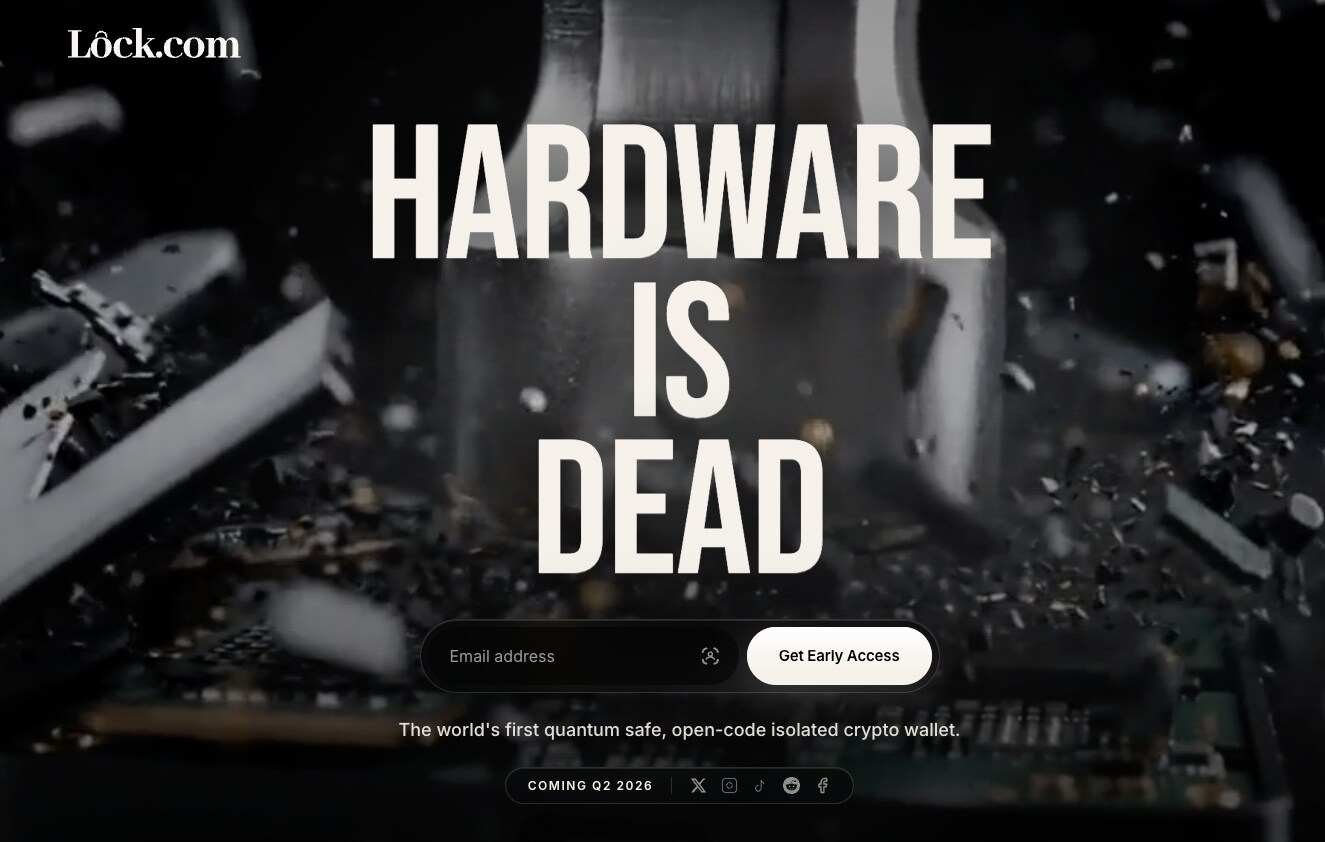
Next-Generation Crypto Security: Not Dependent on Devices, But on Isolated Architecture

Odaily星球日报Publicado a 2026-05-08Actualizado a 2026-05-08

Resumen

Next-Generation Crypto Security: Moving from Device-Reliance to Isolation Architecture For a decade, hardware wallets like Ledger and Trezor have been the gold standard for securing crypto assets by keeping private keys offline. However, as on-chain transactions increase and attacks grow more sophisticated, their limitations are becoming apparent. Security is no longer just about offline key storage but also involves transaction signing, online interactions, supply chain trust, and future quantum computing threats. The next generation of crypto security is shifting from "relying on a more secure device" to "relying on a more robust system architecture." While hardware wallets offer a clear security model, their safety depends on trusting the manufacturer, secure firmware updates, and the physical device itself—introducing central points of failure. Furthermore, during use, the device must interact with online gadgets (e.g., via USB or QR codes), creating potential attack vectors like transaction tampering. The emerging alternative is the "isolation architecture" wallet. Its core principle is to strictly separate private key management and transaction signing (kept offline) from the network broadcast function (handled online). Even if the online component is compromised, attackers can only access already-signed transactions, not the private keys. This approach reduces reliance on any single physical device or vendor. Another critical driver is "post-quantum" security. Curr...

In the past decade, hardware wallets have been a key consensus for crypto asset security. However, as on-chain transactions become more frequent and attack methods more complex, the limitations of this approach are starting to show. Security is no longer just about whether the private key is stored offline; it also includes transaction signing, network interaction, supply chain trust, and long-term risks posed by future quantum computing. The next generation of crypto security is shifting from "relying on a more secure device" to "relying on a more reliable system architecture."

I. Hardware Wallets: Once the Most Trusted Security Solution

In the self-custody of crypto assets, hardware wallets have long been considered the most secure choice. The cold storage philosophy represented by brands like Ledger and Trezor has almost become a consensus for many crypto users: the private key is stored in an offline device, transactions require physical device confirmation, making it difficult for hackers to directly access user assets from the network.

For a long time, this logic held true. A non-networked device indeed blocks most remote attacks. For early crypto users, hardware wallets provided a simple, clear, and tangible sense of security.

But as the scale of crypto assets grows larger, on-chain transactions become more frequent, and attack methods become more sophisticated, one question has become increasingly important: Are hardware wallets still secure enough? Are they merely the mainstream solution at this stage, rather than the final form of crypto security?

It is against this backdrop that more and more security researchers are starting to focus on a new direction: isolated crypto wallets, which protect private keys and transaction signing through clearer system isolation.

II. Re-examining Hardware Wallets: Trust Costs Remain Behind Security

Hardware wallets seem secure, but their security actually relies on many premises.

First, users need to trust the device manufacturer. For example, is the device firmware secure enough? Has the supply chain been tampered with? Has the secure chip undergone reliable audits? For ordinary users, it is almost impossible to verify these questions independently.

Second, firmware updates can also introduce risks. Hardware wallets need continuous system updates to fix vulnerabilities and support new features, but users find it difficult to judge whether an update is entirely trustworthy. Often, users have no choice but to trust the manufacturer.

Additionally, the physical device itself carries risks. The device can be lost, stolen, confiscated, or even targeted by physical attacks. Even if the device itself is not compromised, the recovery seed phrase used by users to restore a wallet can become a new risk point.

Therefore, the issue with hardware wallets is not that they are "insecure," but that their security still depends on the device, the manufacturer, and the supply chain. For an industry that emphasizes decentralization and trust minimization, this dependency is being re-evaluated.

III. Practical Challenges of Hardware Wallets: Needing to Connect to Networked Devices for Transactions

The core security promise of a hardware wallet is that the private key never leaves the device. However, in real-world use, transactions ultimately need to be broadcast to the blockchain network.

This means that when a hardware wallet signs a transaction, it typically needs to interact with a phone, computer, or other networked device. Whether via USB, Bluetooth, or QR codes, this interaction process creates a potential risk point.

Many attacks do not require directly stealing the private key. Attackers may tamper with transaction information, making the user think they are signing a legitimate transaction while actually authorizing a malicious operation. They may also use malicious contracts, fake websites, clipboard hijacking, and other methods to trick users into completing dangerous operations unknowingly.

This is also a practical limitation of hardware wallets: the device itself can be offline, but the user's transaction process can hardly be completely offline.

If users want to further enhance security, they can use a more stringent air-gapped device, which is completely offline and only transmits data via methods like QR codes. However, this method is more complex to operate, and ordinary users find it difficult to maintain long-term. Ultimately, most people make a trade-off between security and convenience.

Thus, the industry is beginning to consider another possibility: instead of relying on users to operate devices correctly every time, why not separate private key management, signing, and the networking环节 more clearly in the system design.

IV. Isolated Crypto Wallets: Isolating Risks Within the System Design

The core idea of an isolated crypto wallet is not complex: place private key management, transaction signing, and network broadcasting in different environments.

Simply put, the private key and signing environment should remain offline as much as possible, without direct contact with the internet; the networked part is only responsible for sending already signed transactions to the blockchain and cannot access the private key.

The benefit of this design is that even if the networked part is attacked, attackers can only access signed transaction data and cannot directly obtain the private key. For users, this is equivalent to placing the most important asset key in a more enclosed, harder-to-reach environment.

The difference from traditional hardware wallets lies in the fact that hardware wallets rely more on a specific device to achieve isolation, while isolated crypto wallets emphasize the structural design of the entire system. Security does not entirely depend on a particular hardware device but on whether the key, signing, and network are truly separated.

This is also the meaning of "architecture as security": security is not just about buying a secure device; it's about isolating dangerous pathways from the very beginning.

V. Post-Quantum Security: Future Risks Are Entering Real-World Discussion Early

Beyond current attack risks, another issue receiving industry attention is quantum computing.

Many encryption systems today rely on cryptographic algorithms like Elliptic Curve Cryptography and RSA, which are still considered secure in traditional computing environments. However, if quantum computers achieve sufficient capability in the future, these algorithms may face the risk of being cracked.

This may sound like a distant future problem, but the global cryptography community has already started preparing in advance. The U.S. National Institute of Standards and Technology (NIST) has already released the first set of post-quantum cryptography standards in 2024, indicating that post-quantum security has moved from theoretical discussion to practical application preparation.

This issue is particularly important for crypto assets because once blockchain assets are exposed to risk, the impact could be long-term. More notably, there is an attack strategy called "harvest now, decrypt later." This means attackers can collect data today and attempt decryption later when quantum computing matures.

Therefore, post-quantum security is not an issue to consider only after quantum computers truly mature. For users and projects holding assets long-term, early planning is itself part of the security strategy.

VI. Hardware-Free Security Model: Reducing Dependency on a Single Device

Behind the isolated architecture lies a new way of thinking about security.

The traditional hardware wallet approach reduces risk through a single physical device. It stores the private key inside the device, making it harder for attackers to access it from the network. This method is effective and has been validated by the market.

But the hardware-free security model attempts to further reduce dependency on specific devices. It focuses on the question: Can certain attack vectors be made inherently difficult to execute through system design?

This approach brings several changes.

First, users no longer need to rely entirely on a single hardware manufacturer. Second, security is no longer completely tied to a specific chip or device. Third, if the system itself can be open-source and undergo community audits, security judgments can become more transparent.

This is not to say hardware wallets have no value. Hardware devices may still be important tools in the security architecture. But in the next generation of crypto security infrastructure, they might not be the sole core but rather part of the overall security architecture.

VII. Lock.com: An Early Explorer in This Direction

In this field, Lock.com is currently one of the earlier projects explicitly exploring isolated signing architecture and post-quantum security.

Lock.com is still in the early access stage and has not been fully released to the public. It attempts to integrate private key management, offline signing, and post-quantum cryptographic approaches into a single hardware-free architecture, aiming to reduce the dependency on physical devices and manufacturer trust inherent in traditional hardware wallets.
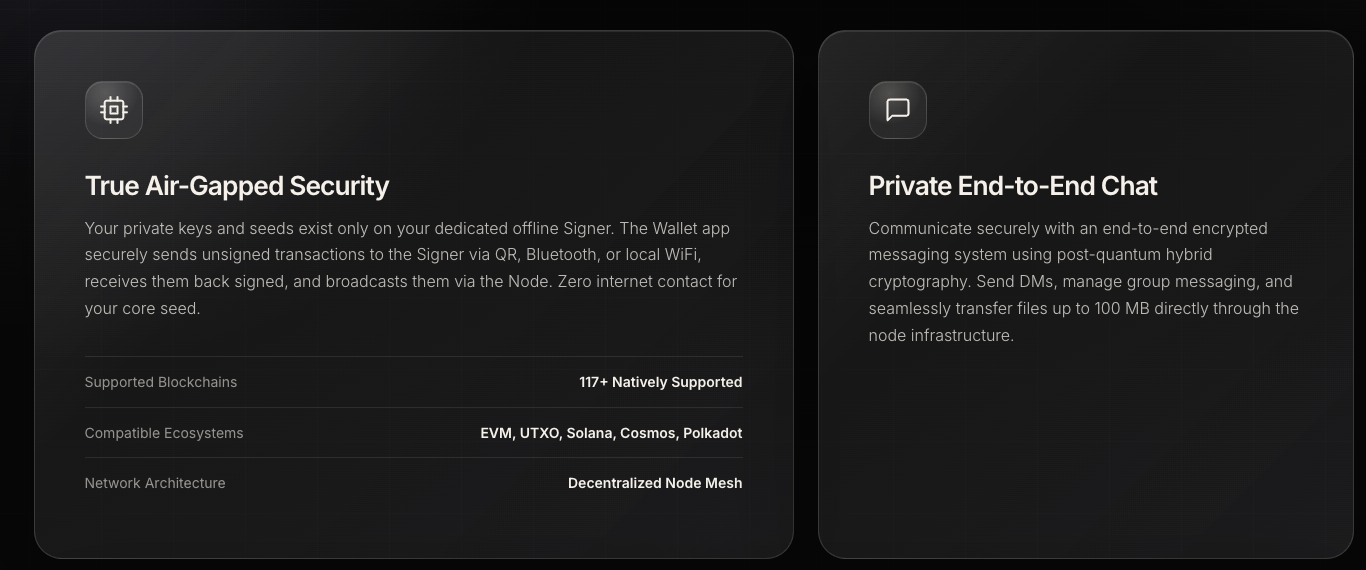
As the project is still in its early stages, many technical details and product features need further refinement. But directionally, it represents an emerging trend in the industry: future wallet security may no longer be just about whether the device is secure enough, but also about whether the system architecture is sufficiently clear and the isolation sufficiently thorough.

VIII. Crypto Infrastructure Evolving from Point Tools to Complete Systems

The emergence of hardware-free wallets is not an isolated phenomenon. It reflects a trend towards the overall upgrade of crypto infrastructure.

In the past, wallets, communication, storage, and transaction execution were often scattered across different products. Users needed to combine various tools themselves and bear many operational risks. In the future, these functions may be integrated into more complete infrastructures.

At the same time, user judgment of security is also changing. In the past, many relied on brand and device reputation. Now, more and more users and developers are focusing on whether the code is open source, whether the system is auditable, and whether the architecture is transparent.

In other words, the sense of security is shifting from "I trust this brand" to "I can understand and verify this system."

In this trend, the direction represented by Lock.com is an imagination of the next generation of security infrastructure: security is not attached to a single device or manufacturer but is embedded in the system architecture itself.

IX. The Industry Is Changing the Question

An important shift is occurring in the crypto security field.

In the past, the most common user question was: Which hardware wallet should I buy?

Now, more and more people are starting to ask: Which security architecture should I trust?

This change in questions indicates a deepening understanding of security within the industry. Hardware wallets have indeed protected a vast number of user assets over the past decade, and their historical value is undeniable. However, as attack methods evolve, quantum computing risks enter discussions, and new isolated architectures emerge, whether hardware devices remain the ultimate answer is no longer so certain.

The next generation of crypto security infrastructure will likely reduce dependency on single physical devices, relying more on system design, key isolation, and more forward-looking cryptographic schemes.

This transformation has already begun.

Lecturas Relacionadas

Revisión de mitad de año de Fidelity: las 6 tendencias clave de los activos digitales para 2026

Repaso interanual de Fidelity: los 6 grandes temas para los activos digitales en 2026 A mitad de año, el panorama de los activos digitales en 2026 presenta un equilibrio entre las presiones a corto plazo y los avances estructurales a largo plazo. 1. **Integración acelerada con los mercados de capitales**: La fusión con los mercados tradicionales avanza, incluso más rápido de lo esperado en áreas como los ETPs de Bitcoin al contado y la tokenización. La claridad regulatoria también está aumentando. 2. **Derechos de los poseedores de tokens**: Se están probando mecanismos como recompras y nuevas estructuras de gobernanza, pero una "prima por derechos" aún no se refleja plenamente en los precios del mercado. 3. **IA y posible cambio en la minería**: El crecimiento del hashrate de Bitcoin se ha desacelerado, posiblemente debido a que los mineros reasignan energía e infraestructura hacia la rentable demanda de computación para IA. 4. **Bitcoin en un nuevo punto de inflexión**: El aumento del límite de datos para OP_RETURN no ha sobrecargado la red. La atención se centra ahora en la dinámica de los nodos (posible actividad Sybil en Knots) y en las mejoras de seguridad a largo plazo frente a la computación cuántica. 5. **Los bajistas controlan temporalmente**: El escenario bajista ha predominado, con Bitcoin cayendo un 13% debido a la desapalancamiento y la incertidumbre macro. Sin embargo, los fundamentos estructurales positivos, como la adopción institucional, persisten. 6. **El oro se mantiene fuerte**: El oro ha tenido un rendimiento sólido, respaldado por la demanda de los bancos centrales y las tendencias de desdolarización. El rendimiento posterior esperado de Bitcoin aún no se ha materializado. En conclusión, para los inversores, es clave mirar más allá de la volatilidad de precios a corto plazo y centrarse en cómo se están consolidando estos cambios estructurales subyacentes.

marsbitHace 1 hora(s)

Revisión de mitad de año de Fidelity: las 6 tendencias clave de los activos digitales para 2026

marsbitHace 1 hora(s)

Fidelity realiza un balance interanual: 6 tendencias clave para los activos digitales en 2026

Revisión de mitad de año de Fidelity: 6 tendencias clave sobre activos digitales para 2026 A mitad de año, el panorama de los activos digitales equilibra las presiones a corto plazo con avances estructurales. Varias tendencias clave avanzan según lo previsto, mientras que otras aún están en desarrollo. 1. **Integración acelerada con los mercados de capital**: Se mantiene la demanda de exposición a activos digitales a través de canales financieros tradicionales. Los contratos de opciones sobre ETF de Bitcoin al contango rivalizan con las opciones nativas, mostrando una mayor adopción institucional. El sector del tokenización gana fuerza con más productos de inversión basados en blockchain. El marco regulatorio en EE.UU. se aclara. 2. **Derechos de los tenedores de tokens**: Aunque continúan los experimentos en el ecosistema (como recompra de tokens y reestructuraciones de gobernanza), aún no se observa una "prima" clara en los precios del mercado por los derechos de los tenedores. La tendencia avanza, pero está en etapa temprana. 3. **IA y posible cambio en la minería**: La competencia por recursos energéticos de la IA parece estar ralentizando el crecimiento de la tasa de hash de Bitcoin, ya que algunos mineros podrían estar reasignando infraestructura hacia actividades más rentables. El crecimiento del hash ha sido más lento que en años anteriores. 4. **Bitcoin en un nuevo punto de inflexión**: El aumento del límite de datos en OP_RETURN no ha causado una expansión significativa de la cadena de bloques. La atención se centra en dinámicas de red más amplias, como la fluctuación en los nodos Bitcoin Knots, que presenta un riesgo de división bajo pero no nulo. Avanzan las investigaciones sobre actualizaciones de seguridad a largo plazo (post-cuánticas). 5. **Los bajistas controlan temporalmente**: El escenario bajista ha predominado en 2026, con Bitcoin cayendo un 13% debido a desapalancamiento e incertidumbre macroeconómica. Sin embargo, los fundamentos estructurales positivos (adopción institucional, claridad regulatoria) persisten. Bitcoin mostró cierta resiliencia como activo neutral durante tensiones geopolíticas recientes. 6. **El oro mantiene fuerza**: El rendimiento del oro, apoyado por la demanda de los bancos centrales y las tendencias de desdolarización, ha sido sólido, alineándose con las expectativas. La posible superación posterior de Bitcoin prevista aún no se ha materializado. **Conclusión**: Los cimientos para la próxima fase de crecimiento se están fortaleciendo bajo la superficie, a pesar de la volatilidad a corto plazo. Los inversores deben observar estos cambios estructurales en formación.

链捕手Hace 1 hora(s)

Fidelity realiza un balance interanual: 6 tendencias clave para los activos digitales en 2026

链捕手Hace 1 hora(s)

La crisis de la mediana edad de los GP de Crypto: Sin PMF, no hay el próximo cheque de los LP

**Crisis de la mediana edad de los GP de cripto: Sin PMF, no hay próximo cheque de los LP** Los inversores institucionales (LP) ya no compran sueños; los gestores de fondos (GP) deben vender productos concretos. El mercado de cripto ha pasado de la fase de "comprar una visión futura" a la de "comprar un producto específico". Los LP han perdido la paciencia y la confianza tras el ciclo anterior, donde muchos no obtuvieron rendimientos excesivos y la narrativa del "próximo ciclo" se desvaneció. Para sobrevivir, la mayoría de los GP de cripto deben demostrar un "Product-Market Fit" (PMF), ya sea encontrando un nicho donde puedan generar alfa (rendimientos superiores) o resolviendo problemas específicos para los LP. El acceso a la beta (exposición general al mercado) ahora es fácil mediante ETF, ETPs u otros productos líquidos, reduciendo el valor de los fondos de capital riesgo (VC) cripto de "grupo ciego" (blind pool). Las razones tradicionales para invertir en VC cripto se han debilitado: acceso al sector, acceso a acuerdos (deals), juicio superior de los GP y capacidad de "construir la mesa" (networking/exit). Solo los fondos muy grandes con capital paciente (como endowments), family offices, o aquellos que demostraron récords excepcionales en este ciclo, pueden mantenerse en la mesa principal (primary market). Los demás deben reconstruir la confianza desde cero en un nicho específico.

marsbitHace 2 hora(s)

La crisis de la mediana edad de los GP de Crypto: Sin PMF, no hay el próximo cheque de los LP

marsbitHace 2 hora(s)

Crisis de la mediana edad de los GP en cripto: Sin PMF, no hay próximo cheque de los LP

**Crisis de mediana edad de los GP de cripto: sin PMF, no hay próximo cheque de los LP** El mercado de capitales de cripto ha cambiado. Los LP (Socios Limitados) ya no "compran sueños" sobre un futuro lejano; ahora exigen a los GP (Socios Generales) productos de inversión concretos con un encaje real en el mercado (PMF). El ciclo de "dinero fácil" y narrativas grandilocuentes ha terminado. La mayoría de los GP que no generaron retornos excesivos en este ciclo deben reinventarse. Ya no basta con ofrecer acceso o juicio; los LP, tanto tradicionales como nativos de cripto, se han vuelto escépticos y tienen más opciones (como ETFs) para obtener exposición al sector. Además, herramientas como la IA han reducido la brecha de conocimiento, desafiando el valor básico de muchos GP. Para sobrevivir, los GP deben ofrecer un producto claro. Este análisis clasifica los productos de captación en tres categorías: **Primary** (capital riesgo, ciego o con pipeline definido), **Liquid** (mercados líquidos, enfocados en alfa o beta) y **Yield Nativo CeFi/DeFi** (staking, farming, incentivos de protocolos). En la mesa del capital riesgo primario, solo podrán permanecer: fondos lo suficientemente grandes para el capital paciente de endowment, family offices que invierten capital propio, los pocos fondos con track record probado este ciclo, y aquellos con capacidad demostrada para "armar negocios" y ofrecer recursos estratégicos a los LP. Para el resto, el camino es reconstruir la confianza perdida, demostrando capacidad de generar alfa en un nicho específico o resolviendo un problema concreto para los inversores.

链捕手Hace 2 hora(s)

Crisis de la mediana edad de los GP en cripto: Sin PMF, no hay próximo cheque de los LP

链捕手Hace 2 hora(s)

Llega la era del desacoplamiento: Bitcoin ya no es la única brújula de la criptografía

Autora original: Charlie Traducción original: Luffy, Foresight News Durante mucho tiempo, el mercado cripto ha girado en torno al Bitcoin. Sin embargo, esta era está llegando a su fin. Actualmente, la economía cripto se divide en dos grupos principales: los **activos endógenos**, cuyo valor depende directamente de las fluctuaciones del mercado cripto, y los **activos exógenos**, que operan cada vez más de forma independiente. El valor del Bitcoin se basa en sus propiedades intrínsecas y su precio las refleja. Sin embargo, proyectos como **Hyperliquid** actúan como un puente entre ambos campos, mientras que otros, como **Venice** (servicios de IA de pago) o **Figure** (préstamos respaldados por blockchain), pertenecen claramente al ámbito exógeno. Su lógica de negocio no depende del precio de las criptomonedas, sino de demandas reales y sostenibles. Este cambio es significativo. En ciclos anteriores, las narrativas del mercado a menudo volvían al Bitcoin debido a la falta de modelos de negocio estables. Ahora, muchos proyectos exógenos generan ingresos reales (por ejemplo, suscripciones o tarifas por uso) y los inversores evalúan su valor fundamental, no solo la especulación. Ejemplos en el mercado privado, como la adquisición de **BVNK** por Mastercard o de **Bridge** por Stripe, muestran que empresas relacionadas con stablecoins también se desvinculan de los ciclos alcistas/bajistas de las criptomonedas. Esta evolución redefine el análisis del sector. Para los activos exógenos, el enfoque debe ser el debido diligencia tradicional: base de usuarios, modelo económico, ventajas competitivas. El precio del Bitcoin ya no es el principal indicador. Algunos sectores exógenos con potencial incluyen: intercambios on-chain, tokenización de activos reales, IA + cripto (ej. inferencia privada), bancos digitales (énfasis en privacidad), préstamos, emisores de stablecoins, soluciones de pago y productos de consumo no financieros (ej. Venice). Actualmente, invertir en capital accionario de estas empresas suele ser más viable que en sus tokens. Aunque el papel del token como portador de valor está mejorando, aún requiere avances regulatorios y de mercado. En resumen, el mercado cripto ya no se mueve como un solo bloque. La fuerza motriz es ahora multifactorial, y el análisis debe centrarse en los fundamentos de cada proyecto, no solo en los gráficos del Bitcoin. La próxima década verá un ecosistema más diversificado y maduro.

marsbitHace 3 hora(s)

Llega la era del desacoplamiento: Bitcoin ya no es la única brújula de la criptografía

marsbitHace 3 hora(s)

Trading

Spot
Futuros
活动图片




