Altcoin market falls from $100B to $26.5B in volume – Can demand recover?

ambcryptoPublicado a 2026-03-21Actualizado a 2026-03-21

Resumen

Altcoin trading volume has sharply declined from peaks above $100 billion to approximately $26.5 billion, indicating a significant contraction in market activity and reduced risk appetite. Binance currently processes nearly 40% of this volume, with other exchanges handling the remainder. The market has entered a capitulation phase, with nearly 40% of altcoins trading near all-time lows, reflecting broad-based deterioration rather than isolated declines. Capital is rotating towards Bitcoin as a safer asset, leading to thinner liquidity and accelerated price declines in altcoins. However, such extreme conditions suggest selling pressure may be nearing exhaustion. Market structure shows stress without full capitulation, with limited liquidations and controlled selling pressure. The Futures-to-Spot ratio on Binance has reached a 1.5-year high, indicating derivatives activity is outpacing spot demand—a sign of fragile market balance. If spot demand fails to recover, the market could face renewed volatility, though current conditions may eventually favor accumulation if liquidity returns to undervalued altcoins.

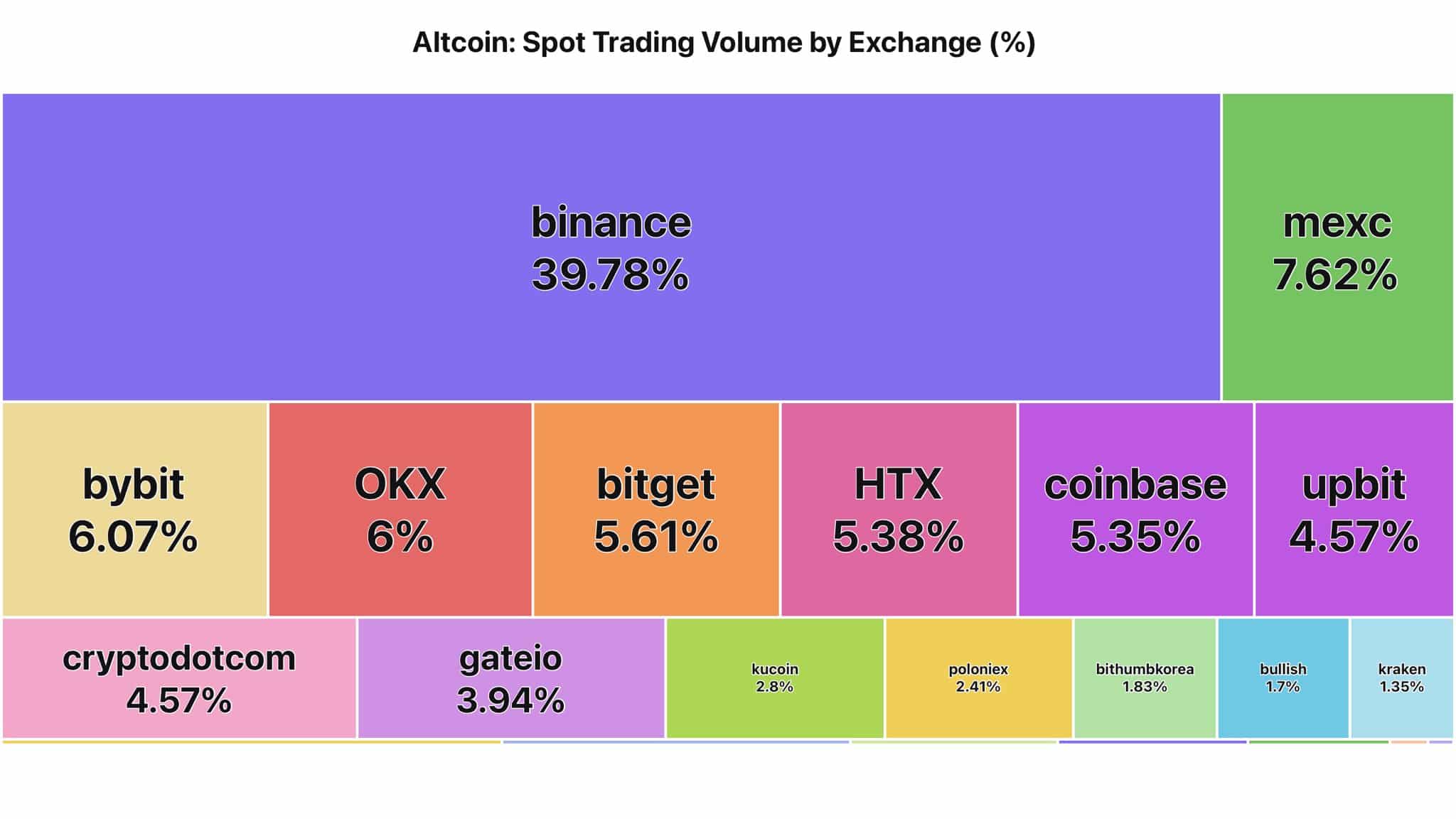
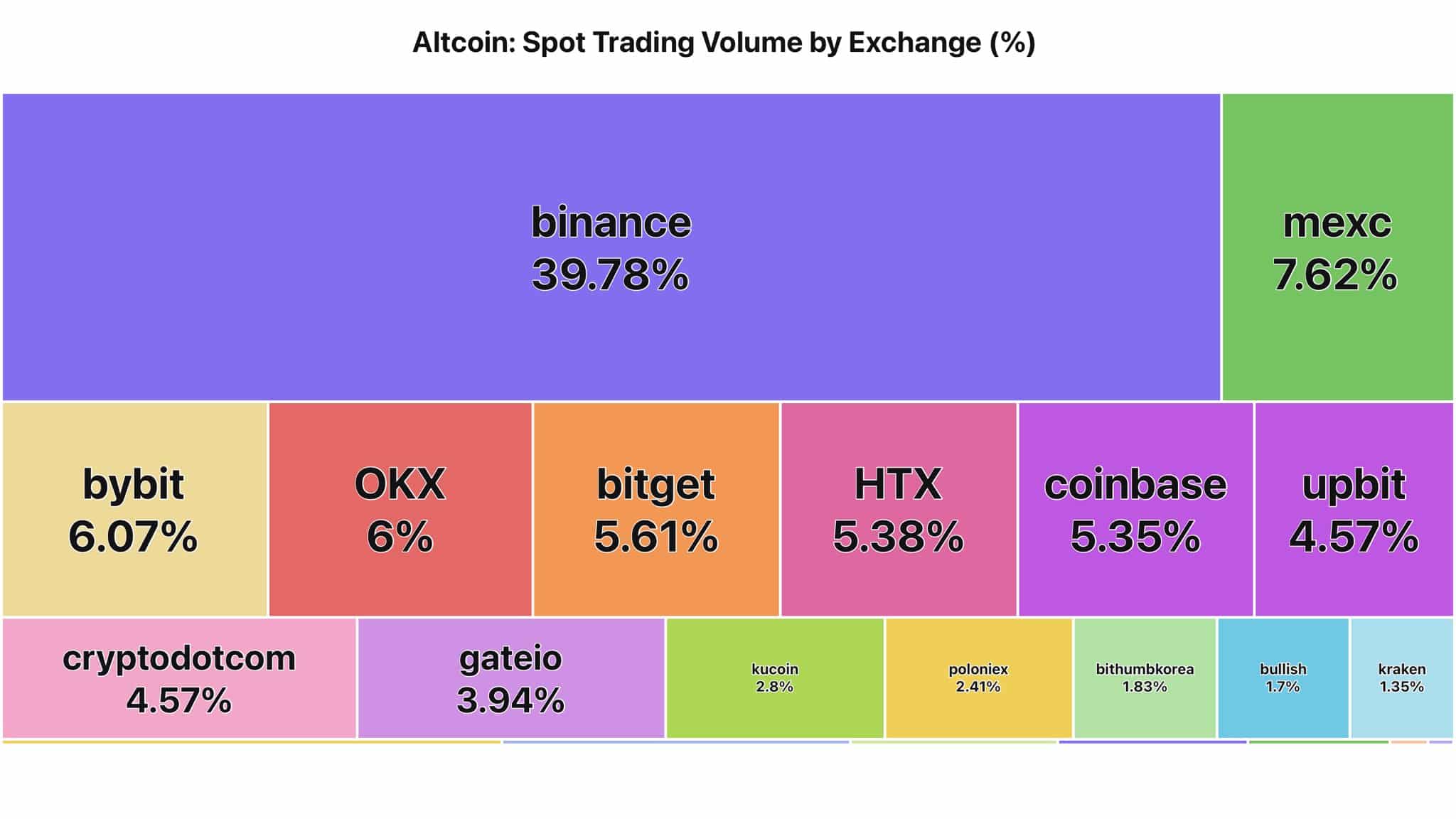
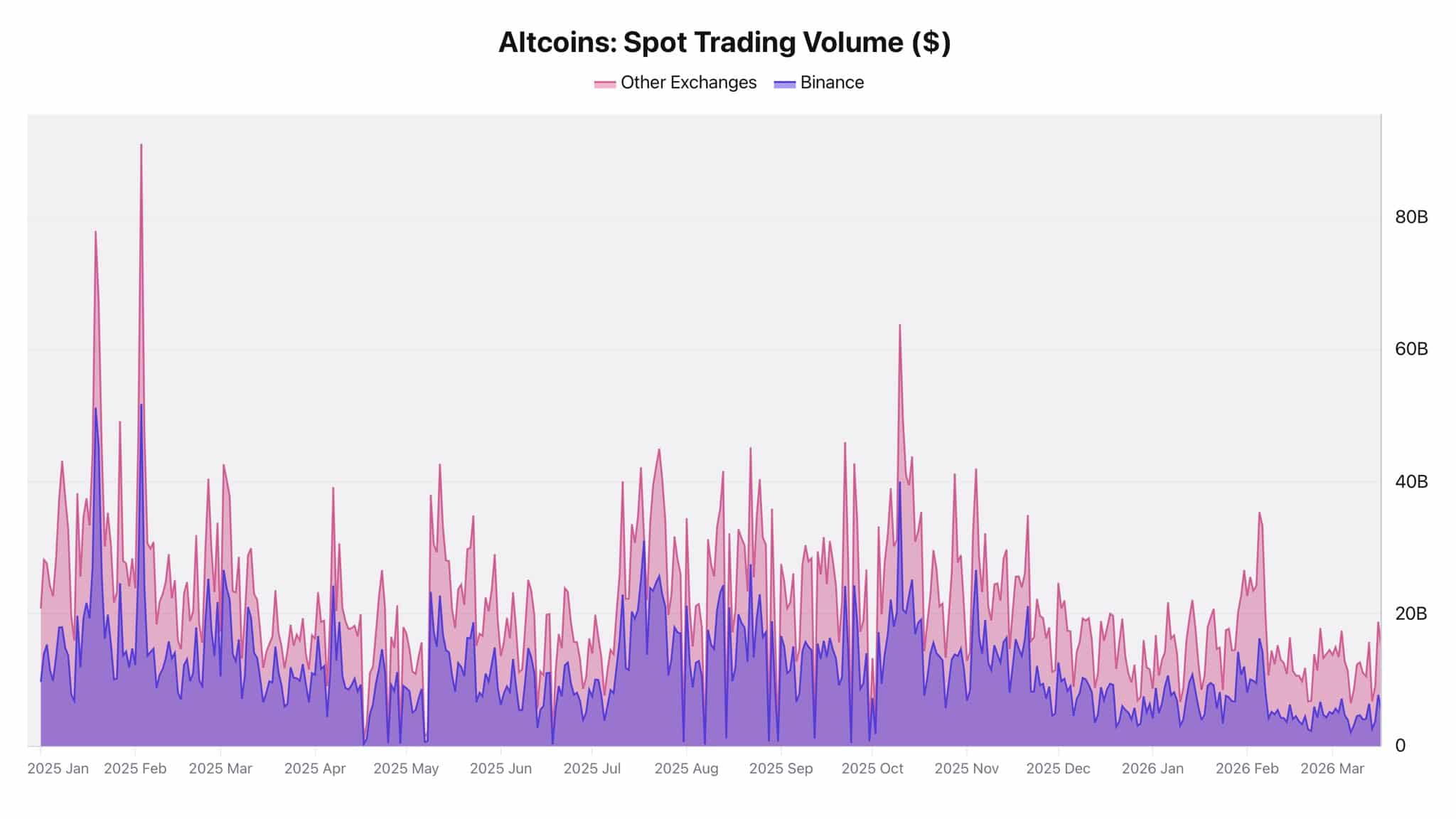
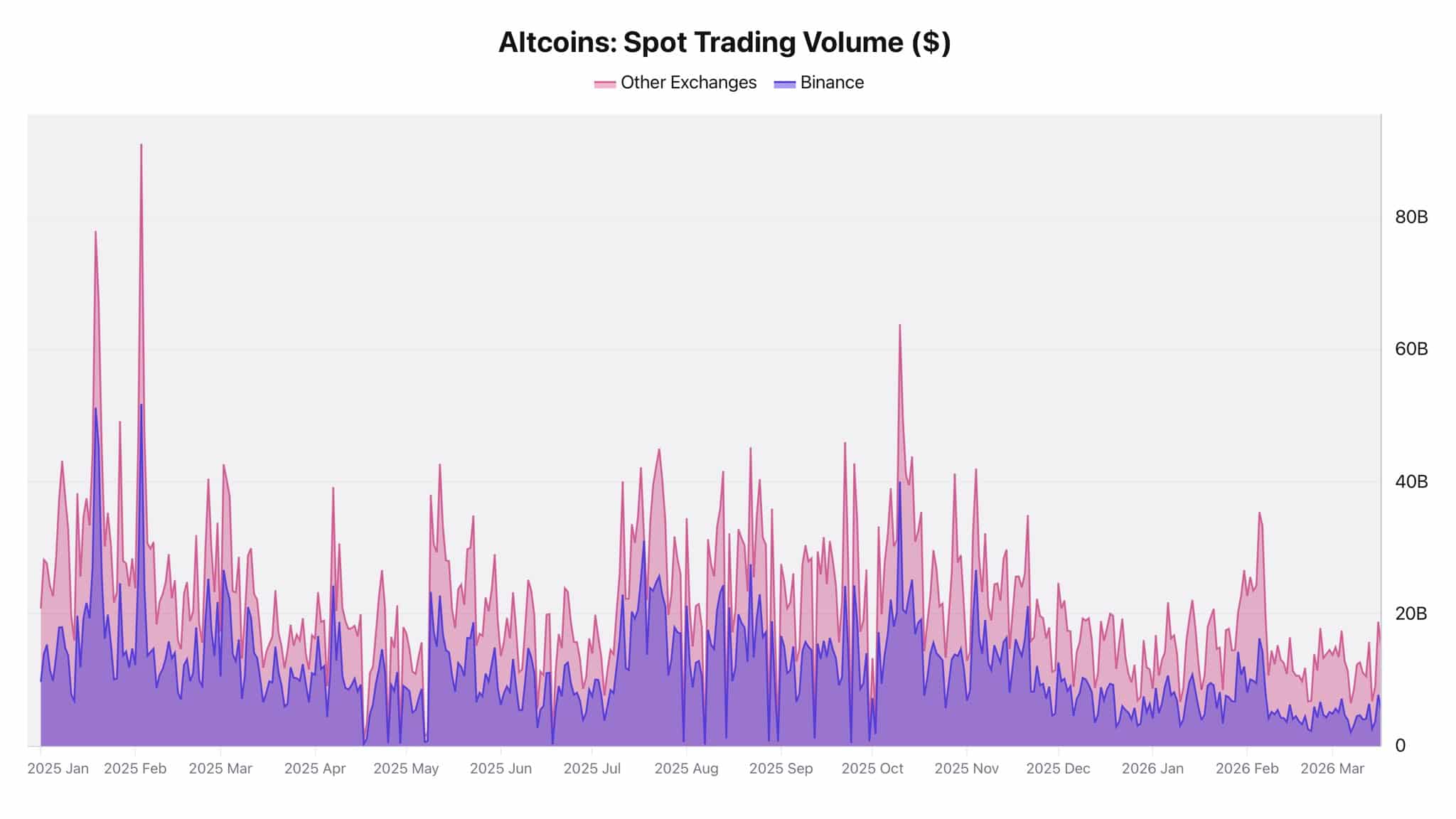
Altcoin trading volume has dropped towards $26.5 billion from peaks above $100 billion, showing a sharp contraction in activity. As this decline unfolded, Binance processed about $7.7 billion. All while other exchanges handled roughly $18.8 billion – Confirming broad-based weakness.

Source: CryptoQuant

In relative terms, Binance holds nearly a 40% share right now, with the same rising as overall participation shrinks. Earlier peaks in February and October 2025 saw volumes surge to $40–50 billion on Binance and up to $91 billion elsewhere, marking periods of strong demand.

As volumes fall across all venues, participation weakens across pairs and trade sizes, pointing to reduced risk appetite.

Source: CryptoQuant

However, this also means capital is stepping back rather than exiting entirely. As engagement compresses, volatility often declines, although such phases can precede renewed positioning once sentiment stabilizes and liquidity begins returning.

Altcoins enter capitulation zone as liquidity rotates to Bitcoin

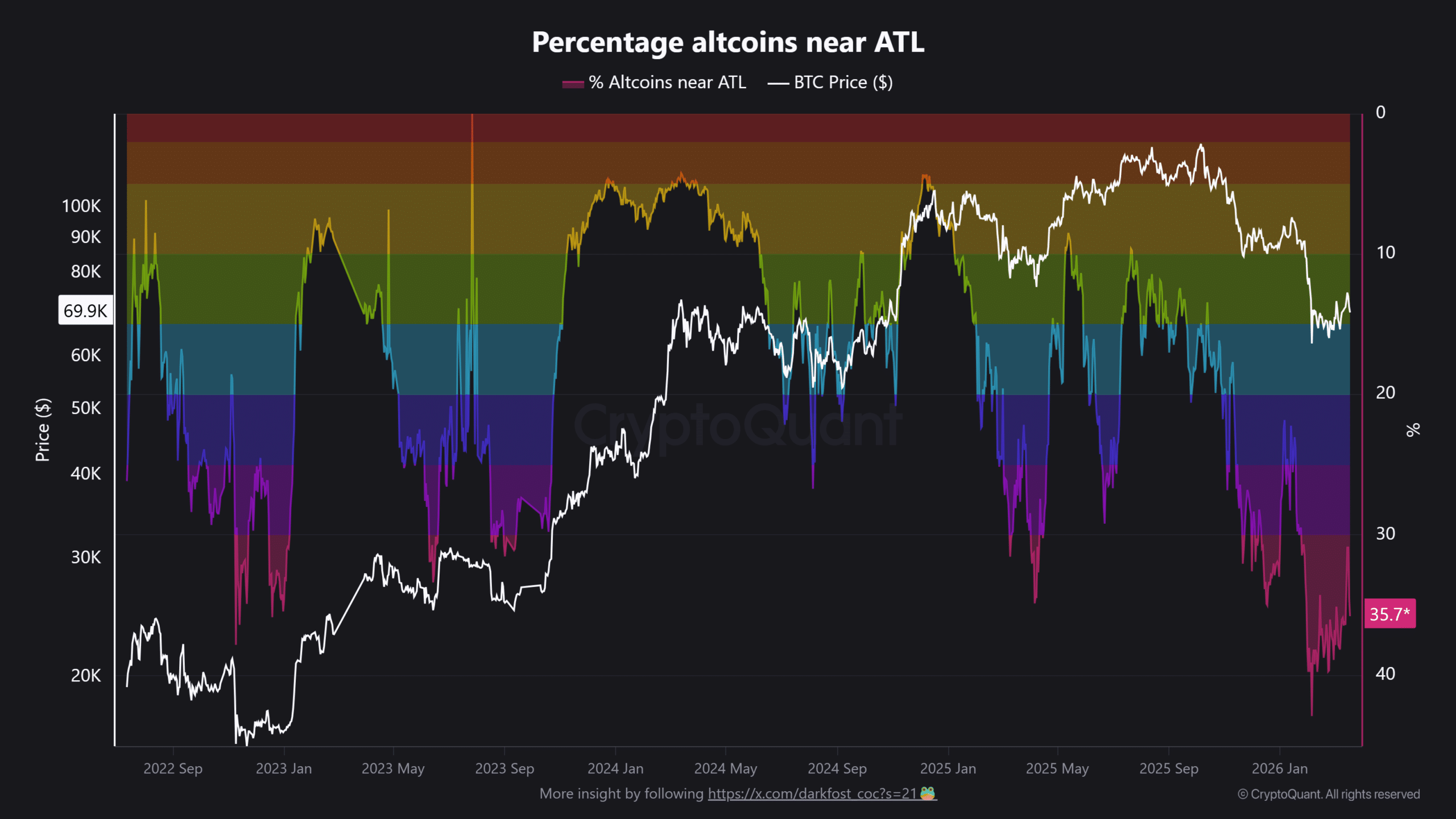
Altcoin weakness deepened as nearly 38–40% of assets traded near all-time lows, pushing the market into clear capitulation territory. As this level rises, it would reflect broad deterioration rather than isolated declines.

Source: CryptoQuant

At the same time, Bitcoin has held on relatively stronger, highlighting a widening divergence between major and risk assets. This shift signals liquidity rotation, where capital moves into Bitcoin for safety while exiting altcoins. As funds leave, altcoins face thinner liquidity and reduced demand, which accelerates price declines.

However, such extreme readings also mean that selling pressure may be nearing exhaustion. Meanwhile, participants reduce risk exposure, favoring preservation over speculation.

Such a structure implies a fragile market, one where downside risks remain. However, conditions may begin to favor accumulation if liquidity gradually returns to undervalued altcoins.

Market holds near capitulation as derivatives outpace spot demand

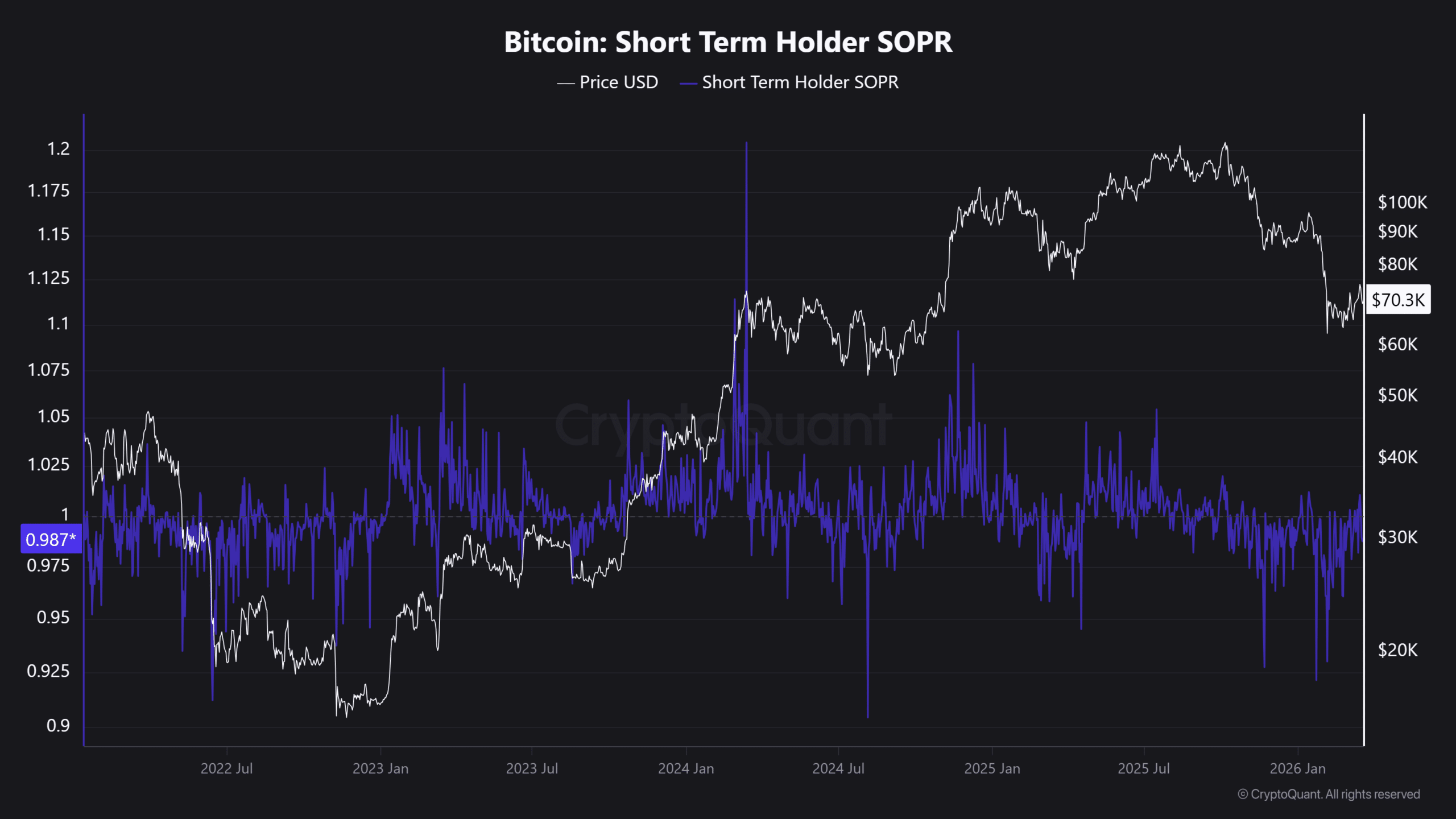
Finally, market structure revealed stress building without full capitulation, as Bitcoin [BTC] Short-Term Holder SOPR held near 0.98, reflecting realized losses around -12%. Since 2023, similar levels have often preceded deeper resets. And yet, press time selling appeared to be more controlled rather than aggressive.

Source: CryptoQuant

Consequently, liquidations have stayed subdued at $234 million, with $127 million in longs – Indicative of limited forced exits.

However, liquidity quality weakened as Binance’s Futures-to-Spot ratio climbed to a 1.5-year high. Such a shift showed derivatives activity expanding faster than spot demand.This divergence also hinted at a fragile balance, one where markets may either stabilize or face renewed volatility if spot demand fails to strengthen.


Final Summary

  • Altcoin market showed weakening demand as volumes fell to $26.5 billion and nearly 40% traded near lows, reflecting reduced risk appetite.
  • Altcoins now face thinning liquidity and sell-side pressure as capital rotates to Bitcoin [BTC], although conditions may begin favoring accumulation if demand returns.

Preguntas relacionadas

QWhat has happened to the altcoin trading volume according to the article?

AAltcoin trading volume has sharply contracted, dropping to $26.5 billion from peaks above $100 billion.

QWhich exchange processed the largest share of altcoin trades during this decline?

ABinance processed the largest share, handling about $7.7 billion, which represents nearly 40% of the market.

QWhat does the decline in altcoin volume and the performance of Bitcoin indicate about market behavior?

AIt indicates a liquidity rotation where capital is moving into Bitcoin for safety while exiting altcoins, reflecting reduced risk appetite and a preference for preservation over speculation.

QWhat does the high Futures-to-Spot ratio on Binance suggest about the current market dynamics?

AThe high ratio, which reached a 1.5-year high, suggests that derivatives activity is expanding faster than spot demand, indicating a fragile balance that could lead to renewed volatility if spot demand doesn't strengthen.

QAccording to the article, what might the current market conditions potentially favor in the future?

AThe current conditions may begin to favor accumulation if liquidity gradually returns to undervalued altcoins, as extreme selling pressure could be nearing exhaustion.

Lecturas Relacionadas

94.000 millones de yuanes, la mayor financiación de este año para robots humanoides ha aparecido

La empresa de robótica humana Neura, con sede en Múnich, ha completado una ronda de financiación Serie C de 14.000 millones de dólares (unos 94.900 millones de RMB), lo que supone la mayor inversión del año en este sector. Tras la operación, su valoración alcanza los 70.000 millones de dólares. La relevancia de esta ronda radica en la participación de inversores industriales como Schaeffler y Bosch, lo que señala un cambio estratégico: el foco pasa de la demostración tecnológica a la implementación práctica en fábricas. Neura, fundada por el experto en robótica industrial Armin Zeher, ha priorizado desde el inicio la aplicabilidad en entornos de producción real, contando ya con BMW como cliente. Otros inversores como NVIDIA, Amazon y Qualcomm aportan perspectivas complementarias en infraestructura de computación, logística y tecnología. El sector de la robótica humana está experimentando una afluencia masiva de capital, impulsada por dos factores clave: los avances en modelos de IA de gran escala, que mejoran la percepción y la toma de decisiones de los robots, y la creciente presión por la escasez y el encarecimiento de la mano de obra en la manufactura global. Actualmente, las empresas siguen dos caminos principales: los robots humanoides de propósito general (como Figure AI), con un horizonte comercial a más largo plazo, y los enfocados en escenarios industriales verticales y específicos (como Neura), que ofrecen una ruta de comercialización más rápida y definida. El campo de batalla real para estos robots ya no es el laboratorio, sino el suelo de la fábrica. Los escenarios de manufactura industrial, por su entorno estructurado y tareas repetitivas, se consideran los primeros en permitir una adopción a escala. Los entornos de trabajo peligrosos también tienen un gran potencial. Sin embargo, los principales retos para la adopción masiva ya no son puramente técnicos, sino de ingeniería y modelo comercial. Destacan los elevados costes de adaptación a cada línea de producción específica y la necesidad de desarrollar sistemas de mantenimiento y servicio locales robustos para garantizar la operación continua. La entrada de gigantes industriales históricos como inversores y la presencia inicial de robots en fábricas como las de BMW marcan un punto de inflexión: la confianza del sector se consolida y la pregunta central evoluciona de "si es posible" a "cómo hacerlo mejor, más rápido y de forma más estable".

marsbitHace 10 hora(s)

94.000 millones de yuanes, la mayor financiación de este año para robots humanoides ha aparecido

marsbitHace 10 hora(s)

Trading

Spot
Futuros
活动图片