$500 to Buy OpenAI Stock: Silicon Valley's Most Respectable Liquidity Invitation

marsbitPublicado a 2026-04-23Actualizado a 2026-04-23

Resumen

Silicon Valley's largest venture capital platform, AngelList, has launched a new fund called USVC, allowing U.S. retail investors to buy into high-profile AI companies like OpenAI, Anthropic, and xAI with a minimum investment of $500—no accredited investor status required. Promoted by AngelList co-founder Naval Ravikant, the fund is framed as an opportunity for ordinary people to access high-growth private tech investments traditionally reserved for VCs. However, critics argue it functions more like an exit vehicle for early insiders. USVC acquires shares not through primary rounds but largely via secondary transactions—purchasing stakes from early investors, VC funds, and employees looking to cash out at peak valuations. With companies like xAI heavily weighted in the portfolio, the fund effectively channels retail money into providing liquidity for insiders who entered at much lower valuations. The fund’s structure raises concerns: shares are illiquid, with no secondary market, and buybacks are limited and discretionary. The actual annual fee reaches 3.61%, far above the advertised 1% management fee. This model parallels the "low float, high fully diluted valuation" strategy seen in crypto, where early investors profit by selling to latecomers at inflated prices. The timing—alongside similar moves by platforms like Robinhood—suggests that Silicon Valley’s sudden interest in retail inclusion may be less about democratizing access and more about securing exits for insider...

Author: David, Shencha TechFlow

When Silicon Valley VCs are finally willing to let ordinary people join the table, it usually means one thing.

The game is almost over.

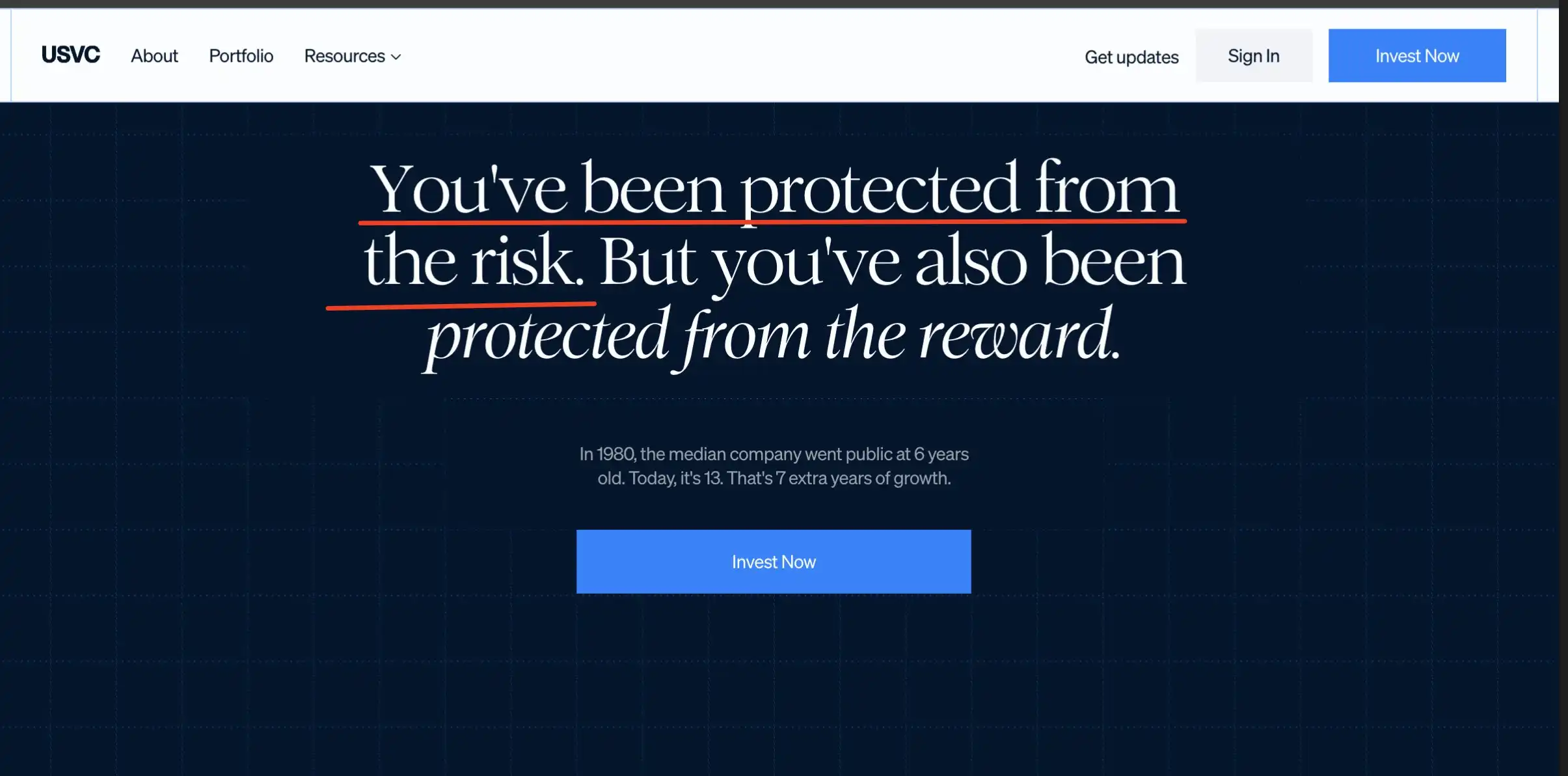
Yesterday, AngelList launched a fund product called USVC. AngelList is Silicon Valley's largest venture capital infrastructure platform. According to its official data, it manages over $125 billion in assets and has served more than 25,000 funds.

It has now opened a door to all US investors: a minimum investment of $500, no accredited investor certification required, directly allowing holders to own shares in seven AI companies, including OpenAI, Anthropic, and xAI.

Promoting this product is Naval, also a co-founder of AngelList. His book "The Almanack of Naval Ravikant" has made him one of the few figures in Silicon Valley with both a strong investment track record and significant public influence.
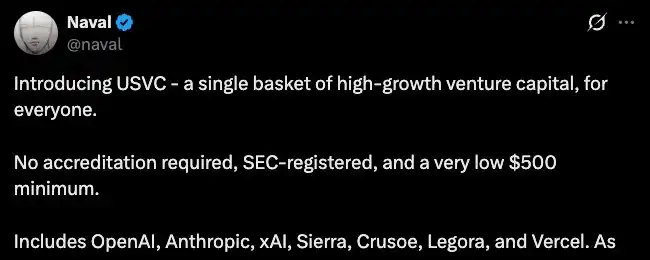
He posted a long thread on X promoting USVC, the gist being that early-stage tech investment is the "adventure capital" of our era, and ordinary people have always been locked out. By the time some great AI companies IPO, their growth is already over. USVC is here to open that door.

Within hours of the tweet, comments emerged asking an uncomfortable question that soured the mood:

These tech companies have been pushed to sky-high valuations, all the explosive growth happened in the private market. Now inviting retail investors to join, what's the difference from looking for exit liquidity?

USVC holds shares in seven companies, with the heaviest weighting in xAI. According to a Decrypt report, as of the end of March, about 44% of USVC's capital had been invested in these seven companies.

However, none of these companies are public. How did they get the shares?

According to the prospectus, USVC has three ways to acquire its targets: investing in emerging fund managers, participating in company growth-round financing, and purchasing secondary shares through AngelList's network.

The first two are straightforward. The third is the key.

Secondary shares mean that the company is not issuing new shares to sell to you; someone who already holds shares is transferring their portion to you. Who is transferring? Early angel investors, VC funds, early employees.

These people might have gotten on board when the company was valued at tens of millions of dollars. Now the company is worth tens or even hundreds of billions. They want to turn paper gains into real money before the IPO. But the private market isn't like a stock exchange; there's no ready queue of buyers waiting to take the other side.

USVC solves this problem perfectly. It raises funds from retail investors and uses that money to buy shares from insiders who want to exit.

AngelList does have a natural advantage for this. According to its website, there are over 4,500 active fund managers on the platform operating more than 25,000 funds, invested in over 13,000 startups.

This network is full of people and shares wanting to be sold, with AngelList sitting right in the middle. This is also the "exclusive access" USVC repeatedly emphasizes.

The access is indeed exclusive, but the direction of the trade doesn't seem to favor retail.

In this trade, the sellers are those who got in when the company was valued at tens of millions. The buyers are those getting in when it's valued at hundreds of billions. The sellers lock in returns of tens or even hundreds of times. The buyers are betting that these already fully-priced companies can still go higher.

Simultaneously, the terms retail investors are getting also say something.

According to the USVC prospectus, the fund is not listed on any exchange, does not anticipate a secondary trading market, may repurchase up to 5% of its net asset value per quarter (solely at the board's discretion, with no guarantees), and has an estimated total annual expense ratio of 3.61%—far higher than the prominently displayed 1% management fee, with the difference coming from layered fees of the underlying funds.
No ability to sell, exit dependent on queuing, and nearly 4% of principal eaten by fees annually. For a product with a $500 minimum investment aimed at ordinary people, this price isn't cheap.

So, the complete picture is likely this.

On one side are the insiders wanting to exit, getting liquidity, locking in profits. On the other side are the retail investors just entering, getting a share that can't be traded, has an exit reliant on queuing, and has an effective fee rate much higher than advertised. The direction of the funds, from start to finish, is only one way: from later arrivals to early arrivals.

The Equity Version of "Low Float, High FDV"

Breaking down the USVC model: insiders accumulate positions at low valuations. After asset prices are pushed high, a channel accessible to retail is packaged, allowing the funds of later arrivals to facilitate the exit of early arrivals.

The crypto industry ran a complete rehearsal of this logic between 2021 and 2024.

During those years, VC-backed token projects had a universal template: seed round valuation a few million, private round rising to tens of millions, and by the time the token listed on exchanges, the Fully Diluted Valuation (FDV) had skyrocketed to tens or even hundreds of billions. But only 2% to 5% of the total supply was in circulation, with the rest locked with VCs and the team, vesting on a schedule.

Low float, high FDV.

What USVC is doing is essentially almost identical to low float, high FDV. Insiders get in when the company is valued at tens of millions. After the company's valuation grows to hundreds of billions, they transfer their shares out through a product aimed at retail.

Naval's own trajectory is also interesting. Last October, he tweeted on X that "Bitcoin is insurance against fiat, Zcash is insurance against Bitcoin." This tweet caused ZEC to surge over 100% in a week. The community then dug up that, according to public reports, Naval had invested $715,000 in the development company behind Zcash as early as 2015 and had served on the Zcash Foundation's board.

The community's conclusion was simple: he was using his personal influence to shill his early investment. Naval did not respond to these质疑 (queries).

From Zcash to USVC, the model hasn't changed. A celebrity uses public credibility to open the demand side and uses a channel to direct that demand towards assets they have a position in.

Of course, in the case of USVC, there doesn't seem to be anything illegal.

USVC is a registered fund, the risk disclosures in the prospectus are ample, and the Zcash tweet didn't constitute investment advice.

But between legal and reasonable, there's always an ambiguous distance. A platform managing a trillion-dollar venture network, using the narrative of "letting ordinary people invest in the future" to raise retail funds, then using those funds to buy out insiders within its own network who want to exit...

Every single part of this is compliant. But all the parts put together easily trigger painful memories for retail investors.

And on the same day USVC launched, Robinhood also announced its fund spent $75 million to buy OpenAI shares, also open to ordinary investors. Two companies did the same thing in the same week: using their respective retail networks to build an exit channel for insiders in the private market.
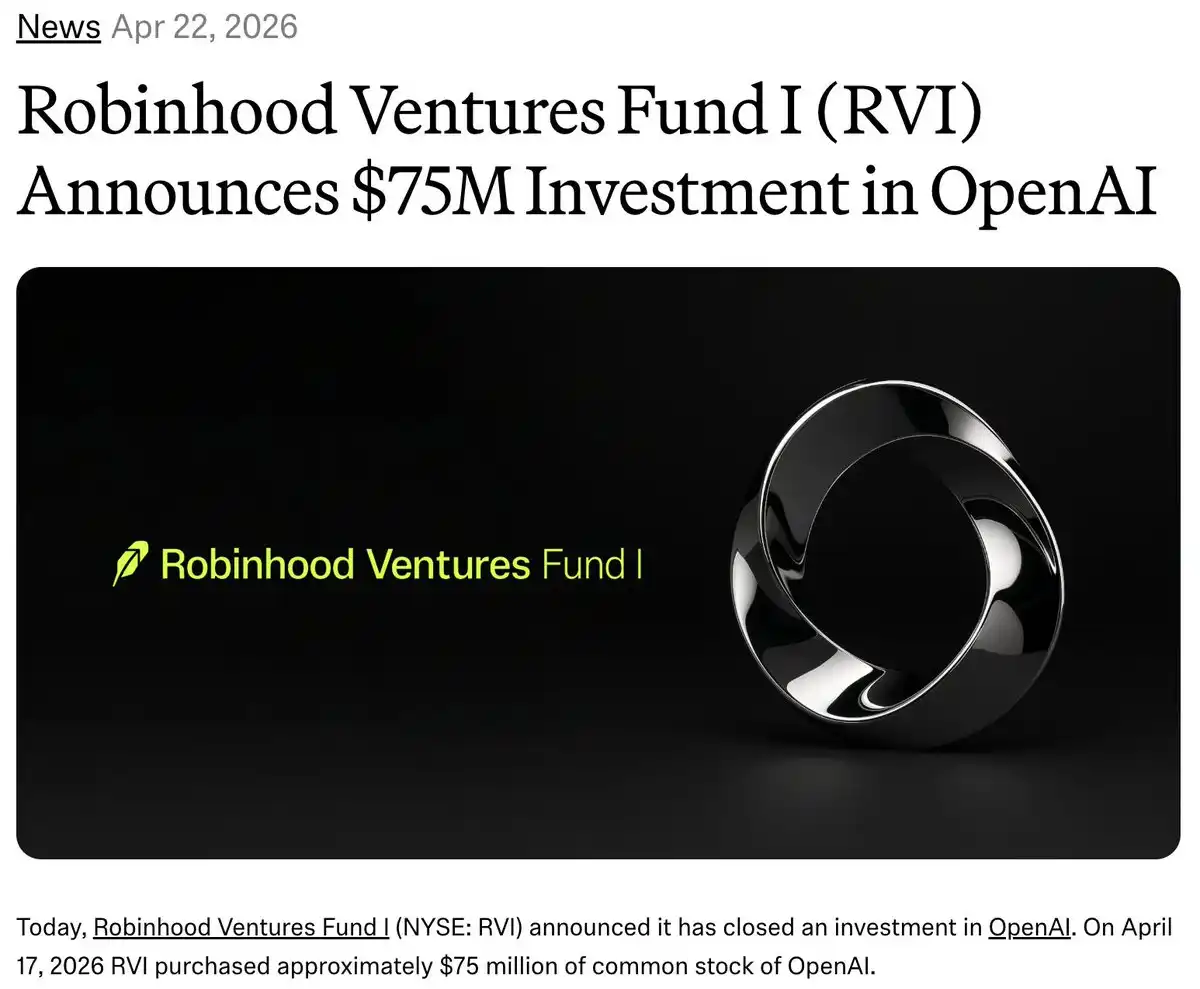
Every time the financial industry suddenly starts caring about the investment rights of ordinary people, it's often not because the situation for ordinary people has improved, but because the exit channels for insiders have narrowed.

This was true in 2021 when the crypto industry opened its doors wide to retail, and it's true in 2026 when Silicon Valley opens its doors to retail. The timing of the door opening is never decided by those who want to enter.

For ordinary people, there's a simple way to judge if an investment opportunity is meant for you.

Look at the people who got in before you. Are they buying more or are they selling right now? If they are selling, and you are being invited to buy, then you need to think clearly about one question: are you bringing capital, or are you bringing liquidity?


Preguntas relacionadas

QWhat is the main purpose of the USVC fund launched by AngelList, as per the article?

AThe main purpose of the USVC fund is to allow ordinary US investors, with a minimum investment of $500 and without accredited investor certification, to gain exposure to shares of private AI companies like OpenAI, Anthropic, and xAI. However, the article suggests it primarily functions as a mechanism for early investors and insiders to sell their shares and secure liquidity before an IPO.

QHow does the USVC fund primarily acquire shares in companies like OpenAI and xAI?

AThe USVC fund acquires shares through three main methods: investing in emerging fund managers, participating in growth-round financings, and most importantly, purchasing secondary shares from early investors, venture capital funds, and employees within the AngelList network who are looking to exit their positions.

QWhat are some of the significant drawbacks and risks for retail investors in the USVC fund, according to the article?

ASignificant drawbacks include: the fund shares are not listed on any exchange with no expectation of a secondary market; quarterly repurchases of up to 5% of shares are at the board's discretion and not guaranteed; and the estimated total annual expense ratio is 3.61%, which is much higher than the advertised 1% management fee due to layered underlying fund fees.

QWhat parallel does the article draw between the USVC fund model and a recent trend in the cryptocurrency industry?

AThe article draws a parallel to the 'low float, high fully diluted valuation (FDV)' model prevalent in crypto from 2021-2024. In this model, VCs and insiders accumulated tokens at low valuations, and when the FDV became very high at public listing, only a small percentage of the supply was released to retail market, creating an exit path for early investors.

QWhat is the implied motivation behind financial platforms like AngelList and Robinhood suddenly offering retail investors access to pre-IPO companies, as suggested by the article's conclusion?

AThe article implies that the motivation is not to improve investment opportunities for ordinary people, but rather to create an exit channel and provide liquidity for insiders and early investors (like VCs and employees) who want to cash out their highly appreciated shares before an IPO, as their own exit avenues have narrowed.

Lecturas Relacionadas

Diálogo con Ray Dalio: Nos encontramos en una burbuja de IA actualmente, el 1% de mi cartera de inversiones está en Bitcoin

**Fuente: The Diary Of A CEO** **Resumen: Felix, PANews** Ray Dalio, fundador de Bridgewater Associates, advierte sobre una burbuja en la inteligencia artificial actual, comparable a burbujas históricas como la de Internet en 2000. Según Dalio, los signos clásicos están presentes: precios inflados, endeudamiento basado en ganancias especulativas y una posible corrección brusca si suben las tasas de interés o cambian las condiciones económicas. Dalio explica que esta burbuja se enmarca en un "gran ciclo" más amplio —de unos 80 años— caracterizado por tres dinámicas: creciente desigualdad interna, déficits fiscales gubernamentales y cambios en el orden geopolítico mundial. Estados Unidos y otros países occidentales se encuentran en una fase de declive relativo dentro de este ciclo. Para proteger la riqueza personal, Dalio recomienda diversificar las inversiones más allá del efectivo, incluyendo activos como oro, acciones y bonos. Aunque revela que alrededor del 1% de su cartera está en Bitcoin —considerándolo un activo escaso—, prefiere el oro físico por su seguridad histórica y su rol como reserva de los bancos centrales. Sobre el impacto laboral de la IA, Dalio prevé que aumentará la desigualdad, beneficiando sobre todo a los dueños de capital. Sin embargo, destaca que las habilidades humanas —como la intuición y la emoción— seguirán siendo valiosas y complementarias a la IA. En el ámbito geopolítico, Dalio anticipa un mundo más regionalizado, con EE.UU. y China como potencias líderes en sus respectivas esferas, y advierte que conflictos como el de Irán han expuesto debilidades estratégicas de Estados Unidos, acelerando un cambio en el equilibrio global de poder.

marsbitHace 2 hora(s)

Diálogo con Ray Dalio: Nos encontramos en una burbuja de IA actualmente, el 1% de mi cartera de inversiones está en Bitcoin

marsbitHace 2 hora(s)

¡Récord de compras netas extranjeras de 7,2 billones de wones en un solo día! Wall Street: Los vientos en contra de los flujos de capital en el mercado coreano se han disipado

La situación de los flujos de capital en el mercado de valores surcoreano está mostrando un cambio sustancial. El 31 de julio, la inversión extranjera realizó una compra neta récord de aproximadamente 7.2 billones de wones en acciones del KOSPI, marcando una reversión fundamental tras meses de importantes salidas de capital. Según análisis de Citi Research, las ventas netas mensuales de inversores extranjeros se redujeron drásticamente a 9.8 billones de wones en julio, comparado con 48.4 y 44.5 billones en junio y mayo, respectivamente. Paralelamente, los fondos de pensiones y fondos de inversión nacionales se convirtieron en compradores netos en julio (1.0 billón de wones), luego de ser vendedores netos en los dos meses anteriores. Además, la Comisión de Servicios Financieros de Corea implementó nuevas regulaciones que restringen el acceso de inversores minoristas a los ETF apalancados, lo que ha reducido significativamente su volumen de negociación y se espera que mitigue la volatilidad del mercado. Citi Research mantiene su objetivo para el KOSPI en 10,000 puntos, destacando fundamentos sólidos en el sector de chips de memoria, valoraciones históricamente bajas, una fuerte economía local y un entorno político favorable como factores de apoyo. La firma considera que los vientos en contra relacionados con los flujos de capital se están disipando, mientras que los impulsores fundamentales y políticos están ganando fuerza, creando condiciones para una mejora en el mercado.

marsbitHace 2 hora(s)

¡Récord de compras netas extranjeras de 7,2 billones de wones en un solo día! Wall Street: Los vientos en contra de los flujos de capital en el mercado coreano se han disipado

marsbitHace 2 hora(s)

Cómo Convertirse en Algo que la Inteligencia Artificial Jamás Podrá Reemplazar

**Resumen: Cómo ser irremplazable por la IA** Ante el temor de que la IA elimine trabajos, la solución no es resistirse, sino volverse "inempleable": un individuo autónomo que construya su propio proyecto vital y económico. El artículo critica la "esclavitud salarial"—depender de un empleo sin sentido—y propone escapar de ella desarrollando estas cinco capacidades clave: 1. **Agencia**: Capacidad de actuar sin pedir permiso. 2. **Gusto**: Criterio para discernir qué vale la pena crear. 3. **Persuasión**: Habilidad para conectar y lograr que otros valoren tu trabajo. 4. **Persistencia**: Resiliencia para ver los errores como aprendizaje. 5. **Iteración**: Proceso constante de ajuste basado en la retroalimentación. Estas habilidades se cultivan únicamente **haciendo**: creando algo propio. Se recomienda enfocarse en **crear contenido (medios)** más que solo en código, ya que el valor del contenido es subjetivo y requiere un criterio humano que la IA no puede replicar fácilmente, abriendo espacio para talentos auténticos. **Cómo empezar:** El cambio real requiere una transformación de identidad. Para ello: 1. Cambia radicalmente tu entorno (físico y digital). 2. Elige un "vehículo" (como crear contenido) que te dé retroalimentación real del mundo. 3. Dedica 15 minutos a responder preguntas introspectivas para encontrar tu "material en bruto" único y tu perspectiva contraria a la convencional. 4. **Publica tu primera idea mañana mismo.** La acción, el feedback y la iteración constante son el único camino. La conclusión es clara: en lugar de temer a la IA, conviértete en un creador que utilice todas las herramientas (incluida la IA) para construir una vida y un trabajo con significado, autonomía e impacto personal.

marsbitHace 4 hora(s)

Cómo Convertirse en Algo que la Inteligencia Artificial Jamás Podrá Reemplazar

marsbitHace 4 hora(s)

Los lanzamientos de dados mantienen las claves de Bitcoin en un modo aislado, pero no todo el mundo se molestará

El título sugiere que las claves de Bitcoin pueden almacenarse fuera de línea mediante lanzamientos de dados, aunque no todos los usuarios adoptarán este método. El artículo comienza explicando la entropía en la teoría de la información, utilizando ejemplos como monedas y dados. Tras un escándalo reciente con Coldcard, se popularizó la generación de semillas de billetera mediante dados. El texto explica que, aunque físicamente determinista, el lanzamiento es impredecible en la práctica, lo que lo hace útil para la seguridad. Se detalla cómo convertir los resultados en datos binarios, con métodos que van desde el simple "par/impar" hasta el uso de funciones hash para preservar más entropía. Para una frase de recuperación de 12 palabras (128 bits de entropía), se necesitan unos 50 lanzamientos; Coldcard recomienda 99 para mayor seguridad. La vulnerabilidad en Coldcard, relacionada con su generador de números aleatorios, puso en riesgo fondos. Las semillas generadas manualmente con dados no se vieron afectadas, pero el investigador Kevin Loaec señaló que otras funciones del dispositivo (como creación de billeteras de papel o claves de coproreseguridad) sí podían estar comprometidas, incluso si la semilla principal era segura. El artículo argumenta que, aunque técnicamente robusto, el proceso de lanzar dados es lento, propenso a errores y poco práctico para la mayoría, especialmente para nuevos usuarios. Concluye que, aunque debe ser una opción para expertos, el objetivo a largo plazo es que el hardware y software generen aleatoriedad fuerte de forma fiable y accesible. Se aconseja a los usuarios de Coldcard verificar su firmware y las funciones utilizadas, y se destaca la utilidad de las billeteras multisig con dispositivos de diferentes fabricantes para mitigar riesgos.

cryptonews.ruHace 7 hora(s)

Los lanzamientos de dados mantienen las claves de Bitcoin en un modo aislado, pero no todo el mundo se molestará

cryptonews.ruHace 7 hora(s)

Trading

Spot
活动图片




