Crypto market’s weekly winners and losers – PIPPIN, ZEC, MYX, APT

ambcryptoPublicado a 2026-02-15Actualizado a 2026-02-15

Resumen

Following weeks of significant losses, the cryptocurrency market showed signs of recovery, buoyed by a U.S. inflation report indicating a slowdown in price increases to 2.4% and a strong labor market, raising expectations of potential Federal Reserve interest rate cuts. While major cryptocurrencies like Bitcoin and Ethereum remained relatively stable, several smaller tokens experienced substantial price movements. Key weekly winners included PIPPIN, which surged over 280% from its accumulation zone to above $0.72, driven by strong buying activity and positive technical indicators. ZCash (ZEC) rallied 33% after Digital Currency Group CEO Barry Silbert suggested privacy coins could attract significant Bitcoin investment and praised ZEC's potential. Humanity Protocol (H) gained nearly 90%, reaching approximately $0.23, supported by its integration with Fireblocks, which provides access to over 2,000 financial institutions. Other notable gainers included Dogecoin (18%), Shiba Inu (12%), and Pi (30%). On the losing side, MYX Finance (MYX) fell nearly 70%, dropping from around $6.30 to below $2.00 due to sell pressure and negative capital flow. Memecore (M) declined over 10% to approximately $1.27 after failing to maintain earlier highs, reflecting weakened buyer confidence. Aptos (APT) slipped from about $1.10 to below $1.00, struggling to recover amid low buying volume. Other decliners included Story (IP, down 6%), Bitget Token (BGB, down 7%), and DoubleZero (2Z, down 13%). Th...

After weeks of heavy losses, the crypto market finally saw some light.

Bitcoin [BTC] and Ethereum [ETH] put up weak shows, but the overall mood was vastly improved. This came after a U.S. inflation report showed prices rising more slowly, with inflation falling to 2.4%.

The labor market also stayed strong, raising hopes that the Fed may cut interest rates soon. That often helps crypto.

While the biggest coins stayed quiet, several smaller tokens saw major gains… and losses. So, grab your coffees and teas! Here’s a quick look at this week’s biggest movers.

Weekly winners

Strong buying pushes pippin [PIPPIN] into a mammoth breakout

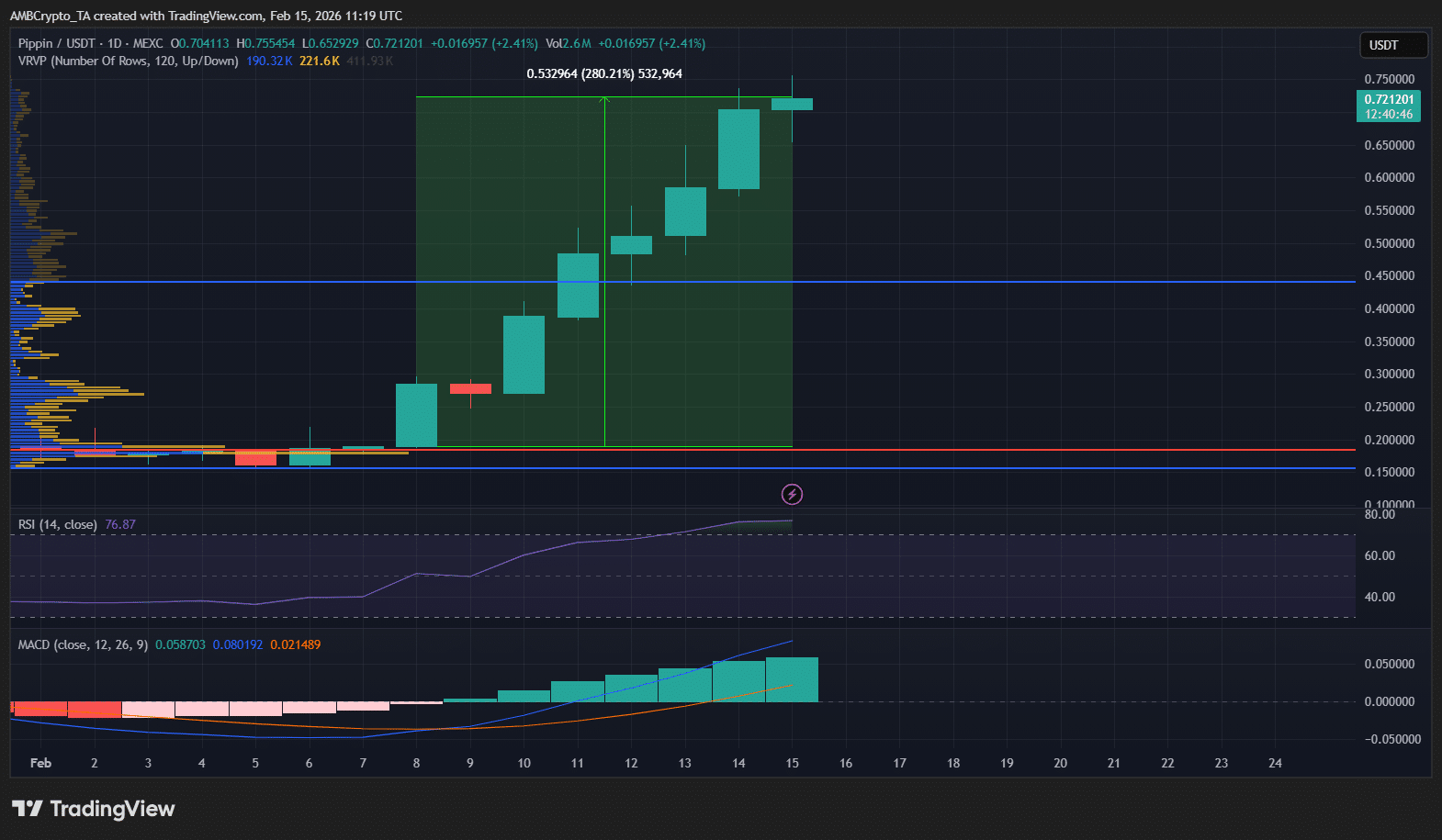
pippin [PIPPIN] has surged from the $0.16-$0.20 accumulation zone to above $0.72, a gain of over 280% in just over a week!

Most trading activity was concentrated near the lower range, which meant that buyers built strong positions before the breakout.

Once price moved above this high-volume area, resistance thinned, and upside movement happened quicker.

RSI showed demand but didn’t show any signs of a reversal. MACD was bullish as well.
Source: TradingView

With rising wallet counts and active incentives, PIPPIN’s rally was pushed by gradual buying. The trend may still have room to continue.

ZCash [ZEC] energized by DCG CEO claims

Zcash [ZEC] rallied 33% this week after Digital Currency Group CEO Barry Silbert said 5% to 10% of Bitcoin [BTC] investments could go into privacy coins in the coming years.

He also called Zcash a project capable of delivering 500x returns!

ZEC surged from around $230 to above $330 before settling at $307. This came after days of consolidation, so investors were buying before the move. RSI was at 51, recovering from weak levels.

Humanity Protocol [H] hits new highs

Humanity Protocol [H] traded near $0.23 after gaining nearly 90% from its recent base around $0.12. The steady series of higher highs and higher lows proves that the spike was supported by buying.

The RSI held above 70, while the MACD stayed bullish.

This growth came alongside Humanity Protocol’s integration with Fireblocks. This development opens access to more than 2,000 financial institutions, allowing professional investors to custody and interact with H.

At the same time, its privacy-focused mainnet and decentralized identity infrastructure are attracting interest.

Other notable winners

Dogecoin [DOGE] went up 18% at the time of writing. Shiba Inu [SHIB] followed with a 12% rise, supported by retail activity. Meanwhile, Pi [PI] led the group with a 30% rally!

Weekly losers

MYX Finance [MYX] drops with sell pressure

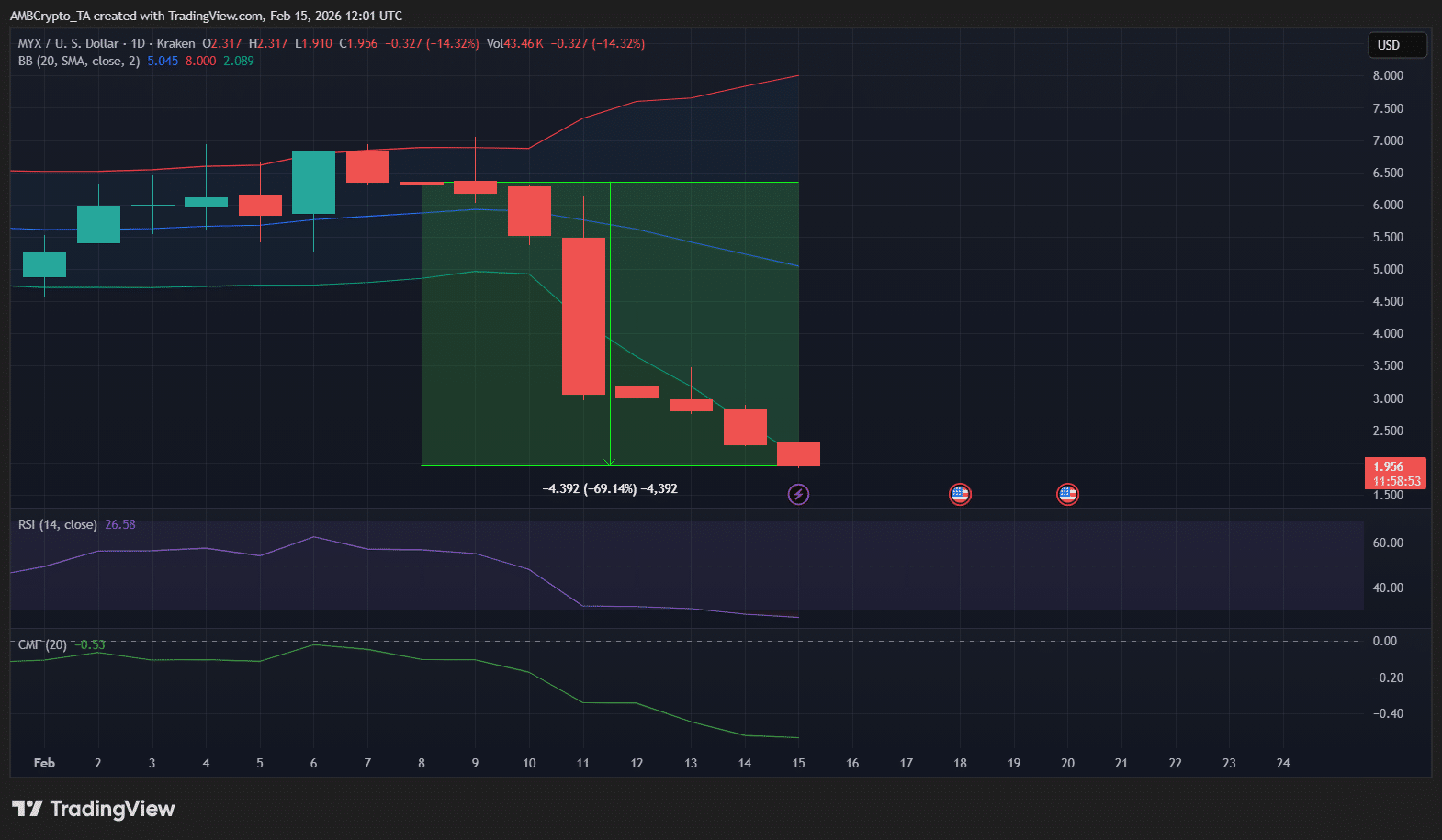
MYX Finance [MYX] fell nearly 70% from around $6.30 to below $2.00, according to the daily chart.

The decline followed a period of consolidation near the upper Bollinger Band, after which price broke down and continued forming lower lows.
Source: TradingView

The RSI dropped to 26, putting MYX deep in oversold territory. At the same time, the CMF was negative, so capital has been exiting.

Unless buyers step in to defend current levels, MYX may continue facing downward pressure in the near term.

Memecore [M] weakens with fading pace

Memecore [M] has come under pressure after failing to hold its early February highs near $1.85. There was a rejection followed by a steady decline, with the price at around $1.27 at press time.

That’s a drop of over 10% in recent sessions.

The token attempted to stabilize between $1.30 and $1.45, but repeated lower highs proved the lack of buyer confidence. RSI slipped to 41.

The earlier rally was met with strong selling at higher levels, forcing M into a consolidation phase.

Aptos [APT] loses its footing

Aptos [APT] slipped from around $1.10 to below $1.00, a steady downtrend before finding weak support near $0.90. While there’s been a small bounce since then, the recovery hasn’t been strong enough to flip the board.

RSI was close to oversold territory at 29. Meanwhile, the OBV was low, so buyers hadn’t returned in full force.

APT is trying to stabilize, but confidence still looks shaky. Unless it can reclaim the $1.00-$1.10 range convincingly, the token may be stuck in a fragile recovery phase.

Other notable losers

Story [IP] fell 6%, while Bitget Token [BGB] dropped 7% with a fading pace. Meanwhile, DoubleZero [2Z] saw the worst decline among the group, sliding 13% as sellers took control.

And that’s the week in crypto!

If there’s always one takeaway, it’s this. Things can flip fast; today’s top gainer can easily become next week’s biggest loser. So, stay curious, stay cautious, and always DYOR before chasing the hype.

We’ll be watching the charts, and we’ll see you next week!


Final Summary

  • PIPPIN jumped 280%, Humanity Protocol rose 90%, and Zcash gained 33%.
  • Market momentum is way beyond major coins.
Next: BONK jumps 11% after channel breakout: Reversal or short squeeze setup?
Share
  • Share
  • Tweet

Preguntas relacionadas

QWhat was the main reason for the improved mood in the crypto market this week?

AThe improved mood was due to a U.S. inflation report showing prices rising more slowly, with inflation falling to 2.4%, and a strong labor market raising hopes that the Fed may cut interest rates soon.

QWhich token had the largest percentage gain this week and what was the gain?

APIPPIN had the largest percentage gain, surging over 280% from the $0.16-$0.20 accumulation zone to above $0.72.

QWhat news event catalyzed the 33% rally for ZCash (ZEC)?

AZCash rallied after Digital Currency Group CEO Barry Silbert said 5% to 10% of Bitcoin investments could go into privacy coins in the coming years and called Zcash a project capable of delivering 500x returns.

QWhich token was the biggest loser this week and what was its percentage decline?

AMYX Finance (MYX) was the biggest loser, falling nearly 70% from around $6.30 to below $2.00.

QWhat development contributed to the growth of Humanity Protocol (H) alongside its price increase?

AIts growth came alongside Humanity Protocol's integration with Fireblocks, which opens access to over 2,000 financial institutions, allowing professional investors to custody and interact with H.

Lecturas Relacionadas

Detrás de los nuevos máximos históricos de HYPE, los «hermanos menores» del ecosistema no logran mantenerse al día

**HYPE alcanza máximos históricos mientras la ecosfera HyperEVM se contrae** El 16 de junio, el token HYPE tocó un nuevo máximo histórico de 76,965 USDT, con un alza diaria del 10% que liquidó más de 11,5 millones en posiciones cortas. Los ETF estadounidenses de HYPE han atraído unos 180 millones de dólares en su primer mes. Este impulso está impulsado por el sólido modelo económico de Hyperliquid: aproximadamente el 97% de las tarifas del protocolo (principalmente de los contratos perpetuos de HyperCore) se destinan a un fondo que recompra y quema HYPE de forma constante, actuando más como una "acción de aplicación" vinculada al rendimiento del negocio central que como un token de ecosistema tradicional. Sin embargo, en contraste con el éxito de HYPE, el ecosistema HyperEVM (la capa de contratos inteligentes) enfrenta una oleada de cierres de proyectos clave. Entre mayo y junio, protocolos importantes en préstamos (HypurrFi), NFTs (Drip.Trade), stablecoins (USDH/Native Markets), DEX (Felix) y mercados RWA (Ventuals) anunciaron su cierre de manera ordenada. Estos no eran proyectos marginales, sino infraestructura principal con usuarios y volumen reales. La raíz de esta divergencia parece estar en el diseño filosófico de Hyperliquid: un enfoque minimalista donde el núcleo (HyperCore) proporciona la infraestructura pero no interviene con grants, liquidez inicial o coordinación para los proyectos en HyperEVM. En un mercado saturado, esto deja a los nuevos protocolos luchando por arrancar sin apoyo. Además, el éxito del núcleo, particularmente de mercados HIP-3 como TradeXYZ que capturan la mayor parte de la atención y la liquidez, genera un efecto de acaparamiento que estructuralmente deja poco espacio para que prosperen los proyectos en la periferia de HyperEVM. En resumen, cuanto más fuerte es el núcleo de Hyperliquid, más difícil resulta sobrevivir para su ecosistema de aplicaciones descentralizadas.

Foresight NewsHace 8 min(s)

Detrás de los nuevos máximos históricos de HYPE, los «hermanos menores» del ecosistema no logran mantenerse al día

Foresight NewsHace 8 min(s)

Diálogo con Arthur Hayes: La IA agotó la liquidez del mercado; el BTC estará por debajo de los 100 mil para fin de año

En un reciente podcast, Arthur Hayes, cofundador de BitMEX, explicó por qué ha liquidado sus principales posiciones en criptomonedas (HYPE, NEAR, Worldcoin, Zcash) y reconfigurado su cartera hacia bonos del Tesoro y acciones energéticas. Su razonamiento se centra en una cadena de eventos macroeconómicos y políticos: el conflicto en Irán mantiene altos los precios del petróleo, alimentando la inflación. Ante las elecciones legislativas de noviembre de 2026 en EE.UU., Hayes argumenta que el presidente Trump podría virar retóricamente contra la industria de la IA para ganar votos populistas, atacando su regulación e impuestos. Esto, sumado a la matemática de la burbuja de la IA, donde el gasto de capital en centros de datos está alcanzando un pico y su ritmo de crecimiento (la "segunda derivada") está destinado a desacelerarse, podría desencadenar una corrección significativa. Hayes señala que la IA ha absorbido toda la liquidez del mercado (aproximadamente 1,5 billones en deuda emitida desde 2025), lo que explica el bajo rendimiento de Bitcoin frente a acciones tecnológicas. Además, anticipa que las próximas megas-OPIs como la de SpaceX (con una valoración "absurda" de 100 veces ventas) podrían decepcionar al mercado y actuar como catalizador de una corrección. En un escenario de colapso de la burbuja de IA, todos los activos de riesgo caerían juntos. Por ello, predice que Bitcoin terminará el año por debajo de los 100.000 dólares. Su estrategia actual es esperar a un lado hasta que la corrección ocurra y la liquidez, eventualmente, vuelva a buscar oportunidades fuera del ecosistema de la IA, posiblemente en las criptomonedas.

marsbitHace 14 min(s)

Diálogo con Arthur Hayes: La IA agotó la liquidez del mercado; el BTC estará por debajo de los 100 mil para fin de año

marsbitHace 14 min(s)

Los halcones del Fed se reagrupan: el difícil debut de Warsh

Funcionarios de la Reserva Federal, incluidos los más "dovish" como Christopher Waller, han cambiado su postura y ahora no descartan una subida de tipos, reflejando un giro general hacia posturas más "hawkish". El nuevo presidente, Kevin Warsh, quien fue nombrado por Trump por su postura partidaria de bajadas, se enfrenta a su primera reunión en un momento incómodo: la inflación se mantiene por encima del 3%, el mercado laboral es fuerte, y la discusión interna ya no es cuándo recortar, sino si es necesario subir los tipos. El cambio es notable en figuras como Waller, que pasó de abogar por recortes a admitir la posibilidad de subidas. Incluso miembros más centrados, como Lisa Cook, ahora condicionan su postura. Los "halcones" del comité, como Hammack, Logan y Kashkari, llevan tiempo argumentando en esta dirección y piden eliminar cualquier sesgo a la baja en la comunicación. Se espera que la Fed mantenga los tipos este miércoles, pero el enfoque estará en la eliminación del "sesgo a la baja" en su comunicado y en el "dot plot", que probablemente mostrará que la mayoría de los funcionarios prevén tipos estables o incluso alguna subida este año. Warsh, crítico con estas herramientas de orientación, debe dirigir este mensaje de posible endurecimiento, que va en contra de los deseos del presidente que lo nombró. La señal es clara: el próximo movimiento de la Fed podría ser una subida de tipos.

marsbitHace 1 hora(s)

Los halcones del Fed se reagrupan: el difícil debut de Warsh

marsbitHace 1 hora(s)

¿Quién es el rey de la relación calidad-precio en el "Yi Zhong Tian" de un billón de dólares de capitalización?

El artículo analiza y compara a las tres principales empresas chinas de módulos ópticos, apodadas "Yi Zhong Tian": XSGS (Nueva Yisheng), ZKXC (Zhongji Innolight) y TFC (Tianfu Communications). Tras un crecimiento exponencial en 2025, el mercado en junio de 2026 experimentó una corrección, planteando la pregunta sobre cuál ofrece mejor valor. Se evalúan con tres criterios: PEG (precio/crecimiento), calidad de ganancias y prima por certidumbre. * **XSGS** es la más barata en PEG (0.30) y tiene alta calidad de ganancias (márgenes >47%). Su descuento refleja riesgos como alta dependencia de clientes clave y exposición geopolítica. * **ZKXC** es la más cara, con una prima pagada por su **certidumbre** como líder. Controla más del 50% del mercado de módulos 800G para Nvidia y tiene ventaja en 1.6T. Su principal riesgo son las tensiones geopolíticas (lista 1260H de EE.UU.). * **TFC** es diferente: es proveedor de componentes (motores ópticos), no de módulos terminados. Tiene los márgenes más altos (>50%) y se beneficia de la transición a arquitecturas CPO/NPO. Sin embargo, su crecimiento es más estable, su valoración muy alta (~122x P/E) y su desempeño reciente decepcionó expectativas excesivas. El análisis concluye con una variable crítica: el verdadero poder y los márgenes más altos están **río arriba**, en los fabricantes de chips láser (como Lumentum, Coherent). El valor a largo plazo de "Yi Zhong Tian" dependerá de que la industria china pueda ascender en la cadena de valor y capturar esa parte de la ganancia, un esfuerzo simbolizado por empresas como YJTech (Yuanjie). La "relación calidad-precio" final no se mide solo en números, sino en la capacidad de controlar la tecnología central.

marsbitHace 1 hora(s)

¿Quién es el rey de la relación calidad-precio en el "Yi Zhong Tian" de un billón de dólares de capitalización?

marsbitHace 1 hora(s)

Trading

Spot
Futuros

Artículos destacados

Cómo comprar ZEC

¡Bienvenido a HTX.com! Hemos hecho que comprar Zcash (ZEC) sea simple y conveniente. Sigue nuestra guía paso a paso para iniciar tu viaje de criptos.Paso 1: crea tu cuenta HTXUtiliza tu correo electrónico o número de teléfono para registrarte y obtener una cuenta gratuita en HTX. Experimenta un proceso de registro sin complicaciones y desbloquea todas las funciones.Obtener mi cuentaPaso 2: ve a Comprar cripto y elige tu método de pagoTarjeta de crédito/débito: usa tu Visa o Mastercard para comprar Zcash (ZEC) al instante.Saldo: utiliza fondos del saldo de tu cuenta HTX para tradear sin problemas.Terceros: hemos agregado métodos de pago populares como Google Pay y Apple Pay para mejorar la comodidad.P2P: tradear directamente con otros usuarios en HTX.Over-the-Counter (OTC): ofrecemos servicios personalizados y tipos de cambio competitivos para los traders.Paso 3: guarda tu Zcash (ZEC)Después de comprar tu Zcash (ZEC), guárdalo en tu cuenta HTX. Alternativamente, puedes enviarlo a otro lugar mediante transferencia blockchain o utilizarlo para tradear otras criptomonedas.Paso 4: tradear Zcash (ZEC)Tradear fácilmente con Zcash (ZEC) en HTX's mercado spot. Simplemente accede a tu cuenta, selecciona tu par de trading, ejecuta tus trades y monitorea en tiempo real. Ofrecemos una experiencia fácil de usar tanto para principiantes como para traders experimentados.

676 Vistas totalesPublicado en 2024.12.12Actualizado en 2026.06.02

Cómo comprar ZEC

Discusiones

Bienvenido a la comunidad de HTX. Aquí puedes mantenerte informado sobre los últimos desarrollos de la plataforma y acceder a análisis profesionales del mercado. A continuación se presentan las opiniones de los usuarios sobre el precio de ZEC (ZEC).

活动图片













