Zcash Founder Says Anthropic AI Audit Found No Serious Protocol Bugs

bitcoinistPublished on 2026-06-14Last updated on 2026-06-14

Abstract

Zcash founder Zooko Wilcox announced that an AI security audit of the Zcash protocol, conducted by Anthropic's Mythos model at the request of Shielded Labs, found no new serious bugs. This result provides a positive security headline for the privacy-focused cryptocurrency amidst ongoing regulatory and technical scrutiny. The audit highlights the growing use of AI-assisted tools in crypto security, though it is not a replacement for human review. The absence of major flaws supports confidence in the protocol's robustness, but developers emphasize that security hardening work continues. The story underscores a broader industry shift where infrastructure and security updates are becoming central to crypto market narratives.

Trusted Editorial content, reviewed by leading industry experts and seasoned editors. Ad Disclosure

TL;DR


  • Zooko Wilcox said an Anthropic Mythos AI audit found no serious Zcash protocol bugs.
  • The audit was requested by Shielded Labs.
  • The story highlights growing use of AI-assisted security review in crypto development.

AI Audit Gives Zcash A Security Headline

Zcash founder Zooko Wilcox said Anthropic’s Mythos AI model completed a security audit of Zcash and found no new serious bugs in the protocol. The audit was requested by Shielded Labs, according to Wilcox’s announcement.

The result gives Zcash a useful security headline at a time when privacy coins continue to face regulatory pressure, exchange-listing questions, and technical scrutiny.

Wilcox framed the audit as part of a broader effort to protect Zcash users. While AI-assisted review is not a replacement for human security work, it is becoming an increasingly important tool for scanning complex codebases and surfacing possible weaknesses.

Why The Zcash Result Matters

Privacy-focused protocols have to maintain a high bar for security because users rely on both cryptographic strength and implementation quality. Any serious protocol-level bug can undermine trust, even if the broader privacy design remains sound.

The absence of newly discovered serious bugs does not mean Zcash is risk-free. It does, however, suggest that running advanced AI tooling against the protocol did not immediately reveal a major flaw, which may support confidence among developers and users.

Why This Matters

The story also shows how AI models are being pulled into crypto infrastructure work. Security audits have traditionally been performed by specialist firms and human researchers. AI tools can add speed and coverage, but their findings still need careful interpretation.

For Zcash, the key benefit may be less about marketing and more about adding another layer to ongoing review, especially as privacy technology becomes more complex.

What To Watch Next

The next details to watch are whether Shielded Labs or Zcash developers publish more technical information about the exact code version, commit range, model configuration, or issues reviewed.

The article should not imply this was a full human-led Anthropic audit unless official sources say so.

Market Context

For Bitcoinist, the story sits inside a wider shift in crypto where infrastructure, security, governance, and token utility are becoming just as important as short-term price action. Traders still care about momentum, but they also need to understand the systems, risks, and product changes behind the headlines.

The useful angle is not to overstate the development, but to explain why it belongs in the daily market conversation. Strong crypto stories increasingly come from protocol updates, official notices, security reports, court records, and on-chain data rather than recycled commentary alone.

The editorial takeaway should stay grounded: the source confirms a meaningful crypto development, but the implications depend on adoption, follow-up disclosures, or further on-chain evidence. That balance keeps the piece useful without leaning on hype or unsupported claims.

From an editorial standpoint, this makes the story worth covering as part of the day’s broader crypto operating environment rather than as a standalone hype cycle. The strongest version of the piece should stay close to the verified source, explain the practical risk or opportunity, and leave room for follow-up once more official data, filings, or project statements are available.

This report is based on information from Zooko Wilcox’s announcement.

Editorial Process for bitcoinist is centered on delivering thoroughly researched, accurate, and unbiased content. We uphold strict sourcing standards, and each page undergoes diligent review by our team of top technology experts and seasoned editors. This process ensures the integrity, relevance, and value of our content for our readers.

Bitcoinist Editorial Team

Follow

Full Profile

Related Posts

XRP Ledger Daily Fees Drop Below $400 As Network Activity Question Returns

Ripple Launches XRPL AI Starter Kit For XRP And RLUSD Agent Payments

Bitcoin To $400,000? Analyst Uses Gold Overlay To Make Bold 2026 Case

Bitcoin Halving Clock Points To Bottoming Phase, But Cycle Signal Needs Caution

Bitcoin Trader Says Cycle Tops And Bottoms Match Exact Day Counts

Coinbase And Ethena Launch High Yield USDC Vault Powered By Morpho

Trending Cryptos

Related Questions

QWhat was the result of Anthropic's Mythos AI security audit on Zcash according to Zcash founder Zooko Wilcox?

AAccording to Zcash founder Zooko Wilcox, the Anthropic Mythos AI security audit found no new serious bugs in the Zcash protocol.

QWho requested the AI security audit of Zcash?

AThe audit was requested by Shielded Labs.

QWhy is a high-security standard particularly important for privacy-focused protocols like Zcash?

AA high-security standard is crucial because users rely on both cryptographic strength and implementation quality. Any serious protocol-level bug can undermine trust, even if the broader privacy design remains sound.

QWhat broader trend in crypto development does this story highlight regarding security reviews?

AThe story highlights the growing use of AI-assisted security review as an important tool in crypto development, adding speed and coverage to the process alongside traditional human-led audits.

QAccording to the article, what should be the editorial approach when covering such a development to avoid hype?

AThe editorial approach should stay close to verified sources, explain the practical risk or opportunity, avoid overstating the development, and leave room for follow-up based on official data or project statements.

Related Reads

Conversation with Co-founder of Hyperdash: Why is Hyperliquid Still Severely Undervalued?

Interview Summary with Hanson Birringer, Co-founder of Hyperdash: Why Hyperliquid Remains Undervalued In an interview on *The Rollup*, Hanson Birringer, Co-founder and Chief Revenue Officer of Hyperdash—a trading data analytics platform for Hyperliquid—shared his investment thesis on the Hyperliquid ecosystem. He described Hyperliquid as a pure play on three key crypto super-trends: perpetual contracts, real-world assets (RWAs), and stablecoins. The platform is an open-source, decentralized, and high-performance financial system uniquely positioned to bridge traditional institutional capital with decentralized finance. Birringer highlighted Hyperliquid's leadership in perpetual DEX trading and its recent innovation of RWA perpetual contracts. He emphasized the significance of USDC becoming a core quoting asset, which, by allocating 90% of its backend yield from assets like US treasuries to a protocol buyback fund, creates substantial, programmatic buy pressure for the Hype token. He addressed regulatory challenges, noting that Hyperliquid's policy team is actively engaging with US regulators like the CFTC to establish clear rules for decentralized venues. Once achieved, regulated brokers could route orders directly to Hyperliquid's backend, tapping into its low-cost liquidity layer. Regarding revenue, Birringer was optimistic, citing the immense size of traditional financial markets. Even capturing a small fraction of global trading volume in products like RWA perpetuals could lead to exponential growth for the protocol. The recently launched Grayscale Hyperliquid ETF, seeded by their SPV (Hyper Holdings Global), provides a compliant on-ramp for institutional investors drawn to the clear "cash flow + token buyback" model. Finally, he discussed Hyperdash's acquisition of Imperator, enhancing its data and node infrastructure to serve both retail traders and traditional asset managers. His bullish case rests on Hyperliquid's potential to provide unprecedented global access to dollar-based capital markets. He struggled to articulate a bear case, seeing the long-term trends of internet adoption and financial inclusion as powerful tailwinds.

marsbit44m ago

Conversation with Co-founder of Hyperdash: Why is Hyperliquid Still Severely Undervalued?

marsbit44m ago

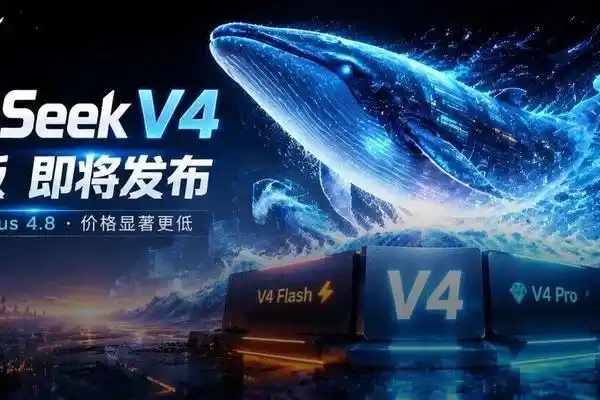
DeepSeek V4 'Full-Blooded Edition' Leaked, Could Be Released As Early As Tomorrow

The highly anticipated full release of DeepSeek V4 is imminent, expected to launch as early as tomorrow after nearly three months of waiting. A select group has already received access to the GA (General Availability) beta, which includes two versions: DeepSeek V4 Flash and DeepSeek V4 Pro. Early testers report that V4's overall performance is close to the level of Opus 4.8, with coding capabilities rivaling GPT-5.6 Sol. Its agent abilities are significantly enhanced, and 3D/SVG generation has improved notably. While it may not surpass the recently released Kimi K3 in performance, its expected price point is significantly lower. The official release will introduce a new "peak/off-peak" pricing model for its API. For example, deepseek-v4-pro will cost $0.87 per million output tokens during standard times and $1.74 during peak hours. The flash version is even more aggressive at $0.28/$0.56 per million tokens, with cached input tokens priced extremely low at $0.0028. This makes V4 a strong contender in terms of cost-effectiveness, potentially offering Opus-level capabilities at a fraction of the cost, continuing DeepSeek's reputation as a "price disruptor" in the AI market. Initial demos showcasing V4's capabilities have begun circulating, including generated 3D simulation games, HTML games blending elements of Minecraft and No Man's Sky, and classic games like a "Cut the Rope" clone. The final GA version is set to replace the older deepseek-chat and deepseek-reasoner models, which will be retired on July 24th.

marsbit53m ago

DeepSeek V4 'Full-Blooded Edition' Leaked, Could Be Released As Early As Tomorrow

marsbit53m ago

WEEX Labs Weekly Observation: The 'Power Restructuring' of AI Infrastructure and the 'Deep Dive Movement' into the Real Economy

WEEX Labs Weekly Review: AI Infrastructure's "Power Restructuring" and the "Deep Dive" into the Real Economy Mid-July 2026 marks a pivotal shift in the global AI industry. The allocation of computing power is transferring from cloud giants to compute resource owners, while the core value of AI is solidifying around its penetration into physical industry, moving beyond the race for model parameters. The era of fragmented model development is over, replaced by a capital-intensive, integrated chain driven by hard tech. Key developments this week include Meta's planned entry into the cloud computing market with "MetaCompute." This move by social media giants with massive GPU clusters challenges traditional cloud providers like AWS, integrating compute, models, and data into one-stop services, which will squeeze smaller rental providers and shift enterprise focus towards underlying model ecosystems. Chinese foundational models like DeepSeek-V4 and Tencent's Hy-3 are pushing towards "utility" status through open-source releases and extreme cost reductions via MoE architectures. This lowers entry barriers for enterprises, allowing them to focus resources on private deployment and deep business integration. Embodied intelligence, particularly humanoid robots, is transitioning from lab demos to real-world factory applications, driven by policies promoting large-scale, practical deployment in logistics and manufacturing. The value focus is shifting from spectacle to stable industrial data and real operational efficiency. Global governance, through forums like WAIC, is evolving from theoretical ethics to practical operational frameworks for "Sovereign AI," raising geopolitical compliance barriers and making auditability and data sovereignty core design requirements from the outset. WEEX Labs Insights: The current transformation shows AI's prosperity is deeply embedding into the fabric of global manufacturing. Strategic recommendations include: 1) leveraging open-source models for private, proprietary knowledge bases; 2) maintaining cloud provider diversity to avoid vendor lock-in from integrated model ecosystems; and 3) seeking opportunities in the "embodied infrastructure" supporting robots, such as data collection, industrial simulation, and factory AI adaptation services.

marsbit1h ago

WEEX Labs Weekly Observation: The 'Power Restructuring' of AI Infrastructure and the 'Deep Dive Movement' into the Real Economy

marsbit1h ago

Is WEEX TradFi Reliable? What You Should Know Before Your First Trade of U.S. Stock Tokens

In recent years, cryptocurrency users have expanded their focus beyond Bitcoin and Ethereum to include popular traditional financial (TradFi) assets like Nvidia, Apple, and Tesla stocks. This shift raises key questions: What do these TradFi assets represent on crypto trading platforms? How do they differ from traditional stock ownership? And how can users assess the reliability of platforms offering such products? TradFi products, such as those offered by WEEX TradFi (including NVDA, MSFT, AAPL, TSLA, and QQQ tokens), are blurring the lines between crypto and traditional markets. They allow users to trade based on the price movements of traditional assets within a familiar digital asset trading environment. However, it's crucial to understand that trading a "stock token" is not equivalent to owning the actual stock. Users are participating in price speculation, not gaining shareholder rights like dividends or voting. A key feature of these products is 7x24 trading, offering flexibility beyond traditional market hours. While convenient, this also introduces unique risks, such as potential liquidity gaps and volatility when underlying markets are closed. For users evaluating TradFi products, reliability hinges on transparency and risk management. Critical factors include understanding the product mechanism, how prices track the underlying assets, and the associated risks—especially when using leverage. Popular stocks and indices are still subject to company performance, macroeconomic shifts, and sector trends. Ultimately, TradFi represents a new gateway connecting crypto users to global markets. The future points toward integrated trading environments where the distinction between "crypto investor" and "traditional investor" fades. For newcomers, a platform's reliability stems not from promises, but from a clear understanding of the product, a comprehensive view of risks, and informed judgment of the platform's capabilities.

marsbit1h ago

Is WEEX TradFi Reliable? What You Should Know Before Your First Trade of U.S. Stock Tokens

marsbit1h ago

Trading

Spot

Hot Articles

Discussions

Welcome to the HTX Community. Here, you can stay informed about the latest platform developments and gain access to professional market insights. Users' opinions on the price of AI (AI) are presented below.

活动图片