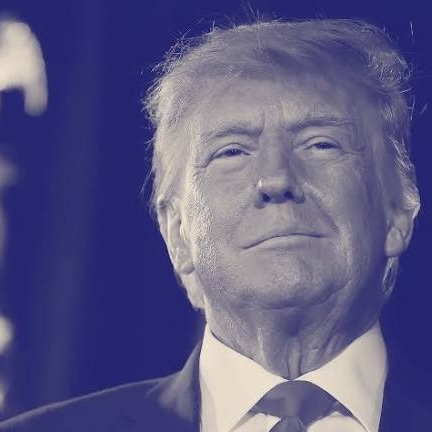
Xi Jinping Attends Opening Ceremony of World Artificial Intelligence Conference 2026 and High-Level Meeting on Global AI Governance, Delivers Keynote Speech

链捕手Published on 2026-07-17Last updated on 2026-07-17

Abstract

On July 17, 2026, Chinese President Xi Jinping delivered a keynote speech titled "Working Together to Build a Fair and Equitable Global Governance System on Artificial Intelligence" at the opening ceremony of the 2026 World Artificial Intelligence Conference and High-level Conference on Global AI Governance in Shanghai. President Xi pointed out that the rapid development of AI, alongside the accelerated global changes, presents both significant opportunities and governance challenges. He raised critical questions for humanity regarding human-machine coexistence, safety, ethics, and bridging divides. China advocates for a people-oriented, benevolent approach to AI, making it a force for common prosperity and security, and jointly building a fair and reasonable global AI governance system. Xi Jinping put forward a four-point proposal: 1. **Uphold Openness for Win-Win Cooperation and Drive Innovation:** Seize the historic opportunity by encouraging open-source collaboration and sharing to foster AI innovation, industry growth, and application, empowering all sectors. 2. **Enhance Risk Awareness and Ensure Security and Controllability:** Attach great importance to AI's inherent and derivative risks. Build systems for laws, technical monitoring, risk warning, and emergency response to safeguard security, prevent misuse, and ensure human control. Oppose the practice of politicizing national security in AI. 3. **Encourage Inclusiveness and Promote Cultural Exchange:** Shape AI'...

Source: Xinhua News Agency

On the morning of July 17, President Xi Jinping attended the opening ceremony of the World Artificial Intelligence Conference 2026 and High-Level Meeting on Global AI Governance at the World Meeting Room in Shanghai and delivered a keynote speech.

By the Huangpu River, a new tide is rising. The World Meeting Room gathered distinguished guests.

Xi Jinping posed for a group photo with attending heads of state, heads of government, leaders of international organizations, and delegation leaders from various countries.

Amid warm applause, Xi Jinping delivered a keynote speech titled "Working Together to Build a Just and Equitable Global Governance System for Artificial Intelligence".

Xi Jinping pointed out that the world is undergoing profound changes at a scale not seen in a century, and a new round of technological revolution and industrial transformation is accelerating, with global AI technological innovation entering an unprecedented period of activity, bringing both tremendous opportunities and governance challenges. Humanity is confronted with the question of our time: How should humans interact with thinking machines? How can safety be ensured when algorithms participate in decision-making? How can governance keep pace when technology challenges ethics? How can inclusivity be achieved as the divide widens? China believes that countries should uphold a people-centered, upward and good-oriented philosophy, make AI an important source of impetus for promoting common prosperity and safeguarding common security, and work together to build a just and equitable global governance system for AI.

Xi Jinping put forward four proposals in this regard:

First, we should uphold openness and win-win cooperation to drive innovation and development. We should seize the rare historical opportunity, encourage open-source and open, cooperative sharing, comprehensively promote AI technological innovation, industrial development, and scenario applications, and coordinate efforts to upgrade traditional industries, cultivate and expand emerging industries, and strategically plan for future industries, enabling AI to empower industries across the board.

Second, we should strengthen risk awareness to ensure safety and controllability. We should attach great importance to various inherent and derivative risks arising from AI, promote the establishment of systems for laws and regulations, technical monitoring, risk warning, and emergency response, safeguard the bottom line of safety, prevent misuse and malicious use, and ensure AI remains under human control. We should jointly oppose the practice of overgeneralizing the concept of national security in the field of AI and prioritizing one country's security over that of others.

Third, we should encourage inclusiveness to promote mutual learning among civilizations. We should shape the values of AI with the common values of humanity, leverage AI technology to enhance understanding and tolerance among different civilizations, facilitate exchanges and mutual learning between civilizations, and cultivate a garden of civilizations where each preserves its beauty and all share in the splendor.

Fourth, we should advocate solidarity and collaboration to improve global governance. We should practice true multilateralism, give full play to the important role of the United Nations, strengthen alignment and coordination of AI development strategies, governance rules, and technical standards, and strive to develop a global governance framework with broad consensus at an early date, so that this cutting-edge technology can better benefit human society. We should help Global South countries strengthen capacity building, bridge the digital and AI divide, promote sustainable development, and avoid creating new historical injustice in the AI field.

Xi Jinping emphasized that this year marks the beginning of China's 15th Five-Year Plan. The 15th Five-Year Plan outlines the blueprint for China's economic and social development over the next five years and also provides a list of opportunities for the international community. In recent years, China has combined an effective market with a proactive government, strengthened AI technological innovation, actively promoted the "AI Plus" initiative, fostered a healthy ecosystem where various entities coexist and thrive, with the core industry scale of the intelligent economy exceeding 10 trillion RMB, and "Intelligent Manufacturing China" has become another bright name card of Chinese modernization. At the same time, China prioritizes both development and security, continuously improving relevant laws and regulations, policy systems, application norms, and ethical guidelines to ensure AI is safe, reliable, and controllable. As a responsible major country, China has always been committed to being a provider of international public goods in the field of AI, consistently contributing Chinese solutions.

Xi Jinping pointed out that with the joint efforts of all parties, the World Artificial Intelligence Cooperation Organization (WAICO) has emerged in Shanghai. This is a major step taken by China in response to the call of the Global South and in uniting the international community to actively promote AI development and governance, and it will become an important milestone in the history of AI development. To further support global AI development and advance global AI capacity building, in the next five years, China will provide 5,000 specialized AI training placements for developing countries; build International AI Application Cooperation Centers for ASEAN, the Arab League, the African Union, CELAC, the Shanghai Cooperation Organization, and BRICS countries; and promote the application of the "Mazu" meteorological intelligent warning system in 30 countries. China is willing to work with all parties, with a more open attitude, more practical actions, and a longer-term vision, to grasp and address the opportunities and challenges brought by AI development and jointly create a brighter future for human society.

Kazakhstan President Kassym-Jomart Tokayev, Cambodian Prime Minister Hun Manet, Thai Prime Minister Anutin Charnvirakul, and UN Secretary-General António Guterres delivered speeches respectively. They warmly congratulated the signing ceremony of the Agreement on the Establishment of the World Artificial Intelligence Cooperation Organization in Shanghai, highly commended China's important contributions to promoting global AI governance, and responded positively to the initiatives and measures proposed by President Xi Jinping. They stated that AI holds the potential to be humanity's greatest development opportunity but also harbors risks. China advocates for AI that is good, inclusive, and safe and controllable, actively helps developing countries strengthen relevant capacity building, and promotes international AI cooperation, demonstrating its sense of responsibility as a major country. AI technology should be shared and governed by all countries, benefiting all nations fairly, serving the sustainable development of all humanity, and bridging the global digital/AI divide and the North-South development gap. The opportunities and challenges brought by AI transcend national borders and require joint cooperation to grasp and address. They expressed hope and belief that the WAICO will play an important role in this regard, and through open, inclusive, equal, and mutually beneficial cooperation, jointly forge a secure, prosperous future where no country is left behind.

The Conference issued the "Chair's Statement of the World Artificial Intelligence Conference 2026 and High-Level Meeting on Global AI Governance".

On the evening of July 16, Xi Jinping and his wife, Peng Liyuan, held a welcome banquet for the distinguished international guests at the World Meeting Room.

Cai Qi, Ding Xuexiang, Wang Yi, and others attended the aforementioned activities.

Chen Jining presided over the opening ceremony.

Trending Cryptos

Related Questions

QAt which event did President Xi Jinping deliver a keynote speech on July 17th, and what was the title of the speech?

AHe delivered a keynote speech titled 'Working Together to Build a Fair and Rational Global AI Governance System' at the opening ceremony of the 2026 World Artificial Intelligence Conference and the High-Level Meeting on Global AI Governance in Shanghai.

QWhat were the four key points President Xi Jinping proposed for building a global AI governance system?

A1) Uphold openness for win-win outcomes and innovation-driven development. 2) Strengthen risk awareness to ensure safety and controllability. 3) Encourage inclusiveness and mutual learning among civilizations. 4) Advocate for solidarity and cooperation to improve global governance.

QWhat major AI initiative was established in Shanghai according to the speech, and what is its significance?

AThe World Artificial Intelligence Cooperation Organization (WAICO) was established in Shanghai. It is a significant milestone in the history of AI development and a major step by China in response to the call from the Global South to unite the international community in promoting AI development and governance.

QWhat concrete measures did President Xi Jinping announce to support global AI development and capacity building over the next five years?

AChina will provide 5,000 AI training opportunities for developing countries, establish international AI application and cooperation centers for organizations like ASEAN and BRICS, and promote the application of the 'Mazu' meteorological intelligent early warning program in 30 countries.

QHow did the foreign dignitaries quoted in the article characterize China's role in global AI governance?

AThey highly appreciated China's important contributions to promoting global AI governance. They stated that China's advocacy for good AI, inclusiveness, safety, and its efforts to help developing countries build capacity demonstrate the responsibility of a major country. They believe AI should be shared and governed by all nations.

Related Reads

Trump’s Teleprompter Operator Investigated for Insider Trading, "Whistleblower" Turns Out to Be Prediction Platform Kalshi

According to reports from CNBC and ABC, a longtime teleprompter operator for President Trump, Gabriel Perez, is under federal investigation for allegedly using insider information to place bets on the prediction market platform Kalshi. Perez, who had handled Trump's speeches since 2016, is suspected of trading on over a dozen upcoming presidential addresses, including the State of the Union, based on his advance knowledge of speech content. Kalshi's monitoring systems flagged the atypical trading patterns in March, leading to his account being frozen and the case being referred to the Commodity Futures Trading Commission (CFTC). Perez reportedly profited over $90,000, though most funds are held by the platform. He is now in settlement talks with the CFTC and has been placed on unpaid leave by the White House. This incident is part of a broader pattern of insider trading on prediction markets. Similar cases involve a congressional candidate betting against his own attendance, military personnel using classified information, and a Google engineer trading on internal data. The growing liquidity of these markets, with some contracts seeing over $150,000 in volume, creates incentives for abuse. In response, platforms like Kalshi are enhancing monitoring, requiring occupational disclosures, and cooperating with regulators. The CFTC and the Justice Department are pursuing civil and criminal actions, while the White House has issued memos explicitly barring staff from such trading.

Foresight News2m ago

Trump’s Teleprompter Operator Investigated for Insider Trading, "Whistleblower" Turns Out to Be Prediction Platform Kalshi

Foresight News2m ago

CLARITY Act Delays Have Become a Compliance Crisis, Not Just a Political Stalemate

The article discusses the ongoing delay in the US Senate regarding the CLARITY Act, a bill intended to clarify the regulatory status of digital assets as either securities under the SEC or commodities under the CFTC. A year after the House passed it, this inaction is creating a concrete governance, risk, and compliance crisis for businesses, moving beyond mere political gridlock. While related bills for stablecoins and CBDC prohibitions have become law, the comprehensive CLARITY Act remains stalled. The delay creates profound uncertainty for companies on fundamental rules for exchanges, custodians, and all market participants. Without clear congressional action, regulatory classification depends on shifting enforcement actions and presidential administrations, making stable compliance impossible. The Senate's window for action is narrowing, with key votes needed before the August recess. Several major issues are blocking passage, including ethical concerns over crypto holdings by officials, law enforcement opposition to certain provisions, perceived loopholes for stablecoin rewards, and regulatory agency vacancies at the SEC and CFTC. Bipartisan support is fragile. Further delay risks postponing the legislation until 2030, perpetuating a costly "regulation by enforcement" environment. In contrast, passage would provide a durable regulatory framework. Regardless of the outcome, compliance leaders are urged to immediately map their digital asset exposures, prepare governance materials for both scenarios, and stress-test their arrangements. The article concludes that while the Senate's action is uncertain, corporate preparedness is not.

Foresight News32m ago

CLARITY Act Delays Have Become a Compliance Crisis, Not Just a Political Stalemate

Foresight News32m ago

The 'Big Short' Burry: Now is an Excellent Time to Bottom-Fish in Hong Kong Stocks

The article discusses growing optimism towards Hong Kong stocks, led by prominent investor Michael Burry of "The Big Short" fame. Burry recently stated it is an "excellent time" to find cheap stocks in the Hong Kong market. His bullish view is based on the prediction that as the global AI chip stock frenzy cools, capital will flow out of markets like South Korea and Japan and seek undervalued opportunities, positioning Hong Kong as a potential beneficiary. Supporting this view, Goldman Sachs' Asia equity capital markets head, Wang Yajun, argues the Hong Kong market has already entered the AI era, but major indices have not yet reflected this reality. He points to active AI-related IPOs and transactions as evidence of underlying market vitality, contrasting with the weak performance of key indices like the Hang Seng. Data highlights Hong Kong's underperformance: the Hang Seng Index is down about 7% year-to-date, while markets in South Korea and Japan and semiconductor ETFs have seen significant gains. This disparity is seen by Burry and others as creating a valuation gap and a potential buying opportunity. The article notes Burry has acted on his view by increasing holdings in Chinese e-commerce firm JD.com. Morgan Stanley has also recently advocated buying Hong Kong stocks, citing positive corporate earnings expectations. However, challenges remain, including persistent concerns over Chinese consumer spending and e-commerce profitability, which continue to weigh on the market. The divergence between weak index performance and strong activity in specific sectors like AI presents both opportunity and complexity for investors looking to capitalize on Hong Kong's potential turnaround.

marsbit1h ago

The 'Big Short' Burry: Now is an Excellent Time to Bottom-Fish in Hong Kong Stocks

marsbit1h ago

Trading

Spot

Hot Articles

Discussions

Welcome to the HTX Community. Here, you can stay informed about the latest platform developments and gain access to professional market insights. Users' opinions on the price of AI (AI) are presented below.

活动图片