New ChatGPT Feature: AI Begins Monitoring Users

cryptonews.ruPublished on 2026-08-14Last updated on 2026-08-14

Abstract

OpenAI has launched "Computer History," a new feature for its ChatGPT desktop app on macOS, designed to track user activity across applications and websites. This allows the AI model to use this data to provide more accurate and personalized responses in subsequent conversations. The feature, released on August 13th, is available to Pro, Business, and Enterprise subscribers. However, its rollout in the European Economic Area, the UK, and Switzerland is delayed as OpenAI works to align the tool with local data processing regulations. Computer History operates in the background, logging user activity into a temporary timeline. Users can review, manage, or delete this history via the app's interface or macOS menu bar. The feature is opt-in and requires explicit user activation in the settings. This release replaces and expands upon an earlier experimental project called Chronicle. OpenAI states the new version is more computationally efficient and offers improved privacy controls. The launch coincides with other AI advancements from the company, including a high-speed GPT-5.6 model. The article notes potential technical risks associated with the predecessor, Chronicle, such as prompt injection vulnerabilities and unencrypted local data storage. It also highlights the competitive landscape, where similar memory features are being developed by rivals like Anthropic's Claude and Google's Gemini. The delayed European rollout underscores the ongoing challenge of balancing deep per...

OpenAI has released a tool called Computer History for the desktop ChatGPT application on macOS. It analyzes user activity across different applications and websites to make the model's subsequent responses more accurate and personalized.

The update was released on August 13th and is available for Pro, Business, and Enterprise subscribers. Residents of the EEA, the UK, and Switzerland will gain access later—the company plans to bring the feature into compliance with local data processing requirements in the coming weeks.

The company announced the launch on the social network X, calling Computer History an evolution of an earlier experimental project called Chronicle. According to OpenAI's statement, the new version consumes fewer tokens to maintain context and offers users more privacy management tools than the early test release.

How It Works

Computer History is built into the desktop ChatGPT application for Mac and runs in the background. The service records which applications and websites a person uses and adds this data to a temporary activity timeline. In subsequent dialogues, the model can rely on this history, reducing the amount of context that would otherwise need to be entered manually.

According to the company, the timeline interface allows users to return to previously completed tasks, track recurring work scenarios, clear the entire history or only a selected period—either through the timeline itself or via the menu in the macOS status bar.

The key condition is enabling the option in the Settings section, under the Integrations tab. Without this step, data collection does not start, and the function's status is always displayed openly in the settings so the user can see whether tracking is active.

OpenAI describes the Computer History function not simply as an extension of memory about conversations within ChatGPT, but as a mechanism that allows the model to account for the user's recurring work patterns outside of dialogue with the chatbot.

ChatGPT's Memory Expands, Europe Waits for Now

In 2026, OpenAI significantly accelerated the implementation of permanent memory across all its key products. The experimental Chronicle function, which is now being replaced and enhanced by Computer History, had already introduced the idea of cross-session context for users of the desktop version.

The new release reduces the computational costs of maintaining such context. On the same day, OpenAI announced GPT-5.6 Ultrafast mode on Cerebras chips—for API customers, generation speed reaches 750 tokens per second. This was announced several hours before the launch of Computer History.

Meanwhile, regulators in the EU and the UK are closely monitoring tools that involve the permanent storage of user data. The decision to delay the launch of Computer History in the EEA, the UK, and Switzerland indicates that the company first aims to bring the feature into compliance with local regulations before granting access in these regions.

Users who do not want the system to track their activity can simply not enable this function—it operates solely on the principle of voluntary consent.

AI Opinion

From the perspective of machine data analysis, the predecessor of the new feature contained technical risks not mentioned in the article. The official OpenAI documentation for the Chronicle project directly indicated increased risks of prompt injection and storage of records in unencrypted form on the user's device—these details are important when assessing the maturity of the technology underlying Computer History.

The macroeconomic context here also deserves attention. The trend towards persistent personalization through analysis of user activity intensifies competition with other major players in the chatbot market—particularly with Anthropic's Claude and Google's Gemini, which are developing similar memory mechanisms in parallel with OpenAI. The delayed launch in the EEA, the UK, and Switzerland can be viewed not only as a gesture of compliance with regulations but also as an indicator of how difficult it is to balance deep personalization with data protection requirements across different jurisdictions.

Will voluntary consent remain a sufficient barrier for user trust as the volume of collected activity data grows?

end-content

Trending Cryptos

Related Questions

QWhat is the primary purpose of OpenAI's new Computer History feature for the ChatGPT desktop app on macOS?

AThe primary purpose of the Computer History feature is to analyze a user's activity across different applications and websites to make the AI model's subsequent responses more accurate and personalized, by providing it with relevant context automatically.

QWhich user groups currently have access to the Computer History feature, and which regions will receive it later?

AThe feature is currently available for subscribers on the Pro, Business, and Enterprise plans. Residents of the European Economic Area (EEA), the United Kingdom, and Switzerland will receive access later, as OpenAI works to align the feature with local data processing requirements.

QAccording to the article, what is a key technical improvement of Computer History over its predecessor, Chronicle?

AA key technical improvement is that the new Computer History feature consumes fewer tokens to maintain context, reducing computational costs compared to the earlier experimental Chronicle project.

QWhat privacy control does OpenAI emphasize regarding the activation of the Computer History tracking?

AOpenAI emphasizes that the feature operates strictly on a voluntary consent basis. Data collection only begins if the user manually enables the option in the Settings under the Integrations tab, and the feature's status is always displayed openly so the user knows if tracking is active.

QWhat major concern does the article's 'AI Opinion' section raise about the future of such personalized tracking features?

AThe 'AI Opinion' section raises the concern of whether voluntary consent will remain a sufficient safeguard for user trust as the volume of activity data collected by such personalized features continues to grow, especially given the complex balance between deep personalization and data protection regulations across different jurisdictions.

Related Reads

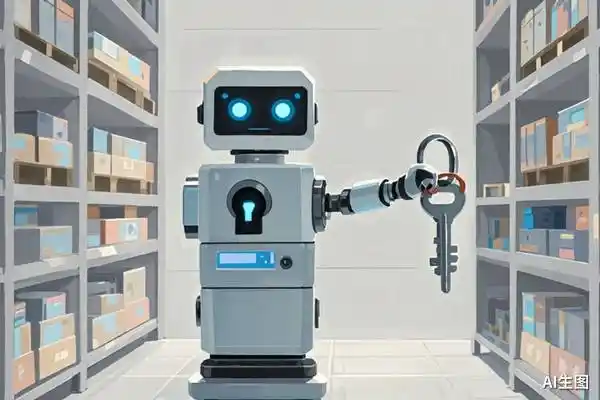
GPT-5 Also Has Tip-of-the-Tongue Moments, Google Tested 4.5 Million Times: The Keys Are Lost

Google researchers have discovered that advanced AI models like GPT-5 and Gemini 3 experience a phenomenon akin to the human "tip-of-the-tongue" state, where they possess knowledge but fail to retrieve it. Their study, "Empty Shelves or Lost Keys?" (ICML 2026), introduces the "Knowledge Portrait" framework to analyze factual knowledge in models, distinguishing between failure to encode a fact versus failure to recall it. Testing on 13 models across 2.15 million queries from the WikiProfile benchmark revealed that state-of-the-art models successfully encode 95-98% of facts into their parameters. However, when asked directly, they fail to recall 26-34% of these known facts. Enabling chain-of-thought ("thinking") reasoning reduces this recall failure to 11-12%, recovering 40-65% of the previously unrecalled but encoded facts. The research identifies two key bottlenecks: recalling obscure ("long-tail") facts and answering reversed queries (e.g., "Who is Tom Cruise's mother?" vs. "Whose son is Tom Cruise?"). While scaling model size effectively reduces encoding failures, it does little to improve recall rates. In larger models, recall failure becomes the dominant source of factual errors, accounting for over 70% of mistakes in GPT-5.2. The findings suggest that for top models, the primary challenge is no longer storing knowledge but accessing it efficiently. Future accuracy gains may depend more on improved inference-time methods and "meta-cognitive" abilities, enabling models to recognize when they need to engage in deeper reasoning to retrieve information they already know.

marsbit1h ago

GPT-5 Also Has Tip-of-the-Tongue Moments, Google Tested 4.5 Million Times: The Keys Are Lost

marsbit1h ago

The Dollar is a Technology: Stablecoins Are Exporting U.S. Institutions to the World

This article argues that stablecoins and blockchain infrastructure are becoming a vehicle for exporting American financial systems globally. The core thesis is that the U.S. dollar, as a "technology," is increasingly embedded in blockchain rails, moving beyond a reserve currency to represent the institutional stability of the United States itself. The piece highlights three key areas where this is happening: 1. **Cross-border payments and trade finance:** Companies like Keyrails use stablecoins and blockchain to streamline and secure trade finance for emerging markets (e.g., Nigeria-China trade), offering faster, often cheaper dollar liquidity than traditional systems. 2. **Programmable collateral and credit:** Platforms like SemiLiquid allow institutions to use tokenized assets (e.g., treasuries, stocks) as "programmable collateral" for loans without moving them from custody, unlocking capital efficiency and improving transparency in institutional lending. 3. **Financing real-world assets:** Protocols like USD.AI create lending markets for productive, hard-to-finance assets like AI GPUs, connecting global stablecoin liquidity to physical capital. The author concludes that the true value of these new blockchain-based financial platforms lies not just in transaction volume, but in the deep, hard-to-replicate "context" (data, trust, operational knowledge) they build around specific economic activities like trade and asset finance. This represents crypto's evolution into an operating system for real-world capital formation, moving beyond speculation.

marsbit1h ago

The Dollar is a Technology: Stablecoins Are Exporting U.S. Institutions to the World

marsbit1h ago

Trading

Spot

Hot Articles

Discussions

Welcome to the HTX Community. Here, you can stay informed about the latest platform developments and gain access to professional market insights. Users' opinions on the price of AI (AI) are presented below.

活动图片