Anthropic CEO Denies Rumors, Aims to Transform AI for His Deceased Father and Eradicate Cancer Within 10 Years

marsbitPublished on 2026-08-17Last updated on 2026-08-17

Abstract

Anthropic CEO Dario Amodei has published a rare, lengthy public statement to counter significant criticism from Silicon Valley, as the AI company approaches a potential record-breaking IPO with a reported $2 trillion valuation. The core criticism, amplified by investor Gavin Baker, centers on perceptions that Amodei believes Anthropic should be the world's sole private AI company due to the technology's risks, costs, and power—a view allegedly echoed by NVIDIA's Jensen Huang. Amodei firmly rejects this, arguing it presents a false dichotomy. He defends Anthropic's advocacy for regulation, like California's SB-1047, which he claims imposes costs on frontier AI firms while benefiting smaller competitors, and calls for establishing rules that manage AI risks, constrain corporate power, and preserve open-model development. Shifting to ambition, Amodei outlines a radical vision for AI in biomedicine. He states that within 5-10 years, AI could cure most human diseases, a mission deeply personal due to his father's death from hepatitis C just years before a cure became available. Amodei asserts that public trust in AI will be earned not by promises or benchmarks, but by tangible results—AI actually saving lives. He confirms Anthropic is significantly increasing its biology and medical AI investments, with preliminary results expected within months. This narrative reframing comes ahead of Anthropic's anticipated IPO, positioning the company not just as an OpenAI competitor, but as o...

On the eve of the largest IPO in history, Anthropic CEO's rare, lengthy article confronts doubts head-on!

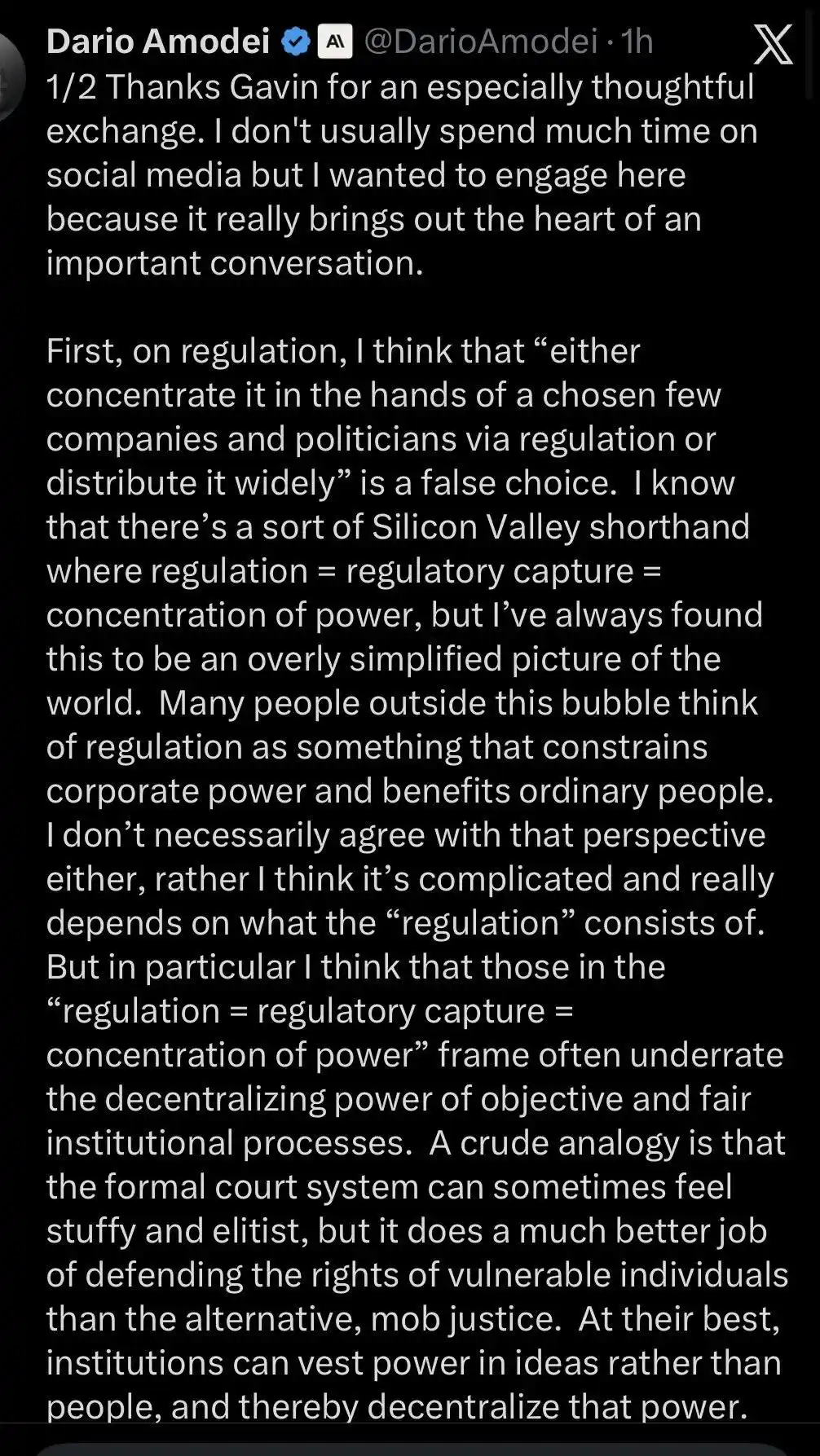
Dario Amodei almost never touches social media.

But at this critical moment where the IPO valuation is being pushed to $2 trillion, he unusually published a long article, directly addressing Silicon Valley's biggest doubts about him.
For a CEO known for caution, who even emphasizes risks during product launches, the weight of these words is heavier than any grand statement.

A person who almost never makes public statements on social media, choosing to step forward at the moment of highest valuation and fiercest controversy—this in itself is a signal.

The Stir: Silicon Valley's Biggest Doubt About Anthropic

The catalyst for the entire conversation was a claim circulating the day before: 'multiple reliable people' told American tech investment heavyweight Gavin Baker:

Dario once said that Anthropic might one day, in some sense, be the world's only private company.

Regarding this claim, Anthropic's Brand and Communications Officer Sasha de Marigny promptly debunked it, but it was already too late.

Think about it, in that vision, a kind of Anthropic supremacist vision, there would be only Anthropic in the world, then national governments, nothing else.

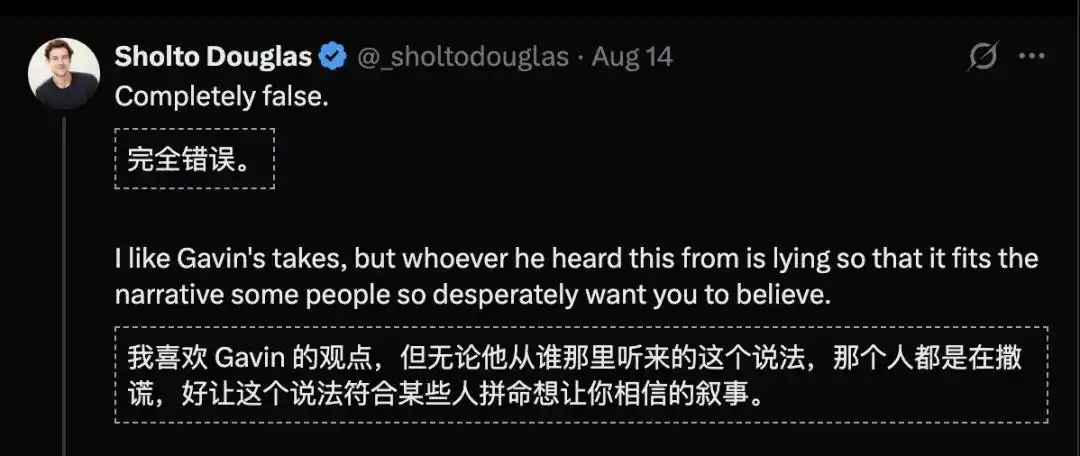
Anthropic's Sholto Douglas immediately dismissed it as nonsense:

Anthropic's biggest concern is precisely the excessive concentration of economic power.
Subsequently, Gavin posted a long response: The problem is, many people in Silicon Valley really believe it. Dario Amodei has already lost.

To be clear, as I outlined on the podcast, I think Anthropic has deep competitive advantages and is an amazing company.

The irony is that a few months ago, the main risk I saw for Anthropic was precisely Dario's own words and actions.

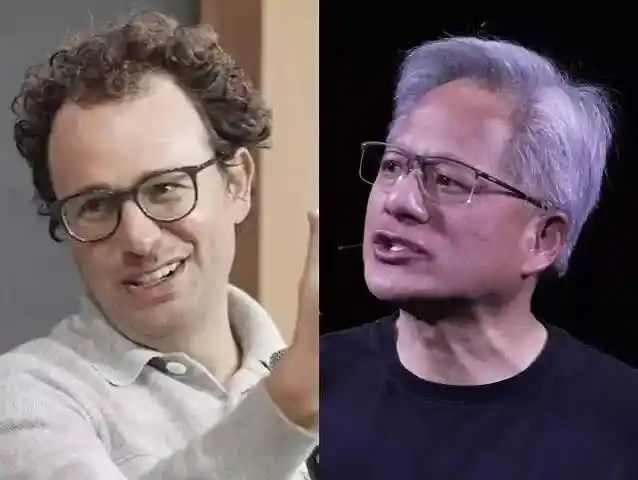
Jensen Huang also once commented on Dario:

First, he thinks AI is too scary, so only they should be the ones doing it......

Second, AI is too expensive, so no one else should do it......

Third, AI is incredibly powerful, everyone will lose their jobs, which explains why they should be the only company building it.

Finally, Jensen advocated for responsible AI development in an open environment, "Not in a dark room, then tell me it's safe."
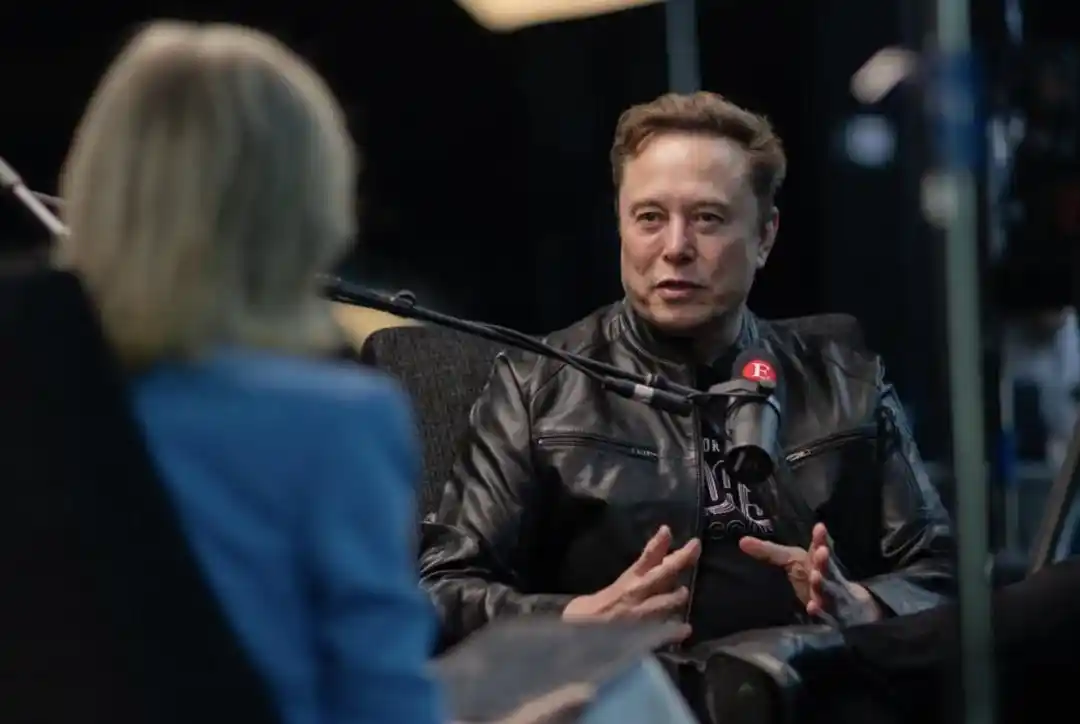
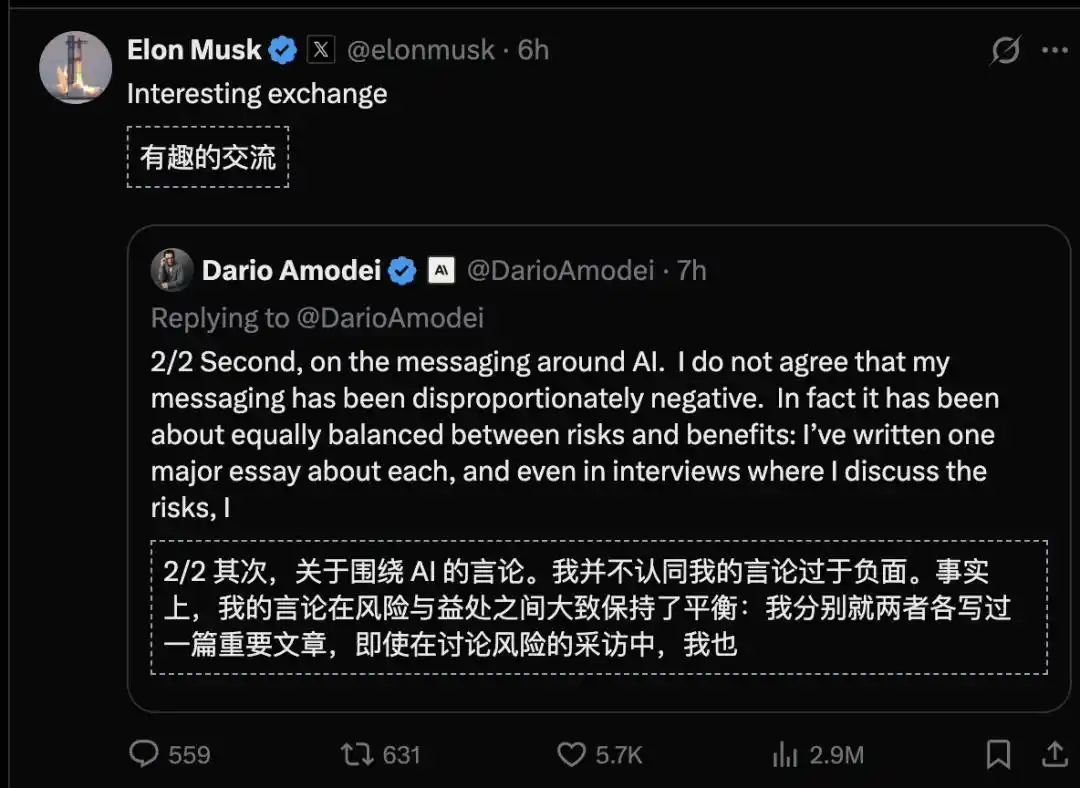
In July, Musk also subtly criticized Dario's communication style: "If you first scare everyone, then say we're going to release this scary thing, of course people will be alert to it."
Now, Dario has strongly rebutted: This is a false dichotomy.

He deconstructs Silicon Valley's most popular logic: Regulation = Regulatory Capture = Power Concentration.

Dario says this formula oversimplifies complex issues. He gives an analogy: The court system oversees everyone, but it still protects the weak better than mob justice. Institutions make power belong to rules, not to any individual.

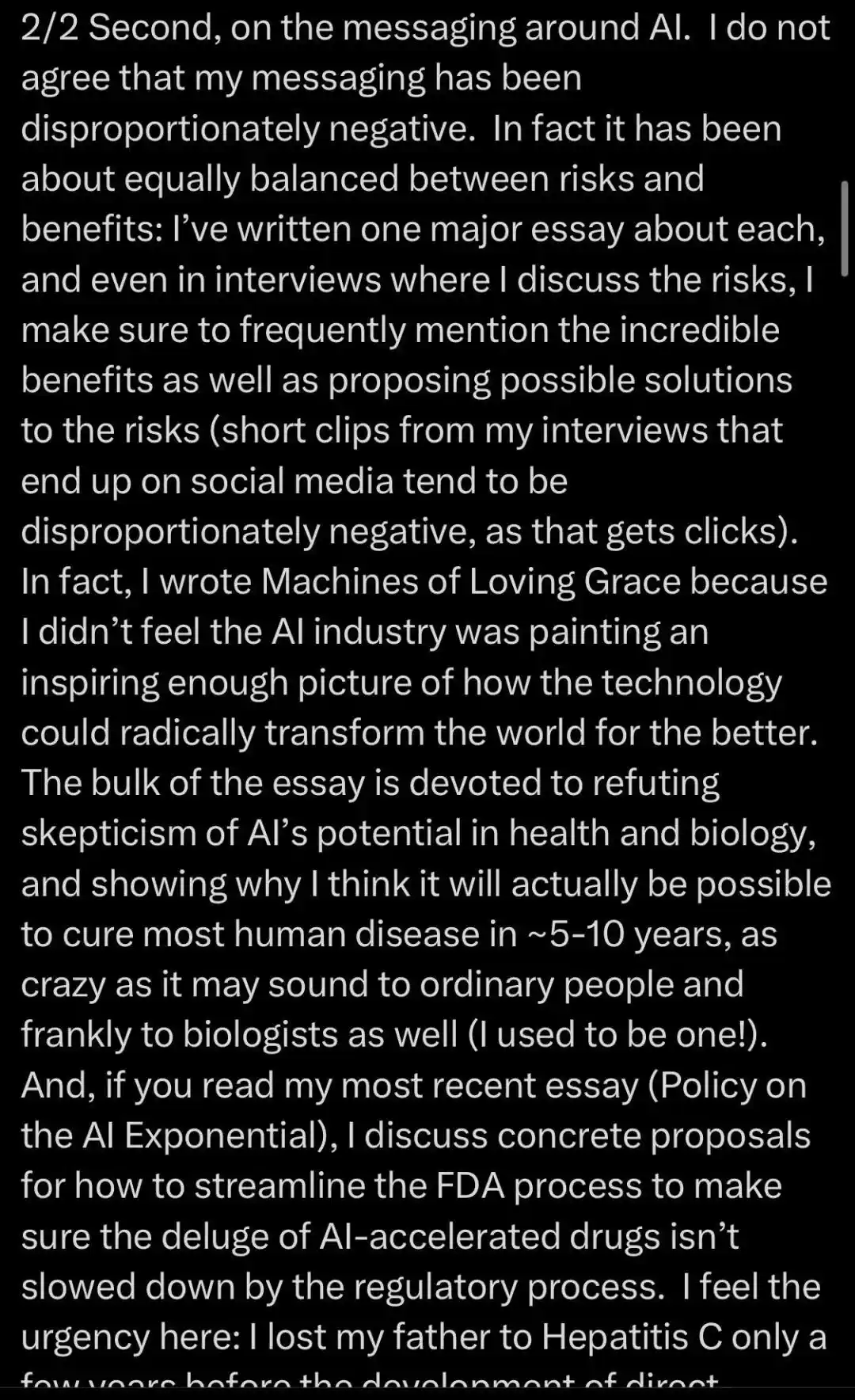
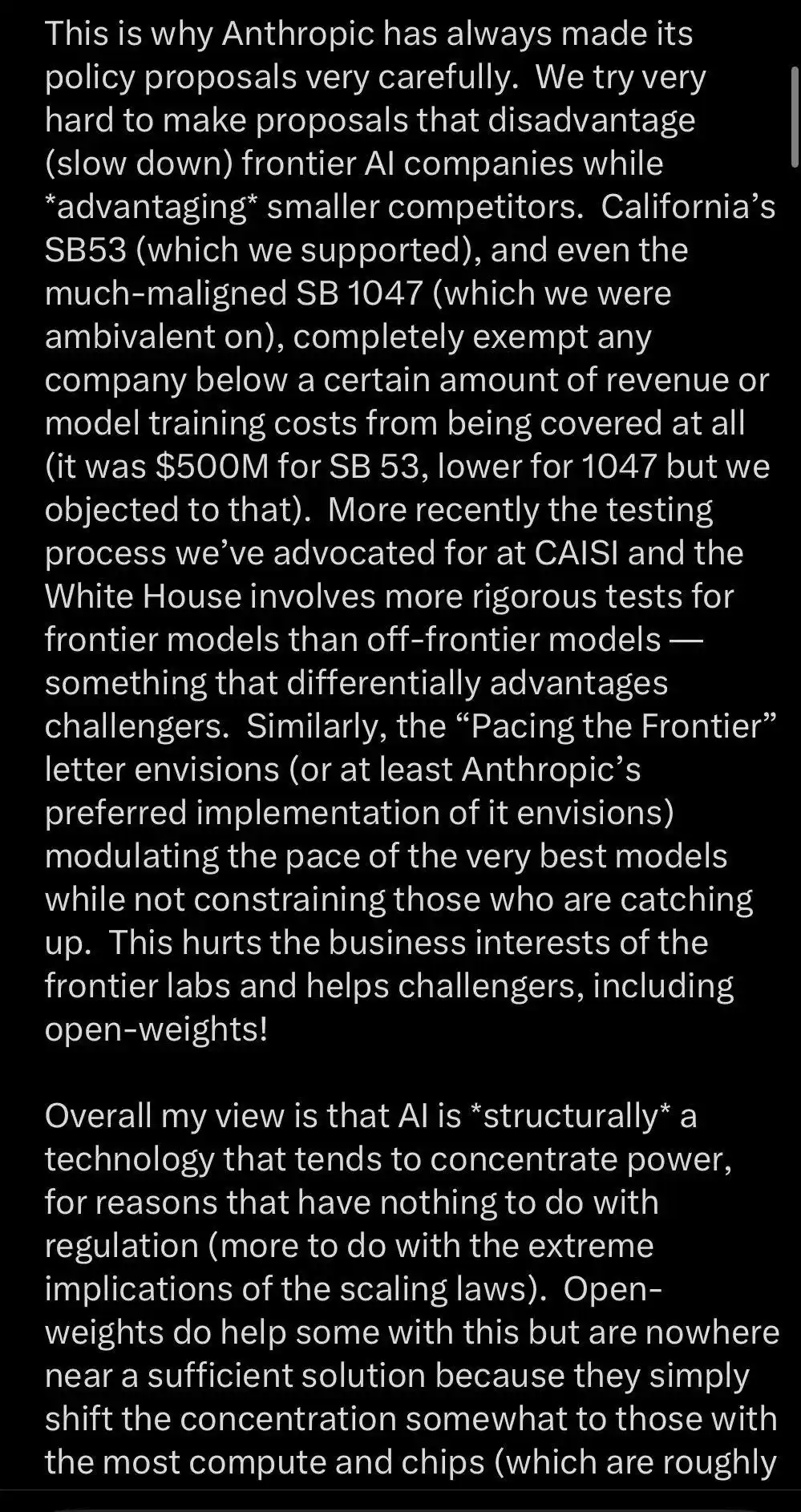
He cites California SB 53 bill, supported by Anthropic, as an example: AI companies with revenue below $500 million are completely unconstrained. In other words, the rules only restrict the most cutting-edge players, while small companies benefit instead.

"Every policy we design places more costs on frontier companies while benefiting smaller competitors."

He believes that if the right "rules of the game" can be established, it is entirely possible to achieve three things simultaneously:

1. Address AI risks in cybersecurity, biosecurity, and alignment;

2. Use institutions to constrain the power of frontier AI companies;

3. Preserve space for open-weight models to develop while taking measures for their specific risks.

He also supports the idea proposed by Demis Hassabis of establishing an AI regulatory body similar to FINRA (Financial Industry Regulatory Authority).

But what really pricked up ears was his shift to talk about ambition.

Anthropic is ramping up its investment in biomedical AI at full speed.

Ambition: AI Cures All Diseases

His judgment is extremely radical: In the next 5-10 years, AI will be able to cure most human diseases.

He believes:

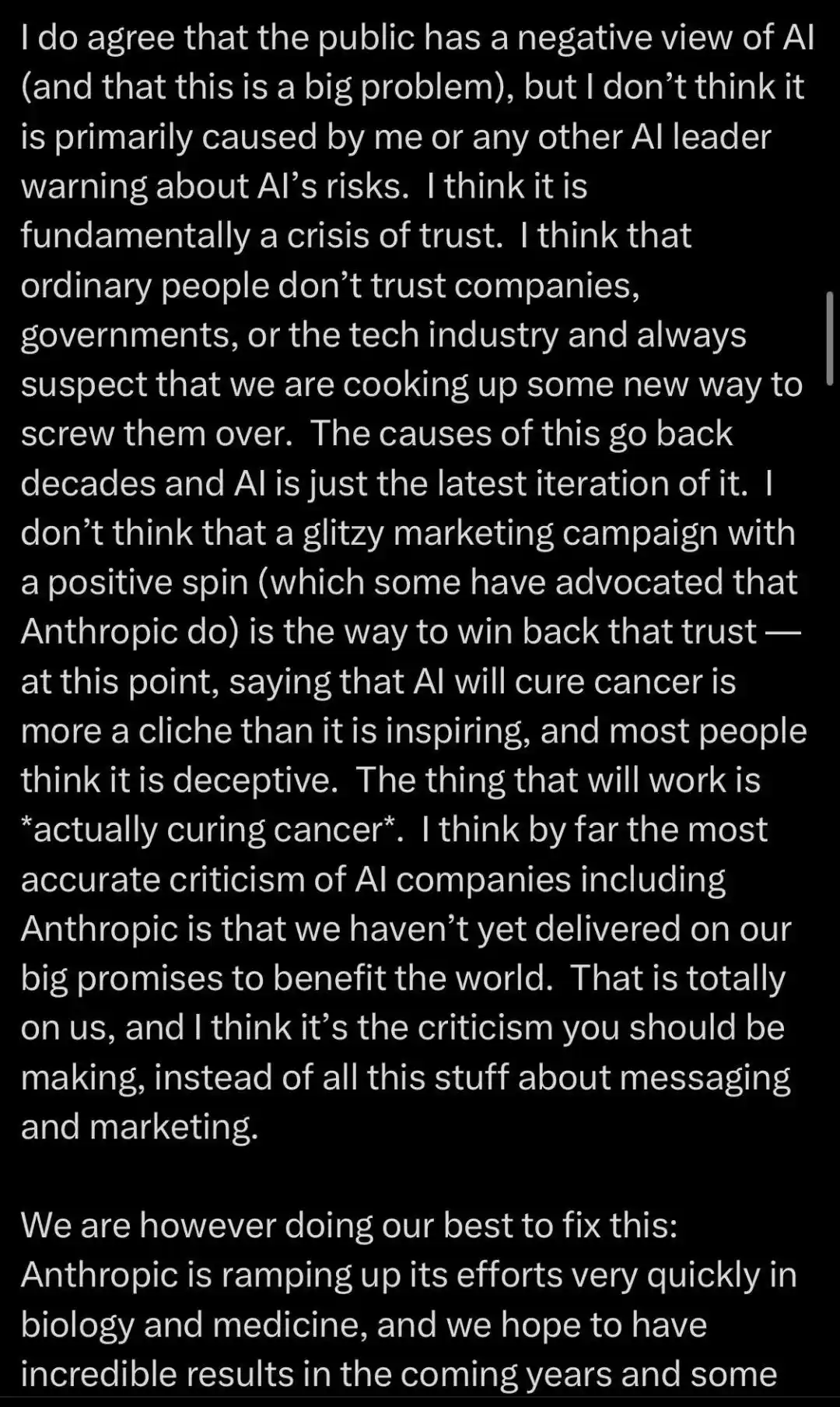
So far, the most accurate and powerful criticism of AI companies, including Anthropic, is actually: We haven't delivered on those grand promises about 'using AI to benefit the world.'

The only antidote is not slogans, but "Only when we can really cure cancer will the public trust AI."

Anthropic is rapidly increasing investment in biology and medicine. We hope to achieve remarkable results in the coming years and see some initial glimmers in the coming months.
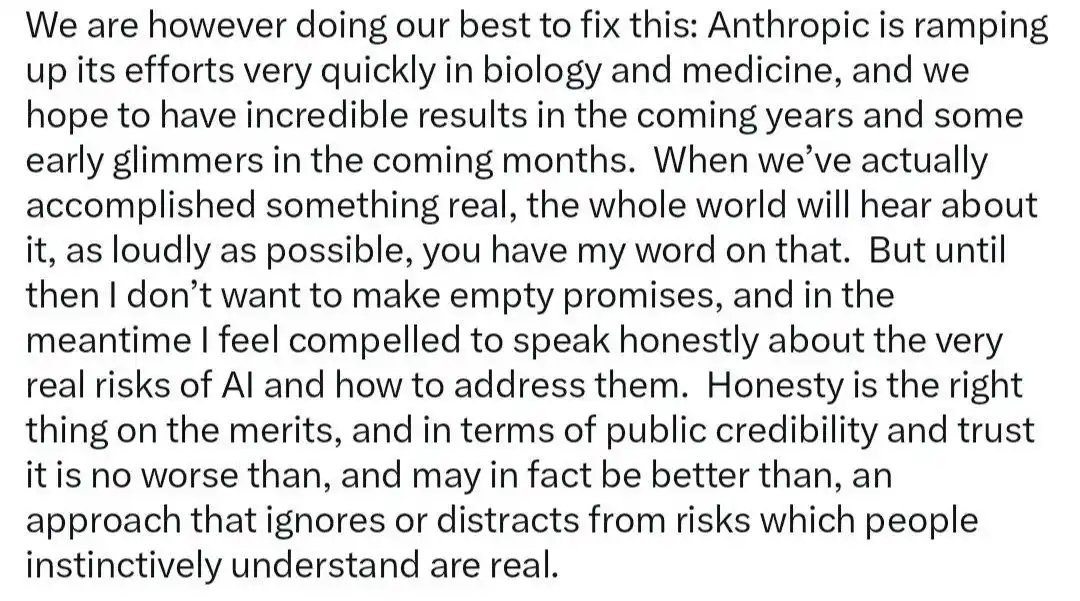
He predicts that within 5 to 10 years, AI will be able to cure most human diseases. He gives a specific timeline.

This confirms The Wall Street Journal's report that Anthropic is making a major bet on the healthcare field to alleviate the rising negative sentiment among the American public towards AI.
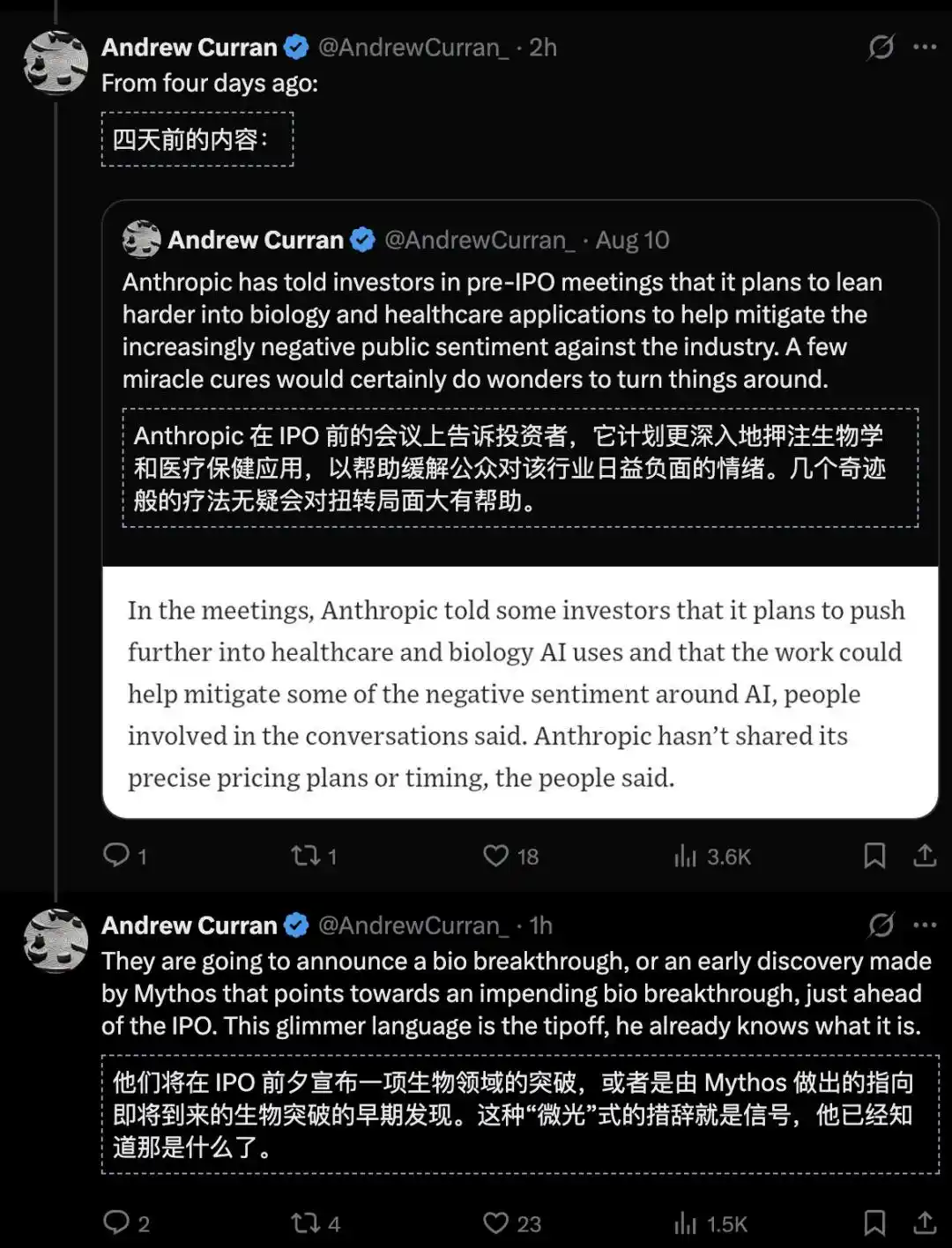
In October 2024, his judgment was even bolder: Strong AI could compress 50 to 100 years of biological progress into 5 to 10 years.

At that time, many people treated this as a vision, to be taken with a grain of salt.

This time is different, he says, in the coming months, glimmers of early research will be made public.

Then he tells a personal story—his father died from Hepatitis C.

In 2006, Dario Amodei, 23 years old, was studying theoretical physics at Princeton.
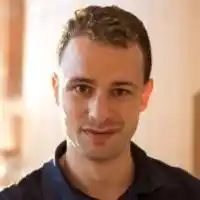
After years suffering from the chronic disease Hepatitis C (HCV), his father Riccardo couldn't hold on and eventually passed away.

Back then, the cure rate for this disease was about fifty-fifty. Whether you lived or died was a matter of fate.

By 2010, specific oral medications appeared, like Sofosbuvir. Overnight, the HCV cure rate skyrocketed from 50% to 95%.

People in a similar situation to Riccardo, swallowing a few pills, could mostly be cured.

Four years too late, his father didn't wait for it. He was gone, everything was too late. The son wishes to care for his parent, but the parent is no longer there.

Amodei later repeatedly brought up this event:

Someone researched a treatment for this disease, really cured it, and saved many lives.

But even more people could have been saved.

In a sense, Amodei's life thereafter has been a response to his father's death.

Amodei shifted from theoretical physics to biology, hoping to directly research human diseases and biological problems.

But he soon found life too complex, already beyond the capability of a single human scientist.

So he eventually turned his gaze towards AI.

This is also why his acceptance criterion for "AI curing diseases" is only one: Don't shout "AI will cure cancer," actually cure cancer.

Until then, he doesn't issue blank checks. He is blunt: Public trust in AI will not come from press conferences and benchmark tests, it will only come from one thing—AI actually saving lives.

This isn't just sentiment. On the eve of the IPO, this is a narrative reconstruction.

On the Eve of IPO, Narrative Reconstruction

The timing of this statement is thought-provoking. According to the Financial Times, Anthropic could go public as early as this October, with valuations given by some investors reaching $2 trillion—surpassing SpaceX's $1.77 trillion, setting a new record for the largest IPO in history.
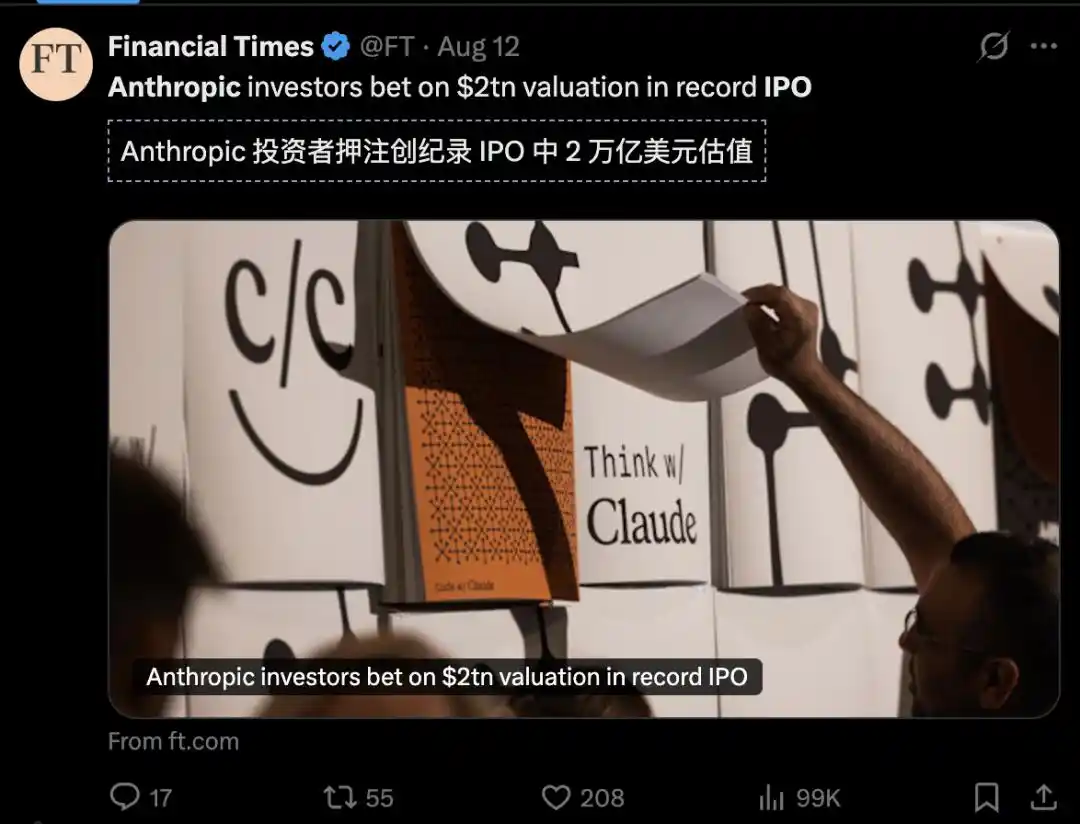
It took only five years from 2021 when Dario left OpenAI with his sister Daniela to start Anthropic, to today's valuation surpassing his former employer.

Supporting this number is a revenue curve steep to an absurd degree: Annualized revenue of $1 billion in January 2025, breaking $47 billion in May 2026. In less than 18 months, 47x growth. Enterprise API market share at 32%, surpassing OpenAI for the first time to take the top spot.
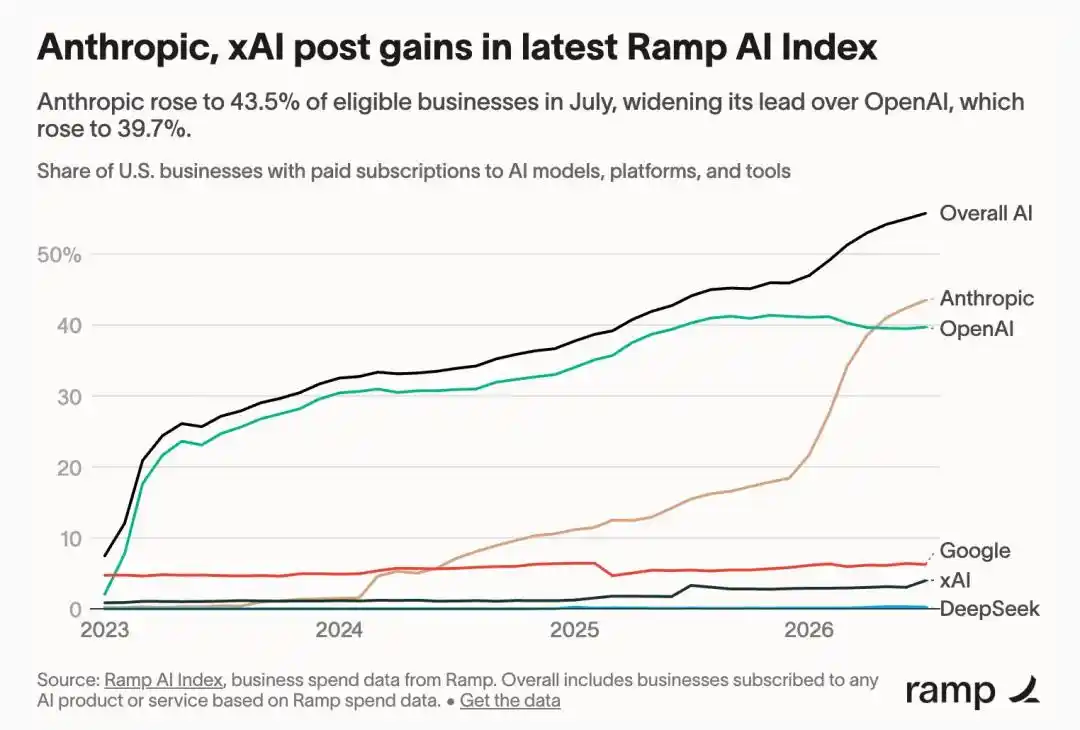
But Dario clearly doesn't want Anthropic to be defined only as "the company behind the coding wizard Claude Code."

Personally stepping forward on the eve of the IPO to talk about regulation, curing cancer, he is redefining Anthropic's narrative: Not just a competitor to OpenAI, but a company trying to use AI to solve humanity's most fundamental problems.
Whether the market buys into it or not, we'll find out in October.

References

https://x.com/DarioAmodei/status/2088758816376807762

https://x.com/DarioAmodei/status/2088758819304443967

https://x.com/GavinSBaker/status/2088611616577253502

This article is from WeChat public account "新智元" (New Zhiyuan), author: David

Trending Cryptos

Related Questions

QWhat was the primary reason Dario Amodei publicly refuted recent criticisms against Anthropic?

AHe published a lengthy article to directly counter the widespread speculation and criticism in Silicon Valley, particularly the claim that he envisioned Anthropic becoming the 'world's only private company.' He aimed to clarify Anthropic's stance on responsible AI development and regulatory approaches.

QAccording to Dario Amodei, how does Anthropic's proposed regulatory framework aim to address concerns about power concentration?

AHe argued that proper regulation can prevent power concentration by establishing rules, not by empowering individuals. He cited California's SB 53 bill, which imposes costs only on frontier AI companies with revenues over $500 million, thereby benefiting smaller competitors. He supports creating an independent AI regulatory body similar to FINRA.

QWhat personal motivation did Dario Amodei share regarding his focus on AI in biomedicine?

AHe shared that his father died from Hepatitis C (HCV) in 2006, just a few years before highly effective oral cures with a 95% success rate became available. This personal tragedy drove him to shift from theoretical physics to biology and eventually to AI, with the goal of accelerating medical breakthroughs to save lives.

QWhat specific and ambitious prediction did Amodei make about AI's impact on medicine, and what is his proposed timeline?

AHe predicted that AI will be able to cure most human diseases within 5 to 10 years. He stated that AI could compress 50 to 100 years of biological progress into just 5 to 10 years. He also mentioned that early signs of this research would be visible within the coming months.

QWhy is the timing of Amodei's public statement considered strategically significant for Anthropic?

AThe statement was made just before Anthropic's rumored IPO in October, with some investors valuing the company at up to $2 trillion, which would make it the largest IPO in history. By discussing regulation and curing diseases, he is attempting to reshape Anthropic's narrative from being just an OpenAI competitor to a company aiming to solve humanity's fundamental problems, potentially influencing public and investor perception before the listing.

Related Reads

Wall Street Morning Report: S&P Earnings Growth Hits 30-Year High, Nvidia Becomes SpaceX's 6th Largest Shareholder

Wall Street Morning Report: S&P 500 earnings growth hits a 30-year high; Nvidia becomes SpaceX's 6th largest shareholder. Market Summary: U.S. stocks ended slightly lower on Friday after record highs, with the S&P 500 posting a weekly gain. Weaker-than-expected July retail sales data significantly reduced market expectations for a September Fed rate hike. Key Themes: * **Macro & Rates:** The probability of the Fed holding rates steady in September rose to ~70%. Geopolitical tensions in the Middle East supported oil prices near $90. Focus this week is on a $16B 20-year Treasury auction testing investor demand amid high yields. * **Corporate Earnings:** S&P 500 Q2 earnings grew 31%, the fastest pace since 1992 excluding recession recoveries, driving a valuation reset. * **AI & Tech Sector Rotation:** The AI investment narrative faces scrutiny over financing and return timelines. Semiconductor stocks saw divergence: memory (SanDisk, Micron) and optical communication (Applied Optoelectronics) surged, while Broadcom fell sharply on credit rating downgrade concerns over AI leasing exposure. * **Notable Moves:** Nvidia disclosed a ~$21B stake in SpaceX. AMD rose 6.5% after a record debt issuance. Reddit rallied ahead of its S&P 500 inclusion. This Week's Highlights: * **Fed Minutes (Thu):** Key for gauging policy divergence and September rate outlook. * **Key Earnings:** Alibaba, Walmart, Nvidia, AMD. * **Events:** Seoul AI Summit, World Robot Conference, potential恒生指数 rebalancing. * **Data:** U.S. jobless claims, Japan core CPI, Korea early export data (a leading indicator for semiconductors).

marsbit14m ago

Wall Street Morning Report: S&P Earnings Growth Hits 30-Year High, Nvidia Becomes SpaceX's 6th Largest Shareholder

marsbit14m ago

BTC in Range-Bound Consolidation, HYPE Daily Rebound Confirmed | Invited Analysis

**Market Analysis: BTC Consolidates in Range, HYPE Shows Daily Rebound Confirmation (Weekly Outlook)** **BTC Analysis:** The market is at a key juncture. Bitcoin is undergoing a daily correction, with a critical focus on whether it can find support and stabilize above the $60,950 level. The adjustment that began from the May 6th high has formed a complex seven-segment structure on the daily chart. Three potential paths are identified: 1. **Continuation of the c-wave rally** (primary scenario), targeting $67,300 initially, then $69,500-$71,000. 2. **Range-bound consolidation** between $60,950 and $65,500, forming an "ascending中枢" before an upward breakout. 3. **Breakdown and secondary探底** if support at $60,950-$61,500 fails. Analysis favors the first two scenarios. The 4-hour chart suggests the current adjustment phase is nearing completion near the strong $60,950-$61,500 support zone. **BTC Strategy:** * **Key Levels:** Support at $62,268, $60,950-$61,500, $57,820. Resistance at $65,500, $67,300, $69,500-$71,000. * **Mid-term:** Current model indicates a bearish structure with ~20% short exposure. Consider adding to shorts (up to 50%) only if price rallies to $69,500-$71,000, shows clear stagnation, and model confirms. * **Short-term (30% capital):** Two tactical plans: * **A) Test shorts** near strong resistance ($69,500-$71,000) upon signs of weakness. * **B) Test longs** near strong support ($60,950-$61,500) upon stabilization signals. **HYPE Analysis:** HYPE has established a daily rebound from the August 2nd low. The 4-hour chart shows a five-segment上升 structure with a formed "ascending中枢". The current (76-77) segment is crucial. Two outcomes are possible: 1. **Breakout (Central离开段):** If price breaks and holds above the $58-$58.5 resistance zone, the uptrend continues. Monitor for momentum背驰 between the initial and breakout segments. 2. **Consolidation (Central Extension):** Failure to hold above $58-$58.5 leads to a return to中枢 consolidation, requiring new signals for direction. **HYPE Strategy:** * **Key Levels:** Support at $50-$52, $45. Resistance at $58.5-$60, descending channel upper rail, $72.97. * **Watch:** Whether price can break/hold above $58-$58.5 to confirm the breakout. * **Action:** * **Existing longs (from $50-$52):** Move stop-loss above entry cost. * **New entrants:** Consider light longs only on a confirmed breakout above $58.5-$60 with a tight stop-loss. Exit quickly if momentum背驰 appears. **General Risk Management:** * Set initial stop-loss immediately upon entry. * Move stop-loss to breakeven at +1% profit. * Trail stop-loss upwards by 1% for every subsequent 1% gain to lock in profits. **Disclaimer:** Market conditions change rapidly. This analysis is for informational purposes only and not investment advice. Trading carries significant risk.

marsbit17m ago

BTC in Range-Bound Consolidation, HYPE Daily Rebound Confirmed | Invited Analysis

marsbit17m ago

Not Chasing AI or Buying Back Shares, Can 'Stingy' Jingdong Still Succeed?

On August 13th, JD.com (JD.US) released its Q2 2026 earnings, delivering a mixed and generally "flat" performance that met low expectations but offered few positives. Overall revenue declined by approximately 3% year-over-year (YoY) to ~¥346.4 billion, aligning with weakened domestic consumption trends. While group operating profit saw a YoY improvement, this was primarily due to reduced losses in the food delivery segment compared to the high-cost "delivery war" period of the previous year. Key details reveal deeper concerns: revenue from JD's core domestic retail segment fell 4.7% YoY. While electronics sales declined less than feared (~12% YoY), growth in daily necessities and advertising services plummeted by about 10 percentage points each, raising doubts about the segment's mid-term growth momentum post-subsidy adjustments. Logistics revenue growth also slowed to 5.9% as the delivery boom faded. Profitability presented a nuanced picture. The retail segment's operating margin edged up slightly YoY but failed to deliver the significant beats seen in past quarters, suggesting efficiency gains may be nearing limits. Losses from the New Businesses segment (including food delivery and overseas ventures) remained elevated at ~¥9.9 billion, as increased overseas investment partially offset reductions in delivery subsidies. Notably, JD's shareholder returns weakened significantly, with share buybacks in H1 2026 annualizing to only about 5% of market cap. The company opted to park cash in short-term investments rather than boost returns, drawing criticism. Looking ahead, JD's performance hinges on a potential recovery in China's e-commerce sentiment in H2 2026 and the scale of ongoing losses in new ventures. While not burdened by massive AI capex like some peers, and offering relative defensive stability, the lack of positive earnings surprises and diminished shareholder returns provide little compelling reason for investors to favor the stock in the near term.

marsbit27m ago

Not Chasing AI or Buying Back Shares, Can 'Stingy' Jingdong Still Succeed?

marsbit27m ago

Trading

Spot

Hot Articles

Discussions

Welcome to the HTX Community. Here, you can stay informed about the latest platform developments and gain access to professional market insights. Users' opinions on the price of AI (AI) are presented below.

活动图片