巨鲸开始抄底?MicroStrategy出售5亿美元股票再投比特币

链得得Published on 2022-09-14Last updated on 2022-09-14

Abstract

MicroStrategy 将 5 亿美元的股票销售再投资于比特币,国际大基金对于加密行业的关注度暴增。

MicroStrategy 将 5 亿美元的股票销售再投资于比特币,国际大基金对于加密行业的关注度暴增。

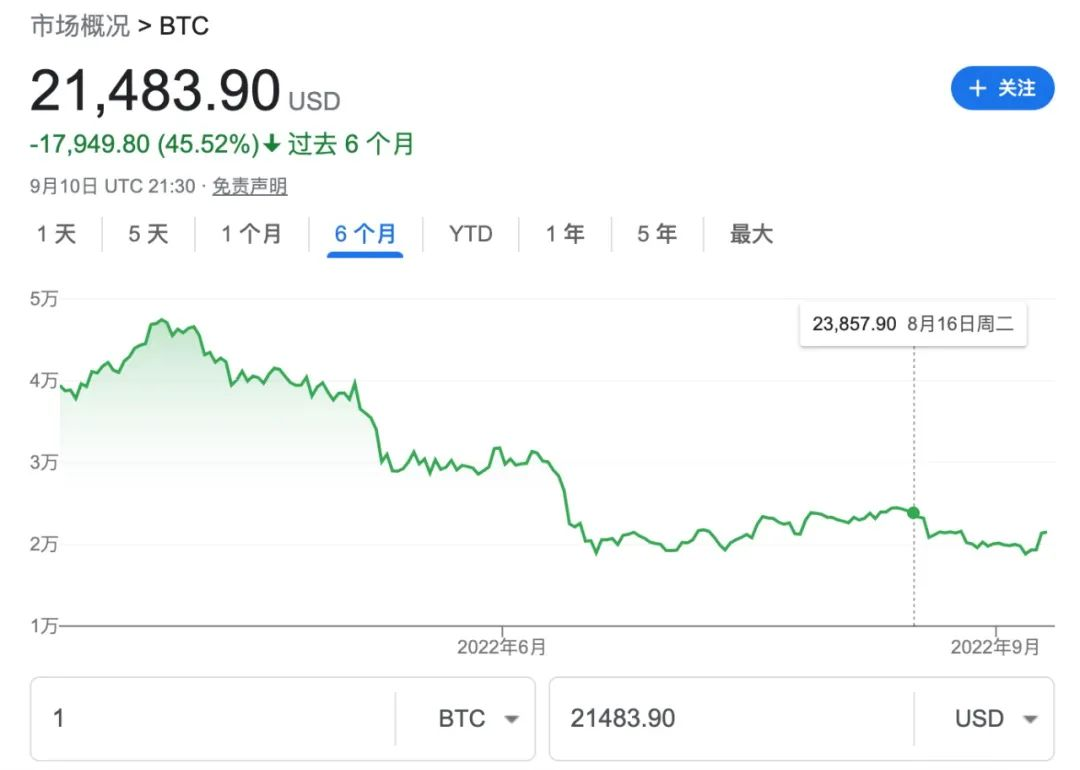
近期,通胀压力和对全球衰退的担忧使投资者远离风险较高的资产,通过以美元为中心的现金头寸避难,美国国债的 5 年期收益率达到 3.38%,接近 15 年高位。而加密行业却一片寒冬。自今年年初以来,比特币的价格一直在下跌,上周跌破19000万美元大关。
但是,逢低买入的 MicroStrategy 当地时间9月10日有了大动作。

—1—卖掉5亿美元抄底比特币

据美国证券交易委员会 (SEC) 提交的文件显示,MicroStrategy 与 Cowen and Company 和 BTIG 两家代理商达成协议,出售其价值 500,000,000 美元的 A 类普通股。

下面是MicroStrategy在向SEC提交的材料中的内容:“我们打算将出售根据本招股说明书提供的任何 A 类普通股的净收益用于公司一般用途,包括收购比特币,除非适用的招股说明书补充文件中另有说明。”
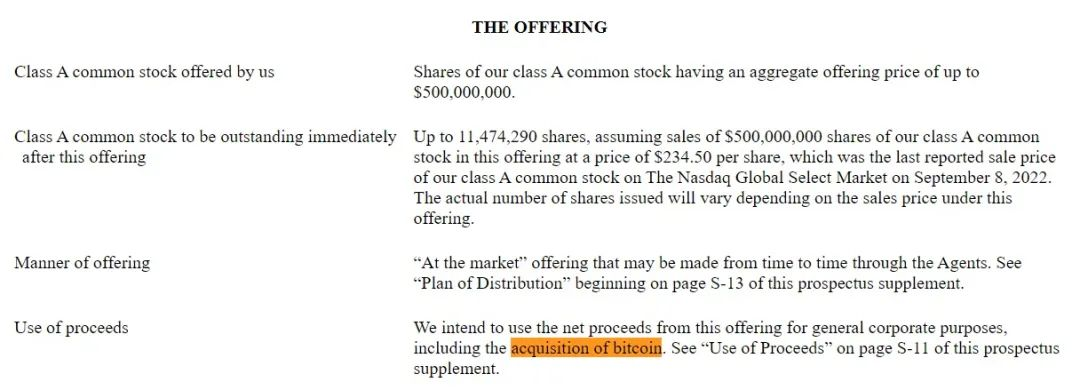
该文件披露以后,市场反应明显。链得得市场数据显示 BTC/USD 价格瞬时飙升 11% 至近 21,500 美元。

由比特币出名的迈克尔·塞勒(Michael Saylor)共同创立的 MicroStrategy,MicroStrategy在当地时间 6 月 29 日, Michael Saylor 在推特宣布,公司新增持 480 BTC以后,持币积累了约 129,699 比特币,这几年的收购总额为 39.77 亿美元。而在文件披露的9月10日节点计算的话,该公司近 129,699 BTC 的储备目前总价值损失超过 10 亿美元。

不仅是MicroStrategy,最近一个多月,加密行业的投资也十分火爆。

—2—全球最大加密基金10亿美元

当地时间9月6日,欧洲投资公司Brevan Howard向美国SEC(证券交易委员会)提交了一份加密资产(虚拟货币)基金的披露文件。文件显示,Brevan Howard从机构投资者那里筹集了超过 10 亿美元,以创建迄今为止最大的加密货币对冲基金。

公开资料显示2021 年 9 月Brevan Howard投资成立自己的加密货币和数字资产部门 BH Digital,计划在 2022 年推出两只类似的加密货币投资基金:Brevan Howard Digital Asset Multi-Strategy Fund Ltd 和 Brevan Howard Digital Asset Multi-Strategy Fund Ltd. Strategy Fund , L.P.) 推出。

据悉,Brevan Howard 向SEC提交的文件是一个被称为 Digital Asset Multi-Strategy Fund Ltd 的对冲基金的文件披露显示,自 4 月 1 日开始销售以来,该基金已从四位投资者那里筹集了 1.8415 亿美元,最低投资额1000万美元。

Brevan Howard 还更新了 Brevan Howard Digital Asset Multi-Strategy Fund, L.P. 的备案文件。更新显示,该基金已从六名投资者那里筹集了 2971 万美元。该基金的首次申请是在一月份完成的,最低投资为 300 万美元。

Brevan Howard 在去年开始就推出加密货币部门,计划将其资产的 1.5% 投资于加密资产,约90亿日元的资产。

此外,Brevan Howard 的创始人兼著名投资人 Alan Howard 持有美国加密货币对冲基金 One River Digital 25% 的股份。

—3—麻烦不断的几个人再出发:建立5亿新加密基金

根据美国证券交易委员会 (SEC) 提交的文件,加密公司 Galaxy Digital 和 Genesis 的前高管正在为名为 DBA Crypto 的新加密基金筹集 5 亿美元,Convex Trading 的首席执行官兼创始人 Shane Barratt 也被列为该基金的管理成员和投资合伙人。

Galaxy Digital 报告了第二季度亏损 5.54 亿美元,其主要原因是数字资产以及其交易和本金投资业务的投资未实现亏损。另一个主要因素在于市场行情的影响下,Galaxy Digital还终止了对BitGo 的高调收购,可谓千仓百孔。

而Genesis Trading则是与三箭资本的龃龉,公司目前在清算程序中向三箭资本提出了 12 亿美元的索赔。

Trending Cryptos

Related Reads

Bitcoin Falls Below $60,000 Again; After 20 Months, We've Reached a New Low

Bitcoin Drops Below $60,000, Hitting a 20-Month Low Bitcoin fell below the key $60,000 psychological level again, reaching a low of $59,023—its lowest point in approximately 20 months, dating back to October 2024. While it later recovered slightly to around $60,600, this marks its third significant breach of $60,000 this year. The downturn is attributed to two primary factors. First, U.S. spot Bitcoin ETFs are experiencing their longest streak of net outflows since launch, with nearly $5.94 billion withdrawn over 30 days. This creates sustained selling pressure as Authorized Participants sell Bitcoin to meet redemptions. Second, shifting macroeconomic expectations are adding pressure. Strong U.S. job data and hawkish remarks from Fed officials have increased market pricing for potential rate hikes, reversing the earlier liquidity-driven bullish sentiment and prompting a shift away from risk assets like Bitcoin. Analyst views are mixed. 21Shares maintains a bullish long-term outlook, expecting prices to recover towards $100,000, citing historical post-halving cycles and substantial ETF holdings as a base. In contrast, Arthur Hayes predicts a potential bottom around $40,000 within six months due to persistent Fed hawkishness. CryptoQuant suggests, based on on-chain data, that the market may not find a bottom until prices fall below the average investor cost basis around $53,000, potentially extending the bearish phase into late 2026 or early 2027. The immediate focus is on upcoming U.S. inflation data and Fed signals. Lower-than-expected CPI could offer relief, but confirmation of sticky inflation or continued ETF outflows may lead to further downside pressure. Bitcoin's ability to hold above $60,000 remains a critical test for the near-term market direction.

Odaily星球日报22m ago

Bitcoin Falls Below $60,000 Again; After 20 Months, We've Reached a New Low

Odaily星球日报22m ago

When Billions Begin to Operate Everything by Voice, How Far is ‘All Assets on Chain’?

In June 2026, WeChat began a limited rollout of "Xiaowei," its native AI assistant. This move is more than an upgrade to a smarter chatbot; it signals a crucial step from "universal internet access" toward the broader vision of "full asset tokenization." Xiaowei, powered primarily by WeChat's in-house WeLM model, demonstrates four key capabilities: 1) direct voice/web chat control of app functions, 2) automated access to mini-programs for services, 3) instant comprehension and summarization of complex documents like PDFs, and 4) generating functional mini-program prototypes from simple natural language requests. This represents a fundamental shift from GUI (Graphical User Interface) to LUI (Language User Interface), eliminating friction in human-digital interaction. The rollout is pivotal because it brings AI Agents to China's massive user base with zero friction—no new app downloads or accounts needed. This "seamless access" mirrors past platform revolutions like the App Store or WeChat Mini-Programs, potentially unlocking a global AI Agent market projected to grow from $7.92 billion in 2025 to nearly $295 billion by 2035. The article argues that China's internet evolution has moved from "connecting everyone" to "putting all services online." The next phase is "tokenizing all assets"—a concept broader than just Real World Assets (RWA) like real estate. It encompasses tokenizing personal assets like social influence, attention, and credit history. RWA tokenization itself is forecast to explode from $35 billion in 2025 to over $500 billion in 2026. The convergence of ubiquitous AI Agents and rapidly tokenizing assets points to a future paradigm for wealth management. Your AI Agent could autonomously manage a globally diversified, tokenized portfolio based on your preferences. Initiatives like EXIO Group's full-stack RWA services aim to lower investment barriers, paralleling WeChat's democratization of AI access. In conclusion, the launch of Xiaowei is not merely a technical upgrade but a historic inflection point. It marks AI Agents' transition from niche tools to essential utilities and accelerates the movement toward a future where voice commands seamlessly interact with tokenized value, redefining humanity's relationship with the digital and financial worlds.

marsbit1h ago

When Billions Begin to Operate Everything by Voice, How Far is ‘All Assets on Chain’?

marsbit1h ago

SoftBank CEO Masayoshi Son's New Trillion-Dollar "Gamble"

SoftBank founder Masayoshi Son is embroiled in a new trillion-dollar "bet" on Physical AI and humanoid robotics, even as his massive wager on OpenAI faces uncertainty ahead of its potential IPO. Recent reports reveal OpenAI's steep losses—$85 billion net loss by Q1 2026 and a $38.5 billion loss in 2025—casting doubt on its path to a trillion-dollar valuation. SoftBank, OpenAI's second-largest external shareholder with a planned 13% stake, stands to gain hugely if OpenAI succeeds. Undeterred, Son is already pushing forward with his next ambitious venture: consolidating SoftBank's AI and robotics assets into a new U.S.-based company named "Roze," targeting a $100 billion IPO as early as late 2026. This move aligns with his belief that Physical AI, merging AI cognition with robotic physical execution, is the next trillion-dollar frontier. Son's confidence stems from recent AI wins; SoftBank's stock surged and he briefly regained the title of Asia's richest person, largely due to OpenAI's soaring valuation. However, his aggressive strategy has raised internal concerns about over-reliance on OpenAI and strained finances. With competitors like Anthropic advancing rapidly and OpenAI's IPO timing uncertain, Son is racing to capitalize on the AI boom. His long-term vision for Physical AI includes a decade of investments in robotics, from Boston Dynamics to recent acquisitions like ABB's robotics unit, and a planned $1 trillion investment in U.S.-based AI robotics industrial parks. Yet, challenges remain: humanoid robotics firms like Figure AI lack the clear revenue paths of AI software companies, and Roze's lofty valuation faces skepticism. For Son, these bets are also driven by an unfulfilled promise of massive returns to key investors like Saudi Arabia's PIF. Despite risks, he continues to double down, betting that the fusion of AI and physical machines will define the next technological era.

marsbit1h ago

SoftBank CEO Masayoshi Son's New Trillion-Dollar "Gamble"

marsbit1h ago

Trading

Spot
Futures

Hot Articles

What is $BITCOIN

DIGITAL GOLD ($BITCOIN): A Comprehensive Analysis Introduction to DIGITAL GOLD ($BITCOIN) DIGITAL GOLD ($BITCOIN) is a blockchain-based project operating on the Solana network, which aims to combine the characteristics of traditional precious metals with the innovation of decentralized technologies. While it shares a name with Bitcoin, often referred to as “digital gold” due to its perception as a store of value, DIGITAL GOLD is a separate token designed to create a unique ecosystem within the Web3 landscape. Its goal is to position itself as a viable alternative digital asset, although specifics regarding its applications and functionalities are still developing. What is DIGITAL GOLD ($BITCOIN)? DIGITAL GOLD ($BITCOIN) is a cryptocurrency token explicitly designed for use on the Solana blockchain. In contrast to Bitcoin, which provides a widely recognized value storage role, this token appears to focus on broader applications and characteristics. Notable aspects include: Blockchain Infrastructure: The token is built on the Solana blockchain, known for its capacity to handle high-speed and low-cost transactions. Supply Dynamics: DIGITAL GOLD has a maximum supply capped at 100 quadrillion tokens (100P $BITCOIN), although details regarding its circulating supply are currently undisclosed. Utility: While precise functionalities are not explicitly outlined, there are indications that the token could be utilized for various applications, potentially involving decentralized applications (dApps) or asset tokenization strategies. Who is the Creator of DIGITAL GOLD ($BITCOIN)? At present, the identity of the creators and development team behind DIGITAL GOLD ($BITCOIN) remains unknown. This situation is typical among many innovative projects within the blockchain space, particularly those aligning with decentralized finance and meme coin phenomena. While such anonymity may foster a community-driven culture, it intensifies concerns about governance and accountability. Who are the Investors of DIGITAL GOLD ($BITCOIN)? The available information indicates that DIGITAL GOLD ($BITCOIN) does not have any known institutional backers or prominent venture capital investments. The project seems to operate on a peer-to-peer model focused on community support and adoption rather than traditional funding routes. Its activity and liquidity are primarily situated on decentralized exchanges (DEXs), such as PumpSwap, rather than established centralized trading platforms, further highlighting its grassroots approach. How DIGITAL GOLD ($BITCOIN) Works The operational mechanics of DIGITAL GOLD ($BITCOIN) can be elaborated on based on its blockchain design and network attributes: Consensus Mechanism: By leveraging Solana’s unique proof-of-history (PoH) combined with a proof-of-stake (PoS) model, the project ensures efficient transaction validation contributing to the network's high performance. Tokenomics: While specific deflationary mechanisms have not been extensively detailed, the vast maximum token supply implies that it may cater to microtransactions or niche use cases that are still to be defined. Interoperability: There exists the potential for integration with Solana’s broader ecosystem, including various decentralized finance (DeFi) platforms. However, the details regarding specific integrations remain unspecified. Timeline of Key Events Here is a timeline that highlights significant milestones concerning DIGITAL GOLD ($BITCOIN): 2023: The initial deployment of the token occurs on the Solana blockchain, marked by its contract address. 2024: DIGITAL GOLD gains visibility as it becomes available for trading on decentralized exchanges like PumpSwap, allowing users to trade it against SOL. 2025: The project witnesses sporadic trading activity and potential interest in community-led engagements, although no noteworthy partnerships or technical advancements have been documented as of yet. Critical Analysis Strengths Scalability: The underlying Solana infrastructure supports high transaction volumes, which could enhance the utility of $BITCOIN in various transaction scenarios. Accessibility: The potential low trading price per token could attract retail investors, facilitating wider participation due to fractional ownership opportunities. Risks Lack of Transparency: The absence of publicly known backers, developers, or an audit process may yield skepticism regarding the project's sustainability and trustworthiness. Market Volatility: The trading activity is heavily reliant on speculative behavior, which can result in significant price volatility and uncertainty for investors. Conclusion DIGITAL GOLD ($BITCOIN) emerges as an intriguing yet ambiguous project within the rapidly evolving Solana ecosystem. While it attempts to leverage the “digital gold” narrative, its departure from Bitcoin's established role as a store of value underscores the need for a clearer differentiation of its intended utility and governance structure. Future acceptance and adoption will likely depend on addressing the current opacity and defining its operational and economic strategies more explicitly. Note: This report encompasses synthesised information available as of October 2023, and developments may have transpired beyond the research period.

444 Total ViewsPublished 2025.05.13Updated 2025.05.13

What is $BITCOIN

Discussions

Welcome to the HTX Community. Here, you can stay informed about the latest platform developments and gain access to professional market insights. Users' opinions on the price of BTC (BTC) are presented below.

活动图片