SoftBank CEO Masayoshi Son's New Trillion-Dollar "Gamble"

marsbitPublished on 2026-06-25Last updated on 2026-06-25

Abstract

SoftBank founder Masayoshi Son is embroiled in a new trillion-dollar "bet" on Physical AI and humanoid robotics, even as his massive wager on OpenAI faces uncertainty ahead of its potential IPO. Recent reports reveal OpenAI's steep losses—$85 billion net loss by Q1 2026 and a $38.5 billion loss in 2025—casting doubt on its path to a trillion-dollar valuation. SoftBank, OpenAI's second-largest external shareholder with a planned 13% stake, stands to gain hugely if OpenAI succeeds. Undeterred, Son is already pushing forward with his next ambitious venture: consolidating SoftBank's AI and robotics assets into a new U.S.-based company named "Roze," targeting a $100 billion IPO as early as late 2026. This move aligns with his belief that Physical AI, merging AI cognition with robotic physical execution, is the next trillion-dollar frontier. Son's confidence stems from recent AI wins; SoftBank's stock surged and he briefly regained the title of Asia's richest person, largely due to OpenAI's soaring valuation. However, his aggressive strategy has raised internal concerns about over-reliance on OpenAI and strained finances. With competitors like Anthropic advancing rapidly and OpenAI's IPO timing uncertain, Son is racing to capitalize on the AI boom. His long-term vision for Physical AI includes a decade of investments in robotics, from Boston Dynamics to recent acquisitions like ABB's robotics unit, and a planned $1 trillion investment in U.S.-based AI robotics industrial parks. ...

On the eve of its IPO, OpenAI's successive exposures of financial crises have introduced new uncertainties into Masayoshi Son's trillion-dollar gamble.

On June 23, The Information reported that OpenAI's IPO filing indicated a net loss of approximately $85 billion for the first quarter of 2026, not yet including non-cash accounting expenses from warrant revaluations due to rising valuations. Its cost of revenue (the expenses required to run its AI models) alone reached $35 billion, about 75 times its capital expenditures.

Just a week earlier, veteran U.S. tech columnist and self-media figure Ed Zitron had also revealed that OpenAI's revenue for 2025 was $13.1 billion, with losses as high as $38.5 billion.

These figures directly impact Masayoshi Son's "trillion-dollar gamble." Son firmly believes OpenAI can become the world's highest-valued company. Currently valued at around $850 billion, the highest market cap belongs to Nvidia at $5 trillion.

To this end, SoftBank has deeply tied itself to OpenAI, with its stake expected to reach about 13%, second only to Microsoft's 27% among external shareholders. If OpenAI can go public with a trillion-dollar valuation, Masayoshi Son will achieve his second legendary milestone.

But now, with OpenAI's IPO chess game unsettled, Masayoshi Son has already begun his next "trillion-dollar gamble."

Not long ago, in an interview with CNBC, he asserted: "The next golden track to birth a 'trillion-dollar market cap company' will be Physical AI and humanoid robots."

For this new "trillion-dollar bet," Son has already begun to act, planning to bundle some of SoftBank's AI and robotics assets together for a separate listing.

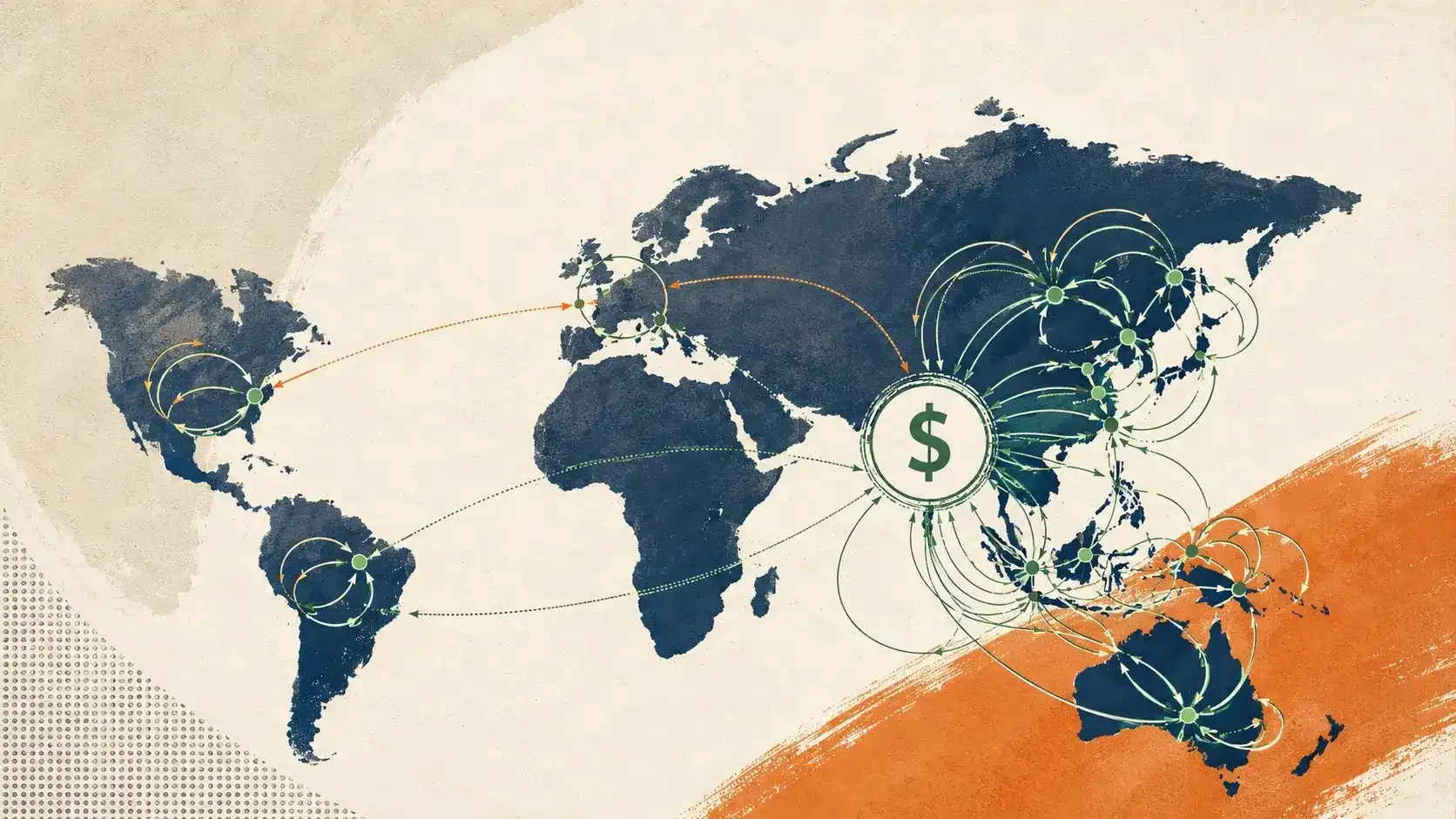
According to the Financial Times, SoftBank is establishing a U.S.-based AI and robotics company named "Roze," expected to go public as early as the second half of 2026, targeting a valuation of $100 billion. Informed sources revealed that SoftBank will hold an analyst day event in Texas this July to promote the IPO.

He has won, and he has lost, but Masayoshi Son has never stopped. From his famous victory with Alibaba, to the disastrous failure of WeWork, to heavy bets on Arm and a massive gamble on OpenAI, his investments either yield astronomical profits or incur huge losses.

AI is one of the battlefields where Son has placed his heaviest bets. With OpenAI's valuation soaring past $850 billion, he stands atop the wave once more. But the 68-year-old Son clearly has no plans to stop there. With the OpenAI game still undecided, he is pushing his chips toward Physical AI and humanoid robots.

A

Why does Son dare to gamble again?

Because he has already tasted success with AI.

On June 1, SoftBank's stock price surged 14%, its total market value briefly exceeding 48 trillion yen, topping the list of Japanese listed companies by market cap. The day before, SoftBank had just announced plans to build AI data centers in France. And the day after, thanks to his bets on OpenAI and other AI ventures, Masayoshi Son returned to the top spot on Forbes' real-time billionaire list as Asia's richest person for the first time in over a decade, albeit only for a few days.

Undoubtedly, OpenAI is Son's biggest reliance for his return to the peak. Over the past two years, SoftBank's cumulative investment in OpenAI is expected to reach $64.6 billion, with a stake of approximately 13%.

Son has pinned his hopes on Sam Altman. For this high-stakes gamble, Son has become aggressive again, selling off some assets, including shares in Nvidia and T-Mobile US, and taking out loans collateralized by Arm shares.
Naturally, there have been doubters. Bloomberg, citing sources, reported that in the early stages of SoftBank's aggressive accumulation of OpenAI shares, internal executives asked Son: What would happen to SoftBank if OpenAI ultimately failed?

Son did not answer directly, only emphasizing his belief that Altman is leading "the most important technological change of this century." At last June's shareholder meeting, Son stated, "I believe OpenAI will eventually go public and become the world's highest-valued company."

The Financial Times also cited senior SoftBank sources saying that Son's engagement with Altman and OpenAI made some within the group uneasy and strained the group's balance sheet.

Another layer of concern within SoftBank is Son's excessive trust in Altman, which has led him to refrain from investing in other competing AI models.

This concern is not unfounded, as the competitive landscape for AI large model companies is changing rapidly.

In March 2025, when SoftBank planned a $40 billion investment in OpenAI, OpenAI was undoubtedly the highest-valued AI company at that time, at $300 billion. Anthropic's valuation was still under $100 billion then. However, the latter's catch-up speed has been extremely fast. A year later, in May 2026, Anthropic's valuation surpassed OpenAI's, approaching $1 trillion, and it filed for an IPO one step ahead.

Nevertheless, Son's attitude has been very firm, as evidenced by his subsequent continued investment in OpenAI.

Betting on OpenAI has indeed given Son a taste of success. According to SoftBank's 2025 financial report, the Vision Fund division gained approximately $46 billion in investment income in the year ending March 31, almost entirely from OpenAI's valuation surge.

But market conditions are ever-changing. SpaceX, which went public just half a month ago, has seen its market cap fall from a peak of $2.7 trillion, now approaching a drop below the $2 trillion mark.

For Son, delays breed risks; no one knows when the AI bubble might burst, so going public sooner is safer.

However, the situation remains unclear. Anthropic submitted its IPO filing a step ahead; OpenAI followed closely but has always been a step behind. According to The Information, OpenAI might go public in late August or early September.

Dan Ives, Global Head of Tech Research at Wedbush Securities, also pointed out, "Being first to the public market is crucial; the first person on the roadshow with investors has an advantage." Institutional traders believe the probability of OpenAI achieving this抢先 is only slightly above 32%.

With competitors closing in, OpenAI's hand is far from as strong as imagined. High costs, failure to meet revenue and growth targets, management changes, and successive exposures of financial crises have all cast a shadow over its IPO prospects.

However, for Son, risk is not a reason to stop betting. He has experienced more painful failures and won gambles through long waits.

In 2016, SoftBank acquired Arm for $32 billion. For years thereafter, this deal was considered one of Son's worst decisions, with IPO plans shelved and failed sale attempts. But Son waited until 2023, when Arm successfully went public. SoftBank holds a 90% stake; based on Arm's latest market cap of $440 billion, SoftBank's stake is worth over $390 billion.

For Son, aside from waiting now, the strategy is to "place bets on multiple tables simultaneously."

Thus, with the OpenAI game not yet concluded, he is already impatient to place his next bet, preparing to make a move in the Physical AI and humanoid robot赛道.

B

Actually, Son has been laying the groundwork for Physical AI and humanoid robots for over a decade. This is a more隐秘 and long-term line in his AI blueprint. Because Son believes AI will ultimately move from the digital world to physical reality.

As early as 2012, SoftBank acquired the French humanoid robot pioneer Aldebaran, forming SoftBank Robotics (SBRH) and launching the emotional interaction robot Pepper.

In 2017, SoftBank acquired Boston Dynamics from Alphabet. At the launch event in July that year, Son invited Boston Dynamics founder Marc Raibert to speak on stage. Raibert said he believed "robots will be bigger than the internet." Son responded, "We will change the world together. We'll put a lot of artificial intelligence into robots."

However, both acquisitions faced坎坷. Perhaps due to poor timing, Pepper was discontinued in 2020; Boston Dynamics was also sold to Hyundai Motor due to commercialization issues.

But Son did not give up; he just changed his approach. He shifted focus to industrial and logistics automation, such as investing in collaborative robot company Agile Robots, acquiring warehouse logistics robot company Berkshire Grey. Additionally, SoftBank invested in delivery robots for餐饮 hotels like擎朗智能, commercial cleaning robots like高仙机器人, and medical rehabilitation robots like傅利叶, focusing on robots with clear application scenarios.

It wasn't until the explosion of AI large models that humanoid robots returned to the spotlight. Silicon Valley giants纷纷入局: $39 billion-valued FigureAI has backing from Microsoft, Nvidia, Amazon, OpenAI; Skild AI has support from Nvidia, Bezos; Musk even claimed he would transform Tesla into a $25 trillion robot company.

Son struck again. In 2024, SoftBank led SkildAI's Series C funding, betting on the "general-purpose robot brain"; last October, SoftBank acquired ABB's robotics business for $5.4 billion, betting on physical robots, where the latter's robot manufacturing capabilities are more crucial.

This is not all.

Son's ambitions for humanoid robots are even greater. Last April, Son announced plans to invest $1 trillion in building multiple AI factory-equipped industrial parks in the U.S., focusing on promoting the large-scale application of humanoid robots in manufacturing. This investment scale far exceeds his involvement in the Stargate project, which has an initial investment of $500 billion.

With such a vast棋局 laid out by Son, it's not hard to understand why he wants to bundle SoftBank's AI and robotics assets for a separate listing, targeting the new trillion-dollar赛道.

Why is Son so obsessed with the "trillion-dollar gamble"?

This goes back many years. As early as 2017, while raising the $100 billion for SoftBank Vision Fund I, Son promised Saudi Crown Prince Mohammed bin Salman: "I will give you a $1 trillion gift: you invest $100 billion in my fund, and I will give you $1 trillion in returns."

Ultimately, the Saudi Public Investment Fund (PIF) invested $45 billion, becoming the largest LP of the SoftBank Vision Fund.

But to this day, Son has not fulfilled his initial trillion-dollar promise.
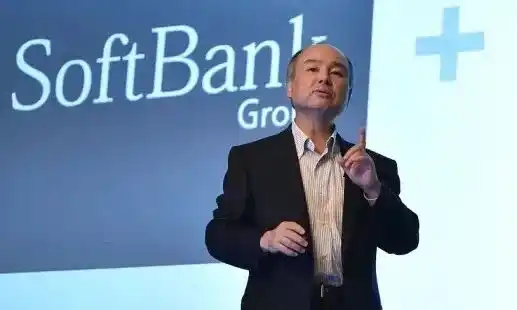
According to "AGBI (Arab Gulf Business Insight)" citing Bloomberg, in February last year, at a roundtable during the Saudi Public Investment Institute Forum in Miami, Son admitted: "I haven't been able to bring him (Mohammed bin Salman) a sufficiently substantial return yet. I still owe him this debt."

This "debt" became Son's motivation, and AI恰好 gave him hope for a comeback. Thus, it's easy to understand why Son dares to make huge bets on OpenAI, gamble heavily on AI, and even go all-in on global AI infrastructure.

In January last year, SoftBank, together with OpenAI and Oracle, planned a total investment of $500 billion to establish "Stargate," building AI data centers in the U.S.; this May, SoftBank announced plans to invest 75 billion euros in building AI data centers in France.

For this, Son once publicly challenged Musk. On June 23, at an internal SoftBank meeting, Son objected to Musk's "space data center" concept, stating that the outcome of the AI race would depend on computing power on Earth, and space data centers were of little value.

After all, computing power is crucial to Son's AI chess game. Computing power, models, chips—Son has gathered the core assets of the AI digital world. To bring AI into physical reality, there is one crucial component left: robots. Thus, Son quietly began preparing his next IPO target.

C

This is how Roze surfaced.

Roze's定位 aligns perfectly with Son's反复提及的 "Physical AI"—combining AI's cognitive abilities with robots' physical execution capabilities.

It is an AI infrastructure platform encompassing data centers, chips, and robotics. According to the Financial Times, Roze's core assets include the data center platform DigitalBridge acquired by SoftBank for $3 billion, chip company Ampere Computing acquired for $6.5 billion, and the robotics division of ABB acquired for $5.4 billion.

By bundling these assets together, Son is betting on "Physical AI," a new trillion-dollar赛道.

As the new trillion-dollar gamble begins,质疑 are again涌向 Son.

The Financial Times reported that despite Son's optimism, some within SoftBank are skeptical about Roze's IPO valuation ($100 billion) and proposed timeline. Some SoftBank executives consider this target overly ambitious, as it relies on rapid expansion of the data center business.

A company "hurriedly拼凑," rushing to go public,难免 seems仓促.

But Son cannot wait. The massive bets on AI are pushing SoftBank's leverage接近极限. A SoftBank insider stated that SoftBank needs to quickly sell or monetize assets to sustain its spending pace. Among these, OpenAI's IPO is a核心 part of Son's plan to reduce leverage.

Roze's上市 carries a similar mission. The investment in OpenAI alone exceeds $64.6 billion,加上 the Stargate project and the trillion-dollar humanoid robot parks—each is an astronomical sum. Son urgently needs Roze to go public to续上 ammunition for this AI gamble.

However, Roze's $100 billion valuation first faces a残酷 reality: at this stage, the valuation of humanoid robots overall is difficult to rise.

The highest-valued humanoid robot company, Figure AI, has a latest valuation of $39 billion, a 24-fold difference from Anthropic's nearly $1 trillion valuation.

One reason is that AI large models have established clear commercialization paths and foreseeable growth prospects. For example, Anthropic has annualized revenue of $47 billion. Figure AI hasn't reached that stage yet.

A deeper gap lies in the fact that Anthropic has重构 the existing industry格局, taking away most of the market share originally held by the traditional software industry. Humanoid robots, for now, are more like大型摇操玩具, let alone having a颠覆性 impact on industries.

The落地 of Physical AI also faces multiple现实困境, such as the割裂 between brain and body and unclear commercialization paths, all of which require time.

Son's plans are good, just somewhat太遥远. Looking back, we see he waited over a decade for Alibaba, seven years for Arm—each high-stakes gamble involved a long wait. Roze might be the same; the outcome and how long Son must wait remain to be seen.

References:

《SoftBank plans to list new AI and robotics company in the US》Financial Times

《Masayoshi Son's 300-Year Vision: SoftBank Swallows the World》Zhixiang Wang

《SoftBank CEO admits failing to deliver returns to PIF》AGBI

《SoftBank plans $1 trillion investment in U.S. AI robot parks》Nikkei Asia

《OpenAI to file IPO documents, aims for autumn listing, valuation could reach $1 trillion, SoftBank Group's stock price surges 20%》National Business Daily

《Explosive! OpenAI financial report leaked: lost 260 billion last year》Zhidongxi

This article is from the WeChat public account "字母榜" (ID: wujicaijing), author: Xue Yaping, editor: Wang Jing


Trending Cryptos

Related Questions

QWhat is the name of the new company that SoftBank is reportedly forming in the US to focus on AI and robotics, and what is its target valuation for IPO?

ASoftBank is reportedly forming a new company called 'Roze' in the US, focusing on AI and robotics, with a target IPO valuation of $100 billion.

QWhat is the main reason cited for Masayoshi Son launching a new 'trillion-dollar bet' on Physical AI and humanoid robots while the OpenAI investment is still pending?

AMasayoshi Son is launching a new 'trillion-dollar bet' on Physical AI and humanoid robots because he believes it is the next golden track to create a trillion-dollar market cap company, and he is diversifying his investments while awaiting OpenAI's IPO outcome.

QWhat significant internal concern about Masayoshi Son's investment strategy in OpenAI is mentioned in the article?

AA significant internal concern mentioned is that Masayoshi Son's excessive trust in Sam Altman and OpenAI led him not to invest in other competing AI models, which could be risky as the competitive landscape changes rapidly.

QWhat is the 'debt' or unfulfilled promise that motivates Masayoshi Son to pursue these massive AI investments, according to the article?

AAccording to the article, Masayoshi Son is motivated by an unfulfilled promise he made to Saudi Arabia's Crown Prince Mohammed bin Salman to deliver a $1 trillion return on the Public Investment Fund's $45 billion investment in the SoftBank Vision Fund.

QWhat are some of the major challenges or realities that the Physical AI and humanoid robot sector faces, which could impact Roze's ambitious valuation?

AMajor challenges include: the valuation gap compared to pure AI software companies (e.g., Anthropic's near-$1 trillion vs. Figure AI's $39 billion), unclear commercialization paths, the disconnection between AI 'brains' and physical robot 'bodies', and the fact that humanoid robots have not yet created a disruptive impact on existing industries.

Related Reads

Bitcoin Falls Below $60,000 Again; After 20 Months, We've Reached a New Low

Bitcoin Drops Below $60,000, Hitting a 20-Month Low Bitcoin fell below the key $60,000 psychological level again, reaching a low of $59,023—its lowest point in approximately 20 months, dating back to October 2024. While it later recovered slightly to around $60,600, this marks its third significant breach of $60,000 this year. The downturn is attributed to two primary factors. First, U.S. spot Bitcoin ETFs are experiencing their longest streak of net outflows since launch, with nearly $5.94 billion withdrawn over 30 days. This creates sustained selling pressure as Authorized Participants sell Bitcoin to meet redemptions. Second, shifting macroeconomic expectations are adding pressure. Strong U.S. job data and hawkish remarks from Fed officials have increased market pricing for potential rate hikes, reversing the earlier liquidity-driven bullish sentiment and prompting a shift away from risk assets like Bitcoin. Analyst views are mixed. 21Shares maintains a bullish long-term outlook, expecting prices to recover towards $100,000, citing historical post-halving cycles and substantial ETF holdings as a base. In contrast, Arthur Hayes predicts a potential bottom around $40,000 within six months due to persistent Fed hawkishness. CryptoQuant suggests, based on on-chain data, that the market may not find a bottom until prices fall below the average investor cost basis around $53,000, potentially extending the bearish phase into late 2026 or early 2027. The immediate focus is on upcoming U.S. inflation data and Fed signals. Lower-than-expected CPI could offer relief, but confirmation of sticky inflation or continued ETF outflows may lead to further downside pressure. Bitcoin's ability to hold above $60,000 remains a critical test for the near-term market direction.

Odaily星球日报25m ago

Bitcoin Falls Below $60,000 Again; After 20 Months, We've Reached a New Low

Odaily星球日报25m ago

When Billions Begin to Operate Everything by Voice, How Far is ‘All Assets on Chain’?

In June 2026, WeChat began a limited rollout of "Xiaowei," its native AI assistant. This move is more than an upgrade to a smarter chatbot; it signals a crucial step from "universal internet access" toward the broader vision of "full asset tokenization." Xiaowei, powered primarily by WeChat's in-house WeLM model, demonstrates four key capabilities: 1) direct voice/web chat control of app functions, 2) automated access to mini-programs for services, 3) instant comprehension and summarization of complex documents like PDFs, and 4) generating functional mini-program prototypes from simple natural language requests. This represents a fundamental shift from GUI (Graphical User Interface) to LUI (Language User Interface), eliminating friction in human-digital interaction. The rollout is pivotal because it brings AI Agents to China's massive user base with zero friction—no new app downloads or accounts needed. This "seamless access" mirrors past platform revolutions like the App Store or WeChat Mini-Programs, potentially unlocking a global AI Agent market projected to grow from $7.92 billion in 2025 to nearly $295 billion by 2035. The article argues that China's internet evolution has moved from "connecting everyone" to "putting all services online." The next phase is "tokenizing all assets"—a concept broader than just Real World Assets (RWA) like real estate. It encompasses tokenizing personal assets like social influence, attention, and credit history. RWA tokenization itself is forecast to explode from $35 billion in 2025 to over $500 billion in 2026. The convergence of ubiquitous AI Agents and rapidly tokenizing assets points to a future paradigm for wealth management. Your AI Agent could autonomously manage a globally diversified, tokenized portfolio based on your preferences. Initiatives like EXIO Group's full-stack RWA services aim to lower investment barriers, paralleling WeChat's democratization of AI access. In conclusion, the launch of Xiaowei is not merely a technical upgrade but a historic inflection point. It marks AI Agents' transition from niche tools to essential utilities and accelerates the movement toward a future where voice commands seamlessly interact with tokenized value, redefining humanity's relationship with the digital and financial worlds.

marsbit1h ago

When Billions Begin to Operate Everything by Voice, How Far is ‘All Assets on Chain’?

marsbit1h ago

Trading

Spot
Futures

Hot Articles

What is SONIC

Sonic: Pioneering the Future of Gaming in Web3 Introduction to Sonic In the ever-evolving landscape of Web3, the gaming industry stands out as one of the most dynamic and promising sectors. At the forefront of this revolution is Sonic, a project designed to amplify the gaming ecosystem on the Solana blockchain. Leveraging cutting-edge technology, Sonic aims to deliver an unparalleled gaming experience by efficiently processing millions of requests per second, ensuring that players enjoy seamless gameplay while maintaining low transaction costs. This article delves into the intricate details of Sonic, exploring its creators, funding sources, operational mechanics, and the timeline of significant events that have shaped its journey. What is Sonic? Sonic is an innovative layer-2 network that operates atop the Solana blockchain, specifically tailored to enhance the existing Solana gaming ecosystem. It accomplishes this through a customised, VM-agnostic game engine paired with a HyperGrid interpreter, facilitating sovereign game economies that roll up back to the Solana platform. The primary goals of Sonic include: Enhanced Gaming Experiences: Sonic is committed to offering lightning-fast on-chain gameplay, allowing players and developers to engage with games at previously unattainable speeds. Atomic Interoperability: This feature enables transactions to be executed within Sonic without the need to redeploy Solana programmes and accounts. This makes the process more efficient and directly benefits from Solana Layer1 services and liquidity. Seamless Deployment: Sonic allows developers to write for Ethereum Virtual Machine (EVM) based systems and execute them on Solana’s SVM infrastructure. This interoperability is crucial for attracting a broader range of dApps and decentralised applications to the platform. Support for Developers: By offering native composable gaming primitives and extensible data types - dining within the Entity-Component-System (ECS) framework - game creators can craft intricate business logic with ease. Overall, Sonic's unique approach not only caters to players but also provides an accessible and low-cost environment for developers to innovate and thrive. Creator of Sonic The information regarding the creator of Sonic is somewhat ambiguous. However, it is known that Sonic's SVM is owned by the company Mirror World. The absence of detailed information about the individuals behind Sonic reflects a common trend in several Web3 projects, where collective efforts and partnerships often overshadow individual contributions. Investors of Sonic Sonic has garnered considerable attention and support from various investors within the crypto and gaming sectors. Notably, the project raised an impressive $12 million during its Series A funding round. The round was led by BITKRAFT Ventures, with other notable investors including Galaxy, Okx Ventures, Interactive, Big Brain Holdings, and Mirana. This financial backing signifies the confidence that investment foundations have in Sonic’s potential to revolutionise the Web3 gaming landscape, further validating its innovative approaches and technologies. How Does Sonic Work? Sonic utilises the HyperGrid framework, a sophisticated parallel processing mechanism that enhances its scalability and customisability. Here are the core features that set Sonic apart: Lightning Speed at Low Costs: Sonic offers one of the fastest on-chain gaming experiences compared to other Layer-1 solutions, powered by the scalability of Solana’s virtual machine (SVM). Atomic Interoperability: Sonic enables transaction execution without redeployment of Solana programmes and accounts, effectively streamlining the interaction between users and the blockchain. EVM Compatibility: Developers can effortlessly migrate decentralised applications from EVM chains to the Solana environment using Sonic’s HyperGrid interpreter, increasing the accessibility and integration of various dApps. Ecosystem Support for Developers: By exposing native composable gaming primitives, Sonic facilitates a sandbox-like environment where developers can experiment and implement business logic, greatly enhancing the overall development experience. Monetisation Infrastructure: Sonic natively supports growth and monetisation efforts, providing frameworks for traffic generation, payments, and settlements, thereby ensuring that gaming projects are not only viable but also sustainable financially. Timeline of Sonic The evolution of Sonic has been marked by several key milestones. Below is a brief timeline highlighting critical events in the project's history: 2022: The Sonic cryptocurrency was officially launched, marking the beginning of its journey in the Web3 gaming arena. 2024: June: Sonic SVM successfully raised $12 million in a Series A funding round. This investment allowed Sonic to further develop its platform and expand its offerings. August: The launch of the Sonic Odyssey testnet provided users with the first opportunity to engage with the platform, offering interactive activities such as collecting rings—a nod to gaming nostalgia. October: SonicX, an innovative crypto game integrated with Solana, made its debut on TikTok, capturing the attention of over 120,000 users within a short span. This integration illustrated Sonic’s commitment to reaching a broader, global audience and showcased the potential of blockchain gaming. Key Points Sonic SVM is a revolutionary layer-2 network on Solana explicitly designed to enhance the GameFi landscape, demonstrating great potential for future development. HyperGrid Framework empowers Sonic by introducing horizontal scaling capabilities, ensuring that the network can handle the demands of Web3 gaming. Integration with Social Platforms: The successful launch of SonicX on TikTok displays Sonic’s strategy to leverage social media platforms to engage users, exponentially increasing the exposure and reach of its projects. Investment Confidence: The substantial funding from BITKRAFT Ventures, among others, emphasizes the robust backing Sonic has, paving the way for its ambitious future. In conclusion, Sonic encapsulates the essence of Web3 gaming innovation, striking a balance between cutting-edge technology, developer-centric tools, and community engagement. As the project continues to evolve, it is poised to redefine the gaming landscape, making it a notable entity for gamers and developers alike. As Sonic moves forward, it will undoubtedly attract greater interest and participation, solidifying its place within the broader narrative of blockchain gaming.

1.7k Total ViewsPublished 2024.04.04Updated 2024.12.03

What is SONIC

What is $S$

Understanding SPERO: A Comprehensive Overview Introduction to SPERO As the landscape of innovation continues to evolve, the emergence of web3 technologies and cryptocurrency projects plays a pivotal role in shaping the digital future. One project that has garnered attention in this dynamic field is SPERO, denoted as SPERO,$$s$. This article aims to gather and present detailed information about SPERO, to help enthusiasts and investors understand its foundations, objectives, and innovations within the web3 and crypto domains. What is SPERO,$$s$? SPERO,$$s$ is a unique project within the crypto space that seeks to leverage the principles of decentralisation and blockchain technology to create an ecosystem that promotes engagement, utility, and financial inclusion. The project is tailored to facilitate peer-to-peer interactions in new ways, providing users with innovative financial solutions and services. At its core, SPERO,$$s$ aims to empower individuals by providing tools and platforms that enhance user experience in the cryptocurrency space. This includes enabling more flexible transaction methods, fostering community-driven initiatives, and creating pathways for financial opportunities through decentralised applications (dApps). The underlying vision of SPERO,$$s$ revolves around inclusiveness, aiming to bridge gaps within traditional finance while harnessing the benefits of blockchain technology. Who is the Creator of SPERO,$$s$? The identity of the creator of SPERO,$$s$ remains somewhat obscure, as there are limited publicly available resources providing detailed background information on its founder(s). This lack of transparency can stem from the project's commitment to decentralisation—an ethos that many web3 projects share, prioritising collective contributions over individual recognition. By centring discussions around the community and its collective goals, SPERO,$$s$ embodies the essence of empowerment without singling out specific individuals. As such, understanding the ethos and mission of SPERO remains more important than identifying a singular creator. Who are the Investors of SPERO,$$s$? SPERO,$$s$ is supported by a diverse array of investors ranging from venture capitalists to angel investors dedicated to fostering innovation in the crypto sector. The focus of these investors generally aligns with SPERO's mission—prioritising projects that promise societal technological advancement, financial inclusivity, and decentralised governance. These investor foundations are typically interested in projects that not only offer innovative products but also contribute positively to the blockchain community and its ecosystems. The backing from these investors reinforces SPERO,$$s$ as a noteworthy contender in the rapidly evolving domain of crypto projects. How Does SPERO,$$s$ Work? SPERO,$$s$ employs a multi-faceted framework that distinguishes it from conventional cryptocurrency projects. Here are some of the key features that underline its uniqueness and innovation: Decentralised Governance: SPERO,$$s$ integrates decentralised governance models, empowering users to participate actively in decision-making processes regarding the project’s future. This approach fosters a sense of ownership and accountability among community members. Token Utility: SPERO,$$s$ utilises its own cryptocurrency token, designed to serve various functions within the ecosystem. These tokens enable transactions, rewards, and the facilitation of services offered on the platform, enhancing overall engagement and utility. Layered Architecture: The technical architecture of SPERO,$$s$ supports modularity and scalability, allowing for seamless integration of additional features and applications as the project evolves. This adaptability is paramount for sustaining relevance in the ever-changing crypto landscape. Community Engagement: The project emphasises community-driven initiatives, employing mechanisms that incentivise collaboration and feedback. By nurturing a strong community, SPERO,$$s$ can better address user needs and adapt to market trends. Focus on Inclusion: By offering low transaction fees and user-friendly interfaces, SPERO,$$s$ aims to attract a diverse user base, including individuals who may not previously have engaged in the crypto space. This commitment to inclusion aligns with its overarching mission of empowerment through accessibility. Timeline of SPERO,$$s$ Understanding a project's history provides crucial insights into its development trajectory and milestones. Below is a suggested timeline mapping significant events in the evolution of SPERO,$$s$: Conceptualisation and Ideation Phase: The initial ideas forming the basis of SPERO,$$s$ were conceived, aligning closely with the principles of decentralisation and community focus within the blockchain industry. Launch of Project Whitepaper: Following the conceptual phase, a comprehensive whitepaper detailing the vision, goals, and technological infrastructure of SPERO,$$s$ was released to garner community interest and feedback. Community Building and Early Engagements: Active outreach efforts were made to build a community of early adopters and potential investors, facilitating discussions around the project’s goals and garnering support. Token Generation Event: SPERO,$$s$ conducted a token generation event (TGE) to distribute its native tokens to early supporters and establish initial liquidity within the ecosystem. Launch of Initial dApp: The first decentralised application (dApp) associated with SPERO,$$s$ went live, allowing users to engage with the platform's core functionalities. Ongoing Development and Partnerships: Continuous updates and enhancements to the project's offerings, including strategic partnerships with other players in the blockchain space, have shaped SPERO,$$s$ into a competitive and evolving player in the crypto market. Conclusion SPERO,$$s$ stands as a testament to the potential of web3 and cryptocurrency to revolutionise financial systems and empower individuals. With a commitment to decentralised governance, community engagement, and innovatively designed functionalities, it paves the way toward a more inclusive financial landscape. As with any investment in the rapidly evolving crypto space, potential investors and users are encouraged to research thoroughly and engage thoughtfully with the ongoing developments within SPERO,$$s$. The project showcases the innovative spirit of the crypto industry, inviting further exploration into its myriad possibilities. While the journey of SPERO,$$s$ is still unfolding, its foundational principles may indeed influence the future of how we interact with technology, finance, and each other in interconnected digital ecosystems.

63 Total ViewsPublished 2024.12.17Updated 2024.12.17

What is $S$

What is AGENT S

Agent S: The Future of Autonomous Interaction in Web3 Introduction In the ever-evolving landscape of Web3 and cryptocurrency, innovations are constantly redefining how individuals interact with digital platforms. One such pioneering project, Agent S, promises to revolutionise human-computer interaction through its open agentic framework. By paving the way for autonomous interactions, Agent S aims to simplify complex tasks, offering transformative applications in artificial intelligence (AI). This detailed exploration will delve into the project's intricacies, its unique features, and the implications for the cryptocurrency domain. What is Agent S? Agent S stands as a groundbreaking open agentic framework, specifically designed to tackle three fundamental challenges in the automation of computer tasks: Acquiring Domain-Specific Knowledge: The framework intelligently learns from various external knowledge sources and internal experiences. This dual approach empowers it to build a rich repository of domain-specific knowledge, enhancing its performance in task execution. Planning Over Long Task Horizons: Agent S employs experience-augmented hierarchical planning, a strategic approach that facilitates efficient breakdown and execution of intricate tasks. This feature significantly enhances its ability to manage multiple subtasks efficiently and effectively. Handling Dynamic, Non-Uniform Interfaces: The project introduces the Agent-Computer Interface (ACI), an innovative solution that enhances the interaction between agents and users. Utilizing Multimodal Large Language Models (MLLMs), Agent S can navigate and manipulate diverse graphical user interfaces seamlessly. Through these pioneering features, Agent S provides a robust framework that addresses the complexities involved in automating human interaction with machines, setting the stage for myriad applications in AI and beyond. Who is the Creator of Agent S? While the concept of Agent S is fundamentally innovative, specific information about its creator remains elusive. The creator is currently unknown, which highlights either the nascent stage of the project or the strategic choice to keep founding members under wraps. Regardless of anonymity, the focus remains on the framework's capabilities and potential. Who are the Investors of Agent S? As Agent S is relatively new in the cryptographic ecosystem, detailed information regarding its investors and financial backers is not explicitly documented. The lack of publicly available insights into the investment foundations or organisations supporting the project raises questions about its funding structure and development roadmap. Understanding the backing is crucial for gauging the project's sustainability and potential market impact. How Does Agent S Work? At the core of Agent S lies cutting-edge technology that enables it to function effectively in diverse settings. Its operational model is built around several key features: Human-like Computer Interaction: The framework offers advanced AI planning, striving to make interactions with computers more intuitive. By mimicking human behaviour in tasks execution, it promises to elevate user experiences. Narrative Memory: Employed to leverage high-level experiences, Agent S utilises narrative memory to keep track of task histories, thereby enhancing its decision-making processes. Episodic Memory: This feature provides users with step-by-step guidance, allowing the framework to offer contextual support as tasks unfold. Support for OpenACI: With the ability to run locally, Agent S allows users to maintain control over their interactions and workflows, aligning with the decentralised ethos of Web3. Easy Integration with External APIs: Its versatility and compatibility with various AI platforms ensure that Agent S can fit seamlessly into existing technological ecosystems, making it an appealing choice for developers and organisations. These functionalities collectively contribute to Agent S's unique position within the crypto space, as it automates complex, multi-step tasks with minimal human intervention. As the project evolves, its potential applications in Web3 could redefine how digital interactions unfold. Timeline of Agent S The development and milestones of Agent S can be encapsulated in a timeline that highlights its significant events: September 27, 2024: The concept of Agent S was launched in a comprehensive research paper titled “An Open Agentic Framework that Uses Computers Like a Human,” showcasing the groundwork for the project. October 10, 2024: The research paper was made publicly available on arXiv, offering an in-depth exploration of the framework and its performance evaluation based on the OSWorld benchmark. October 12, 2024: A video presentation was released, providing a visual insight into the capabilities and features of Agent S, further engaging potential users and investors. These markers in the timeline not only illustrate the progress of Agent S but also indicate its commitment to transparency and community engagement. Key Points About Agent S As the Agent S framework continues to evolve, several key attributes stand out, underscoring its innovative nature and potential: Innovative Framework: Designed to provide an intuitive use of computers akin to human interaction, Agent S brings a novel approach to task automation. Autonomous Interaction: The ability to interact autonomously with computers through GUI signifies a leap towards more intelligent and efficient computing solutions. Complex Task Automation: With its robust methodology, it can automate complex, multi-step tasks, making processes faster and less error-prone. Continuous Improvement: The learning mechanisms enable Agent S to improve from past experiences, continually enhancing its performance and efficacy. Versatility: Its adaptability across different operating environments like OSWorld and WindowsAgentArena ensures that it can serve a broad range of applications. As Agent S positions itself in the Web3 and crypto landscape, its potential to enhance interaction capabilities and automate processes signifies a significant advancement in AI technologies. Through its innovative framework, Agent S exemplifies the future of digital interactions, promising a more seamless and efficient experience for users across various industries. Conclusion Agent S represents a bold leap forward in the marriage of AI and Web3, with the capacity to redefine how we interact with technology. While still in its early stages, the possibilities for its application are vast and compelling. Through its comprehensive framework addressing critical challenges, Agent S aims to bring autonomous interactions to the forefront of the digital experience. As we move deeper into the realms of cryptocurrency and decentralisation, projects like Agent S will undoubtedly play a crucial role in shaping the future of technology and human-computer collaboration.

739 Total ViewsPublished 2025.01.14Updated 2025.01.14

What is AGENT S

Discussions

Welcome to the HTX Community. Here, you can stay informed about the latest platform developments and gain access to professional market insights. Users' opinions on the price of S (S) are presented below.

活动图片