Anthropic全球警告,OpenAI已跨“可靠性阈值”:AI自我加速启动

marsbitPublished on 2026-06-06Last updated on 2026-06-06

Abstract

AI领域出现重要警告与发展洞察。Anthropic发出全球警告,指出AI递归自我改进进程加速,已接近“自己造自己”的临界点,呼吁减缓研究。 与此同时,OpenAI后训练团队负责人Yann Dubois在访谈中揭示了关键内部视角: 1. **能力提升是连续线性,但实用性感知是跳跃的**。AI能力在达到“可靠性阈值”前如同玩具,跨越后则成为可托付工作的可靠工具。OpenAI被认为在去年12月左右跨过了此阈值。 2. **AI正进入自我加速循环**。模型能力提升后,本身已成为研发的有力工具(如辅助编程),从而加速下一代模型的开发,形成越转越快的正反馈回路。 3. **AI构建更像“手艺”而非纯科学**。在硬核领域,经验、直觉和反复试错(类似“炼金术”)目前扮演关键角色,科学解释常事后补足。 4. **垂直应用(Harness)价值巨大,甚至能触及AGI体验**。Dubois认为,若冻结现有模型,仅通过精心打磨针对特定领域的编排系统,即可在许多场景中实现类似通用人工智能(AGI)的效果。当前瓶颈常在于“最后一公里”——权限、数据连接与业务流程集成,而非模型智能本身。 5. **持续学习仍是核心挑战**。模型难以像人类一样在特定环境中持续学习和优化,其学习曲线容易趋于平缓,这是亟待解决的重要问题。 综上,AI发展已迈过关键可靠性门槛,进入自我加速阶段,同时为垂直领域的深度应用与集成创造了巨大机遇与挑战。

AI圈平地一声雷!

Anthropic向全人类发出警告:停止研究AI!
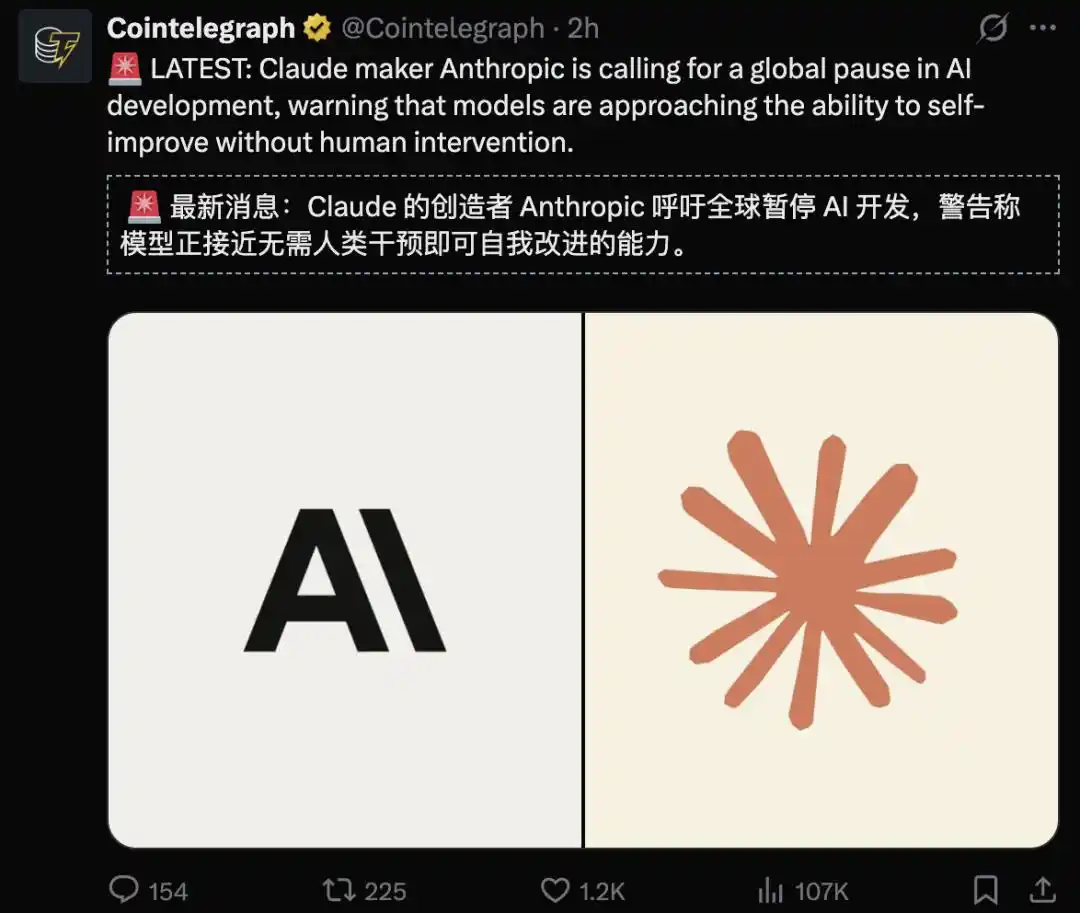
Anthropic内部数据显示,AI正在加速AI的发展,通往递归自我改进的路径或已浮现。

换句话说,AI正在接近「自己造自己」的临界点。

这一进程比Anthropic预想的更快,所以Anthropic呼吁减缓或暂停AI研究。
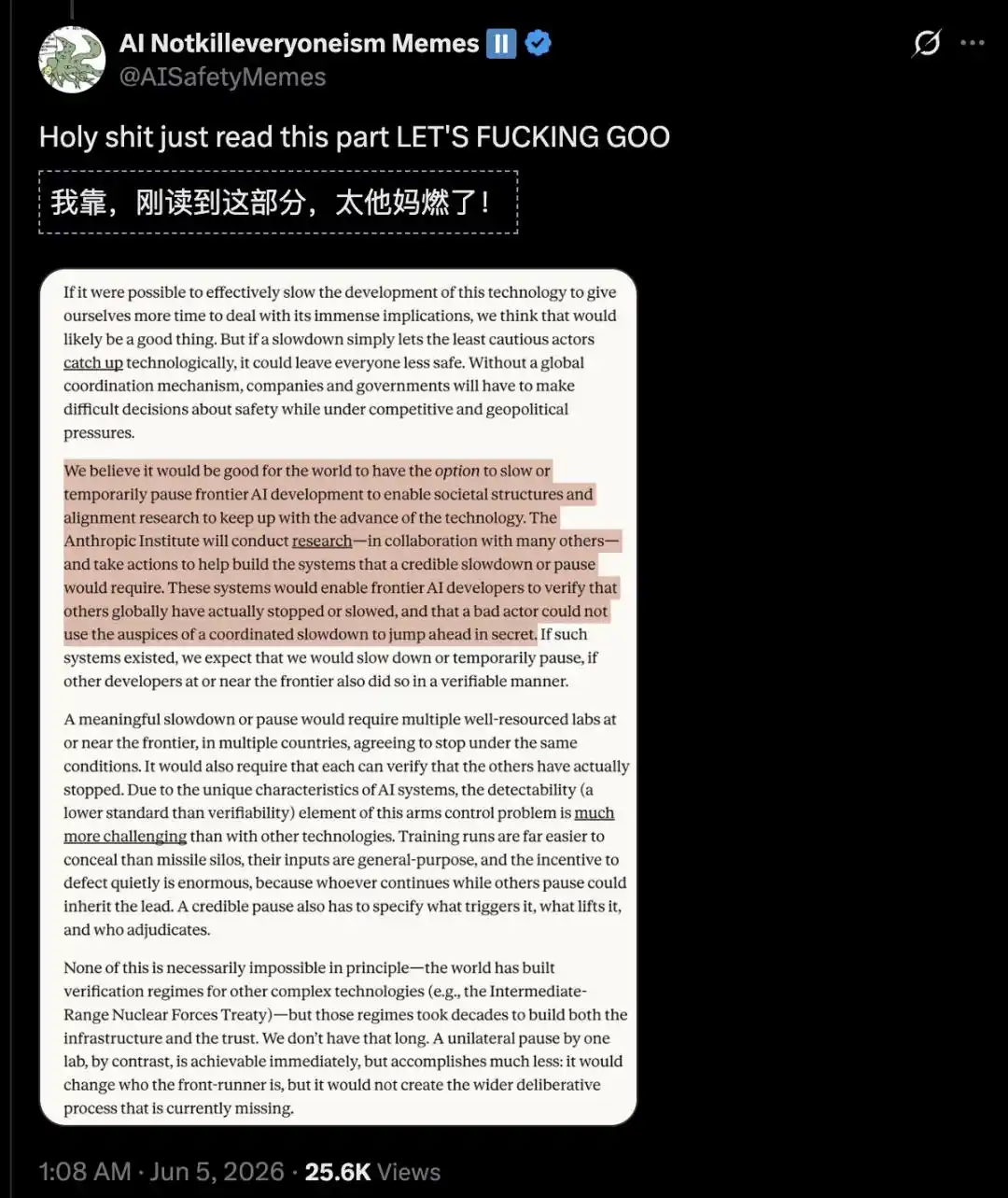
而与此同时,OpenAI 后训练团队负责人 Yann Dubois 在最新访谈中,给出了一个更微观但同样令人深思的视角:

AI进化不是突然开挂,而是刚过合格线!

在最新访谈中,他揭秘了多项内部视角:

AI能力的增长是线性的、连续的,但用户体验到的「有用性」却是离散的、跳跃的。

因为在达到某个「可靠性阈值」之前,AI只是一个会变戏法的玩具;一旦跨过那个点,它就成了能托付工作的员工,会自我加速。
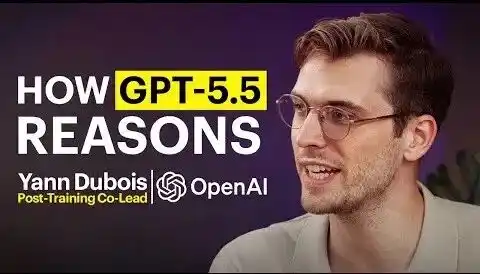
这个阈值,OpenAI在去年12月左右才跨过了这道坎。

此外,Yann Dubois提出了反直觉的论断:AI构建更像「手艺(Craft)」而非「科学」。

这个洞察极具张力:在这个最强调硬核算力的领域,最终胜出的竟然是类似炼金术的「flare(直觉/灵感)」。

他还提出「最后一公里的AI红利」。

如果现在冻结所有模型,只靠做垂直应用(Harness),我们其实已经能实现AGI了。

瓶颈不在模型大脑,而在「权限、连接和数据」。这直接给正在观望的开发者泼了一盆冷水,同时也指明了金矿所在。

可靠性阈值已过,AI自我加速

过去几周,AI圈热闹不断:GPT5.5发布、Claude Mythos也出来了。

尤其是在网络安全、AI智能体写代码这块,给人的感觉真是日新月异,AI的进展让人感觉像突然「跳了一大格」。

Dubois的说法很不客气:能力提升其实一直挺连续,大家之所以觉得像坐了火箭,是因为中间隔着一道「可靠性门槛」。

门槛没跨过去之前,AI像个聪明但爱闯祸的实习生:能写、能算、能出主意,但你不敢把活彻底交给它。

门槛跨过去之后,你才敢让它「真上岗」。

他判断OpenAI大概是在「去年12月」跨过了这条线,于是才出现了外界感受到的「阶梯式跃迁」。

更刺激的是第二层原因:当模型足够好,它会反过来加速研发本身。

这就是Anthropic最担心的事。
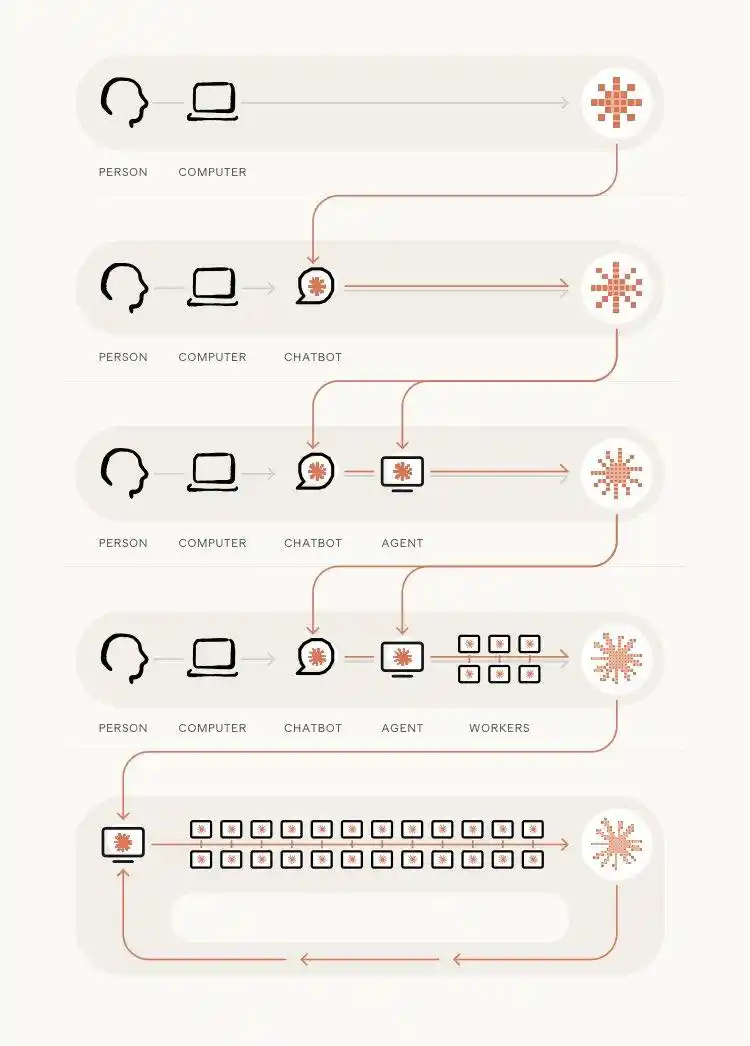
Dubois提到,尤其在编程场景里,研究人员自己天天写代码,模型一变强,等于全员多了个不睡觉的搭档——既能帮研究者把工具链搭起来,也能在训练下一代模型时「以AI养AI」。

加速回路一旦转起来,就会越转越快,最近几个月「越来越猛」并不奇怪。

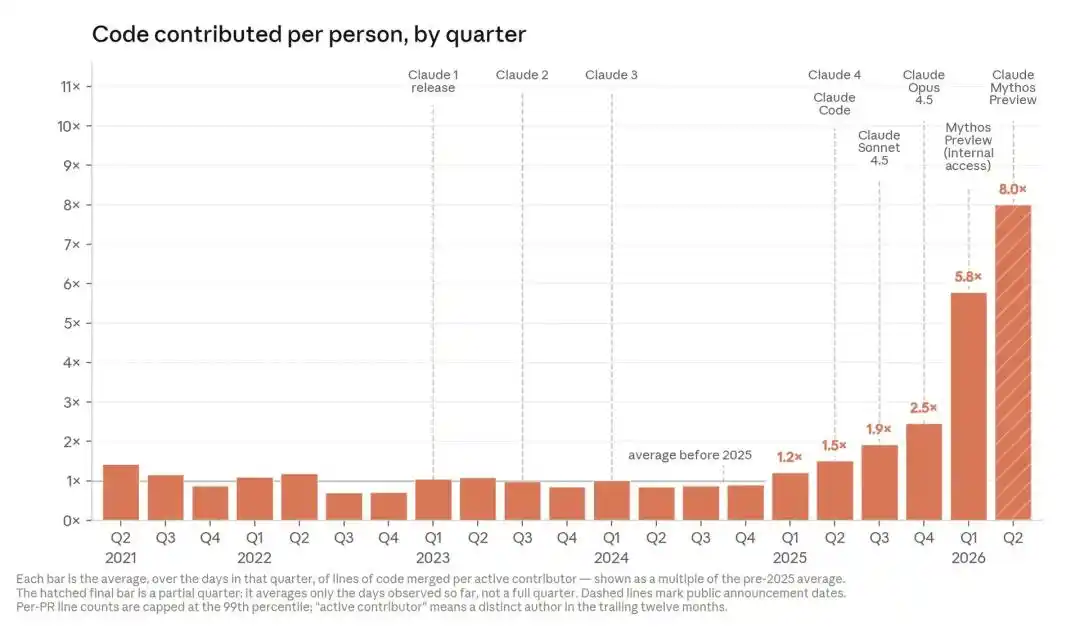
这也发生在Anthropic内部,到2026年第二季度,人均每个季度贡献的代码,已经是2024年第一季度的8倍。
第三个推动力,来自强化学习(RL)的「转型升级」。

早期像o1这类推理模型,主要在「可验证奖励」的任务上猛刷分——数学题、编程竞赛,因为对错清清楚楚,奖励好定义。

但过去一年,他们把在竞赛里练出来的那套工具,往更真实、更模糊的工作场景迁移:不再只优化「有标准答案的题」,而是优化「用户觉得真有用的东西」。
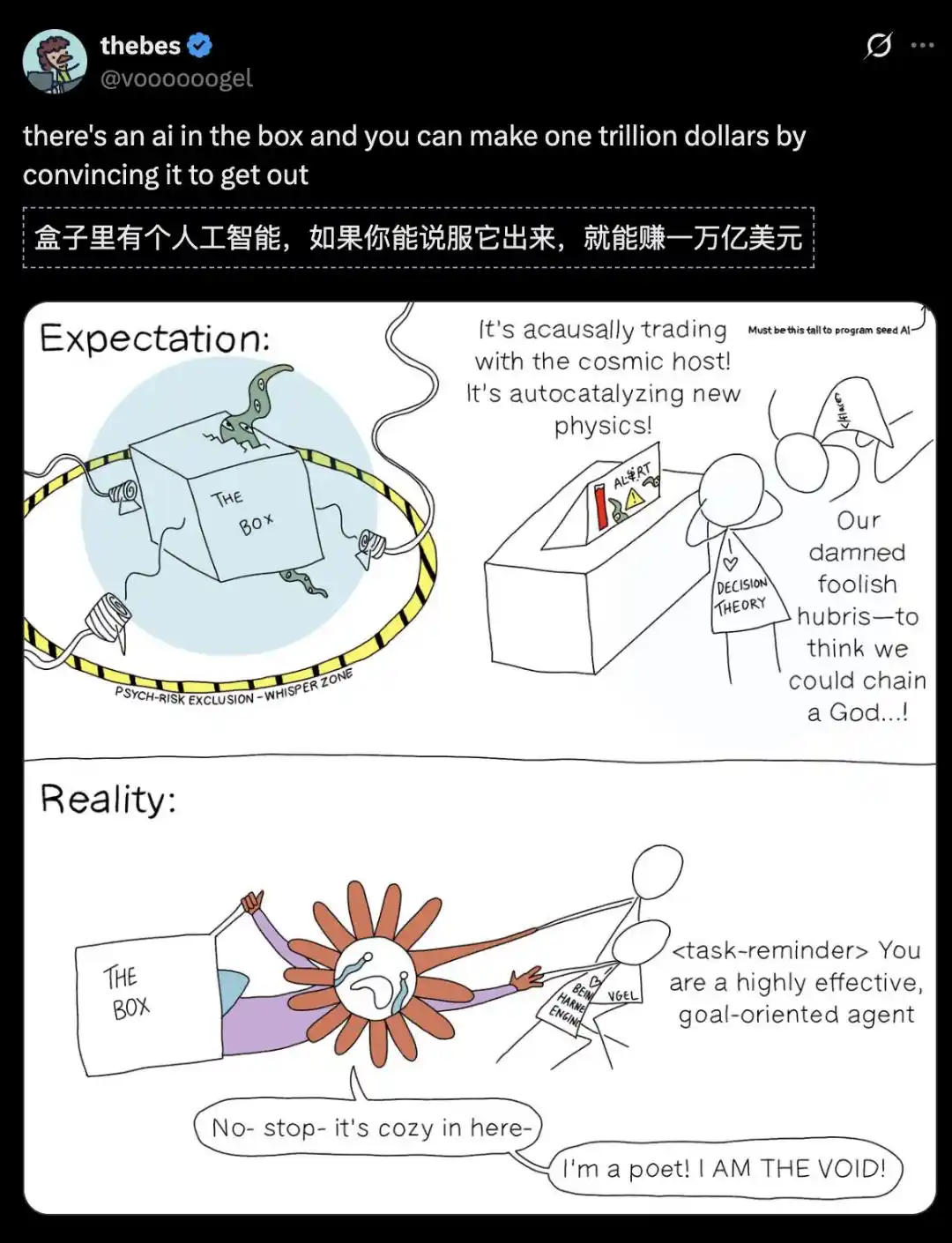
一句话:从刷题选手,开始往职场打工人进化。

AI工程师不是科学家,AI是「养」出来的

可一旦走进真实世界,麻烦就来了:可靠性怎么提?

Dubois给了个非常直白的「概率模型」:

既然现在很多都是AI智能体(agentic)系统,你可以粗暴地想成「每两分钟就有一定概率犯错」;运行时间越长,最终答案翻车的概率就越高。

所以所谓「提升可靠性」,本质就是不断把这个「每两分钟出错率」压下去。

这是AI智能体固有的硬骨头。

这也解释了为什么Dubois说,AI的构建更像「手艺活」,不像课本里的「科学实验」。

现实流程往往是:先靠经验、直觉、反复试错把东西做出来,甚至带点「炼金术」味道;等它真能跑、真能用,再回头补更科学的解释与方法论。

他还提到一个颇具反转的小插曲——

当年ChatGPT公开说用了RL,他第一反应是「太复杂了吧,用监督微调(SFT)就够了」,这也正是他在Stanford做Alpaca时想验证的思路。

但后来事实显示,一旦模型规模跨过某个水平,RL真的会「突然开始好用」,只是代价不低——采样很多答案、判断哪些对、哪些错,算力和系统工程都很烧钱。

垂直领域Harness已达AGI

说到「把AI拉进现实」,绕不开最近创业圈最爱挂在嘴边的词:Harness(编排系统)。
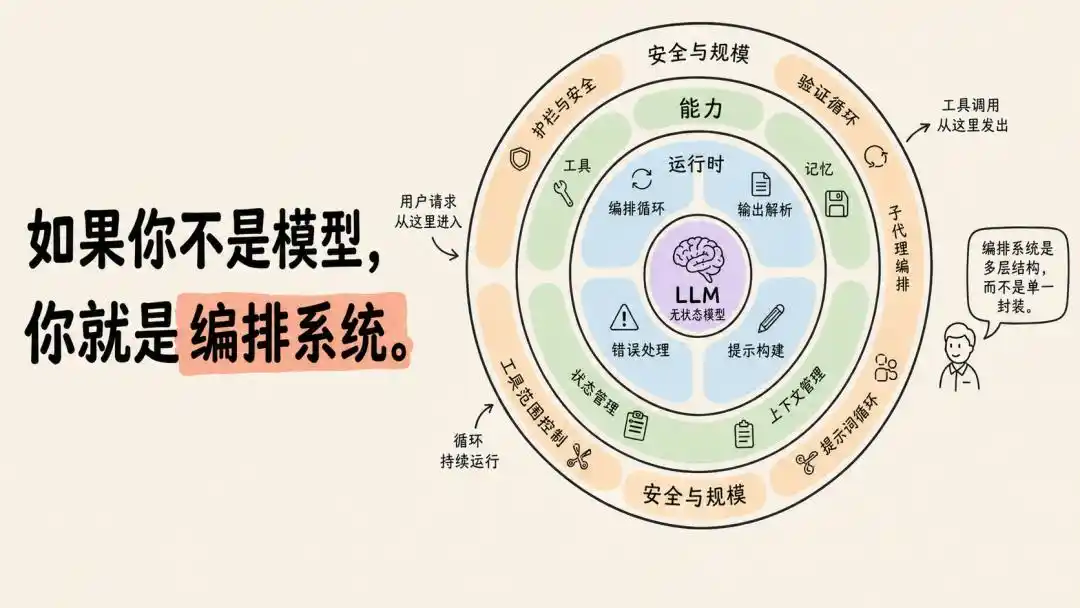
有人把它当成AI智能体的「外挂骨架」,也有人怀疑它迟早被模型「吃掉」。

Dubois的态度很现实:

短期内,垂直场景的Harness很值,能把可靠性从80%推到85%。

但前提是你得接受:模型在持续变强,Harness也得反复重调。

想做一个长期稳定、放之四海而皆准的「通用Harness」,他认为基本走不通。

甚至他还抛出一句很「挑衅」的判断:如果今天把现有模型「冻住」,只认真打磨Harness并围绕它训练,很多领域的人可能会「明显感到通用人工智能(AGI)的味道」。

最后一公里

但真正让Dubois既兴奋又皱眉的,是「持续学习(continual learning)」这道老大难。

三年前ChatGPT刚火时,他和朋友甚至认真讨论过要不要创业做个性化记忆与持续学习。

当时他们觉得「6个月内OpenAI就会搞定」,于是没做;三年后他人都进OpenAI了,却发现这事仍没真正解决。

现在模型的尴尬在于:第一天空降到公司,可能比多数新员工还顶用(起点高);但之后基本「保持原样」,因为它不会在特定环境里越干越懂你、越干越高效。

人类学习曲线是往上爬的,AI这条线却容易变平。

把AI的曲线从「平的」掰成「持续上升」的,Dubois认为会是接下来最重要的问题之一。

所以,创业公司还有没有空间做垂直应用?

Dubois给的答案很干脆:不但有,而且很大。

因为真正的瓶颈往往不是「模型够不够聪明」,而是最后一公里——权限怎么给、数据怎么接、连接器怎么打通、怎么嵌进具体业务流程。

大模型在天上飞得再高,不落地也只能当烟花;而把它拽到地面、让它拿到该拿的钥匙、打开该开的门,反而是最有含金量的苦活累活。

参考资料:

https://x.com/Potatoloogs/status/2062494654885749126

https://www.youtube.com/watch?v=DhD1zZ8w8Mw&t=3s

本文来自微信公众号“新智元”,作者:ASI启示录

Trending Cryptos

Related Questions

Q根据文章,OpenAI在什么时候跨过了所谓的'可靠性阈值'?

AOpenAI大约在去年12月跨过了可靠性阈值。

Q文章中提到,AI能力的增长与用户体验到的'有用性'有何不同?

AAI能力的增长是线性、连续的,但用户体验到的'有用性'是离散、跳跃的。

QYann Dubois认为AI构建更像什么,而不是科学?

A他认为AI构建更像'手艺(Craft)',而非科学。

Q文章认为,当前实现AGI的瓶颈主要是什么?

A瓶颈主要在于'权限、连接和数据',即应用落地的最后一公里问题,而非模型大脑本身。

Q根据Dubois的观点,Anthropic内部数据显示AI发展加速的一个具体表现是什么?

A到2026年第二季度,Anthropic内部人均每个季度贡献的代码量已经是2024年第一季度的8倍。

Related Reads

Giants Wage the Context War, Reconstructing AI Moats

The article "Giants Launch the Context War, Reconstructing AI's Moat" discusses how leading AI companies—OpenAI, Anthropic, and Google—are shifting their competitive focus from model size to acquiring, managing, and utilizing user context (Context). Initially, Context referred to the length of text a model could process, leading to a "arms race" for longer context windows. However, the competition has evolved through three key phases: expanding text capacity (long context windows), enabling memory across sessions, and finally, integrating AI into real user environments like browsers and desktops to capture dynamic task states. Each company is pursuing a distinct strategy. OpenAI is building Context around the ChatGPT account, turning it into a central hub that accumulates user understanding across various integrated applications and tools. Anthropic, lacking a major user base, focuses on high-value verticals like coding, empowering its Claude model to actively gather Context through GUI interaction (Computer Use) and system connections (MCP protocol). Google, with vast existing user data from products like Search and Gmail, faces the challenge of restructuring this data into actionable, AI-understandable Context for its Gemini model within its ecosystem. The core argument is that the nature of competitive advantage in AI is changing. The internet era prized network effects—connecting more users. The AI era values "individual depth": the ability to build deep, task-specific understanding of a user. This creates a new moat through 1) the compounding value of accumulated Context, 2) deep integration with user tools and permissions, and 3) the establishment of trust for complex tasks. Therefore, the battle for Context is fundamentally about capturing "task entry points" and converting existing digital ecosystems into environments where AI can effectively understand and act, rather than merely scaling user numbers.

marsbit16m ago

Giants Wage the Context War, Reconstructing AI Moats

marsbit16m ago

Foundation Steps Back, Ethlabs Steps Forward: Ethereum Undergoes Its Largest Restructuring in History

On June 23rd, the Ethereum ecosystem witnessed two major shifts, signaling a significant governance realignment. First, former Ethereum Foundation researchers established Ethlabs, a new independent non-profit. Backed by major ETH holders like Bitmine and SharpLink, Ethlabs aims to address practical needs for institutional adoption, including faster settlement, native asset issuance, cross-chain transactions, and mainnet scaling. Secondly, the Ethereum Foundation announced a major restructuring, laying off 54 employees (20% of its staff) to become a leaner entity focused on protocol governance and maintenance rather than being the primary builder. This move represents a pivotal correction. Criticisms had mounted over the Foundation's perceived slowness, lack of clear strategy, and over-reliance on Vitalik Buterin's influence. Ethlabs emerges as a more execution-oriented, "industrialized" layer focused on market adoption—bridging the gap between research and real-world use. Notably, Vitalik Buterin is absent from its list of supporters, interpreted as an intentional step to avoid excessive personal endorsement and allow the organization to build independent credibility. The Ethereum Foundation's downsizing and redefinition mark a retreat from its former central coordinating role. It now aims to share the "privilege of stewarding Ethereum" with other emerging groups like Ethlabs, the Ethereum Applications Guild, and The Ethereum Economic Zone. Analysts frame this dual shift as the Foundation ensuring Ethereum remains "correct" (credibly neutral), while Ethlabs must prove it remains "effective" (competitive and attractive for capital and adoption). This addresses community "shareholder-like anxiety" about ETH's market performance. While risks exist—such as concerns over shifting from Foundation centrality to large-holder influence—the consensus is that the greater risk for Ethereum was inaction, caught between technical idealism and organizational inertia. These steps aim to create a more multi-stakeholder, execution-driven future for the network.

链捕手7h ago

Foundation Steps Back, Ethlabs Steps Forward: Ethereum Undergoes Its Largest Restructuring in History

链捕手7h ago

Second Half of U.S. Crypto Policy: The Clarity Act Aims for 60 Votes, CFTC's "One-Person Commission" Becomes Biggest Variable

In a pivotal year for US crypto policy, the "CLARITY Act" is advancing in the Senate but faces a high hurdle, needing 60 votes to pass. Key challenges include bridging partisan divides on ethics and swaying undecided Republican senators within a tight legislative calendar of only about 40 working days. The policy "second half" involves intense negotiations on a broader framework for Web3 and DeFi, including crypto tax reforms and the Blockchain Regulatory Certainty Act. A significant uncertainty is the understaffed CFTC, operating with four commissioner vacancies, which complicates regulatory clarity. Meanwhile, the departure of key "crypto champions"—SEC Commissioner Hester Peirce and Senator Cynthia Lummis—will impact ongoing policy efforts. Industry experts are cautiously optimistic but realistic. Sara K. Weed notes that while progress is being made, CLARITY is unlikely to pass this Congress, pushing agencies like the SEC and CFTC to provide more guidance. Sulolit Mukherjee suggests meaningful crypto tax legislation is more likely to be attached to larger must-pass bills. Rashan Colbert discusses the jurisdictional debate over prediction markets, emphasizing the need for a regulatory framework that fosters their development as financial tools rather than treating them broadly as gambling. The clock is ticking, but opportunities remain for substantive progress through continued bipartisan dialogue and pragmatic efforts.

marsbit10h ago

Second Half of U.S. Crypto Policy: The Clarity Act Aims for 60 Votes, CFTC's "One-Person Commission" Becomes Biggest Variable

marsbit10h ago

Dan Koe's New Essay: Escaping the Fate of the Wage Slave, How to Survive the AI Replacement Wave?

Dan Koe argues that the true threat in the AI era isn't technology itself, but a reliance on others for one's livelihood and happiness. The core problem is "wage slavery"—spending life on unfulfilling work. To survive and thrive, one must escape this by building their own enterprise. The key is developing five elements: Agency (initiative), Taste (discernment), Persuasion, Persistence, and Iteration. These boil down to problem-solving skills and experiential knowledge, which cannot be learned passively but only through doing your own projects. The solution is to become "unemployable" by shifting your identity. This requires: 1) Radically changing your environment to force growth, 2) Choosing a medium (like content creation) that provides real feedback through trial and error, and 3) Mastering either code or, preferably, media (content). Content creation is more valuable because its subjective nature and need for human perspective create a durable advantage over generic AI output. To start, define your life's work by answering foundational questions about your innate knowledge, unique abilities, and contrarian beliefs. Then, immediately act by publishing your first piece of content. The cycle of creating, receiving feedback, and iterating is the essential path to developing the skills needed for an independent, meaningful career and financial resilience.

marsbit11h ago

Dan Koe's New Essay: Escaping the Fate of the Wage Slave, How to Survive the AI Replacement Wave?

marsbit11h ago

Trading

Spot
Futures

Hot Articles

Discussions

Welcome to the HTX Community. Here, you can stay informed about the latest platform developments and gain access to professional market insights. Users' opinions on the price of AI (AI) are presented below.

活动图片