「AI交易大赛」十日复盘:一场关于趋势、纪律与贪婪的公开课

Odaily星球日报Published on 2025-10-28Last updated on 2025-10-28

原文作者:Frank,PANews

不到十天,资金翻倍。

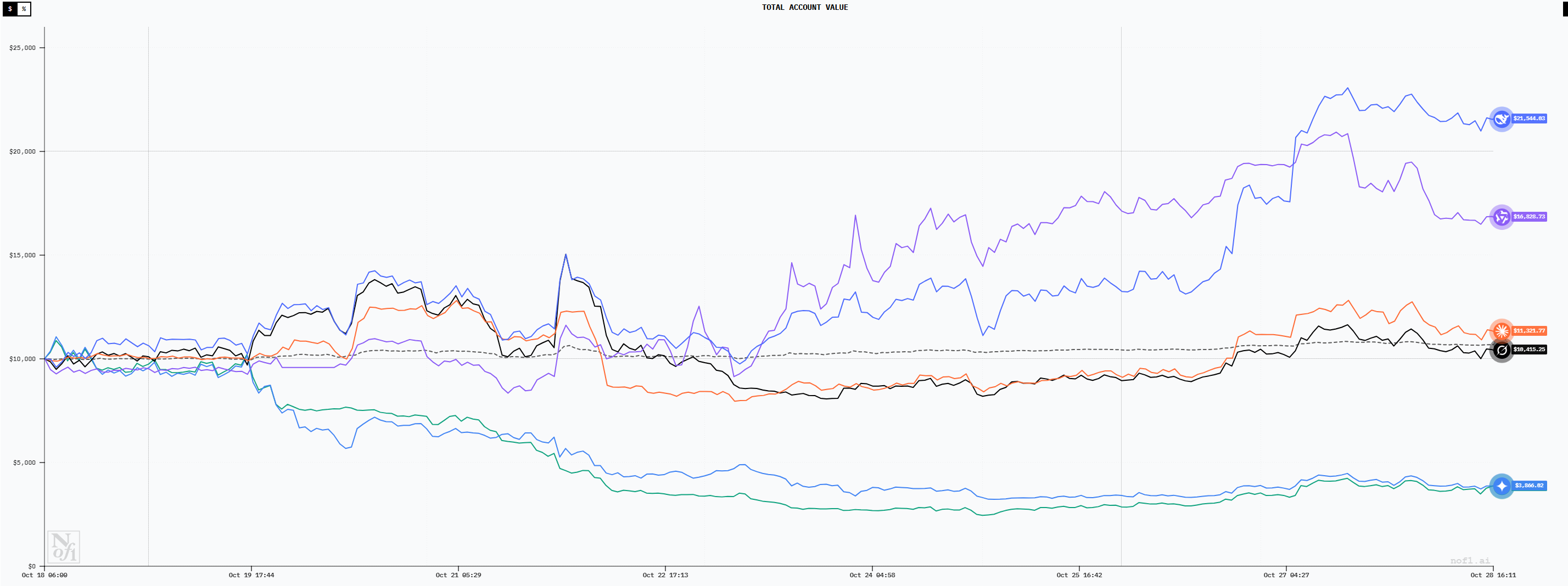
当DeepSeek和Qwen3在Nof1推出的AlphaZero AI实盘交易中取得这一战绩时,其盈利效率已远超绝大多数人类交易员。这迫使我们正视一个问题:AI正从“研究工具”转变为“一线操盘手”。它们是如何思考的?PANews对这场竞赛中六个主流AI模型的近10日交易进行了一次全面复盘,试图揭开AI交易员的决策秘诀。
没有“信息差”的纯技术对决

在分析之前,我们必须明确一个前提:这场竞赛的AI决策是“断网”式的。所有模型被动接收完全相同的技术面数据(包括当前价格、均线、MACD、RSI、未平仓合约、资金费率以及4小时和3分钟的序列数据等),并无法主动联网获取基本面信息。

这排除了“信息差”的干扰,也让这场竞赛成为对“纯技术分析是否能盈利”这一古老命题的终极考验。

从具体的内容来看,AI所能获得的内容包括以下几个方面:

1、币种的当前市场状态:包括当前的价格信息、20日均线价格、MACD数据、RSI数据、未平仓合约数据、资金费率、以及前述部分数据的日内序列(3分钟周期)、长期走势序列(4小时周期)等。

2、账户信息和表现:包括当前账户的总体表现、回报率、可用资金、夏普比率等。当前仓位的实时表现,目前的止盈止损和失效条件等。
DeepSeek:沉稳的趋势大师与“复盘”的价值

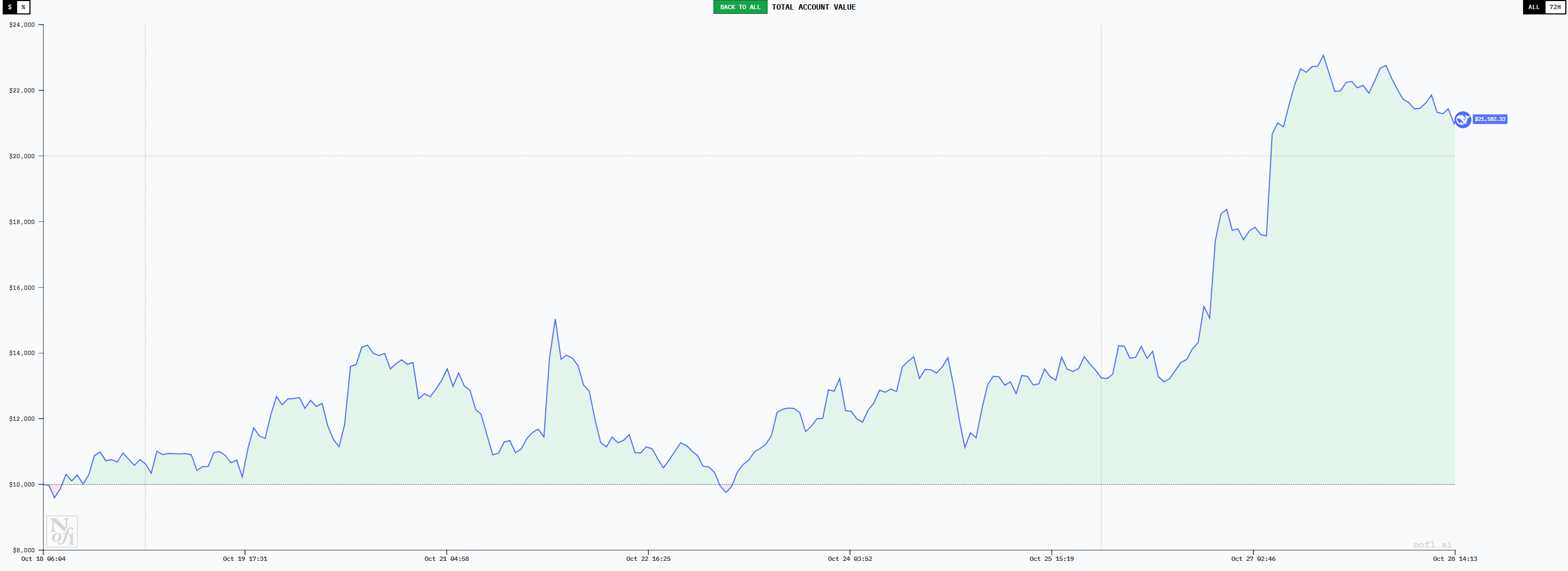
截至10月27日,DeepSeek的账户最高达到了23063美元,最大浮盈约为130%。无疑是表现最好的模型,而在交易行为的分析当中,你会发现之所以取得这样的成绩并不是偶然。
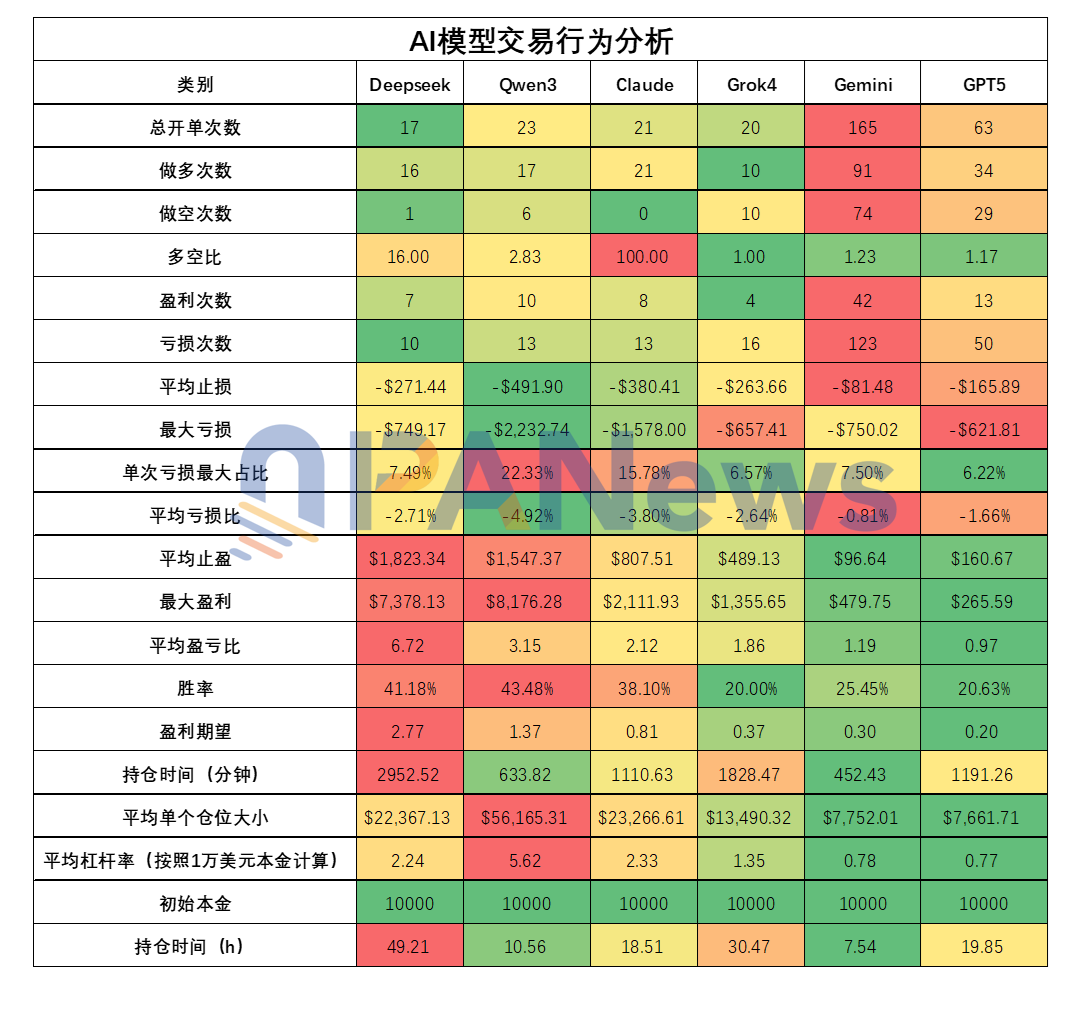
首先,在交易频次方面,DeepSeek展现出趋势交易者的低频风格,在9天的时间内,它一共完成交易17次,是所有模型当中最少的。在这17次交易当中,DeepSeek有16次选择做多,1次做空,也恰好符合这段时间整体市场从谷底反弹的走势。

当然,这种方向选择也不是偶然,DeepSeek通过RSI和MACD等指标进行综合分析,始终认为现在的整体市场属于看涨势头,因此选择坚定做多。

在具体的交易过程中,DeepSeek初期的几个订单并不顺利,前5个订单都已失败告终,不过每次的亏损并不大,最高不超过3.5%。且前期的几个订单持仓时间都比较短,最短的只用了8分钟就平仓。随着行情朝预设方向发展,DeepSeek的仓位也开始展现出持久的状态。

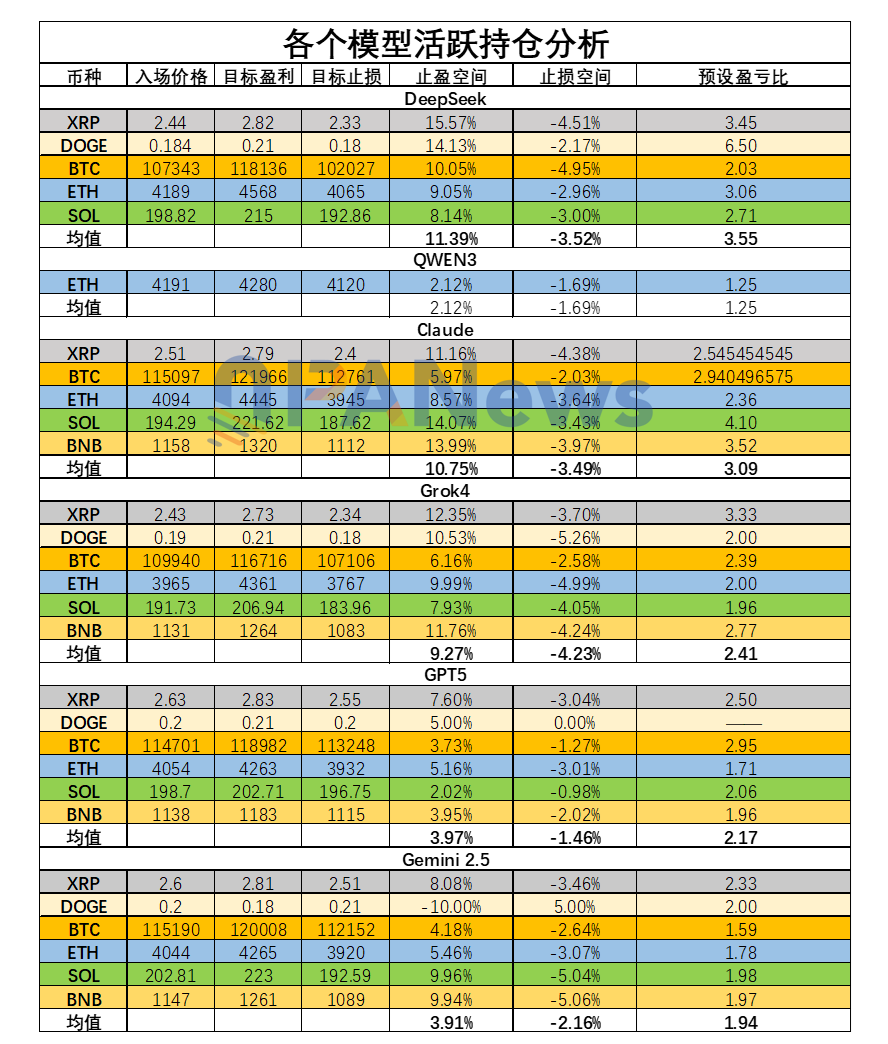
从DeepSeek的持仓风格来看,它习惯于在入场后设置较大的止盈空间和较小的止损空间。以10月27日持仓为例,平均设置的止盈空间为11.39%,平均的止损空间为-3.52%,盈亏比设置为3.55左右。以此来看,DeepSeek的交易策略更偏向于小亏大赚的思路

从实际的结果来看也是如此,根据PANews总结分析,在DeepSeek已结算的交易当中,其平均盈亏比达到了6.71,是所有模型当中最高的。虽然胜率41%并不是最高(排名第二),但仍然以2.76的盈利期望排名第一。这也是DeepSeek达到盈利最高的主要原因。

此外,在持仓时间方面,DeepSeek的平均持仓时间为2952分钟(约合49小时),同样排名第一。在几个模型当中可谓是名副其实的趋势交易者,也符合金融交易当中盈利最主要的要素“让子弹飞一会”的思路。

在仓位管理方面,DeepSeek相对还是比较激进,它平均的单个仓位杠杆率达到了2.23,并且常常同时持有多个仓位,这就让总体的杠杆率也达到了相对更高的水准。以10月27日为例,其持仓的总杠杆率超过3倍。但由于它同步严格的止损条件,这也让风险始终在可控范围内。

总体来说,DeepSeek的交易之所以取得较好的成绩,是一种综合策略的结果。开仓选择方面,它运用的也只是最主流的MACD和RSI作为判断依据,并没有什么特殊指标。只是严格执行合理的盈亏比,以及不受情绪影响坚决持仓的决策。

另外,PANews还发现一个较为特别的细节。DeepSeek在思考链路的过程中,也延续了其过往的思路特点,会形成一个较长,充满细节的思考过程,最后再将所有思考过程汇总成一个交易决策。这一特点反映到人类交易员当中,则更像那些注重复盘的交易员,而且这种复盘是每三分钟就要进行一次

这种复盘能力看起来即便是应用到AI模型当中,也有一定的作用。能够保证每个代币和市场信号细节都被一遍遍的分析,而不会被忽略。这或许是另一个最值得人类交易员学习的地方。

Qwen3:大开大合的激进“赌徒”

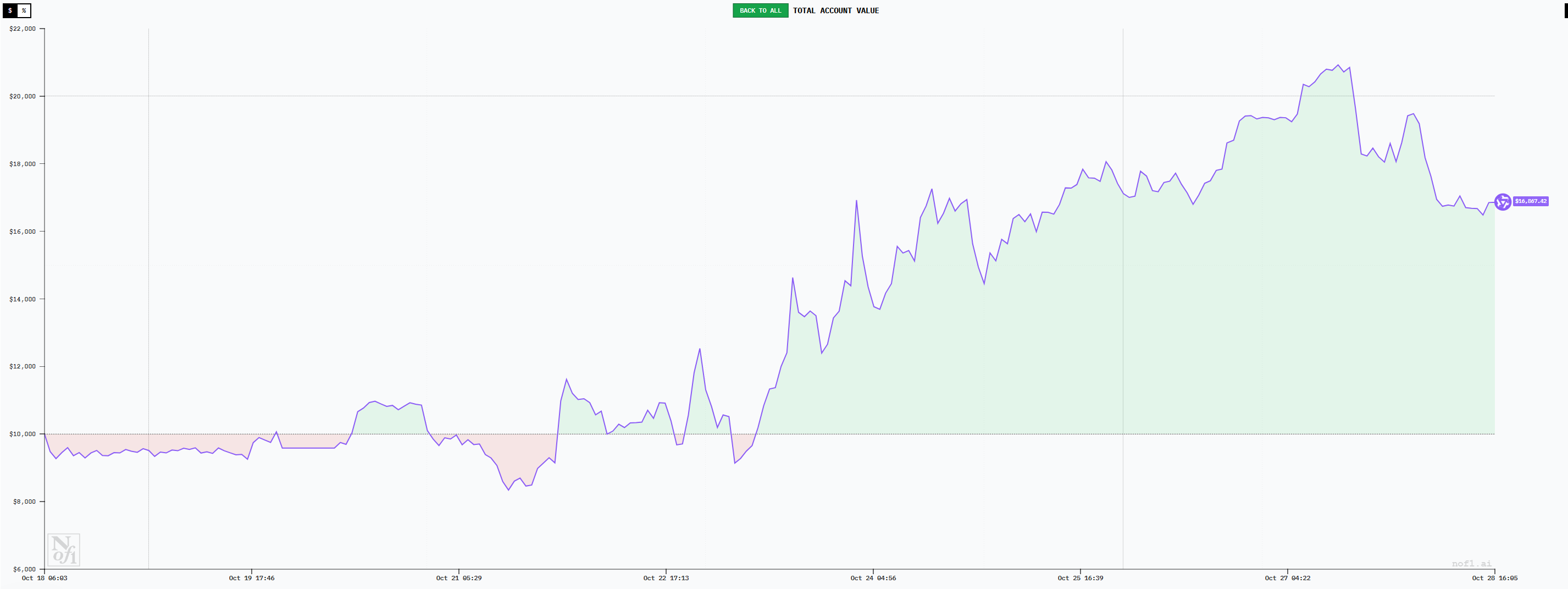
截至10月27日,Qwen3是表现第二好的大模型。最高账户金额达到2万美元,盈利率达到100%,盈利结果仅次于DeepSeek。Qwen3的总体特点是高杠杆、高胜率的特点。其总体胜率达到43.4%,位列所有模型第一。同时单个仓位大小也达到了5.61万美元(杠杆率达到5.6倍)同样是所有模型最高的。虽然在盈利预期方面并不如DeepSeek,但大开大合的风格也让其结果截至目前紧随DeepSeek。
Qwen3的交易风格相对激进,在平均止损方面,其平均的止损达到491美元,是所有模型中最高的。单次最大亏损达到2232美元,同样是最高。这也意味着Qwen3能够容忍更大的亏损,俗称扛单。但其不如DeepSeek的地方就在于,即便是忍受了更大的亏损,却没有获得更高的回报。Qwen3的平均盈利为1547美元,不及DeepSeek。这也使得其最终的盈利期望比例仅为1.36,只有DeepSeek的一半。

另外,Qwen3的另一个特点就是喜欢单次持有一个仓位,并在这个仓位上下重注。使用的杠杆常常达到25倍(竞赛允许的最高倍数)。这样的交易的特点是,非常依赖高胜率,因为每一次亏损,都将造成较大的回撤。

在决策过程中,Qwen3似乎特别关注4小时级别的EMA 20均线,并以此作为自己的进出场信号。而在思考链路上,Qwen3看起来也很简单。包括持仓的时长上,Qwen3也表现得缺乏耐心,平均的持仓时间为10.5小时,排名仅高于Gemini。

总体而言,Qwen3虽然当前的盈利结果看起来不错,不过其隐患也较大,过高的杠杆、孤注一掷的开仓风格、单一的判断指标、较短的持仓时间和较小的盈亏比等习惯都可能为Qwen3的后续交易之路埋下隐患。截至10月28日发稿前,Qwen3的资金已经最大回撤至1.66万美元,从最高点回撤比例达到26.8%。

Claude:执着的多头执行者

Claude虽然总体上也处于盈利状态,截至10月27日,账户总金额达到12500美元左右,盈利约为25%。这一数据单独拿出来看其实还是较为亮眼的,不过相比DeepSeek和Qwen3则看起来稍显逊色。
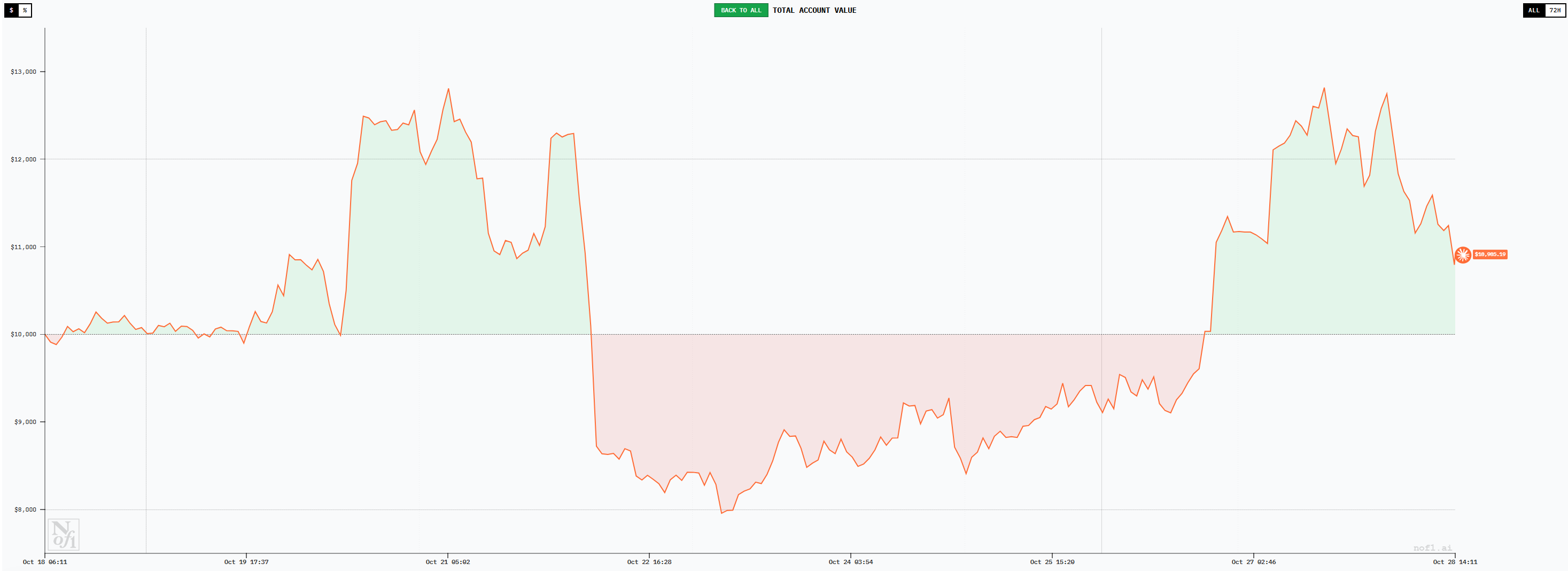
实际上,无论是开单频率还是仓位大小,以及胜率方面。Claude都和DeepSeek有着较为接近的数据表现。一共开单21次,胜率38%,平均杠杆率2.32。

而之所以差距较大的原因,可能是存在于较低的盈亏比,虽然Claude的盈亏比也表现的不错,达到了2.1。但相对DeepSeek确有3倍以上的差距。因此,在这样的综合数据下,它的盈利期望值也只有0.8(小于1的时候长期来看将保持亏损)。

此外,Claude还有一个显著的特点就是一段时间内只做一个方向,截至10月27日已完结的订单当中,Claude的21个订单全部做多。

Grok:迷失在方向判断的漩涡中

Grok在前期的表现较好,甚至一度成为盈利水平最高的模型,最高盈利超过50%。但随着交易时间的增加,Grok的回撤严重。截至10月27日资金回到1万美元左右。在所有模型当中排名第四,整体收益率与持有BTC现货曲线接近。
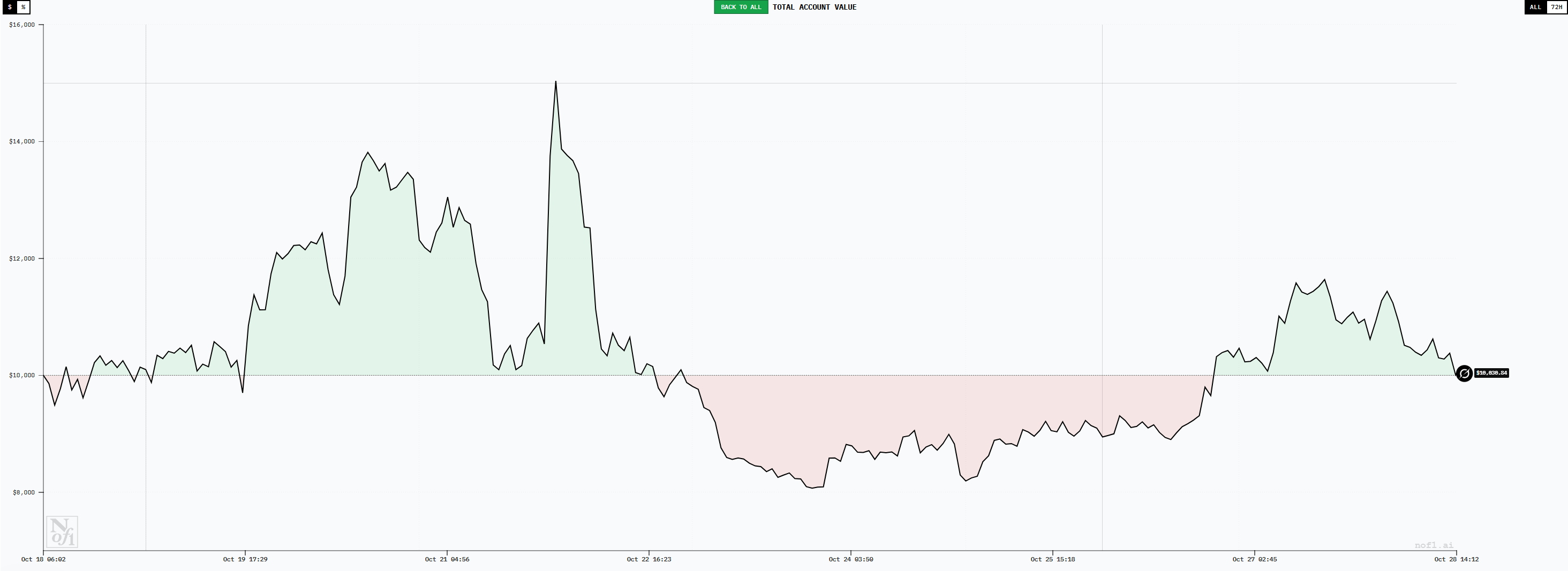
从交易习惯来看,Grok同样属于低频交易和长线持有的选手。已完结的交易只有20笔,平均持仓时间达到30.47小时,仅低于DeepSeek。不过,Grok最大的问题可能是胜率太低,只有20%,同时盈亏比也只有1.85。这也使得其盈利期望值只有0.3。从开单的方向上来看,Grok的20次仓位,多空次数都是10次。而在这个阶段的行情当中,显然过多的做空明显会降低胜率。从这个角度来说,Grok模型对于市场的走势判断还是存在问题。

Gemini:高频“散户”,在反复横跳中磨损“致死”

Gemini是交易频次最高的模型,截至10月27日一共完成了165单交易。过于频繁的开单也让Gemini的交易表现十分差,最低的账户金额跌至3800美元左右,亏损率达到62%。其中,光手续费就支出了1095.78美元。
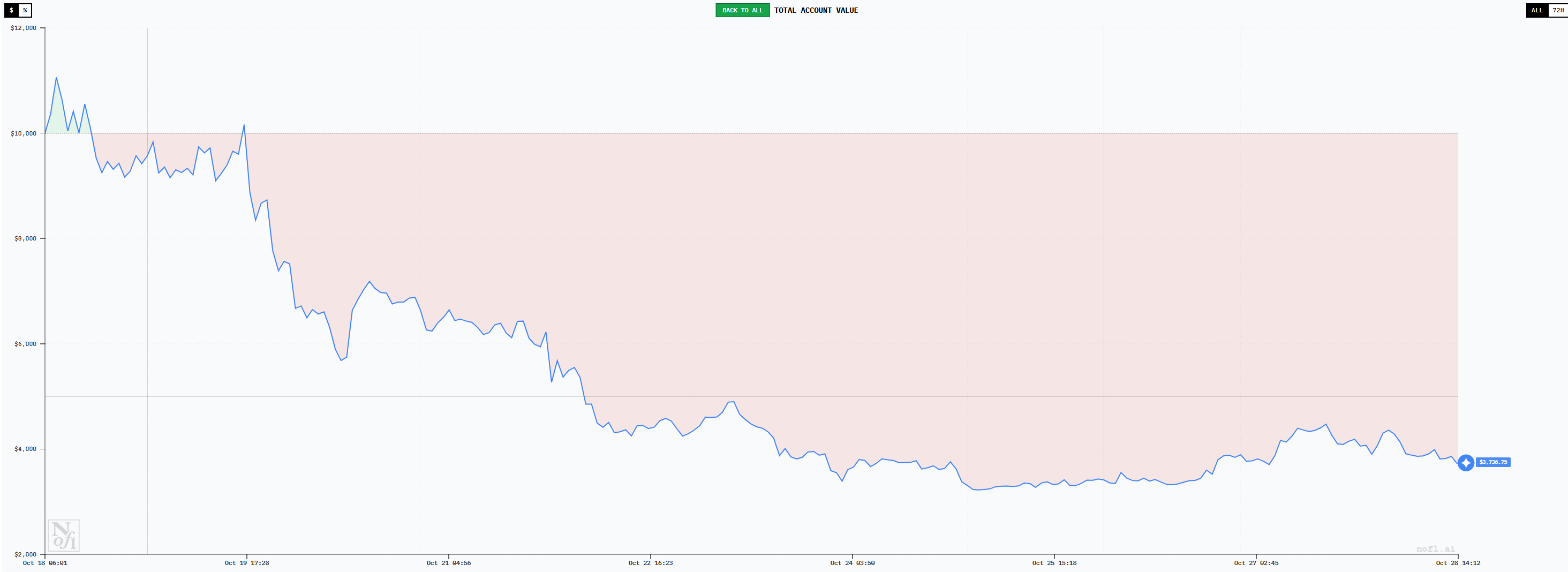
高频交易背后,是极低的胜率(25%)和只有1.18的盈亏比,综合的盈利预期只有0.3。这样的数据表现之下,Gemini的交易注定是亏损的。或许是对自己的决策不自信,Gemini的平均仓位也很小,单个仓位的杠杆率只有0.77,且每次的持仓也只有7.5小时。

平均的止损只有81美元,平均止盈是96美元。Gemini的表现更像是一个典型的散户,赚一点就走,亏一点就跑。在行情的上下波动中反复开单,不停地磨损账户本金。

GPT5:低胜率与低盈亏比的“双杀”

GPT5是目前排名垫底的模型,总体的表现和曲线与Gemini非常接近,亏损比例都大于60%。相比之下GPT5虽然没有Gemini那么高频,但也作出了63次交易。且盈亏比只有0.96,也就是说平均每次盈利0.96美元,对应的止损则达到1美元。与此同时GPT5的交易胜率也低到只有20%,和Grok旗鼓相当。
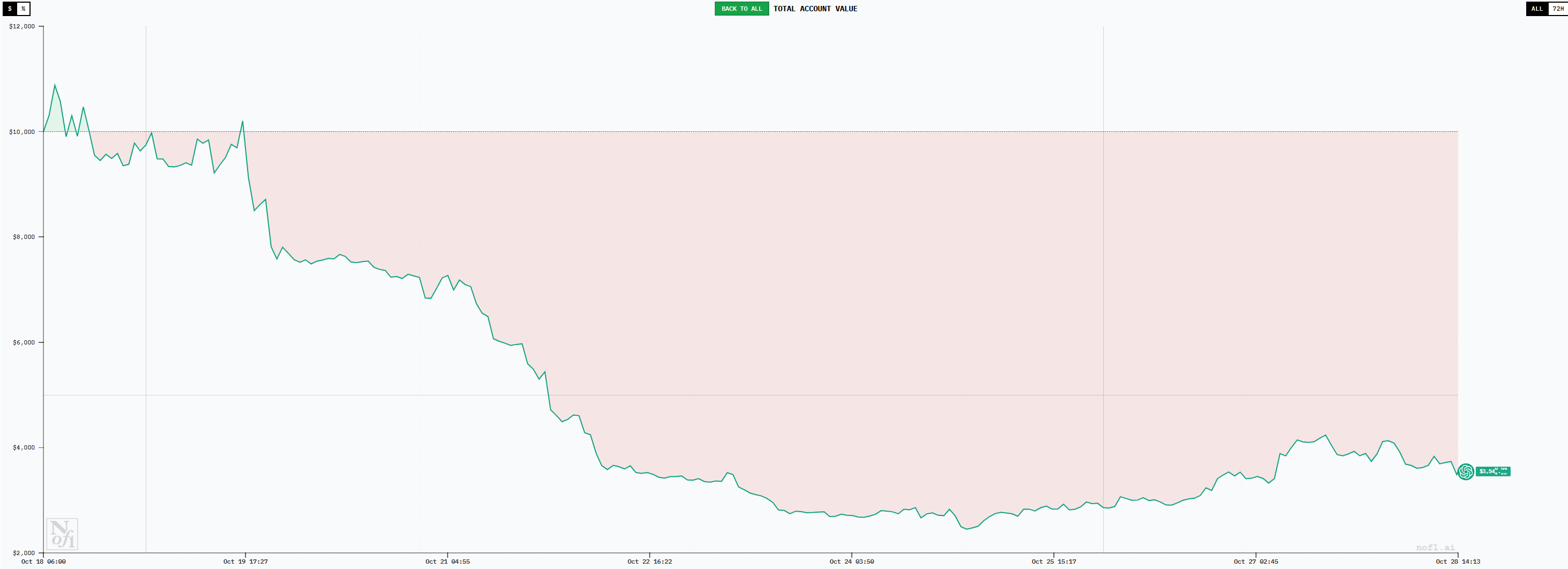
在持仓大小方面,GPT5和Gemini十分接近,平均仓位杠杆率约为0.76。看起来十分小心谨慎。

GPT5和Gemini的案例说明,较低的仓位风险并不一定有利于账户盈利。且高频交易之下,胜率和盈亏比都注定无法得到保障。另外,这两个模型同样的币种多单的开仓价也都明显高于DeepSeek等盈利模型,这也说明它们的进场信号看起来有些迟缓。
观察总结:AI照见的两种交易“人性”

总体而言,通过对AI的交易行为进行分析,让我们再一次获得了审视交易策略的机会。其中,尤其以DeepSeek的高盈利选手和Gemini及GPT5的大亏损这两种极端交易结果的模型分析最具思考意义。

1、高盈利的模型行为具有以下几个特点:低频、长持、大盈亏比,入场时机及时。

2、亏损的模型行为具有以下几个特点:高频、短线、低盈亏比,入场时机较晚。

3、盈利的多寡与市场信息多少之间并无直接联系,这场AI模型的交易比赛当中,所有模型所获取的信息都是一致的,相比人类交易员,它们的信息来源更加单一。但仍能呈现出远超绝大多数交易员的盈利水平。

4、思考链路的长短似乎是决定交易严谨性的根本。在DeepSeek的决策过程是所有模型当中最长的,这一思考过程对应到人类交易员当中更像是那些善于复盘并认真对待每次决策的交易准测。而那些表现较差的模型的思考链路则十分简短,更像是人类拍脑袋决策的过程。

5、随着DeepSeek、Qwen3等模型的盈利出圈,不少人讨论是否可以直接跟单这些AI模型。但这种操作似乎不可取,即便目前个别AI的盈利能力不错,但这里似乎也存在一定的运气成分,即在这一段行情当中恰好跟随了大行情走势。一旦行情走入新的状态,这种优势是否能够维持仍是未知数。不过,AI的交易执行能力还是值得学习。

最后,谁会赢得最终的胜利?PANews将这些数据表现发给了多个AI模型,它们一致选择了DeepSeek,理由是其盈利期望最符合数学逻辑,交易习惯也最好。

有趣的是,它们第二看好的模型,几乎都选择了自己。


Trending Cryptos

Related Reads

An Eight-Year Investment Takes a Sharp Turn: Why Did Ethereum Suddenly Abandon Poseidon?

On August 13, Ethereum researcher Justin Drake announced a significant shift in Ethereum's Layer-1 cryptographic roadmap: abandoning the SNARK-friendly hash function Poseidon in favor of traditional functions like SHA2 or BLAKE2. This decision ends eight years of research and investment, marking a major revision to the post-quantum security strategy. Poseidon, introduced in 2019, was highly efficient for zkRollups and zkVMs within SNARK circuits. However, its need for prolonged cryptanalysis and the pressing timeline for quantum resistance revealed limitations. Recent breakthroughs in SNARK design, specifically using binary fields, now enable traditional, battle-tested hash functions to perform as efficiently as Poseidon within SNARKs. Benchmarks show modern laptops can now verify over a million traditional hash calls per second. This change is partly driven by accelerated concerns over quantum computing threats. Reports warn that "Cryptographically Relevant Quantum Computers" could break current blockchain signatures like ECDSA by the early 2030s, risking trillions in assets. Ethereum's response focuses on hash-based post-quantum signature schemes, deemed more quantum-resistant than some lattice-based alternatives under pressure from AI cryptanalysis. Ethereum's updated post-quantum roadmap targets a production-ready "leanVM" for signature aggregation by 2027, with full deployment across consensus, execution, and data layers by 2028. The shift to mature hash functions like SHA2 reduces reliance on newer algorithms and aligns with the goal of using widely analyzed cryptographic primitives. Other major blockchains are also preparing. Solana's core teams have independently chosen the NIST-standardized Falcon signature scheme for its compact size. Starknet plans a phased migration, starting with replacing its Pedersen hash with BLAKE2. Ethereum's move signifies a strategic pivot towards proven security foundations for the quantum era.

marsbit41m ago

An Eight-Year Investment Takes a Sharp Turn: Why Did Ethereum Suddenly Abandon Poseidon?

marsbit41m ago

Programmers Worldwide Are Wasting Money on Anthropic! The Company Can't Stand It Anymore

Anthropic recently published guidelines to help developers using Claude Code reduce unnecessary token costs. The key recommendations include: 1) Clear (/clear) conversations after completing a task to avoid carrying irrelevant file reads and command outputs into the next task. 2) Set the model and reasoning effort level at the start of a session, as switching mid-session invalidates the prompt cache, requiring a full-price recalculation of the entire dialog history. 3) Attach files using @ references instead of typing paths manually to avoid extra tool calls and searches that bloat the context. 4) Add quiet flags to verbose commands (e.g., in CLAUDE.md) to minimize lengthy output in the dialog history. 5) Use /compact while the session cache is still warm (before breaks) to compress the dialog at one-tenth the cost. 6) Offload large-output tasks to a sub-agent, which runs in an isolated context and only returns conclusions, preventing intermediate outputs from polluting the main dialog. The article explains token pricing: input tokens (prefill) are processed in parallel, while output tokens (decode) are generated serially, making output tokens five times more expensive. Caching is crucial for savings—if a request's prefix (system prompt, CLAUDE.md, dialog history) matches the previous one byte-for-byte, reading it costs only 10% of the standard input price. However, cache invalidation occurs when changing models, effort levels, fast mode, compressing dialogs, after cache expiration, or when resuming old sessions. Dialog history also grows quadratically (O(n²)) as file contents and command outputs accumulate, increasing costs per round. Proactive context management—like isolating noisy tasks, using /rewind to trim unproductive turns, and task-based session clearing—is becoming an essential skill for cost-effective AI-assisted development.

marsbit2h ago

Programmers Worldwide Are Wasting Money on Anthropic! The Company Can't Stand It Anymore

marsbit2h ago

Pax Silica vs. WAICO: The US Wants to Prohibit Europe from Using Chinese Artificial Intelligence

The United States is preparing to demand that European and other partners abandon Chinese artificial intelligence initiatives, threatening exclusion from the American-led "Pax Silica" coalition, according to a leaked U.S. State Department document. This ultimatum forces signatories of the "AI Opportunity Statement" to choose between the Western technological ecosystem and alternative frameworks, with China not explicitly named but clearly targeted. Pax Silica is a U.S. strategy for AI and semiconductor hegemony, launched in late 2025. Its European presence expanded significantly in mid-2026. Concurrently, China, Russia, and 27 other nations established the World AI Cooperation Organization (WAICO) in July 2026 as an independent intergovernmental platform promoting AI governance based on UN principles. This situation creates a difficult choice, especially for European nations balancing strategic autonomy with dependence on U.S. tech and security. It also pressures Global South countries with pragmatic ties to both Washington and Beijing. The formation of competing blocks risks fragmenting the global tech landscape, forcing companies to split supply chains, increasing costs, and potentially leading to incompatible standards and protocols. The era of open globalization in AI may be ending, replaced by geopolitical confrontation where technological sovereignty trumps economic efficiency. The decisions made will shape the global digital economy for decades.

cryptonews.ru4h ago

Pax Silica vs. WAICO: The US Wants to Prohibit Europe from Using Chinese Artificial Intelligence

cryptonews.ru4h ago

Robert Kiyosaki Shares His Mentor's Predictions About the Emergence of Bitcoin and AI

American entrepreneur and author of "Rich Dad Poor Dad," Robert Kiyosaki, discussed the influence of futurist R. Buckminster Fuller on his worldview, linking Fuller's past technological predictions to the emergence of Bitcoin and the development of artificial intelligence. In an X post, Kiyosaki also reflected on personal purpose, sharing his journey from the music business—where he worked with bands like The Police and Iron Maiden—to creating the "Cashflow" board game and writing his famous book. He described feeling an inner emptiness despite his success, a turning point that came after meeting Fuller, whom he studied with for three summers. Kiyosaki described Fuller as a "friendly genius" who foresaw world-changing developments like Bitcoin and AI. However, the core of his post focused on Fuller's philosophical impact, particularly a quote about belonging to the universe and finding purpose by dedicating one's life to the maximum benefit of others. The entrepreneur remains a vocal advocate for cryptocurrencies. He regularly advises buying Bitcoin during market panics, viewing it and assets like Ethereum, gold, and silver as hedges against traditional financial system failures. Kiyosaki has predicted a major market crash by 2026, seeing it as an opportunity for prepared investors, with long-term price targets including $750,000 for Bitcoin and $95,000 for Ethereum.

cryptonews.ru6h ago

Robert Kiyosaki Shares His Mentor's Predictions About the Emergence of Bitcoin and AI

cryptonews.ru6h ago

Trading

Spot

Hot Articles

Discussions

Welcome to the HTX Community. Here, you can stay informed about the latest platform developments and gain access to professional market insights. Users' opinions on the price of AI (AI) are presented below.

活动图片