别错过 Web3 AI 的造富列车:11 个潜力项目推荐

深潮Published on 2025-09-22Last updated on 2025-09-23

AI 的空气里早已弥漫着金钱的味道。

作者:Biteye 核心贡献者 Anci

编辑:Biteye 核心贡献者 Denise

从年薪过亿的 AI 研究员,到甲骨文 CEO 八旬老翁登顶世界首富,AI 正在以惊人的速度改变财富格局。眼红吗?传统 AI 可能是精英和资本的封闭游戏,但 Web3 AI 却为普通人打开了一扇门。

眼下市场正回归理性,无数优质项目和机会开始涌现,以下是我们精选的 Web3 AI 领域最具潜力的项目和方向。Web3 AI 的造富列车已经启动,现在上车还来得及!

01 Crypto AI 研究助手

Crypto AI 研究助手们采用了专门针对币圈和加密投资微调的模型,比通用大语言模型,它们对行业的理解更深入,体验更精准。目前主要以聊天框的形式交互,可以输出高质量的研究报告。

1. @caesar_data

Caesar Data 定位为“世界上最强大的深度研究 AI 工具”,通过整合实时数据和引用支持,提供准确可靠的答案。 与 MessariCrypto 等平台合作,专注于 Web3、加密货币及 AI 主题研究。

目前处于 Beta 测试阶段,持有 10000 枚 $CAESAR 代币即可免费使用,无需质押或锁定。

2. @Surf_Copilot

Surf Copilot 专为 Crypto 领域优化,可以通过 AI 快速分析项目投资者、社区情绪及市场趋势,生成专业级研报。此外,Surf 还提供“操作层”,可以将信息转化为链上行动,支持跨链、任务完成及交易等一键式工作流。

目前 Surf 已取消白名单限制,对所有用户开放,免费用户每周有 3 次研究机会,付费 Pro 会员以上可解锁更多次数、体验“操作层”功能并获赠 NFT,或有潜在空投机会;参与 Kaito Yaps 活动还有额外奖励。

3. @minara_ai

Minara AI 由 @Circle 支持,扮演“虚拟 CFO”角色,不仅提供加密货币和股票投资建议,付费用户还可通过工作流享受托管模式及无 Gas 费交易,极大简化操作。

目前对白名单开放,可在 Discord 完成任务获取免费版本代码,月费 49U 以上的套餐可解锁工作流模式。

02 去中心化算力云

AI 算力需求激增,大厂疯狂囤积 GPU,而去中心化算力网络以更低成本正在成为新选择,目前许多 web3 的去中心化网络都取得了不错的成绩。

4. @AethirCloud

Aethir 是目前最大的去中心化 GPU 算力网络,拥有超 43.6 万个 GPU 容器,提供 3200 万 + TFLOPS 计算力,覆盖全球 90 多个地点,服务月活 2.2 亿 + 用户,支持 AI 及云游戏等企业级应用。

其收入主要来自链上协议交易和使用费,近期月均收入约 1300 万美元,Q3 预计同比增长 20%。代币 $ATH 一周内涨幅高达 100%,被市场强烈看好。

5. @chutes_ai

Chutes 是 Bittensor 第 64 号子网,由 Rayon Labs 打造的无服务器 AI 计算平台。依托 Bittensor 架构,矿工提供 GPU 算力,验证者监控性能,支持开发者快速部署开源 AI 模型(如大语言模型、语音模型等)。

作为 Bittensor 排放和流动性最强的子网,Chutes 占据 9-10% 的网络排放份额,日均收入超 1 万美元,平台收入用于回购子网代币并奖励矿工和验证者,形成正向飞轮效应。

03 AI 硬件生息产品

AI 公司购买 GPU 的巨大资金压力催生了 Web3 硬件金融化方案:既为企业提供流动性,也让普通用户能小额参与 GPU 投资。

6. @usdai_official

USD.AI 是一种解决 AI 公司融资难题的创新方案。AI 公司可抵押 GPU 等硬件铸造美元挂钩稳定币 USDai(1:1 锚定 USD),快速获得流动性。

普通用户可购买 USDai 并质押铸造收益型代币 sUSDai,当前年化收益率约 8%,收益来源于 GPU 运营收入。

截至 2025 年 9 月,其 TVL 已超 1.1 亿美元,支持 Arbitrum 和 Plasma 等多链。

7. @gaib_ai

GAIB 致力于将 GPU 及机器人等 AI 基础设施金融化并上链,通过代币化未来收入为数据中心提供债务、股权及混合融资方案,同时为投资者提供直接参与 AI 经济的渠道。

其核心产品 AID 是一种美元挂钩稳定币,由 GPU 融资收入及美国国债等超额抵押支持。

用户存入稳定币购买 AID Alpha 并质押生成收益型代币 sAID,年化收益率约 15%,TVL 已超 7800 万美元,支持 Ethereum、Arbitrum、Base 和 BNB Chain 等多链。

04 AI Agent Launchpad

AI Agent Launchpad 近期热度一直居高不下,具有长期持续的生命力。

8. @virtuals_io

Virtuals 是目前最具影响力的 AI Agent Launchpad,2024 年底成功孵化了 AiXBT、Luna 等一批优质 AI Agent 项目后。平台于 2025 年创新推出 Genesis Launch 模式,将打新资格和额度与用户积分绑定,不仅增强了用户粘性,还显著提升了毕业 AI Agent 项目的质量。目前已成功推出 138 个 Genesis Agent。

此外,Virtuals 通过 ACP(Agent Commerce Protocol)整合平台上的 AI Agent,充分发挥各 Agent 的独特优势,致力于打造由 AI Agent 组成的对冲基金组合。同时,平台以 Butler 为用户交互窗口,展现公开透明的运营机制,表现出十足诚意。

据 DeFiLlama 数据,Virtuals Protocol 累计实现超过 5425 万美元的收入,位居 AI 协议前列。

9. @CreatorBid

CreatorBid 是一个构建在 Base 和 BNB Chain 上的 AI Agent Launchpad,与 Bittensor 生态系统深度合作。它运营一个名为“TAO 委员会”的组织,汇集了 Bittensor 的顶级子网,旨在为子网解决收入问题,并为潜力 AI Agent 项目提供资金和指导。

开发者可利用 Bittensor 的 AI 模型开发 Agent,并通过 CreatorBid 的平台进行代币化和社区推广,使其成为 Bittensor AI Agent 的分发网络。

目前较知名的 AI Agent 包括 Rizzy(投资资讯)和 Hermes(天气预报),均依托 Bittensor 网络支持。

05 多 AI Agent 应用构建平台

多 AI Agent 协作是行业探索的热点方向,不论是 Anthropic 提出的广为接受的 MCP,还是 Google 最新提出的 Agent2Agent Protocol (A2A),都代表了主流 AI 对这个方向的探索。Web3 也在积极尝试。

10. @openservai

OperServ 想要成为 AI 一人独角兽公司的孵化平台,它提供了一个 aApp 构建器,开发者无需代码就可以调用不同的 AI Agent,支持研究、执行 defi、生成图片、浏览器操作等多种 AI Agent 的无缝协作。

AI Agent 还能可以通过 Human-in-the-Loop 机制请求用户输入,减少幻觉,提升任务准确性,适用于金融、自动化等场景。

11. @gen_impressions

General Impressions 是一个工作流自动化平台,用户可以在 Nexflow 面板上像搭乐高一样拖拽模块,链接 API、数据库和 AI Agent 服务,10 分钟内即可创建 Telegram 或 X 平台上的自动化机器人。

持有 10 万枚 $GEN 代币即可解锁操作面板,并可用代币支付执行费用或 API 调用 Gas 费。

06 总结

AI 的空气里早已弥漫着金钱的味道,Web3 AI 的潜力或许也即将爆发。

Trending Cryptos

Related Reads

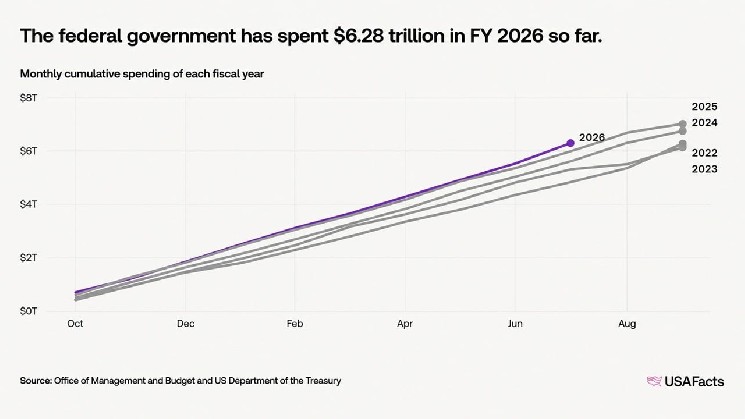
U.S. National Debt Approaches $40 Trillion in 5 Months, Bitcoin Debate Gains Momentum

The US national debt has surged to nearly $40 trillion in just five months, the fastest trillion-dollar increase on record. The debt's growth has accelerated dramatically over time, from taking 192 years to reach the first $1 trillion in 1981 to adding the latest $1 trillion in only five months. The federal budget deficit for the fiscal year is already over $1.8 trillion, exceeding last year's total, and net interest payments on the debt have surpassed $1 trillion, now exceeding defense or Medicare spending. This rapid debt accumulation is fueling arguments within the cryptocurrency industry that Bitcoin serves as a hedge against government-backed currencies and fiscal irresponsibility. Proponents, including some lawmakers and industry leaders, argue Bitcoin could act as a "hard currency" fiscal control mechanism. Legislation has even been proposed for the Treasury to acquire Bitcoin to help reduce the national debt. The International Monetary Fund has warned that global public debt could hit 100% of world GDP by 2029 if current trends continue, with the US and China as primary drivers. Some analyses suggest a sovereign debt crisis could drive capital into alternative assets like Bitcoin, similar to past regional banking crises. However, skeptics point out that both Bitcoin and gold have fallen in price at times during 2026 despite record debt, indicating the depreciation hedge theory may operate over a much longer timeframe than short-term price action.

cryptonews.ru7m ago

U.S. National Debt Approaches $40 Trillion in 5 Months, Bitcoin Debate Gains Momentum

cryptonews.ru7m ago

Technological Self-Reliance in China: A War from Lithography Machines to ABF Films

"China's Tech Independence: A Battle from Lithography Machines to ABF Film" In August 2026, Japan's Ajinomoto announced a 30% supply cut of ABF film to Chinese mainland clients, causing industry-wide shock and fears of price hikes and shortages in the semiconductor supply chain. That same year, Chinese company Lotus Holdings, known for its MSG business, acquired a small domestic ABF film startup for 103 million yuan, aiming to change this passive situation. ABF film is a core insulating material for advanced CPU, GPU, and AI chip packages. Ajinomoto, originally a food flavoring company, has monopolized over 95% of the global ABF film market for nearly 30 years, deriving its technology from byproducts of monosodium glutamate production. With AI chips consuming 5-10 times more ABF film than traditional chips, the supply-demand gap is widening. Ajinomoto's supply cut to China, where domestic ABF film production accounts for less than 5%, directly threatens the production of domestic high-end AI chips and their substrates. This incident highlights a crucial but often overlooked truth: the vulnerabilities in China's quest for technological self-reliance extend beyond headline areas like lithography machines to critical but seemingly minor components—insulating films, photoresists, electronic specialty gases, etc. The article frames China's tech independence as a multi-front war. While major breakthroughs have been achieved in chip design (e.g., Huawei's HiSilicon), foundry (e.g., SMIC), and memory chips (e.g., YMTC), countless smaller "Ajinomoto-style" chokepoints remain. Lotus Holdings' acquisition represents a significant shift: the battle is no longer fought only by tech giants but has become a collective, industry-wide effort involving companies from diverse backgrounds. Historically, external blockades have often spurred China's technological breakthroughs, as seen with Huawei's Kirin chips and YMTC's 3D NAND flash memory. Ajinomoto's supply cut, while a short-term challenge, may similarly catalyze domestic innovation in ABF film and other critical materials. The path to technological sovereignty is long and arduous, requiring sustained patience and investment to fill every gap in the complex supply chain. Lotus's move is not an immediate solution but a step towards that future, symbolizing a broader, relentless march toward independence.

marsbit27m ago

Technological Self-Reliance in China: A War from Lithography Machines to ABF Films

marsbit27m ago

The Great Ethereum "Rate Cut" Debate: Is Now the Golden Window for Staking with the Unconventional EIP-8363?

Ethereon's economic policy is under review as a new proposal, EIP-8363, sparks debate over potential "interest rate cuts" for staking. The unconventional proposal suggests gradually increasing the proportion of newly issued ETH rewards that are burned as the total staked ETH ratio rises, with issuance fully offset by burns once the ratio nears 50%. This would drive the protocol-level staking APR towards 0%, though validators would still earn transaction fees and MEV. This discussion emerges as staked ETH approaches 35% of supply, with the current protocol APR at ~2.6%. The core question is whether Ethereum needs to continue paying high issuance costs for marginal gains in security once sufficient participation is achieved. EIP-8363 aims to optimize security spending, but critics warn it could disproportionately impact solo stakers and potentially increase centralization among large, resilient operators. Paradoxically, this debate coincides with the Pectra upgrade (EIP-7251), which introduces native compounding for staking rewards, significantly improving capital efficiency for long-term holders. This creates a dual narrative: the protocol is making staking more efficient while reconsidering the economic incentive to stake. For long-term ETH holders, this environment may present a "time window" rather than a fixed-rate opportunity. While future APRs are expected to trend downward, starting staking earlier maximizes the compounding effect over time. The decision to stake depends on individual factors like investment horizon, liquidity needs, and risk tolerance regarding options like native validation, staking services, or liquid staking tokens (LSTs). The evolution from encouraging staking to managing its economic cost marks a new, mature phase for Ethereum's tokenomics, where the true value of staking may increasingly lie in the long-term power of compounding time.

marsbit35m ago

The Great Ethereum "Rate Cut" Debate: Is Now the Golden Window for Staking with the Unconventional EIP-8363?

marsbit35m ago

Analyst States Bitcoin Remains Within $61-68k Range

An analyst stated that Bitcoin is likely to remain within a trading range of $61,000 to $68,000. According to Kirill Komalenkov, director of strategic communications at Bitbanker, Bitcoin continues to trade sideways amidst declining market volatility. He attributes its current stability to high market liquidity, with volatility near three-year lows. Komalenkov warned that sustained low activity carries risks of a price decline, with potential tests of support at $62,300 and $61,600. He suggested that major market players might use the current situation to accumulate liquidity, meaning any initial breakout from the range could be a false move. The analyst expects this sideways movement to persist until the latter part of August. Key factors for determining future market direction include fund flows into Exchange-Traded Funds (ETFs) and trader activity. However, Komalenkov noted a potential negative scenario for the second half of August, where heightened geopolitical tensions or hawkish rhetoric from US monetary authorities could trigger a new decline. In such a case, Bitcoin could fall to a range of $45,000–$50,000 by early autumn, which might form a new base for a potential market recovery later in the season. Separately, a Russian deputy finance minister recently announced that non-qualified investors in Russia will soon be allowed to legally purchase Bitcoin, Ethereum, and popular stablecoins, with an annual limit of 300,000 rubles per intermediary.

cryptonews.ru37m ago

Analyst States Bitcoin Remains Within $61-68k Range

cryptonews.ru37m ago

Trading

Spot

Hot Articles

Discussions

Welcome to the HTX Community. Here, you can stay informed about the latest platform developments and gain access to professional market insights. Users' opinions on the price of AI (AI) are presented below.

活动图片