Panne Starknet : le L2 d’Ethereum repart après 4h d’arrêt

bitcoinistPublished on 2025-09-02Last updated on 2025-09-02

Abstract

Quatre heures de blackout total : dans l'univers crypto, c'est une éternité. Starknet, présenté comme l'un des Layer 2 les...

Trusted Editorial content, reviewed by leading industry experts and seasoned editors. Ad Disclosure

Quatre heures de blackout total : dans l’univers crypto, c’est une éternité. Starknet, présenté comme l’un des Layer 2 les plus solides d’Ethereum, s’est retrouvé complètement figé après son upgrade Grinta. Plus rien ne passait : ni transactions, ni smart contracts. Un silence radio qui a pris de court les utilisateurs et déclenché un flot de doutes sur la fiabilité des L2. L’équipe a réagi vite, le réseau est reparti et les explications ont suivi. Mais le malaise reste là : si un acteur aussi en vue peut s’arrêter net pendant des heures, jusqu’où peut-on vraiment faire confiance à ces solutions censées porter l’avenir d’Ethereum ?

Un bug technique au cœur de la panne

L’upgrade Grinta devait rendre Starknet plus solide et plus rapide. Au lieu de ça, un bug de synchronisation des nœuds a tout bloqué. Plus aucune transaction, plus aucun mouvement, une blockchain figée pendant des heures. L’incident est derrière nous, mais il rappelle à quel point chaque mise à jour majeure peut être un pari risqué.

On gagne en performance, mais la moindre faille peut tout faire planter. Ce blackout est évidemment dur pour les utilisateurs. Pour l’équipe, c’était un crash-test grandeur nature qu’elle a su gérer avec réactivité en corrigeant et en relançant le réseau sans tarder.

Un coup de frein pour la confiance des utilisateurs

Au-delà du bug, c’est la confiance qui est mise à l’épreuve. Les Layer 2 comme Starknet sont présentés comme la clé de voûte de l’avenir d’Ethereum. Mais quand une panne de quatre heures survient, c’est toute l’image de fiabilité qui vacille.

Sur les réseaux, la communauté a exprimé à la fois frustration et inquiétude. Certains investisseurs craignent que ces interruptions renforcent l’idée que les L2 ne sont pas encore prêts pour un usage institutionnel massif. D’autres relativisent : ce type de crash-test fait partie du chemin vers la maturité. Une chose est sûre : l’incident de Starknet restera une référence pour le débat sur la résilience des Layer 2. Dans ce climat d’angoisse, il existe deux cryptos prêtes a redonner de la confiance aux utilisateurs.

Token6900 ($T6900) : l’ICO qui secoue la scène crypto
token-6900

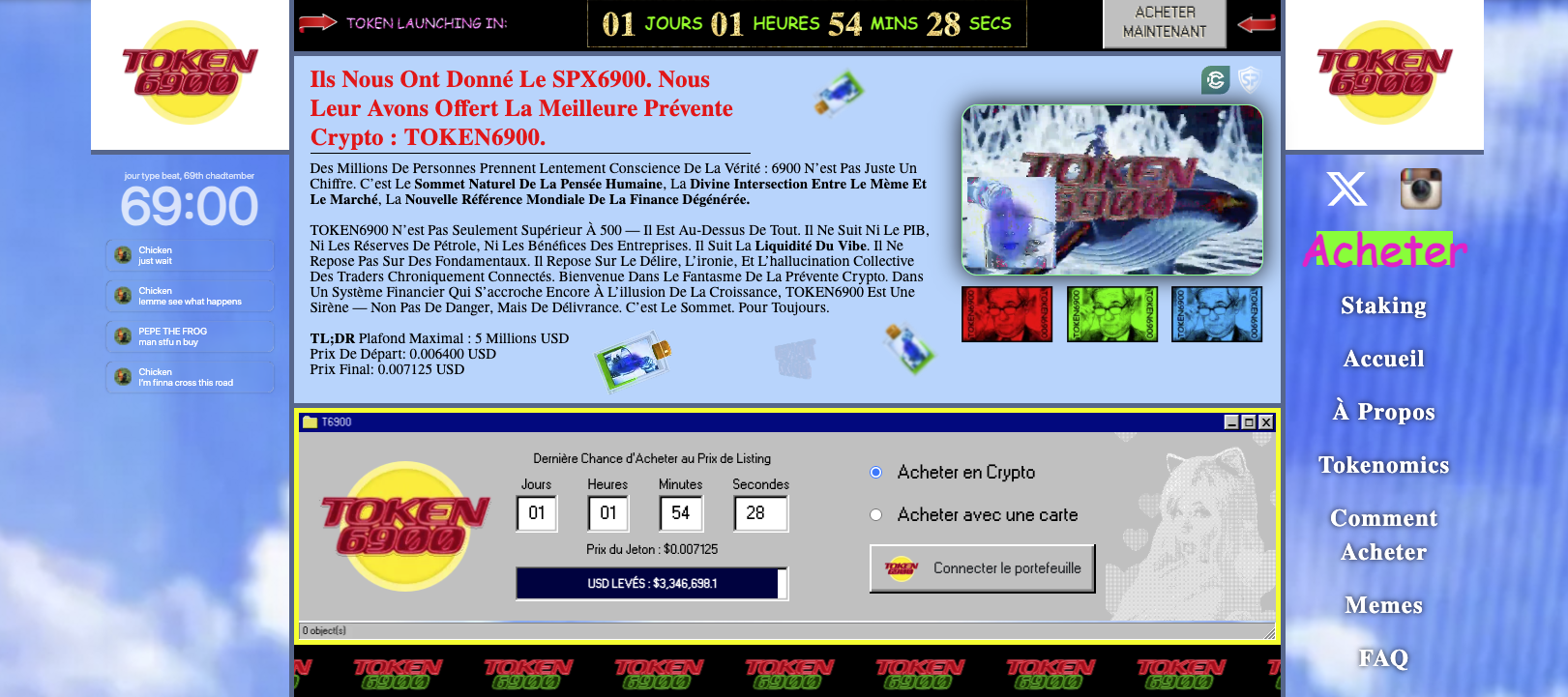
Token6900 fait partie des meilleures cryptos ICO en 2025 et donc des plus surveillées. Son idée ? Un token hybride, pensé pour durer, avec une rareté programmée et un prix qui grimpe par paliers. La répartition des fonds est calibrée entre développement, sécurité, marketing et liquidité. Une offre limitée qui joue naturellement sur la tension entre offre et demande.

Ce qui séduit, c’est sa capacité à parler à deux publics en même temps : les traders court terme qui y voient un terrain de jeu post-claim, et les investisseurs long terme qui misent sur une roadmap déjà balisée, des partenariats en préparation et une arrivée sur les grandes plateformes.
Le claim à venir sera son premier crash-test : si la confiance suit, Token6900 pourrait bien sortir du lot dans une année saturée de projets vite oubliés.

Bitcoin Hyper ($HYPER) : quand Bitcoin rencontre la Solana VM
bitcoin-hyper

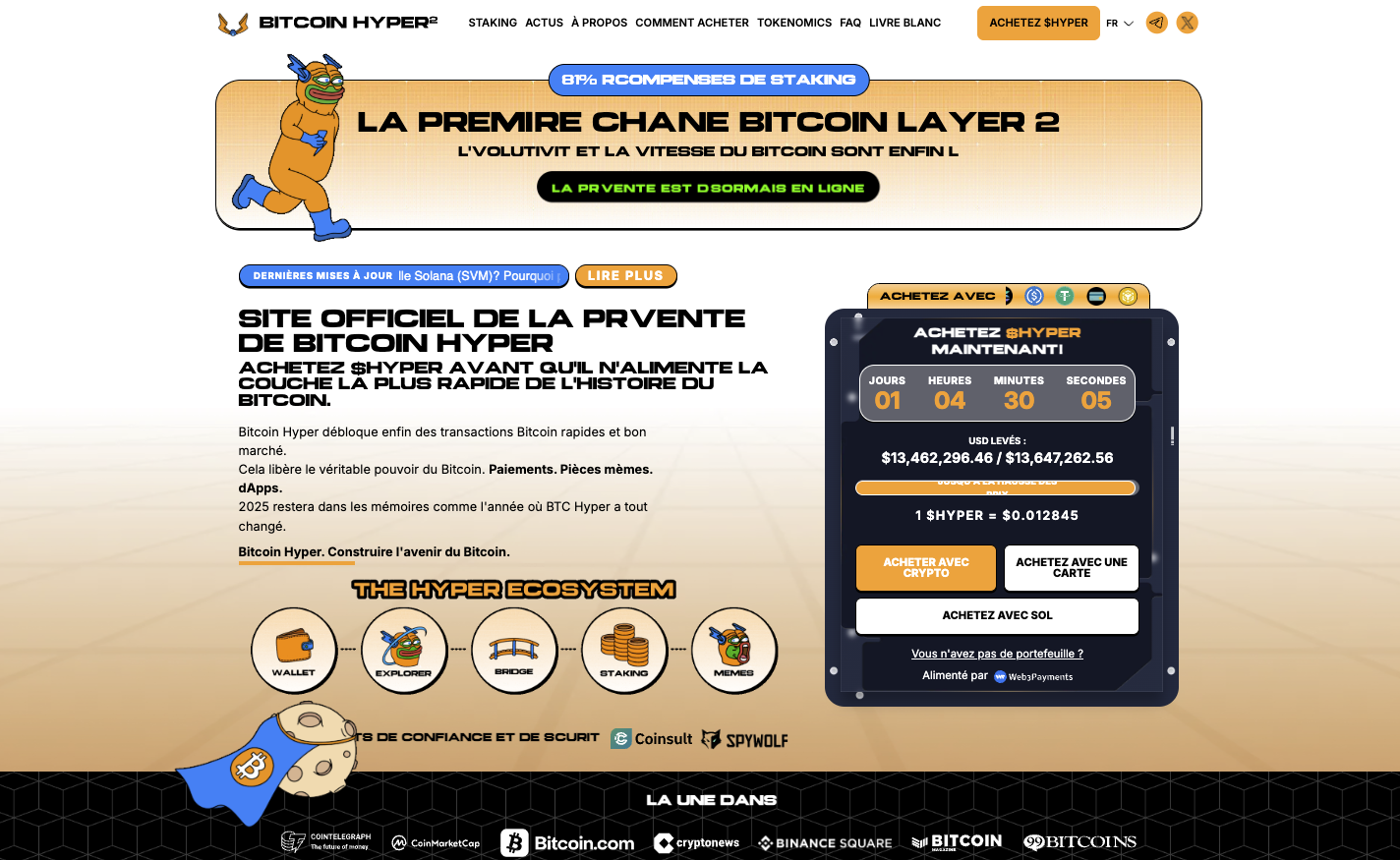
Bitcoin Hyper ne prétend pas tout révolutionner, mais il pousse l’existant beaucoup plus loin. Ce Layer 2 arrimé à Bitcoin a une particularité qui le distingue : il intègre la Solana Virtual Machine (SVM). Ce qui permet de lancer des smart contracts rapides et bon marché, directement sur l’infrastructure Bitcoin. En clair, il marie la sécurité d’un réseau inébranlable avec la souplesse d’un environnement déjà éprouvé.

Sur le plan financier, la présale a déjà attiré plus de 12,7 millions de dollars, avec un token proposé autour de 0,0128 $. L’offre limitée ajoute un effet de rareté qui accentue l’intérêt, c’est tout naturellement qu’elle se compte parmi les meilleures préventes.

Pour ceux qui suivent de près, l’attrait est double : surfer sur l’énergie de l’altcoin season tout en misant sur une solution qui pourrait enfin rendre Bitcoin programmable et pratique à grande échelle.

Conclusion

La panne de Starknet remet les pendules à l’heure : même les projets les plus réputés ne sont pas à l’abri d’un bug majeur. Quatre heures de blackout n’ont pas suffi à entamer durablement la confiance, mais elles rappellent la fragilité des briques censées bâtir l’avenir d’Ethereum. En même temps, ce type de secousse agit souvent comme un accélérateur d’innovation.

Pendant ce temps, d’autres initiatives attirent la lumière. Token6900 par sa mécanique d’ICO claire et sa roadmap ambitieuse arrive à séduire. Bitcoin Hyper est assez ambitieux pour rendre Bitcoin plus flexible et programmable sans compromettre sa sécurité.

Promesses techniques, crash-tests grandeur nature et paris d’investisseurs, le marché bouillonne de tous les côtés. C’est ce mouvement permanent qui continue de captiver.

Editorial Process for bitcoinist is centered on delivering thoroughly researched, accurate, and unbiased content. We uphold strict sourcing standards, and each page undergoes diligent review by our team of top technology experts and seasoned editors. This process ensures the integrity, relevance, and value of our content for our readers.

Trending Cryptos

Related Reads

BTC Sees Largest Single-Day Short Liquidation in History: Overnight $1.1 Billion Short Positions Evaporate, But Calling a Bull Return is Premature

Bitcoin experienced its largest single-day short liquidation in history, with approximately $1.191 billion in short positions being forcibly closed within 24 hours as the price surged nearly 7% to approach $70,000. This event, occurring on the evening of August 19, resulted in total liquidations of about $1.345 billion across the network. The massive short squeeze was attributed to a combination of catalysts: a White House meeting between former President Trump and crypto industry executives fueling regulatory optimism, and a more substantial signal from the U.S. Treasury doubling its liquidity support for long-term bond repurchases, hinting at looser macro liquidity for risk assets. Data showed strong institutional buying, with U.S. spot Bitcoin ETFs seeing significant inflows. The liquidation process itself created a feedback loop, accelerating the price rise as forced buy-backs pushed prices higher. This event surpassed the previous record for BTC perpetual short liquidations set during the volatile "5.19" period in 2021. While such extreme short liquidations have historically signaled a potential medium-term bottom formation, analysts caution that the market often undergoes weeks of consolidation and "cooling off" afterward. Current sentiment remains mixed, with the Fear & Greed Index still in "Fear" territory, and the key test for the rally being whether it can sustain momentum to challenge higher resistance levels like $75,000. The article concludes by warning against immediate "bull market is back" assumptions, emphasizing that history provides context but not guaranteed outcomes.

marsbit17m ago

BTC Sees Largest Single-Day Short Liquidation in History: Overnight $1.1 Billion Short Positions Evaporate, But Calling a Bull Return is Premature

marsbit17m ago

Websea Global RWA Summit Successfully Held: Focusing on New Opportunities in China-Kazakhstan Digital Economy, Releasing Signals of Cross-border Collaboration

Websea Global RWA Summit Successfully Held: Focusing on China-Kazakhstan Digital Economy Opportunities, Releasing Signals for Cross-Border Synergy When traditional industries seek new channels for globalization and digital technologies reshape capital, assets, and collaboration methods, an industrial dialogue connecting China, Kazakhstan, and global markets took place in Almaty. On August 18, 2026, the "2026 Global RWA Real-World Asset Tokenization Enterprise Globalization Resource Matching & China-Kazakhstan Industrial Investment Conference," co-hosted by Websea, concluded successfully in Almaty, Kazakhstan. Centered on RWA digitization, cross-border industrial synergy, and investment promotion, the summit gathered industry representatives, investors, digital economy practitioners, creators, and media from China and Kazakhstan to explore the future of a digital economy community. The event shifted focus from mere "project showcases" to fostering deeper "industrial synergy." It featured project roadshows and panel discussions on topics like "Mining Future·Digital Empowerment," "Real Estate Renewal·Urban Evolution," "Green Energy·RWA Opportunities," and "The Globalization Logic of Real Economy." Mr. Yerbol Kharbayev, Chairman of the Kazakhstan Association of Special Economic Zones, emphasized that RWA's significance lies not only in technology but in enhancing asset transparency, collaboration efficiency, and cross-border connectivity through digitization. The discussions highlighted a move towards a deeper "Digital Economy Community" between China and Kazakhstan. Key points included the need for an open, transparent, and stable business environment to attract long-term investment and the crucial role of synergy between governments, enterprises, platforms, and communities. The summit facilitated strategic cooperation signings and targeted B2G/B2B matching, providing a direct channel for Chinese enterprises exploring the Central Asian market. As an invited digital asset platform, Websea participated in brand presentations and the launch of initiatives like a Creator Alliance and a Web3 MCN agency. Herbert Sim, Global CMO of Websea, stated that platform development is fundamentally rooted in user trust and real experience. He expressed gratitude for user and partner trust, underscoring Websea's commitment to asset security, transaction experience, risk awareness, and user rights protection. Websea aims to contribute to the global digital economy through optimized services and open collaboration. The summit also launched the Web3 Beauty Alliance - Central Asia Chapter, a China-Kazakhstan Quality Creator Alliance, and Web3 MCN agencies, expanding the dialogue beyond industry and capital to include technology, content, community, and brand building. The event concluded by signaling that the future of the digital economy will be co-created by a broad range of participants. It requires institutional and infrastructural support, long-term commitment from enterprises, and the sustained trust of users, partners, and communities. With the summit's conclusion, a new chapter in China-Kazakhstan industrial synergy and digital economy cooperation has begun. Websea will use this as a starting point to continue exploring a secure, open, and sustainable digital future alongside global users and partners.

marsbit26m ago

Websea Global RWA Summit Successfully Held: Focusing on New Opportunities in China-Kazakhstan Digital Economy, Releasing Signals of Cross-border Collaboration

marsbit26m ago

Russia's Banking Bleed and the Crypto Hunt: Citizens Have Withdrawn 24 Billion Euros from Banks This Year; Bill Limiting Total Crypto Purchases Set to Take Effect

**Title: Russia's Banking System Bleeds Cash as Citizens Turn to Crypto, But New Law Imposes Strict Limits** **Summary:** Russia is witnessing a significant outflow of cash from its banking system, with citizens withdrawing approximately €24.4 billion in the first seven months of 2026. This trend accelerated in July, marking the highest monthly increase for the year. Major banks like Gazprombank and Sberbank have reported substantial deposit losses. Simultaneously, cryptocurrency transaction volumes have surged, with an estimated daily trading volume of around $650 million. Officials note that annual crypto transactions exceed 10 trillion rubles, largely occurring outside regulated channels. Citizens are increasingly using crypto as a tool to hedge against currency depreciation and financial uncertainty. In response, President Putin signed the "Digital Currency and Digital Rights Law," with key provisions taking effect on September 1, 2026. This law severely restricts access for ordinary citizens. Non-qualified retail investors will be limited to purchasing only about $3,600 worth of cryptocurrency (initially Bitcoin, Ethereum, and USDT) per year through any single licensed intermediary. Qualified investors and businesses face no such limits for cross-border settlements. Official explanations for the cash exodus cite technical factors like tax changes and digital payment disruptions. However, analysts and media point to deeper public concerns over potential asset freezes, economic instability related to the war, and a lack of trust in the financial system. Notably, September 1 also marks the public launch of the Digital Ruble, Russia's central bank digital currency (CBDC). This creates a dual dynamic: tightening control over decentralized crypto assets while introducing a state-controlled digital currency for payments. For ordinary Russians, traditional banking is losing appeal, crypto access is being capped, and the new Digital Ruble offers a third, fully state-managed pathway.

marsbit50m ago

Russia's Banking Bleed and the Crypto Hunt: Citizens Have Withdrawn 24 Billion Euros from Banks This Year; Bill Limiting Total Crypto Purchases Set to Take Effect

marsbit50m ago

Household & Personal Care Giant Quietly Becomes the Champion in 'Chip Cleaning'

Kao, the renowned Japanese consumer goods giant known for laundry detergent and facial cleansers, has quietly become a leader in the semiconductor precision cleaning agent market, as revealed in its recent financial report. The company's chemical business, which includes semiconductor precision cleaning agents, achieved net sales of 2472 billion yen (approx. RMB 104.4 billion) in the first half of fiscal 2026, growing 9.4% year-on-year and becoming its fastest-growing segment. Notably, Kao holds about a 60% market share in cleaning agents for package substrates and is also a leader in specific chemicals for NAND flash manufacturing processes. Its products have entered the supply chains of major chipmakers like TSMC, Samsung, and Kioxia. Kao's journey into semiconductors began with its core expertise in surface science, developed from its origins in soap and detergent manufacturing. The 1987 Montreal Protocol, which phased out ozone-depleting solvents like Freon, created a demand for alternative cleaning solutions. Leveraging its deep knowledge of surfactants and purification, Kao launched its "CLEANTHROUGH" aqueous cleaning agent in 1991, entering the precision cleaning market. Over the past three decades, Kao has expanded its product line to cover both front-end (wafer fabrication) and back-end (packaging) semiconductor processes. Its "precision interface control technology" addresses key challenges like particle removal, photoresist stripping, and cleaning complex structures in advanced packaging without damaging delicate materials. Beyond cleaning, Kao's portfolio extends to adjacent processes like dry film photoresist stripping. A key to Kao's success is its customer-centric business model. The company operates "Fine Cleaning Centers" in Japan and Taiwan, where it collaborates directly with clients on process development. This deep integration, coupled with the high cost and risk of switching validated materials in semiconductor production, creates strong customer loyalty. As the AI boom drives demand for complex chip packaging like CoWoS, which requires more numerous and difficult cleaning steps, Kao is strategically positioned. The company plans to defend its back-end dominance while expanding into DRAM and logic semiconductor markets. Kao's story mirrors that of other Japanese firms like Ajinomoto (ABF film) and TOTO (electrostatic chucks), which leveraged deep-rooted core technologies from seemingly unrelated industries to achieve leadership in critical, niche segments of the semiconductor supply chain.

marsbit51m ago

Household & Personal Care Giant Quietly Becomes the Champion in 'Chip Cleaning'

marsbit51m ago

Trading

Spot

Hot Articles

What is SONIC

Sonic: Pioneering the Future of Gaming in Web3 Introduction to Sonic In the ever-evolving landscape of Web3, the gaming industry stands out as one of the most dynamic and promising sectors. At the forefront of this revolution is Sonic, a project designed to amplify the gaming ecosystem on the Solana blockchain. Leveraging cutting-edge technology, Sonic aims to deliver an unparalleled gaming experience by efficiently processing millions of requests per second, ensuring that players enjoy seamless gameplay while maintaining low transaction costs. This article delves into the intricate details of Sonic, exploring its creators, funding sources, operational mechanics, and the timeline of significant events that have shaped its journey. What is Sonic? Sonic is an innovative layer-2 network that operates atop the Solana blockchain, specifically tailored to enhance the existing Solana gaming ecosystem. It accomplishes this through a customised, VM-agnostic game engine paired with a HyperGrid interpreter, facilitating sovereign game economies that roll up back to the Solana platform. The primary goals of Sonic include: Enhanced Gaming Experiences: Sonic is committed to offering lightning-fast on-chain gameplay, allowing players and developers to engage with games at previously unattainable speeds. Atomic Interoperability: This feature enables transactions to be executed within Sonic without the need to redeploy Solana programmes and accounts. This makes the process more efficient and directly benefits from Solana Layer1 services and liquidity. Seamless Deployment: Sonic allows developers to write for Ethereum Virtual Machine (EVM) based systems and execute them on Solana’s SVM infrastructure. This interoperability is crucial for attracting a broader range of dApps and decentralised applications to the platform. Support for Developers: By offering native composable gaming primitives and extensible data types - dining within the Entity-Component-System (ECS) framework - game creators can craft intricate business logic with ease. Overall, Sonic's unique approach not only caters to players but also provides an accessible and low-cost environment for developers to innovate and thrive. Creator of Sonic The information regarding the creator of Sonic is somewhat ambiguous. However, it is known that Sonic's SVM is owned by the company Mirror World. The absence of detailed information about the individuals behind Sonic reflects a common trend in several Web3 projects, where collective efforts and partnerships often overshadow individual contributions. Investors of Sonic Sonic has garnered considerable attention and support from various investors within the crypto and gaming sectors. Notably, the project raised an impressive $12 million during its Series A funding round. The round was led by BITKRAFT Ventures, with other notable investors including Galaxy, Okx Ventures, Interactive, Big Brain Holdings, and Mirana. This financial backing signifies the confidence that investment foundations have in Sonic’s potential to revolutionise the Web3 gaming landscape, further validating its innovative approaches and technologies. How Does Sonic Work? Sonic utilises the HyperGrid framework, a sophisticated parallel processing mechanism that enhances its scalability and customisability. Here are the core features that set Sonic apart: Lightning Speed at Low Costs: Sonic offers one of the fastest on-chain gaming experiences compared to other Layer-1 solutions, powered by the scalability of Solana’s virtual machine (SVM). Atomic Interoperability: Sonic enables transaction execution without redeployment of Solana programmes and accounts, effectively streamlining the interaction between users and the blockchain. EVM Compatibility: Developers can effortlessly migrate decentralised applications from EVM chains to the Solana environment using Sonic’s HyperGrid interpreter, increasing the accessibility and integration of various dApps. Ecosystem Support for Developers: By exposing native composable gaming primitives, Sonic facilitates a sandbox-like environment where developers can experiment and implement business logic, greatly enhancing the overall development experience. Monetisation Infrastructure: Sonic natively supports growth and monetisation efforts, providing frameworks for traffic generation, payments, and settlements, thereby ensuring that gaming projects are not only viable but also sustainable financially. Timeline of Sonic The evolution of Sonic has been marked by several key milestones. Below is a brief timeline highlighting critical events in the project's history: 2022: The Sonic cryptocurrency was officially launched, marking the beginning of its journey in the Web3 gaming arena. 2024: June: Sonic SVM successfully raised $12 million in a Series A funding round. This investment allowed Sonic to further develop its platform and expand its offerings. August: The launch of the Sonic Odyssey testnet provided users with the first opportunity to engage with the platform, offering interactive activities such as collecting rings—a nod to gaming nostalgia. October: SonicX, an innovative crypto game integrated with Solana, made its debut on TikTok, capturing the attention of over 120,000 users within a short span. This integration illustrated Sonic’s commitment to reaching a broader, global audience and showcased the potential of blockchain gaming. Key Points Sonic SVM is a revolutionary layer-2 network on Solana explicitly designed to enhance the GameFi landscape, demonstrating great potential for future development. HyperGrid Framework empowers Sonic by introducing horizontal scaling capabilities, ensuring that the network can handle the demands of Web3 gaming. Integration with Social Platforms: The successful launch of SonicX on TikTok displays Sonic’s strategy to leverage social media platforms to engage users, exponentially increasing the exposure and reach of its projects. Investment Confidence: The substantial funding from BITKRAFT Ventures, among others, emphasizes the robust backing Sonic has, paving the way for its ambitious future. In conclusion, Sonic encapsulates the essence of Web3 gaming innovation, striking a balance between cutting-edge technology, developer-centric tools, and community engagement. As the project continues to evolve, it is poised to redefine the gaming landscape, making it a notable entity for gamers and developers alike. As Sonic moves forward, it will undoubtedly attract greater interest and participation, solidifying its place within the broader narrative of blockchain gaming.

2.4k Total ViewsPublished 2024.04.04Updated 2024.12.03

What is SONIC

What is $S$

Understanding SPERO: A Comprehensive Overview Introduction to SPERO As the landscape of innovation continues to evolve, the emergence of web3 technologies and cryptocurrency projects plays a pivotal role in shaping the digital future. One project that has garnered attention in this dynamic field is SPERO, denoted as SPERO,$$s$. This article aims to gather and present detailed information about SPERO, to help enthusiasts and investors understand its foundations, objectives, and innovations within the web3 and crypto domains. What is SPERO,$$s$? SPERO,$$s$ is a unique project within the crypto space that seeks to leverage the principles of decentralisation and blockchain technology to create an ecosystem that promotes engagement, utility, and financial inclusion. The project is tailored to facilitate peer-to-peer interactions in new ways, providing users with innovative financial solutions and services. At its core, SPERO,$$s$ aims to empower individuals by providing tools and platforms that enhance user experience in the cryptocurrency space. This includes enabling more flexible transaction methods, fostering community-driven initiatives, and creating pathways for financial opportunities through decentralised applications (dApps). The underlying vision of SPERO,$$s$ revolves around inclusiveness, aiming to bridge gaps within traditional finance while harnessing the benefits of blockchain technology. Who is the Creator of SPERO,$$s$? The identity of the creator of SPERO,$$s$ remains somewhat obscure, as there are limited publicly available resources providing detailed background information on its founder(s). This lack of transparency can stem from the project's commitment to decentralisation—an ethos that many web3 projects share, prioritising collective contributions over individual recognition. By centring discussions around the community and its collective goals, SPERO,$$s$ embodies the essence of empowerment without singling out specific individuals. As such, understanding the ethos and mission of SPERO remains more important than identifying a singular creator. Who are the Investors of SPERO,$$s$? SPERO,$$s$ is supported by a diverse array of investors ranging from venture capitalists to angel investors dedicated to fostering innovation in the crypto sector. The focus of these investors generally aligns with SPERO's mission—prioritising projects that promise societal technological advancement, financial inclusivity, and decentralised governance. These investor foundations are typically interested in projects that not only offer innovative products but also contribute positively to the blockchain community and its ecosystems. The backing from these investors reinforces SPERO,$$s$ as a noteworthy contender in the rapidly evolving domain of crypto projects. How Does SPERO,$$s$ Work? SPERO,$$s$ employs a multi-faceted framework that distinguishes it from conventional cryptocurrency projects. Here are some of the key features that underline its uniqueness and innovation: Decentralised Governance: SPERO,$$s$ integrates decentralised governance models, empowering users to participate actively in decision-making processes regarding the project’s future. This approach fosters a sense of ownership and accountability among community members. Token Utility: SPERO,$$s$ utilises its own cryptocurrency token, designed to serve various functions within the ecosystem. These tokens enable transactions, rewards, and the facilitation of services offered on the platform, enhancing overall engagement and utility. Layered Architecture: The technical architecture of SPERO,$$s$ supports modularity and scalability, allowing for seamless integration of additional features and applications as the project evolves. This adaptability is paramount for sustaining relevance in the ever-changing crypto landscape. Community Engagement: The project emphasises community-driven initiatives, employing mechanisms that incentivise collaboration and feedback. By nurturing a strong community, SPERO,$$s$ can better address user needs and adapt to market trends. Focus on Inclusion: By offering low transaction fees and user-friendly interfaces, SPERO,$$s$ aims to attract a diverse user base, including individuals who may not previously have engaged in the crypto space. This commitment to inclusion aligns with its overarching mission of empowerment through accessibility. Timeline of SPERO,$$s$ Understanding a project's history provides crucial insights into its development trajectory and milestones. Below is a suggested timeline mapping significant events in the evolution of SPERO,$$s$: Conceptualisation and Ideation Phase: The initial ideas forming the basis of SPERO,$$s$ were conceived, aligning closely with the principles of decentralisation and community focus within the blockchain industry. Launch of Project Whitepaper: Following the conceptual phase, a comprehensive whitepaper detailing the vision, goals, and technological infrastructure of SPERO,$$s$ was released to garner community interest and feedback. Community Building and Early Engagements: Active outreach efforts were made to build a community of early adopters and potential investors, facilitating discussions around the project’s goals and garnering support. Token Generation Event: SPERO,$$s$ conducted a token generation event (TGE) to distribute its native tokens to early supporters and establish initial liquidity within the ecosystem. Launch of Initial dApp: The first decentralised application (dApp) associated with SPERO,$$s$ went live, allowing users to engage with the platform's core functionalities. Ongoing Development and Partnerships: Continuous updates and enhancements to the project's offerings, including strategic partnerships with other players in the blockchain space, have shaped SPERO,$$s$ into a competitive and evolving player in the crypto market. Conclusion SPERO,$$s$ stands as a testament to the potential of web3 and cryptocurrency to revolutionise financial systems and empower individuals. With a commitment to decentralised governance, community engagement, and innovatively designed functionalities, it paves the way toward a more inclusive financial landscape. As with any investment in the rapidly evolving crypto space, potential investors and users are encouraged to research thoroughly and engage thoughtfully with the ongoing developments within SPERO,$$s$. The project showcases the innovative spirit of the crypto industry, inviting further exploration into its myriad possibilities. While the journey of SPERO,$$s$ is still unfolding, its foundational principles may indeed influence the future of how we interact with technology, finance, and each other in interconnected digital ecosystems.

427 Total ViewsPublished 2024.12.17Updated 2024.12.17

What is $S$

What is AGENT S

Agent S: The Future of Autonomous Interaction in Web3 Introduction In the ever-evolving landscape of Web3 and cryptocurrency, innovations are constantly redefining how individuals interact with digital platforms. One such pioneering project, Agent S, promises to revolutionise human-computer interaction through its open agentic framework. By paving the way for autonomous interactions, Agent S aims to simplify complex tasks, offering transformative applications in artificial intelligence (AI). This detailed exploration will delve into the project's intricacies, its unique features, and the implications for the cryptocurrency domain. What is Agent S? Agent S stands as a groundbreaking open agentic framework, specifically designed to tackle three fundamental challenges in the automation of computer tasks: Acquiring Domain-Specific Knowledge: The framework intelligently learns from various external knowledge sources and internal experiences. This dual approach empowers it to build a rich repository of domain-specific knowledge, enhancing its performance in task execution. Planning Over Long Task Horizons: Agent S employs experience-augmented hierarchical planning, a strategic approach that facilitates efficient breakdown and execution of intricate tasks. This feature significantly enhances its ability to manage multiple subtasks efficiently and effectively. Handling Dynamic, Non-Uniform Interfaces: The project introduces the Agent-Computer Interface (ACI), an innovative solution that enhances the interaction between agents and users. Utilizing Multimodal Large Language Models (MLLMs), Agent S can navigate and manipulate diverse graphical user interfaces seamlessly. Through these pioneering features, Agent S provides a robust framework that addresses the complexities involved in automating human interaction with machines, setting the stage for myriad applications in AI and beyond. Who is the Creator of Agent S? While the concept of Agent S is fundamentally innovative, specific information about its creator remains elusive. The creator is currently unknown, which highlights either the nascent stage of the project or the strategic choice to keep founding members under wraps. Regardless of anonymity, the focus remains on the framework's capabilities and potential. Who are the Investors of Agent S? As Agent S is relatively new in the cryptographic ecosystem, detailed information regarding its investors and financial backers is not explicitly documented. The lack of publicly available insights into the investment foundations or organisations supporting the project raises questions about its funding structure and development roadmap. Understanding the backing is crucial for gauging the project's sustainability and potential market impact. How Does Agent S Work? At the core of Agent S lies cutting-edge technology that enables it to function effectively in diverse settings. Its operational model is built around several key features: Human-like Computer Interaction: The framework offers advanced AI planning, striving to make interactions with computers more intuitive. By mimicking human behaviour in tasks execution, it promises to elevate user experiences. Narrative Memory: Employed to leverage high-level experiences, Agent S utilises narrative memory to keep track of task histories, thereby enhancing its decision-making processes. Episodic Memory: This feature provides users with step-by-step guidance, allowing the framework to offer contextual support as tasks unfold. Support for OpenACI: With the ability to run locally, Agent S allows users to maintain control over their interactions and workflows, aligning with the decentralised ethos of Web3. Easy Integration with External APIs: Its versatility and compatibility with various AI platforms ensure that Agent S can fit seamlessly into existing technological ecosystems, making it an appealing choice for developers and organisations. These functionalities collectively contribute to Agent S's unique position within the crypto space, as it automates complex, multi-step tasks with minimal human intervention. As the project evolves, its potential applications in Web3 could redefine how digital interactions unfold. Timeline of Agent S The development and milestones of Agent S can be encapsulated in a timeline that highlights its significant events: September 27, 2024: The concept of Agent S was launched in a comprehensive research paper titled “An Open Agentic Framework that Uses Computers Like a Human,” showcasing the groundwork for the project. October 10, 2024: The research paper was made publicly available on arXiv, offering an in-depth exploration of the framework and its performance evaluation based on the OSWorld benchmark. October 12, 2024: A video presentation was released, providing a visual insight into the capabilities and features of Agent S, further engaging potential users and investors. These markers in the timeline not only illustrate the progress of Agent S but also indicate its commitment to transparency and community engagement. Key Points About Agent S As the Agent S framework continues to evolve, several key attributes stand out, underscoring its innovative nature and potential: Innovative Framework: Designed to provide an intuitive use of computers akin to human interaction, Agent S brings a novel approach to task automation. Autonomous Interaction: The ability to interact autonomously with computers through GUI signifies a leap towards more intelligent and efficient computing solutions. Complex Task Automation: With its robust methodology, it can automate complex, multi-step tasks, making processes faster and less error-prone. Continuous Improvement: The learning mechanisms enable Agent S to improve from past experiences, continually enhancing its performance and efficacy. Versatility: Its adaptability across different operating environments like OSWorld and WindowsAgentArena ensures that it can serve a broad range of applications. As Agent S positions itself in the Web3 and crypto landscape, its potential to enhance interaction capabilities and automate processes signifies a significant advancement in AI technologies. Through its innovative framework, Agent S exemplifies the future of digital interactions, promising a more seamless and efficient experience for users across various industries. Conclusion Agent S represents a bold leap forward in the marriage of AI and Web3, with the capacity to redefine how we interact with technology. While still in its early stages, the possibilities for its application are vast and compelling. Through its comprehensive framework addressing critical challenges, Agent S aims to bring autonomous interactions to the forefront of the digital experience. As we move deeper into the realms of cryptocurrency and decentralisation, projects like Agent S will undoubtedly play a crucial role in shaping the future of technology and human-computer collaboration.

1.1k Total ViewsPublished 2025.01.14Updated 2025.01.14

What is AGENT S

Discussions

Welcome to the HTX Community. Here, you can stay informed about the latest platform developments and gain access to professional market insights. Users' opinions on the price of S (S) are presented below.

活动图片