Rescuing US Treasuries in 'Soros Style': From Exchange Rates to Interest Rates, Can Bessent Win Against the Market?

marsbitPublished on 2026-08-20Last updated on 2026-08-20

Abstract

"Scott Bessent's 'Soros-Style' Gamble: Can He Save the U.S. Treasury Market?" U.S. Treasury Secretary Scott Bessent, a former Soros fund manager who helped bet against the British pound in 1992, is now deploying aggressive market interventions to defend U.S. Treasuries. He aims to cap rising borrowing costs, declaring his job is to be the "nation's top bond salesman." Bessent's 2026 playbook includes coordinated U.S.-Japan intervention to support the yen—seen as protecting Japan, a major Treasury holder, from selling bonds—signaling reduced long-term debt supply, and recently doubling the Treasury's buyback program for long-dated bonds. The moves triggered immediate yield declines. This activist approach breaks with the Treasury's traditional "regular and predictable" debt management principles, drawing criticism from economists who note it doesn't address structural drivers: massive fiscal deficits, soaring interest costs, and inflation pressures. While interventions have caused short-term market swings, skeptics argue battling both the bond and forex markets is unsustainable without fiscal consolidation. Bessent is betting his credibility that signaling and market operations can manage the curve.

Original Author: Long Yue

Original Source: Wall Street News

A man who once helped Soros break the Bank of England is now using the same tactics to defend the US Treasury market?

This year, US Treasury Secretary Scott Bessent has made a series of surprising market moves, putting his own credibility on the line to suppress US borrowing costs. According to Bloomberg, he has become "the most active Treasury Secretary intervening in financial markets in decades."

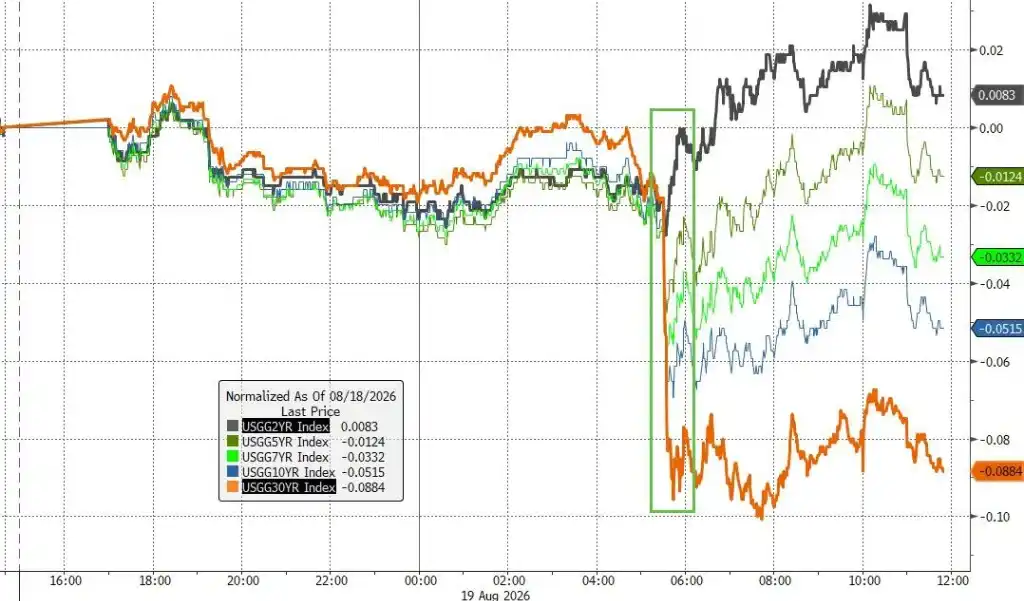
Following the joint US-Japan intervention on the yen, Bessent's latest move is expanding Treasury buybacks. The Treasury Department announced it will "at least double" the buyback size for 10- to 30-year Treasuries—a plan unveiled just two weeks prior. On the day of the announcement, the 10-year Treasury yield fell about 6 basis points, the 30-year yield dropped nearly 9 basis points, and the dollar index hit a three-month low.

The market reaction confirmed Bessent's own assessment: He has publicly stated, "My job is to be the nation's top bond salesman, and Treasury yields are the barometer of success."
From Pound Short-Seller to Bond Market Gatekeeper

To understand Bessent's approach, one must look back to 1992.

That year, Bessent, in his twenties, was working at Soros Fund Management and helped build the short position against the British pound. On "Black Wednesday," the pound was forced out of the European Exchange Rate Mechanism, netting Soros over $1 billion. Media reports describe a former advisor's view of Bessent at the time: "He could see market vulnerabilities that others couldn't."

He later returned to Soros as Chief Investment Officer, and in 2013, led a $1 billion short on the yen, again reaping significant returns. In 2015, he founded Key Square Capital Management with $4.5 billion, successfully betting on Brexit and Trump's two election victories.

This "find the crack, give it a push" predator logic has defined his entire hedge fund career.

Now, he's applying the same instincts to do the exact opposite—defend a market under pressure.

The Intervention Blueprint This Year: From Yen to Treasuries

Bessent's moves this year form a clear chain of logic.

Step One: Yen Intervention. On July 31, the US Treasury Department, alongside Japanese authorities, intervened to buy yen—marking the first direct US intervention in the yen market in nearly thirty years. According to the Peterson Institute for International Economics (PIIE), Japan used about $87 billion in foreign reserves to purchase yen in the last two days of July, with the US Treasury "joining in the final stage, providing relatively limited funds but sending an important signal of political support." Notably, the Treasury sold euros, not dollars, for the operation and did not notify eurozone authorities in advance.

A hidden thread connects this: Japan holds about $1.1 trillion in US Treasuries, making it the largest foreign holder. If Japan had to finance the intervention alone, it might have been forced to sell Treasuries, further pushing up long-term yields. Washington's participation meant Japan sold fewer Treasuries, indirectly protecting the yield curve Bessent cares most about.

Step Two: Signaling Supply Contraction. Earlier this month, the Treasury hinted at possibly reducing issuance of long-term bonds, signaling a tightening of supply to the market.

Step Three: Ramping Up Buybacks. This week's announcement to at least double long-term bond buybacks directly props up prices from the demand side.

Bloomberg quoted Brad Golding, a portfolio manager at Christofferson Robb & Co., describing this as akin to the "old-school 'painting the screen' technique"—a hedge fund tactic of placing simultaneous orders with multiple large dealers to trigger significant market movement.

Mark Sobel, a former US Treasury official now at the OMFIF research institute, told Bloomberg: "He is absolutely an activist. It recalls his hedge fund background." "He and this administration are clearly worried about the rise in long-term yields."

Breaking 'Regular and Predictable'

Bessent's operations clash directly with the Treasury's traditional principles.

The US Treasury has long adhered to "regular and predictable" debt management principles, avoiding market surprises. Bessent himself publicly endorsed this principle at a Treasury market conference in November last year.

Now, his actions have departed from that promise.

Gregory Faranello, Head of US Rates Trading and Strategy at AmeriVet Securities, told Bloomberg: "This goes against the 'regular and predictable' mantra—but that's the world we're in." "The signal is clear: stop yields from rising."

More ironically, Bessent's predecessor Janet Yellen also tried to suppress yields in 2023 by adjusting debt issuance patterns, at which time Bessent was a critic, accusing the move of being politically motivated. Stephen Miran, a former Trump chief economist, co-authored a paper in 2024 criticizing "aggressive Treasury issuance" (ATI).

According to Bloomberg, Miran and Nouriel Roubini wrote in that paper: "Once one party starts using ATI to juice the economy in an election season, all future administrations may follow suit."

Question: Can Intervention Solve Structural Issues?

The market reacts in the short term to Bessent's maneuvers, but economists' questions are more fundamental.

In the first ten months of fiscal year 2026, federal net interest expense reached $963 billion, or about $3.18 billion per day, a 14% year-on-year increase. The 10-year Treasury yield is at 4.72%, and the 30-year at 5.31%—large amounts of old debt issued at rates below 2% are rolling over at much higher costs. The deficit for FY2026 so far is $1.8 trillion, 5% wider than the previous year, with spending on Social Security, Medicare, defense, and debt interest all rising, and Republicans discussing further tax cuts.

Robin Brooks, a senior fellow at the Brookings Institution, told Bloomberg bluntly: "This is not solving the underlying problem—reducing debt, shrinking the fiscal deficit—but trying to manipulate the yield curve."

John Velis, a macro strategist at BNY, also noted: "Given current spending policies and wars, it will be very difficult to alleviate long-end pressure."

The effectiveness of yen intervention is also in doubt. After hitting a high of 163.98 on July 23, USD/JPY had retreated to 159.43 by August 17, but CNBC reported the intervention did not stop the yen's persistent weakness. PIIE's Maurice Obstfeld stated flatly that the intervention had little effect, calling it "not a free lunch, not even a free snack."

Guy Miller, Chief Strategist at Zurich Insurance, told Bloomberg: "This approach can only work for a while. When the Treasury explicitly signals it will intervene consistently, it can have a fairly strong effect. But ultimately, without addressing profligate fiscal policy, this is unsustainable."

Peter Boockvar, Chief Investment Officer at Onepoint Bfg, was more direct: "He is fighting two giant markets—US Treasuries and foreign exchange—simultaneously. It's an incredibly tough battle."

Betting on Credibility

Bessent's logic is clearly stated in his own words. Last month, discussing the Trump administration's stakes in tech and resource companies, he said: "What we're trying to do is create market signals." He told Fox Business: "Essentially, it's telling investors, okay, where's the puck going, skate there fast."

The problem is, in 1992, shorting the pound meant finding an institutional weakness and pushing. Now, he faces structural pressure driven by fiscal deficits, inflation expectations, and Fed policy—issues not fundamentally changed by buyback operations or currency interventions.

According to Bloomberg, Mark Sobel, who served at the Treasury for nearly 40 years, believes Bessent is at least the most activist Treasury Secretary since the early 2000s, but he also characterized the yen intervention as unwise, arguing it avoids the fiscal consolidation the US truly needs.

Related Questions

QWho is the current U.S. Treasury Secretary mentioned in the article, and what is his controversial strategy?

AThe current U.S. Treasury Secretary mentioned is Scott Bessent. His controversial strategy involves aggressive and surprising market interventions, including foreign exchange intervention (like with Japan on the yen) and large-scale U.S. Treasury buybacks, aimed at suppressing long-term bond yields, a departure from the Treasury's traditional 'rules-based and predictable' debt management approach.

QWhat historical event is used to illustrate Scott Bessent's market philosophy, and what role did he play?

AThe historical event is the 1992 'Black Wednesday,' where George Soros's Quantum Fund bet against and broke the British pound's peg to the European Exchange Rate Mechanism. Scott Bessent, then a young employee at Soros Fund Management, helped build the short position against the pound. This illustrates his philosophy of identifying structural market weaknesses and applying pressure at the right point.

QAccording to the article, what is the implicit link between the U.S. intervention in the yen market and protecting U.S. Treasury yields?

AThe implicit link is that Japan is the largest foreign holder of U.S. Treasuries (approx. $1.1 trillion). If Japan had to finance a large-scale yen intervention alone, it might be forced to sell its U.S. Treasuries. By participating, the U.S. Treasury provided political support and financial backing, allowing Japan to sell fewer Treasuries for the intervention. This indirectly helped prevent a sell-off that could have pushed U.S. long-term yields even higher.

QWhat are the key criticisms from economists regarding Scott Bessent's interventionist approach?

AEconomists criticize that Bessent's interventions address only the symptoms, not the root causes of high bond yields. They argue the fundamental problems are structural: persistently large fiscal deficits, high and rising government debt, increasing net interest costs, and inflation expectations. Critics like Robin Brooks state he is 'trying to manipulate the yield curve' instead of tackling necessary fiscal consolidation (reducing debt and deficits). Others doubt the sustainability and long-term effectiveness of fighting such powerful market forces.

QHow does the article describe the potential risk to Scott Bessent's personal and professional credibility?

AThe article frames Bessent's aggressive actions as a high-stakes 'bet' on his own credibility. He is applying the 'find a crack and push' hedge fund tactics he learned from his time with Soros, but this time to defend a market (U.S. Treasuries) under structural pressure rather than attack a weak one. The risk is that if his interventions fail to sustainably lower yields or if market forces overwhelm them, it could damage his reputation as Treasury Secretary and the credibility of the Treasury's debt management.

Related Reads

UBS Research Report Analysis: Murata's MLCC Factory Opens to the Public for the First Time in 20 Years, 20% Production Increase Potential from Optimization of Existing Assets

On August 18, UBS analysts visited Murata's Fukui Takefu factory, its first public opening in about 20 years. As the global MLCC leader with ~35% market share, this plant serves as the mother factory for advanced MLCCs used in AI servers and premium smartphones. UBS confirmed key findings: deep technical barriers remain, existing equipment holds ~20% latent production capacity, and physical expansion is nearing its limits. Murata's competitive edge lies in a closed-loop system encompassing proprietary ceramic material uniformity control, capacitance-maximizing self-developed technology, and self-built production equipment—a "black box" model difficult to replicate. Its flexible segmented production system efficiently manages over 50,000 product types. With new facility construction constrained and equipment lead times lengthening, optimizing existing lines becomes a crucial, lower-cost path to increase output. Murata's strategy involves shifting generic production to overseas sites like Thailand while focusing Japanese facilities on advanced, high-margin products. UBS projects significant operating margin expansion from 15.4% in FY2026 to 37.6% in FY2029, driven by this product mix upgrade toward high-capacitance, small-size MLCCs for AI and smartphones. Primary risks include U.S. economic slowdown, technology diffusion in Asia, and circuit integration trends. UBS maintains a positive industry outlook, noting potential for guidance upgrades, and sets a 13,200 yen target price based on a 30x FY2029 P/E, implying ~76% upside contingent on successful MLCC product structure advancement.

marsbit14m ago

UBS Research Report Analysis: Murata's MLCC Factory Opens to the Public for the First Time in 20 Years, 20% Production Increase Potential from Optimization of Existing Assets

marsbit14m ago

Arthur Hayes: Awaiting Fed Signal, Replenishing Ammo to Position for Crypto Bull Market

Arthur Hayes, co-founder of BitMEX, argues that the yen is significantly undervalued and analyzes three potential paths for its appreciation. He dismisses the first two options—the Bank of Japan raising interest rates or Japanese institutions selling foreign assets—as politically or economically unfeasible. Instead, he identifies the preferred method: Japan's Ministry of Finance (MOF) using the Federal Reserve's FIMA (Foreign and International Monetary Authorities) repo facility to borrow dollars against its U.S. Treasury holdings, then selling those dollars to buy yen in the forex market. Hayes explains that U.S. Treasury Secretary "Besant" has already called for removing the FIMA per-counterparty limit to enable this. The execution depends on Fed Chair "Warsh" convening a subcommittee to adjust the FIMA rules. Hayes is confident this will happen, signaling a major shift in USD/JPY dynamics and the end of the "cheap" yen era. He connects this potential massive dollar liquidity injection directly to a surge in asset prices, particularly Bitcoin, physical gold, and gold miners' stocks, drawing parallels to the Fed's balance sheet expansion during COVID-19. Within crypto, besides Bitcoin, he views Ethereum as undervalued and highlights Ethena (ENA) as a high-potential, speculative altcoin that could see 5-10x returns if liquidity increases and boosts Bitcoin basis trade yields. Hayes concludes he is waiting for the Fed's signal to fully deploy capital, anticipating a significant crypto bull market.

marsbit53m ago

Arthur Hayes: Awaiting Fed Signal, Replenishing Ammo to Position for Crypto Bull Market

marsbit53m ago

BTC Sees Largest Single-Day Short Liquidation in History: Overnight $1.1 Billion Short Positions Evaporate, But Calling a Bull Return is Premature

Bitcoin experienced its largest single-day short liquidation in history, with approximately $1.191 billion in short positions being forcibly closed within 24 hours as the price surged nearly 7% to approach $70,000. This event, occurring on the evening of August 19, resulted in total liquidations of about $1.345 billion across the network. The massive short squeeze was attributed to a combination of catalysts: a White House meeting between former President Trump and crypto industry executives fueling regulatory optimism, and a more substantial signal from the U.S. Treasury doubling its liquidity support for long-term bond repurchases, hinting at looser macro liquidity for risk assets. Data showed strong institutional buying, with U.S. spot Bitcoin ETFs seeing significant inflows. The liquidation process itself created a feedback loop, accelerating the price rise as forced buy-backs pushed prices higher. This event surpassed the previous record for BTC perpetual short liquidations set during the volatile "5.19" period in 2021. While such extreme short liquidations have historically signaled a potential medium-term bottom formation, analysts caution that the market often undergoes weeks of consolidation and "cooling off" afterward. Current sentiment remains mixed, with the Fear & Greed Index still in "Fear" territory, and the key test for the rally being whether it can sustain momentum to challenge higher resistance levels like $75,000. The article concludes by warning against immediate "bull market is back" assumptions, emphasizing that history provides context but not guaranteed outcomes.

marsbit1h ago

BTC Sees Largest Single-Day Short Liquidation in History: Overnight $1.1 Billion Short Positions Evaporate, But Calling a Bull Return is Premature

marsbit1h ago

Trading

Spot
活动图片