Household & Personal Care Giant Quietly Becomes the Champion in 'Chip Cleaning'

marsbitPublished on 2026-08-20Last updated on 2026-08-20

Abstract

Kao, the renowned Japanese consumer goods giant known for laundry detergent and facial cleansers, has quietly become a leader in the semiconductor precision cleaning agent market, as revealed in its recent financial report. The company's chemical business, which includes semiconductor precision cleaning agents, achieved net sales of 2472 billion yen (approx. RMB 104.4 billion) in the first half of fiscal 2026, growing 9.4% year-on-year and becoming its fastest-growing segment. Notably, Kao holds about a 60% market share in cleaning agents for package substrates and is also a leader in specific chemicals for NAND flash manufacturing processes. Its products have entered the supply chains of major chipmakers like TSMC, Samsung, and Kioxia. Kao's journey into semiconductors began with its core expertise in surface science, developed from its origins in soap and detergent manufacturing. The 1987 Montreal Protocol, which phased out ozone-depleting solvents like Freon, created a demand for alternative cleaning solutions. Leveraging its deep knowledge of surfactants and purification, Kao launched its "CLEANTHROUGH" aqueous cleaning agent in 1991, entering the precision cleaning market. Over the past three decades, Kao has expanded its product line to cover both front-end (wafer fabrication) and back-end (packaging) semiconductor processes. Its "precision interface control technology" addresses key challenges like particle removal, photoresist stripping, and cleaning complex struct...

ChipNews August 19 report - On August 5, Japanese household and personal care giant Kao Corporation released its interim report for the fiscal year 2026. Within the financial report of this company famous for laundry detergent and facial cleanser, a business line less known to the general public became the core growth driver—semiconductor precision cleaning agents.

The financial report shows that in the semiconductor back-end process, Kao holds an approximate 60% market share in precision cleaning agents for package substrates; in the front-end process, Kao holds the top share in chemicals used for specific NAND manufacturing processes.

During the same period, Kao's chemical business, which includes semiconductor precision cleaning agents, achieved net sales of 247.2 billion yen (approximately 10.44 billion RMB), a year-on-year increase of 9.4%. This growth rate is more than double that of Kao's consumer goods business, making it the fastest-growing segment for the period. Currently, Kao's cleaning agents have entered the supply chains of leading semiconductor companies such as TSMC, Samsung, and Kioxia.

In the earnings conference call on August 5, Kao executives stated that the company is shifting its focus toward high-value-added businesses like electronic materials and semiconductor-related products. Its front-end chemicals business is expanding from NAND to the currently hotter areas of DRAM and logic semiconductors.

How did a company famous for cleaning agents and personal care products manage to secure a leading position in the high-barrier semiconductor materials segment?

01. Starting from a bar of soap, entering the precision cleaning market in the 1990s

In 1887, Kao's founder, Tomiro Nagase, opened a general store named "Nagase Store" in Tokyo, primarily selling various Western sundries, with soap being a major category.

At that time, soap in Japan mainly relied on imports and was expensive, while domestically produced soap was of poor quality. Tomiro Nagase saw the opportunity and, three years later, developed a reasonably priced, high-quality facial soap. This soap was later named "Kao," from which the company derived its name.

Kao's founder, Tomiro Nagase, and Kao's soap products

The soap business soon hit a ceiling: raw materials. The core of soap is fat, and deep processing technology for fats was held by European and American manufacturers. To avoid being constrained by raw materials, in 1925, Kao's Tokyo factory began production, achieving large-scale glycerol production; in 1928, Kao created Japan's first food industrial shortening, expanding the application of fats from soap to food. The fat chemistry business, originally derived from soap making, gradually grew into an independent venture.

In 1951, Kao began selling surfactants, the core component of synthetic detergents, which also became the origin of the later "Kao Chemicals" business. Surfactants can manipulate everything that happens when a liquid contacts a solid: wetting, penetration, dispersion, and stripping. Mastering this skill gave Kao a ticket to almost all "interface problems."

In the following decades, Kao's chemical business expanded along this line: in the 1960s, its developed polyurethane catalysts and concrete admixtures were applied in highway and high-rise building construction; the wastepaper deinking agent launched in the 1970s caught the wave of recycled paper; and the photocopier toner binder from the 1980s rode the wave of office automation. The industries these products belonged to seemed unrelated, but the core was always interface control.

Kao's intersection with semiconductors began with an industry reshuffle triggered by environmental regulations. Freon was the mainstream solvent for circuit board and precision component cleaning at the time. It performed well, was volatile, and non-flammable, and the entire industry was deeply reliant on it. However, with the signing of the Montreal Protocol in 1987, ozone-depleting chlorofluorocarbons (represented by Freon, etc.) entered a phase-out countdown.

Under the ban, alternatives had to simultaneously meet several nearly contradictory conditions: capable of removing grease and flux residue, non-corrosive to metals and resins, easy to rinse off, and waste liquid must be treatable. Various alternative solvents that emerged subsequently each had significant shortcomings, plunging the industry into a dilemma of "compliant ones don't work well, effective ones aren't compliant."

This was precisely Kao's strength. One of the core contradictions in household and personal care product development is balancing cleaning power with mildness. Kao's accumulation in raw material purification and low-residue formulations also aligned with the purity requirements of electronic cleaning.

In 1991, Kao launched the CLEANTHROUGH water-based cleaning agent, replacing Freon with a surfactant compound system, entering the precision cleaning market, and accumulating process data and customer relationships for future entry into semiconductor cleaning.

02. Products cover front and back-end semiconductor processes and extend to adjacent steps

Over the next thirty-plus years, Kao's CLEANTHROUGH product line continuously expanded along the path of electronics manufacturing advancement. In 2001, Kao began production of polishing agents for Hard Disk Drive (HDD) platter manufacturing, extending products from cleaning to the polishing process. Subsequently, as chip processes continued to shrink, its cleaning targets upgraded from circuit boards to wafers, gradually establishing a product system covering silicon wafer rinsing, particle removal, wettability improvement, and photoresist stripping, with corresponding products for almost every cleaning step.
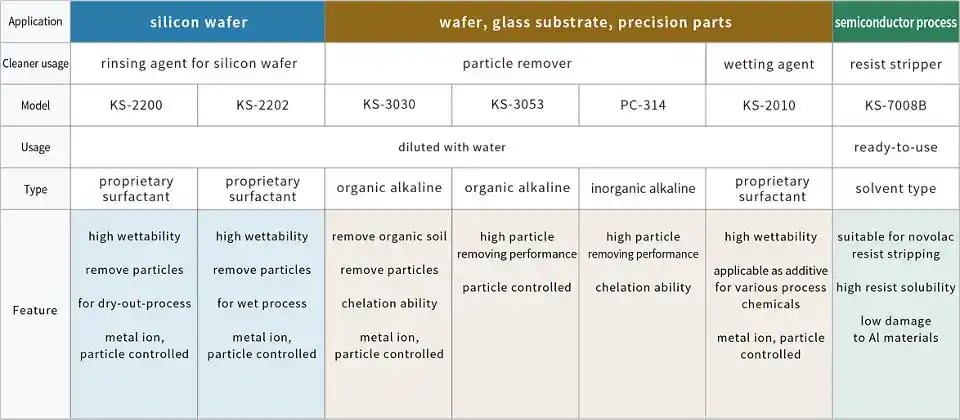
Supporting these products is what Kao calls its "Precision Interface Control Technology." In principle, its core is achieving uniformity of the cleaning action on complex nanostructures while maintaining selectivity towards various materials, and meeting the semiconductor industry's specifications for purity, particle control, and metal impurity management.

Specifically, in the front-end wafer manufacturing process, cleaning accounts for about 30% of the total steps. Advanced processes have low tolerance for particles, metal ions, and organic residues, where excess residue can significantly impact product yield. Traditional RCA cleaning relies on multiple cycles of strong chemicals like hydrogen peroxide, sulfuric acid, ammonia, and hydrofluoric acid, facing issues such as wafer surface damage, high water and electricity consumption, and heavy waste liquid processing burdens.

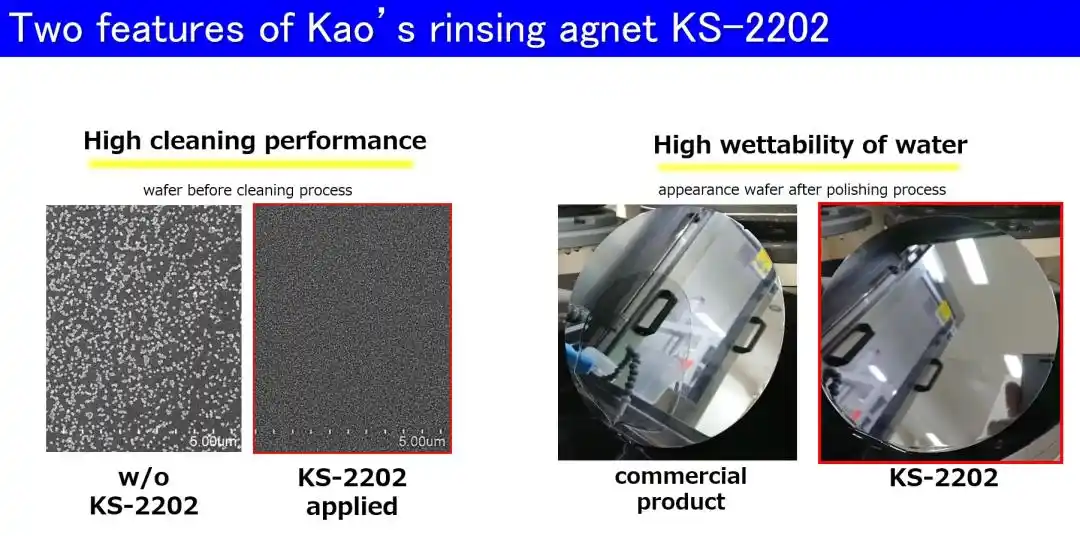
Kao's entry point was the pre-cleaning and rinsing chemical series KS-2200 for silicon wafers: after a 300mm wafer is polished with silicon dioxide abrasive, the number of particles adhering to the surface, according to Kao's estimates, reaches about 7 trillion. Moreover, the silicon surface is naturally hydrophobic, making it difficult for chemicals to wet uniformly. The KS-2200 series modifies the surface to be super-hydrophilic, improving wettability so that a water film spreads evenly, mechanically suppressing particle adhesion and thus reducing the number of cleaning cycles.
Another key indicator for particle removal is preventing recontamination. Kao's KS-3000 series targets scenarios like post-CMP cleaning, photomasks, and quartz fixtures. It enhances the dispersion stability of particles through surfactants and adjusts the particle surface Zeta potential to create electrostatic repulsion, inhibiting redeposition of already removed particles like silicon dioxide and cerium dioxide during the rinsing process.
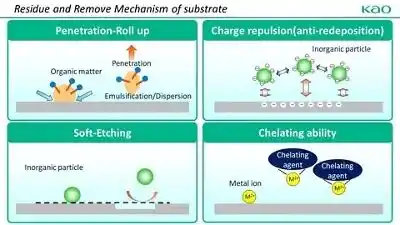
In photoresist removal, Kao's KS-7000 series uses a swelling and stripping mechanism rather than chemical dissolution, reducing the risk of damage to underlying metal lines; semi-aqueous wetting agents like KS-2010 are used to improve chemical infiltration in narrow-gap structures.

The packaging segment is where Kao holds its highest market share. High-end ABF substrate line width/spacing has entered below 10 micrometers, with micro-via structures being deep and narrow. Drilling residue, plating residue, and flux, if not thoroughly removed, can cause short circuits or reliability failures due to ion migration.

The difficulty in this segment lies in selectivity: a single substrate contains multiple materials like copper, resin, nickel, and gold. The cleaning agent must penetrate microstructures to remove contaminants without corroding any substrate material, and must itself be easy to rinse off with extremely low ionic residue.

Kao has highly segmented this area, with each product addressing a specific process pain point. Rosin-based solder paste and flux residue are the most common contaminants in packaging cleaning. Kao's solution is CLEANTHROUGH 750H, a cleaning agent for high-density packaging components with OSP (Organic Solderability Preservative) coating, covering mainstream packaging forms like BGA, CSP, WLCSP, PiP, PoP. It dissolves residue without damaging the OSP film itself.

Another pain point occurs after cleaning: copper OSP pads are prone to discoloration during cleaning, affecting subsequent soldering reliability. The 770A was developed specifically for this issue. With the expansion of power semiconductors, cleaning targets have further extended to sintered materials and high-melting-point solder in power modules, for which Kao has also configured dedicated product lines.

Beyond cleaning, Kao's product portfolio extends to adjacent process steps. The substrate circuit patterning and solder bump processes require stripping of dry film photoresist. Kao provides strippers, including amine-free formulations, the latter giving customers leeway for wastewater treatment. In 2.5D/3D packaging, stubborn residue left by temporary bonding materials after high-temperature or laser treatment was once a bottleneck for mass production. Matching cleaning agents are also on Kao's product list.

03. Directly participating in customer process development, positioning for AI-driven capacity expansion wave

Kao's foothold in the semiconductor industry relies not only on products but also on a commercial system built around customer production lines.

The semiconductor materials business model has a characteristic: once a product passes customer verification and enters mass production, the cost of switching suppliers is extremely high. Changing cleaning chemicals means redoing a full set of reliability verifications, which is time-consuming and carries yield risks. Therefore, leading suppliers' shares typically have strong stickiness.

To leverage this industry characteristic, Kao has established Fine Cleaning Centers in Wakayama, Japan, and Hsinchu, Taiwan, China, opening up actual cleaning and stripping process testing and analysis to customers, participating in their process development rather than just selling chemicals.

The Hsinchu Center in Taiwan, China, launched in December 2025, is Kao's first overseas cleaning center. Officially disclosed service targets include PCB, IC substrate, automotive and communication substrate manufacturers, as well as advanced packaging lines like CoWoS, CoWoP, and FOPLP.
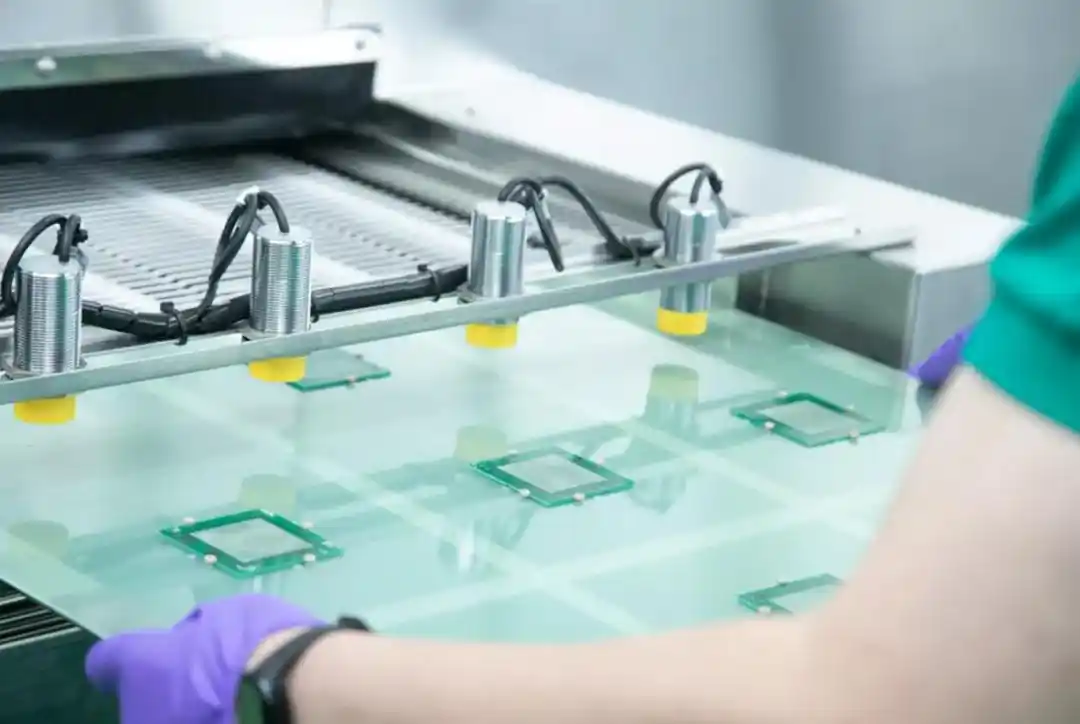
Kao equipped the Hsinchu Fine Cleaning Center with high-spec equipment

Hsinchu is one of the regions with the highest concentration of semiconductor manufacturing companies globally. TSMC's headquarters and its most advanced process R&D and mass production bases are located here. UMC, PSMC, Macronix, Winbond, and other foundries are also rooted here. In packaging and testing, companies like KYEC and Chipbond gather, while substrate players Unimicron and Kinsus have formed complete supply clusters in northern Taiwan.

Choosing this moment to locate its first overseas cleaning center in Hsinchu positions Kao for this wave of AI-driven capacity expansion. Currently, AI chips from companies like NVIDIA and AMD commonly use packaging solutions like CoWoS. TSMC has been continuously expanding advanced packaging capacity in recent years, yet supply still falls short of demand.

The more packaging layers and the more complex the structure, the higher the number and difficulty of cleaning steps. As a consumable used in every key step, the demand for cleaning agents grows in sync with advanced packaging capacity expansion.

In the conference call for the fiscal year 2026 interim report, Kao executives revealed that they plan to continue defending and expanding their back-end share in the future, further penetrating established strongholds like package substrate cleaning. Additionally, they aim to expand from NAND to areas like DRAM and logic semiconductors.

Against the backdrop of businesses like fat and oil chemicals continuously facing raw material price fluctuations, the company has explicitly stated it will shift focus toward electronic materials and semiconductor-related products.

04. Conclusion: Cross-industry semiconductor players win by focusing on the same thing

In semiconductor manufacturing, the monetary proportion of the cleaning segment is far less than that of equipment and main materials, but its impact on yield is direct and rigid. As advanced packaging drives a continuous increase in the number of cleaning steps, the strategic value of such "low-profile, high-stickiness" material businesses is being re-evaluated.

Kao's case is not an isolated example. Ajinomoto's ABF film, TOTO's electrostatic chucks, and Nitto Denko's dicing tapes are all representative products. These Japanese companies' main businesses are MSG, sanitary ware, and tape, respectively, yet each holds a leading position in a niche segment of semiconductor materials.

Their commonality lies in the fact that their underlying technologies stem from long-term accumulation in their main businesses. Competition in semiconductor materials is, to a large extent, competition based on foundational chemical expertise—precisely the part that is difficult to rapidly build.

This article is from the WeChat public account "ChipNews," author: Chen Junda, editor: Xinyuan

Trending Cryptos

Related Questions

QAccording to the article, which two specific semiconductor manufacturing process areas does Kao hold leading market positions in?

AThe article states that Kao holds about a 60% market share in precision cleaning agents for package substrates in the back-end process, and it occupies the top market share position for chemicals used in specific NAND manufacturing processes in the front-end process.

QHow did environmental regulations in the late 1980s create an opportunity for Kao to enter the electronics cleaning market?

AThe 1987 Montreal Protocol mandated the phasing out of ozone-depleting chlorofluorocarbons (CFCs), like Freon, which were the mainstream solvents for cleaning circuit boards. This created a demand for high-performance, compliant alternatives. Kao leveraged its expertise in balancing cleaning power and gentleness from its household chemical business to develop its CLEANTHROUGH aqueous cleaning agent in 1991, successfully entering the precision cleaning market.

QWhat is the core technological principle behind Kao's semiconductor cleaning products, as mentioned in the article?

AThe core principle is "precision interface control technology." This involves achieving uniform cleaning action on nano-scale complex structures while maintaining selectivity for different materials, and meeting the semiconductor industry's stringent requirements for purity, particle control, and metal impurity management.

QWhy did Kao choose Hsinchu, Taiwan, for its first overseas Fine Cleaning Center, and what strategic trend is this move aiming to capitalize on?

AKao chose Hsinchu because it is a global hub with the highest concentration of semiconductor manufacturing firms, including TSMC's headquarters and most advanced R&D/fabs. This move strategically positions Kao to capitalize on the current AI-driven capacity expansion boom, particularly for advanced packaging like CoWoS, where more complex structures increase the number and difficulty of cleaning steps, driving demand for cleaning agents.

QThe article compares Kao's success to other Japanese companies like Ajinomoto and TOTO in the semiconductor materials field. What common factor does it identify as key to their success?

AThe common key factor is that their core technologies are derived from long-term accumulation in their primary, seemingly unrelated businesses. For example, Kao's expertise comes from household chemicals, Ajinomoto's from amino acids for ABF film, and TOTO's from ceramics for electrostatic chucks. The competition in semiconductor materials is largely a competition in fundamental chemical expertise, which is difficult to achieve quickly.

Related Reads

UBS Research Report Analysis: Murata's MLCC Factory Opens to the Public for the First Time in 20 Years, 20% Production Increase Potential from Optimization of Existing Assets

On August 18, UBS analysts visited Murata's Fukui Takefu factory, its first public opening in about 20 years. As the global MLCC leader with ~35% market share, this plant serves as the mother factory for advanced MLCCs used in AI servers and premium smartphones. UBS confirmed key findings: deep technical barriers remain, existing equipment holds ~20% latent production capacity, and physical expansion is nearing its limits. Murata's competitive edge lies in a closed-loop system encompassing proprietary ceramic material uniformity control, capacitance-maximizing self-developed technology, and self-built production equipment—a "black box" model difficult to replicate. Its flexible segmented production system efficiently manages over 50,000 product types. With new facility construction constrained and equipment lead times lengthening, optimizing existing lines becomes a crucial, lower-cost path to increase output. Murata's strategy involves shifting generic production to overseas sites like Thailand while focusing Japanese facilities on advanced, high-margin products. UBS projects significant operating margin expansion from 15.4% in FY2026 to 37.6% in FY2029, driven by this product mix upgrade toward high-capacitance, small-size MLCCs for AI and smartphones. Primary risks include U.S. economic slowdown, technology diffusion in Asia, and circuit integration trends. UBS maintains a positive industry outlook, noting potential for guidance upgrades, and sets a 13,200 yen target price based on a 30x FY2029 P/E, implying ~76% upside contingent on successful MLCC product structure advancement.

marsbit14m ago

UBS Research Report Analysis: Murata's MLCC Factory Opens to the Public for the First Time in 20 Years, 20% Production Increase Potential from Optimization of Existing Assets

marsbit14m ago

Arthur Hayes: Awaiting Fed Signal, Replenishing Ammo to Position for Crypto Bull Market

Arthur Hayes, co-founder of BitMEX, argues that the yen is significantly undervalued and analyzes three potential paths for its appreciation. He dismisses the first two options—the Bank of Japan raising interest rates or Japanese institutions selling foreign assets—as politically or economically unfeasible. Instead, he identifies the preferred method: Japan's Ministry of Finance (MOF) using the Federal Reserve's FIMA (Foreign and International Monetary Authorities) repo facility to borrow dollars against its U.S. Treasury holdings, then selling those dollars to buy yen in the forex market. Hayes explains that U.S. Treasury Secretary "Besant" has already called for removing the FIMA per-counterparty limit to enable this. The execution depends on Fed Chair "Warsh" convening a subcommittee to adjust the FIMA rules. Hayes is confident this will happen, signaling a major shift in USD/JPY dynamics and the end of the "cheap" yen era. He connects this potential massive dollar liquidity injection directly to a surge in asset prices, particularly Bitcoin, physical gold, and gold miners' stocks, drawing parallels to the Fed's balance sheet expansion during COVID-19. Within crypto, besides Bitcoin, he views Ethereum as undervalued and highlights Ethena (ENA) as a high-potential, speculative altcoin that could see 5-10x returns if liquidity increases and boosts Bitcoin basis trade yields. Hayes concludes he is waiting for the Fed's signal to fully deploy capital, anticipating a significant crypto bull market.

marsbit53m ago

Arthur Hayes: Awaiting Fed Signal, Replenishing Ammo to Position for Crypto Bull Market

marsbit53m ago

BTC Sees Largest Single-Day Short Liquidation in History: Overnight $1.1 Billion Short Positions Evaporate, But Calling a Bull Return is Premature

Bitcoin experienced its largest single-day short liquidation in history, with approximately $1.191 billion in short positions being forcibly closed within 24 hours as the price surged nearly 7% to approach $70,000. This event, occurring on the evening of August 19, resulted in total liquidations of about $1.345 billion across the network. The massive short squeeze was attributed to a combination of catalysts: a White House meeting between former President Trump and crypto industry executives fueling regulatory optimism, and a more substantial signal from the U.S. Treasury doubling its liquidity support for long-term bond repurchases, hinting at looser macro liquidity for risk assets. Data showed strong institutional buying, with U.S. spot Bitcoin ETFs seeing significant inflows. The liquidation process itself created a feedback loop, accelerating the price rise as forced buy-backs pushed prices higher. This event surpassed the previous record for BTC perpetual short liquidations set during the volatile "5.19" period in 2021. While such extreme short liquidations have historically signaled a potential medium-term bottom formation, analysts caution that the market often undergoes weeks of consolidation and "cooling off" afterward. Current sentiment remains mixed, with the Fear & Greed Index still in "Fear" territory, and the key test for the rally being whether it can sustain momentum to challenge higher resistance levels like $75,000. The article concludes by warning against immediate "bull market is back" assumptions, emphasizing that history provides context but not guaranteed outcomes.

marsbit1h ago

BTC Sees Largest Single-Day Short Liquidation in History: Overnight $1.1 Billion Short Positions Evaporate, But Calling a Bull Return is Premature

marsbit1h ago

Trading

Spot

Hot Articles

What is LINON

Linde plc Tokenized Stock (Ondo): Revolutionizing Traditional Equity Access Through Blockchain Innovation The emergence of Linde plc Tokenized Stock (Ondo), represented by the ticker $LINON, signifies a monumental shift in the fusion of traditional financial structures and decentralized finance (DeFi). This innovative financial instrument showcases the tremendous potential of blockchain technology to democratize access to traditional equity markets while ensuring the security and regulatory compliance necessary for institutional-grade financial products. Through Ondo Finance's pioneering tokenization platform, $LINON provides a seamless pathway for global investors to engage with one of the world's leading industrial gas companies, Linde plc, creating a blockchain-native representation of the underlying equity. Introduction to Linde plc Tokenized Stock The landscape of financial markets is witnessing a groundbreaking transformation through the tokenization of real-world assets. Linde plc Tokenized Stock (Ondo) epitomizes this revolutionary approach by bridging the gap between conventional stock ownership and blockchain-enabled financial infrastructure. The $LINON token allows investors to gain exposure to one of the prominent industrial companies worldwide through decentralized technology. Operating within Ondo Finance's comprehensive ecosystem, $LINON symbolizes a practical application of tokenization technology that enhances accessibility, efficiency, and global connectivity in traditional financial markets. By leveraging blockchain infrastructure, this tokenized stock enables international investors to participate in U.S. equity markets, overcoming traditional barriers associated with cross-border investing. The significance of $LINON goes beyond technological innovation; it represents a fundamental shift in asset structuring, distribution, and trading in the digital age. This tokenized stock maintains all the economic benefits associated with traditional Linde plc shares while offering improved liquidity, programmable compliance features, and seamless integration with decentralized finance protocols. The development of $LINON indicates a growing acceptance of blockchain technology as a viable means for traditional finance, exemplifying how even well-established assets like Linde plc can integrate into blockchain systems. This approach preserves the core attributes that appeal to investors while introducing advanced capabilities that enhance the overall investment proposition. Project Overview and Objectives Linde plc Tokenized Stock (Ondo) encapsulates a strategic effort to democratize access to traditional equity markets through advanced blockchain technologies. The primary objective of $LINON is to provide approved global investors seamless access to the economic exposure associated with Linde plc shares, furthering an effort to create a more inclusive financial ecosystem. Beyond the digital representation of traditional assets, $LINON endeavors to eliminate barriers of geography and time zones that limit investor participation. Its design ensures that blockchain technology can elevate traditional investment vehicles without undermining the security or compliance requirements expected by investors. Key goals of the project include enhanced liquidity provision, programmable compliance mechanisms, and interoperability with other blockchain networks. Each $LINON token is fortified by actual Linde plc securities housed at U.S.-registered broker-dealers, allowing holders to reap economic advantages akin to traditional stockholders, such as dividend reinvestment. Furthermore, $LINON aims to establish new industry standards for institutional-grade tokenized securities, paving the way for traditional assets to embrace blockchain technology while remaining compliant with regulatory frameworks. By associating itself with a company as reputable as Linde plc, the project opens avenues for exploring tokenized equities catering to both conservative institutional players and daring retail investors. Project Creator and Development Team The vision for Linde plc Tokenized Stock (Ondo) comes from Nathan Allman, founder and CEO of Ondo Finance. His background in traditional finance coupled with expertise in blockchain technology positions him uniquely to navigate the complexities of asset tokenization. Allman's academic journey began at Brown University, focusing on Economics and Biology, equipping him with valuable analytical skills. His time at Goldman Sachs in the Digital Assets division strengthened his understanding of the interplay between financial institutions and emerging technologies, laying the groundwork for his later endeavors in alternative investment strategies. Under Allman's guidance, Ondo Finance has emerged as a leader in asset tokenization, launching $LINON as a flagship example of the company's larger mission towards revolutionizing traditional financial systems using blockchain technology. His commitment to leveraging blockchain for creating institutional-grade financial products has shaped the landscape of real-world asset tokenization. Investment and Funding Structure The growth of Ondo Finance, the platform powering Linde plc Tokenized Stock (Ondo), is bolstered by robust financial backing from prestigious venture capital firms and strategic investors. This strong investment foundation underpins the development of the key infrastructure essential for compliant tokenized securities like $LINON. In August 2021, Ondo Finance secured $4 million in seed funding led by a major venture capital firm, which enabled the company to commence platform development and establish the necessary regulatory processes for tokenizing real-world assets. This early investment cemented Ondo Finance's credibility within the industry. The Series A funding round followed, garnering $20 million with participation from renowned firms committed to transformative technology companies. This backing demonstrated substantial institutional confidence in Ondo Finance's vision, allowing it to hone its approach to asset tokenization through mechanisms that ensure compliance and accessibility. Noteworthy contributors, including institutional investors and experienced partners, have added significant value to Ondo Finance’s development efforts. Their involvement underscores the confidence across sectors in Ondo Finance's approach to bridging traditional finance with blockchain innovations. Technical Infrastructure and Innovation The technical architecture that underpins Linde plc Tokenized Stock (Ondo) represents a sophisticated melding of traditional finance systems and cutting-edge blockchain technology. The architecture's foundation is built on the Ethereum network, renowned for its security and programmability—both critical for intricate financial instruments. The $LINON tokenization process comprises creating a blockchain-native representation of Linde plc shares that preserves economic benefits while augmenting investor capabilities. Each token corresponds to actual shares held at U.S.-registered broker-dealers, creating a compliant custody structure that legitimizes the asset's existence and value. Automated compliance systems are integrated into the tokenization process, managing critical components such as know-your-customer (KYC) verification and anti-money laundering (AML) protocols. This incorporation of programmable compliance empowers $LINON to uphold regulatory standards essential for institutional proliferation. Cross-chain interoperability characterizes the advanced technical features of $LINON. While initially deployed on Ethereum, the framework is designed for expansion to other networks such as Solana and BNB Chain. This adaptability enhances liquidity and accessibility, allowing investors to select their preferred blockchain ecosystems. Historical Timeline and Development Crafting the history of Linde plc Tokenized Stock (Ondo) unfolds in parallel with the evolution of Ondo Finance's tokenization platform. The timeline's inception dates back to March 2021 when Nathan Allman laid the foundations for creating institutional-grade financial products on blockchain infrastructure. The initial funding round in August 2021 provided crucial resources for developing the platform and establishing partnerships necessary for effective tokenization. By January 2023, Ondo Finance launched its tokenized treasury products, establishing mechanisms that would facilitate future tokenized equities such as $LINON. A pivotal milestone arose in February 2025 when Ondo Chain—a Layer 1 blockchain designed specifically for asset tokenization—was introduced. This infrastructure enhances capabilities vital for institutional markets, demonstrating Ondo Finance's long-term commitment to tokenization. Subsequently, the launch of Ondo Global Markets in September 2025 marked the official debut of $LINON. This milestone showcased the successful transition from development to active trading, enabling investors around the world to access American financial markets seamlessly. Ongoing development plans include a targeted expansion of available tokenized assets to over 1,000 by the end of 2025, pointing to a bright future for Ondo Finance's ecosystem and its mission to broaden tokenized equity accessibility. Regulatory Compliance and Legal Framework The legal architecture governing Linde plc Tokenized Stock (Ondo) emphasizes a sophisticated approach to regulatory compliance, allowing tokenized securities to be implemented within a blockchain-based framework. The legal structure governing $LINON spans multiple jurisdictions while maintaining a robust legal footing. Compliance systems ensure that only eligible investors can access the token, enforced through automated verification that aligns with international regulations. This innovative regulatory technology promises real-time enforcement of complex requirements, considerably enhancing efficiency in operating within the regulatory landscape. The custody framework undergirding $LINON ensures that the underlying shares are securely held at U.S.-registered broker-dealers, complying with necessary regulations while delivering blockchain-driven access to investors. The token maintains its economic equivalency and security through this carefully structured custody arrangement. KYC and AML compliance systems are embedded within the smart contract architecture, ensuring integrity and adherence to regulatory practices while fostering transparency for investors. The jurisdictional restrictions mark a commitment to navigating the evolving landscape of international securities laws. Market Impact and Industry Significance The advent of Linde plc Tokenized Stock (Ondo) holds profound implications for the broader financial landscape, symbolizing a clear shift towards blockchain-enabled markets. $LINON serves as a proof-of-concept for integrating traditional companies into blockchain ecosystems, showcasing the potential benefits such as broader accessibility and improved efficiency. The market's response to $LINON indicates a growing acceptance of tokenization among institutional investors, contributing to the emergence of an expanding sector wherein traditional assets can be interconnected with blockchain innovations. The success of $LINON further solidifies market confidence, indicating an overarching shift towards recognizing asset tokenization as a transformative force in finance. Future Development and Expansion Plans The future trajectory for Linde plc Tokenized Stock (Ondo) centers around the expansion of the tokenization ecosystem and enhanced infrastructure supporting blockchain-enabled financial services. Plans for cross-chain integration usher in new opportunities for liquidity and flexibility within the investment framework, with existing capabilities poised for continuous enhancement. With the introduction of Ondo Chain, Ondo Finance aims to transition $LINON to an optimized blockchain environment specifically designed for asset tokenization. This new infrastructure heralds exciting prospects for the development of institutional-grade financial products, ensuring ongoing compatibility with contemporary investment strategies. Further integration with decentralized finance protocols signifies a commitment to empowering $LINON holders through advanced financial strategies. The anticipated expansion of available tokenized assets promises to broaden investor access, enhancing the utility and appeal of the platform. In alignment with ambitions for regulatory expansion, ongoing efforts to secure approvals for new jurisdictions will enhance investor access, further positioning $LINON at the forefront of the burgeoning tokenization market. Conclusion Linde plc Tokenized Stock (Ondo), as represented by the $LINON token, stands at the intersection of traditional finance and blockchain innovation. It embodies a transformative milestone in how financial assets are structured, distributed, and engaged within modern investment ecosystems. The technical sophistication behind $LINON, combined with its regulatory compliance framework, illustrates that asset tokenization can improve financial infrastructure rather than simply digitizing existing products. This pioneering effort not only enhances investor access to U.S. equity markets but also signifies an evolution of how traditional financial services can integrate blockchain technology. As the asset tokenization market grows exponentially, with prospects suggesting significant valuation increases, $LINON paves the way for a future where tokenized securities become standard fixtures in the financial landscape. The trajectory of $LINON will undoubtedly influence how traditional finance adapts to a transformed, blockchain-powered world.

4.6k Total ViewsPublished 2025.12.05Updated 2025.12.05

What is LINON

What is CRMON

Salesforce Tokenized Stock (Ondo): Revolutionising Traditional Equity Access Through Blockchain Innovation The emergence of Salesforce Tokenized Stock (CRMON) marks a pivotal advancement in integrating traditional financial markets with blockchain technology. This innovative approach offers investors unprecedented access to equity exposure through tokenisation. Developed by Ondo Finance, CRMON provides tokenholders with economic exposure equivalent to holding Salesforce stock (CRM) while automatically reinvesting dividends. This effectively bridges the gap between conventional equity markets and decentralised finance (DeFi). Introduction and Comprehensive Overview of Salesforce Tokenized Stock In recent years, the financial landscape has dramatically transformed due to blockchain technology, fundamentally altering how investors access and interact with traditional assets. The development of Salesforce Tokenized Stock (CRMON) is a prime example of this evolution, representing a sophisticated fusion of conventional equity markets with cutting-edge distributed ledger technology. CRMON is a tokenised version of Salesforce stock, emerging from the innovative work of Ondo Finance, a leading platform in the real-world asset tokenisation sector that positions itself as a bridge between traditional finance and decentralised systems. Designed to provide tokenholders with economic exposure that mirrors the performance of the underlying Salesforce stock, CRMON incorporates automatic dividend reinvestment mechanisms. This eliminates many traditional barriers associated with international equity investment, such as complex brokerage relationships, currency conversion challenges, and restricted trading hours. The tokenisation process reimagines stock ownership as a blockchain-native asset while maintaining its economic equivalence with the underlying security, offering enhanced portability and integration capabilities within decentralised finance ecosystems. CRMON transcends its individual utility as an investment instrument to represent a fundamental shift in how financial markets can operate in an increasingly digital world. By maintaining full backing through U.S.-registered broker-dealers and implementing robust compliance frameworks, CRMON demonstrates that tokenised securities can achieve the regulatory standards necessary for institutional adoption while delivering the technological advantages of blockchain infrastructure. Understanding Tokenized Real-World Assets and CRMON's Strategic Position Tokenised real-world assets signify one of the most significant innovations in modern finance, fundamentally reimagining how traditional securities are represented, traded, and utilised within digital ecosystems. CRMON operates as a tokenised equity instrument correlating directly with Salesforce stock while optimising accessibility and efficiency. This aligns with Ondo Finance's broader mission to democratise access to institutional-grade financial products through innovative tokenisation strategies. The tokenisation process guarantees complete economic equivalence with the underlying Salesforce equity. Each CRMON token represents a proportional claim on Salesforce stock held by qualified custodians, with dividend payments automatically reinvested to maintain continuous exposure to total return performance. This structure simplifies dividend management and ensures that tokenholders receive the full economic benefit of their equity exposure, encompassing both capital appreciation and income generation. Ondo Finance's strategy in tokenising Salesforce stock demonstrates its expertise in creating compliant, institutional-grade products that meet traditional financial markets' stringent requirements. The platform’s focus on merging regulatory compliance with blockchain benefits positions it at the forefront of decentralised finance, captivating both institutional and retail investors seeking blockchain-native solutions. The Technology and Innovation Framework Behind CRMON The technological infrastructure supporting CRMON integrates blockchain technology with traditional financial mechanisms, delivering institutional-grade security and compliance while maintaining the operational advantages of decentralised systems. Built on the Ethereum blockchain, CRMON utilises robust smart contract capabilities to ensure transparent, secure operations. The smart contract architecture incorporates layered security and compliance mechanisms, enabling automated compliance checks and real-time asset backing verification. Integration with oracle services maintains accurate pricing and dividend information, ensuring CRMON reflects the underlying Salesforce stock's accurate performance. This architecture delivers automated dividend reinvestments and other corporate actions, eliminating manual processing requirements and directly enhancing tokenholder benefits. Ondo Finance ensures CRMON's security structure includes daily third-party verification of holdings, independent collateral agents, and a multiple-layer custody system through partnerships with established financial institutions. This framework safeguards tokenholder interests against operational risks while providing robust asset backing. The user interface enhances integration capabilities, allowing seamless interaction between CRMON and various decentralised finance protocols, as well as cryptocurrency exchanges. This interoperability enables users to leverage their tokenised equity across multiple platforms, creating sophisticated investment strategies that marry traditional equity characteristics with blockchain-native innovation. Leadership and Corporate Structure of Ondo Finance The leadership team behind CRMON and Ondo Finance blends expertise from traditional finance and blockchain technology, presenting a robust combination of skills essential for successfully bridging conventional markets with decentralised finance. Nathan Allman, the founder and CEO, emerged from a distinguished financial background before establishing Ondo Finance in 2021. Allman's experience includes notable roles at major financial institutions, including significant contributions to developing cryptocurrency market services. His insights into regulatory compliance were paramount in developing products like CRMON that successfully unify traditional securities with blockchain technology. With a team of professionals boasting substantial experience in both conventional finance and blockchain sectors, Ondo Finance's leadership comprises diverse expertise that covers every aspect of tokenised asset development. Justin Schmidt serves as President and COO, contributing unique operational expertise, while Chris Tyrell brings essential compliance knowledge. Investment Landscape and Funding History The investment landscape surrounding Ondo Finance reflects significant institutional confidence in its mission to tokenise real-world assets. The company has raised substantial funds through various investment rounds, attracting leading venture capital firms and strategic investors that recognise the transformative potential of tokenised securities like CRMON. Notably, Ondo Finance completed a successful Series A funding round in 2022, led by well-known venture capital firms. This funding success validates Ondo Finance's innovative approach to creating compliant, institutional-grade tokenised products. In total, Ondo Finance has successfully secured substantial funding, raising significant capital for product development and market expansion, including a noteworthy token sale that reinforced its governance structure through the establishment of the ONDO token. The diverse composition of investors reflects broad market confidence in Ondo Finance's business model, demonstrating support from both traditional and blockchain-native organisations. Operational Mechanics and Technical Implementation The operational framework supporting CRMON exemplifies sophisticated integration of traditional financial mechanisms with blockchain technology. The technical implementation introduces multiple layers of security, compliance, and operational efficiency to meet institutional standards while enhancing accessibility. The tokenisation process begins by acquiring actual Salesforce stock through U.S.-registered broker-dealers, ensuring each CRMON token maintains direct correlation with the underlying equity performance. Smart contracts automate operational processes, including dividend reinvestment and corporate action processing, facilitating a streamlined user experience. The Minting and redemption processes allow authorised participants to manage CRMON tokens effectively. During U.S. trading hours, institutions can mint new tokens by depositing stablecoins that are used to purchase corresponding Salesforce equity. This structure maintains a tight correlation with underlying assets, enhancing liquidity and price discovery. Additionally, the infrastructure supports twenty-four-hour token transfer capabilities, providing CRMON holders with operations outside traditional market hours. This represents a significant advantage over conventional securities ownership, thus promoting integration with decentralised finance applications. Plans for cross-chain compatibility through partnerships signal further ambitions for CRMON's market reach. By expanding to other blockchain networks, Ondo Finance aims to enhance accessibility and user engagement with tokenised equity products. Timeline and Historical Development of Tokenized Equity Innovation The timeline of CRMON's development and Ondo Finance's broader tokenised capabilities demonstrates a systematic innovation process beginning with the company's founding in 2021. 2021: Ondo Finance is founded by Nathan Allman and co-founders, launching initial products focused on structured vault offerings on the Ethereum blockchain. 2022: The company completes substantial funding rounds—both equity and token sales—totaling significant capital and launching initial tokenised U.S. Treasury products. 2023-2024: Ondo Finance experiences substantial growth, establishing partnerships with major financial institutions while expanding its product offerings beyond fixed-income securities. February 2025: Ondo Global Markets is announced, marking the transition into equity tokenisation with plans for accessing over one hundred U.S. stocks and ETFs. September 2025: The official launch of Ondo Global Markets includes CRMON alongside other tokenised equity offerings, marking a significant evolution in Ondo Finance's product ecosystem. This timeline highlights the organisation's rapid growth and its capability to adapt its technological and compliance frameworks to accommodate different asset classes effectively while maintaining security and regulatory integrity. Regulatory Framework and Compliance Approach Ondo Finance's regulatory framework showcases a sophisticated compliance strategy, essential for achieving institutional adoption in the tokenised securities market. The company's strong partnerships with U.S.-registered broker-dealers promote adherence to Securities and Exchange Commission regulations and apply robust investor protections. Acquisitions, such as Oasis Pro—a registered broker-dealer—significantly enhance Ondo Finance's compliance capabilities, ensuring thorough alignment with existing regulatory structures. The company employs independent verification procedures that foster transparency, aiming for a solid performance standards reputation. Furthermore, Ondo Finance's commitment extends to international regulatory compliance, ensuring token access remains restricted to eligible investors while adhering to pertinent cross-border securities regulations. Comprehensive attention to tax implications and reporting requirements fortifies the security and compliance landscape of CRMON, ensuring that investor obligations remain manageable. Future Prospects and Market Positioning The forward-looking landscape for CRMON and Ondo Finance illustrates substantial growth opportunities driven by institutional adoption of blockchain technology and escalating demand for efficient alternatives to conventional securities ownership. Market projections indicate the tokenised asset sector could value multiple trillion dollars by 2030. With plans to scale CRMON offerings significantly and integrate it with a dedicated blockchain infrastructure—Ondo Chain—Ondo Finance aims to elevate its institutional-grade tokenised asset operations. Additionally, the development of strategic partnerships enhances distribution capabilities while establishing the company's credibility in the financial market. Furthermore, the integration of tokenised equity with decentralised finance protocols offers new potential for innovative financial products and strategies previously impossible with traditional securities. These factors underscore CRMON's positioning to effectively capture increased market share and deliver innovative solutions for international investment exposure. Conclusion Salesforce Tokenized Stock (CRMON) symbolises a transformative development within financial markets, successfully bridging traditional equity ownership with blockchain technology to create unprecedented accessibility for global investors. Through Ondo Finance's sophisticated tokenisation framework, CRMON provides complete economic exposure to Salesforce equity performance while enhancing operational advantages that exceed traditional ownership. The launch of CRMON reflects the broader evolution of financial markets towards blockchain infrastructures that maintain regulatory compliance while delivering increased efficiency. Ondo Finance's extensive approach to regulatory adherence, institutional-grade security, and technological innovation solidifies CRMON as a model for future tokenised securities, delivering access previously unattainable in conventional brokerage structures. As the tokenised asset sector continues to develop, CRMON is well-positioned to address historical inefficiencies in capital markets while providing investors with innovative solutions for accessing traditional securities. The outlook for CRMON looks exceptionally promising, supported by ambitious expansion plans, technological innovations, and strategic partnerships, thereby representing a pioneering model of modern financial infrastructure evolving through blockchain integration.

4.7k Total ViewsPublished 2025.12.05Updated 2025.12.05

What is CRMON

What is SHOPON

Shopify Tokenized Stock (Ondo): A Comprehensive Analysis of Real-World Asset Tokenization in Web3 This article delves into the Shopify Tokenized Stock (Ondo), recognised by its ticker symbol $SHOPON, exploring its implications at the intersection of traditional finance and blockchain technology. As a part of Ondo Finance's tokenized securities platform, Shopify’s tokenized stock exemplifies advancements in democratizing access to global capital markets through innovative digital assets. Introduction and Overview of Shopify Tokenized Stock (Ondo) Shopify Tokenized Stock (Ondo), or $SHOPON, portrays a pivotal innovation in the realm of tokenized securities, allowing investors to gain economic exposure akin to directly owning shares of Shopify Inc. This token, developed under the umbrella of Ondo Finance, not only provides investors with the ability to hold digital representations of the company’s stock but also integrates features such as automatic reinvestment of dividends. This advancement represents a substantial shift in the landscape of decentralized finance (DeFi), linking conventional equity markets with blockchain solutions designed to enhance accessibility, transparency, and liquidity. By eliminating geographical barriers and enabling 24/7 trading capabilities, $SHOPON is positioned as a bridge connecting traditional financial instruments and the emerging Web3 ecosystem. What is Shopify Tokenized Stock (Ondo), $SHOPON? The $SHOPON token serves as a digital manifestation of Shopify Inc.'s shares, engineered to provide a direct correlation to the underlying asset's performance. Through the utilization of blockchain technology, the token gives holders a mechanism to participate in the economic benefits associated with equity ownership, including capital appreciation and dividend distribution. The unique aspect of $SHOPON lies in its automatic dividend reinvestment mechanism, which allows returns to compound without necessitating active management by the investor. This feature inherently enhances its attractiveness as an investment vehicle, particularly for individuals seeking passive income growth alongside exposure to high-performing equities. The tokenization process is facilitated by the custody of actual Shopify shares through regulated intermediaries, ensuring that every $SHOPON token is verifiably backed by real equity. This structure empowers investors with the dual advantages of both traditional financial characteristics and the innovative benefits tied to blockchain technology. Who is the Creator of Shopify Tokenized Stock (Ondo)? The creator of Shopify Tokenized Stock (Ondo), Nathan Allman, is an experienced figure in the finance sector, formerly associated with Goldman Sachs. His rich background includes significant expertise in digital asset development, bridging the gap between traditional finance and cryptocurrencies. Allman’s educational journey, marked by studies at Brown University, provided him with a deep understanding of economics and biology, equipping him with analytical skills that inform his strategic vision. In 2021, he founded Ondo Finance, committing to developing tokenized securities that meet institutional-grade standards while leveraging blockchain's transformative capabilities. Under Allman's leadership, Ondo Finance has focused on creating compliant and innovative financial products that empower a diverse investor base. Who are the Investors of Shopify Tokenized Stock (Ondo)? The investment landscape surrounding Shopify Tokenized Stock (Ondo) is notably robust, underpinned by significant institutional support. Primarily, Pantera Capital stands out as a strategic partner through the Ondo Catalyst initiative, a $250 million commitment aimed at accelerating the development of on-chain capital markets. This partnership not only signifies institutional confidence in the potential of tokenized assets but also reinforces Ondo Finance's operational capabilities and market positioning. The funding pathways have included earlier rounds that amassed millions in seed funding and further structural investments, solidifying relationships with both venture capital firms and private investors. Moreover, the financial framework is complemented by strategic partnerships with established financial institutions and technology companies, enhancing Ondo’s infrastructure and operational expertise. How Does Shopify Tokenized Stock (Ondo), $SHOPON Work? At the core of $SHOPON's operational framework is a sophisticated system integrating traditional finance mechanisms with blockchain technology. The custody of actual Shopify shares ensures that token holders retain authentic economic exposure, safeguarding their investments in line with recognized legal structures. The smart contracts employed in managing $SHOPON handle various functions, including automatic dividend reinvestment and ownership transfer, offering instant settlement and increased liquidity, marking a significant departure from conventional trading systems plagued by multi-day settlement delays. By providing interoperability with other decentralized finance applications, $SHOPON empowers holders with potentially lucrative opportunities for advanced investment strategies, including lending and automated market making. This complex integration presents a unique value proposition, catering to both traditional and crypto-native investors. The innovative structure of $SHOPON also allows for real-time settlements and transactions documented on the blockchain, delivering unparalleled transparency and security—a major advancement over standard equity trading practices. Timeline of Shopify Tokenized Stock (Ondo) March 2021: Nathan Allman establishes Ondo Finance, initially focusing on decentralized finance yield optimization. August 2021: Completion of a $4 million seed funding round led by Pantera Capital. January 2023: Launch of initial tokenized treasury security products, laying the groundwork for future equity tokenization. July 2025: Announcement of the Ondo Catalyst initiative, a strategic investment program valued at $250 million, aimed at propelling the development of tokenization in capital markets. September 3, 2025: Launch of Ondo Global Markets featuring over 100 tokenized U.S. stocks and ETFs, including $SHOPON. Technical Implementation and Blockchain Infrastructure Shopify Tokenized Stock (Ondo) operates on a technical architectural framework that marries blockchain protocols with traditional financial custody arrangements. The ecosystem leverages Ethereum's smart contract capabilities, providing seamless transaction management while ensuring compliance with regulatory standards through established financial custodians. Central to this architecture are security measures and transparent transaction records that affirm the legitimacy of each tokenholder's economic stake. With automated features managed by intricate smart contracts, $SHOPON not only streamlines ownership transfers but also allows for the tactical reinvestment of dividends—a hallmark of modern investment strategies. Moreover, the incorporation of LayerZero technology facilitates cross-chain interoperability, making $SHOPON accessible across multiple blockchain environments while preserving its functional robustness. This forward-thinking technical design positions $SHOPON as an adaptable asset within the larger DeFi milieu. Regulatory Framework and Compliance Architecture $SHOPON's regulatory framework is built upon the meticulous navigation of existing financial regulations that govern securities. The custody arrangements for the underlying Shopify shares are managed by U.S.-regulated broker-dealers, ensuring compliance and protection for investors. By maintaining a separation between the blockchain tokenization process and traditional custody, $SHOPON adheres to legal requirements while offering innovative functionalities that challenge conventional constraints. This dual-layered compliance approach enhances investor confidence and underscores Ondo Finance's commitment to regulatory integrity. Notably, the availability of $SHOPON is tailored to international investors from regions such as Asia-Pacific, Europe, and Africa, as regulatory parameters in the U.S. and U.K. present challenges in accessing tokenized securities. Market Access and Global Distribution Strategy The distribution strategy of $SHOPON is keenly designed to optimize global access while conforming to regulatory standards. The platform aims to establish comprehensive coverage for eligible investors across multiple regions, effectively dismantling traditional barriers through the implementation of blockchain technology. Integration with various cryptocurrency wallets and exchanges also promotes user-friendliness and accessibility, establishing a streamlined experience for investors to manage their holdings. Moreover, the 24/7 trading capabilities afforded by the tokenized model allow participants to react promptly to market shifts, fundamentally transforming how global equities are accessed and traded. Technology Integration and Cross-Chain Functionality The remarkable technological underpinnings of $SHOPON propagate its multi-chain functionality, set to expand its reach beyond Ethereum to networks such as Solana and BNB Chain. Such cross-chain capabilities allow users flexibility when navigating between blockchains, concurrently leveraging distinct network attributes to optimize their trading experience. LayerZero serves as the backbone for ensuring decentralized transfers between networks while providing the requisite security and speed, quintessential for maintaining investor trust. This comprehensive interoperability illustrates $SHOPON's commitment to being a versatile, user-centric asset in the evolving investment landscape. Ecosystem Integration and DeFi Compatibility Incorporating $SHOPON into broader DeFi protocols signifies its potential beyond traditional stock ownership. Token holders can leverage their holdings for various sophisticated strategies and applications, enhancing investment returns and liquidity management. By establishing a presence in lending protocols and automated trading systems, $SHOPON effectively democratizes access to advanced financial strategies previously limited to institutional investors. Such integration contributes to a more competitive and dynamic financial landscape, where individual investors can capitalize on tools typically reserved for larger entities. Risk Management and Security Framework Security remains paramount in the operational infrastructure of $SHOPON. The tokenization framework employs multiple layers of protection—beginning with regulated custody of the underlying Shopify shares. The operational protocols establish rigorous auditing, key management, and transaction monitoring standards, thus safeguarding against potential vulnerabilities. Moreover, meticulous adherence to evolving regulatory requirements provides an extra layer of security, fortifying investor protections and institutional compliance. Market Impact and Industry Implications The introduction of Shopify Tokenized Stock (Ondo) heralds a transformative shift in how financial markets operate, emphasizing the potential of tokenized securities to reshape traditional investment paradigms. The successful integration of $SHOPON encapsulates the efficiencies inherent in blockchain technology and opens avenues for new user demographics previously barred from extensive market participation. The impact extends beyond the immediate benefits to token holders, indicating broader trends that may challenge the status quo of investment services, particularly in addressing geographic restrictions and operational costs typically associated with traditional brokerage platforms. Undeniably, $SHOPON encapsulates the potential for traditional institutions to innovate further, leveraging the increasing demand for seamless blockchain access to complement existing financial infrastructure. Future Development Roadmap and Strategic Vision As Ondo Finance looks forward, the trajectory of $SHOPON rests on ambitious goals aimed at broadening the spectrum of available tokenized assets significantly. Over the next few years, plans are in place to expand to more than 1,000 tokenized securities, further enhancing market participation and investment options for individuals worldwide. Continued integration with traditional financial actors, development of specialized institutional products, and enhancements in automated trading capabilities will ensure that $SHOPON maintains its position at the forefront of financial innovation. Regulatory collaboration will also remain a focal point, establishing a framework that not only supports the compliance requirements but also promotes a healthy environment for tokenized asset proliferation. Conclusion and Market Significance In summary, Shopify Tokenized Stock (Ondo), represented by the ticker $SHOPON, is more than merely a tokenized equity offering; it embodies the innovation possible when traditional finance collides with modern blockchain applications. With a robust technical architecture, a commitment to compliance, and a clear strategic vision, $SHOPON exemplifies the potential for tokenized assets to enhance liquidity, accessibility, and functionality in capital markets. As the global investment landscape evolves, the transformative implications of $SHOPON extend beyond individual investors to revolutionize how financial instruments are perceived, traded, and utilized within both traditional and decentralized frameworks.

4.7k Total ViewsPublished 2025.12.05Updated 2025.12.05

What is SHOPON

Discussions

Welcome to the HTX Community. Here, you can stay informed about the latest platform developments and gain access to professional market insights. Users' opinions on the price of CHIP (CHIP) are presented below.

活动图片