Websea Global RWA Summit Successfully Held: Focusing on New Opportunities in China-Kazakhstan Digital Economy, Releasing Signals of Cross-border Collaboration

marsbitPublished on 2026-08-20Last updated on 2026-08-20

Abstract

Websea Global RWA Summit Successfully Held: Focusing on China-Kazakhstan Digital Economy Opportunities, Releasing Signals for Cross-Border Synergy When traditional industries seek new channels for globalization and digital technologies reshape capital, assets, and collaboration methods, an industrial dialogue connecting China, Kazakhstan, and global markets took place in Almaty. On August 18, 2026, the "2026 Global RWA Real-World Asset Tokenization Enterprise Globalization Resource Matching & China-Kazakhstan Industrial Investment Conference," co-hosted by Websea, concluded successfully in Almaty, Kazakhstan. Centered on RWA digitization, cross-border industrial synergy, and investment promotion, the summit gathered industry representatives, investors, digital economy practitioners, creators, and media from China and Kazakhstan to explore the future of a digital economy community. The event shifted focus from mere "project showcases" to fostering deeper "industrial synergy." It featured project roadshows and panel discussions on topics like "Mining Future·Digital Empowerment," "Real Estate Renewal·Urban Evolution," "Green Energy·RWA Opportunities," and "The Globalization Logic of Real Economy." Mr. Yerbol Kharbayev, Chairman of the Kazakhstan Association of Special Economic Zones, emphasized that RWA's significance lies not only in technology but in enhancing asset transparency, collaboration efficiency, and cross-border connectivity through digitization. The discussions ...

As traditional industries seek new global pathways and digital technologies reshape capital, assets, and collaborative models, an industrial dialogue connecting China, Kazakhstan, and global markets unfolded in Almaty.

On August 18, 2026, the "2026 Global RWA Real-World Asset On-Chain Enterprise Outbound Resource Matchmaking Conference & China-Kazakhstan Industry Investment Promotion Conference," co-organized by Websea, was successfully held in Almaty, Kazakhstan. The conference focused on RWA real-world asset digitization, cross-border industrial collaboration, and investment attraction. It brought together industry professionals, investors, digital economy practitioners, creators, and media representatives from China and Kazakhstan to explore the future of a digital economic community.

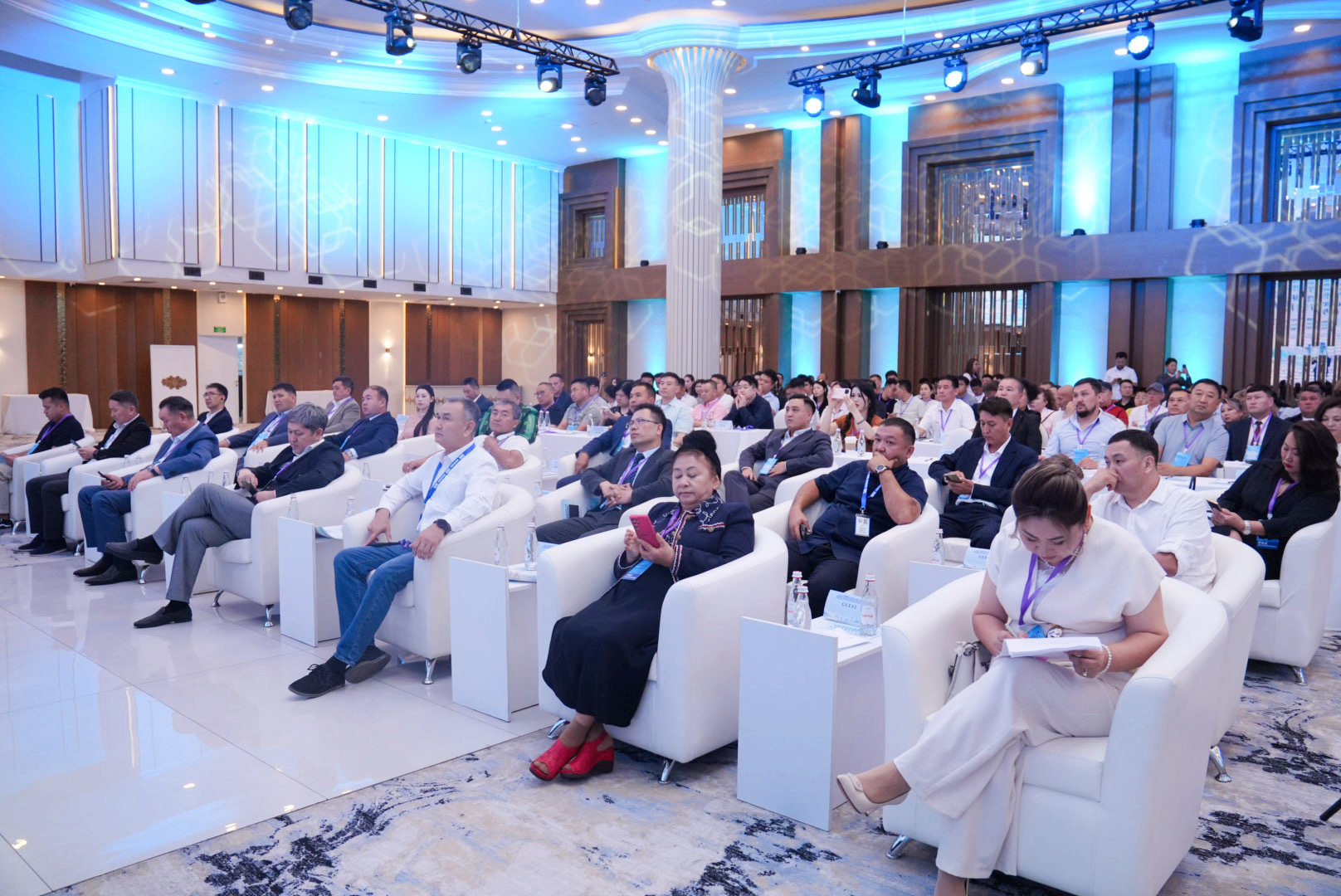
From "Project Showcase" to "Industrial Collaboration": RWA Opens New Visions for the Real Economy

The conference highlighted digital opportunities for real-economy sectors such as mining, agriculture, real estate, and green energy. Multiple project roadshows and roundtable forums centered on themes including "The Future of Mining • Digital Empowerment," "Real Estate's Renewal • Urban Evolution," "Green Energy • New RWA Opportunities," and "The Logic of Real Economy Going Global."

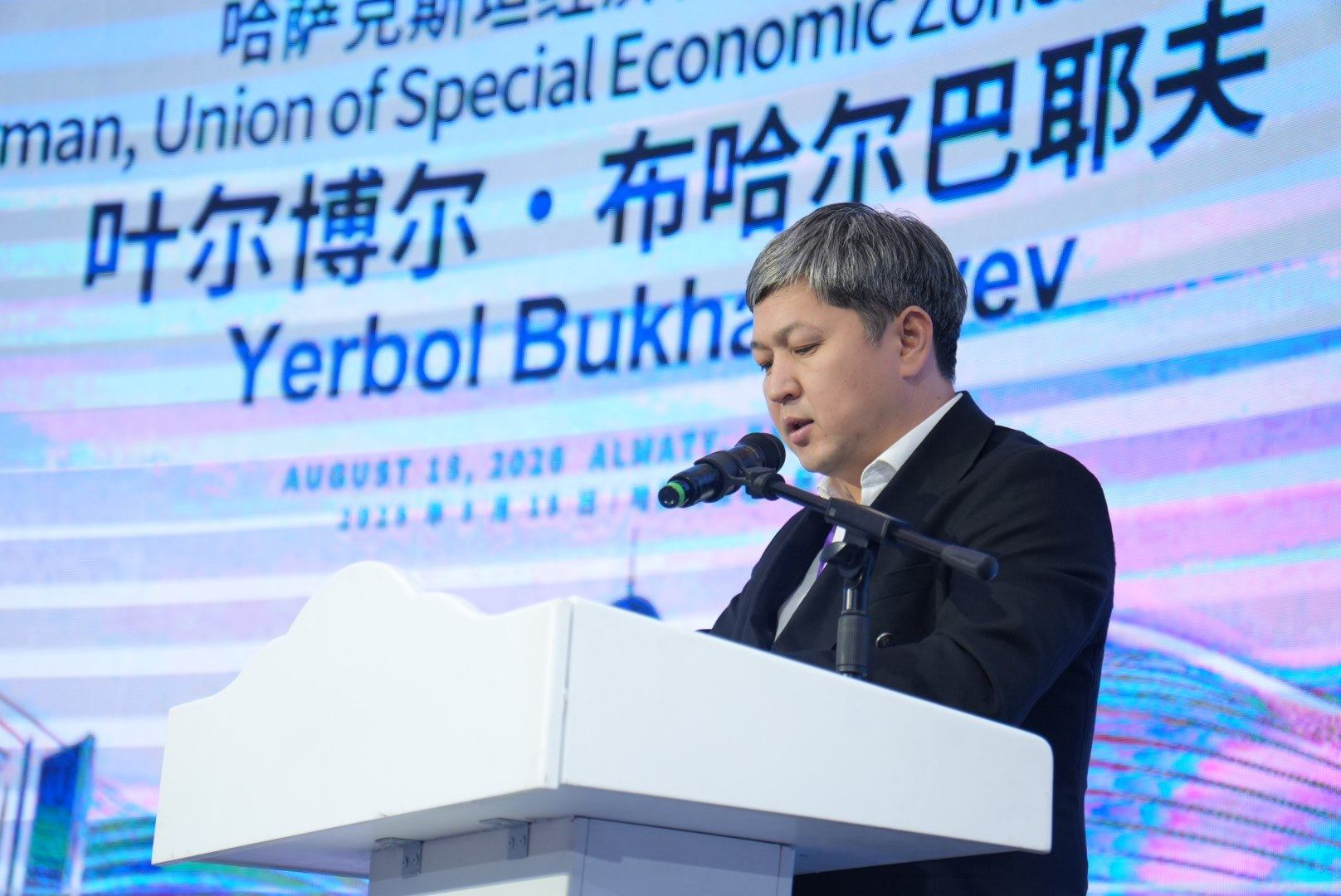
Yerbol Kharbayev, Chairman of the Association of Special Economic Zones of Kazakhstan, stated: "The significance of RWA extends beyond a technological concept; it lies in enhancing asset information transparency, collaboration efficiency, and cross-border connectivity through digitalization. For the Central Asian market, rich in industrial resources, geographical advantages, and international cooperation potential, achieving industrial digitalization under clear, compliant, and risk-controlled frameworks is becoming a topic of shared interest."
China-Kazakhstan Cooperation Moves Towards a Deeper "Digital Economic Community"

At the event, Chinese and Kazakh guests exchanged views on investment environments, industry localization, international resource sharing, and digital economy development. Hosts and participants emphasized that an open, transparent, and stable business environment is the foundation for attracting long-term investment in technology, capital, and industry. Collaboration between governments, enterprises, platforms, and communities was identified as crucial for project implementation.

The conference featured strategic cooperation signing ceremonies for key China-Kazakhstan projects and targeted resource matching sessions between governments and enterprises, transforming cross-border collaboration from a macro vision into a more actionable negotiation mechanism. For Chinese enterprises eyeing the Central Asian market, this platform offered direct industry insights, resource connections, and entry points for cooperation.

Websea's Presence at the Summit: Responding to the Era's Digital Economy Imperatives with User Trust

As an invited digital asset platform representative, Websea participated in several segments including a brand roadshow and the launch of the Creator Alliance and Web3 MCN agencies. Websea's Global CMO, Herbert Sim, shared that a platform's development must always be grounded in user trust and genuine experience.
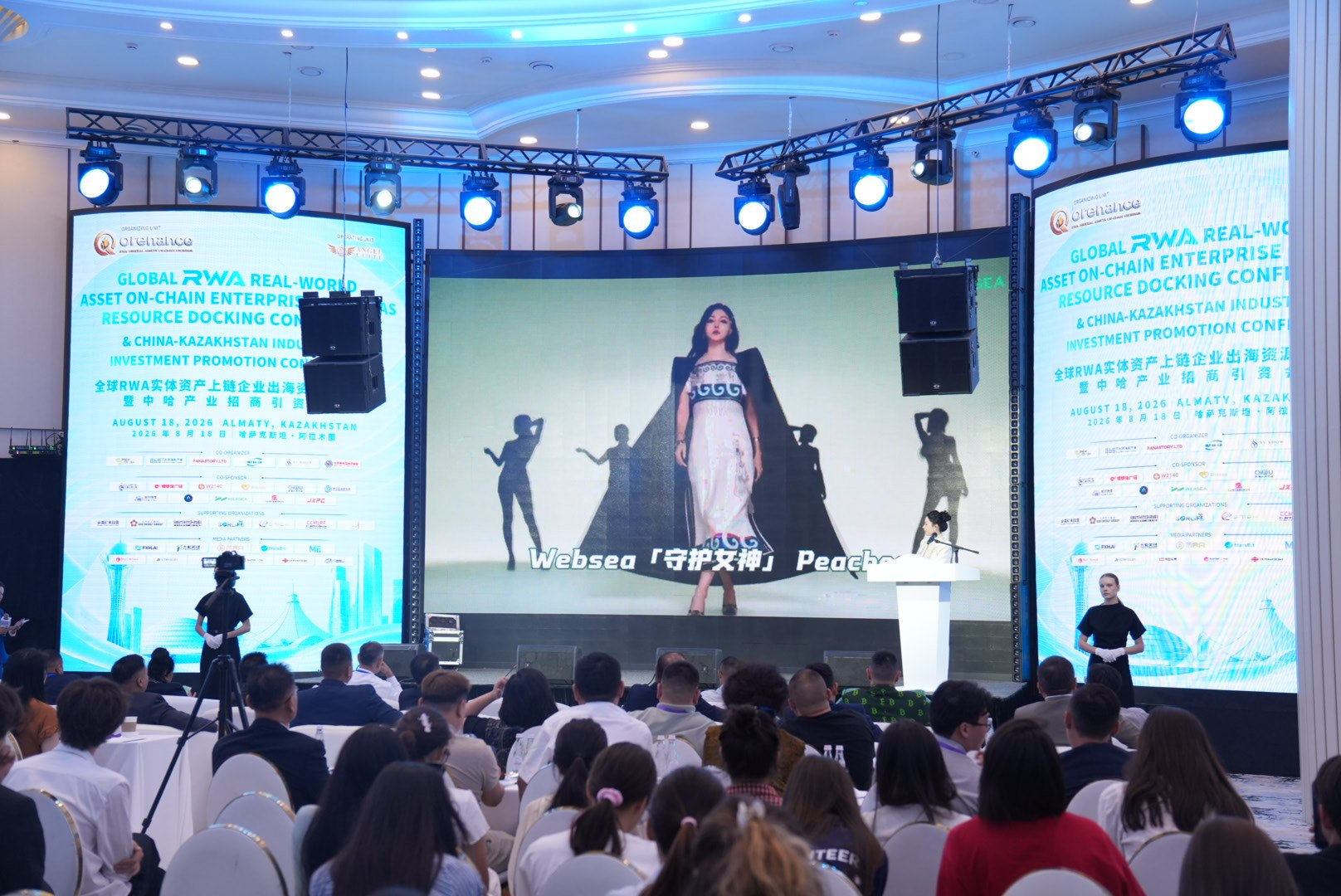
"Technology can enhance efficiency, but trust is the cornerstone of a platform's long-term growth. We are grateful to every user and partner who has accompanied and trusted Websea along the way. It is precisely because of this trust that we consistently prioritize user asset security and trading experience," Herbert Sim stated.
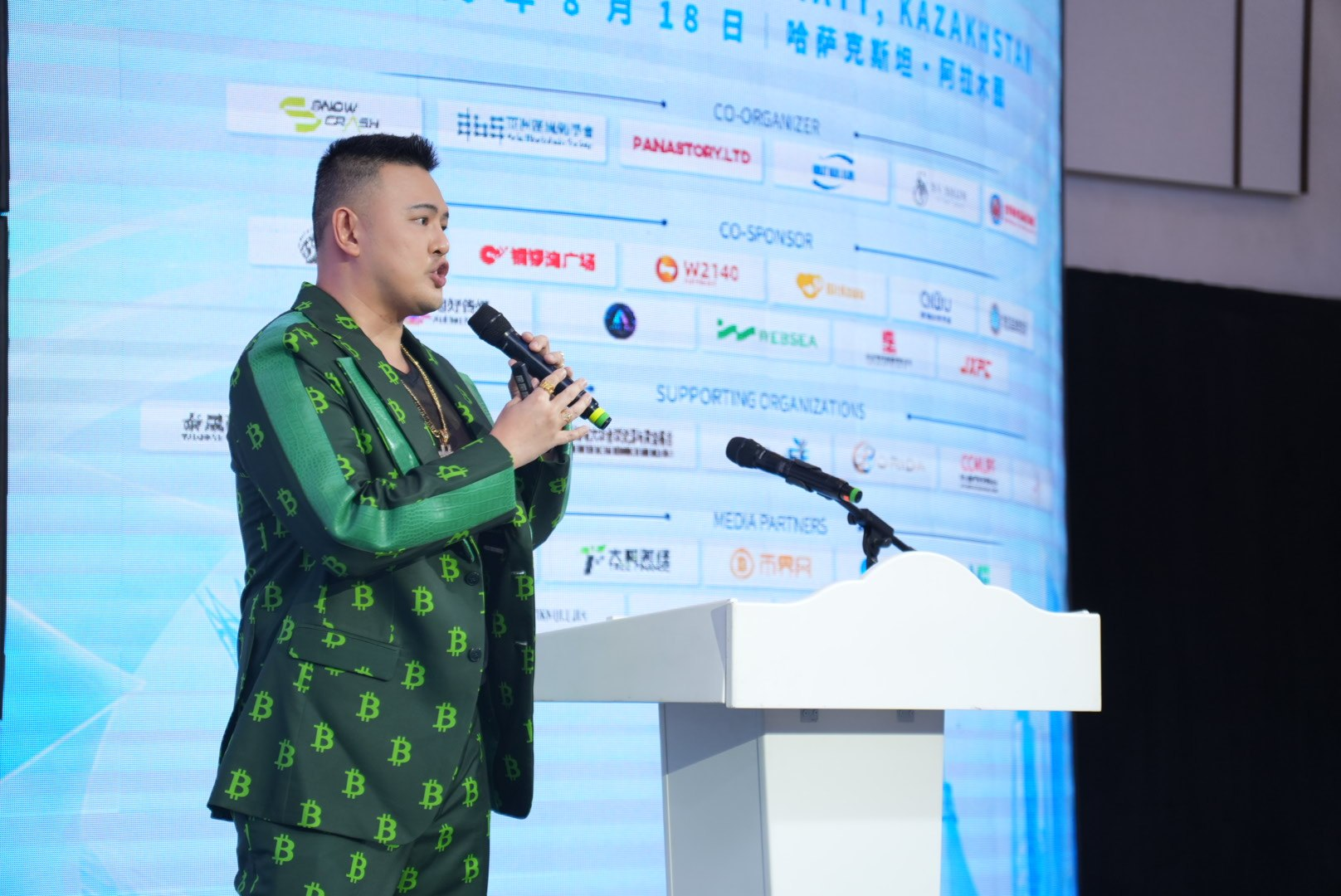
In a rapidly evolving industry landscape, Websea aims to participate in global digital economy development with a more steadfast service philosophy: continuously optimizing products and trading experiences while maintaining a strong risk awareness and protecting user rights. This is complemented by open cooperation to connect more global users, creators, and industrial partners.

Industry, Creators, and Community in Sync: The Digital Economy is More Than a Tech Narrative

The event also featured launch ceremonies for the Web3 Beauty Alliance • Central Asia Chapter, the China-Kazakhstan Quality Creator Alliance, and Web3 MCN agencies. The involvement of these diverse ecosystems ensured the conference was not just a dialogue between industry and capital but also an open stage for technology, content, community, and brand collaboration.

From the real economy to digital platforms, from cross-border investment to content ecosystems, this summit sent a clear signal: the future of the digital economy will be co-authored by a broader range of participants. It requires the guidance of systems and infrastructure, the long-term commitment of quality enterprises, and the sustained trust of users, partners, and communities.
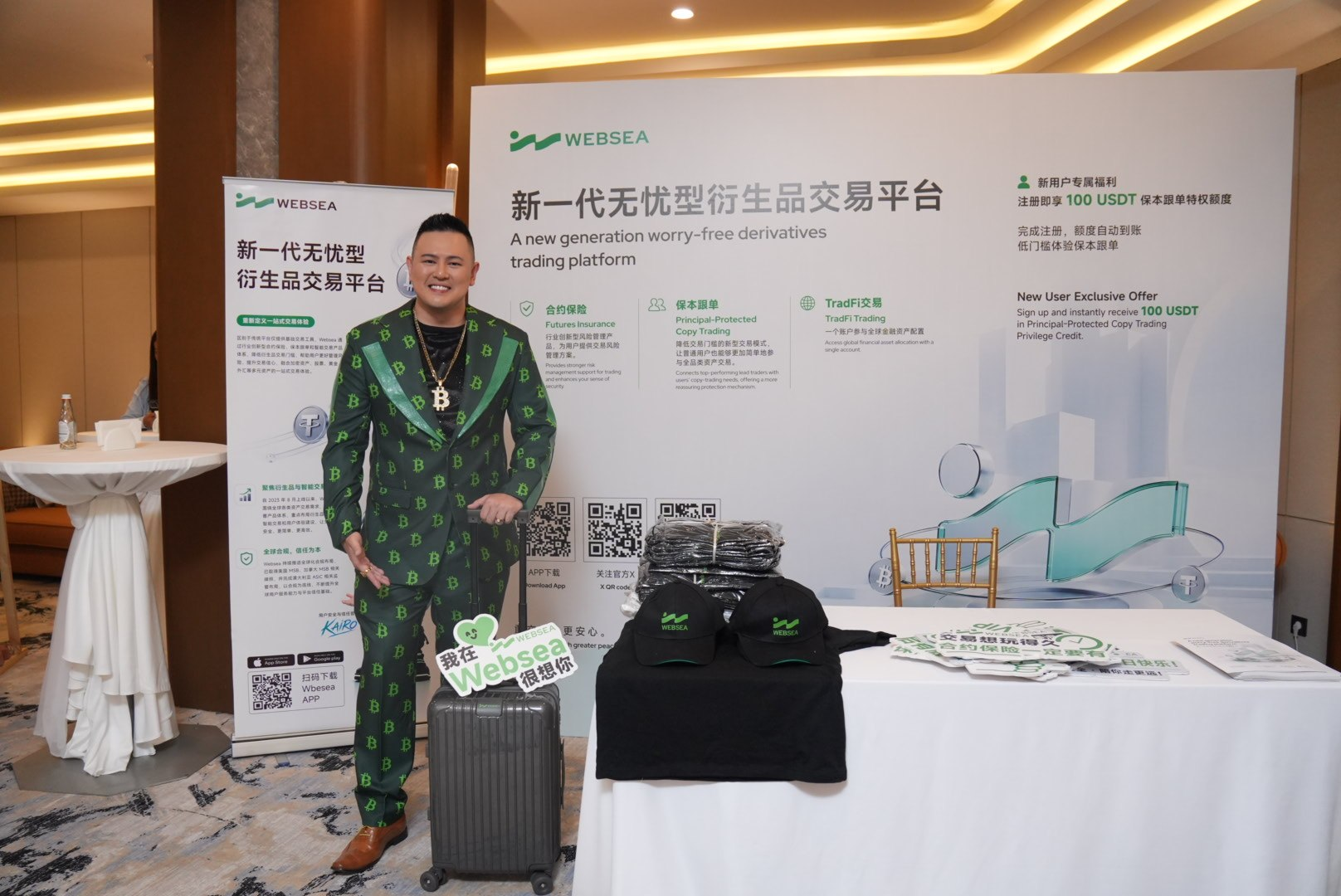
As the conference concluded successfully, a new chapter in China-Kazakhstan industrial collaboration and digital economy cooperation has begun. Taking this summit as a new starting point, Websea will continue to work hand in hand with global users and partners to explore a safe, open, and sustainable future for the digital economy.
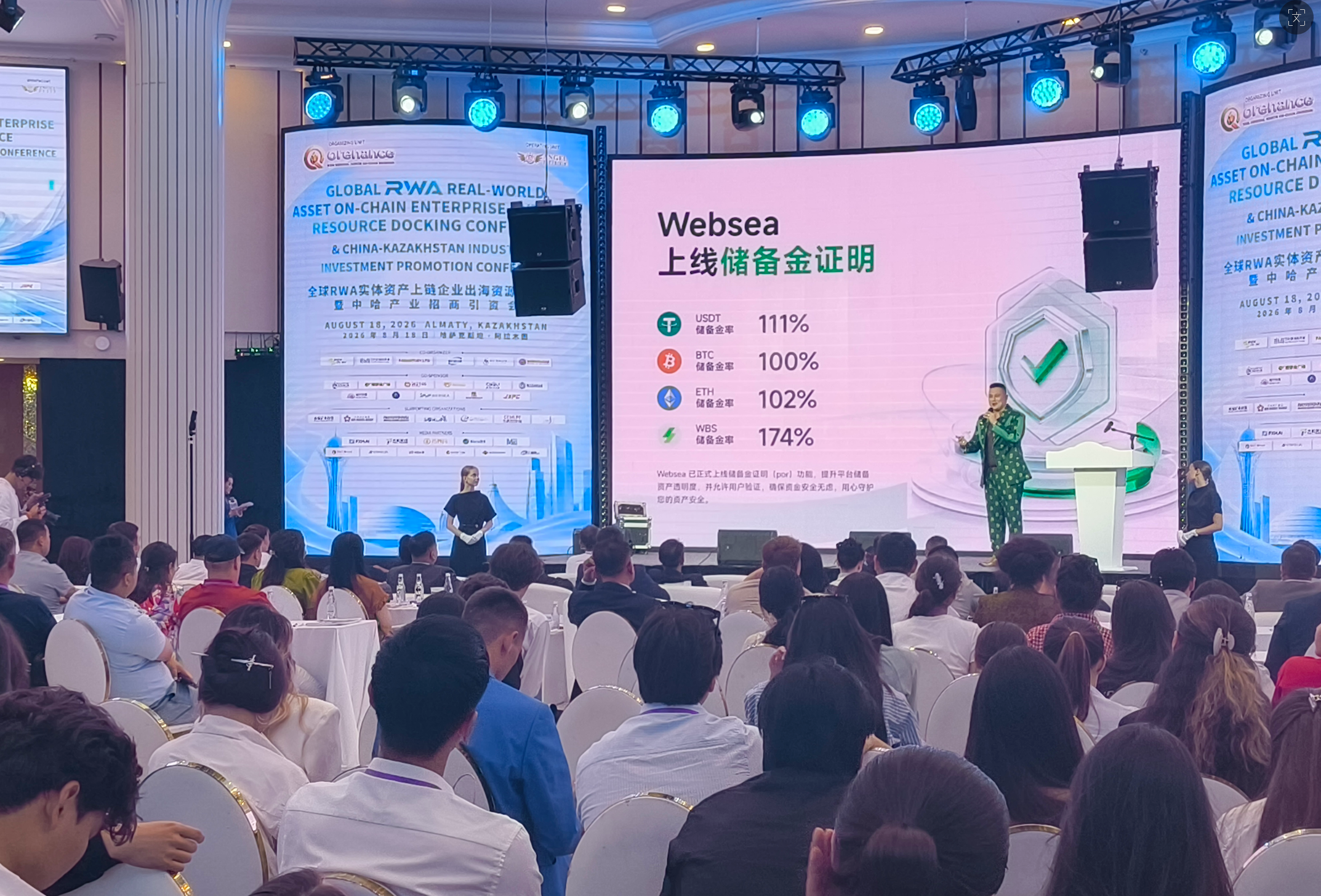
A special thanks to all media partners for their attention, coverage, and dissemination of this summit. Gratitude is extended to all attending guests, host and co-organizing institutions, partners, community members, and Websea global users for their trust and companionship.

Related Questions

QWhat was the main focus of the '2026 Global RWA Summit' held in Almaty, Kazakhstan?

AThe summit focused on RWA (Real World Asset) tokenization, cross-border industrial collaboration, and investment promotion between China and Kazakhstan, particularly exploring new opportunities within the digital economy for sectors like mining, agriculture, real estate, and green energy.

QAccording to the article, what key shift does RWA represent for the real economy, beyond just being a technical concept?

AAccording to Yerbol Kharbayev, Chairman of the Special Economic Zone Association of Kazakhstan, RWA represents a shift towards using digitalization to enhance asset information transparency, improve collaboration efficiency, and strengthen cross-border connectivity, moving from simple 'project showcases' to deeper 'industrial synergy'.

QHow did the summit aim to move China-Kazakhstan cooperation from vision to execution?

AThe summit facilitated the move from vision to execution by organizing strategic cooperation signings for key projects and setting up precise resource-matching sessions between government bodies and enterprises, creating a more actionable platform for negotiation and collaboration.

QWhat core principle did Websea's Global CMO, Herbert Sim, emphasize as the foundation for the platform's long-term development?

AHerbert Sim emphasized that 'trust' is the fundamental cornerstone for the platform's long-term development. While technology improves efficiency, he stated that maintaining user trust, asset security, and a positive trading experience are of paramount importance.

QBesides industry and capital discussions, what other elements were integrated into the summit to portray a broader vision of the digital economy?

AThe summit integrated elements like the launch of the Web3 Beauty Alliance (Central Asia), the China-Kazakhstan Quality Creator Alliance, and Web3 MCN agencies, involving content creators, communities, and brand ecosystems to show that the digital economy's future is shaped by diverse participants beyond just technology narratives.

Related Reads

UBS Research Report Analysis: Murata's MLCC Factory Opens to the Public for the First Time in 20 Years, 20% Production Increase Potential from Optimization of Existing Assets

On August 18, UBS analysts visited Murata's Fukui Takefu factory, its first public opening in about 20 years. As the global MLCC leader with ~35% market share, this plant serves as the mother factory for advanced MLCCs used in AI servers and premium smartphones. UBS confirmed key findings: deep technical barriers remain, existing equipment holds ~20% latent production capacity, and physical expansion is nearing its limits. Murata's competitive edge lies in a closed-loop system encompassing proprietary ceramic material uniformity control, capacitance-maximizing self-developed technology, and self-built production equipment—a "black box" model difficult to replicate. Its flexible segmented production system efficiently manages over 50,000 product types. With new facility construction constrained and equipment lead times lengthening, optimizing existing lines becomes a crucial, lower-cost path to increase output. Murata's strategy involves shifting generic production to overseas sites like Thailand while focusing Japanese facilities on advanced, high-margin products. UBS projects significant operating margin expansion from 15.4% in FY2026 to 37.6% in FY2029, driven by this product mix upgrade toward high-capacitance, small-size MLCCs for AI and smartphones. Primary risks include U.S. economic slowdown, technology diffusion in Asia, and circuit integration trends. UBS maintains a positive industry outlook, noting potential for guidance upgrades, and sets a 13,200 yen target price based on a 30x FY2029 P/E, implying ~76% upside contingent on successful MLCC product structure advancement.

marsbit13m ago

UBS Research Report Analysis: Murata's MLCC Factory Opens to the Public for the First Time in 20 Years, 20% Production Increase Potential from Optimization of Existing Assets

marsbit13m ago

Arthur Hayes: Awaiting Fed Signal, Replenishing Ammo to Position for Crypto Bull Market

Arthur Hayes, co-founder of BitMEX, argues that the yen is significantly undervalued and analyzes three potential paths for its appreciation. He dismisses the first two options—the Bank of Japan raising interest rates or Japanese institutions selling foreign assets—as politically or economically unfeasible. Instead, he identifies the preferred method: Japan's Ministry of Finance (MOF) using the Federal Reserve's FIMA (Foreign and International Monetary Authorities) repo facility to borrow dollars against its U.S. Treasury holdings, then selling those dollars to buy yen in the forex market. Hayes explains that U.S. Treasury Secretary "Besant" has already called for removing the FIMA per-counterparty limit to enable this. The execution depends on Fed Chair "Warsh" convening a subcommittee to adjust the FIMA rules. Hayes is confident this will happen, signaling a major shift in USD/JPY dynamics and the end of the "cheap" yen era. He connects this potential massive dollar liquidity injection directly to a surge in asset prices, particularly Bitcoin, physical gold, and gold miners' stocks, drawing parallels to the Fed's balance sheet expansion during COVID-19. Within crypto, besides Bitcoin, he views Ethereum as undervalued and highlights Ethena (ENA) as a high-potential, speculative altcoin that could see 5-10x returns if liquidity increases and boosts Bitcoin basis trade yields. Hayes concludes he is waiting for the Fed's signal to fully deploy capital, anticipating a significant crypto bull market.

marsbit51m ago

Arthur Hayes: Awaiting Fed Signal, Replenishing Ammo to Position for Crypto Bull Market

marsbit51m ago

BTC Sees Largest Single-Day Short Liquidation in History: Overnight $1.1 Billion Short Positions Evaporate, But Calling a Bull Return is Premature

Bitcoin experienced its largest single-day short liquidation in history, with approximately $1.191 billion in short positions being forcibly closed within 24 hours as the price surged nearly 7% to approach $70,000. This event, occurring on the evening of August 19, resulted in total liquidations of about $1.345 billion across the network. The massive short squeeze was attributed to a combination of catalysts: a White House meeting between former President Trump and crypto industry executives fueling regulatory optimism, and a more substantial signal from the U.S. Treasury doubling its liquidity support for long-term bond repurchases, hinting at looser macro liquidity for risk assets. Data showed strong institutional buying, with U.S. spot Bitcoin ETFs seeing significant inflows. The liquidation process itself created a feedback loop, accelerating the price rise as forced buy-backs pushed prices higher. This event surpassed the previous record for BTC perpetual short liquidations set during the volatile "5.19" period in 2021. While such extreme short liquidations have historically signaled a potential medium-term bottom formation, analysts caution that the market often undergoes weeks of consolidation and "cooling off" afterward. Current sentiment remains mixed, with the Fear & Greed Index still in "Fear" territory, and the key test for the rally being whether it can sustain momentum to challenge higher resistance levels like $75,000. The article concludes by warning against immediate "bull market is back" assumptions, emphasizing that history provides context but not guaranteed outcomes.

marsbit1h ago

BTC Sees Largest Single-Day Short Liquidation in History: Overnight $1.1 Billion Short Positions Evaporate, But Calling a Bull Return is Premature

marsbit1h ago

Trading

Spot
活动图片